 Yesterday, 15 February, the world’s fastest train scanner was opened in the port of Rotterdam with the installation and commissioning of a Rapiscan Eagle® R60 rail scanner, on behalf of Dutch Customs. It produces images of a good quality while the train is running up to 60 kilometres per hour. The Eagle R60’s 6 MeV X-ray imaging system penetrates dense and densely-packed cargo. Installations in other countries operate at a train speed of 30 kilometres. Dutch Customs selects containers on the basis of a risk analysis. The scanner checks trains out of the European hinterland into the port of Rotterdam. Here, the containers are loaded on vessels for export outside the European Union. The scanning installation is located at the Maasvlakte area, near to the N15 motorway on one side and the Steinweg Steel Terminal on the other. Capable of detecting and identifying a wide range of threats and suspect materials, including contraband goods, drugs, weapons and explosives, as well as radioactive material, the Eagle R60 is a high energy rail inspection system, which can efficiently scan cargo containers as they travel at speeds of up to sixty kilometers per hour. When the train scanner is fully integrated in Custom’s processes, a container will only be taken out of the logistic process if the scanning image provides ground for it. Source: Ministry of Finance /Customs, Netherlands.
Category / Cargo screening
Adoption of container tracking will accelerate in the coming years
According to a new research report from Berg Insight, the number of active remote container tracking units deployed on inter-modal shipping containers was 77,000 in Q4-2011. Growing at a compound annual growth rate (CAGR) of 66.9 percent, this number is expected to reach 1.0 million by 2016. The penetration rate of remote tracking systems in the total population of containers is estimated to increase from 0.4 percent in 2011 to 3.6 percent in 2016. Berg Insight’s definition of a real-time container tracking solution is a system that incorporates data logging, satellite positioning and data communication to a back-office application.
The market for container tracking solutions is still in its early stage. Aftermarket solutions mounted on high value cargo and refrigerated containers will be the first use cases to adopt container tracking. Orbcomm has after recent acquisitions of Startrak and PAR LMS emerged as the largest vendor of wireless container tracking devices with solutions targeting refrigerated containers. Qualcomm, ID Systems and Telular are prominent vendors focusing on inland transportation in North America, which is so far the most mature market for container tracking solutions. PearTrack Systems, Honeywell Global Tracking, EPSa and Kirsen Global Security are examples of companies offering dedicated solutions targeting the global end-to-end container transport chain.
Ever since the events of 9/11, there have been a lot of activities to bring container tracking solutions to the market according to the report. Only now technology advancement, declining hardware prices and market awareness are starting to come together to make remote container tracking solutions attractive. Container telematics can help supply chain operators to comply with regulations and meet the high demands on security, information visibility and transportation efficiency that comes with global supply chains. Source: Berg Insight
Next Generation High-Energy X-ray System for Rapid Cargo and Vehicle Screening
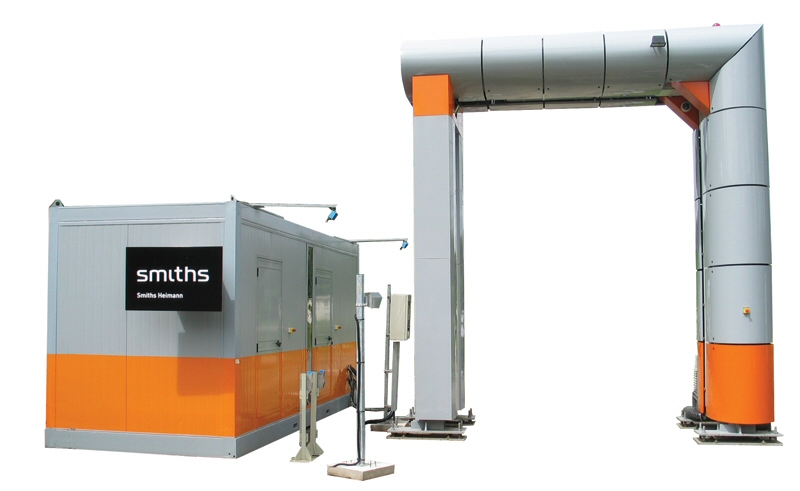 Smiths Detection has unveiled its next-generation high-energy X-ray scanner, the first pass-through cargo system to offer steel penetration of 30cm combined with three-colour material discrimination. The HCVP 6030 viZual, based on Smiths Detection ABRATM technology, is designed primarily for high-volume cargo screening. It can inspect up to 100 trucks or container loads per hour. The new system is a combination of proven high-energy X-ray technology and advanced material discrimination provides best-in-class performance at the lowest total cost of ownership. It is ideal for rapid cargo throughput with high safety standards for truck drivers and operators alike allowing customs quick and effective enforcement of tax, revenue and fraud laws.
Customer interest in the new cargo screener is already significant and a series of orders has been placed with Smiths Detection even before official market entry.
The HCVP 6030 viZual is based on the most powerful HCV technology platform, incorporating Optical Character Recognition, Automatic Radiation Detection, Electronic Data Interchange and Remote Service maintenance.
The HCVP series systems offer accelerators delivering energy levels from 4MeV to 6MeV, allowing for steel penetration ranging from 230mm (9”) to 300mm (11.8”) while providing a high throughput of up to 195 trucks per hour with a scanning speed of 7 km/4 mph. This innovative automatic free-flow scanning procedure will guarantee a constant vehicle flow on site.
The system’s high performance imaging capability, known as viZual technology (optional), provides the operator with detailed radioscopic images of the container or vehicle and its contents with organic and inorganic material discrimination and colorization based on atomic number for the assisted recognition of threats. The viZual feature allows for reliable results in a single scan.
The modular compact design of the HCVP provides the ability for the system to be relocated, adapting to the customer’s specific needs. The HCVP is a standalone unit which requires limited external infrastructure. The system is designed for ease of operation with a minimal footprint, while still integrating the most demanding international security screening requirements.
The HCVP system’s automated scanning procedure allows the vehicle or container to pass through the x-ray system. The scanning process starts when the end of the driver’s cabin has been detected. The driver and driver’s cabin are not scanned. When equipped with the automatic radioactive material detection – ARD (optional), the HCVP simultaneously carries out both the X-ray inspection and an analysis to detect the presence of radioactive gamma and/or neutron materials within the container or vehicle. The system requires 1 traffic receptionist, 1 system operator, an up to 8 image analysts depending on need. Source: Smiths Detection
Related articles
- Nigeria Customs acquires sophisticated Smith-Heimanns fixed scanner (mpoverello.com)
- X-Ray Security Screening -Technologies & Global Market 2011-2016 (mpoverello.com)
Shortage of Helium – challenges for Cargo Security and potential contractual dilemma for Security Agencies
While the topic of non-intrusive detection equipment there has been much-a-do about the shortage of helium over the last 18 months, the impact this may have for existing investments in scanner and radiation detection equipment poses an even more ominous question, particularly those countries and agencies having already invested in US-based technology.
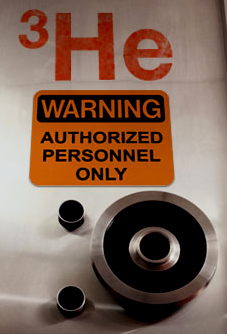 The demand for nuclear detectors exploded (if you’ll pardon the expression) from 8,000l/year to ten times that in 2008 due to increased efforts to stop nuclear proliferation and terrorism. But production of helium-3, a critical element in nuclear detection technology, has not kept pace and existing stockpiles are quickly dwindling. Alternatives are currently in the early stages of development and researchers have found several promising leads; when an alternative is found, current radiation detection equipment will have to be replaced with the new technology.
Helium-3 is a decay product of tritium, a heavy isotope of hydrogen used to enhance the yield of nuclear weapons, but whose production stopped in 1988. The half-life decay of tritium is about 12 years, and the U.S. supply for helium-3 is fed by harvesting the gas from dismantled or refurbished nuclear weapons. However, production of helium-3 hasn’t kept pace with the exponential demand sparked by the Sept. 11 attacks.
Projected demand for the non-radioactive gas in 2010 is said to be more than 76,000 litres per year, while U.S. production is a mere 8,000 litres annually, and U.S. total supply rests at less than 48,000 litres. This shortage wasn’t identified until a workshop put on by the Department of Energy’s Office of Nuclear Physics in August 2008. Between 2004 and 2008, about 25,000 litres of helium-3 annually was entering the U.S. from Russia. Right around the time of the August workshop, Russia decided it was “reserving its supplies for domestic use.
 Helium-3 is primarily used in security applications as it is highly sensitive to the neutrons that are emitted by plutonium. Roughly 80 percent of helium-3 supplies are used for national security. Since 9/11 demand for radiation detectors increased sharply, however production failed to increase. The shortage is reported to severely effect even the handheld and backpack detectors used by the U.S. Coast Guard, Customs and Border Protection, and Transportation Security Administration. A representative of General Electric Energy, which manufactures radiation detectors, said, “Up to six different neutron-detection technologies may be required to replace helium-3 detectors” for its four main uses and “[a] drop-in replacement technology for helium-3 does not exist today.” When an acceptable alternative is found, current radiation detection equipment will have to be replaced with the new technology. In the meantime, industrial manufacturers of detection equipment have been diversifying their helium-3 sources and turning to recycling old helium-3 canisters.
In June 2011, however, General Electric (GE) did announce that it had introduced a new radiation detection solution using boron-10 (10B) to detect radiation in border security applications. These detectors are key components of radiation portal monitors used in a wide range of applications including screening at borders and in seaports. GE is the only company to date to manufacture an alternate neutron detection technology for deployment in radiation portal monitors.
It still needs to be seen how manufacturers will deal with their existing customers. Concerned Customs Administrations and Security Agencies should be reviewing the terms and conditions of their supply agreements in the meantime. Future acquisitions will no doubt look at Helium-3 based technology with sceptism unless they are uninformed.
Sources: WIRED, General Electric
X-Ray Security Screening -Technologies & Global Market 2011-2016
 Despite years of cutting edge weapon and explosives screening technology Research, Development, Test & Evaluation (RDT&E), there is no competitive modality on the market, which challenges the cost-performance of X-ray screening technologies. This is a significant drawback for security agencies and funding bodies when considering the multi-year investments which need to be costed to operate a successful and effective scanner inspection solution. The capital cost of the equipment is but one facet, one also needs to consider the HR and facilities which need to be procured to make all this work. The Homeland Security Research Corporation (HSRC) have therefore made significant improvements over the years to the scope and content of their market analysis to make visible the scope, application and longevity of such equipment.
Over the next six years, HSRC analysts forecast that, led by the USA, China and India, the global X-ray security screening market (including systems sales, service, and upgrades) will grow from $1.0 billion in 2010 to $1.9 billion by 2016.
HSRC’s latest report, is the most comprehensive review of the multibillion global X-ray security screening market available today. It analyses and forecasts the market by application, by country and by business transaction.
The report, segmented into 50 sub-markets, offers for each sub-market 2010 data and 2011-2016 forecasts and analysis. In 210 pages, 87 tables and 118 figures, the report analyses and projects the 2011-2016 market and technologies from several perspectives, including:
- Market forecast by application: Air cargo, Airport-cabin baggage, Secured facilities, Postal items, Supply chain cargo and People.
- National and regional markets: e.g., US, UK, Germany, France, Saudi Arabia, China, India, Japan, Korea, Malaysia, Singapore, Brazil
- X-Ray Technologies: conventional, back-scatter, multi-view, coherent, dual energy
- Systems Sales, post warranty service and upgrade markets
- Competitive environment:6 leading vendors and their products
- Market analysis: e.g., market drivers & inhibitors, SWOT analysis
- Business environment: e.g., competitive analysis
- Current and pipeline technologies
- Business opportunities and challenges
At a purchase cost just shy of US$ 4,500 for this market analysis, procurement officers would do well to familiarise themselves with the WCO’s Guidelines for the Purchase and Deployment of Scanning/Imaging Equipment. While it won’t provide all the answers, it certainly outlines the key areas for evaluation. Better still, secure the services of a non-intrusive inspection expert, typically with procurement and implementation experience who can guide and recommend the most cost-effective and practical solution. These experts can also offer significant help in the development of associated organisation planning and performance structures.
Related articles:
- Scanner Procurement Basics (www.mpoverello.com)
Nigeria Customs acquires sophisticated Smith-Heimanns fixed scanner
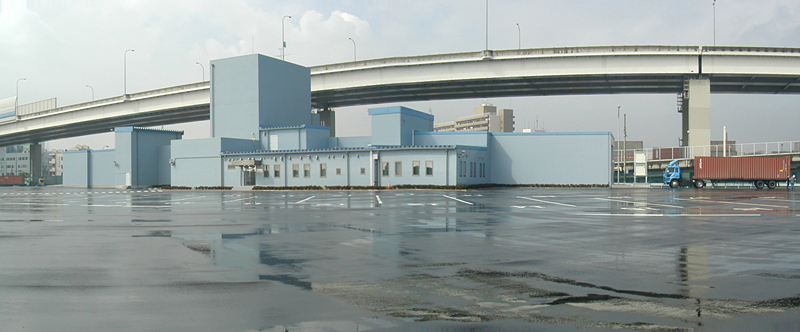 Security solutions specialist Smiths Detection has received a multi-million Euro order from Nigeria for its dual view, high energy X-ray container scanner, which includes a state-of-the-art material discrimination system. The order was placed by Global Scan systems Ltd and forms part of the Destination Inspection Programme (DIP) established by the Nigerian Ministry of Finance for the Customs Authorities of Nigeria. The stationary scanner, which will be the most advanced system of its kind in West Africa, will be deployed at the customs and border checkpoint between Nigeria and Benin.
The HCVS (Heimann Cargo Vision System) with material discrimination features X-ray images that distinguish between organic and inorganic substances. The associated colour coding greatly helps in the detection of threat objects such as weapons, explosives and drugs.
The HCVS is the most powerful tool in Smiths Detection’s cargo inspection product portfolio. It is permanently installed on a dedicated site, providing a swift and non-intrusive inspection procedure for every part of fully loaded trucks and containers
Technical features of the scanner
• Stationary X-ray system for the inspection of fully loaded trucks and containers
• State-of-the-art technology for outstanding image quality
• Ideal for maritime ports, border crossings and airports dealing with heavy traffic
• Easy and fast processing with low staffing requirements
• viZual technology for real organic/inorganic material discrimination
• Top of the line system for manifest verification
• Detection capacity reaching 100%
Optional Features
• Automatic Radioactive Material Detection (ARD)
• Discrimination high energy
• Single of dual view technology
• Single or dual tunnel version
• Available in 6MeV & 9MeV (Mega electron volt)
Source: Smiths Detection
Non-declaration of hazardous containers
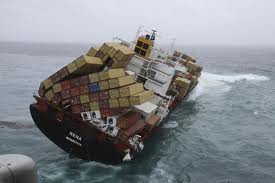 In this age of heightened security it remains remarkable how carriers still willfully take custody and/or load ‘goods’ for which the contents thereof are unclear. True, carriers and intermediaries (fowarders/brokers) will correctly point at the ‘shipper’ (exporter) for not disclosing the details correctly. It also needs be mentioned that the cargo handler (packer of the container) is really key in all of this. It is this entity who has knowledge of what is being stuffed into the container. There is much debate on this matter, and a whole lot more work to be done in ultimately pinning down the responsible party. Given this state of affairs, most Customs administrations are happy to lay the responsibility and liability for lawful clearance on the party responsible for cargo reporting, i.e. the entity which ‘cuts’ the manifest. I dare say that the terms of sale (incoterms) also have an influence in terms of risk and liability here which adds some complexity to decision-making in time of misfortune. Take for instance the recent grounding of the M/V Rena off New Zealand earlier this month, where it has recently come to light that the wreck contains at least 21 containers which were not properly recorded on the ship’s manifest. Read articles below.
Related articles
The value of risk-based Non-Intrusive Inspection
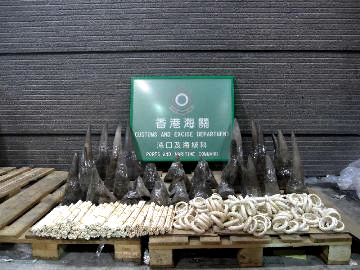 On 14 November 2011 Hong Kong Customs seized 33 rhino horns (weighing 86.54 kg), 758 ivory chopsticks (13.22 kg) and 127 ivory bracelets (9.2 kg) with a value of about 17.4 million Hong Kong dollars (over 1.6 million euro). Acting on risk assessment, a container on board a vessel arriving from Cape Town in South Africa and declared as containing “scrap plastic” was selected for inspection by Customs officers. Under x-ray examination, officers discovered the contraband concealed inside a package of plastic scrap placed at the rear end of the container.
This is one of the biggest seizures of rhino horns reported by Customs. Over the past two years, rhino horns have been seized by Customs in Belgium, China, Ireland, Kenya, Portugal, the Netherlands, South Africa and the United Kingdom.
Early November statistics from the South Africa National Parks authority show that 341 rhinos have been lost to poaching so far in 2011, compared to a record total of 333 last year. Most rhino horns are smuggled to Asia in particular China and Vietnam, where the unfounded rumour persists that rhino horn can cure cancer! This record seizure follows another made by Hong Kong Customs on 29 August 2011, when 794 pieces of African ivory tusks (1,898 kg) found inside a container were seized. Source: WCO.
A single bust like this invokes a number of things. Firstly an outrage amongst the general populace of the cruelty and greed concerned with the crime, and secondly, elation amongst law enforcement officers in making the bust. A bust such as this reinforces confidence in the initial commitment to procure inspection technology.
Related articles
- Listen up, you oriental berks, rhino horn does not cure cancer (lennymaysay.wordpress.com)
- Rhino horn trade triggers extinction threat (cnn.com)
Why Is This Cargo Container Emitting So Much Radiation?
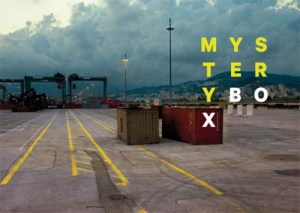 The November 2011 edition of Wired.com (magazine) features an interesting read on the question of ‘suspect containers’. Perhaps this sheds some credible light on the dangers of unregulated handling of radioactive materials; and no less the potential hazards faced by cargo handlers and port authorities in the course of their duties. The billions of dollars spent by governments every year in maintaining national security across multimodal transport modalities and ports of entry are often questioned; nonetheless, it is stories such as this case in the Port of Genoa, Italy, that lend credence to the need for non-intrusive inspection and detection equipment. Source: Wired.com
Related articles
- Are Shippers Load Stow and Count and Said to Contain – different..?? (theshippingandfreightblog.wordpress.com)
Zero Tolerance – the saga of 100% scanning continues
Various opinions on this subject have been voiced over the last 3 years – the threat of sea and airborne cargo being used as ‘a delivery mechanism’ for a nuclear or terrorist attack. Besides the US calling for 100% scanning of containerised cargoes at point of origin, the reality remains that less than 4% of seaborne containers are being scanned at port of departure.
Post 9/11, the US was quick to initiate a multi-layered approach to securing America against another terrorist attack. This entailed a number of domestic and extra-territorial programmes. At the bottom of each of these lies an authoritarian distrust or question mark against the integrity of entities involved in the international supply chain. In as much as these modern-day Customs’ initiatives aim to deal with tangible and intangible threats, one can begin to question the motives used by many governments and organisations in introducing such programs.
Last year, the US postponed it’s requirement for 100% scanning of inbound boxes by at least two years because of technical and funding issues. (Lets not forget the massive outcry from foreign countries of origin who envisaged their own ports coming to a standstill). The 2014 deadline, as it stands, would require any container heading to the US to be scanned for conventional as well as radioactive threats before being loaded at a foreign port.
However, in June 2011, US Homeland Security chief Janet Napolitano went on record saying that 100% scanning was “probably not the best way to go”. She said Congress was considering a “more layered approach” to container security, a combined system of scanning, data and risk analysis, physical checks and closer co-operation with ports and countries around the world.
Could it be that the promise of mega-deals for the ‘security industry’ is under serious threat given limited success and results from these ‘supply chain’ initiatives? One hears less and less about the awarding of multi-million dollar contracts for non-intrusive equipment. Funding is a big issue, and no less an issue is the question mark which countries of origin have regarding the direct intrusion these US-domestic policies have on their local economies and supply chains.
The WCO went a long way in accommodating and addressing the question of international terrorism which in the view of many helped curbed the ‘paranoia’ which prevailed post 9/11. Still the question of motive and opportunity spurred several organisations and governments to support the many bilateral developments that ensued. The EU Commission for one was infuriated by the bilateral overtures of the CBP and EU Custom’s administrations before diplomatic agreement prevailed.
The bottom line is that a nation’s domestic policy overrides that of the wants and whims of the more affluent states. Several donor programs nowadays offer ‘security equipment’ free of charge to countries packaged with ‘capacity building programmes’ to instil the desired mentality of the donor country or agency. Traditional forms of customs control and human initiative/intuition are being cast out on the trash heap as primitive everywhere, yet there is little to show for the billions of dollars spent on anti-terrorism measures year after year. However, reading the article – Zero Tolerance – you get the impression of a little desperation on the part of the engineers and manufacturers of nuclear based security equipment – almost wishing a further nuclear calamity to prove their point! Source of article: www.portstrategy.com
Australian Customs achieves one million sea cargo x-ray scans
Recently, Australian Customs and Border Protection staff celebrated the one millionth x- ray of a sea cargo container arriving in Australia. Staff witnessed the x-ray and unpacking of a recent seizure of 16.8 tonnes of illicit loose tobacco, worth almost $8 million in foregone duties and GST. The sea cargo container arrived from Indonesia and was selected for further examination based on anomalies detected during an x-ray at the Container Examination Facility (CEF) in Melbourne.
Container Examination Facilities across Australia, have been instrumental in many major seizures of illegal or prohibited items. In the last 13 months CEFs have detected:
- 448 kilograms of heroin and opium
- 396 kilograms of cocaine
- 174 kilograms of amphetamines and chemical precursors
- 82 million cigarette sticks
- 258 tonnes of tobacco
Since the first Container Examination Facility was opened in November 2002, Customs and Border Protection has x-rayed one million containers at key ports around Australia including Melbourne, Sydney, Brisbane and Fremantle. Prior to the first facility opening, about 4,000 containers were examined each year. Today, Customs officers x-ray more than 101,500 containers each year. That’s a huge increase in physical assessments.
The facilities at Australian ports have container x-ray machines capable of x-raying up to four sea cargo containers at a single time. Source: Ministry of Home Affairs, Australia.
Comment: All I can say is this is an amazing feat! Africa truly has a long way to go.
Smiths Detection Wins German Contract for Mobile Cargo Scanners
Smiths Detection has won an order from the German Federal Ministry of Finance (BMF) to provide advanced high-energy [6Mev] X-ray systems for mobile Customs checkpoints to be delivered by the end of 2011. The contract comprises three Heimann Cargo Vision Mobile (HCVM) 3 systems, Smiths’ third generation, mobile high-energy X-ray cargo series, to inspect trucks, containers 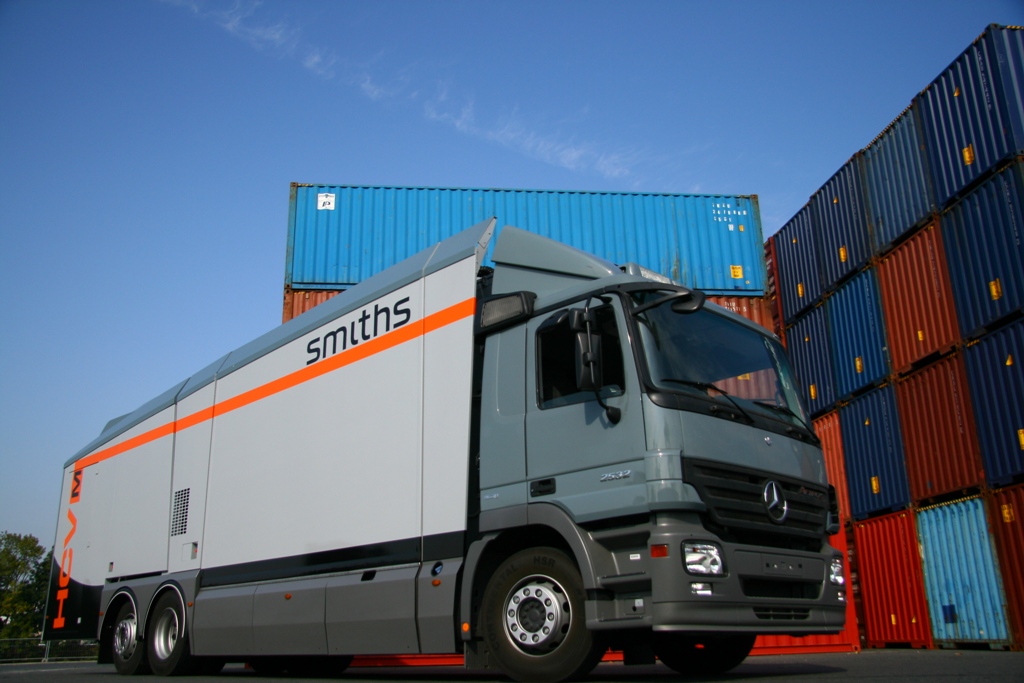 and other vehicles for contraband, weapons, explosives and narcotics. They will be deployed at various locations throughout Germany. Available in truck and trailer versions, which give operators the freedom to use their own towing equipment, the HCVM 3 series improves threat identification through its viZual technology, which uses colour-coded material discrimination to distinguish between organic and inorganic substances. Operational in less than 15 minutes, with a throughput of up to 150 containers per hour, the system offers flexible scanning heights for different vehicle or load dimensions and adjustable scanning angles with a variety of scanning modes. Some of the technical features include:
-
High throughput of up to 25 trucks per hour in scan mode and up to 150 trucks per hour in pass through mode.
-
Steel penetration up to 320mm.
-
viZual technology for real organic/inorganic material discrimination.
-
Up to 6 different Scanning Modes.
-
Automatic Radioactive Material Detection.
-
Space+Cabin for up to 8 Image Analysis Workstations.
- Automatic Guidance System.
Related articles:
US advised to backtrack on 100% container scanning

U.S. Customs and Border Protection inspectors
A key US government advisory committee has recommended that Washington repeals legislation requiring 100% scanning of maritime containers, suggesting instead risk-based analysis of any threat. A report by the Commercial Operations Advisory Committee (COAC) states: “The mandate for 100% scanning of maritime containers and the 100% screening of air cargo on passenger aircraft contained within the September 11 Commission Recommendations Act should be re-evaluated in favour of risk-based measures that target high-risk shipments for physical inspections. “Further the requirement to scan 100% of maritime containers prior to vessel load should be repealed.” COAC, tasked with providing advice to the Secretary of Homeland Security, the Secretary of the Treasury, and the Commissioner of US Customs and Border Protection, made its comments in reviewing the US government’s National Strategy for Global Supply Chain Security. This comes in the wake of recent recommendations to have the mandate extended until 2015. The Senate Committee on Commerce, Science, and Transportation was told that the Department of Homeland Security would need “significant resources for greater manpower and technology – technologies that do not currently exist – and the redesign of many ports.
I have updated the page ‘Non-Intrusive Inspection’ substantially – please visit.
New Screening Technology for Air Cargo
 I have added a new link which will be of interest to Customs Border Control officers and cargo handlers in the airfreight industry. Read all about the new screening technology recently installed at Schiphol Airport – http://www.diag-nose.com/rascargo.html. You will also find interesting posts in regard to the use of detector dogs in the combatting narcotics and explosives.
 What Happened to the Portcullis?
You must be logged in to post a comment.