Bribery along the corridor

Notwithstanding efforts to minimize collusion, bribery and corruption through increased use of technology, the underlying fact remains that human intervention cannot be completely removed from nodes within the supply chain.Identifying the causes and parties involved in such activity is only the start (yet minuscule) aspect of a problem entrenched in the distrust of government officials and border authorities in particular. Integrity is based on trust. If trust is the placement of hordes of incompetence in public jobs to secure votes, then you will not need to look very far to understand that “the bribe” epitomizes the ultimate enterprise of individuals either bent on extortion, or to avail their services (like prostitutes  to the crooked trader. The following article “Bribery as a non-tariff barrier to trade” (click hyperlink to download) takes account of a wide-spread of role players as to their views and attitudes on the matter. In my view it is a template for what actually occurs at every border across the continent. 

Transparency International (Kenya) and Trade Mark (East Africa) have collaborated in the publication of a review on the subject of bribery in the EAC region. The executive summary elucidates the context – 

The East African Common Market Protocol that came into force in 2010 provides for the free flow of goods, labour, services and capital across the EAC bloc. To achieve this, members undertook to remove all tariff and non-tariff barriers to trade. While progress has been made on the removal of the former, doing away with the Non-tariff barriers along the main transport corridors of the region has remained a challenge.

Taking cognizance of this, Transparency International-Kenya, Uganda, Rwanda and Burundi in conjunction with the Transparency Forum in Tanzania conducted a survey along EAC‘s main corridors — the Northern and Central corridors- that form a vital trade link in the region between August and November 2011. The survey objectives were to measure the impact of bribery practices and create public awareness on the vice.

In determining the size of bribe payable, negotiations came top. The value of consignment and the urgency were some of the other factors sighted by the respondents. According to the survey, truck drivers have devised various means of accounting for bribery expenses to their employers. The most common is road trip expense’. These are anticipated regular amounts given prior to the start of a journey and ad hoc miscellaneous expenses. In the transporters’ books of accounts, the bribes are normally disguised either as anticipated regular amounts or as ad hoc miscellaneous expenses. Source: Transparency International and Trade Mark

Transnet’s loco acquisition programme gaining traction

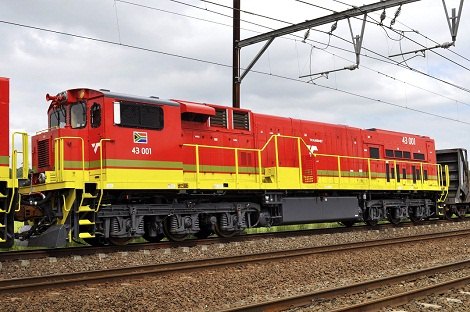
Ports.co.za reports that the US-based General Electric (GE) Transportation has announced that another locomotive, which forms part of a deal sealed with state-owned Transnet, was delivered with local content that exceeds the commitment from GE’s initial Transnet order of 100 locomotives.

The locomotive is the 42nd and is the most advanced diesel-electric locomotive ever built-in South Africa. Its official unveiling took place at an event held at Transnet Rail Engineering’s facilities in Koedoespoort, Pretoria, on Wednesday.

With this order, GE overshot its self-imposed target of 30% local content. The locomotives assembled in South Africa now have 37% local content.Transnet concluded an agreement with GE for a further 33 diesel-electric locomotives, over and above the 100 already being purchased under a deal concluded in 2009. In terms of the contract, 10 of the locomotives were manufactured in Erie and Grove City, Pennsylvania, USA and 133 are being assembled locally at Transnet Rail Engineering’s site in South Africa.

A total of 53 will be deployed in the Phalaborwa-Richards Bay corridor, 30 on the Sishen-Saldanha iron-ore corridor, 32 on the Witbank-Nelspruit-Komatipoort line and the remaining 28 will be used to transport coal to Eskom power stations. Source: ports.co.za

Revisiting the national transit procedure – Part 1

FTW Online last week ran an interesting article in response to a proposed change in Customs’ policy concerning the national transit movement of containers from coastal ports to inland container terminals and depots. In February 2011, I ran an article Customs Bill – Poser for Cargo Carriers, Handlers and Reporters alluding to some of the challenges posed by this approach. The following article goes a step further, providing a trade reaction which prompts a valid question concerning the practicality and viability of the proposed change given logistical concerns. I believe that there is sufficient merit in the issues being raised which must prompt closer collaboration between the South African Revenue Service and trade entities. For now it is sufficient to present the context of the argument – for which purpose the full text of the FTW article is presented below. In Part 2, I will follow-up with SARS’ response (published in this week’s edition of the FTW) and elaborate on both view points; as well as consider the matter  on ‘raw’ analysis of the ‘cargo’ and ‘goods declaration’ elements which influence this matter. Furthermore, one needs to consider in more detail what the Revised Kyoto Convention has to say on the matter, as well as how other global agencies are dealing and treating the matter of ‘security versus facilitation’.

Customs’ determination to have all goods cleared at the coast does not bode well for the South African trade environment, Pat Corbin, past president of the Johannesburg Chamber of Commerce and Industry (JCCI), said. Speaking at the Transport forum in Johannesburg Corbin said the Customs Bills have been on the cards for several years now and while consensus had been reached on most issues in the Nedlac process, the determination of Customs to not allow for any clearing to take place at inland ports will only add more pressure to the already overburdened ports in the country. “Customs maintains that despite the changes they propose it will be business as usual. We disagree. We have severe reservations about their intention to terminate vessel manifests at the coastal ports in all cases and have called for further research to be undertaken in this regard,” said Corbin. “By terminating the manifest at the coast it has severe ramifications for moving goods from road to rail. International experience has shown when you have an inland port and you have an adequate rail service where the vessel manifest only terminates at the inland port, up to 80% of the boxes for inland regions are put on rail while only 12% land on rail if the manifest terminates at the coastal port.” Corbin said the congestion at both the port and on the road would continue and have an adverse impact on quick trade flows. “It also raises issues around the levels of custom security and control at inland ports and then the general implications on the modernisation project.” According to Corbin, government’s continued response has been that no provision exists for inland ports and that goods must be cleared at the first port of entry. “They maintain that it is about controlling goods moving across our borders and thus the requirement that all goods must be cleared at the first port of entry. The security of the supply chain plays an important role to avoid diversion or smuggling of goods,” said Corbin. “Government says that the policy change will not clog up the ports or prohibit the seamless movement of trade. Labour organizations and unions seem to agree with them.” But, Corbin said, the Johannesburg Chamber of Commerce differs and is worried about the ramifications of this dramatic change to the 35-year-old option of clearing goods at an inland port or terminal. “With this policy change all containers will have to be reconsigned after not only Customs clearance on copy documents but also critically, completion of shipping lines’ requirements ie, payment of freight, original bill of lading presentation and receiving delivery instructions prior to their issuing a delivery order.” Corbin said the issue had been addressed directly with Transnet CEO Brian Molefe on two occasions, but that he had said he accepted Customs’ assurance that nothing would change and the boxes would still be able to move seamlessly once cleared. “It is not understood that the manifest will terminate at the coast where all boxes will dwell until they can be reconsigned,” said Corbin. Source: FTW Online – “New Customs Bill ruling will put pressure on port efficiency.”

Multimodal inland hubs to add to Gauteng’s container capacity

Engineering News reports that Gauteng will require additional container terminal capacity by 2016, when City Deep, in Johannesburg, will reach its full capacity. Container movements to the province was projected to grow to over three-million twenty-foot equivalent units (TEUs) a year by 2020, she said in her Budget Vote address at the Gauteng Provincial Legislature. Gauteng’s intermodal capacity currently stood at 650 000 TEUs a year and comprised the Pretcon, Vaalcon, Kascon and City Deep hubs.

Gauteng MEC for Economic Development, Qedani Mahlangu said the next generation of inland hubs would create an integrated multimodal logistics capability connecting air, road, rail and sea. Tambo Springs and Sentrarand, in Ekurhuleni, were identified to be developed into the new improved hubs.

By 2018, Tambo Springs would handle 500 000 TEUs and will focus on economic development and job creation, among others. “Tambo Springs will serve as an incubator to stimulate the establishment and growth of new ventures, create opportunities for small, medium-sized and micro enterprises and create 150 000 new jobs,” Mahlangu said.

She added that the department was working towards reaching an agreement with State-owned Transnet in September so that funding could be committed to start implementation by June 2013, for the first phase, which would comprise the railway arrival and departure terminal, to be completed by March 2014.

As per the Gauteng Employment, Growth and Development Strategy, freight and logistics were key drivers in stimulating sustainable growth in the province and the country. “Logistics efficiency will have positive spin-offs to the country‘s ability to export and import goods. In terms of freight, the intention is to move to rail… thereby reducing congestion on roads, air pollution and the impact on the surface of roads. The overall objective is to optimise Gauteng as the gateway to the emerging African market,” Mahlangu said. Source: Engineeringnews.co.za

‘State of Logistics’ survey – SA’s progress revealed

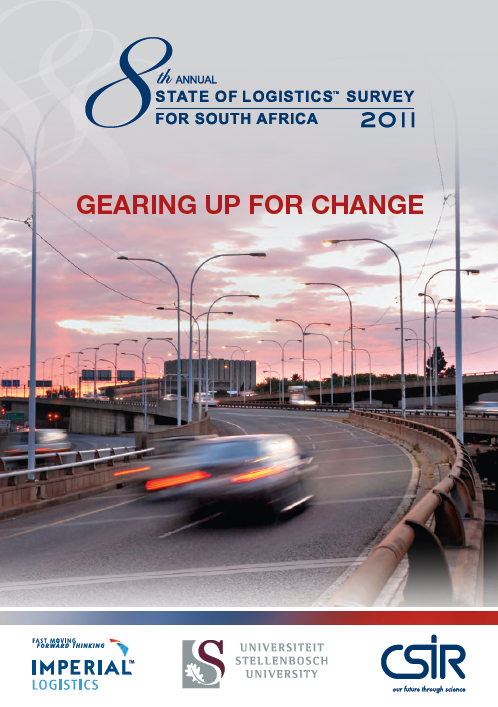
The 8th Annual State of Logistics Survey, a joint project by Imperial Logistics, the University and Stellenbosch and the CSIR reveals good news for South Africa. Logistics costs – as a percentage of GDP – have dropped to the lowest level ever at 12.7%. The in-depth report, which is available online at http://www.csir.co.za/sol/, provides some fascinating insights from some of the industry’s logistics thought leaders.

Transport costs are singled out as the most significant factor impacting the country’s logistics costs, comprising 53.2% of the logistics bill. “The marked impact of the 11% fuel price increase between 2009 and 2010 is no surprise considering the fuel price is the primary transport cost driver,” says Zane Simpson of the University of Stellenbosch. “Had the fuel price remained as it was in 2009, total transport costs in 2010 would have been R5.8billion less, consequently putting logistics costs as a percentage of GDP at an even more favourable 12.5%.” Transport costs as a percentage of total logistics costs would then have been 52% instead of 53%.

Globally, transport costs as a percentage of logistics costs are less than 40% which makes South Africa’s percentage relatively high. “For logistics to become a competitive weapon for South Africa, change is required,” said Cobus Rossouw, chief integration officer of Imperial Logistics. “South Africa is a leader in complex, dynamic logistics and has achieved success despite geographical impediments, severe skills shortages and lack of economies of scale “South Africans need to recognise that we are and can be counted among the best in logistics. And while we will always have much to learn from others, we need to recognise that we also have a lot to offer.” Source: CargoInfo.co.za

Importers and Exporters may see doubled freight rates by 2015

Get ready for a crazy roller coaster ride…As is already well known, the current situation in the shipping world is that there is a large lack of demand against the current overall supply of container space. Today, the current fleet capacity is around 15.5 million TEUs. Since 2005, the total capacity has roughly doubled – literally.

Because of the imbalance of supply/demand, carriers are losing blood and even declaring a negative balance sheet for end of 2012. This situation pushes them to the dilemma of getting bigger or getting smaller. Getting bigger means buying new, larger ships. These ships allow carriers to improve their cost effectiveness, work with smaller crews and lower their capital costs. On the other hand, some carriers are getting smaller; serving more niche markets where larger vessels will not call since that will reduce the efficiency of the vessel. You can imagine that a 15,000 TEU ship will not make 3 ports in the same country – if that country is not China.

These are the things we see and hear everyday. However a more important game is being played behind the scenes which has a crucial effect on the whole industry. According to Bloomberg; DNB ASA, the world’s largest arranger of shipping loans, expects the shipping industry to have a funding gap of $100 billion by 2015, as European banks are reducing their support to maritime transport. Even if US and Asian banks have an increased interest on maritime loans; EU banks account for 90% of the global ship lending. Considering net shipping loan losses at Nordea Bank AB (NDA), the world’s No. 4 shipping lender, tripled to 135 million euros ($179 million) last year because of “weak market conditions” and “a general decline in vessel values”, everyone will be thinking twice before granting a loan. In addition to that, since there will be less vessel orders with reduced prices, it will be forcing some yards to close in the following 12 to 18 months.

How is this going to affect exporters/importers? That’s our major question of course. Considering several factors; the EU Crisis, US getting out of recession, Arab spring is over; it will take another couple of years to get on track for sure. According to HSBC Global Connections, despite the current climate, the overall trend for international trade is positive with growth acceleration sooner than expected from 2014, than 2015. Over the next 5 years an annualized growth rate of %3.78 is forecasted for international trade. The main countries that will be carrying the growth are China and India, and China is expected to have an annualized growth of 6.60% in imports and 6.61% on exports; while India is expected to have 6.81% growth in imports and 7.60% in their exports from 2012 to 2016.

Now, according to 2010 stats, worldwide container traffic reached 560 million TEUs – an all-time high. China & Hong Kong Ports handle close to 169 milllion TEUs, 18% of this traffic. We need to keep in mind though, this is not only China exports/imports but also transshipped cargo that goes via those ports to other Asian nations.

With that in mind, if we take the growth rate with an average 6% for that region and multiply this with 169 million, we come up with a possible increase of 30 million TEUs annually and 500,000 TEUs weekly basis increase only in the region that handles %18 of global trade.Now, lets go back to the supply side. The major banks will be reducing loans, there will be less ship orders and there will be less ship yards to build new ships. How is this going to affect the years 2014-15 and later?

Can Fidan believes very tough years will come for exporters/importers in the sense of shipping costs and finding available space. Prepare to see more of the complaints from exporters not being able to find space and getting asked to pay very high freight charges like we were seeing in 2010. However, this time the difference will be, there won’t be any idle vessels sitting in Singapore or any new ordered vessels to come in and let everyone breath. Considering today, this sounds improbable… Well? the facts are out there and they show that the roller coaster ride we are on will just get crazier. Source: Can Fidan, MTS Logistics

Tolls ‘slush fund’ a threat to US trucking

US TruckingThe American Trucking Association slammed the “irresponsible behaviour of some tolling authorities which, along with complicit state officials, seemingly view toll revenue as a slush fund for investment in all manner of projects, programmes and activities which have nothing to do with maintaining their highways, bridges and tunnels”.

The Chief Financial Officer of National Freight Incorporated (NFI), told last week’s hearing of the US Senate Commerce, Science and Transportation Committee’s Subcommittee on Surface Transportation and Merchant Marine Infrastructure, Safety and Security that New Jersey-based NFI had paid $14 million in tolls last year. He said that as a result of this his company has been forced to re-route their trucks to less efficient secondary roads, which raises costs and increases congestion and safety concerns.

Further increases planned for tolls on the six interstate bridges and tunnels between New York and New Jersey, operated by the Port Authority of New York and New Jersey (PANYNJ), would by 2015 raise the charges by 163%, to a total of $105 per truck – nearly three times higher than any other toll in the country. By 2015, a trip from Baltimore to New York City will cost a five-axle truck more than $209 in tolls.

He said the authority had refused to reveal where the extra revenue would be spent, but it was clear that billions would be diverted to major PANYNJ projects like raising the Bayonne Bridge to accomodate bigger ships at the port. He added: “The most egregious use of toll revenue is the approximately $11 billion dedicated to the completion of the World Trade Center office buildings. It is unclear why trucking companies and commuters are being forced to foot the bill for a real estate project.”

He told the hearing: “The process and the outcome points to an authority with unchecked power that shows little regard for the impacts of its decisions on the community which it purports to serve.”

The tolls distorted the market by penalising vehicles that use toll roads and rewarding those diverting to local routes. No doubt this article strikes a ‘tender nerve’ for truckers and commuters in South Africa around this time – SANRAL vs Public. Source: www.ifw-net.com

Border Posts, Checkpoints and Intra-African Trade

You may recall earlier this year the African Development Bank and the WCO agreed to a partnership to advance the economic development of African countries by assisting Customs administrations in their reform and modernization efforts.

The AfDB’s regional infrastructure financing and the WCO’s technical Customs expertise will complement each other and improve the efficiency of our efforts to facilitate trade which includes collaboration in identifying, developing and implementing Customs capacity building initiatives by observing internationally agreed best practice and supporting Customs cooperation and regional integration in Africa.

In addition, the partnership will seek to promote a knowledge partnership, including research and knowledge sharing in areas of common interest, as well as close institutional dialogue to ensure a coherent approach and to identify comparative advantages as well as complementarities between the WCO and AfDB. Customs professionals, trans-national transporters and trade practitioners will find the featured article of some interest. It provides a synopsis of the key inhibitors for trade on the continent, and will hopefully mobilise “African expertise” in the provision of solutions and capacity building initiatives.

How to resolve regional transport problems?

The Freight-Intra Africa Trade Conference in Pretoria, this week, has featured several news articles in the local media, and no doubt some foreign tabloids as well. The Minister of Transport has cleared up the cause of the ills plaguing cross border and regional transport. At least we are now fully informed that [historical] design issues and operational inefficiencies at South Africa’s landborders, and Beit Bridge in particular, are the fundamental causes of under-performance in intra-Africa trade.

“In most cases, the delays at the borders are caused by operational inefficiencies, which result in the duplication of processes. This is a serious cost to the economies of the countries that conduct their trade through such border posts,” the Minister said.

One has to seriously question who advises the minister which leads to such statements, and whether or not these advisers have visited any land borders in recent months.

Now the remedy – Government has budgeted and approved R845-billion for infrastructure development over the medium-term, with a significant proportion, about R262-billion of this investment being earmarked for transport infrastructure and logistics projects. Can anyone question government’s commitment in this respect? Not really. However, the Minister was quick to point out government would resolve inefficiencies at the borders by establishing a mechanism that will bring all border entities under a single command and control structure to address the fragmentation in border operations. “The ultimate vision is to create one-stop border operations to facilitate legitimate trade and travel across the borders”.

The proliferation of border management agencies (integration of enforcement and regulatory authorities under one umbrella) – which has seen the demise of many customs administrations over the last decade – has not proven an effective vehicle to manage cross border travel and trade. It is difficult to see how facilitation procedures can co-exist under a command and control environment. What the situation does create is the opportunity to consolidate a budget for security expenditure. Various Sources: Engineering News, Business Live, Fin24.com and personal opinion.

SA truckers – fines for cross-border permit infractions

Assuming that the RSA government favours the drive for increased inter-Africa trade and free movement of goods and conveyances, perhaps its time for transport officials to look beyond the letter of the law and automate their process.

South African truckers have been warned not to travel without their cross-border permits as they could face hefty fines. According to the Cross Border Road Transport Agency (CBRTA), trucks dispatched to the border ahead of a permit being issued could be fined as the permit has to be in the truck at all times. “According to the legislation anyone with the intent of crossing the border must be in the possession of these permits,” said CBRTA CEO Sipho Khumalo. “That means operators cannot dispatch their trucks to the border and then send the permit with a car once it has been issued later to catch up with the truck. That is against the law.” Source: FTW

Customs Modernisation Release 3 – SACU

Saturday 11 February 2012 sees the implementation of new modernised customs procedures and formalities at South Africa’s first SACU land frontier office – Kopfontein – border between South Africa and Botswana.  While enhancements are slanted more in terms of internal SARS customs procedure, SACU traders will no doubt experience some anxiety with the transition. For the first time SARS Customs Modernisation impacts directly on traders and neighbouring Botswana Customs operational procedures in a significant way, which will fashion operations at all remaining inland border posts of the Customs Union. Over the last few months SARS has worked with trade, the Botswana customs authority as well as the business chamber in Botswana concerning the intended changes and their impact on stakeholders. The implementation ushers in cross-cutting changes for customs staff operationally, new technology as well as legal and policy changes. In the case of the latter, a further element of the draft Customs Control Bill is introduced whereby foreign business operators (importers, exporters and road carriers) must be registered with SARS to perform customs transactions in South Africa. This is perhaps the single issue which has had ramifications for parties who regularly cross the border between Botswana and South Africa. Hopefully recent iterations of notices and explanations have helped clarify the SARS requirements. (See the SARS Customs Modernisation webpage).

Other modifications and changes include –

Elimination of paper clearance documents – this is a significant departure from traditional SACU processing where all member countries have relied on the Single Administrative Document (SAD) to facilitate intra-SACU clearance. With the bulk of clearances expected to be electronic, SARS will now only print a customs notification (CN1) which will specify the status and outcome for each clearance. This the trader will use in support of customs clearance in Botswana. SARS will therefore no longer stamp and authorise hardcopy SAD500 clearance documents. Of course, there is nothing which stops a trader printing the SAD500 for cross border purposes, only SARS will no longer attest these. As concerns SARS VAT requirements, arrangements will be made for traders to submit the CN1 for purposes of VAT returns. Details on this to follow.

Electronic supporting documents – already tried and tested at sea and airports across South Africa, traders no longer need to carry on their person hard copy clearance supporting documentation , i.e. invoices, worksheets and packing lists. These are only required should SARS indicate via electronic message that a consignment requires further scrutiny. Customs brokers and traders using EDI will in most cases have the SARS e@syScan facility available on their computer systems which makes it relatively simple and easy to scan, package and submit to SARS. In the event a trader cannot perform this electronically, he may approach any of the 4 Customs Hubs (Alberton, Cape Town, Durban, and Doringkloof) across the country, to have these scanned and uploaded by SARS. Alternatively, these can of course be delivered to the border post for manual processing and finalisation of a customs intervention. Supporting documents are linked to a unique case number which SARS notifies to the trader in the event of a risk.

Clearance processing – SARS has centralised its backend processing of clearances where goods declarations are now processed off-site at one of the 4 Hubs. No longer are clearances processed at customs branch office. All goods declarations – whether electronically submitted or manually captured – are routed to a central pool for validation, verification and assessment if flagged by the risk engine. In the case of land borders all clearances once successfully processed will receive a ‘Proceed-to-border’ message implying that the road carrier may commence delivery to the border. A key feature of the new clearance process is the availability of Customs Status Codes. These codes are initiated by the customs system at specified points in the process to alert the declarant of the status of his/her transaction. These status’s also indicate the follow-up required of the declarant to bring the transaction to a state of finality.

Automated Cargo Management (ACM) – All road carriers are now required to submit their road manifests electronically, via EDI, to the Customs ACM system. For now, SARS will not electronically match the manifest against the declaration, but will monitor compliance and data quality of electronic manifest  for a period of time before initiating real-time matching and acquittal. This will invoke a significant responsibility on both trader and road remover to ensure that they both provide credible data to customs otherwise delays will occur. Upon arrival of the cargo at the border, the driver presents a printout of his electronic manifest. The manifest number is ‘checked in’ by a customs official which in seconds brings up all associated goods declarations linked to the manifest number on the system. The customs officer is able to determine the overall risk status of the vehicle. Where no risks are present a status notification (CN1) is printed for each goods declaration, and a gate pass (CN2) is handed to the driver permitting him to exit the customs controlled area. The future real-time matching will comprise a combined risk assessment of both manifest and declaration information that will result in a single risk outcome. Such risk assessment will include both fiscal and security compliance features thereby bringing SARS in line with international supply chain security standards. Going forward, risk assessment will accommodate ‘all-of-government’ requirements ensuring that all regulatory measures and associated risks are administered in a single instance obviating the need for successive, time-consuming inspections and costly delays.

Automated Customs Inspection – Following its recent introduction at the Beit Bridge border post, the new hand-held inspection tool, conveniently developed on an iPod, allows the customs border control official to electronically access, capture and upload an inspection outcome to the central customs system. This significantly improves the efficiency for this time-intensive activity where the officer can initiate a status up date electronically at the inspection site, where previously the declarant would have to wait for the outcome of the manual inspection report and release note. What’s more, the customs officer has access to the underlying clearance data and can even activate the camera function and capture visuals of suspect cargo which can be appended to an inspection case for verification by higher authority or historical reference value.

There are additional features and functionality to be introduced at Kopfontein and all remaining border posts over the next few months. These relate to improved revenue accounting, new trader registration and licensing system offering online application and approval, and a new traveller and temporary import/export processing. More about this in a future post.  For traders, the benefits of the new solution at SACU land borders aim to remove random and unwarranted intervention by customs. All activities are risk driven via a secure ‘get next’ selection function ensuring that internal integrity is maintained and only ‘risk-related’ consignments/transactions are dealt with. Please visit the SARS Modernisation webpage for all the latest updates and notices on modernisation releases.

Non-declaration of hazardous containers

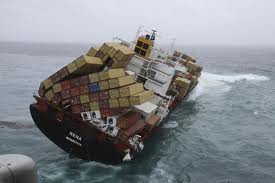
MV Rena off New Zealand Coast of TaurangaIn this age of heightened security it remains remarkable how carriers still willfully take custody and/or load ‘goods’ for which the contents thereof are unclear. True, carriers and intermediaries (fowarders/brokers) will correctly point at the ‘shipper’ (exporter) for not disclosing the details correctly. It also needs be mentioned that the cargo handler (packer of the container) is really key in all of this. It is this entity who has knowledge of what is being stuffed into the container. There is much debate on this matter, and a whole lot more work to be done in ultimately pinning down the responsible party. Given this state of affairs, most Customs administrations are happy to lay the responsibility and liability for lawful clearance on the party responsible for cargo reporting, i.e. the entity which ‘cuts’ the manifest. I dare say that the terms of sale (incoterms) also have an influence in terms of risk and liability here which adds some complexity to decision-making in time of misfortune. Take for instance the recent grounding of the M/V Rena off New Zealand earlier this month, where it has recently come to light that the wreck contains at least 21 containers which were not properly recorded on the ship’s manifest. Read articles below.

Upgrades and Downgrades

GNU-FDL, selbst fotografiert

Image via Wikipedia

The global shortage of intermodal shipping containers is making the companies that lease them rich. In a year that will probably go down as the worst in shipping history, a small group of companies is making a fortune. These are the companies that buy and then lease to major shipping lines the humble “box,” or intermodal shipping container. You know, those ugly rust- or gray-colored containers that sit atop 18-wheelers and block your view of the road and cause massive congestion and beaucoup emissions? And I bet you can’t name a single one of these companies. I couldn’t, until I started researching this article. They’re not exactly household names, but they should be for any investor worth his or her salt. Read the full article here! Source: The Maritime Executive

Mandatory reporting of Cargo Carrier Code

On Sunday, 31 July 2011, SARS will implement a stepping stone towards full cargo/declaration matching and acquittal. All goods declarations must reflect a valid cargo carrier code as part of the house waybill number data field.  The requirement was implemented successfully in the sea cargo environment some years ago with the launch of the old Manifest Acquittal System; the challenge now lies largely within the air cargo community.

The ‘House Waybill” data field comprises two parts – The first part must reflect the Cargo Carrier Code (Eight-digit Alpha Numeric Code). This is the code assigned by the Automated Cargo Management (ACM) system to the entity who issued the House Bill of Lading e.g. the Groupage Operator or his appointed agent in the Republic. The second part must reflect the actual number of the transport document.

By way of faciliatory gesture to legitimate importers who may be blissfully unaware of the non-compliance of their forwarding agent / carrier, SARS will allow the insertion of a specific code “ZZZ99999” for non-compliant cargo reporters. This code must only be used in the event the cargo reporter is not registered with SARS for submission of cargo reports to ACM. The facility is a temporary measure which will be withdrawn after a short period.

In the event a declarant inserts the aforementioned code, the associated declaration will be selected by the customs system for scrutiny by a customs official. In order to remedy any delay to an otherwise legitimate import, the unregistered cargo reporter must immediately identify themselves to SARS by way of disclosing their company name and contact details to enable SARS to expedite registration of the entity for ACM compliance. The sooner this is accomplished the quicker the importer can obtain release if there is no further outstanding impediment.

Subsequent registration of the non-compliant carrier could also result in the imposition of a penalty against the entity concerned. Therefore as of 31 July 2011, declarants will need to be more vigilant concerning the status/standing of their local forwarding agent in regard to compliance with SARS reporting requirements. Once the temporary dispensation above is withdrawn, the effect of a customs intervention will directly impact on the release of an importer’s goods.

Freight forwarders, Customs Brokers and Service Providers are urged to make their clients and business partners aware of the new developments to mitigate disappointment.  For more information refer to the SARS Modernisation webpage.