Port-to-Hinterland…gearing up for growth?

Proposed Durban-Free State-Gauteng Logistics and Industrial Corridor Plan (SIP2)

Proposed Durban-Free State-Gauteng Logistics and Industrial Corridor Plan (SIP2)

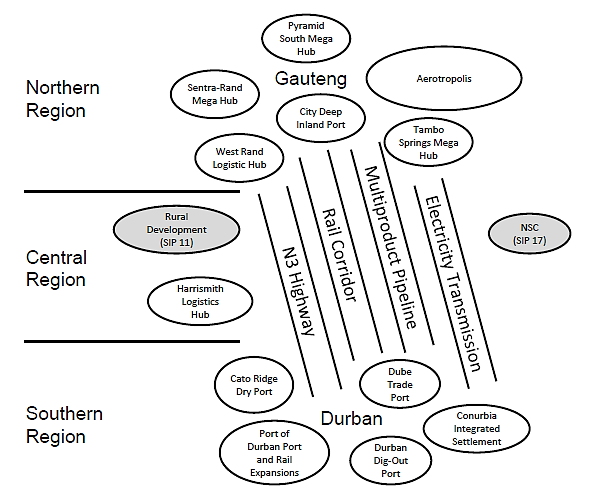
Notwithstanding on-going discontent amongst industry operators in regard to proposed legislative measures mandating customs clearance at first port of entry, the South African government (GCIS) reports that work has already commenced on a massive logistics corridor stretching between Durban and the central provinces of the Free State and Gauteng. Most of the projects that form part of the second Strategic Infrastructure Project (SIP 2), also known as the Durban-Free State-Johannesburg Logistics and Industrial Corridor, are still in the concept or pre-feasibility stage, but construction has already started on several projects.

These include:

  • the building of a R2,3 billion container terminal at City Deep
  • a R3,9 billion project to upgrade Pier 2 at the Port of Durban
  • R14,9 billion procurement of rolling stock for the rail line which will service the corridor.

Work has also started on the R250 million Harrismith logistics hub development to set up a fuel distribution depot, as well as on phase one of the new multi-product pipeline which will run between Johannesburg and Durban and transport petrol, diesel, jet fuel and gas.

The aim of these projects and others which form part of SIP 2, is to strengthen the logistics and transport corridor between South Africa’s main industrial hubs and to improve access to Durban’s export and import facilities. It is estimated that 135 000 jobs will be created in the construction of projects in the corridor. Once the projects are completed a further 85 000 jobs are expected to be created by those businesses that use the new facilities. Source: SA Government Information Service

Interested in more details regarding South Africa’s infrastructure development plan? Click here!

MOL Comfort – off to Davey Jone’s Locker!

Ironically, nature always has the last say. Mitsui OSK Lines has confirmed that the fore section of MOL Comfort has sunk in the Indian Ocean despite salvage and coastguard teams battling for seven days to contain a blaze that broke out on board after the vessel split in heavy seas.

MOL Comfort sank in high seas near 19º56’N and 065º25’E in waters around 3,000 metres deep at about 0400 hrs Japan standard time on 11 July, MOL said in a statement .

Mitsui has reported this fact to the flag state of Bahamas, Indian authorities and parties concerned, and will keep the salvage team at the scene to monitor if there is any oil leakage and floating containers. The salvage team comprises Smit Salvage, which was overseeing the operation from Singapore, and Nippon Salvage.

The Indian Coast Guard sent a patrol vessel with firefighting capability two days go to help put out the fire.

The 2008-built, 8,110 TEU ship ruptured on 17 June off the coast of Yemen while en route from Singapore to Jeddah with some 4,372 boxes on board. It split in two the following morning and the stern section sank after drifting for 10 days.

Tugs reached the forward section, which still had much cargo intact, on 24 June, which slipped free from its tow wire on 1 July, but was reattached on 3 July. Adverse weather has hampered the salvage operation since it began. Source: Mitsui. Pictures courtesy gCaptain.com

What’s In Store for ACE?

ACE_image_csonLast week, the National Customs Brokers & Forwarders Association of America, Inc. (NCBFAA) hosted a conference in Baltimore, MD targeting software developers interested in obtaining more information about US Customs and Border Protection’s (CBP’s) Automated Commercial Environment (ACE) and upcoming technical changes related to the PGA Message Set, Entry Summary Edits, Automated Corrections/Cancellations and AES Re-Engineering/Manifest Baseline development. During the conference, CBP made two important announcements which were heard and noted first hand from an Integration Point representative. These two announcements included:

  • CBP announced that it plans to mandate the use of manifest and cargo release in ACE by December 31, 2015 and mandate the use of ACE by December 31, 2016. CBP also provided a tentative release schedule for seven deployments that will lead up to this mandate.  Each deployment will consist of one or two increments, and each increment will span over a period of twelve to thirteen weeks. On this road map, CBP announced some exciting functionalities to be released in the near future such as automated cancellation and/or correction of entries, integration of simplified entry with other modes of transport and certifying simplified entry through summary. In addition to the enhanced simplified entry process, CBP also gradually plans to include the validations that were not initially included in ACE entry summaries.
  • CBP is also working on the reengineering of AES and pilot programs of entry data collection for various Participating Government Agencies such as the US Environmental Protection Agency (EPA) and US Food Safety and Inspection Service (FSIS) and CBP plans to deploy this later on in 2013 and early in 2014.

Now there is relevance in all of this. It reinforces the growing importance of Customs’ focus on “cargo management”.  Far too much emphasis is placed on the goods declaration alone. This is not only short-sighted but demonstrates an ignorance of the global supply chain. Without the ‘cargo report’ (manifest) the goods declaration is little more than a testament of what is purported to have been imported and exported.

The trouble with Safety Sheets

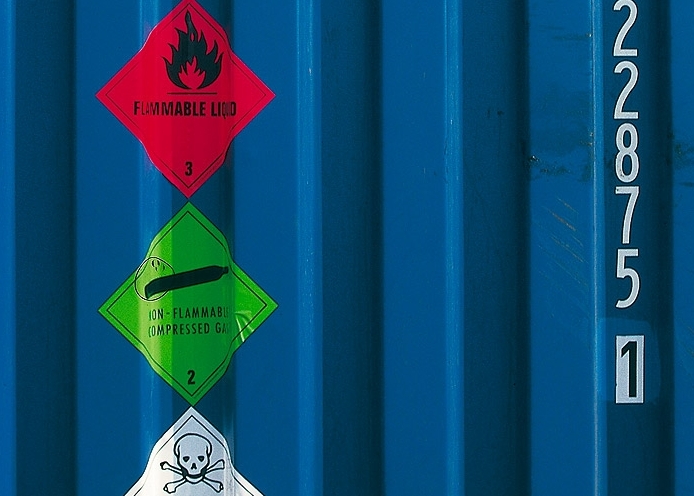
The TT Club says that the abuse of safety data sheets (SDS) for cargo bookings is “uncomfortably frequent” leading to the view that shipping executives feel “surrounded by criminals”.

The following expose is no less pertinent to Customs risk-profilers.

A recent TT Club claim relating to a fire onboard a ship highlighted a number of issues. The insurance expert argues that differing global format standards and the ease of creating “viable” SDS are only serving to make cargo screening more difficult.

What’s really in the box asks the TT Club.  Photo: Port of Hamburg (Credit - Port Strategy)

What’s really in the box asks the TT Club. Photo: Port of Hamburg (Credit – Port Strategy)

In the claim, a cargo was booked, packed, declared and documented by a shipper as ‘Hookah burner (C.Tablets)’. When the ship caught fire at sea, significant costs were incurred by the ship because of mis-declared cargo, which was in fact activated carbon/charcoal.

Worryingly, when this was investigated further, the shipper had produced two safety data sheets – one was correct, but the other suggested that activated carbon was not considered to be a dangerous good.

TT Club argues that the situation is made far more difficult by the lack of consistency between the various governments about when SDS should be reviewed – Australia stipulates every five years, Canada every three and the EU Regulation recommends checking at “regular intervals”.

Peregrine Storrs-Fox, risk management director, TT Club, told Port Strategy: “We’ve identified two [problem]areas – firstly at the point of booking/contracting with a carrier and secondly post event. Conversations with a number of liner shipping companies confirm that the information given at the time of booking/contracting is frequently suspect. In one instance a single SDS had been presented for about 50 different cargoes over a period.”

Although this is an issue between shipper and carrier, which includes forwarders/logistics operators, there is wider issue here for port operators. During an incident, the port may be supplied with SDS in order to respond appropriately – so there is a risk associated with that too.

The advice to freight forwarders, operators and carriers from the Club is to “Be constantly vigilant and question anything that seems strange or suspicious”. The penalties for non-compliance can be severe. Source: PortStrategy.com

Ambitious Port Plan for Walvis Bay


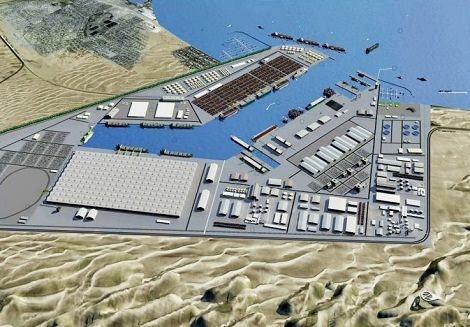
Computer-generated imagery of what the Walvis Bay North Port will look like when built. Image courtesy Namport.

Computer-generated imagery of what the Walvis Bay North Port will look like when built. Image courtesy Namport.

Far from simply developing a new container terminal, Namport could be bringing forward plans to build an ambitious new port at Walvis Bay to accommodate an expected increase in container and other traffic in the near future.

Originally intended as a long-term proposal for the Port of Walvis Bay, the plans may have to be brought forward and, coupled with finance that could come from China, the Namibian port is set to become a real rival for business in the southern and central African region.

According to reports in The Namib Times the cabinet has discussed and in principle given the go-ahead to create a new harbour on the northern side of the existing port. It said the new harbour is part of Namport’s strategy of positioning Walvis Bay as the premier port in the region. The plans will require dredging of a deep entrance channel and excavating the land to clear space for the new deepwater basin along with 10 kilometres of quayside for ships to berth.

If it was necessary to have proof that this development has the potential of shaking up the southern African region, it came in the form of a warning given yesterday by Transnet Chief Executive Brian Molefe at a community briefing session in Durban, in which he said, while justifying the need for the Durban dig-out port to go ahead, that if it was delayed or not built then Durban would lose out to other African ports. As an example he cited Walvis Bay where he said ambitious plans to build a large container port had been given the go-ahead. Source: Ports.co.za

Discovery Channel to air six-part series on construction of the world’s biggest container ship

Triple E - Picture courtesy: Mearsk

Triple E – Picture courtesy: Maersk


A TV channel is to broadcast a series of six programmes showing how the world’s largest vessels – Maersk Line’s 18,000teu Triple-E containerships were built.

Maersk has given the Discovery Channel access to every stage of the Triple-E build; from the design of the vessel’s unique hull to the construction of the enormous engines and propellers, from the environmental improvements and safety systems to the ship’s naming ceremony and maiden voyage on the Asia-Europe route.

The series will also focus on lives of some of the people involved, including the naval architect, the site team supervising the build and the captain as he prepares for the maiden voyage.

“The Triple-E is an exceptional ship, in terms of its size as well as its energy saving technology and design. We’re excited about these vessels and proud to have Discovery Channel as a partner for showing how it is built and the people and passion behind it,” says Morten Engelstoft, Chief Operating Officer, Maersk Line.

The World’s Largest Ship will air on Discovery Channel in November, but to save you waiting all that time, Maersk Line has made available a time lapse video of the building of the Triple-E, that consists of 50,000 photos taken over a three-month period. Click here to watch video clip!

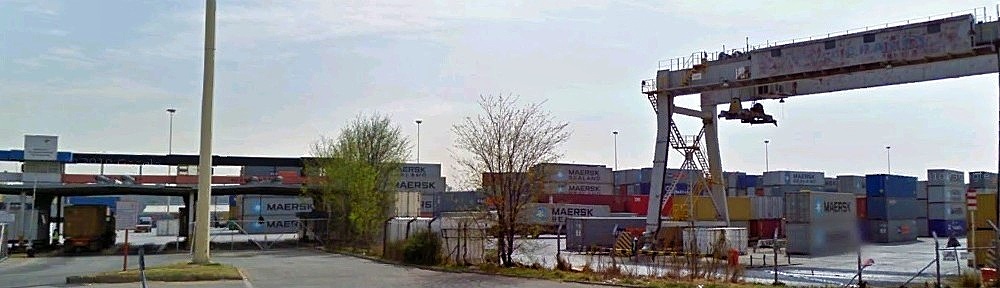
City Deep Inland Terminal [port] to be hit hard by Customs Bill

Trucks at Transnet Freight Rail's City Deep Terminal (Engineering News)

Trucks at Transnet Freight Rail’s City Deep Terminal (Engineering News)

Following up on last year’s meeting (click here!) of the minds, convened by the JCCI, a recent meeting in Johannesburg placed fresh emphasis on the dilemma which impending changes contemplated in Customs Draft Control Bill will have for the import and logistics industry in particular. The following report carried by Engineering News highlights trade’s concerns which are by no means light weight and should be addressed with some consideration before the Bills come into effect. Gauging from the content below, there is a clear disconnect between business and policy makers.

The closure of Johannesburg’s inland port seemed to be a “done deal” as Parliament deliberated the recently tabled Customs Control Bill that would leave the City Deep container depot invalid, Chamber of Commerce and Industry Johannesburg (JCCI) former president Patrick Corbin said on Friday.

The promulgation of the South African Revenue Services’ (Sars’) newly drafted Customs Control Bill, which, in conjunction with the Customs Duty Bill, would replace the current legislation governing customs operations, would have a far-reaching impact on the cost and efficiencies of doing business in South Africa and other fellow Southern African Customs Union (Sacu) countries, he added.

The Bill, which was the product of a three-year development process within the National Economic Development and Labour Council, declared that all imported goods be cleared and released at first port of entry. This was part of efforts by customs officials and government to root out any diversion and smuggling of goods, ensure greater control of goods moving across borders and eliminate risks to national security.

Speaking at the City Deep Forum, held at the JCCI’s offices in Johannesburg, Corbin noted, however, that City Deep had operated as an inland port for the past 35 years, easing the load on the country’s coastal ports, which were already strained to capacity. Despite customs officials assuring the chamber that the operations and facilities in City Deep/Kaserne would retain its licence as a container depot, he believed customs had failed to recognise the critical role City Deep had played in lowering the cost of business, easing the burden on South Africa’s ports and ensuring ease of movement of goods to neighbouring countries. As customs moved full responsibility of container clearances to the ports, port congestion, inefficiencies, shipping delays and costs would rise, and jobs would be lost and import rail volumes decreased, he noted.

Economist Mike Schussler added that the closure of the City Deep inland port operations would add costs, increase unreliability and induce “hassles”, as the Durban port did not have the capacity to handle the extra volumes and its productivity and efficiencies were “questionable” compared with other ports.

“The volume of containers going to overstay or being stopped for examination in City Deep [will] need to be handled by [the coastal] ports. If they can’t cope with the volume at the moment, how are they going to handle increased volumes,” Iprop director Dennis Trotter questioned. He noted that only the containers cleared 72 hours prior to arrival would be allocated to rail transport. Those not cleared three days before arrival would be pushed onto road transport to prevent blocking and delaying rail operations.

This, Schussler said, would also contribute – along with port tariffs and the cost of delays – to higher costs, as road transport was more expensive than rail.

He pointed out that South Africa was deemed third-highest globally in terms of transport pricing. It would also result in less rail capacity returning for export from Johannesburg, further leading to increased volumes moving by road from City Deep to Durban.

Sacu countries, such as Botswana, would also be burdened with higher costs as they relied on City Deep as an inland port. Trotter noted that the region would experience loss of revenue and resultant job losses. Over 50% of South Africa’s economy was located closer to Gauteng than the coastal ports. Johannesburg alone accounted for 34% of the economy, said Schussler, questioning the viability of removing the option of City Deep as a dry port.

However, unfazed by the impending regulations, Transnet continued to inject over R1-billion into expansion and development opportunities at City Deep/Kaserne. Corbin commented that Transnet had accepted the assurances from customs that “nothing would change and the boxes would still be able to move seamlessly once cleared.” The City of Johannesburg’s manager of transport planning Daisy Dwango said the State-owned freight group was ramping up to meet forecast demand of the City Deep/Kaserne depot.

The terminal’s capacity would be increased from the current 280 000 twenty-foot equivalent units (TEUs) a year, to 400 000 TEUs a year by 2016, increasing to 700 000 TEUs a year by 2019. Transnet aimed to eventually move to “overcapacity” of up to 1.2-million TEUs a year. Dwango said projections have indicated that by 2021, the City Deep/Kaserne terminals would handle between 900 000 and one-million TEUs a year. Source: Engineering News
Hi-tech shippers switch from air to ocean

sea_freight_trackingCargo traditionally sent by air is increasingly switching to sea as shippers capitalise on the mode’s lower transport costs – a trend expected to continue over the coming years.

Lloyds List reports that several leading freight forwarders reported in their full-year results that certain cargo types — particularly hi-tech and telecoms — switched from air freight to sea freight last year.

DHL Global Forwarding CEO Roger Crook said the switch was the result of a price difference of 10 times between the two modes of transport. He said: “Obviously many companies are under cost pressure and looking to reduce total supply chain costs. Therefore, they are buying and moving by ocean freight, and particularly it is happening in the technology sector.”

Panalpina chief operating officer Karl Weyeneth said he expected the trend to continue. “There is a maximum shift you can achieve, depending on what industry you are talking about,” he said.

“But I believe that now supply chains are used to working with more ocean freight, this impact will stay for at least a couple of years, until the economy has really recovered, then it will start to shift back again.”

“We really see this as an important factor in our market for the next two to three years.”

Kuehne+Nagel (KN) chief executive Reinhard Lange said the decision on whether cargo was suitable to be switched from air to sea partly came down to the weight of the shipment. He said that if two products had the same market value, but one weighed less than the other, the overall cost impact of flying was less for the lighter cargo because air cargo costs were based on weight. He said this explained why hi-tech products had transferred to ocean freight while lighter products, such as pharmaceuticals, had, in the main, continued to utilise air freight.

The forwarders said the impact of the switch from air to ocean freight was partly to blame for a decline in air freight volumes last year, while container volumes continued to grow. In its full-year results, Panalpina saw air freight volumes decline 6% last year while ocean freight volumes grew by the same amount. Meanwhile, DHL Global Forwarding’s air freight volumes slipped 5.3% in 2012 with ocean freight increasing 4.3%, while KN saw its air freight volumes grow by 2% while ocean freight increased 6% year on year. Source: LloydsList

eAWB – Biggest achievement in standard-setting in air freight in 20 years

freightStandardization of the format for the e-AWB is expected to accelerate the industry’s move toward paperless transportation. Before this, Leger says, carriers were confronted with signing hundreds or even thousands of separate bilateral agreements with individual forwarders. He went on to describe e-AWB “the biggest achievement in standard-setting in air freight in 20 years.”

Following a year-long development process culminating in three months of trials that involved 15 carriers and eight forwarders, the IATA/FIATA Consultative Council (IFCC) endorsed the multilateral e-AWB agreement in February with some minor amendments. IATA formally adopted the agreement as its new Resolution 672 at the 35th Cargo Services Conference (CSC/35) in Doha, immediately ahead of the World Cargo Symposium. Click Here! to view the new Resolution.

The agreement was this week filed with governments, from whom IATA is seeking expedited approval in 30 days. “We hope to go live before mid-year,” Leger says. “We see e-Freight as essential for the future competitiveness of air cargo, and the e-AWB is the cornerstone of e-Freight. Agreeing the multilateral e-AWB is a game changer, and should go a long way toward reaching our target of the 20 percent e-AWB adoption rate we have set as our target for 2013.”

While early adopters in the airline community, including Cathay Pacific, Singapore Airlines, Korean Air and Singapore Airlines, overcame the logistical obstacles, they commented that having to draft separate bilaterals with forwarders would prevent wider implementation and delay the e-Freight objective.

“The standard bilateral that we initially developed, which allowed forwarders to make their own amendments, still left the industry facing extra costs but rapidly proved the concept,” Leger says. “Cathay adopted it in 2011 and then, in the middle of last year, we started work on the multilateral agreement.

“There were long discussions between carriers and forwarders as we tried to come up with an acceptable formula. This did not concern technical or operational aspects, but was more to do with what the governing law should be. Each nationality wanted to follow its own jurisdiction and consensus was necessary.”

As soon as trials began in October, Leger says the participants could see the value of the multilateral agreement. IATA hopes it will acts as the springboard for its ultimate target of 100 percent conversion to e-AWB by 2015. Source: Air Cargo World News

Debate or Mitigate?

City Deep1_SnapseedBrowsing my various sources of news I came across this article featured in the FTW Online a few weeks ago. It prompted me to post it as an item for some detailed discussion in a follow-up post. Many followers have enquired what happened to my discussion on Inland Ports and the National Transit procedure. I guess it’s now time to respond, but not just yet – perhaps after what materializes at the event below.

What will be the impact of the new Customs Bill on City Deep’s inland port status?
This is the issue to be debated at a JCCI event scheduled for March 15. “The Johannesburg Chamber has been closely involved with City Deep, our international gateway for containerised cargo, for the past 36 years,” says the JCCI’s Pat Corbin. “We have actively promoted the benefits for traders of a combined transport (multi-modal) bill of lading allowing seamless movement through the coastal ports.

“But diametrically opposed developments are taking place which could have far-reaching impact on not just the future of the dry port, the supporting logistical suppliers and local employment, but also the coastal ports and the transport mode for inland movement.”

The event will examine Transnet’s major investments in City Deep and the Durban corridor, SACD’s expanded facilities and services, and the Customs Bill – with its intended removal of inland port status. Source: FTW Online

Aerotropolis for Gauteng…stuff’s about to happen

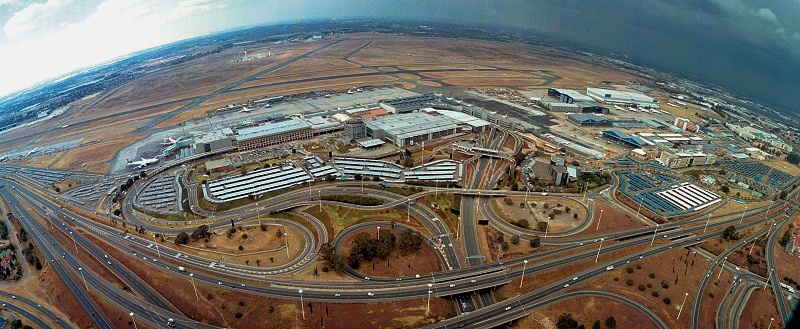
Oliver Reginald Tambo International Airport (east of Johannesburg) to become Africa's first aerotropolis

Oliver Reginald Tambo International Airport (east of Johannesburg) to become Africa’s first aerotropolis

The Gauteng Provinicial government has announced that Africa’s busiest airport, OR Tambo International Airport is set to become the location for the continent’s first aerotropolis. Work on the development of the aerotropolis, centred at OR Tambo International Airport, seeks to leverage public and private sector investment at the airport and surrounding areas. In supporting industrial development in this precinct, approval has been granted for the creation of an Industrial Development Zone (IDZ) in the area surrounding the airport. Heard this all before, but what’s different this time around?

An aerotropolis is an urban plan in which the layout, infrastructure, and economy is centered around an airport, existing as an airport city. It is similar in form and function to a traditional metropolis, which contains a central city core and its commuter-linked suburbs.The term was first proposed by New York commercial artist Nicholas DeSantis, whose drawing of a skyscraper rooftop airport in the city was presented in the November 1939 issue of Popular Science.The term was revived and substantially extended by academic and air commerce expert Dr. John D. Kasarda in 2000, based on his prior research on airport-driven economic development. Wikipedia

Jack van der Merwe, who successfully oversaw the development of the Gautrain project, has been appointed to lead the initiative of developing the aerotropolis. The proposal for the airport to become a terminal city with air, rail and road networks fuelling economic development. It is envisaged to include a commercial component, hotel, conferences, exhibitions and a residential component.

One of the key initiatives of the national government is the e-Thekwini-Free State-Gauteng freight and logistics corridor, known as the Strategic Infrastructure Project 2 (SIP2), which seeks to improve the movement of goods from the Durban port to Gauteng, and to business enterprises nationally as well as in southern Africa.

City Deep/Kazerne cargo terminals and the planned Tambo-Springs Freight and Logistics Hub are to be the focal points for the movement of goods for the export market. Phase 1 of the City Deep/Kazerne Terminal expansion and roads upgrade was underway at the continent’s largest and busiest in-land container terminal. This includes a redesign and upgrading of the roads network in and around the City Deep Terminal to provide for better flow of freight traffic and linkages with the national highways – the cost of the road works would amount to R122 million. At some point the issue of non-tariff barriers to import/export trade will need to be discussed…..and overcome.

Transnet has completed the first phase in the actual improvements of the terminal. It will be investing R900 million in upgrading the terminal. A detailed road design work, including feasibility studies and the development of a master plan, are underway for the Tambo-Springs Inland Port. Now, we’re talking…….

Gauteng  Province is to get 2 484 new modern trains as part of the Passenger Rail Agency of South Africa (PRASA) rolling stock for fleet recapitalisation and refurbishment programme.

The province will be making major investments in road infrastructure in the coming financial year and these include reconstruction and upgrading of the R55 (Voortreker Road) to a dual carriageway road between Olievenhoutbosch and Pretoria West; rehabilitation of the remaining section between Main Road and Maunde Street in Atteridgeville; reconstruction and upgrading of William Nicol Drive (K46) between Fourways and Diepsloot as well as reconstruction and improvement of the remaining section of the Old Pretoria to Cullinan Road between the Chris Hani Flats and Cullinan, among others. Wow, and the toll fees?

The department has been allocated a budget of R4.77 billion for the 2013/14 financial year. Of this amount R1.4 billion has been earmarked for roads maintenance and upgrading, R1.7 billion for public transport operations and R802 million for the running cost of the Gautrain Management Agency. Source: EngineeringNews

So, all-in-all, the above together with other recent noises of incentives and benefits for foreign and local investors in SEZs, the future holds some promise and interest…..

How much bigger can container ships get?

Check out this superb article – click here – featured on BBC News Magazine‘s website –

What is blue, a quarter of a mile long, and taller than London’s Olympic stadium? The answer – this year’s new class of container ship, the Triple E. When it goes into service this June, it will be the largest vessel ploughing the sea. Each will contain as much steel as eight Eiffel Towers and have a capacity equivalent to 18,000 20-foot containers (TEU). If those containers were placed in Times Square in New York, they would rise above billboards, streetlights and some buildings. Or, to put it another way, they would fill more than 30 trains, each a mile long and stacked two containers high. Inside those containers, you could fit 36,000 cars or 863 million tins of baked beans.

The Triple E will not be the largest ship ever built. That accolade goes to an “ultra-large crude carrier” (ULCC) built in the 1970s, but all supertankers more than 400m (440 yards) long were scrapped years ago, some after less than a decade of service. Only a couple of shorter ULCCs are still in use. But giant container ships are still being built in large numbers – and they are still growing.

It’s 25 years since the biggest became too wide for the Panama Canal. These first “post-Panamax” ships, carrying 4,300 TEU, had roughly quarter of the capacity of the current record holder – the 16,020 TEU Marco Polo, launched in November by CMA CGM.

In the shipping industry there is already talk of a class of ship that would run aground in the Suez canal, but would just pass through another bottleneck of international trade – the Strait of Malacca, between Malaysia and Indonesia. The “Malaccamax” would carry 30,000 containers.

There are currently 163 ships on the world’s seas with a capacity over 10,000 TEU – but 120 more are on order, including Maersk’s fleet of 20 Triple Es. Source: BBC News Magazine

Keeping manifest information confidential

confidentialAn interesting and pertinent issue has been raised in the social media area on the ‘confidentiality’ of carrier information submitted to Customs. In this particular regard it relates to the practice of the US Customs and Border Protection Agency. One blogger commented “It’s kind of ironic in the U.S. for example that importers/consignees are required to submit a request to customs to opt-in to keep manifest information confidential.”

CustomsNow, a direct filing solution for US traders relates “As a common practice, importers and consignees may submit a request to US Customs, pursuant to 19 CFR 103.31, to keep manifest information confidential.  Our previous blog post on this topic  includes several tips to ensure these requests result in the broadest degree of confidentiality.”

Recently, importers and consignees who have submitted confidentiality requests have complained to CBP that confidential shipping data — party/shipper/consignee name and address — for ocean freight have nevertheless been disclosed to the public.  After reviewing the matter, Customs has determined that “improper data entry” was the cause.  To avoid this, CBP advises in a recent CSMS publication, when filing e-Manifests in ACE, “the commercial party name fields must ONLY contain commercial party name data.”  Otherwise, “…the name of the party stored in the ACE database is corrupted because it includes address data. This inaccurate party name data fails the confidentiality edits resulting in confidential business information being shared publicly. This inadvertent disclosure is tied directly to the way in which data is transmitted by users.” Additional information can be found in CBP’s CSMS #13-000064.

In South Africa, and I’m sure a great many other countries too, one just has to accept that the Customs authorities will secure such information, because they say its safe. Read the link below – cause for concern.

Air-to-sea cost differential narrows

Multimodal Freight

Just to keep them on their toes – the following will undoubtedly play a factor in many customs administration’s risk management and intel systems.

Air freight rates slipped in December as the trade returned to business-as-usual following the volume boost of earlier hi-tech product launches, according to Drewry’s new monthly report, Sea & Air Shipper Insight. Drewry’s recently launched East-West Air Freight Price Index, a weighted average of air freight rates across 21 east-west trades, fell by 1.4 points from November to reach 110.8 in December, bringing to an end four consecutive months of gains in the index. “The waning effect of new hi-tech product launches on traffic demand was the primary contributor to declining rates from Asia into North America and Europe,” said Simon Heaney, research manager at Drewry. “Drewry expects pricing on routes out of Asia to decline further, though the impact will be softened by an uptick in demand levels in advance of Chinese New Year.”

Evidence of a tentative recovery in air freight demand comes in the form of a 2% year-on-year rise (the first such increase in 16 months) in November of worldwide semiconductor sales, a traditional bellwether for air cargo. Air cargo demand could also see a temporary boost at the expense of the ocean market. With ocean currently facing capacity issues such as the looming threat of strike action at US ports and carriers cancelling voyages, some shippers, particularly those wanting to move higher-value goods, might well be tempted to shift some cargo to the air. Demand growth for air cargo has lagged behind ocean, which Drewry believes is due to a combination of shippers having access to better IT systems, leaner inventory strategies and greater faith in liner service reliability, which has been improving steadily in the last year or so.

Recent issues in the ocean sector are testing that faith, although of course shippers that do switch to air freight will have to pay a considerable premium. East-west air freight rates and comparable ocean rates have almost mirrored their ups and downs since May 2012, with air prices showing a steeper upswing since October. However, the fall in air freight pricing and a corresponding rise in container shipping rates in December sent Drewry’s east-west air freight price multiplier down 1.3 points to 11.8. The multiplier measures the relationship between the cost of shipping by air relative to sea. “Air cargo is not a viable Plan B for all shippers,” said Heaney, “but for those moving expensive goods it remains a justifiable alternative, particularly at a time when the reliability of the ocean supply chain is threatened.”  Source: Lloyds List

Thinking Inside the Box

The fluid transition from sea to land

The fluid transition from sea to land

Here’s an interesting view on containers, presented by Alex Colas from Birkbeck University, USA. Colas highlights that containers have been fundamental drivers of global processes and have had an unprecedented effect on logistics and labour organisations. Moreover Colas demonstrates that containers as well as being transformative objects in themselves, have also transformed the way in which circulatory barriers have been overcome through seamless transitions from water to land. Containers are a worthy protagonist of material analysis in international systems and there is much room in academic discourse for the full story of the container to unfold. Herewith the link to the article Thinking Inside the Box, available on the blog – Geopolitics & Security.