BMA – This one is not implementable!

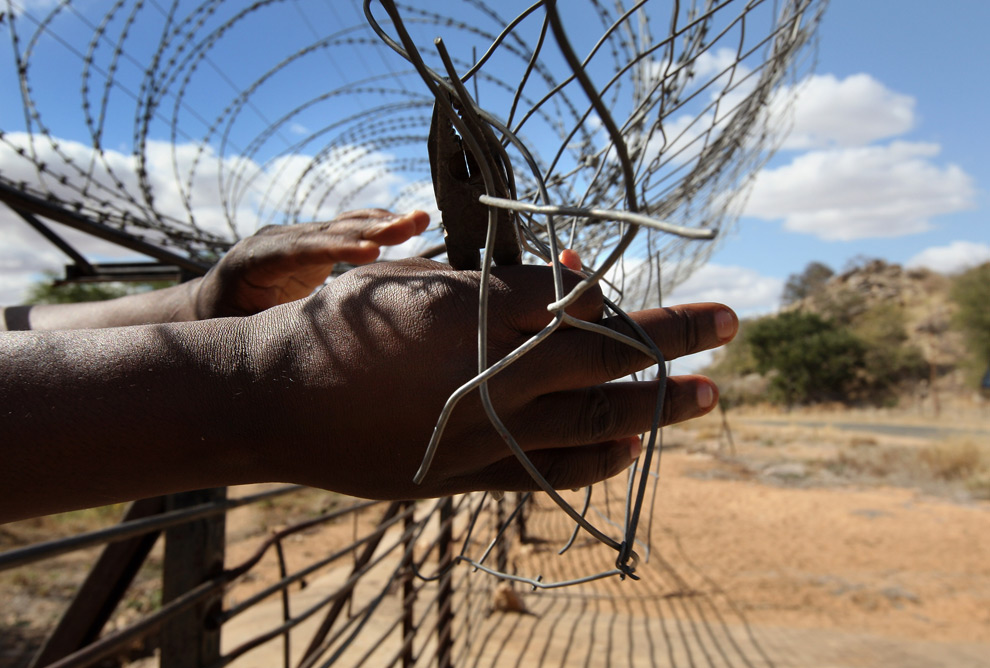
[Picture Credit: John Moore - Getty Images]

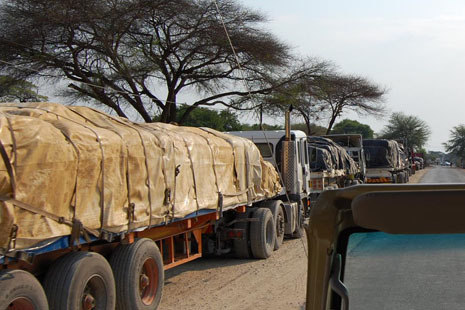
Border between South Africa and Zimbabwe [Picture Credit: John Moore – Getty Images]

The SA government is forging ahead with plans for a border management agency to handle all aspects of border control, from security to customs and plant and animal inspection – but MPs have said it can’t be done.

Home Affairs Minister Malusi Gigaba and his defence counterpart Nosiviwe Mapisa-Nqakula launched Operation Pyramid – a transitional arrangement to improve interdepartmental co-ordination – on Friday, while a draft bill to create the legal framework for the agency was tabled at a workshop in Pretoria earlier in the week.

But there are serious concerns about the ability of one entity to manage the diverse requirements of border control, which would require a huge single body that may prove unwieldy, while it would also need to assume some of the functions of the police and defence force. This would put it in conflict with the constitution, which provides for a single police service and defence force.

Section 199.2 of the constitution states the defence force is the “only lawful military force in the Republic”. Establishing a border management agency performing security functions in parallel with the police and SANDF would thus require a constitutional amendment, but this is just one among many challenges.

The need for such an agency arose in the first place because numerous national intelligence estimates had said the lack of co-ordination in the border environment resulted in “significant weaknesses, threats and challenges”.

Briefing Parliament’s police oversight committee this week, Brigadier David Chilembe, head of border policing, outlined steps that had been taken to get the agency off the ground, six years after President Jacob Zuma ordered it to be done.

The Department of Home Affairs, the lead agent in the project, had established a project office to oversee implementation, heads of affected departments had signed a multiparty agreement and sat on a committee together to co-ordinate their efforts, while an interministerial committee ironed out the policy questions.

The Government Technical Advisory Centre in the Treasury was working on the business case for the agency, Chilembe said.
The plan was to set up the agency in stages and identify the legal and operational implications at each stage so they could be addressed.

But a follow-up briefing on concerns raised by MPs after an oversight visit to the Lebombo border post near Komatipoort in Mpumalanga opened a window into the difficulties the agency will face.

The committee wrote a damning report on the Lebombo border post after a visit earlier this year, when MPs found the ceiling was collapsing because air-conditioning ducts dripped on to it, the door was shattered and the gate jammed, meaning it was possible to drive or walk through it without stopping.

Police complained they had to stand unprotected in the sun or rain and had to make their own travel arrangements from town.
Lieutenant-General Kehla Sithole said the problems originated in a 1998 agreement between Mozambique and South Africa for the post to be established as a “one-stop” facility, with officials sitting back-to-back under one roof.

Mozambique later said it had expected South Africa to pay for its construction, but the Treasury balked at this.The resulting limbo meant new facilities could not be built and neither could the existing ones be refurbished because the Public Works Department refused to upgrade buildings earmarked for demolition.

There were perceptions that the SA Revenue Service, which was the lead agency in the Border Control Operational Co-ordinating Committee – the body charged with harmonising the environment since 2001 – looked after its own interests first, leaving the SAPS short-changed in accommodation and office space.

MPs were shocked to hear an 80-room residential complex for SAPS personnel stood empty because police were expected to pay for it themselves but, unlike SARS officials, did not receive an accommodation allowance. As a result, they preferred to rent a shack in town and travel to the border post daily.

There was also no scanner at the border post, meaning truck cargos, for instance, could only be inspected manually. Opposition DA spokeswoman on police Dianne Kohler Barnard said this almost certainly meant the majority of vehicles went through the post unchecked, meaning it could easily be used for child trafficking, for example.

Sithole said the lack of a scanner was the result of a Treasury instruction for departments represented at the post to make a joint proposal for one to be procured, instead of each asking for their own – at a cost of millions a unit.

A “scanner committee” had been established in the late 1990s but, because one was provided for in the plans for the one-stop concept, it had yet to be bought.

Committee chairman Francois Beukman said MPs weren’t interested in the history of the problem, but rather in what would be done to get a scanner in place.

ANC MP Jerome Maake, supported by Leonard Ramatlakane, said after the presentation it was clear the border management agency couldn’t work. If it was established as a government department – one of three options on the table – this would create a “super department” that would reach into the functions of the others. This would confuse lines of accountability.

If it was established as a government component under an executive authority, or as a public entity, the other two options, it would run into the constitutional challenges related to the police and defence functions.

“All I see here is problems and I don’t see how they can be solved,” Maake said.

“Maybe you’re just afraid of telling the president, this animal can’t be implemented and you’re moving around it, on the periphery, afraid to just say, no – can we come up with something new?

“This one is not implementable.”

Source: Independant On Line (IOL)

US Customs launches new Passenger Control App

mobile-passport-control-app-by-cbpU.S. Customs and Border Protection (CBP) today announced the launch of the first authorized app to expedite a traveler’s entry process into the United States. Mobile Passport Control (MPC) will allow eligible travelers to submit their passport information and customs declaration form via a smartphone or tablet prior to CBP inspection. This first-of-its-kind app was developed by Airside Mobile and Airports Council International-North America (ACI-NA) in partnership with CBP as part of a pilot program at the Hartsfield-Jackson Atlanta International Airport. IPhone and iPad users can download the app for free from Apple’s App Store.

Eligible travelers arriving at Hartsfield-Jackson Atlanta International Airport will be able to use the app beginning Aug. 13. MPC is expected to expand to more airports later this year and to Android smartphone users in the future.

“CBP continues to transform the international arrivals experience for travelers by offering new and innovative ways to expedite entry into the United States, while maintaining the highest standards of security” said CBP Commissioner R. Gil Kerlikowske. “By offering this app to passengers, we hope to build upon the success we have already experienced with Automated Passport Control, which has resulted in decreases in wait times as much as 25-40 percent, even with continued growth in international arrivals.”

MPC currently offers U.S. citizens and Canadian visitors a more efficient and secure in-person inspection between the CBP officer and the traveler upon arrival in the United States. Much like Automated Passport Control, the app does not require pre-approval, is free-to-use and does not collect any new information on travelers. As a result, travelers will experience shorter wait times, less congestion and faster processing.

“Mobile Passport exemplifies the forward-thinking commitment CBP and airports have to improving the passenger experience when entering the United States,” said ACI-NA President and CEO Kevin M. Burke. “This partnership between CBP and ACI-NA also represents an outstanding example of industry and government working together to find smart, cost-effective solutions. We look forward to continuing our collaboration with CBP as Mobile Passport begins its roll-out at U.S. airports later this year.”

There are five easy steps to MPC:

  • Download the Mobile Passport Control App from the Apple App Store prior to arriving
  • Create a profile with your passport information
  • Complete the “New Trip” section upon arrival in the United States
  • Submit your customs declaration form through the app to receive an electronic receipt with an Encrypted Quick Response (QR) code. This receipt will expire four hours after being issued
  • Bring your passport and smartphone or tablet with your digital bar-coded receipt to a CBP officer

ACI-NA contracted with Airside Mobile in MPC’s technical development. Information about Mobile Passport, including how to download, user eligibility and other frequently asked questions, is available on the Travel section of the CBP.gov website and the Airside Mobile website.

MPC is just one part of CBP’s resource optimization strategy which is transforming the way CBP does business in land, air and sea environments. As part of its commitment to innovation, CBP last year rolled out Automated Passport Control, which is now available in 22 locations, and automated the I-94 form. CBP has also enrolled more than two million travelers in trusted traveler programs such as Global Entry, NEXUS and SENTRI. These programs allow CBP officers to process travelers safely and efficiently while enhancing security and reducing operational costs. Source: USCBP

State-of-Art Port Control Centre opens in Cape Town

Inter-Departmental CooperationSouth Africa’s first maritime port of entry control centre represents a milestone in the country’s journey to secure, modernise and control its borders, Finance Minister Pravin Gordhan said at the opening of the centre at Cowrie Port in Cape Town harbour last week on Friday.

The centre puts all the government departments and agencies involved in immigration and border control under one roof. These include the departments of home affairs, health, agriculture and fisheries, the SA Police Service (border police and crime intelligence), and the SA Revenue Service (Customs). The state-of-the-art centre would not only improve security and immigration issues, but would also serve to enhance trade and South Africa’s status as a logistical gateway to Africa, Gordhan said.

Trade

The rationale behind the centre was in line with the National Development Plan, the minister said. Among other things, the NDP aims to stimulate growth by lowering the cost of doing business in South Africa, improving the country’s competitiveness and exports, and linking local products with other emerging markets. Gordhan said the fast-growing markets of Africa represented important new markets, and the NDP was committed to increasing South Africa’s trade with its regional neighbours from 15% to 30%.

‘Complex borders’

Home Affairs Minister Naledi Pandor, also speaking at Friday’s opening, said the centre had been designed “to accommodate in one spot not only customs, excise and immigration, but also health, safety and intelligence.

“Ports are complex borders to manage. Cowrie Place will provide the space and facilities to manage passengers and cargoes more efficiently than before.” Pandor said the government hoped to establish a border management agency by the end of 2016, taking advantage of the lessons learnt from Cowrie Place. A flagship feature of Cowrie Place is the co-ordination monitoring centre, where the data and information will be fed, assimilated and made available to all government department and agencies involved in the maritime border management.

“For the bona fide tourist or member of the trade community, this will mean better service,” Gordhan said. “For those who intend to challenge the laws of our country, be warned, as we intend to raise the bar of compliance by an order of magnitude.”

Important port

Cape Town’s port is oldest in South Africa, but despite changes to its maritime culture brought by air travel and containerisation, it is still an important point of entry. The port processes more than 870 000 containers as well as nearly 730 000 tons of dry bulk per annum, Pandor said.

A total of 6 173 commercial vessels and 55 passenger vessels entered and/or left the port in 2013, while more than 62 000 people entered and/or departed from Cape Town harbour. Pandor said E-berth at the harbour would be developed into a fully fledged passenger liner terminal to complement Cowrie Place.

WCO News – October 2013 Edition

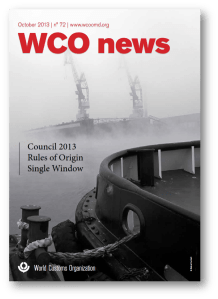
wco news 2013The latest edition of WCO News reflects on the Secretary General’s thoughts on what the WCO has done, what it will be doing, and what will impact on its work in the coming months. The WCO will actively focus its energies on it’s four strategic packages concentrating on revenue, compliance and enforcement, economic competitiveness and organizational development. Together, these packages support the adoption and application of modern Customs practices and raise awareness on the vital role of Customs in international trade.

Featured articles include –

  • From borders to boundless: the digital dilemma in Customs – it discusses two questions – How does an industry traditionally focused on physical borders remake itself for digital commerce, which inherently circumvents such borders? and, Why must Customs agencies transform to address the rise in digital goods and services?
  • Intercepting next generation threats

    For those responsible for the security of our borders, transit networks, VIPs and high-profile sites, the threat posed by more creative adversaries is compounded by the increasing frustrations of passengers and visitors, when subjected to existing security checks. The article discusses a range of ingenuity which technology nowadays provides to these adversaries, and the elements of new Terahertz imaging equipment to assist border agencies in the combat thereof.

  • Beyond the Single 

    Window (SW) – In the 20-plus years since they first opened in Singapore and Sweden, SWs have remained a central focus of border clearance strategies, even though the majority of Customs administrations have not implemented them. Although design plans vary considerably, most SW systems support an electronic data exchange model which allows for (i) Single submission of data and information; (ii) Single and synchronous processing; and (iii) Single decision-making for release and clearance. This article considers 4 best practices which governments should consider when implementing Single Window programs.

The publication also includes country case study’s on Single Window featuring Nigeria and New Zealand, Sri Lanka Customs 20 years of dedication towards conservation, a feature on Argentine Customs and many other interesting articles. To access the publication – click here! Source: WCO

100% Scanning – Have all the Options been considered?

Port of Oakland - VertiTainer's  crane mounted scanner solution employs advanced passive scanning technology and sophisticated identification algorithms to detect and identify gamma and neutron sources in shipping containers as they are loaded or discharged from a container ship.

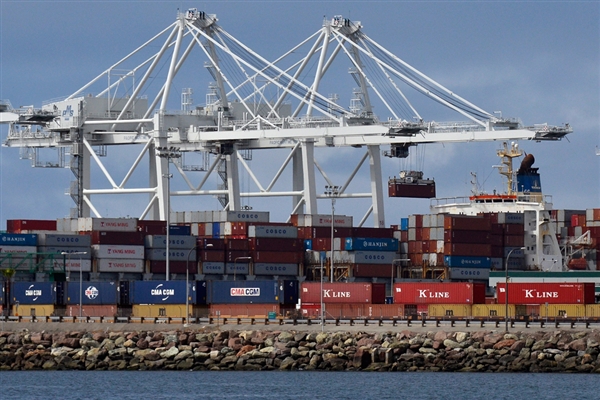
Port of Oakland – VertiTainer’s crane mounted scanner solution employs advanced passive scanning technology and sophisticated identification algorithms to detect and identify gamma and neutron sources in shipping containers as they are loaded or discharged from a container ship.

While the question of mandatory weighing of containers features high on the International Maritime Organisations’ (IMO) list of priorities, a recent post “Container Weighing – industry solution on the horizon“, reminded me of a solution which has been around for some time now, but for various reasons would appear to have been overlooked by authorities – or so it would appear. Readers and followers of this blog may well already have viewed the feature on VeriTainer’s gantry crane mounted radiation detection and identification system, called the VeriSpreader® – refer to the New generation NII technology page of this Blog.

The spreader is a device used for lifting containers and unitized cargo. The spreader used for containers has a locking mechanism at each corner that attaches the four corners of the container. A spreader can be used on a container crane, a straddle carrier and with any other machinery to lift containers. (Wikipedia)

The recent maritime disaster involving the breaking-in-half, and eventual sinking of the MOL Comfort gave rise to the question of overloaded container boxes. While government and international security-minded organisations have pursued methods to address breaches in the supply chain, it would seem that little ‘innovation’ has been applied to the problem – specifically in regard to minimizing the time and cost of routing containers via purpose-built inspection facilities.

At least three known radiation incidents have hit the headlines in recent times – namely Port of Genoa (2010), Port Elizabeth, New Jersey (Feb, 2013), and the most recent in the Port of Voltri (July, 2013). Each of these incidents warranted an emergency response from authorities with a consequential impact on Port Operations.  Unfortunately, advanced risk management systems and other security safeguards did not alert suspicion, allowing these ‘threats’ into the heart of the port, not to mention the radiation threat to port workers?

It could be argued that since the inception of government-led supply chain security, 2002 onwards, many of the world’s supply chains have built in ‘possible inspection’ into their export lead times. A trip to a purpose-built inspection facility will normally require diverting transport from its predestined journey to a land border crossing or seaport. Moreover, lack of predictability often causes delays with possible loss of business where ‘security’ measures delay the movement of cargo.

Several Customs and Border authorities have instituted ‘export-led’ compliance programmes which seek to create better regulatory awareness and expectation for shippers. While not without merit, these still impose an inherent cost to trade where in some instances, shipper’s are compelled to institute ISO-type security standards which for some require dedicated and skilled experts to entrench and maintain these throughout the organisation. So, while the development of increasing levels of compliance amongst supply chain operators will occur over time, what of government ‘Non-Intrusive’ inspection capability?

Port Technology International‘s Feb 2013 article – Future X-Ray Inspection Equipment to be based on Industry Standards – opined that “future developments in cargo screening are likely to follow a common innovation trajectory that is fostered by market needs and new technology, while being strengthened by existing intellectual property and evolving industry standards. Innovation is often perceived as a circular path beginning with customer needs that are identified by a technology developer. The developer then creates application technology in the form of products to meet those needs”.

Land and rail-based cargo screening technology has improved immensely over the last 10 years with improved safety (shielding), throughput (speed) and portability. Engineers have likewise realized the need to ‘fuse’ imaging and radiation threat detection technologies, all offering a more cost-effective package to the end-user. These are by and large the Customs and Border authorities worldwide who protect our territorial waters and ports. Yet, the approach remains ‘modality driven’ which has ensured a period of predictability for designers and manufacturers, not to mention their revenue streams. Given the container weighing – port radiation threats discussed earlier, perhaps it is time now for transport and enforcement authorities to consider technologies as developed by VeriTainer and Lasstec and define a specification for “100%” needs – could this be uniform? Not unlike Lasstec’s container-weighing solution that allows the weighing of containers during the loading cycle so not to disrupt the work flow, Veritainer’s VeriRAD solution uses a gantry crane ‘spreader’ to house its unique solution with specific emphasis to mitigate the threat of a ‘dirty bomb’.


Latest SA Cabinet decisions affecting Customs

Coat_of_arms_of_South_Africa_svgGovernment Communication and Information (GCIS) has published a statement on Cabinet’s recent meeting (26 June 2013) revealing at least three key aspects affecting SARS as well as external stakeholders involved in or impacted by Customs business. An excerpt of the statement follows below.

Cabinet approved the submission of the Southern African Development Community (SADC) Protocol on Trade in Services to Parliament for ratification, in accordance with section 231 of the Constitution. The objectives of the Protocol are to liberalise intra-regional trade in services on the basis of equity, balance and mutual benefit. This Protocol also sets out a framework for the liberalisation of trade in services between SADC member states and serves as a basis for negotiations.

Cabinet approved the implementation steps proposed for the establishment of a Border Management Agency (BMA).  The BMA would manage migration, customs and land border line control services and efficiently coordinate the service of all departments in ports of entry. The Department of Home Affairs will be the lead Department in establishing the BMA.

Finally, and for some a contentious issue, Cabinet also approved the Customs Control Bill (CCB), the Customs Duty Bill, 2013 (CDB) and the Customs and Excise Amendment Act, 2013 (CEAA) for submission to Parliment.  The Bills provide a foundation for the facilitation of international trade and protection of the economy and society, thereby creating a balance between customs control and trade facilitation. Source: GCIS

Study into the cooperation of border management agencies in Zimbabwe

tralacZimbabwe is a landlocked developing country with a population of 14 million, sharing common borders with Botswana, Mozambique, South Africa and Zambia. Zimbabwe has 14 border posts, varying in size in accordance with the volume of traffic passing through them. Beitbridge, the only border post with South Africa, is the largest and busiest, owing to the fact that it is the gateway to the sea for most countries along the North-South Corridor. Zimbabwe thus provides a critical trade link between several countries in the southern African regions. The need for the country, especially its border posts, to play a trade facilitative role can therefore not be over-emphasised.

Trade facilitation has become an important issue on the multilateral, regional and Zimbabwean trade agendas, and with it, border management efficiency. Border management concerns the administration of borders. Border agencies are responsible for the processing of people and goods at points of entry and exit, as well as for the detection and regulation of people and goods attempting to cross borders illegally. Efficient border management requires the cooperation of all border management agencies and such cooperation can only be achieved if proper coordination mechanisms, legal framework and institutions are established.

This study explores how border agencies in Zimbabwe operate and cooperate in border management. The objectives of the study were to:

  • Identify agencies involved in border management in Zimbabwe;
  • Analyse the scope of their role/involvement in border management; and
  • Review domestic policy and legislation (statutes of these agencies) specifically to identify the legal provisions that facilitate cooperation among them.

Visit the Tralac Trade Law website to download the study.

Source: TRALAC

Home Affairs announces plans for Border Management Agency

safrica1Minister for Home Affairs, Naledi Pandor, in her recent budget debate  (click hyperlink to view full speech) to parliment, made brief allusion to the establishment of a Border Management Agency (BMA) in South Africa. The Agency will ensure coordination of and co-operation among the departments operating at South African points of entry and along our borders. The BMA will be led by the Department of Home Affairs and will involve SARS, SANDF, SAPS, Health and Agriculture. At present, focused attention is being paid to improving the management, capacity, and infrastructure at ports of entry. Last year over R110 million was allocated to ports of entry infrastructure via the Public Works budget. This year over R130 million is being made available in the DHA budget. A number of our ports of entry have been equipped with the enhanced movement control system (EMCS) while introducing the advanced passenger processing system (APP) for airlines. Source: Info.gov.za

Beit Bridge – ZIMRA and Immigration gear up for congestion

beitbridge

Beitbridge – crossing the Limpopo river

The Department of Immigration in Beitbridge has put in place mechanisms aimed at dealing with congestion at the country’s busiest border post in anticipation of an increase in the volume of traffic during the festive period. Assistant regional immigration manager in charge of Beitbridge Border Post, Mr Charles Gwede, said they have since held a series of meetings with key stakeholders and their South African counterparts to address congestion at the border.

“We have started preparing for the festive period in anticipation of a huge influx of travellers and all necessary strategies are now in place to help speed up the clearance of people during the festive period,” he said. “We are suspending leave and off-days for staff between 15 December and 16 January next year.

“As part of our decongestion drive we will scramble our shifts to maximise on manpower during the normal and extra peak days. In fact, starting from 15 December we expect a huge influx of travellers hence between 14 and 17 December, 21 and 24 December and 4 to 7 January, we will dissolve our shifts to ensure that we have more officers per shift who would effectively manage the queues and speed up the clearance process,” he said.

Mr Gwede said they were expecting 20 officers from other stations to beef up the local staff and ensure that all check points and counters were adequately manned. Beitbridge Border Post has a staff complement of 47 officers and support staff.

“As border stakeholders, we held several inter-border meetings with our South African counterparts to discuss and explore ways and strategies aimed at dealing with congestion during extra peak periods.

As part of their decongestion strategy, Mr Gwede said they would categorise travellers and create more counters to reduce queues. According to statistics, immigration officials at the border handled 73 825 travellers between Monday and Wednesday on both arrival and departure sides.

The Zimbabwe Revenue Authority (Zimra) spokesperson, Mr Canisio Mudzimu, said they would deploy relief officers to Beitbridge Border Post to beef up the local staff and help speed up the customs clearance process. “We are geared up in terms of facilitating the smooth movement of both human and vehicular traffic passing through Beitbridge Border Post during the festive season. We will deploy extra officers from less busy stations to Beitbridge Border Post during the festive period and to assist in border operations,” he said.

Beitbridge Border Post requires at least 247 customs officers to man it. The border post, which is the country’s busiest inland port of entry, has an establishment 141 officers. Mr Mudzimu said they would create separate traffic lanes to cater for tourists, returning residents, private motorists, commercial, buses and pedestrians to speed up the flow of traffic and reduce congestion.

Touts and bogus clearing agents continue to find their way into the customs yard where they would swindle unsuspecting travellers of their money under the guise of offering assistance. Beitbridge is the busiest inland port of entry in sub-Saharan Africa, which handles a huge volume of both human and vehicular traffic passing though daily. Commercial trucks destined for East and Central African countries such as Tanzania, the Democratic Republic of Congo and Zambia also pass through the border post.

On a normal day, the border handles between 6 000 and 8 000 travellers daily with the figures rising to 20 000 during the peak period. Source: Bulawayo24.com

Bribery along the corridor

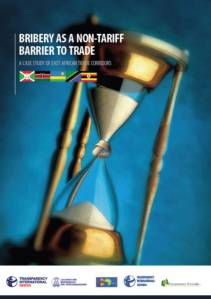
Notwithstanding efforts to minimize collusion, bribery and corruption through increased use of technology, the underlying fact remains that human intervention cannot be completely removed from nodes within the supply chain.Identifying the causes and parties involved in such activity is only the start (yet minuscule) aspect of a problem entrenched in the distrust of government officials and border authorities in particular. Integrity is based on trust. If trust is the placement of hordes of incompetence in public jobs to secure votes, then you will not need to look very far to understand that “the bribe” epitomizes the ultimate enterprise of individuals either bent on extortion, or to avail their services (like prostitutes  to the crooked trader. The following article “Bribery as a non-tariff barrier to trade” (click hyperlink to download) takes account of a wide-spread of role players as to their views and attitudes on the matter. In my view it is a template for what actually occurs at every border across the continent. 

Transparency International (Kenya) and Trade Mark (East Africa) have collaborated in the publication of a review on the subject of bribery in the EAC region. The executive summary elucidates the context – 

The East African Common Market Protocol that came into force in 2010 provides for the free flow of goods, labour, services and capital across the EAC bloc. To achieve this, members undertook to remove all tariff and non-tariff barriers to trade. While progress has been made on the removal of the former, doing away with the Non-tariff barriers along the main transport corridors of the region has remained a challenge.

Taking cognizance of this, Transparency International-Kenya, Uganda, Rwanda and Burundi in conjunction with the Transparency Forum in Tanzania conducted a survey along EAC‘s main corridors — the Northern and Central corridors- that form a vital trade link in the region between August and November 2011. The survey objectives were to measure the impact of bribery practices and create public awareness on the vice.

In determining the size of bribe payable, negotiations came top. The value of consignment and the urgency were some of the other factors sighted by the respondents. According to the survey, truck drivers have devised various means of accounting for bribery expenses to their employers. The most common is road trip expense’. These are anticipated regular amounts given prior to the start of a journey and ad hoc miscellaneous expenses. In the transporters’ books of accounts, the bribes are normally disguised either as anticipated regular amounts or as ad hoc miscellaneous expenses. Source: Transparency International and Trade Mark

US Customs – $100 million customs fraud uncovered


The article below has been doing the rounds over various social media the last few days. The ‘standout’ issue for me is the fact that such an alleged crime occurred in the USA. With the focus of the customs world nowadays so much on the anti-terror campaign, could it be that one of the single biggest enforcement agencies in the world is not as sharp on traditional customs fraud activities? With the boundless focus on ‘safety and security’ it often seems as though the traditional customs crimes have given way to ‘globally networked syndicates’ using every means of technology to by-pass sovereign authorities. Yet, when you read the brief below, it all boils down to the human factor. To what extent the outcome of this case will attest to the Customs and Border Protection Agency’s risk management capability and moreover the extent to which such campaigns as CT-PAT really give the agency the edge in better ‘knowing’ its customers remains to be seen. A successful border agency must still do the basic things right, as dated as they may seem in the modern world. This case therefore proves how important it is for any national customs and border management agencies to invest in customs-skills training with lesser emphasis on the technology side of things. It is so unfortunate that most countries see Customs Capacity Building as an investment in technology. At this rate with no investment in customs technique, who is going to be able to properly interpret risk indicators if all the agency employs are statisticians and university post-graduates?

SAN DIEGO, CA – A complaint charging eight individuals and three corporations with operating a ring that illegally imported hundreds of millions of dollars in foreign goods into the United States though the Long Beach Port-of-Entry and evaded millions of dollars in import taxes was unsealed today, announced United States Attorney for the Southern District of California Laura E. Duffy.

According to the complaint, the defendants’ scheme focused on purchasing large, commercial quantities of foreign-made goods and importing them without paying import taxes or A Customs duties. As alleged in the charging documents, wholesalers in the United States would procure commercial shipments of, among other things, Chinese-made apparel and Indian-made cigarettes, and arrange for them to be shipped by ocean container to the Port of Long Beach, California. Before the goods entered   States, the defendants generated paperwork and database entries indicating that the goods were not intended to enter the commerce of the United States, but instead would be transshipped “in-bond” to another country, such as Mexico.

As noted in the complaint, this in-bond process is a routine feature of international trade. Goods that travel in-bond through the territory of the United States do not formally enter the commerce of the United States, and so are not subject to Customs duties.By claiming that the goods would be transshipped in-bond to another country, the defendants falsely represented that no Customs duties applied.

According to the complaint, instead of completing the in-bond transshipment, the defendants would hire truck drivers to haul the shipments to warehouses throughout Southern California. After generating the false paperwork and database entries, the goods would then be diverted back to Los Angeles and other destinations for shipment throughout the United States. As the conspirators had now effectively imported the goods tax-free, they could in turn sell more merchandise at cheaper prices and reap greater profits than their law-abiding competitors, including domestic American manufacturers of the same goods.

The complaint alleges that in addition to harming lawful domestic businesses, the defendants deprived the United States of the Customs duties that it was owed on these diverted shipments. To date, the government has already identified more than 90 commercial shipments of Chinese-made apparel, foreign-made cigarettes and other goods that were illegally imported in this manner. Altogether, these shipments were worth at least $100 million and resulted in more than $10 million in lost Customs duties, taxes and other revenue.

According to United States Attorney Duffy, “The charges announced today underscores our commitment to ensure that no one exploits the import process for personal gain. Not only does such illegal conduct present a significant danger to the American people, but it deprives law-abiding companies of a level playing field resulting in the potential loss ofbillions of dollars in revenue.”

“This investigation pulled back the curtain on a potentially costly fraud scheme operating in one of the world’sbusiest commercial centers,” said ICE Director John Morton. “Instead, HSI, aided by our law enforcement partners, exposed and dismantled this criminal ring and now those responsible will be held accountable.”
“Every day, U.S. Customs and Border Protection officials work to protect the U.S. and interdict fraudulent goods from entering the country. I commend the work of our officers for their instinct and diligence, and recognize the seamless coordination across government agencies,” said David V. Aguilar, Acting Commissioner, U.S. Customs and Border Protection. “Joint efforts such as this are crucial to maintaining our nation’seconomic security and competitiveness.”

“The FDA-Office of Criminal Investigations is fully committed to investigating and supporting the prosecution of those who may endanger the public’s health and safety by importing unsafe and potentially life-threatening products. We commend the U.S.Attorney’s Office in the Southern District of California for their diligence,”said Lisa Malinowski, Acting Special Agent in Charge, U.S. Food and Drug Administration’s Office of Criminal Investigations, Los Angeles Field Office. As alleged in the complaint,defendant Gerardo Chavez is President of the San Diego Customs Brokers Association and a licensed Customs broker. Using his Customs license, Chavez, his employees and his companies—including defendants Tecate Logistics, LLC and International Trade Consultants, LLC—generated the fraudulent Customs paperwork that was integral to the scheme. Similarly, Chavez and his companies would make false entries into Customs databases, in order to create the false appearance that in-bond shipments of foreign-made goods had been lawfully transshipped to Mexico. As part of this effort, Chavez, Joel Varela and others would also forge official Customs markings to make it appear as if a United States Customs official had certified various shipments as having been transshipped to Mexico.

Charging documents also allege that Chavez had several dedicated customers who were part of the conspiracy. For example, defendant Sunil Mirwani, a citizen of the United Kingdom, received dozens of shipments of illegally imported Chinese-made apparel at warehouses throughout the Los Angeles area. Mirwani marketed and sold the apparel using hiscompany, defendant M Trade Inc. Similarly, defendant Rene Trahin and other co-conspirators distributed various shipments of illegally imported “gray market” cigarettes ranging from Indian-made to German-made brands to warehouses, self-storage areas and a residence in San Diego, Los Angeles and parts between.

The complaint alleges that the defendants also imported produce infected by Salmonella Agona. Often called simply “Salmonella,” this pathogen is a potentially life-threatening infectious bacteria. On one occasion, after a shipment of nopal cactus (also known as prickly pear) tested positive for Salmonella,co-conspirator changed the description of the nopal cactus’ grower for subsequent shipments, for the purpose of evading future Food and Drug Administration (“FDA”) inspections. Similarly, defendant Elizabeth Sandoval and Varela conspired to import Mexican snack foods that were mislabeled and adulterated with a prohibited dye. The remaining defendants named in the complaint are employees and agents of Customs brokers, wholesalers and transport companies who are alleged to have knowingly aided the conspiracy.

This case is being prosecuted in federal court in San Diego by Assistant United States Attorney Timothy C. Perry and is being investigated by the Department of Homeland Security, Immigration and Customs Enforcement Homeland Security Investigations, and United States Customs and Border Protection, the Internal Revenue Service, the Food and Drug Administration, and the Alcohol and Tobacco Tax and Trade Bureau. A complaint is a formal charging document and defendants are presumed innocent until the Government meets its burden in court of proving guilt beyond a reasonable doubt. Source: US Department of Justice


Nigerian Customs – a paramilitary display

Ports.co.za reports that Nigerian Customs Service has signed an agreement for the delivery of two 24 metre P249 patrol craft, which will use them to combat smuggling and piracy.The supplier is a Cape Town based outfit called Kobus Naval Design (KND). In the context of intra-Africa trade this deal should be considered a real scoop. Kobus Potgieter, CEO of Kobus Naval Design (KND), confirmed that his company had received the order and would deliver the vessels in ten months’ time. The aluminium vessels will be built in Cape Town. This will be the sixth KND designed vessel in the Nigerian waters delivered over the last couple of years. The company is also busy with a dive boat contract for the oil and gas industry in Nigeria.

Nigeria’s Federal Executive Council (FEC) also recently approved N1.7 billion (US$11 million) for the purchase of a Cessna Citation CJ4 aircraft for the Customs Service. The aircraft would be used for surveillance missions along Nigeria’s borders and would help combat economic sabotage and cross-border crimes. Alhaji Mohammed Dikko, the Comptroller-General of the Nigerian Customs Service, said that his agency had already acquired the helicopters for surveillance of Nigeria’s borders and added that President Goodluck Jonathan had approved the purchase of 400 Toyota Hilux vehicles for border patrol.

Border control is an increasingly important issue in Nigeria. Militant groups in the oil-producing Niger Delta have been illegally supplying weapons for years and Boko Haram is also believed to have received illegal arms, raising questions about border surveillance, especially after reports that weapons looted from Libya have turned up in Nigeria. Source: Ports.co.za and Defenceweb.co.za

New Issue of the World Customs Journal

The latest edition of the World Customs Journal (March 2012) comprises what appears to be a disparate array of topics. Professor David Widdowson invites your attention to the underlying theme of contrasting approaches to universal imperatives which permeates several of the contributions, which includes, for example,

  • a comparative analysis of excise taxation across the ASEAN region and identifies the need for standardisation in readiness for the impending introduction of the ASEAN Economic Community. It’s nice, for a change to have articles which deal with Excise.
  • a research paper concerning the diversity of de minimis arrangements in the APEC region, highlighting their impact on economic benefits and costs.
  • a review of a variety of regional approaches to coordinated border management, and
  • the introduction of the EU’s electronic customs environment as a means of achieving regional standardisation.

The underlying commonality of border management imperatives is also reflected in this edition’s Special Report. In his insightful article ‘Lines and Flows: the Beginning and End of Borders’ Alan Bersin (former Commissioner of the CBP) challenges the traditional concept of international borders, and introduces a paradigm that views global cooperation as a fundamental requirement for effective border management. The next edition of the Journal will focus on excise policy and practice, and will include papers presented at the World Customs Organization’s Global Excise Summit which will be held on 2-3 July at the WCO Headquarters in Brussels. Source: The World Customs Journal.

Open Borders and Integrated Supply Chains break down Global Trade Barriers

East Asian economies have recorded marked improvements in their ability to enable trade, while traditional frontrunners Singapore and Hong Kong retain a clear lead at the top of the global rankings, according to the Global Enabling Trade Report 2012, released today by the World Economic Forum.

The report, which is published every two years, also confirms strong showings for Europe’s major economies, with Finland and the United Kingdom both advancing six places to 6th and 11th, respectively, and Germany and France remaining stable at 13th and 20. Other large economies fare less well: the US continues its decline to 23rd, as does China (56th) and India (100th). Among emerging economies, Turkey (62nd) and Mexico (65th) remain stable while Chile (14th), Saudi Arabia (27th) and South Africa (63rd) climb in the ranking. ASEAN members Thailand (57th), Indonesia (58th) and the Philippines (72nd) also improve. Perhaps the proponents of OSBPs and a BMA in South Africa have not read this or have deeper insight into the matter.

As well as ranking nations’ trade openness, the report finds that traditional notions of trade are increasingly outdated as global value chains require new measurements, policies and cooperation. The report also finds that security, quality and trade can be mutually reinforcing through supply chain integrity efforts, but a knowledge gap in identifying buyers remains an important barrier. The biennial report, covering 132 economies worldwide, measures the abilities of economies to enable trade and highlights areas where improvements are most needed. A widely used reference, it helps countries integrate global value chains and companies with their investment decisions.

At the core of the report is the Enabling Trade Index, which measures institutions, policies and services facilitating the free flow of goods over borders and to destination. It breaks the enablers into four issue areas: market access, border administration, transport and communications infrastructure, and business environment. The Index uses a combination of data from publicly available sources, as well as the results of the Executive Opinion Survey, a comprehensive annual survey conducted by the World Economic Forum with its network of partner research institutes and business organizations in the countries included in the report. The 2012 results demonstrate that the ASEAN Trade in Goods Agreement has facilitated trade since its entry into force in 2010. This year, the report also directly captures the most important obstacles to exporting and importing in each country, and notes the strong links between import and export success. Source: AllAfrica.com / WEF

Enhancing South Africa’s and Africa’s development through Regional and Continental Integration

Hardly a week goes by without some or other African politician waxing lyrical about continental integration, continental trade diversification, and a wholesome analysis of the ‘barriers’ which prevent the African continent  from reaching its full economic potential. No doubt I’m a bit biased in relaying the recent ‘public lecture’ of our deputy President Kgalema Motlanthe at the University of Finlandread the full speech here! Plenty of insight clearly delineating a plethora of barriers; yet, are we African’s so naive not to have identified these barriers before? Evidently yes.

In recent weeks, on the local front, we have learnt that One Stop Border Posts (OSBPs) is the solution to non-tariff barriers. This topic was drilled amongst the press till it got boring. The focus soon thereafter shifted to the implementation of a border management agency (BMA) – all of government under one roof – so simple. The reality is that there is no silver-bullet solution to African continental integration. Of this, affected business, Customs administrations and the international donor community is acutely aware. While the WTO and the multitude of trade lawyers will ‘yadder’ on about ‘diversification’ in trade, the reality is that Africa’s raw materials are even more sought after today than at an any time before. Certainly those countries which contain vast resources of oil and strategic minerals are about to reap the benefits. So why would African countries be concerned about diversification when the petro-dollars are rolling in? Perhaps greed or lack of foresight for the medium to long-term well-being of countries and their citizens? The fact remains, without homegrown industries producing goods from raw materials, most of  Africa’s eligible working class will continue to be employed by foreign mineral moguls or the public service.

Several customs and infrastructure solutions have over the last few years emerged with the usual credential of “WCO or WTO compliant”. Africa has been a guinea pig for many of these solutions – ‘experiments’ if you prefer. Literally millions of dollars are being spent every year trying out so-called ‘best-of-breed’ technology which users unfortunately accept without much questioning. The cart is being placed before the horse. Why? because the underlying route cause/s are not being identified, understood (sufficiently) and prioritized. Insofar as there exists no silver bullet solution, neither is there a single route cause in most cases. Unfortunately, donor aid often comes with its own pre-conceived outcomes which don’t necessarily tie in with those of the target country or the well-being of the continent.

While governments like to tout the ‘big-hitting’ projects, there are several ‘less exciting’ (technical) areas which countries can address to kick-start the process. One of these has even been recognised by the likes of the World Bank and OECD notwithstanding capital-intensive programs which promised much and have not delivered fully on their promise.  The issue at hand is the harmonisation of customs data. It might at first sound irrelevant or trivial, yet it is the key enabler for most Customs Modernisation initiatives. While there is still much anticipation in regard to the forthcoming deliberation and outcome of the WCO’s Globally Networked Customs (GNC) initiative at June’s WCO Policy Commission session in Brussels, there is significant support for this approach on the African continent. The momentum needs to be maintained.

 Related articles