USCBP and EU sign C-TPAT Mutual Recognition

U.S. Customs and Border Protection (CBP) and the European Union (EU) signed today a Mutual Recognition Decision between CBP’s Customs-Trade Partnership Against Terrorism (C-TPAT) program and the EU’s Authorized Economic Operator (AEO) program.

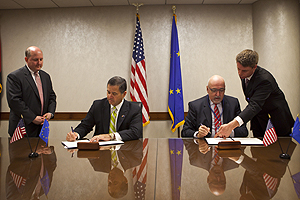
U.S. Customs and Border Protection Acting Commissioner David V. Aguilar and European Union Taxation and Customs Union Directorate Director-General Heinz Zourek sign the Mutual Recognition Decision between CBP’s Customs-Trade Partnership Against Terrorism program and the EU’s Authorized Economic Operator Program.

CBP Acting Commissioner David V. Aguilar and Director-General Heinz Zourek, European Union Taxation and Customs Union Directorate (TAXUD) signed the decision, which recognizes compatibility between the EU and the U.S. cargo security programs.

“Today’s decision on the mutual recognition of the EU and U.S. trade partnership programmes is a win-win achievement: It will save time and money for trusted operators on both sides of the Atlantic while it will allow customs authorities to concentrate their resources on risky consignments and better facilitate legitimate trade,” said Director-General Zourek.

C-TPAT is a voluntary government-business initiative to build cooperative relationships that strengthen and improve overall international supply chain and U.S. border security. C-TPAT recognized that U.S. Customs and Border Protection can provide the highest level of cargo security only through close cooperation with the ultimate owners of the international supply chain such as importers, carriers, consolidators, licensed customs brokers, and manufacturers. Source: US CBP

Related article

SARS issues Compliance Programme 2012/13 – 2016/17

SARS has issued its inaugural SARS Compliance Programme, a high-level overview of its plans for the next five years to further grow compliance with tax and customs legislation. More so than perhaps any other time in history, the current global economic conditions have thrust domestic resource mobilisation into the spotlight, highlighting sustainability built on a foundation of tax compliance. Countries lacking this solid base have found their room for manoeuvre in these uncertain times severely curtailed and, in some cases, completely absent. The impact of self-reliance on self-determination is self-evident.

Many tax administrations publish similar compliance programmes (including Australia, Brazil, Canada, Denmark, Netherlands, New Zealand, Poland, Spain, Sweden, Turkey, USA, UK) and SARS has based it’s Compliance Programme on their ground-breaking work. To download and read the SARS Compliance Programme, click here! For Customs specialists and trade practitioners no less than 3 priority areas involve Customs –

Illicit cigarettes: the trade in and consumption of illicit cigarettes is detrimental to the fiscus and to the health of South Africans. SARS interventions will continue to focus on clamping down on cigarettes smuggled via warehouses as well the diversion of cigarettes destined for export back into the local market. SARS also plans to modernise it’s warehousing management and acquittal system.

Undervaluation of imports in the clothing and textile industry: Undervalued imports pose a significant risk not only to the fiscus but to local industry and job creation. SARS will continue to work together with other government agencies and industry stakeholders to clamp down on this practice including through the establishment and frequent revision of a reference pricing database to detect undervaluation, increasing inspections as well as supporting an integrated border management model.

Tax Practitioners and Trader Intermediaries: Regulation of this industry will be pursued to ensure that tax practitioners and trade intermediaries are all persons of good standing, are fully tax compliant in their personal capacity and provide a high quality service and advice to their clients. SARS will also develop a rigorous risk profiling system to identify high risk practitioners and trade intermediaries.

Economic sanctions and international trade

Despite global automation and harmonisation of trade, customs operations and procedures, the following article exemplifies the continued need and importance of knowledgeable trade practitioners and customs specialists. Human intellect and ‘expertise’ will forever play a critical role in the interpretation international trade law and national customs procedure.

Long used by governments to punish rogue countries, regimes, entities and individuals, trade and economic sanctions impact an ever-widening range of goods, technology and services. Recent developments in Iran, Syria and Libya, for example, resulted in far-reaching sanctions by Australia, Canada, the European Union and its 27 Member States, the United Nations, the United States and others. The complexity of sanctions and the speed with which governments implement them to address rapidly changing political situations create serious compliance challenges.

Companies are therefore well advised to implement compliance from management through all levels of sales, logistics and finance. The stakes are extremely high because compliance failures—even unintentional ones—can result in the imposition of substantial fines, debarment from government contracts, damage to public reputation and even imprisonment. Recent penalties illustrate the risks and the high governmental enforcement priority for trade sanctions. These include fines of up to US$536 million imposed by US and UK regulators against financial institutions and major businesses. Individuals may also be subject to prison sentences of up to 10 years in the United States and the United Kingdom.

Anyone involved in cross-border transactions therefore needs to determine if their conduct and that of persons acting on their behalf is regulated by trade sanctions. At a minimum, businesses must understand: which countries, regimes and individuals are targeted by trade sanctions; who is obliged to comply; which transactions are prohibited or restricted; and which authorisations may be available or required for any restricted action.

Businesses should also consider the long reach of US and EU sanctions. US sanctions generally apply to “US persons” wherever they are located in the world and to anyone located in the United States. Similarly, EU sanctions apply to “EU persons” wherever they are located in the world and to anyone located in the European Union. Adding to the breadth of coverage, US rules prohibit “facilitation”, which means neither persons nor companies subject to the rules may support a transaction undertaken by another party, including a foreign affiliate, from which a US person would be prohibited from engaging in directly. EU rules likewise prohibit covered persons from infringing sanctions rules indirectly – so much for economic freedom!

Law firm McDermott Will & Emery recommends that companies should take appropriate steps to minimise the risk of infringing trade sanctions by introducing the following safeguards:

  • Require due diligence in connection with all transactions. This should involve at least the screening of all counterparties against the ever-changing sanctions lists that identify the countries, regimes, entities and persons blacklisted. Trade sanctions can apply to goods, technology licensing and the provision of technical assistance, and to ancillary services such as financing, insurance and transport.
  • Establish internal procedures to ensure prompt legal review in the event a transaction with a sanctioned party is identified.
  • Check that the due diligence checklist for merger or acquisition transactions includes an assessment for compliance with trade sanctions.

Source: McDermott Will & Emery 

SEZ – requires a paradigm shift in government thinking

While there have been several attempts in recent years by various private sector entities to bring about innovation to the South African market, these opportunities are now being lost to other quarters on the African continent, such as Nigeria, Kenya, and closer to home, Angola. Perhaps its time for government authorities to realise that South Africa is in serious danger of losing its competitive edge.

It will do all economic and fiscal policy makers, government administrators and trade practitioners good to view the video below. It portrays the success of Foreign Trade Zone 202, in the Port of L.A. is the largest FTZ in the United States. Learn why and how Sony, Citizen Watch Company, Puma and many others take advantage of FTZ 202 to optimize their inventories and control costs. Then consider whether the local SEZ policy and bill aspires to any of this…

Advancing the argument for sealing cargo and tracking conveyances

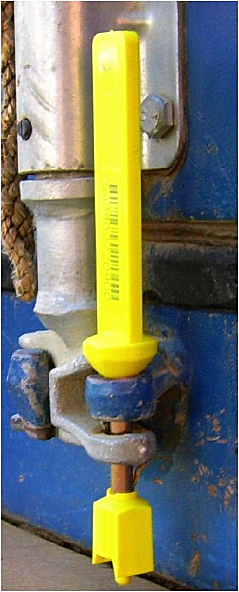
South African Customs law provides for a seal integrity regime. This consists in provisions for the sealing of containerised sea cargo as well as sealable vehicles and trailers. These requirements have, however, not been formally introduced into operation due to the non-availability (until recently) of internal systems and cross-functional procedures that would link seal integrity to known entities. To explain this in more layman’s terms, it is little use implementing an onerous cargo sealing program without systems to perform risk assessment, validation of trader profiles and information exchange. It’s  like implementing non-intrusive inspection (X-ray scanning) equipment without backward integration into the Customs Risk Management  and Inspection environment and systems. It has often been stated that a customs or border security programme is a layered approach based on risk mitigation. None of the individual elements will necessarily address risk, and automation alone will likewise not accomplish the objective for safe and secure supply chains. Moreover, neither will measures adopted by Customs or the Border Agency succeed without due and necessary compliance on the part of entities operating the supply chain. It therefore requires a holistic strategy of people, policy, process and technology.

In the African context, it is surmised that the business rationale will be best accomplished with a dual approach on IT connectivity and information exchange. Under the political speak there are active attempts within SACU, SADC, COMESA and the EAC to establish electronic networks to facilitate and safeguard transit goods. Several African states are landlocked and are not readily accessible, some requiring multiple transit trips through countries from international discharge in the continent to place of final destination. National laws of each individual country in most instances provide obstacles to carriers achieving cost effective means in delivering cargoes. Over and above the laws, there exists (regrettably) the need to ‘grease palms’ without which safe passage in some instances  will not be granted. Notwithstanding the existence of customs unions and free trade areas, internal borders remain the biggest obstacle to facilitation.

Several African logistics operators already implement track and trace technology in the vehicle and long-haul fleets. This has the dual purpose of safeguarding their assets as well as the cargoes of their clients which they convey. Since 9/11, a few customs administrations have formally adopted ISO PAS 17712 within their legislation to regulate the use of high security seals amongst cargo handlers and carriers. In most cases this mandates the use of high security ‘mechanical’ bolt seals. However, evidence suggests there is a growing trend to adopt electronic seals. Taiwan Customs for one has gone a significant way in this regard. Through technological advances and increased commercial adoption of Radio Frequency Identification (RFID) technology the costs are reducing significantly to warrant serious consideration as both a viable and cost-effective customs ‘control’ measure.

Supply chain custody using RFID as an identifier and physical security audit component – as provided for in ISO 17712 – is characterized by the following:

  • it uniquely identifies seals and associates them with the trader.
  • the seal’s unique identity and memory space can be used to write a digital signature, unique to a trader on the seal, and associating that seal with a customs declaration.
  • using customs trader registration/licensing information, together with infrastructure to read seal information at specified intervals along a route to create a ‘bread-crumb’ audit trail of the integrity of the cargo and conveyance.
  • using existing fleet management units installed in trucks to monitor seal integrity along the high risk legs of a cargo’s transit.
  • record the seal’s destruction at point of destination.

Looking forward to the future, it is not implausible for customs and border authorities to consider the use of RFID:

  • as a common token between autonomous customs systems.
  • to verify and audit that non-intrusion inspections have taken place en-route, and write that occurrence to the seal’s memory with the use of an updated digital signature issued to the customs inspection facility.
  • to create a date and time stamp of the cargo’s transit for compliance and profile classification – to confirm that transit goods have actually left the country as well as confirm arrival at destination (to prevent round tripping).
  • Lastly to archive a history of carrier’s activities for forensic and/or trend analysis.
This is a topic which certainly deserves more exposure in line with current regional developments on IT-connectivity and information exchange. A special word of thanks to Andy Brown for his contribution and insight to this post.
Related articles

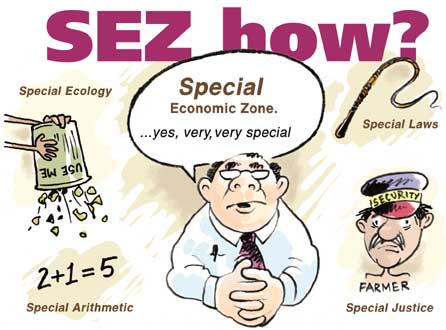
Special Economic Zones – how special?

Despite having burned its fingers with Industrial Development Zones (IDZs), which involved a few fiscal benefits (shrouded in legalese) and billions in infrastructure, Trade and Industry has gone into overdrive to push its new policy on special economic zones (SEZs). It has relaxed ‘locality’ for one, i.e. such zones need not be located in close proximity to an international port or airport. Moreover, SEZs are now being promoted to ‘compliment’ existing IDZs and not replace them as was erroneously suggested in an earlier post.

While the South African Department of Trade and Industry (the dti) is conducting public hearings on the matter, it is perhaps relevant to consider what the Free Market Foundation (FMF) – a think-tank on limited government and economic freedom – has to say on the matter. The content of the report might well attract support from some in the business community involved with manufacturing, distribution and logistics. Read the FMF’s evaluation of the dti’s SEZ Policy here!

While there are not many trade remedies available to local business many prospective requests have over the last decade been presented to establish so-called distribution centres/hubs and ‘virtual bonded warehouses’, which have not borne much fruit mainly due to the lack of a legal framework for their operation. Moreover, in government there is always a cautious resistance to liberalisation in customs and trade laws (they directly impact the fiscus) in the absence of viable risk mitigation strategies or remedies. Perhaps it has something to do with the dwindling public sector skills and experience levels available to conduct effective audits; although, the big audit firms would readily contest this and advocate the outsourcing of such function to the private sector. As the development of more sophisticated systems in SARS come on stream, ICT will no longer be an obstacle. Through increased automation comes the availability of additional human resources who can be up-skilled to perform audit work. Both Tax and Customs Modernisation programmes bare testimony to this.

The establishment of the IDZ programme (circa 2000) was fraught with inter-departmental tensions around the so-called benefits and concessions to be made available to foreign investors. The lack of a clear framework did not allow for much ‘liberalisation’ of controls and fiscal benefits. In fact the customs dispensation offered procedures and facilities to IDZs identical to that available in the national customs territory. Tax holidays and relaxed red tape are characteristic of some of the more successful SEZs around the world, as the article will attest. The dti’s latest SEZ Bill and Policy do not hint to any great length how things will be different this time round. There is however some firm calls within government to consider relaxed labour regulations – the test however lies in whether the policy makers have the appetite (or vision) to permit liberalisation in this area. I have a simple view on this matter – (i) create a favourable economic environment focusing development on SMMEs and entrepreneurship, and (ii) get the standard customs procedures and controls right through modernisation and there will be no need for ‘tax holidays’ and economic zones in this country!

Where Does the Chain of Custody Begin?

Here follows an article, published by Dr. James Giermanski, an internationally renowned expert in container and supply chain security, international transportation and trade issues. It deals with a crucial but mostly forgotten/unknown aspect of international supply chains – who packed the cargo?

Tracking, tracing, and custody are all generally accepted concepts involving the control of movement. All these concepts have in their fundamental cognitive structure the idea of path, corridor, multiple parts, flow, and coordination.

However, what is often omitted or overlooked is the fundamental sine qua non core principle of “beginning”. What is the beginning of a chain of custody? This article focuses on this core concept and the role it plays as the beginning of the connective custody and control process. Specifically, it addresses the significance of cargo stuffing, the concept of authorized or trusted agent, the means of connectivity, the legal role of the authorized agent, and the consequences of a connected and visible supply chain.

Cargo stuffing

Establishing and maintaining cargo integrity begins with stuffing the container at origin. A chain of custody – chronological documentation or paper trail – involves “the movement and location of physical evidence from the time it is obtained until the time it is presented in court.” As in a criminal case comparison, a supply chain “chain of custody” needs three types of essential assertions:

  1. That the cargo is what it purports to be and in the quantity stated;
  2. That the cargo was in the continuous possession or control by the carrier who took charge of the cargo from the time it was loaded in the container at origin until the time it is delivered at final destination; and
  3. That there is evidence of the identify of each person or entity who had access to it during its movement, and that the cargo remained in the same condition from the moment it was sealed in the container for transfer to the carrier that controlled possession until the moment it released the cargo into the receipted custody of another.
Trusted partner

It is imperative that the initial point of a connectivity process begins at the beginning! Loading cannot take place without a human agent. The agent could be the company’s forklift driver, the dispatcher, the loading dock supervisor, or even an authorizing manager who has a specific duty to verify the cargo and its quantity. It could even be a third party hired by the shipper, for instance, companies that currently provide inspection services around the world.

Various Customs programs discuss, in one way or the other, the concept that supply chain security begins at “stuffing”: the Secure Export Scheme Program (New Zealand); the Partners in Protection Program (Canada); the Golden List Program (Jordan); the Authorized Economic Operator Program (Japan); the Authorized Economic Operator Program (Korea); the Secure Trade Partnership Plus Program (Singapore); and the Authorized Economic Operator.

Establishing ‘connectivity’

Maintaining connectivity depends on the security program, software and hardware utilized. While no system is 100% effective, and one cannot depend on technology alone, there are ‘off-the-shelf’ container security devices (CSDs) that provide connectivity through a sophisticated, comprehensive chain of custody system that begins with loading the container at origin, monitoring it, and reporting on its integrity at the end of the global supply chain path, i.e. at final destination.

CSDs can include the identity of the trusted agent verifying the cargo at loading and the agent’s counterpart at destination. Both parties are electronically connected by a unique identifier to the smart container system along with bill of lading or booking information, or data needed by Customs authorities. Therefore, when the CSD is activated, the accountable party becomes the initiating element in the smart container security system.

Consequences of chain of custody – standards, laws and litigation

If a smart container is opened at destination by an equally accountable person and cargo is missing, and there were no breaches detected, recorded or reported, the accountable person at origin can face either disciplinary, or worse, criminal action by appropriate authorities.

This ESI becomes a source of evidence, should legal action follow. The concept of custody and control from origin to destination also supports Incoterms 2010, a publication of the International Chamber of Commerce (ICC) which provides the playbook of international rules involving international sales of goods. These new terms now contain security requirements for the shipper, making a chain of custody system essential for compliance. There are also changes coming for shippers, consignees, and vessel carriers with respect to carriage of goods by sea: the new Rotterdam Rules.

According to the UN General Assembly, the Rotterdam Rules are a “…uniform and modern global legal regime governing the rights and obligations of stakeholders in the maritime transport industry under a single contract for door-to-door carriage” (cf. American Shipper). The new door-to-door liability places the vessel carrier directly in a chain of custody. Instead of the vessel carrier filing what the shipper said is in the container, the vessel carrier will be automatically and really responsible for knowing what is in the container.

What are the benefits?

The shipper, the consignee, the carrier, and control and regulatory authorities all benefit from a chain of custody system that begins with the loading of the container at origin. CSDs incorporating the identity of the trusted agent at stuffing would assist law enforcement officials to comply with international security and trade standards, solve transhipment problems, impair illegal access to the cargo conveyance, improve supply chain efficiencies, aid in securing hazardous materials and other dangerous cargo movement, reduce counterfeiting, eliminate the in-bond problem of unauthorized container access, and improve bottom line revenue generation for the firms using them. Source: Supply Chain Digest.
WCO News – February 2012 Edition

WCONews Edition February 2012Herewith a link to the latest edition of WCO News, providing a wealth of customs news and developments from across the globe. This edition focuses almost entirely on regional initiatives involving C-2-C information exchange. On pages 20 to 22 you’ll read about new developments emerging on customs inter-connectivity and information exchange in the Southern African Region. At this time, a conference lead by the WCO, involving representatives from UNCTAD, SACU, SADC and COMESA and SARS is taking place in Pretoria to establish a firm framework for introduction of customs information exchange. I will devote a dedicated article on these developments shortly, as this has implications for the business community as well. Also, don’t miss the feature on South Africa’s modernisation developments, pages 29 and 30. Besides the usual editorials this edition includes –

  • WCO Secretary General launches Year of Connectivity.
  • Evolving technology landscape and its impact on Customs.
  • Latest developments in Latin America, Southern Africa and Europe.
  • West Africa implements airport task forces to fight drug trafficking.
  • South Africa to roll out mobile Customs controls.
  • Operation “Short Circuit” successes and challenges.
  • WCO Tariff and Trade Affairs Directorate

US and EU one step closer to Mutual Recognition agreement

The U.S. Customs and Border Protection (CBP) and the European Union Taxation and Customs Union Directorate (TAXUD) have agreed to language for the U.S.-EU Mutual Recognition Decision today which will lead to its signing in the Spring of 2012. Once signed, the Mutual Recognition Decision will recognize the respective trade partnership programs of the U.S. and the EU—CBP’s Customs-Trade Partnership Against Terrorism (C-TPAT) and the EU’s Authorized Economic Operator (AEO)—with reciprocal benefits.

In 2007, CBP and TAXUD initiated efforts to implement Mutual Recognition between C-TPAT and AEO. Mutual Recognition is an industry partnership program that creates a unified and sustainable security posture that can assist in securing and facilitating global cargo trade. Upon achieving mutual recognition with a foreign partner, one program may recognize the validation findings of the other program.

C-TPAT is a voluntary government-business initiative to build cooperative relationships that strengthen and improve overall international supply chain and U.S. border security. C-TPAT recognizes that U.S. Customs and Border Protection can provide the highest level of cargo security only through close cooperation with the ultimate owners of the international supply chain such as importers, carriers, consolidators, licensed customs brokers, and manufacturers. CBP currently has mutual recognition with: New Zealand, Canada, Japan, Korea and Jordan. Source: USCBP

Related articles

SARS “Trusted Trader” programme under the spotlight

With the implementation of the SARS Customs Modernization Program, accreditation has been revisited and SARS has taken a more robust approach.

South Africa is currently focusing on accreditation for customs procedures only. The Self-assessment Questionnaire was reworked and sent to a number of large importers, inviting them to participate in the “Preferred Trader Pilot Program.” Now more customs accreditation initiatives are underway.

In terms of a future focus on mutual recognition, bilateral discussion between EU and South Africa has commenced. The parties recently agreed to launch a customs project, financed under the Trade, Development and Cooperation Agreement (TDCA) facility, covering the implementation of the WCO SAFE Framework in South Africa. South Africa intends to align its Authorized Economic Operator (AEO) strategy with that of the EU to ensure that standards for both compliance and security match those of the EU.

The EU is South Africa’s main trading partner. The TDCA is the legal basis for relations between the EU and South Africa and provides the framework for cooperation in the social, economic, political and cultural field. Please click here for the full report – refer to  pages 32 -33 for South African AEO article. Source: Ernst & Young

U.S. Customs may get more involved with export security

A top U.S. Customs and Border Protection (CBP) official said the agency is considering expanding its role to include verifying U.S. exporters’ security compliance, with any future program likely to be modeled after the agency’s Customs-Trade Partnership Against Terrorism (C-TPAT) program. C-TPAT sets security standards for imports and verifies compliance with those standards.

“The idea is being noodled around now” at CBP’s headquarters in Washington, said Dan Baldwin, executive director for cargo and conveyance security in CBP’s Office of Field Operations, during a Nov. 3 presentation at the Coalition of New England Companies for Trade (CONECT) 10th Annual Northeast Cargo Symposium in Foxborough, Mass.

The impetus for adding export security to CBP’s portfolio comes partly from the Obama Administration’s push to increase exports as a means of strengthening the U.S. economy. But much of the motivation traces back to exporters themselves.

Large exporters have been asking for a program that would verify their compliance with foreign governments’ cargo security programs, some of which are based on C-TPAT, Baldwin said. CBP plans to sign an agreement with the European Union regarding coordination between C-TPAT and the EU’s Authorised Economic Operator (AEO) security program by the end of this year, he said.

CBP already has some involvement with export security, notably on the U.S. borders with Mexico and Canada. The agency could play a bigger role than it currently does in enforcing limits on technology and licensed goods, Baldwin said.

“I think … the same process we use on the import side should be emulated on the export side,” he concluded. “I don’t think that’s going to be a heavy lift.”  Source: DCVelocity.com Comment: not likely if it means the CBP has to condescend to adapt its system to those of a foreign sovereignty!

Related articles

What is an Authorised Economic Operator (AEO)?

WCO LogoAlthough in its infancy here in South Africa, I thought I should share an interesting research paper on AEO developments across the globe. First, let’s define what it means to have AEO status? AEO status is given to a company who is considered to be reliable in their Customs-related operations. This includes customs compliance, appropriate record-keeping, proven financial solvency and security and safety standards. In principle, there are 3 types of AEO certificates — security and safety, customs simplifications, and full which includes customs simplifications/security and safety.

If you’re curious about which countries currently have AEO programs, the WCO has put together a compendium of 30 programmes currently operating in 56 countries.

The list has been divided into three areas — operational AEO programmes, AEO programmes to be launched in the near future, and Customs compliance programmes. While technically not AEOs, Customs compliance programmes can be regarded as an initial step towards the establishment of an AEO programme. Besides providing basic information on AEO and Customs compliance programmes, the Compendium also includes a short overview of AEO authorization procedures and benefits offered by programmes. The latter should be useful to South African traders participating in SARS’ “Trusted Trader” programme. Click here to access the WCO AEO Compendium