TFA – Africa is on the move! Why not go faster?

WTO LogoThe following article is published with the kind permission of the author, Tapia Naula who is Principal Transport Economist at African Development Bank, based in the Ivory Coast. He is an international project manager and transport economist with experience in logistics business, research and trade facilitation. This article is a must for anyone associated with or working on the TFA on the African sub-continent, and a bit of a wake up call to those countries who have as yet done little or nothing to progress their participation.

In the World TFA Cup Asia is leading Africa 72 – 35. The first scores of the WTO Trade Facilitation Agreement are out as member countries submit their Category A notifications. Initial results of the African first series are somewhat unfulfilling. Some teams are playing defensive even if attacking tactic is the only way to win.

In December 2013, WTO members concluded negotiations on a Trade Facilitation Agreement (TFA) at the Bali Ministerial Conference, as part of a wider “Bali Package”. Among trade facilitation practitioners the Agreement was received with great enthusiasm: finally there was a legal instrument, which is concrete enough to make a difference! TFA will enter into force once two-thirds of members have completed their domestic ratification process. Section I contains substantive provisions in 12 main Articles. The members are required to categorize and notify each provision of the Agreement as either A, B or C Category. The A Category commits a country to implement the provision upon entry into force of the TFA, or one year after for LDC’s. For B-Category there will be a transitional period. C-Category provisions are allowed a transitional period, technical assistance and capacity building.

First, let it be said loud and clear: the WTO TFA is an excellent collection of modern trade and transport facilitation instruments in one folder. In developing countries its implementation would mean reforms that would save time, money and efforts for regular business people and consumers. These reforms may be painful but the countries that can do it, will be the future winners of their regional competition and they will be the ones that will most benefit from joining the global value chains. TFA is the best vehicle for poverty reduction invented so far and that is why it is so important.

In August, 2015, 14 African countries and 25 Asian countries had submitted notifications for category A provisions. Asian countries had “accepted” 72 % of all the provisions as A-Category commitments on average where the respective share of the African countries is only 35 %. On Article-level African countries lag behind on every Article except one (Table 1).

In addition to the low overall share of category A-notifications, the African notifications generally look like “random picks” of sub-paragraphs, compared to many Asian members that have commonly chosen the strategy of basically accepting the whole Agreement and making exceptions for certain few paragraphs according to their particular needs.

Were African governments well-informed of the impact and substance of each paragraph – or are they just being cautious, perhaps trying to delay the final commitment? The patterns between African and Asian countries are in any case different.
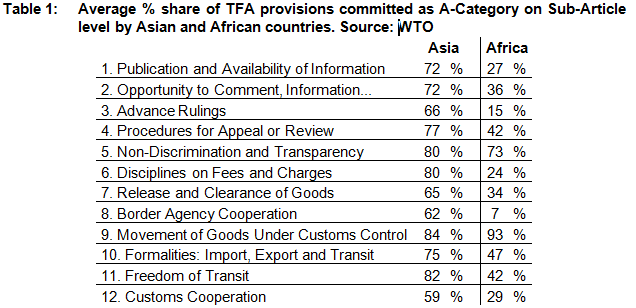
Table 1

TFA includes also “low hanging fruit” – sections that require little technical expertise to be implemented. At least some of these should have been easy for member countries to accept. “Publication and Availability of Information” is one of those sections. Access to information through internet is routine and affordable. It should not require transition periods or particular technical assistance. Donors are even competing to assist governments with such low cost and high-return activities. Still, less than one third of the African Governments notified this Article.

Here are some other peculiar findings:

  • Out of 14 African countries only Morocco accepted “Border Agency Cooperation” as A –Category provision. Three of the others countries that did not notify it are landlocked countries;
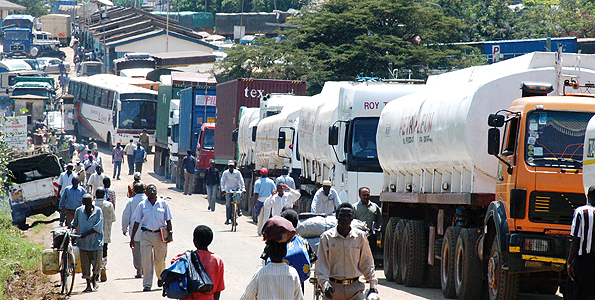
  • Only four out of 14 African countries had fully notified “Freedom of Transit.” Transit challenges in Africa are probably the single most significant source of inefficiency in trade logistics;
  • One of the foundations of modern customs management is the introduction of Risk Management. Only 3 out of 14 African countries had notified this provision;
  • Only Morocco notified Trade Facilitation Measures for Authorized Economic Operators (AEO), which gives certain privileges to traders and transport operators, who show high level of compliance to regulations. One wonders why Kenya, Uganda, Rwanda, Burundi and Tanzania did not notify it as we know that an AEO program is being piloted in the East African Community;
  • Only Senegal notified the sub-Article on Single Window, which is probably the most important one of the whole Agreement. Senegal perhaps deserves this honor – being the first truly African-based single window country – and also representing the good practice of SW management. Yet, according to the African Alliance for e-Commerce, currently there are at least 16 other single windows either already operational or under development in Africa. Why weren’t these developments recognized?

Despite the above “peculiarities” the African situation is fortunately nowhere near as somber as the A-Category notifications indicate. There are plenty of trade and transport facilitation initiatives under implementation – and Africa is indeed “on the Move.” We should on one hand side make sure that the valuable TFA Agreement is not becoming a separate formal process alongside the practical actions on the ground, but rather a framework for coaching governments in climbing up the stairs toward greater competitiveness. On the other hand, the countries should not ignore the existing achievements. A lot has been achieved in Africa in recent years and this process should go on and gain speed. Some sub-regions, which have been less successful in this field need  benchmarks, encouraging and coaching. This is where African and international organizations can play a role.

Although the direct cost of TFA implementation is relatively low, the indirect cost may be extremely high. The indirect cost concerns existing structures, which generate income for organizations and individuals, who often greatly benefit from the status quo. Some governments have entered into concessions outsourcing critical government functions such as pre-customs clearance operations and processing and submissions of declarations to customs. Western firms have efficiently seized the opportunity and negotiated deals, which guarantee profits for in many cases for decades to come. Single Windows in certain countries are good examples for these. In an unnamed Southern African country for example, humanitarian aid is exempt from taxes and duties in import. If however a UN agency for example imports a container of pharmaceuticals worth five million USD, it will have to pay for a Single Window fee of 42,500 USD! Such Ad Valorem fee arrangements are against the TFA. Such concessions are often built inside structures, which profit from the concessions and in exchange – protects its operations and continuity. This is why they are difficult to tackle. This is an example of the problematics that African policy makers must deal with when taking a position in committing in TFA provisions. It may be a whole lot more complicated than what it looks like.
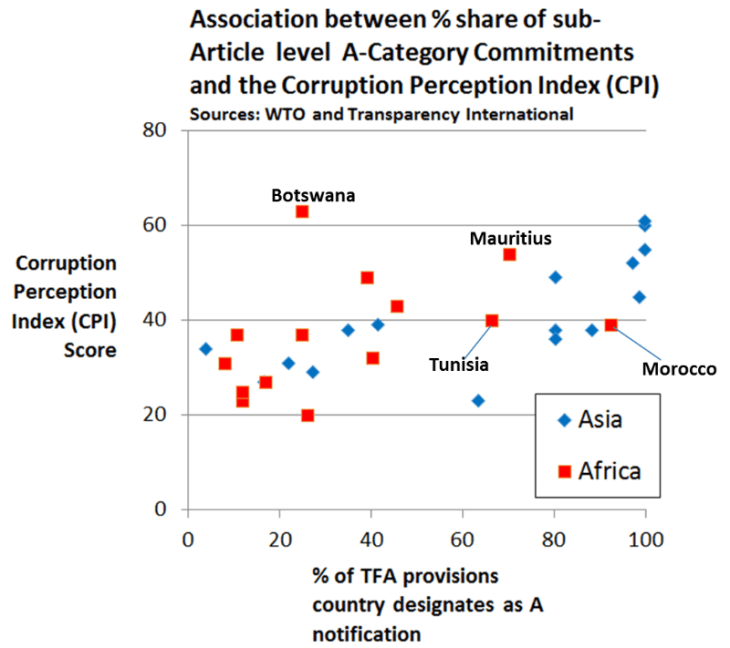
Association between % Share of Sub-Article Level A-Category Commitments and the Corruption Perception Index Score (CPI). Sources: WTO and transparency International.

The diagram above shows the association of share of the provisions that have been covered by A-Category notifications and the Corruption Perception Index (CPI) score of the countries. For African countries the correlation is moderate (correlation co-efficient: 0.42) but for Asian countries the association is strong (correlation co-efficient: 0.73). The association of the two variables is understandable: the less corruption a country has (the higher the CPI rank is), the more reforms the government is in liberty to conduct (the higher coverage of TFA as A-category Notifications).

We need to better understand the underlying reasons why policymakers cannot let reforms take off. Traditions, corruption and outdated structures are usually the biggest obstacles. These cannot be overcome by merely providing short-term technical assistance and bench-marking the world best practices but only strong political leadership can make the change. Developing partners should raise this topic on the highest political level and “live together” through the reforms with the counterparts.

The Northern Corridor (Kenya, Uganda, Rwanda) provides an encouraging example how multiple reforms can be carried out in very short time. Only two years ago it took staggering 27 days to transport a container from Mombasa Port and deliver it in Kigali, Rwanda. Today it takes only seven days. The improvement was enabled by series of reforms, which were championed by the Heads of States of the Corridor member countries. The example proves that major improvements can indeed be achieved in very short time. On the other hand, even with the most sophisticated instruments, reforms will not succeed if there the high-level ownership is not there. Author: Tapio Naula

EAC Compliant Companies Awarded Regional AEO Certificates

EAC CompliantThirteen compliant companies across East Africa were awarded Regional Authorized Economic Operator (AEO) certificates jointly by Partner States Commissioners of Customs and Director Customs, EAC at a ceremony held at Serena Kampala, Uganda on 24th July 2015.

The Commissioner Customs, URA Mr. Dickson Kateshumbwa who represented the URA Commissioner General was the chief guest during the award ceremony. The Chief Guest observed that with the award of Regional AEO certificate, the project had now come of age and indeed puts EAC on the global map of being the first region to implement a regional AEO programme. The Director Customs, Mr. Kenneth Bagamuhunda congratulated the thirteen companies and remarked that the AEO programme will go a long way in supporting the SCT implementation and eventually spur the growth of intra and extra trade. The SCT Coordinators recited each company profile before all the commissioners and Director Customs awarded the Regional AEO certificate to each of the awardees.

The companies were selected after meeting the set admissibility as set out in the AEO selection criteria. The awarded companies participated in the project pilot phase of the project but have continued to demonstrate and maintain high compliance to the set standards. The companies, from different sectors have continued to move consignments under the AEO scheme and in return have been offered benefits that are now currently under review to ensure they are not only tangible but are attractive enough to draw interest from other traders. Source: WCO

Rwanda Customs Process Made Easier for Tax Compliant Traders

Headquarters of the Rwanda Revenue Authority

Headquarters of the Rwanda Revenue Authority

Thirteen companies, three of them Rwandan, last week signed a Memorandum of understanding with Rwanda Revenue Authority to be accorded preferential treatment when clearing their goods at customs. The Authorized Economic Operator (AEO) is a regional trade facilitation program recommended by the world customs organization to ease trade and customs clearance for tax compliant and prominent importers and exporters.

Delay in clearing goods at customs is one of the major impediments to smooth trading within the East African Community (EAC). It also contributes to making the EAC region one of the most expensive places to do business despite being the second most growing economy in the world. The AEO creates some kind of obstacle-free zone where traders in the import or export business, known to be complaint with customs requirements, are accorded special treatment to ease the process of clearing their goods while in transit.

The pilot project will see how the system works in reality and the beneficiaries have all been informed of their rights and which ports or borders to claim them from. Rwanda customs officials issue special identifiers to the beneficiaries to help them identify the benefiting traders once their goods appear at any of the designated custom points. These identifiers will be recognizable everywhere in the five partner states of the EAC where the beneficiaries will pass and claim their privileges as AEO.

The growth of global trade and increasing security threats to the international movement of goods have forced customs administrations to shift their focus more and more to securing the international trade flow and away from the traditional task of collecting customs duties.

Recognizing these developments, the World Customs Organization (WCO) drafted the WCO Framework of Standards to Secure and Facilitate global trade (SAFE). In the framework, several standards are included that can assist customs administrations in meeting these new challenges and developing an Authorized Economic Operator programme is a core part of SAFE. Source: AllAfrica.com

Enforcement, Risk Management and Preferred Trade come together in the SACU Region

Enforcement, Risk Management and Preferred Trade come together in the SACU Region

Enforcement, Risk Management and Preferred Trade come together in the SACU Region

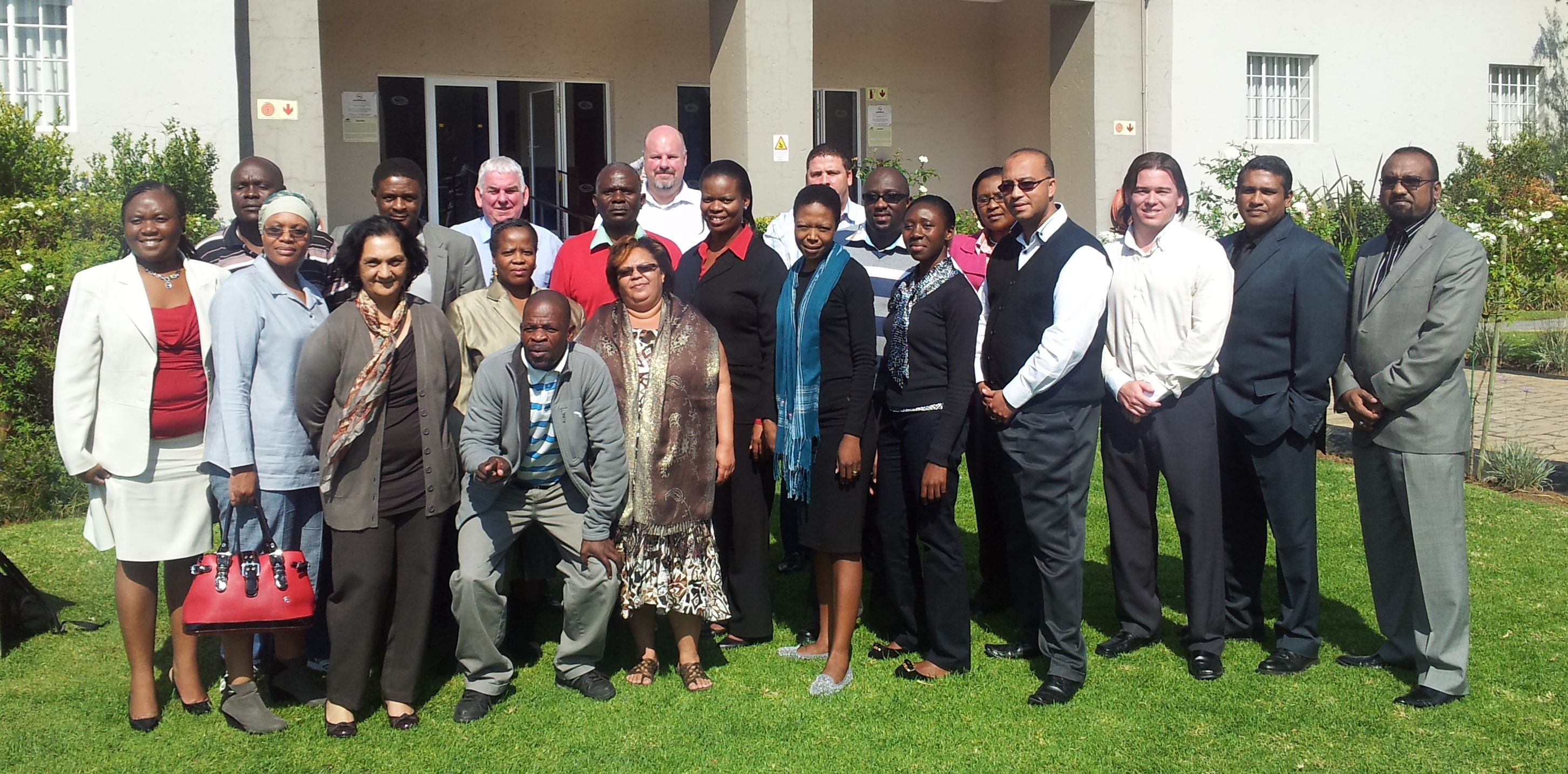
A WCO workshop on the topics of Enforcement, Risk Management and Preferred Trader was conducted in April in Johannesburg, South Africa, with the involvement of the WCO Secretariat, UK Customs and the member countries of the Southern African Customs Union – SACU (Botswana, Lesotho, Namibia, South Africa and Swaziland). Capacity Building in the mentioned areas in the SACU Region is part of the WCO Sub-Saharan Customs Capacity Building Programme financed by the Swedish Government through the Swedish International Development Cooperation Agency, SIDA.

An assessment including lessons learned was conducted concerning Operation Auto, targeted at second hand motor vehicles. This first ever regional enforcement operation in the 102 years of history of SACU presented good results as around 250 vehicles were seized by the Customs administrations. The Regional Intelligence Liaison Office contributed actively in the assessment process, ensuring that also future enforcement operations will benefit from the experiences gained.

The development of further risk management capacity is ongoing at the regional level and discussions were held concerning the establishment of common risk profiles. A number of high risk products have been identified and the formulation of profiles to engage illegal trade in these areas is ongoing.

Regarding the Preferred Trader program, progress can also be reported as SACU Members are approaching implementation at operational level. This project component fits very well with the risk management component as the latter is the foundation of the Preferred Trader approach. The process of selecting high compliant, low risk economic operators for the upcoming pilot scheme is well underway while capacity in verification and post clearance audit is being enhanced. A launch of (a pilot of) the regional Preferred Trade program is tentatively envisaged for the second half of 2013. Source: WCO

Singapore and China’s Mutual Recognition Becomes a Reality

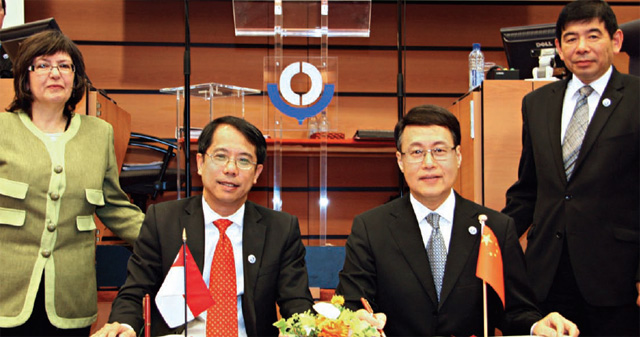
Director-General of Singapore Customs Fong Yong Kian and Vice Minister of the General Administration of China Customs Sun Yibiao (both seated), signed the China-Singapore MRA at the WCO Council Sessions in June 2012. The signing was witnessed by Chairperson of the WCO Council and Chairman of the Revenue Commissioners of Ireland, Josephine Feehily and WCO Secretary-General   Kunio Mikuriya.

Director-General of Singapore Customs Fong Yong Kian and Vice Minister of the General Administration of China Customs Sun Yibiao (both seated), signed the China-Singapore MRA at the WCO Council Sessions in June 2012. The signing was witnessed by Chairperson of the WCO Council and Chairman of the Revenue Commissioners of Ireland, Josephine Feehily and WCO Secretary-General Kunio Mikuriya.

General Administration of Customs of Singapore has announced that the Mutual Recognition Arrangement (MRA), signed with Customs of the People’s Republic of China went into effect on March 15, 2013.  Following the effective date, both Singapore’s STP-Plus companies and China’s Class AA accredited companies will be recognized as Authorized Economic Operators (AEOs) of the respective countries.

This recognition as AEOs allows Customs from both countries to grant clearance facilitation for accredited AEOs such as lower examination rates, priority inspections, and priority handling of customs clearance documents at each country’s port.  Included in the announcement were specific instructions for how importers in both Singapore and China should fill out customs forms when receiving exported goods from one of their respective AEOs.

For goods exported directly to Singapore from a Chinese Class AA company, the Chinese exporter would need to provide the Singapore importer with the 10-digit Customs Registration Code to place on their import declarations to Singapore along with inputting the “AEO code” into the portal for mutual recognition purposes and benefits of AEO.  The AEO code is comprised of “AEO”, “CN” and the 10-digit Customs Registration Code.

For goods exported to China from a Singapore STP-Plus company, the Chinese importer must fill in the “AEO code” of the Singapore’s exporter in the “remark column” in their import declarations to receive mutual recognition benefits.  The format for the AEO code is as follows:  “AEO (written in English half-width characters and capital letters)” plus “<” plus “SG” plus “12-digit AEO code” plus “>”.  For instance, if the AEO code of one Singapore STP-Plus company is AEOSG123456789012, then the remark column filled in by the Chinese importer would read as “AEO”.

The MRA signed between China and Singapore is but one example of several security programs in different countries making it easier for trusted traders to move goods through the supply chain. Other countries that also participate in MRAs include:

  • US Customs & Trade Partnership Against Terrorism (C-TPAT) which has MRAs in place with Canada’s Partners in Protection (PIP), New Zealand’s Secure Export Scheme Program (SES), Jordan’s Golden List Program (GLP), Japan’s Authorized Economic Operator Program (AEO), Korea’s AEO, and the European Union’s ( EU) AEO
  • European Union (EU) AEO which has MRAs in place with Canada’s PIP, Japan’s AEO, Australia’s AEO, New Zealand’s SES, and US C-TPAT
  • Japan Customs has MRAs in place with New Zealand’s SES, EU’s AEO, Canada’s PIP, Korea’s AEO, and Singapore’s STP-Plus
  • Singapore Customs has signed MRAs in place with Canada’s PIP, Korea’s AEO, Japan’s AEO, and China’s Class AA

Part of participating in any security program is the ability to assess and manage risk across the supply chain.  This includes soliciting and analysing information received from every partner within the supply chain to corrective actions and best practices.  While are security programs are still voluntary in nature, companies that take advantage of them are reaping benefits such as faster customs clearance and less inspections. Source: Integration Point

EAC Traders Encouraged to Grab AEO Business Opportunities

EACThe EAC business community has been asked to take advantage of the Authorized Economic Operator (AEO) scheme that seeks to cut down costs of doing business in the East African member states.

The AEO programme, launched in Dar es Salaam on Wednesday, is an entity involving importers, clearing agents, transport companies authorized to import and move cargo within the EAC region with minimal inspections and other customs interventions at checkpoints.

The Permanent Secretary in the Ministry of East African Cooperation Dr Stergomena Tax, launching the World Customs Organisation (WCO)-AEO pilot programme said, “The AEO status can provide companies with significant competitive advantages in terms of supply chain certainty and reduced import costs and finally to the final consumer.”

Apart from reduced transport costs, Dr Tax said the programme would also pull down storage charges because of minimal customs border inspections as well as few checkpoints or road blocks for transit goods.

The Swedish Ambassador to Tanzania Mr Lennarth Hjelmåker said the AEO scheme is a broader compliance strategy to reward compliant traders with simplification benefits which are concrete and predictable.

“Regional integration and cooperation are factors which are important for development, including creation of favourable conditions under which private sector can operate and provide for economic growth with focus on sustainability,” he said.

Sweden, through the Swedish International Development Cooperation (SIDA), has been supporting the work carried out by the WCO-EAC-AEO programme since 2008. Speaking on behalf of the Tanzania Revenue Authority (TRA) Commissioner General Mr Saleh Mshoro, the revenues body’s Finance Director said efficiency and effectiveness of customs procedures can significantly boost the nation’s economic competitiveness.

The launching of AEO programme marks the beginning of a journey between the region’s revenues authorities and the business communities in facilitating smooth and win win trading activities. Source: Tanzania Daily News

US C-TPAT member exports to receive expedited EU customs clearance

4209_image002January, 2013 saw the United States and the European Union implemented the mutual recognition arrangement for their respective supply chain security programmes. The US Customs and Border Protection (CBP) administers the Customs-Trade Partnership Against Terrorism (C-TPAT), which is now recognised as equivalent to the European Union’s Authorised Economic Operator (AEO) programme.

Should they elect to allow CBP to share certain information with the European Union, US importers authorised under C-TPAT will be considered secure and their exports will receive a lower-risk score by the customs administrations of EU member states. In practice, certification translates into time and money savings for parties dealing with trusted operators. In that sense, certified operators are successfully marketing their status as a distinguishing competitive advantage.

Both programmes are voluntary, security-based programmes aimed at improving supply chain security. As programme members, importers receive lower risk-assessment scores in customs administrations’ computer targeting software. Therefore, members are subject to fewer security-related inspections and controls. The mutual recognition arrangement between the United States and the European Union allows for members of one programme to receive reciprocal benefits when exporting to the other jurisdiction.

However, not all C-TPAT members qualify for full AEO benefits. Only Tiers 2 and 3 C-TPAT importers (considered as more secure) may receive a lower risk-assessment score, and consequently undergo fewer inspections when exporting to an EU member state. In addition, in order to receive these benefits, C-TPAT members must expressly elect for the United States to share certain information with the European Union and certify that their exports meet all applicable requirements.

The mutual recognition arrangement may also exempt members’ facilities from undergoing validation site visits by both administrations when initially being certified or during revalidation visits. This benefit is available for every tier of C-TPAT membership.

The mutual recognition arrangement applies only to C-TPAT importers which also act as exporters. A C-TPAT manufacturer will benefit from the arrangement only if it also acts as the US exporter. For example, if a US company owns a C-TPAT-certified manufacturer in Mexico that directly ships merchandise to the European Union, those shipments will not benefit from the arrangement.

CBP’s targeting system recognises AEO-certified entities by their manufacturer identification number. Certified manufacturers will receive benefits under the arrangement regardless of whether they are the EU exporter. A certified exporter which is not a manufacturer may obtain a manufacturer identification number to gain from the benefits of mutual recognition. As such, AEO-certified manufacturers and exporters may benefit under the arrangement, but only US exporters are eligible for benefits.

Although the United States and the European Union have recently announced the possibility of a US-EU free trade agreement, this arrangement is a trade facilitation measure that companies may elect to participate in immediately, regardless of the results of potential free trade agreement negotiations.

The United States also has mutual recognition arrangements for supply chain security with Canada, Japan, Jordan, Korea, New Zealand and Taiwan. Source:  Sidley Austin LLP, and The International Law Office

Picard 2012 – with a South African perspective

Over 230 delegates representing WCO Members, the academic world, international organizations, the private sector, donor organizations and other interested parties attended the 7th WCO Conference on the Partnership in Customs Academic Research and Development (PICARD) hosted by the University of Cadi Ayyad in partnership with Morocco Customs and the WCO in Marrakesh, Morocco from 25-27 September 2012.

The Conference was co-chaired by Prof. Michael Wolffgang, University of Münster, and Prof. M’barek Benchanaa and Prof. Abdullah Ait Ouahman from the University of Cadi Ayyad. The Conference focused on three main topics: The Impact of Regional Economic Integration and Preferential Trade Arrangements on Customs Services; Emerging and Evolving Risks; and Customs Strategic Human Resource Management.

The WCO PICARD Programme was officially launched in 2006 to strengthen co-operation between the WCO, universities, and Customs human resources entities such as Customs Academies. The programme’s objective is to provide a platform where stakeholders can co-operate, collaborate, and contribute to two main pillars: (1) Customs professionalism and (2) Customs-related research.

Key PICARD achievements include adopting the PICARD Professional Standards for operational and strategic Customs managers; holding six successful PICARD Conferences; and publishing many Customs-related research papers in the World Customs Journal. Moreover, a growing number of universities have obtained WCO recognition of their Customs-related academic curriculums.

The PICARD Conference has become an annual meeting place for Customs officers, Customs human resource professionals, and academics to network and exchange ideas on Customs professionalism and Customs-related research. It is an opportunity for Customs academies and the WCO Regional Training Centres to glean new ideas on human resource development. At each conference, research papers are presented; this year, papers will be presented on regional economic integration, emerging and evolving risks, and human resource management.

The dearth in Customs expertise has become an international phenomenon, and South Africa is no exception. Locally based training organisation, GMLS, has been working with the University of Kwazulu Natal, Durban and UCT in Cape Town and in Durban specifically it is expected after council of Higher education approval next year that we will be offering a full masters Degree in Customs for the first time in South Africa as a MCom Customs and Excise, says GMLS CEO Mark Goodger. GMLS is a WCO E learning trainer, an ICC accredited trainer and an approved TETA (Transport Education Training Authority Trainer).

Mark was invited as a guest speaker to this year’s Picard Conference. He explained that the WCO arranged presentations to  stimulate discussions and guidance required from the WCO in the future. Along with South Africa, presentations were also delivered by Finland, Canadian and Moroccan Customs training experts in the results of research and the status in SADC countries of recognised accredited training frameworks which can be utilized by Customs worldwide. Whilst Customs administrations are implementing the Revised Kyoto Convention and the SAFE Framework it is clear that trade will need to follow the direction of future compliance as Customs leads forward into the 21st century.

USCBP and EU sign C-TPAT Mutual Recognition

U.S. Customs and Border Protection (CBP) and the European Union (EU) signed today a Mutual Recognition Decision between CBP’s Customs-Trade Partnership Against Terrorism (C-TPAT) program and the EU’s Authorized Economic Operator (AEO) program.

U.S. Customs and Border Protection Acting Commissioner David V. Aguilar and European Union Taxation and Customs Union Directorate Director-General Heinz Zourek sign the Mutual Recognition Decision between CBP’s Customs-Trade Partnership Against Terrorism program and the EU’s Authorized Economic Operator Program.

CBP Acting Commissioner David V. Aguilar and Director-General Heinz Zourek, European Union Taxation and Customs Union Directorate (TAXUD) signed the decision, which recognizes compatibility between the EU and the U.S. cargo security programs.

“Today’s decision on the mutual recognition of the EU and U.S. trade partnership programmes is a win-win achievement: It will save time and money for trusted operators on both sides of the Atlantic while it will allow customs authorities to concentrate their resources on risky consignments and better facilitate legitimate trade,” said Director-General Zourek.

C-TPAT is a voluntary government-business initiative to build cooperative relationships that strengthen and improve overall international supply chain and U.S. border security. C-TPAT recognized that U.S. Customs and Border Protection can provide the highest level of cargo security only through close cooperation with the ultimate owners of the international supply chain such as importers, carriers, consolidators, licensed customs brokers, and manufacturers. Source: US CBP

Related article

SARS issues Compliance Programme 2012/13 – 2016/17

SARS has issued its inaugural SARS Compliance Programme, a high-level overview of its plans for the next five years to further grow compliance with tax and customs legislation. More so than perhaps any other time in history, the current global economic conditions have thrust domestic resource mobilisation into the spotlight, highlighting sustainability built on a foundation of tax compliance. Countries lacking this solid base have found their room for manoeuvre in these uncertain times severely curtailed and, in some cases, completely absent. The impact of self-reliance on self-determination is self-evident.

Many tax administrations publish similar compliance programmes (including Australia, Brazil, Canada, Denmark, Netherlands, New Zealand, Poland, Spain, Sweden, Turkey, USA, UK) and SARS has based it’s Compliance Programme on their ground-breaking work. To download and read the SARS Compliance Programme, click here! For Customs specialists and trade practitioners no less than 3 priority areas involve Customs –

Illicit cigarettes: the trade in and consumption of illicit cigarettes is detrimental to the fiscus and to the health of South Africans. SARS interventions will continue to focus on clamping down on cigarettes smuggled via warehouses as well the diversion of cigarettes destined for export back into the local market. SARS also plans to modernise it’s warehousing management and acquittal system.

Undervaluation of imports in the clothing and textile industry: Undervalued imports pose a significant risk not only to the fiscus but to local industry and job creation. SARS will continue to work together with other government agencies and industry stakeholders to clamp down on this practice including through the establishment and frequent revision of a reference pricing database to detect undervaluation, increasing inspections as well as supporting an integrated border management model.

Tax Practitioners and Trader Intermediaries: Regulation of this industry will be pursued to ensure that tax practitioners and trade intermediaries are all persons of good standing, are fully tax compliant in their personal capacity and provide a high quality service and advice to their clients. SARS will also develop a rigorous risk profiling system to identify high risk practitioners and trade intermediaries.

Economic sanctions and international trade

Despite global automation and harmonisation of trade, customs operations and procedures, the following article exemplifies the continued need and importance of knowledgeable trade practitioners and customs specialists. Human intellect and ‘expertise’ will forever play a critical role in the interpretation international trade law and national customs procedure.

Long used by governments to punish rogue countries, regimes, entities and individuals, trade and economic sanctions impact an ever-widening range of goods, technology and services. Recent developments in Iran, Syria and Libya, for example, resulted in far-reaching sanctions by Australia, Canada, the European Union and its 27 Member States, the United Nations, the United States and others. The complexity of sanctions and the speed with which governments implement them to address rapidly changing political situations create serious compliance challenges.

Companies are therefore well advised to implement compliance from management through all levels of sales, logistics and finance. The stakes are extremely high because compliance failures—even unintentional ones—can result in the imposition of substantial fines, debarment from government contracts, damage to public reputation and even imprisonment. Recent penalties illustrate the risks and the high governmental enforcement priority for trade sanctions. These include fines of up to US$536 million imposed by US and UK regulators against financial institutions and major businesses. Individuals may also be subject to prison sentences of up to 10 years in the United States and the United Kingdom.

Anyone involved in cross-border transactions therefore needs to determine if their conduct and that of persons acting on their behalf is regulated by trade sanctions. At a minimum, businesses must understand: which countries, regimes and individuals are targeted by trade sanctions; who is obliged to comply; which transactions are prohibited or restricted; and which authorisations may be available or required for any restricted action.

Businesses should also consider the long reach of US and EU sanctions. US sanctions generally apply to “US persons” wherever they are located in the world and to anyone located in the United States. Similarly, EU sanctions apply to “EU persons” wherever they are located in the world and to anyone located in the European Union. Adding to the breadth of coverage, US rules prohibit “facilitation”, which means neither persons nor companies subject to the rules may support a transaction undertaken by another party, including a foreign affiliate, from which a US person would be prohibited from engaging in directly. EU rules likewise prohibit covered persons from infringing sanctions rules indirectly – so much for economic freedom!

Law firm McDermott Will & Emery recommends that companies should take appropriate steps to minimise the risk of infringing trade sanctions by introducing the following safeguards:

  • Require due diligence in connection with all transactions. This should involve at least the screening of all counterparties against the ever-changing sanctions lists that identify the countries, regimes, entities and persons blacklisted. Trade sanctions can apply to goods, technology licensing and the provision of technical assistance, and to ancillary services such as financing, insurance and transport.
  • Establish internal procedures to ensure prompt legal review in the event a transaction with a sanctioned party is identified.
  • Check that the due diligence checklist for merger or acquisition transactions includes an assessment for compliance with trade sanctions.

Source: McDermott Will & Emery 

WCO – 2012 is the year of Connectivity

WCO 60 Years AnniversarySecretary General of the WCO, Kunio Mikuriya, is pleased to announce that 2012 will be dedicated to promoting connectivity, including enhanced cooperation and communication, under the slogan “Borders divide, Customs connects”.

“Connectivity encompasses people-to-people, institutional, and information linkages that underpin and facilitate the achievement of Customs’ main goals,” said the Secretary General. “This theme is particularly relevant as the WCO prepares to commemorate its 60th anniversary in 2012,” he added.

The Year of Connectivity will be launched on International Customs Day, celebrated annually by the global Customs community on 26 January in honour of the inaugural session of the Customs Co-operation Council (CCC) which took place on 26 January 1953.

In 1994, the CCC adopted the informal working name “World Customs Organization” to better reflect its worldwide growth in membership which now totals 177 Customs administrations.

Customs and its stakeholders are urged to be innovative and creative in taking forward the connectivity theme in all its facets throughout 2012. The WCO invites the Customs community to diarise 26 January. Source WCO.

US and EU one step closer to Mutual Recognition agreement

The U.S. Customs and Border Protection (CBP) and the European Union Taxation and Customs Union Directorate (TAXUD) have agreed to language for the U.S.-EU Mutual Recognition Decision today which will lead to its signing in the Spring of 2012. Once signed, the Mutual Recognition Decision will recognize the respective trade partnership programs of the U.S. and the EU—CBP’s Customs-Trade Partnership Against Terrorism (C-TPAT) and the EU’s Authorized Economic Operator (AEO)—with reciprocal benefits.

In 2007, CBP and TAXUD initiated efforts to implement Mutual Recognition between C-TPAT and AEO. Mutual Recognition is an industry partnership program that creates a unified and sustainable security posture that can assist in securing and facilitating global cargo trade. Upon achieving mutual recognition with a foreign partner, one program may recognize the validation findings of the other program.

C-TPAT is a voluntary government-business initiative to build cooperative relationships that strengthen and improve overall international supply chain and U.S. border security. C-TPAT recognizes that U.S. Customs and Border Protection can provide the highest level of cargo security only through close cooperation with the ultimate owners of the international supply chain such as importers, carriers, consolidators, licensed customs brokers, and manufacturers. CBP currently has mutual recognition with: New Zealand, Canada, Japan, Korea and Jordan. Source: USCBP

Related articles

SARS “Trusted Trader” programme under the spotlight

With the implementation of the SARS Customs Modernization Program, accreditation has been revisited and SARS has taken a more robust approach.

South Africa is currently focusing on accreditation for customs procedures only. The Self-assessment Questionnaire was reworked and sent to a number of large importers, inviting them to participate in the “Preferred Trader Pilot Program.” Now more customs accreditation initiatives are underway.

In terms of a future focus on mutual recognition, bilateral discussion between EU and South Africa has commenced. The parties recently agreed to launch a customs project, financed under the Trade, Development and Cooperation Agreement (TDCA) facility, covering the implementation of the WCO SAFE Framework in South Africa. South Africa intends to align its Authorized Economic Operator (AEO) strategy with that of the EU to ensure that standards for both compliance and security match those of the EU.

The EU is South Africa’s main trading partner. The TDCA is the legal basis for relations between the EU and South Africa and provides the framework for cooperation in the social, economic, political and cultural field. Please click here for the full report – refer to  pages 32 -33 for South African AEO article. Source: Ernst & Young

U.S. Customs may get more involved with export security

A top U.S. Customs and Border Protection (CBP) official said the agency is considering expanding its role to include verifying U.S. exporters’ security compliance, with any future program likely to be modeled after the agency’s Customs-Trade Partnership Against Terrorism (C-TPAT) program. C-TPAT sets security standards for imports and verifies compliance with those standards.

“The idea is being noodled around now” at CBP’s headquarters in Washington, said Dan Baldwin, executive director for cargo and conveyance security in CBP’s Office of Field Operations, during a Nov. 3 presentation at the Coalition of New England Companies for Trade (CONECT) 10th Annual Northeast Cargo Symposium in Foxborough, Mass.

The impetus for adding export security to CBP’s portfolio comes partly from the Obama Administration’s push to increase exports as a means of strengthening the U.S. economy. But much of the motivation traces back to exporters themselves.

Large exporters have been asking for a program that would verify their compliance with foreign governments’ cargo security programs, some of which are based on C-TPAT, Baldwin said. CBP plans to sign an agreement with the European Union regarding coordination between C-TPAT and the EU’s Authorised Economic Operator (AEO) security program by the end of this year, he said.

CBP already has some involvement with export security, notably on the U.S. borders with Mexico and Canada. The agency could play a bigger role than it currently does in enforcing limits on technology and licensed goods, Baldwin said.

“I think … the same process we use on the import side should be emulated on the export side,” he concluded. “I don’t think that’s going to be a heavy lift.”  Source: DCVelocity.com Comment: not likely if it means the CBP has to condescend to adapt its system to those of a foreign sovereignty!

Related articles