This edition’s “Dossier” focuses on how Customs can bolster “Recovery, Renewal and Resilience”, the WCO’s theme for 2021, and includes several articles on the digitalization of procedures and the emergence of new digital ecosystems, an article on an impact assessment method using a stakeholder needs analysis, as well as another one on a methodology for using machine learning to identify transactions involving strategic goods.
In the “Panorama” section, China Customs offers some suggestions on how to combat waste trafficking more effectively, Brazil Customs presents its experience of conducting its first Time Release Study, and Oman Customs explains how it managed to accelerate the release of goods by rolling out a Single Window environment and signing service level agreements with regulatory agencies.
The COVID-19 pandemic has highlighted the danger posed by products infringing quality and safety requirements intended to protect consumers and workers. In the “Focus” section of the magazine, we asked market surveillance authorities and Customs administrations to share their experience of controlling the compliance of imported products. To introduce the topic and give an overview of the different offences observed, we open this section with an article on Operation STOP. This global enforcement operation targeted illicit trade in medical products, especially those generally used to diagnose or treat COVID-19.
To discover the full content of this edition please visit the magazine website.
Korea Customs Service (KCS), represented by its Commissioner, Mr. Suk-Hwan Roh, and the World Customs Organization (WCO), represented by its Secretary General, Dr. Kunio Mikuriya, completed the signing process for a Memorandum of Understanding on establishing a WCO Regional Dog Training Centre (RDTC) in Incheon, Republic of Korea.
The new RDTC in Incheon is equipped with high-quality facilities, which include indoor and outdoor kennels, training buildings with simulation training zones and veterinary clinic, etc. Its experienced instructors will conduct professional detector dog training programmes for Customs officials responsible for canine-related duties in the region.
The Centre will serve as a hub for the region’s Customs administrations to share best practices and expertise, and will also provide assistance and advice to other administrations through detector dog training and procurement of detector dogs.
“Detector dogs are of paramount importance in Customs duties,” stressed Secretary General Mikuriya. “Thanks to the professional experts, first-rate facilities and specialized and tailor-made training programmes provided by the KCS, I am confident in the future success of the new RDTC,” he added.
Detector dogs are an ideal tool for screening people and goods in a timely manner, as they have one of the most acute senses of smell in the animal kingdom. This enables them to rapidly detect the presence of prohibited or regulated goods (including drugs, explosives, currency, CITES items, etc.), with minimal disruption to the movement of people and goods. Detector dogs are one of the most important operational resources for identifying and combating Customs fraud worldwide.
With a view to maintaining high standards and building a global network for canine enforcement, to date the WCO has certified 16 WCO RDTCs established in different regions. The goal of these RDTCs is to provide professional canine-related training and capacity building activities for Customs administrations in each of the respective regions and to facilitate cooperation between them.
Germany and Belgium have seized 23 tonnes of cocaine in the biggest-ever haul of the drug in Europe, German customs said Wednesday.
“The enormous amount of cocaine would have brought in several billion euros (dollars) in street sales,” the customs office said in a statement.
German officers had discovered 16 tonnes of cocaine hidden in containers from Paraguay at the port of Hamburg on Feb. 12.
Joint investigations into the stash with Dutch officers led authorities to swoop on another 7.2 tonnes in cocaine at the port of Antwerp in Belgium, German customs said.
A 28-year-old man was arrested on Tuesday in the Netherlands in connection with both the German and Dutch hauls totaling 23 tonnes, it added.
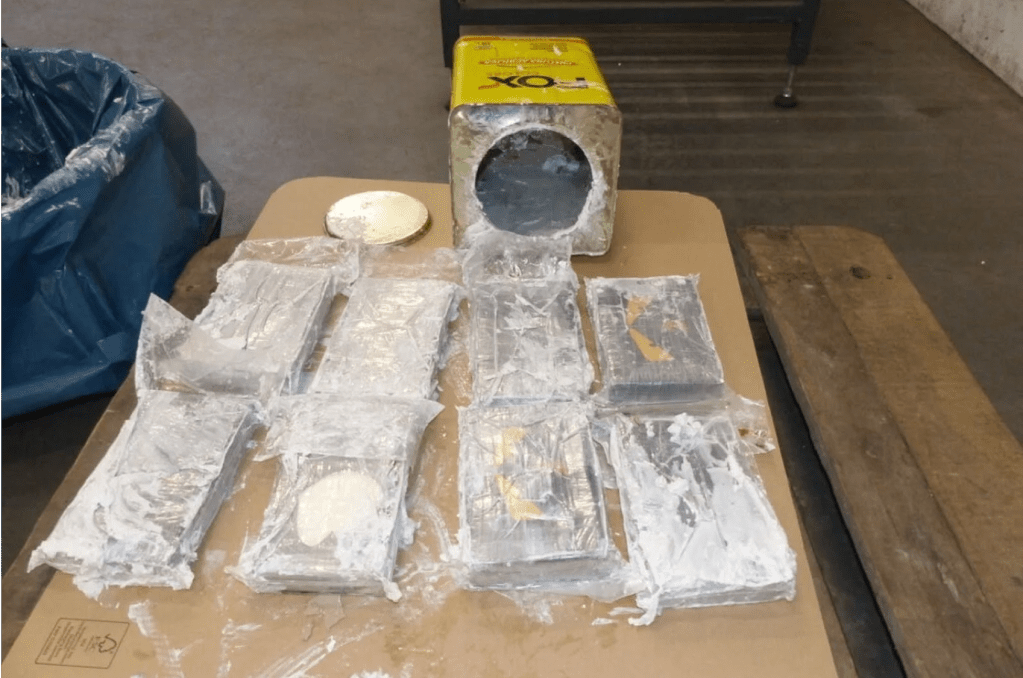
Customs officers at the busy port in Hamburg had decided to take a closer look at the Paraguayan containers after noticing “clear irregularities” with its contents – tin cans that were meant to be filled with putty.
“Beyond a layer of genuine goods packed just behind the container door, numerous tin cans were in fact filled with other goods,” said customs.
Investigators ordered the containers unloaded, and found the cocaine stash in over 1,700 tin cans.
“This is the largest amount of cocaine ever seized in Europe and one of the largest single seizures worldwide,” German customs said, referring to the Hamburg haul.
In all, 102 tonnes of cocaine headed for the European continent were intercepted last year by an international law enforcement project co-implemented by the United Nations.
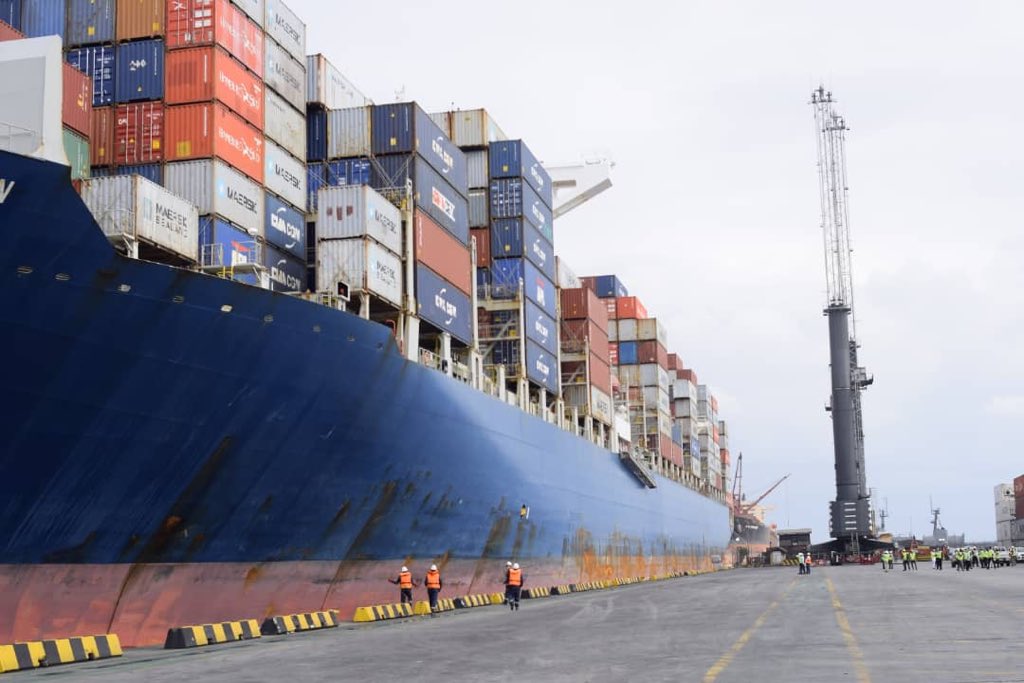
The federal government has banned all agencies from conducting individual cargo inspection at the ports, noting that such inspections must be done jointly.
The Executive Secretary, the Nigerian Shippers Council (NSC), Mr. Hassan Bello disclosed this on Wednesday during a courtesy call to the Nigerian Drug Law Enforcement Agency (NDLEA) Chairman, Brigadier General Mohammed Buba Marwa (rtd).
He said the regime of the Nigerian Port Process Manual (NPPM) recently approved has commenced with no provision for individual inspections by agencies, directing inspection agencies to assemble do joint inspection by 9 am.
“What causes delay is the lack of harmonisation of operating procedures of many agencies at the port. We want all agencies to be on the same page so the process is efficient. The manual says everyone should assemble at the port by 8:30 am and by 9:00 am, everyone does joint inspection. This will cut out delays, ensure efficiency, and promote ease of doing business” Mr. Bello said.
With this measure in place, the ports digitisation process must reach 90 per cent by this first quarter just as the government targets 24 hours operations at the ports.
“Some terminal operators have 98 per cent and others are coming up. Our target is that by the end of the first quarter, we should achieve 90 per cent digitalisation so you don’t need to go to the port to transact business,” he stated.
“We are also aiming to have 24 hours operations at the seaports just like the airports. We are doing it in conjunction with our sister agencies at the ports” he further stated.
The NDLEA Chairman, Brig. Gen. Marwa (rtd) pledged his support to the new reform but he added that the NDLEA will not compromise its duties in stopping illicit drugs from entering the country to destroy citizens.
Herewith a 2020 update of the ICC BASCAP report assessing the environment and highlighting trends in counterfeiting and other forms of illicit trade facilitated within free trade zones.
The Risks
Free Trade Zones (FTZs) provide significant opportunities for legitimate business and play a critical role in global trade as well as economic growth for the host nation. However, our updated research has continued to confirm that insufficient oversight remains a major enabler of illicit activities. Since the publication of our previous 2013 report, there have not been vast improvements in limiting criminal activities within FTZs. In fact, the Covid-19 pandemic has increased vulnerability for abuses by criminal actors who take advantage of supply chain shortages and increased demands as well as relaxed oversight often because of such things as quarantines that have softened Customs control.
Counterfeiters use transit or transhipment of goods, through multiple, geographically diverse FTZs for no other purpose than to disguise the illicit nature of the products. Once introduced into an FTZ, counterfeit goods may undergo a series of economic operations, including assembly, manufacturing, processing, warehousing, re-packaging, and re-labelling. Once completed, the goods can be imported directly to the national territory of the hosting state or re-exported to another country for distribution or to another FTZ, where the process is repeated.
Key recommendations:
Our 2020 report promotes a set of specific policy and legislative recommendations on how to preserve and expand the benefits of FTZs for legitimate traders and protect the public and honest businesses from predatory practices. These recommendations are based on a review of the international and national legal frameworks governing FTZs, including how they are implemented and enforced.
Suggested recommendations include:
empowering Customs with jurisdiction over day-to-day operations within FTZs
strengthening relationship between Customs and FTZs
clarifying and declaring that FTZs remain under the jurisdiction of the national Customs authority
enhancing data sharing between Customs and the private sector
strengthening national government adherence to international conventions and implementation of international standards
legislatively ensuring that strict penalties are in place, including criminal sanctions where appropriate, against perpetrators of illegal activities in FTZs
that manufacturers and shippers recognize and use the ICC World Chambers Foundation’s International Certificates of Origin (COs) Accreditation Chain which is a program that accredits chambers of commerce issuing COs wishing to guarantee their commitment to the highest level of quality, implementing transparent and accountable issuance and verification procedures. Accredited chambers will receive a distinctive internationally recognized quality classification, reinforcing their integrity and credibility as competent trusted third parties in the issuance of COs.
Additionally, the new document also provides specific recommendations such as drawing on international agreements, lessons learned from effective and ineffective national legislation, the experience of IP rights holders, and legislative and regulatory measures to enforce intellectual property right protection in FTZs. These specific recommendations are delineated in the report for action by the World Customs Organization, World Trade Organization, national governments, and FTZ operators. Effective implementation of the measures delineated for each of these bodies will go a long way in securing FTZs from illicit traders.
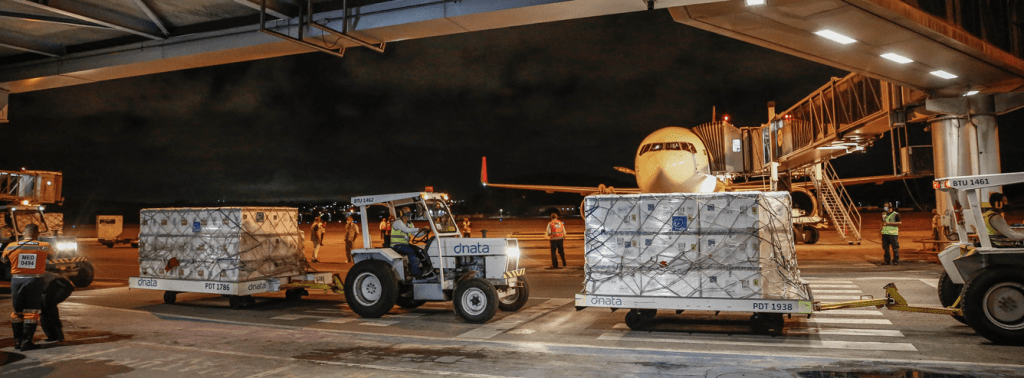
Today, the World Customs Organization (WCO) and International Civil Aviation Organization (ICAO) released their Joint WCO-ICAO Guiding Principles for Pre-Loading Advance Cargo Information and Joint WCO-ICAO Guidelines on Alignment of the Customs Authorized Economic Operator and Aviation Security Regulated Agent/Known Consignor Programmes. These Guiding Principles and Guidelines are a result of continuous joint efforts over the last 10 years, following serious threats and vulnerabilities to international trade supply chains.
“In the context of the COVID-19 pandemic and the need to facilitate safe and secure vaccine distribution, strong collaboration among Customs, Civil Aviation Authorities and the relevant stakeholders is highly recommended,” said the WCO Secretary General, Dr. Kunio Mikuriya. “WCO and ICAO Members are encouraged to make the best use of advance cargo information for risk assessment as well as to align partnership and security programmes to ensure secure and efficient air cargo supply chains,” he added.
With the new Joint WCO-ICAO Guiding Principles for Pre-Loading Advance Cargo Information (PLACI), another layer is being added to the multi-layered approach to Aviation Security in order to detect Improvised Explosive Devices/Improvised Incendiary Devices (IED/IID) in air cargo. These PLACI principles should not be used as a standalone method of Aviation Security (AVSEC) screening or air cargo security control, but rather to perform an additional assessment of the potential Aviation Security risks represented by a consignment.
These Joint Guiding Principles comprise several key and specific principles to meet the needs and capabilities of both regulators and industry, and provide guidance for the risk analysis process. Combined with intelligence and other information, PLACI consignment data enables regulators to perform an initial assessment of the potential risks posed by a consignment. The results of the initial assessment may also indicate the need for additional action.
These Guidelines aim to assist WCO and ICAO Members wishing to assess the similarities between their Customs and AVSEC security programmes, with the intention of further aligning them. This collaborative work should ultimately lead to simplification of procedures and eradication of duplicate security requirements and controls, to the benefit of the authorities and the airline industry.
SARS’ Customs unit made a bust of rhino horn with an estimated value of R53 172 000, in a shipment destined for Malaysia.
While conducting manifest profiling at the courier facilities, the Customs Detector Dog Unit at O.R.Tambo International Airport selected a suspicious shipment declared as ‘HP Cartridges Developers’.
The three-piece shipment was taken to the X-ray scanner for non-intrusive inspection, where the image analysis reflected objects resembling the shape of rhino horns. The shipment was taken for physical inspection and upon inspection of the boxes, 18 pieces of rhino horn were found concealed in traditional clothing. The goods weighed 63kg.
This is the fourth rhino horn bust by SARS Customs at the O.R.Tambo International Airport between July 2020 and February 2021. The overall weight of the rhino horn seized in these four cases is 277.30 kg with an estimated value of R 234 114 206.
The Customs officers immediately called the Directorate of Priority Crimes Investigation (Hawks) to the scene, who confiscated the shipment for further investigation.
In his reaction to this massive seizure of the rhino horn, Commissioner Edward Kieswetter congratulated the Customs officers for their excellent work. He warned the perpetrators of crime that SARS, working with other law enforcement agencies, would spare no efforts in confronting and dealing decisively with any criminal malfeasance. Those that are involved in such egregious and merciless killing of rhinoceros and mutilating them will be brought to book.
He furthermore said, “Those who are determined to destroy the rich natural endowment of our country, which is a common treasure and heritage for all, that we should look after for future generations, will be met with unwavering commitment of our officers to enforce the law.”
Source: South African Revenue Service, 4 February 2021


 What Happened to the Portcullis?
You must be logged in to post a comment.