Nigerian Customs to host Single Window Feasibility Conference

Single-Window-SystemThe Nigeria Customs Service (NCS) has concluded plans to hold a conference on Single Window feasibility study findings where the national single window roadmap, implementation plan and key recommendations will be analysed.

The conference will occur in Lagos from 11 to 12 December, 2012, during which organisational, financial and cost benefit analysis for the proposed single window solution will also be analysed. The conference will address issues in areas such as business process, data harmonisation, ICT readiness of stakeholders, legislation, stakeholder relations and change management.

Feedback from all stakeholders is also expected to be collected and validated at the forum for the conclusion of the feasibility study. Furthermore, the conference is designed for policy makers, government officials, business managers, analysts, service providers, representatives of international agencies working in the field of trade facilitation, members of the academia as well as experts in trade and e-business. Source: Leadership (Abuja)

Tobacco industry uses trade pacts – to snuff out anti-smoking laws

Anti-tobaccoAs countries around the world ramp up their campaigns against smoking with tough restrictions on tobacco advertising, the industry is fighting back by invoking international trade agreements to thwart the most stringent rules.

A key battlefront is Australia, which is trying to repel a legal assault on its groundbreaking law requiring cigarettes to be sold in plain packs without distinctive brand logos or colors. Contesting the law, which came into effect Dec.1, are the top multinational cigarette makers and three countries — Ukraine, Honduras and Dominican Republic — whose legal fees are being paid by the industry.

The dispute underlines broader concerns about trade provisions that enable foreign companies to challenge national health, labor and environmental standards. Once a country ratifies a trade agreement, its terms supersede domestic laws. If a country’s regulations are found to impose unreasonable restrictions on trade, it must amend the rules or compensate the nation or foreign corporation that brought the complaint. In the case of Australia’s plain packaging law, the tobacco industry and its allies are challenging the measure as a violation of intellectual property rights under trade agreements the nation signed years ago.

Public health advocates fear the legal attack will deter other countries from passing strong measures to combat the public health burdens of smoking. The “cost of defending this case, and the risk of being held liable, would intimidate all but the most wealthy, sophisticated countries into inaction,” said Matthew L. Myers, president of the Campaign for TobaccoFree Kids in Washington D.C.

The advocates also say countries should be free to decide how best to protect public health, without being second-guessed by unelected trade panels. Moreover, they argue, tobacco products, which kill when used as intended, should not be afforded the same trade protections as other goods and services. Worldwide, nearly 6 million people a year die of smoking-related causes, according to the World Health Organization, which says the toll could top 8 million by 2030. With fewer people lighting up in wealthy nations, nearly 80 percent of the world’s 1 billion smokers live in low and middle-income countries.
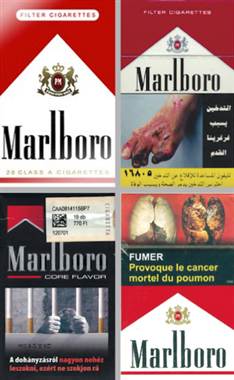
Marlboro, the world’s top-selling brand, packaged under labeling laws of (clockwise) the U.S., Egypt, Djibouti, Hungary/Photos of non-U.S. packs, Canadian Cancer Society

Marlboro, the world’s top-selling brand, packaged under labeling laws of (clockwise) the U.S., Egypt, Djibouti, Hungary/Photos of non-U.S. packs, Canadian Cancer Society

Countries have been emboldened to pass more stringent measures by the Framework Convention on Tobacco Control. In effect since 2005, the treaty has committed about 175 nations to pursue such measures as higher cigarette taxes, public smoking bans, prohibitions on tobacco advertising, and graphic warning labels with grisly images such as diseased lungs and rotting teeth (The U.S. has signed the treaty, but the Senate has not ratified it. The U.S. Food and Drug Administration has ordered graphic warnings for cigarette packs, but an industry court challenge on 1st Amendment grounds has stalled the rule.)

Cigarette makers say they acknowledge the hazards and the need for regulations. “We actually support the vast majority of them,” said Peter Nixon, vice president of communications for Philip Morris International, which has its headquarters in New York, its operations center in Switzerland, and is the biggest multinational cigarette maker with 16 percent of global sales.

But the industry has watched with growing concern as more than 35 countries have adopted total or near-total bans on cigarette advertising. Its big profits depend on consumer recognition of its brands. Yet in many countries, the once-ubiquitous logos and imagery are receding, leaving the cigarette pack as a last refuge against invisibility.

Now the pack, too, is under attack. Along with plain packaging laws such as Australia’s, countries are weighing retail display bans that keep cigarette packs out of view of consumers, and laws requiring graphic health warnings so large that there is barely any room for trademarks. Tobacco companies contend that countries enforcing such rules are effectively confiscating their intellectual property and must pay damages.

The industry also claims that measures like plain packaging are counterproductive. “We see no evidence — none at all — that this will be effective in reducing smoking,” Nixon of Philip Morris International said in an interview. In fact, he said, generic packaging likely will increase sales of cheap, untaxed counterfeit smokes, thus increasing consumption (my emphasis added).

Comment: And for me this is the bottom line. Governments are happy to collect the ‘sin tax’ every year, most increasing it annually under the pretext of curbing the use of alcohol or tobacco products. Forcing draconian law will only increase the contraband ‘underground’ which these same governments have little control over. The worldwide push under the WHO banner appears to have more of a ‘social conditioning’ connotation than a health one.

Export tax mooted on iron ore and steel

Iron ore (Engineering News)

Iron ore (Engineering News)

The South African cabinet has endorsed the final report on the work of the Intra-Departmental Task Team (IDTT) on iron ore and steel, says Minister in the Presidency responsible for Performance Monitoring, Evaluation and Administration, Collins Chabane.

Briefing reporters following Cabinet’s last meeting of year on Thursday, Chabane said in keeping with prior decisions to enhance the competitiveness of the steel value chain, Cabinet endorsed the final report on the work of the IDTT and the recommendations contained in the report for urgent implementation.

He said there had been a lot of debate and interaction between the Departments of Trade and Industry, Economic Development and steel producers and mining houses with regards to the pricing of steel.

In August 2010, the dti announced the formation of a task team to make recommendations into the viability of local steel production. This as it had expressed concern about the high price of steel in the South African economy.

“Within the context of the beneficiation programme where the government is emphasising and wanting to expand the beneficiation of South African mineral products as it is one of the critical aspects,” said Chabane.

Among the recommendations of the task team are the amendments to the Competition Act and the introduction of export taxes on iron ore and steel where appropriate. The recommendations also include the promotion of new steel investments and prioritisation of electricity available and connections to such investments.

“Government would want, among other things, to expand the number of participants in terms of those who are producing steel as part of the reason to introduce new competition. Secondly [we] also want to take measures which are going to contain the expansion of prices of steel countrywide in order to stimulate the domestic production of various products which need to be processed in the country.

“The government is going to take several steps with regards to that in order to lower the price for domestic consumption and to redirect the steel products to provide for the South African economy,” explained Chabane.

He further added that the Industrial Development Corporation (IDC) will have to play a greater role in the industrialisation of the country through being involved in manufacturing as well as beneficiation. Source: SAnews.gov.za

Corruption Perceptions Index 2012

Corruption Perceptions Index 2012Twelve African countries are ranked among the 75 least corrupt nations in the world, according to the 2012 index published Wednesday by Transparency International. Published annually, the Corruption Perceptions Index draws upon a range of data sources to determine how corrupt countries’ public sectors are perceived to be. On a scale from 100 (highly clean) to 0 (highly corrupt), two-thirds of all countries scored below 50.

The top eight in sub-Saharan Africa (SSA) in 2012 also led the list in 2011, with approximately the same global rankings, ranging from 65 to 43. Liberia – at number 11 in sub-Sahara with a score of 41 – saw its global ranking rise 16 points – from number 91 last year to 75 in 2012.

Botswana, Cape Verde, Mauritius, Rwanda, Namibia, Ghana and Lesotho led the SSA rankings, along with South Africa, which dropped two places this year – to nine from seven. Gambia, which was ninth last year, dropped this year to 21 in SSA and 105 globally. Tunisia, which is grouped with Middle East and North Africa (MENA) countries, is tied with Liberia at 75 on the global rankings. Crowding the bottom among the most corrupt in the world are Chad, Sudan and Somalia. For more information visit – www.cpi.transparency.org

Portable multi-purpose airport scanner

Flatscan portable scanner

Flatscan 27 portable scanner

Mondial Defence Systems provide the full range of CBRNe (Chemical, Biological, Radiological, Nuclear and Explosive) solutions to government, military and civil agencies.

The FlatScan 27 is a highly innovative flat portable battery-powered X-ray photodiodes system that has been specifically designed for high-speed and high-resolution inspection tasks. It incorporates a state-of-the-art 2D (two-dimensional) self-contained robust scanning detector, a laptop computer and a CP120B or CP160B portable constant potential X-ray generator to deliver real-time image processing. FlatScan 27 was developed in cooperation with specialised EOD (Explosive Ordnance Disposal) teams and comprises various unique features, specifically to meet any emergency situation. The technology will predominantly be of interest for applications used by the military, police, prisons and customs.

The FlatScan 27 comprises a large number of unique technological features and delivers a versatile and highly thin detector (thickness of just 55mm). This detector means that large objects with dimensions up to as much as 535 x 412mm can be scanned in just one attempt, even in situations where they might be located in very inaccessible places (e.g. close to a wall).

Flatscan 27 providing material discrimination and conventional scanning capability

Flatscan 27 providing material discrimination and conventional scanning capability

Furthermore, the FlatScan 27 delivers an excellent image quality with a high penetration capability (up to 34mm of steel at 160kV, 0.5mA). This is possible as a result of its sensitivity, the 800 microns resolution and the ability it offers for slowing down the speed of the scanning detector.

The FlatScan technology can be extended through a variety of options including materials separation. This involves the colour coding of a package to indicate whether the components inside are organic or inorganic in nature. This option delivers extra insight to the operator when making an informed judgment relating to the contents of suspect objects or packages.

The detector is equipped with a battery that lasts for two hours, while the two X-ray source cells each enable the development of up to 200 images. It should be noted that in cases of long-lasting laboratory applications, both items can be powered by optional mains power supplies.

For quick on site intervention, the FlatScan 27 detector can be easily transported in a backpack, while all accessories are stored in a carrying case. For more information visit – http://www.mondial-defence.com


African lament – regional integration too slow

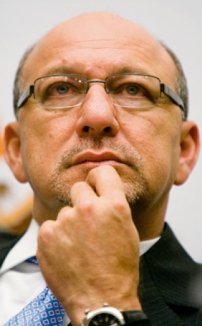
National Planning Commission Minister - Trevor Manual

National Planning Commission Minister – Trevor Manual

South African Minister in the Presidency in charge of the National Planning Commission Trevor Manuel says Africa has a lot to learn from the ongoing European economic crisis in order to avoid making the same mistakes. Delivering a presentation under the theme “Africa and the European Financial Crisis — Opportunities and Risks” at the AMH Conversations dinner in Harare on Monday, Manuel said while the European Union (EU) moved at a fast speed towards convergence “we in Africa have been rather painfully too slow about convergence”.

“In fact, it’s so bad for us as Africans that 21 years after the Abuja Treaty was adopted and set out exactly what we need to do if we want to get to an African common market…we still need to focus on regional building blocks,” he said.

“We aren’t building blocks, I am afraid that we are just pebbles without mortar to hold us together. Its not about EU, not about the US (United States), not about the IMF (International Monetary Fund) and World Bank, its about us and the way we relate to each other, and in this context it is fundamentally important that we talk to each other as Africans about some of the hard truths that confront us.”

The former South Africa Finance minister said regional integration required hard work, honesty and convergence, adding that in a global economy, African countries would not be able to survive as individual entities. “As individual countries, we will not make it in the world. We will be picked off and become markets for the rest,” he said.

“So we can’t look to the rest of the world. We have to look to each other in our neighbourhood and understand that’s where change will be driven from. As we learn from Europe we look at ourselves in understanding what we should not do.”

He said institutions mattered both in good times and during a crisis, adding that it mattered for Africa to understand the speed at which countries develop as it builds regional institutions. Manuel said the Lisbon accord brought everybody together in a short space of time without ensuring that each country in the EU was moving at the same rate.

Meanwhile, speaking at the same event, Finance minister Tendai Biti described regional integration as imperative. “For me, with great respect to our principals and leaders, my great disappointment is with the structure of our regional bodies,” he said.

“If you go into the main summit of a SADC meeting, we spend 90% of the time discussing Madagascar, Zimbabwe, Lesotho and now the Democratic Republic of Congo. The actual reports from key ministers like Ministries of finance, regional integration and trade are basically footnotes that Head of States just sift through.” Source: Newsday (Zimbabwe).

Comment: The sad reality of it all is that it is Africa’s politicians which drive this process – they preside over the regional secretariat’s. Its time to provide the necessary guidance to the regional bodies. Moreover, if the ultimate goal is an African Union, why are multiple (overlapping) regional economic unions being promoted?

Zambia – government to crack whip on crossborder smuggling

New Kasumbalesa border post facility - time to jack up cross-border security

New Kasumbalesa border post facility – time to jack up cross-border security

Copperbelt Permanent Secretary Stanfold Msichili says Government will enhance security measures to curb rampant illegal activities at Kasumbalesa Border Post which threaten public security. Mr Msichili has also directed Chililabombwe acting District Commissioner, Frank Siatwinda, to establish how Congolese managed to set up a booming trading place on the Zambian soil where assorted wares were being sold.

He said the Government would find a lasting solution to combat rampant illegal activities which threatens public security and that there were plans to engage concerned parties from the Democratic Republic of Congo (DRC). The Open Market has been built on our land because of its proximity to the trading area. It will not be easy to control the situation but Government is committed to finding a long-term solution.

Mr Msichili was saddened that scrap metal from DRC, which was banned for export in that country, was being smuggled into Zambia and reloaded for onward transportation to South Africa. He’s adamant that these issues should be addressed by the police, customs and immigration because we are allowing scrap metal to pass through the country. Earlier, Zambia Revenue Authority (ZRA) Kasumbalesa Border station manager Levy Simatimbe told Mr Msichili’s delegation that illegal activities were rampant at the border with some Congolese traders at the controversial Open Market on the Zambian side selling the banned alcohol, ‘Tujilijili’.

During the tour, Kasumbalesa police assistant superintendant Anthony Mphanza said the existence of the Bilanga Township, a few metres from the Zambian side where the population of foreigners was swelling posed a security threat. The Bilanga Township may encroach the Zambian side because its population of foreigners was concentrating along the areas where there was potential for trading in essential basic commodities, like maize meal, cooking oil, sugar, timber, household items, among other items. Illegal trade in cement was becoming a huge public concern at the border. It is estimated that about five tonnes of cement was illegally sold to DRC everyday. Congolese freely come to Comesa Market at Kasumbalesa Border to sell and buy different items. They carry about 10 bags of 25 kilogrammes on a bicycle. Source: The Times (Zambia)

EAC to punish Member States enforcing non-tariff barriers

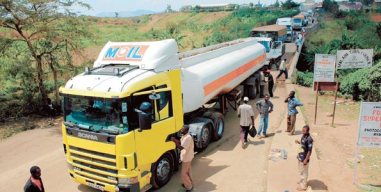
Uganda, Malaba border crossing

Uganda, Malaba border crossing

The New Vision (Uganda) reports on a draft law which will punish countries that fail to implement agreed upon mechanisms to eliminate trade barriers has been submitted at the regional Parliament.

Jose Maciel, the TradeMark East Africa director of trade facilitation, noted that while most of the non-tariff barriers (NTBs), including road blocks and corruption have slightly declined, the proposed law in the East African Legislative Assembly, if enacted, would create the possibility of sanctions against stubborn states that do not enforce the check points. “It is important to give teeth to the system. We need to make it possible to impose sanctions for countries that do not eliminate NTBs,” said Maciel.

He was speaking at a Kenya Ports Authority (KPA) organised meeting with EAC media in Mombasa. TradeMark is a trade facilitating agency operating in the five states of East Africa. Maciel said non-tariff barriers like road blocks, which are easy to eradicate, are some of the biggest impediments to East Africa’s competitiveness.

States are not the only defaulting party to agreed upon positions on eliminating NTBs. P.J. Shah, a Mombasa entrepreneur, for instance notes that while Mombasa began 24-hour operations about three years ago, other agencies like banks and shipping lines are not operating 24 hours. The poor infrastructure such as rail and water systems, whose potential is yet to be optimised, also increase trade costs. Other NTBs include weighbridges and corrupt state enforcement agencies.

Regional trade experts and facilitation agencies such as Trade Mark East Africa agree that NTBs are known, and numerous researches have been done about them and their impact on trade. Although some efforts have been made to eradicate or reduce the salient ones such as road blocks, overall NTBs remain a major trade impediment.

Two thirds of goods are shipped in containers. TradeMark estimates that 20% of annual shipments face NTBs. TradeMark is also targeting to work with regional governments to harmonise 20 standards in a year, amongst the other efforts at making EAC more competitive.

During the Mombasa meeting, it was agreed that because sometimes there seems to be no communication between the different government agencies such as the Kenya Revenue Authority (KRA) and KPA, hinterland states suffer.

There should be a single authority that oversees them all and ensures enforcement. There are about 24 road blocks between Mombasa and Uganda’s border and another 21 in Uganda, four in Burundi and two in Rwanda. There are also 12 weighbridges in Kenya, five in Uganda and two in Rwanda.

“A well run efficient port can help shape economic growth and performance of the economy,” said Antony Hughes, a TradeMark official.

Mombasa handles about 20 million tonnes of cargo, 85% destined for Uganda and other hinterland states. Transit states always suffer the biggest brunt of NTBs and poor flow of information regarding imminent disruptions at the border. This was witnessed during the recent cash bond imposed by KRA that caught Uganda traders unaware, leading to massive clog ups of cargo and huge loss of value.

Comment: It appears that regional bodies such as the EAC are to get extraordinary powers to enforce rules over sovereign states. Would be interesting to learn whether these member states voted for such action, or if it is rather the ideal and persuasion of ‘foreign’ interests.

WTO – Merchandise Trade and Commercial Services

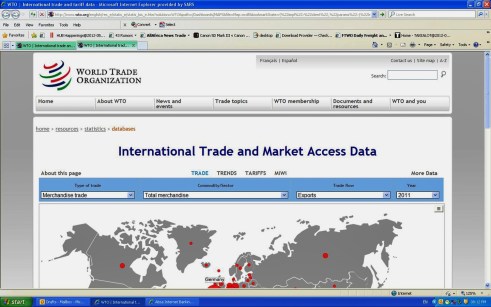
Researchers and students of international trade patterns and economics will find a useful resource in the following link. Information is made available across databases, annual publications as well as interactive statistics and maps. Please take note of the copyright.

WTO Statistics