Private sector finally welcome in Africa?

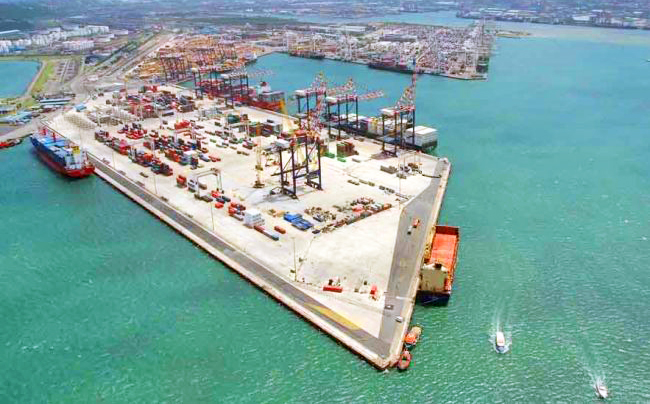
The acceptance of private sector participation in ports in Africa is gaining traction, and not before time. At least that’s what a meeting of port minds in Nigeria would have us believe. The Port Management Association of West and Central Africa at its 35th Council Meeting and 11th Round Table Conference held recently in Lagos, Nigeria, came out firmly in favour of increased private sector participation in ports as a means of achieving cost efficiency improvements.

The Council meeting, held under the theme ‘Impact of Port Concession on the Socio-Economic Development of Our Countries’ ended with the resolution that, “member countries should put in place robust legal frameworks that will sustain the growth of Public Private Partnerships in port management systems”. Words that are encouraging to hear and that generally reflect a much changed position from a decade ago when there was still a strong belief in the public versus private system of port operation.

Successful privatisation programmes such as the major one that has been implemented in Nigeria have, however, brought some insight into what the private sector can do better than the public sector and hence a changed perception, although the learning curve is by no means over in this respect. What would also help facilitate this however is improved process to the goal – what can perhaps be termed Step 2. In particular, concession processes that are not weighed exclusively by cash received considerations but place greater emphasis on technical considerations in the broadest sense of the word.

A better balance between the two elements can lead to the selection of a more appropriate long term strategic partner and potentially to all-round greater economic benefit. The trouble is of course that such systems are not high on the agenda of African nations where cash considerations are usually to the fore especially in today’s troubled economic times. A system of this ilk is more likely to be found deployed in a mature economy than an emerging one. It remains a laudable goal, however, as a longer term objective and as part of efforts by the IMF, World Bank and aid agencies to develop Africa’s infrastructure, particularly in Sub-Saharan Africa. Source: Port Strategy


Most African countries to be middle income by 2025?

As many as 38 of sub-Saharan Africa’s 48 countries could be regarded as ‘middle income’ by 2025, but World Bank chief economist for Africa Shantayanan Devarajan warned that such an advancement would not necessarily translate into a reduction in poverty. Currently, 21 countries, collectively with 400-million citizens, have middle-income status, which the World Bank defines as countries with yearly per-capita income levels of higher than $1 000.

Speaking following the release of the October edition of the bank’s ‘Africa Pulse’ publication, Devarajan noted that at least ten countries, representing 200-million people, were poised to transition to middle-income status over the coming 13 years on the back of prevailing growth rates. Included in the list are countries such as Zimbabwe and Comoros, which would require both growth and stablisation.

Over the past 15 years, the continent had expanded at a rate of two percentage points better than the average global growth rate, and the bank was still expecting sub-Saharan Africa to expand by 4.8% in 2012 – excluding slow-growing South Africa, the region’s largest economy, average growth for the region was forecast at closer to 6% for the year.

But there was potential for a further seven countries, with 70-million citizens, to be included in the middle-income mix over the period if rates of growth accelerated beyond levels achieved over the past 15 years. Only ten African countries, representing 230-million people, almost certainly will not achieve middle-income status by 2025.

But while Africa’s recent growth spurt had resulted in the first overall reversal in the continent’s poverty rate since the 1970s – from 58% in 1999 to 47.5% in 2008 – the bank cautioned that continued progress would depend on continued macroeconomic prudence and improved governance, particularly in the area of natural resources.

Africa Pulse showed that resource-rich countries had seen a strengthening of economic growth, while poverty rates and inequality levels had not performed as impressively. “Some countries, such as Angola, Republic of Congo and Gabon have actually witnessed an increase in the percent of the population living in extreme poverty.”

“Resource-rich African countries have to make the conscious choice to invest in better health, education, and jobs, and less poverty for their people because it will not happen automatically when countries strike it rich,” Devarajan said. “Gabon, for example, with a per-capita income of $10 000 has one of the lowest child immunisation rates in Africa.”

To ensure that the benefits of rising growth were “pro poor”, more jobs would need to be created. And, in the context of high levels of informal sector employment, efforts would also need to be made to improve access to finance and skills, in the informal sector. Source: Engineeringnews.co.za


Interfront – Customs know-how and software

Forgive my exuberance and national pride, for one minute. After some years of intense re-organisation and strategization a new dynamic organization is set to spearhead ICT development in the Customs and Border Management industry. Many will know it by its previous name TATIS or TATIScms. The Cape Town based IT outfit is responsible for the intuitive customs software solution which currently operates in Luxembourg Customs. Let it be known that this is one tough space to operate and succeed in.

Africa, in particular, has  suffered the stigma of UN and World Bank ‘freebies’ by way of customs automated solutions – designed and developed by the west, on western philosophy with little concern for the longer term sustainability and development on the African continent. Before the emergence of commercial Windows-based software, African states (and most developing countries for that matter) had little option but to adopt ASYCUDA. The French colonies in the main sought franco-developed SOFIX. Bull Computers were particularly strong in this space and received great support from the French government in their ventures.

Just as the ‘power’ of the west is waning under financial and political turmoil, so developmental states and economies are looking to their own resources and expertise to fulfil their needs and destinies. A similar phenomenon occurred in the border and port control security space during the first decade of the 21st century, where the Chinese have virtually stolen international market share in NII (Cargo scanning) equipment.  Therefore the emergence of InterFront on the Customs ICT scene is both unique and timely. For more details on the new company and its partners, solutions and expertise please visit their website: http://www.interfront.co.za. Also read their corporate and product profile brochure – click here!

This week, Interfront are show-casing their solution and expertise at the WCO‘s 2012 ICT Conference in Tallinn, Estonia. With the international customs and border management relatively young and seeking stability, Interfront have a great opportunity to develop a regional and international footprint. SARS, in particular, looks forward to its new integrated customs solution; setting a new bench mark in global customs processing.

A study in Corruption and Firm Behavior

Extensive literature argues that reducing trade costs can substantially increase income and improve welfare in trading countries, particularly in the developing world where these costs are highest. In 2007, a shipping a container from a firm located in the main city of the average country in Sub-Saharan Africa was still twice as expensive, and six times more time-consuming, than shipping it from the US. It was also twice as expensive and just as time-consuming as shipping a similar container from India or Brazil, according to the World Bank. As a result, a significant portion of international aid efforts has in recent years been channeled to reducing trade costs and improving logistics in the developing world. Evidence is growing on how corruption in transport networks can significantly increase the cost of moving goods across borders.

A recent paper “Corruption and Firm Behaviour” investigates how different types of corruption affect company behavior. Firms can face two types of corruption when seeking a public service: cost-reducing, “collusive” corruption and cost-increasing “coercive” corruption. Using an original and unusually rich dataset on bribe payments at ports matched to firm-level data, the authors observe how firms respond to each type of corruption by adjusting their shipping and sourcing strategies. Cost-reducing “collusive” corruption is associated with higher usage of the corrupt port, while cost-increasing “coercive” corruption is associated with reduced demand for port services. Data suggests that firms respond to the opportunities and challenges created by different types of corruption, organizing production in a way that increases or decreases demand for the public service. This can have important implications for how we identify and measure the overall impact of corruption on economic activity. The data further allows us to understand the bribe setting behavior of different types of public officials with implications for the design of anti-corruption strategies.

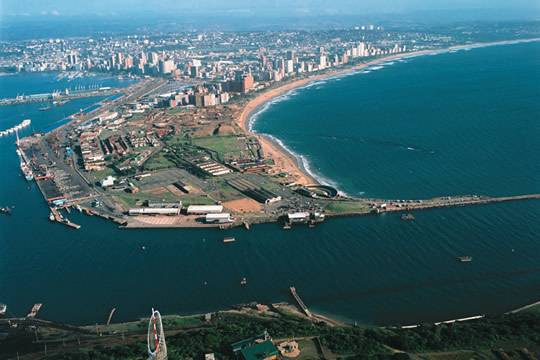
In our setup, firms have the choice to ship through two ports: Maputo in Mozambique, and Durban in South Africa. The majority of firms in our sample are equidistant to both ports while a subset of firms will be significantly closer to the more corrupt port of Maputo. Survey data revealed that the choice of port is driven primarily by the interaction between transport and corruption costs at each port. Transport costs are linear to the distance between each rm and the ports, while corruption costs are determined by the type of product the firm ships. Our main measure of the distortion caused by corruption is how rms shipping products that are more vulnerable to corruption will opt to go the long way around to avoid a closer, but more corrupt port. We also nd suggestive correlations between the level and type of corruption rms face at each port, which directly affects the cost of using port services, and firms’ decision to source inputs from domestic or international markets.

Source: Corruption and Firm Behavior (December 2011) by Sandra Sequeira and Simeon Djankov.

Related articles

Trade costs and corruption in Ports of Durban and Maputo

Recent years have brought an increased awareness of the importance of trade costs in hindering trade, particularly in the developing world where these costs are highest, says a report in the latest edition of Port Technology. The most salient type of trade costs have often been tariff duties and costs associated with the physical transportation of goods. As a result, several countries embarked on extensive programmes of tariff liberalisation and a significant portion of aid effort was channelled to investments in hard transport infrastructure, such as rebuilding railways and ports (the World Bank alone devotes more than 20 percent of its budget to transport infrastructure projects worldwide).

More recently, new light has been cast on the importance of a different type of trade cost: the cost imposed by the soft infrastructure of transport, defined as the bureaucratic infrastructure handling the movement of goods across borders. While there are many possible sources of inefficiencies stemming from the soft infrastructure of transport, recent research is beginning to document the role played by corruption in transport bureaucracies in driving trade costs. This article provides an overview of this research.

Research into corruption

Corruption can take many forms and emerge in many different phases of the process of clearing goods across borders. Sequeira and Djankov (2011) documented in great detail the ways in which port corruption emerges in Durban and Maputo in Southern Africa – this report is featured in my next post. This research was based on a unique dataset of directly observed bribe payments to each port bureaucracy for a random sample of 1,300 shipments.

The study began by defining two broad categories of port officials that differed in their administrative authority and in their discretion to stop cargo and generate opportunities for bribe extraction: customs officials and port operators. In principle, customs officials hold greater discretionary power to extract bribes than regular port operators, given their broader bureaucratic mandate and the fact that they can access full information on each shipment, and each shipper, at all times. Customs officials possess discretionary power to singlehandedly decide which cargo to stop and whether to reassess the classification of goods for tariff purposes, validate reported prices of goods, or request additional documentation from the shipper.

Regular port operators, on the other hand, have a narrower mandate to move or protect cargo on the docks, and at times even lack access to the cargo’s documentation specifying the value of the cargo and the client firm. This category of officials includes those receiving bribes to adjust reefer temperatures for refrigerated cargo stationed at the port; port gate officials who determine the acceptance of late cargo arrivals; stevedores who auction off forklifts and equipment on the docks; document clerks who stamp import, export and transit documentation for submission to customs; port security who oversee high value cargo vulnerable to theft; shipping planners who auction off priority slots in shipping vessels, and scanner agents who move cargo through non- intrusive scanning technology.

The organisational structure of each port created different opportunities for each type of port official to extract bribes: the high extractive types -customs agents- or the low extractive types -port operators. These opportunities were determined by the extent of face to face interactions between customs officials and clearing agents, the type of management overseeing port operations, and the time horizons of each type of official.

Durban and Maputo

In Durban, direct interaction between clearing agents and customs’ agents was kept to a minimum since all clearance documentation was processed online. In contrast, all clearance documentation was submitted in person by the clearing agent in the Port of Maputo. The close interaction between clearing agents and customs officials in Maputo created more opportunities for corrupt behaviour to emerge in customs relative to Durban.

In Maputo, port operators were privately managed but in Durban, most terminals (for containerised cargo) were under public control, with very lax monitoring and punishment strategies for those engaging in corrupt behaviour. Private management in Maputo was associated with fewer opportunities for bribe payments due to better monitoring and stricter punishment for misconduct. As a result, the organisational features of each bureaucracy determined that the high extractive types in customs had more opportunities to extract bribes in Maputo, while the low extractive types in port operations had more opportunities to extract bribes in Durban. While corruption levels were high in both ports, bribes were higher and more frequent in Maputo relative to Durban.

Finally, port officials with opportunities to extract bribes at each port differed in their time horizons. Customs in Maputo adopted a policy of frequently rotating agents across different terminals and ports, and since bribes varied significantly by the type of terminal at the port, customs agents were aware of the risk of being assigned to terminals with lower levels of extractive potential. On the other hand, port operators in Durban had extended time horizons given the stable support received from dock workers’ unions. Customs officials were therefore the high extractive types with the shortest time horizons, the broadest bureaucratic mandates and more opportunities to interact face to face with clearing agents. As a result, they extracted higher and more frequent bribes, relative to port operators in Durban (the low extractive types) who had longer time horizons and narrower bureaucratic mandates. Source: Port Technology.

Africa – ready for rich pickings?

While on the theme of African economic and trade emancipation, it is interesting to consider the detailed analysis and evaluation occurring in regard to African continental readiness for information and communication technologies. One such study is the Transformation Ready or eTransform Africa programme, a joint programme of the African Development Bank and the World Bank, in partnership with the African Union. Bear in mind that the WCO and African Development Bank recently signed a cooperation agreement to enhance the capacity of Customs administrations in Africa. 

The study (Click Here!) is a series of  case studies of certain countries. The aim of the programme as a whole, as set out in the terms of reference, is to:

  • Take stock of emerging uses of ICT across sectors and of good practices in Africa and in other continents, including how ICTs are changing business models in strategic sectors.
  • Identify key ICT applications that have had significant impact in Africa or elsewhere and that have the potential of being scaled up, both from the public and private sectors.
  • Identify binding constraints that impact ICT adoption and scaling-up of effective models, such as the need to develop a regional culture of cyber security, and measures to address these constraints, including in relation to the role of different actors and stakeholders (private, public, development community, civil society, etc).
  • Commission a series of country case studies, to formulate a guide for rolling out and scaling up key applications in Africa, in each of the focus sectors, and thereby to identify opportunities for public/private partnership, as well as identifying areas where intervention can be reduced or eliminated.
  • Develop a common framework for providing support in ICT for development to countries that brings together the operations of the two Bank Groups and their respective departments.

The terms of reference for individual sectors were as follows:

  • Within each sector, identify specific opportunities and challenges in Africa that can possibly be addressed with an increased or better use of ICT. Constraints that are hindering ICT uptake and scale-up will be examined within the context of each sector/industry, including human capacity in IT skills and sustainable business models such as for public private partnerships (PPP). Further, the appropriate role of governments in the provision of priority ICT applications and services will be examined in order to maximize private sector development;
  • Undertake a quick scan of ICT applications in the different sectors and identify a few applications that have had significant impact in Africa or elsewhere and that have the potential of being scaled up. The scan should refer to a matrix of selection criteria on which to select case study countries that are considered ripe for the creation of public/private partnerships. On this basis, specific country case studies will be chosen – two to three per sector — on a representative basis, for deep dive analysis. The selection of case studies should be made in consultation with the partners and the other consultants. A workshop should be organized by the coordinator firm at an early stage in the project to finalise this selection.
  • Analyze and understand the barriers to the greater adoption and mainstreaming of ICTs. Barriers may include, for instance, low purchasing power, illiteracy, infrastructure constraints, lack of regulation, poorly functioning mobile ecosystem, power shortages, political instability etc. Identify cases/examples on how these have been dealt with;
  • Analyze and understand the enabling factors of success, including political economy, policy, institutional, human, financial and operational factors;
  • Consider the option of developing multi-country programs or special facilities that would allow fast-tracking specific programs across countries;
  • Provide guidelines on designing appropriate and sustainable ICT components for sector projects (including building effective public and private partnerships) and on evaluating the impact of these interventions; and
  • Propose a course of action on how to include ICT in policy dialogue and planning with country counterparts on sectoral development goals and priorities. Experiences and best practices from other regions will be drawn upon to define the role of the public sector, bearing in mind that government is increasingly positioned as a lead user of ICTs as well as a regulator of the sector.
Related articles

The following article provides a disturbing – some would call it conspiracy theory – on what lies in store for the continent of Africa. Perhaps the colonial days will be viewed as mild should some of the suggested schemes materialise.

Who Will Be Africa’s Brazil?

Will there ever be an “African Brazil”? Who will that be? Angola? Congo? Ethiopia? Nigeria? South Africa? Flip that question: what will it take for an African country to become a new Brazil? A lot. First, it will take governments that do not spend or borrow too much, and independent central banks that keep inflation low. That is, the first order of business is a stable “macroeconomic framework.” Brazil managed to do that, but only after decades of rampant inflation and financial crises. Many African countries are making progress in that direction, but none is quite there. Read this objective review by Marcelo Giugale, World Bank’s Director of Economic Policy and Poverty Reduction Programs for Africa. Source: The Huffington Post

Global Preferential Trade Agreement Database (GPTAD)

world-bank-logoThe World Bank International Trade Department has just launched it’s Global Preferential Trade Agreement Database (GPTAD). The GPTAD provides information on preferential trade agreements (PTAs) around the world, including agreements that have not been notified to the World Trade Organization (WTO). It is designed to help trade policy makers, scholars, and business operators better understand and navigate the world of PTAs.

The GPTAD Database contains the original text of PTAs that have been notified to the WTO as well as agreements that have not yet been notified. The database is updated on a regular basis and currently comprises more than 330 PTAs. Agreements in the database have been indexed using a classification consistent with the WTO criteria. The GPTAD is a unique online tool that allows users to search PTAs around the world by provisions or keywords and to compare provisions across multiple agreements. The database can be searched according to the following categories:

  • Duties and charges on imports
  • Quantitative restrictions on imports
  • Rules of origin
  • Sanitary and phytosanitary measures
  • Agriculture
  • Investment
  • Services
  • Dispute settlement procedures
  • Intellectual property
  • Labor
  • Environment

The Library provides the text of all agreements in their original language and archives them by key criteria. It enables users to sort PTAs by membership, date of signature, in-force status, and other key criteria. It also allows users to download and print PDF files of entire agreements.

The GPTAD is designed to be a valuable resource on PTAs for trade policy makers, scholars, and business operators around the world. To that end, the World Bank International Trade Department welcomes your input. If you are aware of bilateral or regional PTAs that are not included in the library or database, please contact us. The GPTAD is work in progress and we actively welcome and solicit your views and suggestions on how the site might be further improved and made more useful. Source: World Bank

Related website:

Africa – Information Technology’s Dangerous Trend

Here’s some food for thought…

For the past few decades, emerging technologies such as biotechnology, microelectronics, information technology and communications technologies have become central to the socioeconomic development of nations. These technologies improve productivity and facilitate better living standards when they penetrate into societies. Among them, information technology (IT) has become the most dominant; IT has revolutionized almost every aspect of our lives, public and private, by connecting individuals, institutions and governments in mutually dependent ways. With its ease of adoption, this interdependence has scaled rapidly, unlike any other technology in modern history. In Africa, for example, despite decades of using electricity, no one can claim that the continent has fully adopted it. The same applies to the aerospace and biochemical industries, among others.

IT is good for developing countries — it empowers people and improves their lives. But, in many African countries, the successes afforded by IT can backfire if it becomes a too-dominant focus. Take Nigeria for example: Despite decades of crude oil exploration, it cannot claim that it has developed indigenous domain expertise in that industry. If the MNCs depart, Nigeria will cease to remain an oil-producing nation, as it lacks the local ability to explore, extract and sustain production. But in the IT industry, most Nigerian firms are well-positioned for any challenge.

The success of IT in Africa has reached a level where it is being dangerously over-emphasized. From The World Bank to The African Union, everyone is talking about IT. IT events are very common everywhere, not to mention the Google, Microsoft, and Blackberry platform-based competitions that are being endlessly unleashed as these brands jockey for position on the continent. The Nigerian government has created a new ministry to focus solely on IT and related areas. And African leaders are neglecting most non-IT technologies. Across most African universities, the only funded and active labs are the IT labs. University administrators are happy to tout how they equipped IT labs, though everything else is broken. Agricultural engineering students are more focused on IT than on learning to build next-generation farm machinery. It’s a troubling pattern, as everyone wants to be seen as IT-savvy.

While IT can be applied to any field, the way Africa is promoting it sets a dangerous precedent. In my continent, “information technology” has become synonymous with “technology” itself. If you don’t know IT, you’re not a techie. You can master diesel engines and polymer technology, but without expertise in IT, few believe that you belong in the technology sector.

So, what’s the danger? Everyone wants to be an IT guy. No one remembers that we still need food. At the University of Nairobi, I recently asked a group of agricultural science students about their plans upon graduation. Only one wanted to stay in agriculture; others are making apps for farmers. Yes, they know more about mobile operating systems and mobile payments than they do about farming! The farms are now IT labs. And while you can simulate farming on tablets, you can’t eat the virtual fruit.

Pick up a typical newspaper on the continent, and you’ll find that the technology column has been changed to an IT column. Newspapers write about Google, Blackberry, Facebook and Apple in the technology section, but non-IT companies — though they’re technology firms — are rarely reported on. Tech journalism is now IT journalism. Even the governments have confused technology policy with IT policy.

I firmly believe that IT has helped Africa, and that it has a role to play as the continent advances. But, there needs to be a balance. The continent needs techies in mining, geology, semiconductors, agriculture, chemicals, and other areas besides IT, and government must ensure that IT does not create a situation that will destroy the continent’s capacity to feed her citizens and compete in the future. Source: Harvard Business Review

Cargo Dwell Time in Durban

An acquaintance in the forwarding industry brought this working paper to my attention. Titled “Cargo Dwell Time in Durban“, it is very useful reading for logistics operators, Customs and government agencies, and policy makers. The object of the working paper attempts to identify the main reasons why cargo dwell time in Durban port has dramatically reduced in the past decade to a current average of between 3 and 4 days. A major customs reform; changes in port storage tariffs coupled with strict enforcement; massive investments in infrastructure and equipment; and changing customer behavior through contractualization between the port operator and shipping lines or between customs, importers, and brokers have all played a major role. The main lesson for Sub-Saharan Africa that can be drawn from Durban is that cargo dwell time is mainly a function of the characteristics of the private sector, but it is the onus of public sector players, such as customs and the port authority, to put pressure on the private sector to make more efficient use of the port and reduce cargo dwell time. The Working Paper is the product of the World Bank’s Africa Region, Transport Unit, being part of a larger effort  to provide open access to its research and make a contribution to development policy discussions around the world. Policy Research Working Papers are also posted on the Web at http://econ.worldbank.org

Related articles