WCO News – June 2016

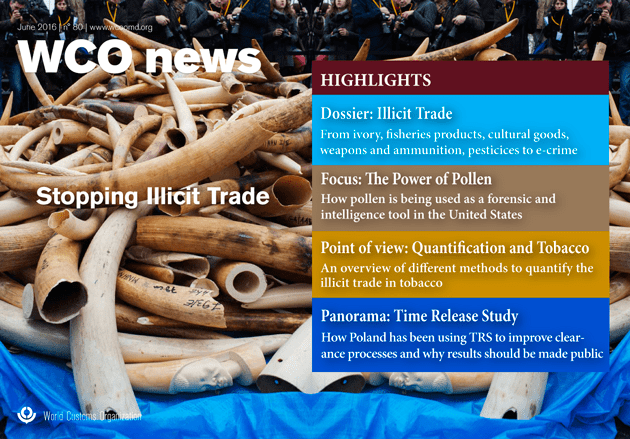
WCO News June 2016 (1)The WCO has published the 80th edition of WCO News, the Organization’s flagship magazine aimed at the global Customs community.

This edition features a special dossier on illicit trade which gathers together articles focusing on the trafficking in various commodities such as cultural goods, small arms, fisheries products and pesticides, as well as articles highlighting the tools and technologies that can contribute to enhancing Customs enforcement capabilities.

Readers will also benefit from articles on how pollen analysis (palynology) has become an essential Customs forensic and intelligence tool in the United States, the challenges in accurately quantifying the illicit trade in tobacco, and why publishing time release study results is advantageous. Source: WCO

New WCO Study Report on Customs Brokers

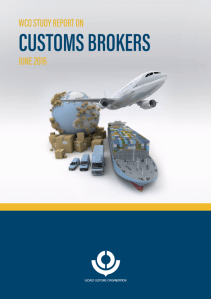
WCO Study Report on Customs BrokersThe WCO has just published a newly developed Study Report on Customs Brokers. The Study Report provides a general background and overview of Customs Brokers’ role in the international supply chain together with some suggested policy and organisational considerations on Customs Brokers regime and a model checklist for licensing/regulating brokers.

Additionally, the Report provides a range of cooperation opportunities between Customs and Brokers including the joint capacity building.

Customs administrations, Brokers, and Brokers Associations are encouraged to make maximum use of the Study Report as a reference/guideline, where needed, in establishing and/or maintaining/adjusting Brokers regime, keeping in view their national circumstances and specificities.

The Study Report on Customs Brokers is available via the following link: Click here

Source: WCO

UNODC-WCO Container Control Programme – 2015 Annual Report online

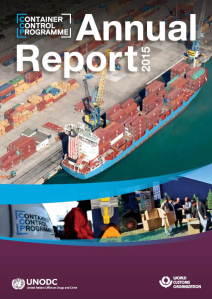
Container Control ProgrammeThe year 2015 has been the most active one ever for this joint WCO – UNODC initiative, which tackles illicit trade in containerized transport.

A number of new countries joined the Container Control Programme (CCP), more than 130 training events, private sector meetings and study visits were implemented and significant seizures of drugs, counterfeit goods, cigarettes etc. were made by the Port Control Units established in the framework of this programme.

The 2015 CCP Annual Report also contains interviews with the Directors General of Georgia and Azerbaijan Customs as well as several statements by Customs’ and Private Sector stakeholders. Source: WCO

WCO News – New Edition February 2016

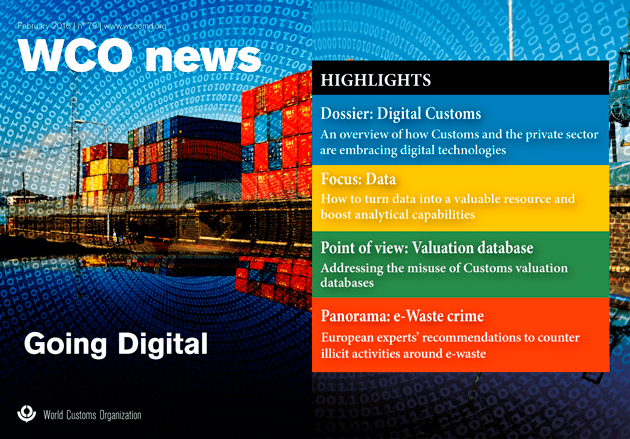
WCO News Feb 2016Another bumper edition of customs news, views and success stories (click here to view!). Several countries showcase their modernization and digital developments under the theme “Digital Customs” from declaration management systems, carnet systems to paperless procedures for AEO’s. Nice to see an article featuring South African Customs once again.

There’s also a section featuring articles on ‘big data’. Learn about Canada’s approach to private sector stakeholder engagement. You’ll also find some interesting points of view regarding use and misuse of valuation databases and a whole lot more.  Source WCO

Revision of Correlation Tables between HS2012 and HS2017

HS_HandbookFollowing the accepted complementary amendments to the Harmonized System Nomenclature listed in the Council Recommendation of 11 June 2015, the Correlation Tables between the 2012 and 2017 versions of the HS have been revised. The revised Correlation Tables show the correlation resulting from both the amendments to the Nomenclature which have been accepted as a result of the Council Recommendation of 27 June 2014 and the complementary amendments to the Nomenclature which have been accepted as a result of the Council Recommendation of 11 June 2015.

For more details visit the WCO website.

WCO facilitates Data Model training for SARS

WCO Data Model Workshop, Pretoria, South Africa, Dec. 2015

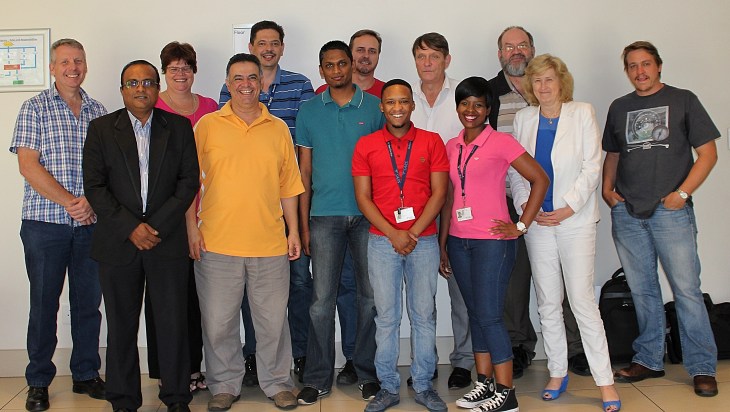
SARS’ EDI and Customs Business Systems representatives with WCO Data Model facilitators Mr. Giandeo Mungroo (2nd from the left) and Ms. Sue Probert (2nd from the right) [Photo – SARS]

Officials of the South African Revenue Service (SARS) last week attended a WCO workshop on the Data Model facilitated by Ms. Sue Probert and Mr. Giandeo Mungroo. The event, held in Pretoria, South Africa was sponsored by the CCF of China as part of the WCO’s Capacity Building endeavours to promote the adoption and use of customs standards and best practice amongst it’s  member states.

The workshop was requested by SARS ahead of new technical and systems developments and requirements informed by SARS’ new Customs Control and Duty Acts. Moreover, there are also political ambition to institute a Border Management Agency for the Republic of South Africa. All of this requires that SARS Customs has a robust electronic tool to assist the organisation in mapping national data requirements according to specific needs.

Besides the use of a value added Data Model tool – GEFEG, it is imperative for the organisation to develop capacity in the knowledge and understanding of the WCO Data Model. SARS has successfully EDI (Electronic Data Interchange) for the last 15 years with various local supply chain trading partners and government agencies. Over the last few years SARS has been actively pursuing and promoting IT connectivity with regional trading partners with the express purpose to extend the benefits of eCommerce across borders.

GEFEG.FX software is used to model data formats and develop implementation guidelines for data interchange standards such as UN/EDIFACT. It is a software tool that brings together modelling, XML schema development, and editing of classic EDI standards under a unified user interface, and supports the development of multilingual implementation guidelines.

Version 3 of the WCO Data Model brought about a distinct shift towards an ‘all-of-government’ approach at international borders with the introduction of the GOVCBR (Government Cross Border Regulatory) message. The message and underlying data requirements facilitate the exchange of customs and other government regulatory information to support a Single Window environment.

WCO Data Model not only includes data sets for different customs procedures but also information needed by other Cross-border Regulatory Agencies for the cross-border release and clearance at the border. The WCO Data Model supports the implementation of a Single Window as it allows the reporting of information to all government agency through the unique way it organizes regulatory information. This instrument is already 10 years old and is seeing increased use by WCO members.

Amongst the benefits derived from the workshop, SARS staff acquired the following competencies that will not only aid their work but business user support as well –

  • Competence in operating the tool to build a source control collaborative environment to support national and regional harmonization;
  • Competence to build a base to conduct national/ regional data harmonization based on the WCO Data Model to support national Single Window implementation as well as Regional Integration;
  • Competence to build systems/ electronic interfaces between Customs and its partner government agencies including a Border Management Agency; and
  • Provide needed competence to develop, maintain and publish national and regional information packages based on the WCO Data Model.

WCO declares 2016 to be the year of Digital Customs

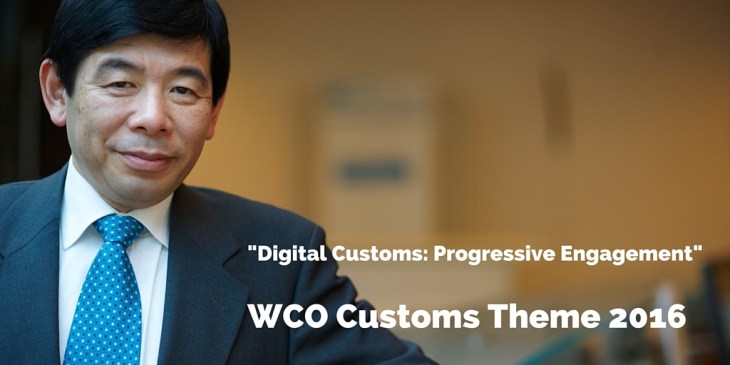
WCO Customs Theme 2016The Secretary General of the WCO, Kunio Mikuriya, announced today that 2016 will be dedicated to promoting the digitalization of Customs processes under the slogan “Digital Customs: Progressive Engagement.” WCO Members will have the opportunity to showcase and further promote their use of Information and Communication Technologies (ICT).

The term Digital Customs refers to any automated or electronic activity that contributes to the effectiveness, efficiency, and coordination of Customs activities, such as automated Customs clearance systems, the Single Window concept, electronic exchange of information, websites to communicate information and promote transparency, and the use of smart phones.

This new era of Digital Customs has transformed the way that Customs operates. Ultimately, it ensures progression – the enhanced ability of Customs Administrations to communicate, process goods, receive and exchange information, coordinate border activities, collaborate on law enforcement actions, and promote transparency. Improved technologies thus have the ability to positively impact and transform the Customs landscape through:

  • Improved compliance as a result of increased access to regulatory information and functions, as well as services, on the part of all international trade stakeholders;
  • Faster clearance times for legitimate trade;
  • Enhanced coordination between Customs units, as well as between Customs and other border regulatory agencies at the national and international level;
  • Increased transparency in regulatory processes and decision-making;
  • The use of performance measurement to improve Customs procedures and levels of integrity, such as through the techniques presented in the WCO Performance Measurement Contracts (PMC) Guide;
  • Enhanced detection of irregularities and illicit consignments through the collection and analysis of data.

Such positive outcomes will contribute significantly towards the realization of Customs’ objectives, including improved revenue collection, border security, the collection of trade statistics, and trade facilitation. “Border agencies are increasingly embracing digitalisation to enhance their effectiveness and efficiency.

The WCO has an extensive portfolio of instruments and tools to support WCO Members in their efforts to further adopt Digital Customs.” said WCO Secretary General Kunio Mikuriya.

“Over the course of 2016, I invite all WCO Members to promote and share information on how they are implementing and using digital technologies to advance and achieve their objectives.” Mr. Mikuriya added.

The WCO’s annual theme will be launched on International Customs Day, which is celebrated annually by the global Customs community on 26 January in honour of the inaugural session of the Customs Co-operation Council (CCC) which took place on 26 January 1953.

The WCO invites the Customs community to mark 26 January 2016 in their diary. Source: WCO

WCO supported Sub – Saharan Africa Customs Modernization Programmes – 3rd Newsletter

WCO Capacity Building Magazine 3rd Edition.ashxThe WCO – Sub – Saharan African Customs Modernization Programme funded by the government of Sweden comprises four projects, namely the WCO- EAC CREATe , the WCO– SACU Connect, the WCO– WACAM and the WCO– INAMA Projects. In their totality, the projects support regional Customs Unions in Africa in their mission to facilitate trade without compromising the security of their country and the safety of their citizens. The newsletter will appear quarterly and will inform on ongoing tasks as well as give an overview of future activities. Source: WCO

WCO News – October 2015 Edition

WCO News N°78 - October 2015The October 2015 Edition focuses on the subject of e-Commerce, among’st other developments at the WCO. There’s a discussion on a new book which provides insight into the economic benefits of implementing a single window system, as well as a review of a book titled  ‘The Politics of Trade and Tobacco Control’.

Other articles include an overview of Russia’s Training Centre for NII System experts; Prospects for Africa’s Tripartite Free Trade Agreement in the light of lessons learned from the East African Community and a panorama of diverse discussion articles concerning Customs standards, education, and Customs response to challenges posed by a world of rampant crime and natural disasters. Download and enjoy! Source: WCO

War Against Ivory Smuggling

Smuggled Ivory

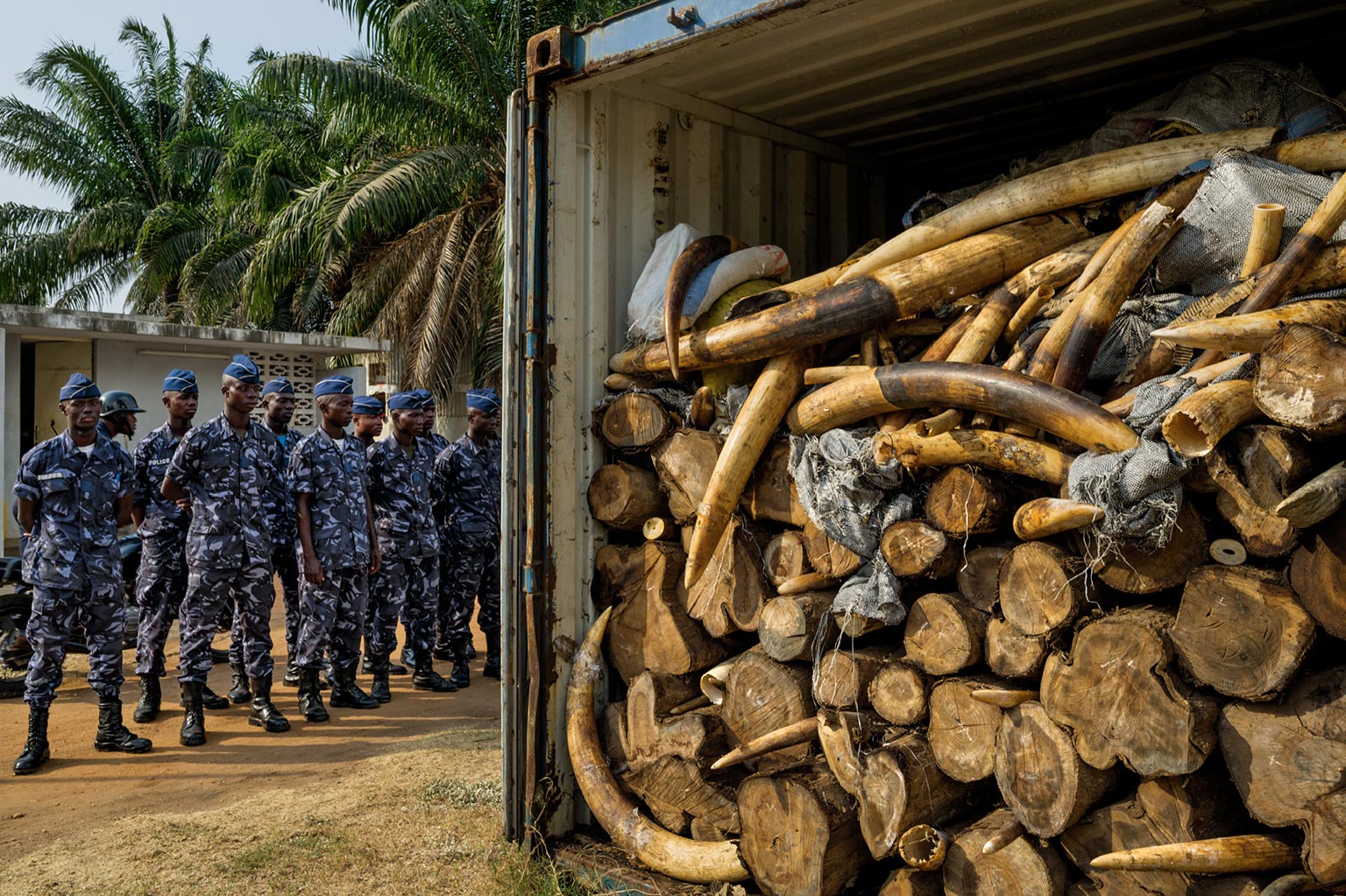
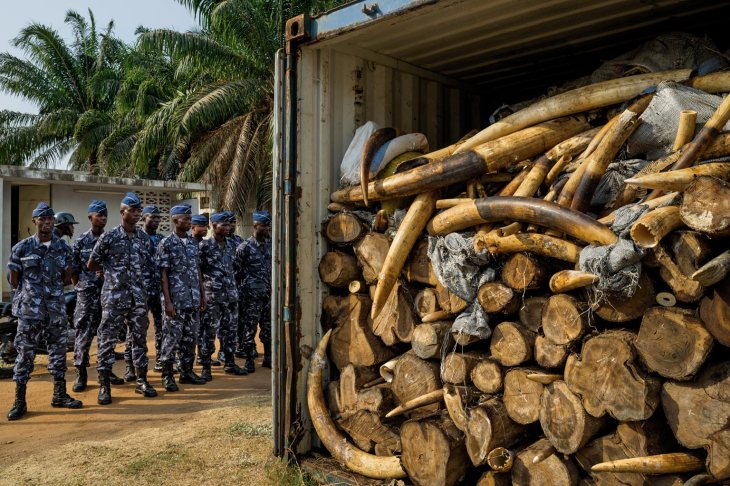
In January 2014, while x-raying a Vietnam-bound container declared to hold cashews, Togolese port authorities saw something strange: ivory. Eventually, more than four tons was found, Africa’s largest seizure since the global ivory trade ban took effect in 1990. [Photo: Brent Stirton, National Geographic]

Last year, one of Kenya’s most adored elephants, Satao, was killed for his ivory. Poachers shot the bull elephant with a poisoned arrow in Tsavo East National Park, waited for him to die a painful death, and then hacked off his face to remove his massive tusks.

Poachers continue to kill an estimated 30,000 elephants a year, one every 15 minutes, fueled to a large extent by China’s love of ivory. Thirty-five years ago, there were 1.2 million elephants in Africa; now around 500,000 remain.

A recent documentary, 101 East, released by Al Jazeera, traces the poaching of elephants and smuggling of ivory from Tanzania’s port of Dar es Salaam through the port of Zanzibar to Hong Kong and Shanghai.

Hong Kong is one of the busiest ports in the world. It handled nearly 200,000 vessels last year and is a key transit hub for smugglers transporting ivory from Africa to China. Between 2000 and 2014, customs officials seized around 33 tons of ivory, taken from an estimated 11,000 elephants.

With the huge challenge faced by customs and other law enforcement agencies in West Africa, wildlife crime is on the rise. Regional traffickers and organized crime groups are exploiting weak, ineffective and inconsistent port controls throughout the region.

U.N. Action in Africa
To address the issue, the United Nations Office on Drugs and Crime (UNODC) organized a workshop in Accra, Ghana, from August 25 to 27 August, and in Dakar, Senegal, from August 31 to September 2. The objective was to provide training for national law enforcement agencies to better fight wildlife crime through the control of maritime containers. The workshop was led by trainers and experts from UNODC, the World Customs Organization (WCO) and the CITES Management Authority.

The Container Control Programme has been developed jointly by UNODC and WCO to assist governments to create sustainable enforcement structures in selected sea and dry ports to minimize the risk of shipping containers being exploited for illicit drug trafficking and other transnational organized crime. The implementation of the program is an opportunity for UNODC to work with governments in establishing a unit dedicated to targeting and inspecting high-risk containers.

UNODC, in partnership with WCO, delivers basic training programs and provides technical and office equipment. For example, the equipment connects the units to the WCO’s ContainerCOMM – a restricted branch of the Customs Enforcement Network dedicated to sharing information worldwide on the use of containers for illicit trafficking.
Sustainability.

UN Secretary-General Ban Ki-moon argues: “Illegal wildlife trade undermines the rule of law, degrades ecosystems and severely hampers the efforts of rural communities striving to sustainably manage their natural resources.”

Wildlife trade is a transnational organized crime that raises profits of about $19 billion annually. In addition, it is often linked to other crimes such as arms trafficking, drug trafficking, corruption, money-laundering and terrorism – that can deprive developing economies of billions of dollars in lost revenues.

Shipping
It’s hardly surprising that many of the big ivory seizures made in recent years have been detected in shipping containers, says Dr. Richard Thomas, Global Communications Coordinator for the environmental organization TRAFFIC. “Partly that’s due to the sheer quantity of ivory being moved (the largest-ever ivory seizure was 7.1 tons) – which from a practical and cost point of view makes sea carriage more attractive than air carriage.

“Also in the smugglers’ favor is the huge numbers of containers moved by sea. Some of the big ports in Asia deal with literally thousands of containers per day. Obviously it’s not practical or feasible to inspect each and every one, and that’s something the organized criminal gangs behind the trafficking rely upon.”

There’s lots of issues to be dealt with, says Thomas: For example, even when an enforcement agency makes a seizure, it’s not easy to find out who actually booked the passage for the container and who knew precisely what was in it and actually put it there. “That’s one area where transport companies can collaborate with enforcement agencies to assist follow-up enquiries. Obviously companies have records of where the container is headed too, obviously key information for follow-up actions,” says Thomas.

TRAFFIC recently ran a workshop in Bangkok under the auspices of the Wildlife Trafficking Response, Assessment and Priority Setting (Wildlife TRAPS) project, targeting the movement of illicit wildlife cargoes across borders.

“The transport industry can serve as the eyes and ears of enforcement agencies as part of a global collaboration to eliminate the poaching and trafficking of illegal wildlife commodities,” said Nick Ahlers, Leader of TRAFFIC’s Wildlife TRAPS project.

“To be successful, the entire logistics sector needs to be part of a united push to eliminate wildlife trafficking from supply chains. In particular, we would welcome participation from major shipping lines and the cargo and baggage-handling sector.”

If nothing is done to stop the ivory trade, Africa’s wild elephants could be gone in a few decades. Source: Reuters.

Related articles
South Africa – WCO ESA Regional Workshop on TFA implementation

ESA_Regional-WS_South-AfricaThe WCO Regional Workshop on Strategic Initiatives for Trade Facilitation and the Implementation of the WTO Trade Facilitation Agreement (TFA) – Mercator Programme – for the WCO East and Southern Africa (ESA) region was held from 15 to 17 September 2015 in Johannesburg, South Africa. It was hosted by the South African Revenue Service (SARS) representing the WCO Vice Chair of the ESA region, and financially supported by the United Kingdom Department for International Development (UK DFID) and the Ministry for Foreign Affairs of Finland. More than 100 participants from 21 ESA Members (Customs, Trade Ministries/equivalent Ministries), the WTO and other international organizations, development partners and the private sector participated in the event.

The Workshop was opened by the Commissioner of SARS, Mr. Thomas Moyane. He expressed his view that the WCO Mercator Programme created significant conditions for contributing to intra-African as well as international trade facilitation benefits. As Vice Chair of the ESA region, he hoped that the Workshop could recommend immediate actions for the region.

The Workshop raised a lot of interest and active discussions from a variety of well-prepared and informative presentations, including the role of the WCO in TFA implementation;  TFA regulations such as Article 23.2 on National Committees on Trade Facilitation (NCTF) and specific national and (sub-)regional examples of implementation approaches; experiences of Trade Ministries and several partner institutions active in the region; and discussions on further approaches to Capacity Building and TFA implementation, including in cooperation with Development Partners.

The region agreed on next steps forward, including on a regional focus on the establishment and maintenance of NCTFs (for instance further provision of replies to the respective WCO survey; identification of the situation within ESA Members); reporting the outcomes of the Workshop to the ESA Regional Steering Committee; encouragement of ESA Members who are not yet Contracting Parties to the Revised Kyoto Convention to accede to it as soon as possible (and/or to identify related Capacity Building needs) – as one concrete way to also support TFA implementation; and responsibility of the ROCB and the Vice Chair to continue collecting and publishing information on ongoing Capacity Building projects and work of partner organizations such as SADC, COMESA, SACU and UNCTAD especially in the TF(A) area in the region – while encouraging Members and partner organizations to share such information.

The Workshop was successfully concluded with positive feedback from Members, partner organizations and development partners. A summary document on the discussions held during the Workshop is currently under finalization by the Vice Chair’s office and the ROCB and will be circulated to all participants of the Workshop in due course. Source: WCO

The SACU Utility Block – My Export is Your Entry

SACU IT Connectivity ConferenceRepresentatives from the Southern African Customs Union (SACU) gathered in Johannesburg, South Africa recently to refine requirements towards the development IT connectivity and electronic data exchange to facilitate cross-border customs clearance in the region. The workshop was convened by the SACU Secretariat under the sponsorship of the Swedish government and technical support from the World Customs Organisation.

Work already commenced way back in 2012 on this initiative. Progress in the main has been hampered by the legal agreement which to date not all members of the Customs Union have ratified. One of the features of this initiative, however, has been the continuity of support rendered by the WCO.

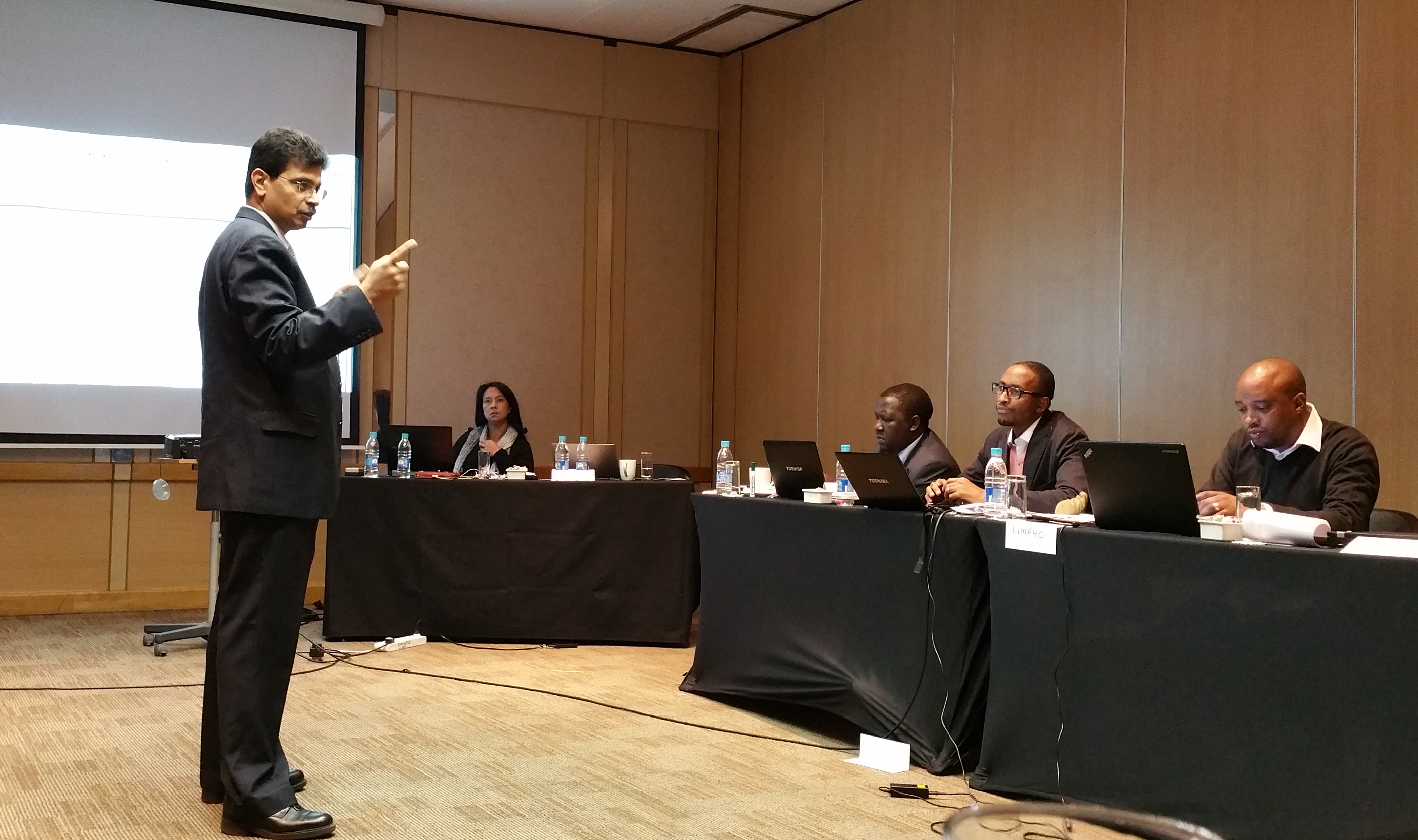
This event was indeed fortunate to secure – once again – the services of S.P. Sahu, former head of Information Technology at the WCO. After his secondment to the WCO he is now back in his home country where he is the Commissioner for Single Window based in Delhi, India.

S.P’s years of experience in both the technical and operational spheres of customs and the international supply chain enable him to articulate concepts and solutions in a manner which are practical and simple to understand. The workshop recognised the need to accelerate border processes and to this end the border process should be limited to physical examination, inspection, release; declaration processes should be done away from borders.

While simple enough in theory, the notion of clearance away from borders could pose challenges. Many of Africa’s borders – including those of a ‘One Stop’ kind – have not fully embraced the need to integrate processing and synchronize Customs activities. The challenge posed by ‘regional integration’ is one of surrendering national imperatives for a common regional good. It imposes a co-ordination of and development towards ‘regional objectives’ with the same level of purpose as national states do for their domestic agenda’s. In the case of SACU, it challenges member state’s stance on what real benefits the customs union should aspire to, beyond the mere sharing of the common revenue pool.

The outcome of the workshop resulted in a more refined, do-able scope and objective. With Mr. Sahu’s experience and guidance, the revised Utility Block (UB) speaks to all facets (legal, operational and technical) of the ‘regional agreement’ to the extent it specifies in the required detail the programme of action required on the part of the member stats as well as the SACU Secretariat. Refinement of the UB includes the removal from scope of the Release Message, Manifest Information and bond/guarantee message for the purpose of simplification of customs processes.

What remains are –

  • An Export & Transit Message – which includes the Unique Consignment Reference (UCR) validated and approved by the Export/Exit country.
  • An Arrival Confirmation/Notification Message – where the arrival date time would be when the import country recognises goods as received and places the goods under its customs procedure.
  • A Control Results Message – which includes the results of data matching, inspection and risk assessment based on agreed business rules.

In support of the above, SACU recently agreed on a framework of a UCR which must be further discussed and agreed upon by the respective member states. The UCR is a structured reference number which will be used by customs administrations of the respective member states to ‘link up’ import declaration data with the corresponding ‘export declaration’ data electronically exchanged by the export country.

Regional traders who have electronic clearance and forwarding capability will also play a role in the exchange of data through the exchange of the UCR on export and transit information with their counterparts or clients in the destination country. Once the exchange of data is operational between member states, it will be imperative for the importer to receive/obtain the UCR from the exporting country and apply it to his/her import declaration when making clearance with Customs.

The SACU Utility block will be tabled at a future Permanent Technical Committee meeting of the WCO for consideration and approval. A Utility Block is a concept structure which is proposed under the WCO’s Globally Networked Customs (GNC) initiative which seeks to aid and assist its members in the operationalisation of Mutual Administrative Assistance agreements.

WCO 2015 Photo Competition

WCO

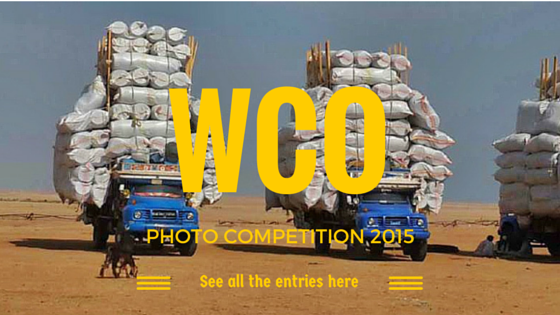
Sudan Customs administration – “Border ahead” The photo shows goods trucks ready to cross the border between Sudan and Egypt. Since April 2015, the Askeit border post is the first and only border crossing point in Sudan benefiting from a Single Window environment, with all relevant authorities gathered under one roof. The volume of trade exchange between Sudan and Egypt through this post amounts to about 185 million US dollars per year, a figure which is expected to increase twofold, or even threefold, over the next few years. [Click on the photo to see all the entries]

OECD estimates WTO TFA could to cut trade cost by 17.5% on customs rules

cut-red-tape“Simplifying trade documentation”; “automating border procedures”; “streamlining border controls” – all cliche’s of the modern customs and international trade scene, but just how attainable are they? Beyond the pleasantries, and fanfare of ribbon cutting ceremonies, very little seems to happen at the cold face. Sovereign states are inward-looking and jealously wish to preserve their ‘sovereign domains’.

A major World Trade Organization deal on streamlining global customs rules could cut international trade costs by between 12.5 percent and 17.5 percent, a study by the Organization for Economic Co-Operation and Development showed on Thursday.

A deal between India and the United States on the Trade Facilitation Agreement last year, which needs to be backed by all 160 WTO members, had resurrected hopes that the trade body could push through such reforms to cut red tape.

“There are very practical measures that we’ve identified that offer significant benefits,” Ken Ash, the OECD director for Trade and Agriculture, told media.

“Things like simplifying the required trade documentation. Automating border procedures, or streamlining border controls.”
Economists say the Trade Facilitation Agreement could save $1 trillion. Ash declined to endorse this figure, only saying the Paris-based body expected each 1 percent reduction in worldwide trade costs to bring $40 billion in savings.

Australia was to formally accept the agreement later on Thursday, Steven Ciobo, parliamentary secretary to the minister of foreign affairs, said at the news briefing in Paris, making Australia the seventh WTO member to adopt the agreement.

WCO Cooperation with Customs Brokers

WCO & BrokersThe International Federation of Customs Brokers Associations (IFCBA) marked its 25th anniversary by holding its Board of Directors meeting at WCO headquarters on 18 and 19 May 2015.

WCO Secretary General Kunio Mikuriya addressed the meeting to stress the importance of the partnership between Customs and Customs brokers, given that Customs performance is often affected by that of service providers, including Customs brokers. Bearing in mind the need to maintain a quality service by and cooperation with Customs brokers, he explained that the WCO was carrying out a survey of its Members’ institutional frameworks for Customs brokers.

During their interaction with Secretary General Mikuriya, representatives of the IFCBA expressed an interest in working with Customs to adjust their way of doing business to the evolving trade environment, including electronic data transfer, and in assisting small and medium-sized enterprises participate in the increasingly complex global trading system. They also discussed the need to provide capacity building for brokers and to improve integrity.

Mr. Shantanu Bhadkamkar, Chairman of the IFCBA, expressed his appreciation for WCO support in improving Customs brokers’ operations and stated that, with its network of people working at borders, the IFCBA was confident that it could play a role in contributing to efficient border procedures and thereby economic competitiveness, including enabling small and medium-sized enterprises to benefit from international trade. Source: WCO