Meeting of the WCO Private Sector Consultative Group (PSCG)

IMGP0749

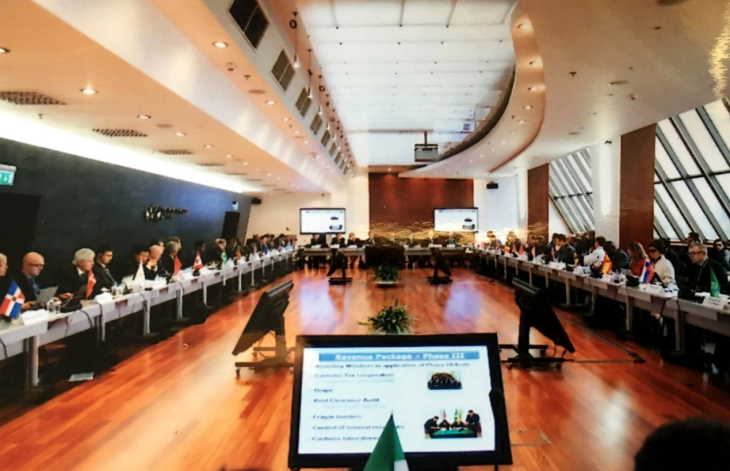
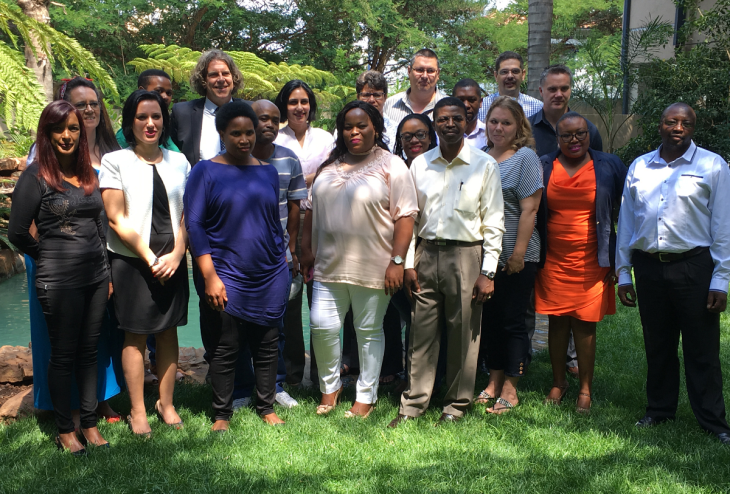
The WCO Private Sector Consultative Group (PSCG) met for the 41st time at the WCO headquarters on 3 and 4 July 2017. The meeting was chaired by Mr. John Mein from PROCOMEX and attended by representatives from 17 of the 21 PSCG members – AAEI, BMW, CATERPILLAR, E-BAY, FIATA, FONASBA, FONTERRA, GEA, HAIER, HUAWEI, IATA, ICC, IFCBA, MICROSOFT, OPORA, PROCOMEX and SAAFF.

During their two-day meeting, the PSCG discussed a number of very topical matters and developments, including current threats of protectionism to free trade, the state of trade facilitation and the implementation of the WTO TFA agreement and e-commerce. WCO members also attended part of the meeting and presented current WCO work programmes, including the upcoming review of the Revised Kyoto Convention and encouraged PSCG members to take an active role in this review work. The Secretary General, Kunio Mikuriya, also addressed the PSCG on its first day on issues relating to the current state of international trade.

Following the PSCG meeting, a dialogue between Policy Commission and PSCG members including Trade Observers was held to discuss current challenges with regard to free trade and globalization.  During break-out groups representatives from both the Customs administrations and private sector discussed the current problem landscape and what the international Customs community can do in collaboration with the private sector to support economic and social development and growth through the application of trade facilitation principles and measures. Source: WCO

WCO News – June 2017 Edition

WCO News June 2017

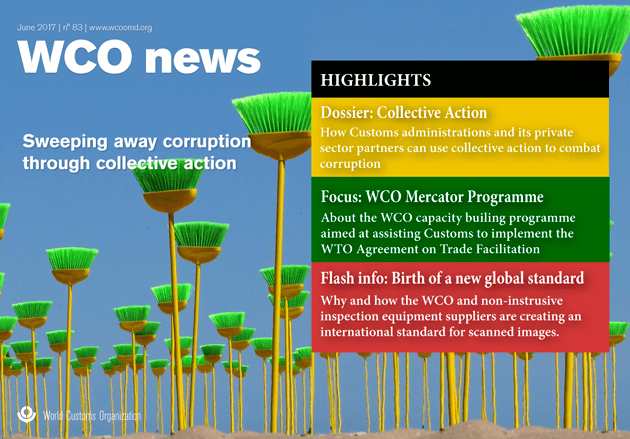
The WCO has published the 83rd edition of WCO News, the Organization’s flagship magazine aimed at the Customs community, which provides a selection of informative articles that touch the international Customs and trade landscape.

This edition features a special dossier on the use of collective action to fight corruption and how it can apply in the Customs context, and includes both country-specific experiences as well as the views of Customs’ partners.

It also puts a spotlight, in its focus section, on the WCO Mercator Programme, the capacity building programme designed by the WCO to assist governments in implementing the Customs trade facilitation measures outlined in the WTO Agreement on Trade Facilitation.

Other highlights include articles on the implementation of a new standard to ensure that men and women receive equal pay for equal work, enhanced control of light aviation in West Africa, the use of basic mathematics to fight corruption and bad practices, and much more.

The magazine is published and distributed free of charge three times a year, in February, June and October, and is available online or in paper format. Source: WCO

Implications of ‘Big Data’ for Customs Risk Management Capability

big_data

Historically, a customs officer’s “intuition” backed up by his/her knowledge and experience served as the means for effective risk management. In the old days (20 years ago and back) there wasn’t any need for all this ‘Big Data’ mumbo jumbo as the customs officer learnt his/her skill through painful, but real-life experience, often under bad and inhospitable conditions.

Today we are a lot more softer. The age of technology has superseded, rightly or wrongly, the human brain. Nonetheless, governments thrive on their big-spend technology budgets to ensure the safety of their economies and supply chains.

No less, the big multinational corporations whose ‘in-house’ business is no longer confined by national boundaries or continents are responsible for the generation of huge amounts of data which need to extend  to the limits of their operations. When the products of such business are required to traverse national boundaries and continents,  their logistics and transport intermediaries, financiers, and insurers become themselves tied up in the vicious cycle of data generation and transfer, also spanning national boundaries to ensure those products arrive at their intended destinations – intact, in time and fit for purpose. Hence we have what as become known as the international supply chain.

It does not end there. Besides the Customs authorities, what about the myriad of other government regulatory authorities who themselves have a plethora of forms and information requirements which must be administered and approved prior to departure and upon arrival of goods at their destination.

Inefficiencies along the supply chain culminate in delays with added cost which dictates the viability for sale and use of the product during delivery. These may constitute what is called non-tariff barriers (or NTBs) which negatively impact the suppliers credibility in international trade.

The bulk of this information is nowadays digitised in some for or other. It is obviously not all standardised and structured which makes it difficult to align, compare or assimilate. For Customs it poses a significant opportunity to tap into and utilise for verification or risk management purposes.

The term ‘Big Data’ embraces a broad category of data or datasets that, in order to be fully exploited, require advanced technologies to be used in parallel. Many big data applications have the potential to optimize organizations’ performance, (and here we have it) the optimal allocation of human or financial resources in a manner that maximizes outputs.

At this point, let me introduce one of the latest WCO research papers – “Implications of Big Data for Customs – How It Can Support Risk Management Capabilities” by Yotaro Okazaki.

The purpose of this paper is to discuss the implications of the aforementioned big data for Customs, particularly in terms of risk management. To ensure that better informed and smarter decisions are taken, some Customs administrations have already embarked on big data initiatives, leveraging the power of analytics, ensuring the quality of data (regarding cargos, shipments and conveyances), and widening the scope of data they could use for analytical purposes. This paper illustrates these initiatives based on the information shared by five Customs administrations: Canada Border Services Agency (CBSA); Customs and Excise Department, Hong Kong, China (‘Hong Kong China Customs); New Zealand Customs Service (‘New Zealand Customs’); Her Majesty’s Revenue and Customs (HMRC), the United Kingdom; and U.S. Customs and Border Protection (USCBP). Source: WCO

2017 WCO Knowledge Academy for Customs and Trade

WCO

This initiative brings together the foremost experts in Customs matters to meet the demands of a complex international and cross-border trading system. Business professionals, Customs managers and administrators, border agency officials, international organization representatives and academia will benefit from the intensive interactive discussions of the most pertinent topics in the Customs environment today.

The courses will be led by technical experts widely respected in their various fields and will also include instructors from private sector companies, government institutions, and academia. The primary objective of the WCO Knowledge Academy for Customs and Trade is to provide an intense training for Customs and Business practitioners.

The Academy is open to all interested participants. Registration is free for one participant from each WCO Member administration. Additional participants from Member administrations, and non-WCO Member participants are subject to a fee. The Public Sector learning track will have interpretation in English and in French.

Why attend?  

  • Gain in-depth knowledge of the WCO’s tools and instruments
  • Express business needs and expectations on core Customs issues
  • Share knowledge, know-how and expertise with participants
  • Be part of a vital Customs-Business knowledge network.

Visit the WCO Knowledge Academy for Customs and Trade webpage for up-coming details of itinerary and programme.

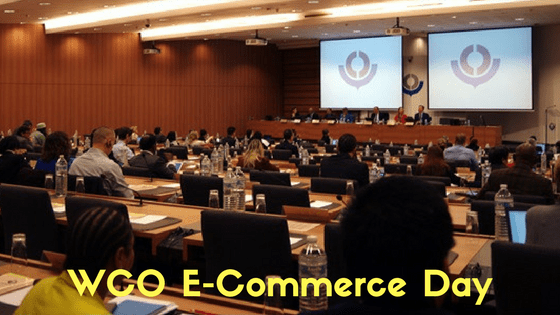
‘E-Commerce Day’ at the WCO PTC lays out broad considerations on Cross-Border E-Commerce

THE NEW YOUGrowing electronic commerce (E-Commerce) has provided unparalleled opportunities for and has become a game changer in the international trade arena. It has revolutionized the way businesses and consumers are selling and buying goods with wider choices, advanced shipping, payment, and delivery options.  At the same time, E-Commerce, in particular Business to Consumer and Consumer to Consumer (B2C and C2C) transactions, is presenting several challenges to governments and businesses alike.

The WCO Working Group on E-Commerce (WGEC) together with its four Sub-Groups is steadily progressing with the four identified work packages, namely Trade Facilitation and Simplification of Procedures, Safety and Security, Revenue Collection, and Measurement and Analysis with a view to develop recommendations/guidelines on cross-border E-Commerce from a wider facilitation, security or revenue perspective, to collect and disseminate good practices/initiatives, and to enhance/update related WCO instruments and tools.

Given the current focus of the WCO Members and the private sector on this topic, the 215th/216th Sessions of the Permanent Technical Committee (PTC) held a whole day dedicated session on E-Commerce on 5 April 2017. During the ‘E-Commerce Day’, the delegates were provided an update with the work done thus far, as well as, the envisaged work by the four Sub-Groups on respective work packages. A number of valuable suggestions were provided by delegates from policy, business process, and operational perspectives to further enhance the WCO E-Commerce Work Programme with tangible and practical deliverables for providing a concerted and effective response to this growing channel of trade.

In addition, four thematic workshops relating to different dimensions of E-Commerce were organized by the Sub-Groups’ Co-Leads together with other partners. Through these workshops, some interesting facets of e-commerce were explored in detail and a number of interim recommendations were made concerning facilitation, risk management, safety and security, revenue collection, and associated capacity building through enhancement partnerships with all e-commerce stakeholders and augmented public awareness and outreach programmes.

In the course of the panel sessions, a number of collaboration success stories were identified, and they will be captured more formally and shared with interested parties, through the WCO webcorner.

The WGEC Sub-Groups will continue carrying out further work and a consolidated set of interim recommendations will be presented to the July 2017 Sessions of the WCO Policy Commission and Council. Source: WCO

WCO – Study Report on E-Commerce

Screen Shot 2017-03-12 at 13.18.00The recent WCO publication of a Study Report on E-Commerce is based on a short survey answered by the Organization’s Members. The Report compiles Customs administrations’ practices as well as their ongoing and/or future initiatives related to the processing of cross-border low-value e-commerce.

Current practices, issues and challenges as well as initiatives and potential solutions are presented in each of the survey sections: Facilitation; Risk Management; Data Exchange/Cooperation with E-Commerce Operators; Control and Enforcement; Revenue Collection. Case studies are also widely used throughout the document to illustrate specific practices.

The survey was undertaken as part of the WCO Work Plan on Cross-Border E-Commerce aimed at addressing cross-cutting issues in relation to e-commerce and coming up with practical solutions for the facilitated clearance of low-value shipments, including appropriate duty/tax collection mechanisms and control procedures.

An overview of the WCO’s work so far, including tools, reports and interim recommendations issued by the WCO Working Group on E-Commerce (WGEC), as well as work to be completed in the future, is available here. Source: WCO

WCO – the opportunities and challenges of E-commerce

wco-in-russia

The WCO Policy Commission, held in Moscow, Russian Federation, from 5 to 7 December 2016 under the chairmanship of Mr. R. Davydov, brought to the fore the key role of Customs in creating a sustainable and efficient e-commerce ecosystem, reviving-up the exchange of data between stakeholders and enhancing risk-management through electronic interface. The other main topics discussed during the Commission pertained to trade facilitation, security, the enhancement of the Customs/Tax cooperation and the modernization of Customs administrations.

The newly established WCO Working Group on E-Commerce will work to tackle the different dimensions of e-commerce by collecting and exchanging best practices in the field, stocktaking and leveraging some of the ongoing work being carried out by other entities and drawing up proposals geared towards the development of practical solutions for the clearance of e-commerce shipments, including appropriate duty/tax collection mechanisms and control procedures.

Concerning the in-depth discussions on Custom /Tax cooperation, the WCO issued this year “Guidelines for strengthening cooperation and the exchange of information between Customs and Tax authorities at the national level” and will continue working on topics of common interest for Customs and Tax experts such as transfer pricing, drawback and Illicit Financial Flows (IFF).

During the Commission, WCO Secretary General Kunio Mikuriya, confirmed the WCO Theme for 2017 “Data Analysis for Effective Border Management” and stressed the impact of the digital revolution and the need to address promptly the challenges posed to the global economy. The Secretary General invited all the WCO Members to promote and share information in the coming months on how they are leveraging the potential of data to advance and achieve their objectives and respond to the expectations of traders, transport and logistic operators, and governments.

As data analysis will be emphasized in 2017 as a force multiplier for Customs administrations, it is relevant to highlight that the WCO is carrying out a Study to collect best practices among its members to assess and promote initiatives in the area of e-commerce. A previous analysis of preliminary data underscored the need for digitalization of processes, better sharing of information between e-commerce stakeholders and customs for improved risk management and the necessity for harmonization in the low-value shipment processes. Source: WCO

WCO declares 2017 to be the year of Data Analysis

wco-icd2017The Secretary General of the WCO, Kunio Mikuriya, announced today that 2017 will be dedicated to promoting data analysis under the slogan “Data Analysis for Effective Border Management.” WCO Members will thus be called upon to further promote their efforts and initiatives in a sector that is becoming a key element in Customs modernization process: collecting and analysing data.

Customs has a substantial amount of data at its disposal, such as data submitted for the Customs clearance process. Customs can also tap data from other government agencies, commercially available databases, and open source information platforms such as digitized global public records and multilingual news sources.

Moreover, physical objects are nowadays embedded within electronics, software, sensors and network connectivity, which enables these objects to collect and exchange data, a phenomenon known as the ‘Internet of things’.

Simply collecting data for its own sake, however, is not sufficient and Customs administrations may face the risk of being overwhelmed with an avalanche of data. Data only has value when it is used effectively and efficiently. It is critical, therefore, that Customs administrations leverage data to make informed decisions, especially given the sophisticated and evolving challenges that Customs administrations face every day.

Data analysis can propel Customs to new levels of success in both compliance and facilitation, by enabling it to:

  • improve risk management which supports enhanced detection of irregularities, illicit consignments, the suspicious movement of people and financial flows, and the facilitation of legitimate trade;
  • learn from historical activity to predict trader or passenger behaviour;
  • engage with other government agencies to leverage their experience and expertise;
  • conduct quantitative research for purposes of building knowledge;
  • enhance performance measurement to improve officer practices and integrity. Data analysis thus can greatly support the core Customs’ objectives of revenue collection, border security, collection of trade statistics, and trade facilitation.

“To achieve these benefits, Customs administrations should make data analysis a strategic priority and acquire cutting-edge technology, establish appropriate automation policies, and recruit experts to collect and analyse data, and act upon the data-driven insights”, said WCO Secretary General, Kunio Mikuriya.

There are of course potential obstacles to an optimal use of data, such as the lack of qualitative data, data that has not been integrated or merged, lack of harmonization of data across border agencies, lack of skilled resources, IT infrastructures and cultural challenges. In addition, it is vital that appropriate privacy and confidentiality laws be respected.

“Data analysis and related challenges will be thoroughly discussed within the WCO during 2017, and at events such as the Information and Technology Conference, the Global Conference on Transit, and the Technology and Innovation Forum”, Dr. Mikuriya added.

As part of this initiative, the WCO will enhance the promotion of tools such as the WCO Customs Enforcement Network (CEN) which is a global Customs seizure database; the WCO Time Release Study (TRS) which is a methodology for measuring border agency clearance times; mirror analysis which involves using the HS Code to compare imports (or exports) of a country with exports (or imports) reported to the country by its trading partners to detect gaps in terms of quantities, weight or value that may reveal fraudulent flows or practices; the use of performance measurement to improve Customs procedures and integrity, such as through the techniques presented in the WCO Performance Measurement Contracts Guide; and the Data Model which supports data analysis by improving data collection and enabling the sharing of data between government agencies.

The WCO’s annual theme will be launched on International Customs Day, which is celebrated annually by the global Customs community on 26 January in honour of the inaugural session of the Customs Co-operation Council (CCC) which took place on 26 January 1953.

The WCO invites the Customs community to mark 26 January 2017 in their diary. Source: WCO

SARS Management benefits from the WCO LMD Workshop

wco-lmd

As part of its Capacity Building programme, the WCO organized a Leadership and Management Development (LMD) workshop from 14 until 25 November 2016 in Pretoria, South Africa. Nineteen middle managers of the South African Revenue Service (SARS) were inspired to strengthen their leadership and management capacities, as well as their personal effectiveness to drive reforms within their organization. The workshop was made possible with the support of the Finnish Ministry of Foreign Affairs.

During a meeting with a delegation of executive management at the end of the LMD workshop, participants were invited to not only implement their newly acquired skills and insights in their own units, but to also continue learning and developing themselves as well as the whole organization. A first follow-up meeting to that end was immediately planned.

In the LMD workshop participants learned that knowing yourself and self-awareness, managing strategically, people management, outstanding communication skills and change management are very important to address SARS’ future challenges. The participating managers were extremely participative and showed a strong motivation and commitment to know, improve and manage themselves, in order to have a great and positive impact on others, as well as on the organization. With personal testimonies at the end of the workshop participants demonstrated their motivation to bridge the gap between policy making and organization-wide implementation of changes.

In the near future SARS will implement its own Leadership and Management Development programme. For further development as a regional centre of expertise in this LMD domain SARS and WCO plan to strengthen their cooperation.

For more information on the WCO Leadership and Management Development Programme, please contact Capacity.Building@wcoomd.org. Source: WCO

The WCO HS2017 Nomenclature – all the details

wco-hs2017

The World Customs Organization (WCO) has just released the 2017 edition of the Harmonized System Nomenclature, the world’s global standard for classifying goods in international trade, which will enter into force on 1 January 2017.

Used by over 200 countries and economic or Customs unions as well as by international organizations such as the United Nations Statistical Division (UNSD) and the World Trade Organization (WTO), the Harmonized System (HS) Convention currently has 154 Contracting Parties, making it the WCO’s most successful instrument to date.

The Harmonized Commodity Description and Coding System, also known as the Harmonized System (HS) of tariff nomenclature is an internationally standardized system of names and numbers to classify traded products. It came into effect in 1988 and has since been developed and maintained by the World Customs Organization (WCO) (formerly the Customs Co-operation Council), an independent intergovernmental organization based in Brussels, Belgium – Wikipedia

The 2017 Edition of the WCO’s HS Nomenclature includes 242 sets of amendments (including some complementary amendments): 85 relating to the agricultural sector; 45 to the chemical sector; 22 to the wood sector; 15 to the textile sector; 6 to the base metal sector; 25 to the machinery sector; 18 to the transport sector and an additional 26 that apply to a variety of other sectors.

The 2017 edition of the Harmonized System comprises a total of 5,387 separate groups of goods identified by a 6-digit code (compared to 5,205 in the 2012 edition).

Click here for the HS Nomenclature 2017 Edition.

HS-related Council Recommendations

The Council, at its 127/128 Sessions in July 2016, adopted two HS-related Recommendations amended consequential to the Council Recommendation of 27 June 2014 concerning the amendment of the HS Nomenclature. First is the revised Recommendation of 18 June 1996 on the insertion in national statistical nomenclatures of subheadings for substances controlled under the Chemical Weapons Convention. Second is the Recommendation on the use of standard units of quantity to facilitate the collection, comparison and analysis of international statistics based on the HS Nomenclature 2017 Edition. With the acceptance of the revised Recommendation, the version of 24 June 2011 has been revoked with effect from 1 January 2017.

Click here for the HS-related Council Recommendations.

Correlation Tables HS 2012 – 2017

Some corrections have been made in the tables correlating the 2012 and 2017 versions of the Harmonized System.

Click here for the Correlation Tables HS 2012 – 2017.

Source: WCO

WCO’s “Guidelines”on Customs-Tax Cooperation

customs-taxThe “Guidelines for strengthening cooperation and exchange of information between Customs and Tax authorities at the national level” have been formulated with the support of WCO Members and development partners, especially the Organisation for Economic Co-operation and Development (OECD) and the International Chamber of Commerce (ICC). The Guidelines aim to provide reference guidance to Customs and Tax authorities who wish to go further in their cooperation and develop operational models which enable agencies to work together to their mutual benefit.

Although there is no limit to the ways in which these two agencies can work together, and countries should consider new and innovative methods based on their organizational structure, needs and operational requirements, the Guidelines highlight some overarching principles and associated benefits concerning enhancement of Customs-Tax cooperation.

The WCO Guidelines for Strengthening Cooperation and the Exchange Of Information between Customs and Tax Authorities at the National Level are intended to supplement the ongoing initiatives in this domain. The aim is to provide general, overarching principles for cooperation which take account of operational considerations, bearing in mind the different organizational structures and national requirements of countries. It is expected that these Guidelines will be useful to Member Customs administrations in developing a sustainable cooperation mechanism (including a MoU where needed) tailored to their unique situation, in close cooperation with their respective Tax authorities

In particular, the Guidelines provide a comprehensive overview of the enablers for mutual cooperation and the exchange of information, address the scope and remit of information exchange, cover different information exchange mechanisms, list the type of activities that Customs and Tax authorities may undertake together, and provide key principles and points to consider when developing a Memorandum of Understanding/Agreement (MOU/MOA). Source: WCO

WCO News – October 2016 Edition

wco-news

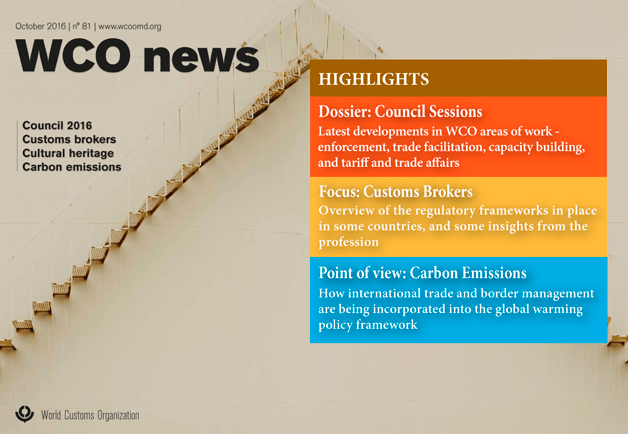
This edition of WCO News features a special dossier on the 2016 Council Sessions, in particular the latest developments in the core WCO areas of work: tariff and trade affairs, trade facilitation, enforcement, and capacity building.

It also puts a spotlight, in its focus section, on the Customs brokers profession, including the practices adopted by some Customs administrations related to licensing and regulatory regimes.

Other highlights include articles covering the quantification and taxation of carbon emissions, the protection of cultural heritage through enhanced cooperation between Customs officers and museum professionals, and much more.

The magazine is published and distributed free of charge three times a year, in February, June and October, and is available online or in paper format.

If you do not want to miss future issues of WCO News, the WCO  invites you to fill out the online subscription form – click here!

Source: WCO

NZ Customs to conduct WCO Cargo Targeting System pilot

nzc-wco

Photograph: (left to right) Philip Hague, Craig Chitty and Brian Cotton from New Zealand Customs Service’s Integrated Targeting Operations Centre (ITOC) are joined by the WCO’s Cristian Moldovan and Robert White for the launch of the WCO CTS air cargo pilot.

New Zealand Customs Service (NZCS) is assisting the WCO by conducting a pilot of the newly developed air cargo capability for the WCO Cargo Targeting System (WCO CTS). NZCS has extensive experience and expertise in cargo risk assessment and targeting and will be fully testing and evaluating the WCO CTS during a 3 month trial.

The WCO travelled to New Zealand during week commencing 10 October 2016 to launch the pilot and conduct training with NZCS personnel who will be using the WCO CTS. The findings of the pilot will be incorporated into the system before existing WCO CTS deployments are upgraded and the new capability becomes available to all WCO Members.

The enhancement of the WCO CTS to include conventional air cargo and express consignments comes 3 years after the WCO first launched the system for maritime containers. During that time the WCO CTS has been deployed to a number of WCO Members with more scheduled in the coming months

The WCO CTS is a cargo manifest risk assessment and targeting solution developed by the WCO for Customs administrations across the globe that require such capability. It allows those adopting the solution to implement international best practice cargo risk assessment including key pillars of the WCO’s SAFE Framework of Standards to Secure and Facilitate Global Trade.

For more information on the WCO CTS project please contact – cargotargetingsystem@wcoomd.org

WCO Workshop on Inland Depots in Lao PDR

inland-port-7The World Customs Organization (WCO) organized a National Workshop on Inland Depots under the sponsorship of the Customs Cooperation Fund (CCF)/Japan and the Japan International Cooperation Agency (JICA). It was held from 20 to 22 September 2016 in Savannakhet Province, Lao People’s Democratic Republic.
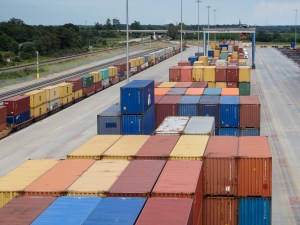
Twenty six Customs officers from the Lao Customs Administration participated in the workshop, along with guest Customs experts from The Former Yugoslav Republic of Macedonia, Japan and JICA. Mr. Somphit Sengmanivong, Deputy Director General of the Lao Customs Administration, opened the workshop. He highlighted the importance of Inland Depots as a national strategy to secure his country’s economic growth and sought participants’ active participation in the discussions on this topic.

Presently, there is no clear definition of “Inland Depot” and many similar terms, such as Dry Port, Inland Terminal, Free Trade Zone and Special Economic Zones, are used in the international logistics. During the three-day workshop, participants discussed the functions and a possible definition of Inland Depot from a Customs perspective.

AmatiComment – Inland container terminals serve as important hubs or nodes for the distribution and consolidation of imported and export destined cargoes. There are 16 Landlocked countries in Africa, which signifies the importance of hinterland logistics development and its consequential impact on regional trade groupings. Consequentially, it behooves governments to understand and support the logistics supply chain industry in maximizing inland transportation (multi-modal) infrastructures to achieve a common and mutually beneficial economic environment. Furthermore, the more facilitative these arrangements, the better opportunity there is for success and longer-term economic sustainability.

The WCO Secretariat made presentations on international standards for relevant procedures, including Customs warehouses, free zones, Customs transit, inward processing, clearance for home use and temporary admission. Experts from The Former Yugoslav Republic of Macedonia and Japan described their national and regional experience of Customs warehousing, and Customs transit procedures. The JICA expert presented the bonded procedures applied by neighbouring countries to Lao People’s Democratic Republic. Lao Customs administration explained their national system for Inland Depots and a logistics company of Lao PDR shared its expectations on inland depots.

On the last day, participants discussed the challenges and possible solutions to enhance the functional and efficiency of Lao’s Inland Depots. Possible solutions, such as the use of modern information technology, further cooperation with the private sector, clear regulations on relevant procedures, coordinated border management and international cooperation were considered. Source: WCO

Recommended reading

BEPS Impact on Trade and Customs

Transcript of video
Todd Smith, principal in KPMG LLP’s Trade & Customs practice: We had over 350 people attend the webinar on Base Erosion and Profit Sharing (BEPS) from a Customs Perspective. I think the reason is because there hasn’t been a lot of discussion on how BEPS will impact customs.

I read all of the action items that the OECD published in October to identify where there would be crossover or an overlap on customs as it relates to BEPS. There clearly is going to be quite an impact.

For one thing, there is a lot of transparency that is being created overall by the BEPS initiatives, and customs auditors around the world are increasingly cooperating with the tax administrations around the world, so there will be a treasure trove of information for the customs auditors found within the Master File, the Local File and the CbC report, and just as tax administrators will use that information because of the information sharing, customs auditors will also use that information to identify targets for audits.

It will tell them, for example, where there is a related party transaction where they may not have had that information previously.

One of the big areas that we feel the customs function will be impacted by BEPS is where you have a situation where a company may need to convert a commissionaire to a buy-sell. When this happens, the importer of record could change, and more importantly the value that’s declared to customs under a commissionaire structure oftentimes is the third-party customer price. And when that entity converts to a buy-sell entity, the new buy-sell entity becomes the importer of record. It needs to achieve a margin, and the only way really to do that is to import that same product at a lower price.

And so the challenge is to convince the customs administration that the new price with the limited-risk distributor, for example, which is lower in its related party price, is still considered arm’s length, even though it’s less than the previous import value at the 3rd party customer price. Source: KPMG

Recommended reading