Port Community Systems – a voyage of discovery

Port Community SystemSince the mid-1980’s the concept of port community systems have abounded in various guises. Portnet (now Transnet Port Terminals / National Ports Authority) initiated a drive around this time as well, however the maturity of B-2-B e-commerce, at the time, was in its infancy and there were simply not enough ‘takers’ due to the unknowns such as ‘cost’ and ‘what’s in it for me’. Similarly, the air cargo community – in Europe especially – operated what was called ‘cargo community systems’ (CCS), most of which were operated by a value added network operator who provided the infrastructure and together with an ‘industry/community’ project team developed all the necessary transaction interchanges to facilitate data exchange between participating trade and logistics entities. Some of these CCS’s interfaced with Customs, but mainly serviced the forwarding and cartage community. Towards the end of 1998, South Africa established its very own known as ZA-CCS. Like Portnet’s endeavour, it was perhaps ahead of its time with very few participants to support the anchor sponsor, being the South African Airways. Two years later SARS implemented its EDI programme, and so developed a new era in information exchange for the customs clearing fraternity. The number of service providers also increased to support a burgeoning need for ICT capability. Mainframe systems gave way to thin client and PC-based solutions making it all the more affordable and accessible to the greater trading community.

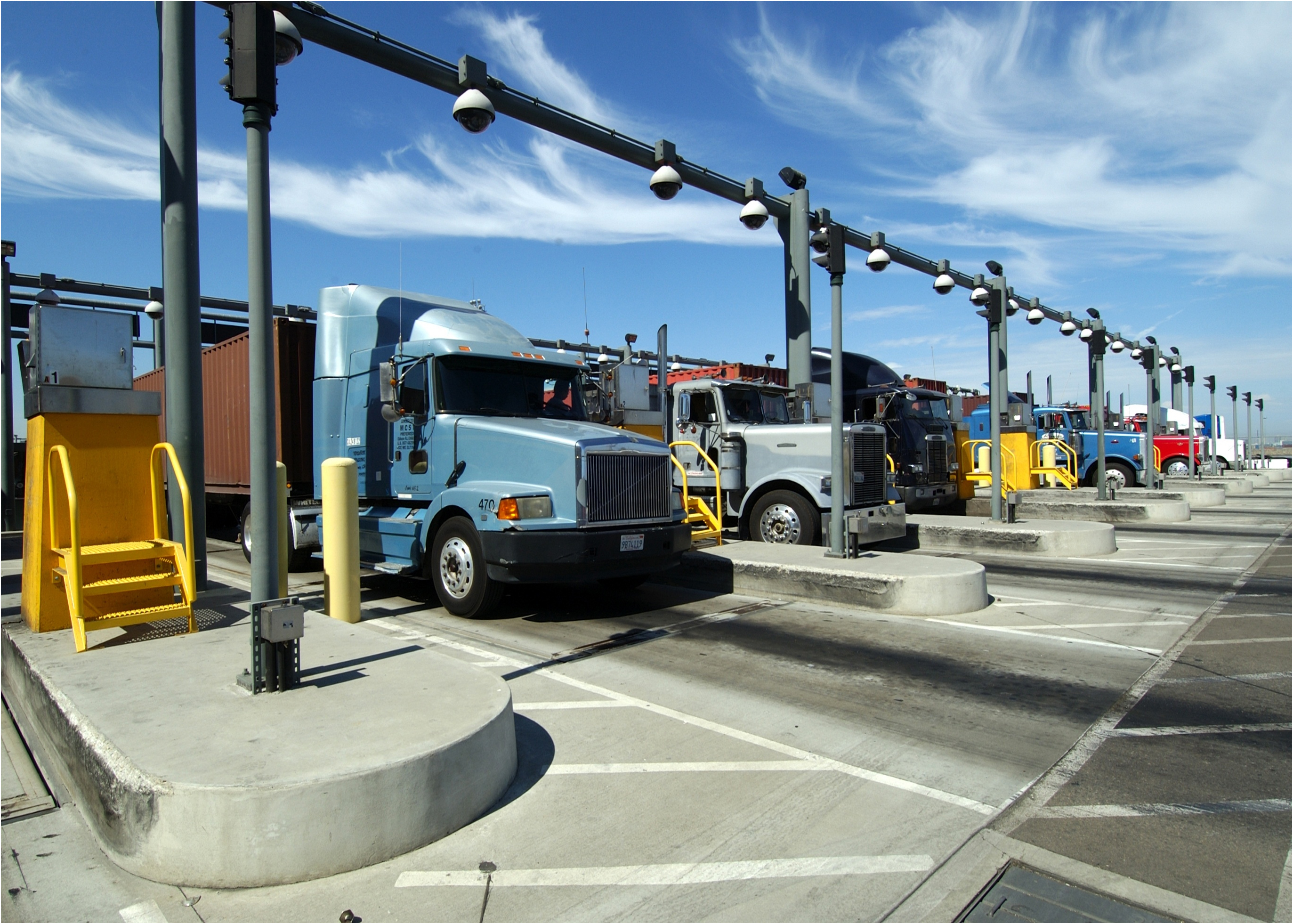
In the US, Los Angeles has spent considerably more installing security cameras than ports have spent in other countries on setting up a Port Community System. However these have yet to prove their worth in the lucrative US market. Much like the voyages of discovery to the New World 500 years ago, Port Community Systems are taking their time to spread beyond Asia and Europe. In the US, they are virtually unknown outside their uses in security and safety.

European ports have undoubtedly benefitted from PCS in varying forms. An outstanding system is Portbase, linking Rotterdam and Amsterdam in virtually every activity. So far, 40 different services are offered, with Notification of Dangerous Goods next in line. The big test in extending Portbase lies in fitting the programme into less homogenous conditions elsewhere.

At Gothenburg in Sweden, the most significant aspect was integrating with the government systems, regulations and requirements – especially in areas such as control of dangerous goods and waste disposal. The single window application is a key to success. Based on a module approach, three sub-programs – the Vessel Clearance System, Marine Service System, and Cargo Management System – cover the spectrum of operations linking port customers, users, management and government authorities.

In developed countries the differences are marginal when new systems are set up, because every port is already heavily computerised. In emerging markets even the most basic computer system can mean a huge step forward. It’s also a big plus when free trade agreements are signed. Customs administrations will zero in on the most efficient port as the designated Trade Zone or bonded manufacturing facility. The more efficient a port, the more likely that it will be used as a trade lane.

In the US, the focus of information exchange is almost solely on safety and security, a consequence of the 2001 terrorist attacks. Commercial and operational information sharing is almost non-existent, and the reason is the extremely competitive culture that pervades business.

The universal opinion is that terminal operators and port authorities jealously guard their business models and details from rivals. It’s all a case of ‘you jump in first’. There is a total refusal to be the first to set up a system – the competitors would be only too happy to plunder the information without giving anything back in return. In complete contrast, the approach to security and safety is “the more the better“. (In South Africa we refer to it as a ‘data rich’ environment). These are undoubtedly interesting times we live in. Source: PortStrategy.com.
Exports – Dispelling a fallacy

Following my previous post on ’empty container depots’, its time to dispel a long time myth basically perpetuated to safeguard the cargo handler’s imagined responsibility that goods delivered to be packed for export must be first cleared through Customs. There is no current law, rule or policy which supports this notion, and neither is there any liability on stuffers, consolidators, container depot, transit shed operators, empty container depot operators to ensure that goods they receive under instruction to pack for export have been pre-cleared with Customs.

Let’s first consider what a Customs export declaration implies. Generally, a declaration for export is lodged with Customs subsequent to the conclusion of a sales agreement between a local supplier and a foreign buyer via the commercial bank. The forwarding agent will arrange foreign shipment with a carrier, obtain commercial documents (pro forma invoice, required regulatory permits/certificates, etc.) and prepare a declaration for submission to Customs on behalf of the exporter.

The acceptance, by Customs, of an export declaration is no more than a formal notification of an exporter’s intention to exportnothing more. It is therefore untrue that an ‘approval to export’ or ‘release for export’ notification is the last word from Customs. Moreover, it is also incorrect to reason that Customs has no right to intervene in a ‘transaction’ subsequent to clearance. In essence the notion of an export ‘consignment’ only materialises once the goods are packed, sealed and ready for delivery to the point of international cartage ; or, more accurately, when the ‘secured goods’ are reported for delivery to the place/port of export. Only at this point can risk be evaluated in all its dimensions and a final decision by Customs (load/no-load) be pronounced.

The advent of advance information, post 9/11 and subsequent proliferation of ‘secure export’ initiatives means that ‘risk’ in relation to international cargo movements encompasses three key areas – information, conveyance and cargo. To merely accept whats declared on the export is insufficient for Customs. Other potential risks involving a multitude of people with a lesser liability, little appreciation for accuracy, and little or no sensitivity towards the safety and security of goods in their custody may compromise the ‘compliant’ intent of the exporter and clearance broker at time of initial customs clearance.

It is therefore plain to see why SARS Customs is modernising not only its procedures and systems, but also its enabling legislation.  A new export clearance and cargo reporting dispensation is envisaged, to be accompanied by the licensing of cargo handlers and their premises and the implementation of a seal integrity programme.

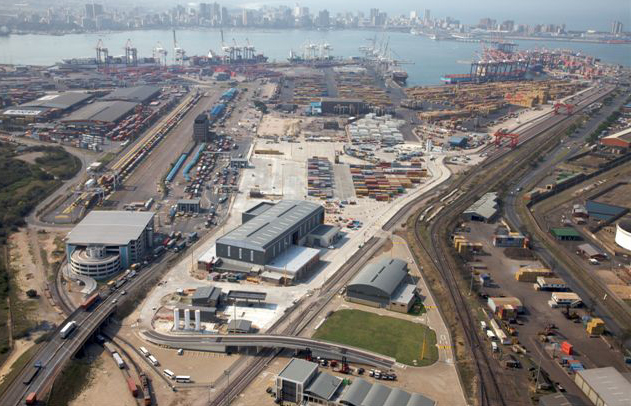
Cargo Dwell Time in Durban

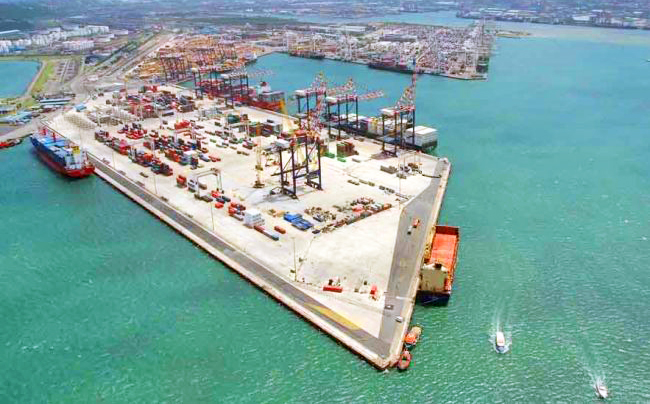
An acquaintance in the forwarding industry brought this working paper to my attention. Titled “Cargo Dwell Time in Durban“, it is very useful reading for logistics operators, Customs and government agencies, and policy makers. The object of the working paper attempts to identify the main reasons why cargo dwell time in Durban port has dramatically reduced in the past decade to a current average of between 3 and 4 days. A major customs reform; changes in port storage tariffs coupled with strict enforcement; massive investments in infrastructure and equipment; and changing customer behavior through contractualization between the port operator and shipping lines or between customs, importers, and brokers have all played a major role. The main lesson for Sub-Saharan Africa that can be drawn from Durban is that cargo dwell time is mainly a function of the characteristics of the private sector, but it is the onus of public sector players, such as customs and the port authority, to put pressure on the private sector to make more efficient use of the port and reduce cargo dwell time. The Working Paper is the product of the World Bank’s Africa Region, Transport Unit, being part of a larger effort  to provide open access to its research and make a contribution to development policy discussions around the world. Policy Research Working Papers are also posted on the Web at http://econ.worldbank.org

Related articles

TPT’s Pre-advice for Export Containers

Durban Container TerminalIt has been enquired by some whether or not Transnet‘s Pre-Advice for Export Container’s initiative is aligned with SARS Customs Modernisation. First of all its important to delineate the process and requirement. Transnet Port Terminal’s Pre-Advice is an electronic exchange (COPARN) between the carrier and TPT. As such it is an arrangement which satisfies the Terminal’s advance reporting requirements of impending export container delivery to a container terminal. In time it will feed Customs’ gate-in reporting requirements.

From a Customs perspective, this initiative is an important development which fills another piece of the supply chain puzzle. As such it is not in contradiction to anything planned for by SARS – rather its somewhat ahead of Customs at this point in time. It is just not possible to synchronise inter-departmental and inter-company project developments. Each has its own financial/procurement cycles and operational deliverables, and in certain cases legal prescription. At the same time it is true that supply chain operators bear the brunt of untimely and non-coordinated initiatives. Nonetheless, they are important while at the same time vital for the country’s future economic growth and stability.

New Zealand Time Release Study 2010

NZ Time Release Study 2010Besides rugby, the Kiwis also do Customs pretty well. It is clear that Customs administrations outside of a revenue authority model can place more time and emphasis on the things that are meaningful. Perhaps South Africa will soon attain this level of performance reporting. Before this however, the ability of the impacted parties to report both spontaneously and reliably is a given.

The trading community are directly impacted by the response times. Not only does it affect whether or not storage and demurrage might occur, it also (more importantly) affects their local and international reputation as suppliers of choice. One of the methods used for the review of clearance procedures is to measure the average time taken between the arrival of the goods and their release. This facilitates Customs to identify both the problem areas and potential corrective actions to increase their efficiency. The use of automation and other sophisticated selectivity methods  allow Customs to improve compliance and at the same time improve facilitation for the majority of low risk goods.

The time required to release goods is also increasingly becoming the measure by which the international trading community assesses the effectiveness of a Customs administration. The WCO Time Release Study provides guidance for a Customs administration on the best way to apply this method of internal review.

Automated Cargo Management – Whipping up Industry Awareness

Following the recent posts on this subject, SARS took to ‘walking the talk’ this week. Over the last month a significant increase in registrations with Customs as well as vast improvements in successful electronic manifest data submission has occurred, mainly in the sea freight industry, however. This week’s initiative took the campaign to the hub of air cargo in southern africa – Oliver Tambo International Airport. Meetings were arranged with various stakeholders and industry bodies to reinforce customs cargo reporting requirements. The campaign was intended to offer an alternative approach to the usual formalities of the bi-monthly modernisation meetings. If necessary, further campaigns will be undertaken leading up to the mandatory enforcement of electronic manifest and cargo report submission for air and sea cargo operators in the very near future. SARS will soon be announcing a final cut-off date for voluntary registration for ACM and electronic submission, after which punitive measures will be introduced. Watch the Customs modernisation webpage for further details.

Addressing Apathetic Compliance Mentality – Part 3

In conclusion of this topic, let’s consider the importance of both cargo and goods clearance. The goods declaration attests to the admissibility of goods according to the Customs tariff, valuation, origin, and all other government regulatory requirements. The cargo declaration and associated cargo reports allow Customs to confirm that what has been cleared has in fact been physically out-turned and accounted for. Moreover, in the case of transit movements, it allows Customs to track cargo movements.

It is therefore not difficult to understand that any non-participating party will undoubtedly impact on whether or not an importer receives his/her goods timeously. It is true to state that until now, the emphasis on valid clearance and release has been placed at the doorstep of the clearing and forwarding agent – the party that presents the goods declaration to Customs. In essence this is little more than a data validation exercise. It does not in any way prove the location of the goods, and the quantities received. Neither does it prove that the correct formalities have been applied as concerns the handling and temporary storage of the goods upon arrival.

What benefit is this to the country if Customs can only satisfactorily control the goods declaration? For exports this is even more nonsensical – after clearing goods for export, how often does it happen that no physical shipment leaves the country for one or other reason; and in such instances are these transactions cancelled with Customs? True, Customs should not be a barrier to trade, but it must still account to the fiscus and trade and industry with accurate trade statistics. Therefore, Customs information requirements are crucial to much more than just the clearance of goods. The SA Reserve Bank is likewise a recipient of Customs data whereupon it monitors foreign exchange and payments.

The difference now is that SARS requires this information in advance, and electronically. To re-iterate – the first phase of ACM is to ensure the registration of all sea and air cargo reporters and the consequential compliance of the cargo data which they submit. As alluded to in Part 2, SARS will continue its liaison with the business community and will mobilise campaigns shortly to get all remaining parties registered. Supply chain security is a myth if certain operators fly under the radar. The consequence of non-participation implies that importers (and exporters) will unwittingly find themselves at the wrong end the stick once SARS commences formal manifest/declaration matching.

Should SARS penalise the importer, exporter or clearance broker, where a cargo reporter fails to submit a manifest? Certainly not, the consequential delay of the latter’s action would have already damaged the his/her reputation, if not the viability of the consignment concerned. Therefore it is important for any ‘qualifying’ cargo reporter to come forward and register. As unsettling as this may sound, it is the best way to clean up the industry and bring it in line with requirements that are ‘standard’ practice in other parts of the world.

Interested parties can open the ACM Fact File, which provides the necessary details and information for registration.  Further details will also be available on the Customs Modernisation webpage, shortly.

Research stuff: Supply Chain, Optimization and Compliance

Logistics operators, shippers, trade practitioners and customs officials will all find something useful visiting Management Dynamics Incorporated.  They provide several white papers of educational interest. So if you’re looking for information relating to current trends in international shipping, this is a good place to start.

The Supply Chain is a Scary Place – World Trade Magazine

The Supply Chain is a Scary Place – THIS MONTH’S ISSUE – World Trade.

The Dynamics of Electronic Trading – Issues for Customs, Forwarders and Traders (and service providers)

Ever since the inception of automation in Customs (circa 1981) it has offered time-saving benefits and obviated several mundane tasks. Like all things new, improvements are lauded and soon forgotten as quickly as the novelty wears off. With each improvement more ‘operational knowledge’ is translated into software code, aiding the user, but unwittingly depriving future users of fully understanding the logic behind it all.

Let me provide an analogy –

20 years ago most broker’s classified supplier’s invoices for appropriate tariff, computed currency conversion, value for duty purposes and duty calculation all manually. Similarly, Customs officers verified each declaration according to the supporting documents presented. True this was resource intensive and time-consuming, and hopelessly inefficient by today’s standards and expectations. On the plus side, the brokers and customs officials had a greater appreciation for the detail and technicalities involved in clearance processing. Another benefit of the past was the accessibility of the customs officer.

After 2 decades of computerised enhancements the technicalities around customs clearance have been made easier through significant automation of workflows and communication. Most brokers nowadays offer transport and logistics services and have clearly evolved into international freight forwarders. The introduction of the Customs duty deferment scheme has also long been recognised by most brokers and forwarders as a critical component of the financial viability of their business.

In fact, the nature and focus of the trade and customs business have themselves shifted drastically in the last 10 years. Company boardrooms are more about strategy and tactics, and the IT division plays more and more an operational role rather than purely a support function. This is often the bain for the operations division which fails to realise that ICT is an ally not and enemy. This short-sightedness is also the cause by which the system is often blamed for operational shortcomings.

It is therefore clear that procedural enhancements, revised business practices along with computerisation have all lead to a conglomeration of miscellaneous ‘detail’ which seemingly daunts the user. The computer is able to process millions of lines of code and perform instructions across the physical boundaries which make up the different organisational divisions and data stores. In the past human intervention gave effect to physical processes through manual activities with hand-offs from one division to another; today, thousand’s of instructions are triggered by a few swift keystrokes by an operator, where sophisticated algorithms filter and distribute data, perform calculations, risk assessment and account management. Computerisation also enables activities to occur in parallel, whereas a manual process normally follows sequentially. Because the eye does not see these things the user/operator is unaware of the sequence or complexity of the processes being accomplished. Because there is perhaps more idle time today, the expectation is that things need to happen in seconds, not hours or days. And so, service levels are defined with these expectations in mind with onerous penalties for non-delivery. (Okay, Customs is indemnified against the latter!)

In the light of the above and a review of the recent weeks of activities leading up to the implementation of the first phase of the Customs Modernisation Programme, it is abundantly apparent that the state of preparedness needs to look at a variety of areas, not just those which affect the computer operator (customs officer or trader).

The diagram is intended to illustrate the effect of Customs Modernisation on the local trade community. In terms of technical ICT developments, Customs need only interact with the 16 service providers. These in turn have the responsibility to provide systems and systems support for their 3000 or so brokers and freight forwarders. However this obligation can only impart systems knowledge. The brokers/freight forwarders must, over and above the systems enhancements, be able to articulate and understand these changes in a tangible manner. Why, because these affect not only their legal obligations under the law but their service offerings to their clients – the importers and exporters. This is where I perceive there is some gap or lack of capacity rather. There are indeed excellent thinkers in this industry, but alas too few, and these few have fulltime day jobs as well. A change of the current magnitude requires a dedicated team of knowledgeable practitioners who (on a fulltime basis) should not only challenge the law makers but make constructive alternatives. It is difficult to maintain focus on this if the participants are all volunteers.

Lastly, those thousands of importers and exporters are soon to realise that the impending new Customs Act has a whole bag of goodies for them too! While the umbrella organisations have always had the intent to provide training, this requires capacity as well. The recent joint training initiative between SARS and Stakeholders was undoubtedly a first, but must not be the last. Moving forward it is imperative that similar joint ventures occur, with increasing frequency and more detailed training content and materials. There is more than enough room for all of us (SARS and Trade) to make an impact. This is the bigger picture!