IDZ – the ‘BS’ marketing approach continues

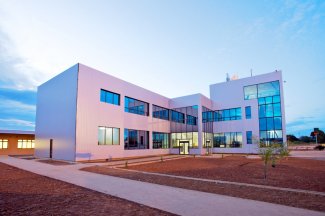
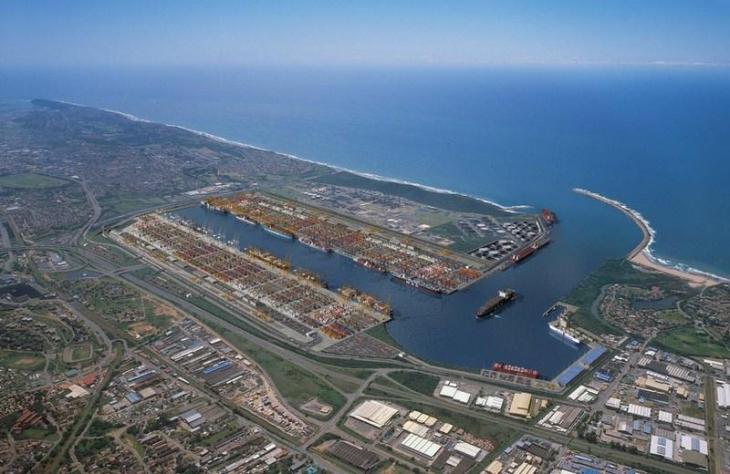
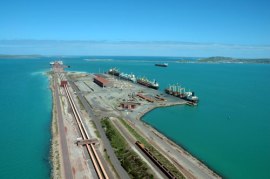
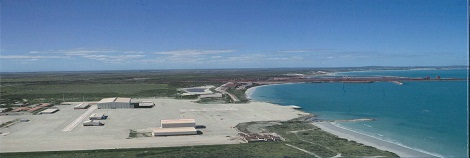
Saldanha Fabrication Centre, Port of Saldanha

Saldanha Fabrication Centre, Port of Saldanha

After all the negative criticism of the South African IDZ programme over the years, its remarkable that the latest offering situated at Saldanna Bay is plagued by the same misrepresentations as preceding zones. When will the IDZ Operators and their marketing/communication teams learn that the South African government does not provide ‘free ports’ within its IDZ programme. For that matter neither does the Special Economic Zone (SEZ) facility. Such statements are misleading and in effect only create confusion for investors.

Ports.co.za recently reported that, as a result of the sub-lessees failing to secure any business (lack of business benefits and government incentives?), the facility that was built as the Saldanha Fabrication Centre in 2007 is now to be converted into a multi-disciplinary facility to support the sectors of Oil & Gas; Petrochemicals; Renewable Energy Power; Desalination; Mineral Mining, Environmental & Chemical Industries.

This facility will be in the Customs Controlled Area (CCA) and will therefore enjoy ‘free-port’ status. The CCA will then be extended as the IDZ phases in the port’s hinterland come into being. Oh really?

KNM Grinaker-LTA will be retaining a certain area including the 25 metre high Bay 1 and Bay 2 workshops. This is intended to house equipment for the Oil & Gas majors which will require the height to be increased. Their work will be fabrication.

The facility has its own dedicated jetty, ideally for loading large diameter, heavy and long vessels, jackets and modules. KNM Grinaker-LTA Fabrication remains the sole local fabricator for the untapped market of pressure vessels above 100mm thicknesses.

The other areas, workshops, etc, are available for leasing on a long-term basis and the rental rates will be determined by the size of area required and the length of the lease. Saldanha Freight Services (SFS) are working with KNM Grinaker-LTA in searching for potential lessees. The screening of lessees will be intensive as the core activities must fit with the KNM Grinaker-LTA vision.

This facility is leased from and located in the Transnet National Port Authority (TNPA) zone designated primarily for the oil & gas sector. West of this facility (off-picture) is an area earmarked for a large graving dock, should such a dock be deemed sustainable in the long-term. East of the facility is open land also designated by TNPA for Oil & Gas developments.

This is the area where the Oil & Gas Base will be established. It will be linked to the shore-front with workshops and other facilities as well as deep-drafted quayside (berths) and lay-down areas suited to the maintenance & repair of vessels in the oil & gas industry.

The roads to the 4-berth multi-purpose terminal (MPT will be upgraded in the short-term to facilitate handing of imports & exports over this terminal. This land is available for leasing from TNPA and SFS is in a position to facilitate this for interested parties. These developments are planned for the 0-5 year and 6-10 year period commencing in 2013.

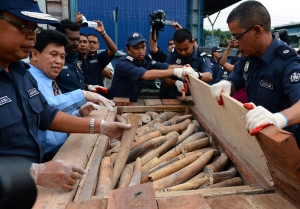
Massive Ivory Stash Seized In Malaysia


Malaysian Customs officers uncovered illegal ivory concealed within secret compartments in a shipment. (Getty Images)

Malaysian Customs officers uncovered illegal ivory concealed within secret compartments in a shipment. (Getty Images)

The Royal Malaysian Customs has received congratulatory messages from South Africa and the World Customs Organisation after thwarting one of the biggest ivory smuggling operations in recent memory. On Monday, Selangor Customs had seized 24 tonnes of elephant tusks and ivory worth US$20 million (RM60 million) in Port Klang from a China-bound ship that is believed to have sailed from Togo.

It is estimated that 750 elephants were killed to produce the quantum of tusks and ivory that was seized. To date, this is the biggest seizure of its kind in Malaysia. Confirming the seizure, Selangor Customs corporate communications chief Mohd Zhafri Johari explained:  “In the China market, ivory could fetch a price of approximately US$25,000 per kilogramme”.

Those arrested will be charged in court under Section 133(1)(a) of the Customs Act 1967 for false declaration and under the Convention for International Trade in Endangered Species of Wild Fauna and Flora. This international treaty was drawn up in 1973 to protect wildlife against over-exploitation and to prevent international profiteering which involved threatening of species.

Zhafri also noted that the smuggling of ivory through Port Klang was a rare occurrence prior to 2011. Since then, however, customs have made at least three major seizures. The seized ivory is now considered government property and will be destroyed upon completion of investigation and prosecution of the suspected parties. The 1,500-odd tusks were found in two containers. Although shipping documents listed the containers’ final destination as Port Klang, customs intelligence said the containers were planned to be sent to China. Source: Thesundaily.com

Beitbridge congestion – Travellers tear-gassed by SA police

border-lines

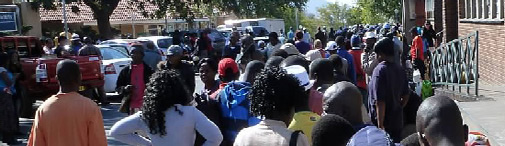
Zimbabwean Police are set to meet their South African counterparts following an incident in which the South African officers used tear gas to control travellers at their side of the border last Friday morning. The majority of the travellers were Zimbabweans, with others coming from countries north of the Zambezi.

The South African Police Services (SAPS) used tear smoke to control travellers at around 9am as the number of human traffic started increasing at Beitbridge Border Post.

No one was injured in the incident which lasted for about 15 minutes when people started showing their discontent with the slow way they were being cleared by immigration officials from that country.

Some travellers started jumping queues after they had spent between three and four hours waiting to gain passage into South Africa. Police officer commanding Beitbridge district Chief Superintendent Lawrence Chinhengo said yesterday that the incident was a great cause for concern.

“This was a very unfortunate incident. We are not happy with the method our counterparts used to control queues and have since communicated to them that we need to have an urgent bilateral meeting to iron out the issue. There are better ways to manage people rather than the tear smoke. It is of paramount importance that we meet and find better ways to control crowds during this festive season,” he said. Source: Bulawayo24.com

For more insight also read “Zim travellers stranded at border post” on zoutnet.co.za.

Beit Bridge – ZIMRA and Immigration gear up for congestion

beitbridge

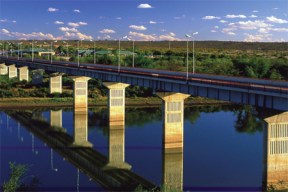
Beitbridge – crossing the Limpopo river

The Department of Immigration in Beitbridge has put in place mechanisms aimed at dealing with congestion at the country’s busiest border post in anticipation of an increase in the volume of traffic during the festive period. Assistant regional immigration manager in charge of Beitbridge Border Post, Mr Charles Gwede, said they have since held a series of meetings with key stakeholders and their South African counterparts to address congestion at the border.

“We have started preparing for the festive period in anticipation of a huge influx of travellers and all necessary strategies are now in place to help speed up the clearance of people during the festive period,” he said. “We are suspending leave and off-days for staff between 15 December and 16 January next year.

“As part of our decongestion drive we will scramble our shifts to maximise on manpower during the normal and extra peak days. In fact, starting from 15 December we expect a huge influx of travellers hence between 14 and 17 December, 21 and 24 December and 4 to 7 January, we will dissolve our shifts to ensure that we have more officers per shift who would effectively manage the queues and speed up the clearance process,” he said.

Mr Gwede said they were expecting 20 officers from other stations to beef up the local staff and ensure that all check points and counters were adequately manned. Beitbridge Border Post has a staff complement of 47 officers and support staff.

“As border stakeholders, we held several inter-border meetings with our South African counterparts to discuss and explore ways and strategies aimed at dealing with congestion during extra peak periods.

As part of their decongestion strategy, Mr Gwede said they would categorise travellers and create more counters to reduce queues. According to statistics, immigration officials at the border handled 73 825 travellers between Monday and Wednesday on both arrival and departure sides.

The Zimbabwe Revenue Authority (Zimra) spokesperson, Mr Canisio Mudzimu, said they would deploy relief officers to Beitbridge Border Post to beef up the local staff and help speed up the customs clearance process. “We are geared up in terms of facilitating the smooth movement of both human and vehicular traffic passing through Beitbridge Border Post during the festive season. We will deploy extra officers from less busy stations to Beitbridge Border Post during the festive period and to assist in border operations,” he said.

Beitbridge Border Post requires at least 247 customs officers to man it. The border post, which is the country’s busiest inland port of entry, has an establishment 141 officers. Mr Mudzimu said they would create separate traffic lanes to cater for tourists, returning residents, private motorists, commercial, buses and pedestrians to speed up the flow of traffic and reduce congestion.

Touts and bogus clearing agents continue to find their way into the customs yard where they would swindle unsuspecting travellers of their money under the guise of offering assistance. Beitbridge is the busiest inland port of entry in sub-Saharan Africa, which handles a huge volume of both human and vehicular traffic passing though daily. Commercial trucks destined for East and Central African countries such as Tanzania, the Democratic Republic of Congo and Zambia also pass through the border post.

On a normal day, the border handles between 6 000 and 8 000 travellers daily with the figures rising to 20 000 during the peak period. Source: Bulawayo24.com

Export tax mooted on iron ore and steel

Iron ore (Engineering News)

Iron ore (Engineering News)

The South African cabinet has endorsed the final report on the work of the Intra-Departmental Task Team (IDTT) on iron ore and steel, says Minister in the Presidency responsible for Performance Monitoring, Evaluation and Administration, Collins Chabane.

Briefing reporters following Cabinet’s last meeting of year on Thursday, Chabane said in keeping with prior decisions to enhance the competitiveness of the steel value chain, Cabinet endorsed the final report on the work of the IDTT and the recommendations contained in the report for urgent implementation.

He said there had been a lot of debate and interaction between the Departments of Trade and Industry, Economic Development and steel producers and mining houses with regards to the pricing of steel.

In August 2010, the dti announced the formation of a task team to make recommendations into the viability of local steel production. This as it had expressed concern about the high price of steel in the South African economy.

“Within the context of the beneficiation programme where the government is emphasising and wanting to expand the beneficiation of South African mineral products as it is one of the critical aspects,” said Chabane.

Among the recommendations of the task team are the amendments to the Competition Act and the introduction of export taxes on iron ore and steel where appropriate. The recommendations also include the promotion of new steel investments and prioritisation of electricity available and connections to such investments.

“Government would want, among other things, to expand the number of participants in terms of those who are producing steel as part of the reason to introduce new competition. Secondly [we] also want to take measures which are going to contain the expansion of prices of steel countrywide in order to stimulate the domestic production of various products which need to be processed in the country.

“The government is going to take several steps with regards to that in order to lower the price for domestic consumption and to redirect the steel products to provide for the South African economy,” explained Chabane.

He further added that the Industrial Development Corporation (IDC) will have to play a greater role in the industrialisation of the country through being involved in manufacturing as well as beneficiation. Source: SAnews.gov.za

Zambia – government to crack whip on crossborder smuggling

New Kasumbalesa border post facility - time to jack up cross-border security

New Kasumbalesa border post facility – time to jack up cross-border security

Copperbelt Permanent Secretary Stanfold Msichili says Government will enhance security measures to curb rampant illegal activities at Kasumbalesa Border Post which threaten public security. Mr Msichili has also directed Chililabombwe acting District Commissioner, Frank Siatwinda, to establish how Congolese managed to set up a booming trading place on the Zambian soil where assorted wares were being sold.

He said the Government would find a lasting solution to combat rampant illegal activities which threatens public security and that there were plans to engage concerned parties from the Democratic Republic of Congo (DRC). The Open Market has been built on our land because of its proximity to the trading area. It will not be easy to control the situation but Government is committed to finding a long-term solution.

Mr Msichili was saddened that scrap metal from DRC, which was banned for export in that country, was being smuggled into Zambia and reloaded for onward transportation to South Africa. He’s adamant that these issues should be addressed by the police, customs and immigration because we are allowing scrap metal to pass through the country. Earlier, Zambia Revenue Authority (ZRA) Kasumbalesa Border station manager Levy Simatimbe told Mr Msichili’s delegation that illegal activities were rampant at the border with some Congolese traders at the controversial Open Market on the Zambian side selling the banned alcohol, ‘Tujilijili’.

During the tour, Kasumbalesa police assistant superintendant Anthony Mphanza said the existence of the Bilanga Township, a few metres from the Zambian side where the population of foreigners was swelling posed a security threat. The Bilanga Township may encroach the Zambian side because its population of foreigners was concentrating along the areas where there was potential for trading in essential basic commodities, like maize meal, cooking oil, sugar, timber, household items, among other items. Illegal trade in cement was becoming a huge public concern at the border. It is estimated that about five tonnes of cement was illegally sold to DRC everyday. Congolese freely come to Comesa Market at Kasumbalesa Border to sell and buy different items. They carry about 10 bags of 25 kilogrammes on a bicycle. Source: The Times (Zambia)

Durban “Dig-out” port – a flagship PPP initiative?

Artistic impression – Durban Dig-out Port

Freight and Trade Weekly (FTW) reports that a team has been assembled to sort out the funding for the new dig-out port on the old Durban International Airport site (FTW November 9, 2012) – a project that represents a potential major shot in the arm for the economy of the region and the country. The consortium is composed of the well-known Dutch port consultants, MTBS; the highly respected international engineering firm, Arup; and Durban-based lawyers,Van Velden Pike Incorporated, in association with Nichols Attorneys.

This consortium is to act as transaction advisers to Transnet, on what is, according to government, likely to be SA’s flagship public/private sector partnership initiative.That will be part of the team’s studies, according to Andrew Pike, partner in Van Velden Pike. However, the study, although started, is still very much in pre-feasibility stage, and there is obviously still no firm comment to be made on what direction the public/private element will take, he told FTW.

Further abroad, AECOM has announced (Oct 2012) that Transnet has awarded the company a US$3.4-million contract to initiate the design of the Durban Dig Out Port in South Africa. AECOM’s has experience delivering creative design services for major ports around the world, such as the New Port Project in Doha, Qatar. As part of the contract, AECOM will provide concept and pre-feasibility design services for the new port and container terminals, including all associated infrastructure relating to its operation. A critical aspect of the design will be ensuring the sustainability of the port throughout the construction phase as well as all of the operational phases of its development.

The Mercury reports that work on the multi-billion rand project is expected to commence in July 2016, with the first phase of the project completed by 2019. Development of the project is to be over a 30-year period. The construction phase will provide an estimated 64,000 jobs, while 25,000 permanent jobs are envisaged in the functioning port.

The scale and details of the project are staggering. The port will involve liquid fuel, automotive and container cargoes. The siting of the entrance to the port will require the relocation of the Shell and BO Refinery’s (Sapref) single buoy mooring. The construction of the southern breakwater alone will absorb 16% of the total cost and will require special sources of quarry stone. Environmental concerns are being taken very seriously. For example R85-million has been budgeted to relocate some 2,000 chameleons which inhabit a part of the northern section of the airport site.

Of particular significance is that without the dig-out port, Durban will stagnate as a port of call and experience decline. Already Cape Town does not have the capacity or berths deep enough to handle the new generation of 18,000 TEU ships that are due soon. Durban’s proximity to the Witwatersrand makes it the logical and preferred destination for container shipping. Studies have shown that the old airport site is ideal for the construction of a new harbour designed specifically to manage the size and volume of container shipping. Durban’s geographical location in the southern hemisphere is particularly advantageous as regards intercontinental shipments from the east to South America and beyond to the north Atlantic. Sources: FTW, AECOM, and The Mercury.


Saldanha Bay IDZ?

Its difficult not to be cynical…..after several failed and half-baked attempts at IDZs whats different about this one? Have the labour and tax issues changed?

A 60 day public consultation period for the designation of an Industrial Development Zone (IDZ) in Saldanha Bay has begun. Members of the public can make use of this opportunity to voice their opinions on the proposed vision for Saldanha Bay as presented in the Application for IDZ Designation and Operator Permit for the Saldanha Bay IDZ document gazetted earlier last week. View the document here!

Collaboration between government, citizens and business is necessary to build a Western Cape that is a better place to invest, to do business, get a job and earn a living, for everyone. Saldanha Bay has long been acknowledged as an important resource for the sustainable growth and development of the West Coast region, and indeed, the whole of the Western Cape.

All indicators show that an Industrial Development Zone in Saldanha Bay would be to the benefit of the Western Cape, South Africa and the African continent as a whole in creating a functional, self-sustaining industry that contributes to economic development and sustainable employment. The Saldanha Bay Feasibility Study published in October 2011, found that there was sufficient non-environmentally sensitive land upon which an IDZ development could take place.

After a process of consolidation into an attainable business plan focussing on the Oil & Gas and Marine Repair Cluster, the socio-economic impacts were found to be that after 20 years, an IDZ in Saldanha Bay developed around these industries, would generate a minimum annual return of R11 billion for the economy and create over 25 000 sustainable jobs nationally.

The total contribution to GDP for the IDZ is expected to amount to R3.4 billion in the first year, increasing to nearly R6 billion in the second year. In the third year the contribution is expected to be slightly lower at R5.5 billion due to a decrease in capital spend, but then increasing by the twentieth year with a total annual contribution to GDP amounting to R11 billion.

Total direct and indirect jobs in the Western Cape are expected to amount to 4 492 in the first year, 8 094 in the second year, 7 274 in the third year, 10 132 in the fourth year and 14 922 in the fifth year. From the seventh year around 14 700 direct and indirect jobs would be sustained in the province as a result of the IDZ.

Saldanha Bay is an ideal location for the development of an Oil & Gas and Marine Repair Cluster. The Port of Saldanha Bay is also competitively located between the oil and gas developments on the West Coast of Africa, as well as the recent gas finds on the East Coast of Africa. South Africa is a significant industrial economy in the sub Saharan region and is logistically well connected to the region. It is therefore a natural location for providing repair and maintenance services, warehousing and logistics and professional/technical services where proximity to end location is an advantage. Source: Western Cape Minister of Finance, Economic Development & Tourism

Zim Police make yet another cigarette bust

Beit Bridge Borderpost, Zimbabwe

Police in Beitbridge have recovered yet another consignment of cigarettes worth US$20 000 in Tshapfuche as they intensify their anti smuggling operation. The stash destined for export was recovered last Friday morning following the discovery of other contraband shipment worth almost US$500 000 in the same area the previous day.

Countries of the South African Customs Union (South Africa, Namibia, Botswana, Lesotho and Swaziland) charge high duties on cigarettes, meaning that even those bought retail in Zimbabwe can be sold for good profit in South Africa.

The police officer commanding Beitbridge district Chief Superintendent Lawrence Chinhengo said the second stash was recovered at the homestead of a security guard they had earlier on arrested.

The security guard was part of the three suspects who were arrested while looking after the “merchandise” at Edzisani Muleya’s homestead. Chief Supt Chinhengo said the suspect had hid 33 boxes at his sister’s homestead while he kept another 72 boxes at his house.

Three hundred and eleven boxes of Remmington Gold, 442 Cevils, 221 Dullas and 107 Newbury cigarettes worth US$500 000 were last week recovered from Muleya’s homestead. Police say the house had become an illegal transit warehouse.

Muleya has since gone into hiding and police have launched a manhunt. Chief Supt Chinhengo said the Ferret squad, made up of the ZRP, Zimbabwe Revenue Authority and other security agents raided the homestead on Thursday afternoon during an operation code-named Sukani Emanzini (Get out of the Limpopo River). Source: The Herald (Zimbabwe)

Hijackers bleed cigarette exporters

While the world’s health authorities rally for legislation outlawing or at least curbing tobacco abuse, it seems there is a world of intrigue deep in the heart of the tobacco trade. 

Zimbabwe is investigating possible industrial espionage amid reports that South African tobacco firms are hiring hijackers to pounce on export cigarette consignments in transit to that country. In the past year or so, indigenous producers exporting to South Africa lost an estimated R100 million worth of cigarettes to armed robbery syndicates. Among the affected companies are Kingdom, Savanna Tobacco, Breco (Fodya), Cutrag, Trednet and Chelsea.

Savanna Tobacco has confirmed losing cigarettes worth over R18 million through hijackings and robberies while their warehouse in SA has been broken into several times. Only British American Tobacco Company has been spared. At least eight Zimbabweans were arrested at Savanna Tobacco in Harare on suspected espionage. Cosygene Dekeya, a former army military intelligence operative and Edmore Muronzerei appeared in court last week.

Investigations by The Herald showed that the Tobacco Institute of South Africa contracted a security firm, Forensic Security Service, to monitor Zimbabwean cigarette manufacturers, whose brands are giving their South African counterparts stiff competition. Stephen Botha, a former apartheid military supremo owns Forensic Security Services, the company that allegedly recruited spies within the workforce of Zimbabwean cigarette manufacturers. The spies allegedly supply consignment export details, enabling the cartel to track, intercept and hijack. FSS is said to have engaged a local business mogul (name supplied) who owns one of the largest courier service companies to co-ordinate the spies and their payments. The mogul’s trucks have also been hijacked in what might turn out to be inside jobs. Local (Zimbabwean) companies now suspect BAT of being behind the formation of TISA, which has since been regionalised.

Savanna Tobacco executive chairman Mr Adam Molai said it was shocking that South Africans were infiltrating local security organisations to commit economic crimes and bleed the economy. “It is deplorable, you cannot have foreign agencies working for our competitors to distabilise our operations in Zimbabwe. We hope our authorities will ensure that issues of this nature are dealt with accordingly,” said Mr Molai.

Trednet administrative manager Mr Graham Acutt said his company had reduced production by 70 percent. “We are aware of the under cover operations for quite some time now. This is tantamount to industrial espionage and it is highly illegal and frowned upon the world over. Imagine people spying on you and following your consignment. It becomes sensitive and clients will stop buying your product,” he said.

Mr Acutt said he was aware that police were investigating and he was willing to assist as much as he could. “We need more help from the authorities in Zimbabwe to investigate those who are actually behind this. We will assist where we can. This espionage has compromised our ability to export and obviously to earn foreign currency for the country,” he said.

Breco, which is now trading as Fodya said their market intelligence has over time indicated that there were clandestine activities being undertaken by some organisations to disrupt their business. “We understand most companies in this industry experienced this form of activity in one form or another,” said Breco in an e-mail to The Herald. “What is most alarming is that some of the organisations involved in these activities are externally-based and being assisted by local Zimbabweans. If the activities of these institutions or organisations are the real basis for our reduced capacity, then it is illegal,” it said. Source: The Herald (Zimbabwe)

Beitbridge to be Zim’s first economic zone?

The Chronicle (Zimbabwe) reports that the Ministry of Economic Planning and Investment Promotion and South Africa’s Department of Trade and Industry are creating economic zones in their respective countries to boost investment. Economic zones are areas where local and foreign investors or companies who invest there are given preferential benefits like low tax and low rentals.

Speaking during the 4th Investment and Trade Initiative between visiting South African business delegates and Bulawayo business people, the Deputy Minister of Economic Planning and Investment Promotion Dr Samuel Undenge said the Bilateral Investment Promotion and Protection Agreement signed in 2010 by the Zimbabwean and South African Governments would help in the creation of the economic zones.

South Africa’s Deputy Director General responsible for Enterprise and Development Mr Sipho Zikode said they were busy crafting a special document to guide the 12 identified economic zones in South Africa. “Messina is one of the chosen economic zones in South Africa and we also want to create linkages with Beitbridge as they are close to each other,” said Mr Zikode. Dr Undenge said there was need for countries to work together to boost economies on the continent. The business seminar was held to achieve mutual economic growth and development through outward investment facilitation, infrastructure development and trade liberalisation between Zimbabwe and South Africa.

US$500 000 cigarette bootleg seized in raid

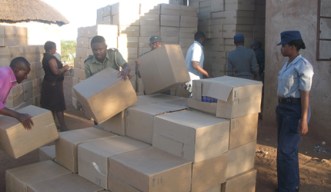
Police and Zimra officials remove cigarettes from an illegal “warehouse” in Tshapfuche, Beitbridge

Zimbabwean Customs and Police have smashed a cigarette smuggling syndicate and recovered a bootleg of export quality cigarettes worth almost US$500 000 in Tshapfuche. The 1 081 boxes of assorted local cigarettes brands were kept at Edzisani Muleya’s homestead. Police said the house had become an illegal transit warehouse.

Muleya disappeared and police have since launched a manhunt. The Ferret squad, made up of the ZRP, Zimbabwe Revenue Authority and other security agents raided the homestead on Thursday afternoon during an operation code-named Sukani Emanzini (Get out of the Limpopo River). Two men and a woman were arrested after police found them taking a nap on top of the cigarette boxes. The suspects kept their “merchandise” in five rooms. By end of day on Thursday, armed police had cordoned off the homestead. Several homesteads in the area were deserted when police arrived.

Police believe the homestead was a transit point for criminals who would then smuggle the cigarettes into South Africa through the Limpopo River. They said South Africa is a choice destination for regional cigarette smugglers who repackage them for export to Asia and other European markets. Another 107 boxes of Newbury cigarettes were recovered in Lutumba on the same day. Police intercepted a suspect attempting move the contraband to “safety”.

Police officer commanding Beitbridge district Chief Superintendent Lawrence Chinhengo yesterday said the raids were made after a tip-off. He said they recovered 311 boxes of Remmington Gold, 442 Cevils, 221 Dullas and 107 Newbury cigarettes. “We received a tip-off to the effect that Edzisani Muleya’s homestead in Tshapfuche area had been turned into an illegal warehouse for cigarettes”.

“We then raided the area on Thursday afternoon, where we found two men who had been hired as security guards sleeping on top of the boxes.” Chief Supt Chinhengo said police recovered documents with the movement, list of suppliers and other people who are part of the syndicate. He said investigations were under way. Last week, a 43-year-old Malawian trucker was fined US$1 000 for attempting to smuggle 262 boxes of export quality cigarettes worth US$35 000 through Beitbridge Border Post. Source: The Herald (Zimbabwe)

Ready for a cock-fight?

Brazil has taken the first legal step at the World Trade Organisation to challenge South Africa’s use of anti-dumping measures on shipments of Brazilian poultry meat, the global trade body said in a statement on Friday. Brazil has “requested consultations” with South Africa over South Africa’s accusation that Brazilian imports were “dumped”, or sold at an unfairly low price that damaged South Africa’s own poultry sales, the WTO said. If the consultations fail to resolve the issue, in 60 days’ time Brazil could ask the WTO to set up a panel to adjudicate.

The statement did not give any more details, but South Africa’s International Trade Administration Commission (ITAC) has imposed anti-dumping duties on frozen chickens and chicken meat imported from Brazil after investigating suspected dumping in 2008-2010. In 2010, Brazil accounted for 94.2% of South Africa’s total 26,916 tonnes of boneless chicken imports and 44.6% of the total 29,039 tonnes of whole chicken imports, ITAC’s investigation report said in January.

After calculating the extent of the unfair competition, South Africa put a provisional anti-dumping duty of 62.93% on whole chickens and 46.59% on boneless cuts from Brazil, except for boneless cuts from Aurora Alimentos, which would incur a duty of 6.26%.  The dispute is the first between Brazil and any African country and only the fourth brought against South Africa at the WTO.

All of the previous three cases, brought by India, Indonesia and Turkey, also concerned South Africa’s use of anti-dumping measures to protect its market from unwanted imports. None of those three disputes advanced to the panel stage. India and Turkey did not press their cases and Indonesia withdrew its challenge after South Africa withdrew its anti-dumping measures. Source: News24

Exposing the Illegal Rhino Horn Trade

Author and investigative journalist Julian Rademeyer has recently launched his book “Killing for Profit’ A terrifying true story of greed, corruption, depravity and ruthless criminal enterprise.

On the black markets of Southeast Asia, rhino horn is worth more than gold, cocaine and heroin. This is the story of a more than two-year-long investigation into a dangerous criminal underworld where merciless syndicates will stop at nothing to attain their prize. It is a tale of greed, folly and corruption, and of an increasingly desperate battle to save  rhinos – which have existed for more than 50 million years – from extinction.

Killing for Profit is a meticulous, devastating and revelatory account of one of the world’s most secretive trades. It exposes poachers, scoundrels, gangsters, conmen, mercenaries, killers, gun-runners,  diplomats, government officials and kingpins behind the slaughter. And it follows the bloody trail from the frontlines of the rhino wars in South Africa, Zimbabwe and Mozambique to the medicine markets of Vietnam and the lair of a wildlife-trafficking kingpin on the banks of the Mekong River in Laos …

For more information visit – http://killingforprofit.com/the-book/

To purchase the book online visit – Kalahari.com

Global Tax Forum elects SARS Chief Legal Officer as Chair

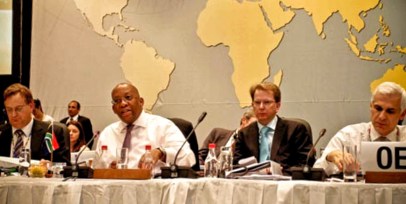
Kosie Louw, SARS (2nd from right) newly elected Chair of the Global Forum on Transparency and Exchange of Information for Tax Purposes.

SARS’s Chief Officer for Legal and Policy, Kosie Louw, was elected Chair of the Global Forum on Transparency and Exchange of Information for Tax Purposes at the organisation’s 5th meeting which was held in Cape Town last week. The appointment is for an initial two-year period from the beginning of 2013. Finance Minister Pravin Gordhan congratulated SARS and Kosie Louw on his election as chairperson of the Global Forum on behalf of the South African government.

“I am certain that the two years of South Africa’s chairmanship will be beneficial for the forum but also to the wider global tax administration community. South Africa, the first African chair of the forum, takes over the post of the forum chair from Australia,” Minister Gordhan said.

The position of forum chair is especially important because the forum’s current mandate expires in 2015, and it is during SA’s tenure that a decision must be made on the best way to take the work of the forum forward. SA’s tenure also coincides with very challenging times for tax administrations globally, especially when it comes to the exchange of information for tax purposes, the Minister said. The two-day Global Forum event, held on 26 and 27 October, was hosted by SARS and was attended by delegates from 81 jurisdictions and 11 international organisations.

The Global Forum was created by the OECD in 2000 to provide a forum for achieving and implementing high standards of transparency and exchange of information in a way that is equitable and permits fair competition between all jurisdictions, large and small, OECD and non-OECD. The principle that guides the Global Forum’s work is that all jurisdictions, regardless of their tax systems, should meet such standards in order for competition to take place on the basis of legitimate commercial considerations rather than on the basis of lack of transparency or lack of effective exchange of information for tax purposes.

The Cape Town meeting comes at an important juncture in the work of the Global Forum as it starts evaluating whether its members are actually exchanging information effectively. It is developing a ratings system based on a global consideration of members’ effectiveness at implementing the standard in practice.

The organisation is also looking at ways of refining governance and deliberating on its future direction. The importance of the work of the Global Forum in the region is highlighted by the increasing membership of African countries to 15, with Burkina Faso, Cameroon, Gabon, Tunisia and Uganda becoming the most recent members. This brings the Forum’s membership to 116.

South Africa has the largest and ever increasing tax treaty network in Africa and is seen as one of the most active jurisdictions in the work towards transparency and exchange of information. The South African Peer review report, which found South Africa’s legal framework and practices to be in accordance with the internationally agreed standard, was adopted by the Global Forum during this meeting. Source: SARSNews

Related articles