SAD story – Part 1

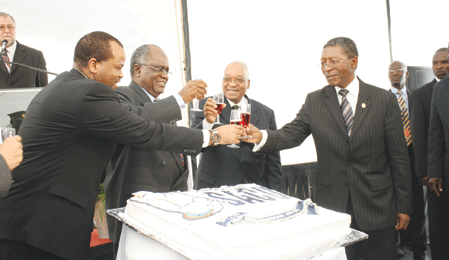
Die-hard SAD fan! (Tammy Joubert)We all suffer a little nostalgia at one or other point in our lives. Those die-hard legacy officials – the kind who have more than 20 years service – will most definitely have suffered, recoiled, and even repelled mass change which has occurred in the last 10-15 years in South Africa.  In the mid-2000’s the advent and replacement of the tried and tested DA500/600 series customs declaration forms by the Single Administrative Document – better known as the SAD – was unpopular to most customs officers although it was possibly welcomed by SACU cross-border traders.

A political coup had been won by some BLNS states compelling South Africa to harmonise its declaration requirements with those of fellow members, especially those operating ASYCUDA. At the time, SARS saw this compromise necessary to bring about alignment with Namibia and Botswana to facilitate the implementation of a new customs clearance dispensation for the Trans Kalahari Corridor (TKC).

The SAD is almost universally accepted by virtue of its design according to the UN Layout Key. However, why the fuss. A form is a form. Allied industry in RSA were used to the three decade old DA500/600 declaration forms which were designed infinitely better and more logical than the SAD.

None-the-less, South Africans are adaptable and accommodating to change. Following on from my recent post “SACU now a liability” it is now the SAD’s turn to stare death in the face. As it turns out, through wave upon wave of technological advances, we no longer need the SAD. At least in its paper form. In SARS case it no longer needs the SAD – period. A newer derivative (strangely not too dissimilar to the DA500/600) has now gained favour. It is known as the Customs Declaration 1 (Form CD1). However, unlike the DA and SAD forms, the CD1 will most likely never be required in printed format owing to SARS Customs preference for digitized information. Needless to say, if nothing else, the CD1 will provide a graphic representation of the EDI CUSDEC data for the customs officer. Next time, I’ll discuss the rationale behind ‘customs harmonisation’ and its non-dependency on document format. I feel for the die-hard SAD fan!

SACU now a liability – telling it as it is

Windhoek:  The century-old five-member Southern African Customs Union is a stumbling block to the region’s economic integration agenda and has become a liability whose continued existence is no longer sustainable, analysts say.  They add that SACU, which comprises Botswana, Lesotho, Namibia, Swaziland and South Africa (the major contributor to the revenue pool), can best serve the region if it is integrated into the Southern African Development Community.

The Southern Times understands that the dominant feeling in the South Africa and BLNS governments is that SACU’s structural weaknesses prohibit it from advancing long-term regional strategic interests.  South Africa doles out billions of rand to BLNS under a revenue sharing agreement.

However, authorities in South Africa realise that the wider SADC market offers greater economic and strategic interests than the SACU enclave. South Africa has also apparently realised that economically and politically, its interests are better advanced through SADC than SACU. 

These are some of the findings of a study by Dr Sehlare Makgetlaneng, the head of governance and democracy research at Pretoria-based think-tank, Africa Institute of South Africa (AISA).

The Southern Times is in possession of an advance copy of the 2011 study in which key decision-makers in member states voiced their opinions on the usefulness of SACU to regional integration, economic development within the BLNS and South Africa’s weakening interest in the customs union.

The AISA study raises pertinent questions on what BLNS would do if SACU were disbanded. The over-dependence on SACU revenue ‑ vis-à-vis BLNS’s failure to come up with viable alternative revenue sources, lack of manufacturing capacity and a captive market for South African products ‑ also raises pertinent questions on BLNS’s future economic strategies.

That SACU has failed to address strategic economic interests of BLNS is bluntly captured by Namibia’s deputy Trade and Industry Deputy Minister Tjekero Tweya.  He says, “Namibia has been insane for 21 years of independence without a production capacity to produce even a toothpick. The same reason why we import toothpicks from China is because we need them, so we need to work on our production capacity and improve ways of collecting revenue.”

AISA lauds Namibia for establishing strategic partnerships within SADC to advance its economic and political interests.

According to the study, South Africa’s view is that SACU does not serve the regional economic powerhouse’s interests and even without the arrangement, trade with BLNS will continue under the aegis of SADC. Pretoria regards Zimbabwe, Mozambique, Zambia, Malawi, the DRC and Angola as more strategic to its economic goals.

“SACU may become a liability in the advancement of South Africa’s interests in the region and the continent particularly if South Africa is not able to effectively and structurally transform it to serve the popular interests of the region,” the AISA study says.

SACU’s mission is to “serve as an engine for regional integration and development, industrial and economic diversification and expansion of intra-regional trade and investment” among other things. For SACU, the issue is its transformation into SADC. South Africa’s contribution to Southern African regional integration is best and effective through SADC, not SACU. SACU is largely a revenue sharing and trade facilitation organisation. It is not the organisation through which to advance Southern African regional integration,” the research says.

AISA dismisses long-held suggestions that SACU could be used as a platform to establish a SADC customs union.  The customs union’s structural weaknesses make it an undesirable model for regional integration.  The research points out that if other SADC members want to join SACU, they have to address their tariff schedules and international obligations under the World Trade Organisation.

SACU’s present revenue-sharing formula also presents a challenge to admitting new members.

AISA says the formula is structured for a win-win situation among members but does not encourage a win-win solution to problems inherent in the contribution to the revenue pool and the way the pool is shared.

“It is a zero sum game in terms of the way it is shared. It is a definite pool. If one member gets more, another member gets less. If two SADC members who trade more with other SACU members are admitted, their membership will have a significant revenue change within SACU. The revenue sharing formula is determined on the basis of SACU intra-trade,” AISA’s Makgetlaneng says.

The revenue sharing formula is the obstacle to admitting other SADC members into the bloc.  South Africa contributes 98 percent to the revenue pool, which is then shared according to intra-SACU trade or imports.  The more South Africa trades with its partners in the region and beyond, the more the revenue pool grows.

“BLNS import more from South Africa and when the distribution formula is applied these countries get the average of 90 percent of customs revenue. In other words, South Africa compensates them for buying more from itself.”

His sentiments dovetail with previous suggestions from South Africa to establish a development fund in which revenue is ring-fenced and used to finance infrastructural projects that benefit SADC.  The study says that this view is strongly opposed by Botswana and Namibia, which claim entitlement to SACU revenue and have argued that as independent nations, they should spend it as they wish.

But AISA argues that since South Africa has a trade surplus with BLNS, it sets the tariffs within the customs bloc, clearly depriving the BLNS policy room to determine tariffs.

“This study has proved that SACU currently serves as a stumbling block to Southern African regional integration. Its revenue-sharing formula is the obstacle to the admission of other SADC countries as its members. The position that it is bound to absorb other SADC countries and even COMESA countries as its members is opposed by SACU officials, scholars and researchers interviewed by the author.

“They maintain that it is not possible for SACU to absorb other SADC countries as its members. Their position is that BLNS are structurally opposed to the admission of other countries as SACU members. As SACU revenue sharing is currently structured, they (BLNS) have no material interests to see other countries joining SACU as members,” Makgetlaneng says.

AISA maintains that SACU’s interests do not serve the region’s long-term socio-political, economic and security interests and implores South Africa to oversee integration of the union into SADC.

“The reality that SADC takes primacy in terms of importance in Southern Africa is such that SACU cannot be sustained in the long-term. Preparations should be made for it to no longer serve as a sub-group within SADC. It should be integrated into SADC. South Africa should prepare itself for SACU’s integration into SADC. It should strategically and tactically ensure that SACU is integrated into SADC. This will be the qualitative step forward towards the reduction and elimination of the weak links in SADC’s chain driving regional integration,” AISA’s chief researcher, Makgetlaneng, suggests. Original source: Southern Times
Customs Modernisation Release 3 – SACU

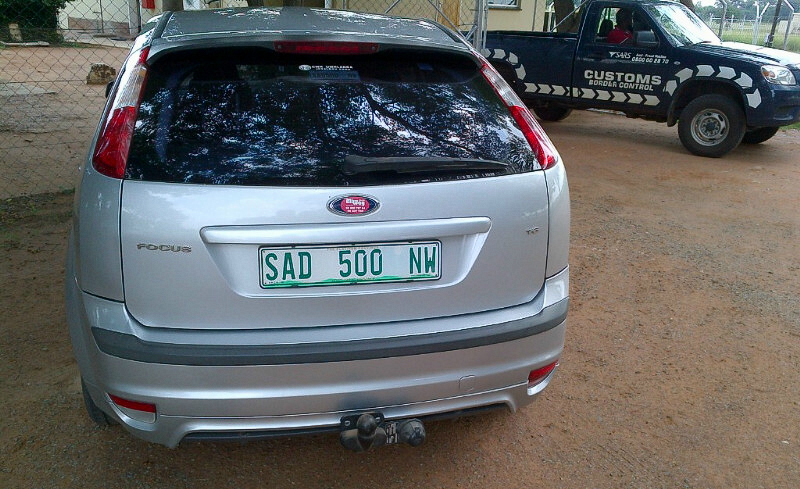
Saturday 11 February 2012 sees the implementation of new modernised customs procedures and formalities at South Africa’s first SACU land frontier office – Kopfontein – border between South Africa and Botswana.  While enhancements are slanted more in terms of internal SARS customs procedure, SACU traders will no doubt experience some anxiety with the transition. For the first time SARS Customs Modernisation impacts directly on traders and neighbouring Botswana Customs operational procedures in a significant way, which will fashion operations at all remaining inland border posts of the Customs Union. Over the last few months SARS has worked with trade, the Botswana customs authority as well as the business chamber in Botswana concerning the intended changes and their impact on stakeholders. The implementation ushers in cross-cutting changes for customs staff operationally, new technology as well as legal and policy changes. In the case of the latter, a further element of the draft Customs Control Bill is introduced whereby foreign business operators (importers, exporters and road carriers) must be registered with SARS to perform customs transactions in South Africa. This is perhaps the single issue which has had ramifications for parties who regularly cross the border between Botswana and South Africa. Hopefully recent iterations of notices and explanations have helped clarify the SARS requirements. (See the SARS Customs Modernisation webpage).

Other modifications and changes include –

Elimination of paper clearance documents – this is a significant departure from traditional SACU processing where all member countries have relied on the Single Administrative Document (SAD) to facilitate intra-SACU clearance. With the bulk of clearances expected to be electronic, SARS will now only print a customs notification (CN1) which will specify the status and outcome for each clearance. This the trader will use in support of customs clearance in Botswana. SARS will therefore no longer stamp and authorise hardcopy SAD500 clearance documents. Of course, there is nothing which stops a trader printing the SAD500 for cross border purposes, only SARS will no longer attest these. As concerns SARS VAT requirements, arrangements will be made for traders to submit the CN1 for purposes of VAT returns. Details on this to follow.

Electronic supporting documents – already tried and tested at sea and airports across South Africa, traders no longer need to carry on their person hard copy clearance supporting documentation , i.e. invoices, worksheets and packing lists. These are only required should SARS indicate via electronic message that a consignment requires further scrutiny. Customs brokers and traders using EDI will in most cases have the SARS e@syScan facility available on their computer systems which makes it relatively simple and easy to scan, package and submit to SARS. In the event a trader cannot perform this electronically, he may approach any of the 4 Customs Hubs (Alberton, Cape Town, Durban, and Doringkloof) across the country, to have these scanned and uploaded by SARS. Alternatively, these can of course be delivered to the border post for manual processing and finalisation of a customs intervention. Supporting documents are linked to a unique case number which SARS notifies to the trader in the event of a risk.

Clearance processing – SARS has centralised its backend processing of clearances where goods declarations are now processed off-site at one of the 4 Hubs. No longer are clearances processed at customs branch office. All goods declarations – whether electronically submitted or manually captured – are routed to a central pool for validation, verification and assessment if flagged by the risk engine. In the case of land borders all clearances once successfully processed will receive a ‘Proceed-to-border’ message implying that the road carrier may commence delivery to the border. A key feature of the new clearance process is the availability of Customs Status Codes. These codes are initiated by the customs system at specified points in the process to alert the declarant of the status of his/her transaction. These status’s also indicate the follow-up required of the declarant to bring the transaction to a state of finality.

Automated Cargo Management (ACM) – All road carriers are now required to submit their road manifests electronically, via EDI, to the Customs ACM system. For now, SARS will not electronically match the manifest against the declaration, but will monitor compliance and data quality of electronic manifest  for a period of time before initiating real-time matching and acquittal. This will invoke a significant responsibility on both trader and road remover to ensure that they both provide credible data to customs otherwise delays will occur. Upon arrival of the cargo at the border, the driver presents a printout of his electronic manifest. The manifest number is ‘checked in’ by a customs official which in seconds brings up all associated goods declarations linked to the manifest number on the system. The customs officer is able to determine the overall risk status of the vehicle. Where no risks are present a status notification (CN1) is printed for each goods declaration, and a gate pass (CN2) is handed to the driver permitting him to exit the customs controlled area. The future real-time matching will comprise a combined risk assessment of both manifest and declaration information that will result in a single risk outcome. Such risk assessment will include both fiscal and security compliance features thereby bringing SARS in line with international supply chain security standards. Going forward, risk assessment will accommodate ‘all-of-government’ requirements ensuring that all regulatory measures and associated risks are administered in a single instance obviating the need for successive, time-consuming inspections and costly delays.

Automated Customs Inspection – Following its recent introduction at the Beit Bridge border post, the new hand-held inspection tool, conveniently developed on an iPod, allows the customs border control official to electronically access, capture and upload an inspection outcome to the central customs system. This significantly improves the efficiency for this time-intensive activity where the officer can initiate a status up date electronically at the inspection site, where previously the declarant would have to wait for the outcome of the manual inspection report and release note. What’s more, the customs officer has access to the underlying clearance data and can even activate the camera function and capture visuals of suspect cargo which can be appended to an inspection case for verification by higher authority or historical reference value.

There are additional features and functionality to be introduced at Kopfontein and all remaining border posts over the next few months. These relate to improved revenue accounting, new trader registration and licensing system offering online application and approval, and a new traveller and temporary import/export processing. More about this in a future post.  For traders, the benefits of the new solution at SACU land borders aim to remove random and unwarranted intervention by customs. All activities are risk driven via a secure ‘get next’ selection function ensuring that internal integrity is maintained and only ‘risk-related’ consignments/transactions are dealt with. Please visit the SARS Modernisation webpage for all the latest updates and notices on modernisation releases.

Free Trade talks to kick continent into the future

The first round of negotiations to establish a free trade area covering 27 countries in southern and east Africa will kick off on December 8, in Nairobi. It is envisaged that the negotiations will be completed in 36 months. (Really?)

The three trade blocs involved – the Southern African Development Community (SADC), the East African Community (EAC) and the Common Market for Eastern and Southern Africa (COMESA) – decided in October 2008 in Kampala to move towards a free trade agreement.

The intention is to boost intra-regional trade because the market will be much bigger, there will be more investment flows, enhanced competitiveness and the development of cross-regional infrastructure.

Industrialisation, making goods to sell instead of selling primary products, is a possible and also necessary spin-off. Competition with older established and also bigger emerging economies might be a stumbling block initially, but the huge new market may make it possible for locally manufactured goods to compete with those imported from outside the FTA.

Close to 600 million people live in the FTA with a gross domestic product of $1 trillion – suddenly we are boxing in the same weight division as China, India, Russia, Brazil, the US and the EU. Source: All Africa.com.

BriberyComment: Heard all of this before?  It could be hoped that some positive developments will materialise from more talkshops with promises to alleviate poverty and increase Africa’s slice of the international market. While the retail and telecommunications industries have made significant inroads into Africa, manufacturing remains a moot point. Does Africa have the political will to take risks? Removing internal border controls for instance are not high priority for sovereign governments. Neither for that matter is the question of the integrity of officials who man these borders. And, neither is the matter of removing one of the key contributors to cross border fraud – the “paper customs declaration”. Nonetheless, attempts are still being made to redress these ills. Recent developments within SACU indicate a genuine move towards customs-2-customs information exchange based on the ‘Customs Inter-connectivity’ concept. More on this shortly.