Will there ever be an “African Brazil”? Who will that be? Angola? Congo? Ethiopia? Nigeria? South Africa? Flip that question: what will it take for an African country to become a new Brazil? A lot. First, it will take governments that do not spend or borrow too much, and independent central banks that keep inflation low. That is, the first order of business is a stable “macroeconomic framework.” Brazil managed to do that, but only after decades of rampant inflation and financial crises. Many African countries are making progress in that direction, but none is quite there. Read this objective review by Marcelo Giugale, World Bank’s Director of Economic Policy and Poverty Reduction Programs for Africa. Source: The Huffington Post
Tag / Nigeria
Africa – Information Technology’s Dangerous Trend
Here’s some food for thought…
For the past few decades, emerging technologies such as biotechnology, microelectronics, information technology and communications technologies have become central to the socioeconomic development of nations. These technologies improve productivity and facilitate better living standards when they penetrate into societies. Among them, information technology (IT) has become the most dominant; IT has revolutionized almost every aspect of our lives, public and private, by connecting individuals, institutions and governments in mutually dependent ways. With its ease of adoption, this interdependence has scaled rapidly, unlike any other technology in modern history. In Africa, for example, despite decades of using electricity, no one can claim that the continent has fully adopted it. The same applies to the aerospace and biochemical industries, among others.
IT is good for developing countries — it empowers people and improves their lives. But, in many African countries, the successes afforded by IT can backfire if it becomes a too-dominant focus. Take Nigeria for example: Despite decades of crude oil exploration, it cannot claim that it has developed indigenous domain expertise in that industry. If the MNCs depart, Nigeria will cease to remain an oil-producing nation, as it lacks the local ability to explore, extract and sustain production. But in the IT industry, most Nigerian firms are well-positioned for any challenge.
The success of IT in Africa has reached a level where it is being dangerously over-emphasized. From The World Bank to The African Union, everyone is talking about IT. IT events are very common everywhere, not to mention the Google, Microsoft, and Blackberry platform-based competitions that are being endlessly unleashed as these brands jockey for position on the continent. The Nigerian government has created a new ministry to focus solely on IT and related areas. And African leaders are neglecting most non-IT technologies. Across most African universities, the only funded and active labs are the IT labs. University administrators are happy to tout how they equipped IT labs, though everything else is broken. Agricultural engineering students are more focused on IT than on learning to build next-generation farm machinery. It’s a troubling pattern, as everyone wants to be seen as IT-savvy.
While IT can be applied to any field, the way Africa is promoting it sets a dangerous precedent. In my continent, “information technology” has become synonymous with “technology” itself. If you don’t know IT, you’re not a techie. You can master diesel engines and polymer technology, but without expertise in IT, few believe that you belong in the technology sector.
So, what’s the danger? Everyone wants to be an IT guy. No one remembers that we still need food. At the University of Nairobi, I recently asked a group of agricultural science students about their plans upon graduation. Only one wanted to stay in agriculture; others are making apps for farmers. Yes, they know more about mobile operating systems and mobile payments than they do about farming! The farms are now IT labs. And while you can simulate farming on tablets, you can’t eat the virtual fruit.
Pick up a typical newspaper on the continent, and you’ll find that the technology column has been changed to an IT column. Newspapers write about Google, Blackberry, Facebook and Apple in the technology section, but non-IT companies — though they’re technology firms — are rarely reported on. Tech journalism is now IT journalism. Even the governments have confused technology policy with IT policy.
I firmly believe that IT has helped Africa, and that it has a role to play as the continent advances. But, there needs to be a balance. The continent needs techies in mining, geology, semiconductors, agriculture, chemicals, and other areas besides IT, and government must ensure that IT does not create a situation that will destroy the continent’s capacity to feed her citizens and compete in the future. Source: Harvard Business Review
Nigeria Customs acquires sophisticated Smith-Heimanns fixed scanner
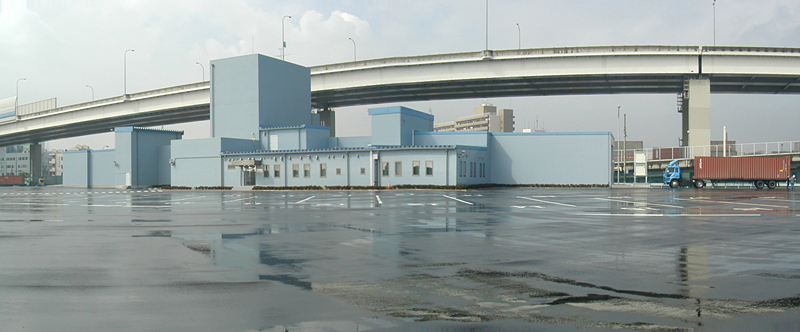 Security solutions specialist Smiths Detection has received a multi-million Euro order from Nigeria for its dual view, high energy X-ray container scanner, which includes a state-of-the-art material discrimination system. The order was placed by Global Scan systems Ltd and forms part of the Destination Inspection Programme (DIP) established by the Nigerian Ministry of Finance for the Customs Authorities of Nigeria. The stationary scanner, which will be the most advanced system of its kind in West Africa, will be deployed at the customs and border checkpoint between Nigeria and Benin.
The HCVS (Heimann Cargo Vision System) with material discrimination features X-ray images that distinguish between organic and inorganic substances. The associated colour coding greatly helps in the detection of threat objects such as weapons, explosives and drugs.
The HCVS is the most powerful tool in Smiths Detection’s cargo inspection product portfolio. It is permanently installed on a dedicated site, providing a swift and non-intrusive inspection procedure for every part of fully loaded trucks and containers
Technical features of the scanner
• Stationary X-ray system for the inspection of fully loaded trucks and containers
• State-of-the-art technology for outstanding image quality
• Ideal for maritime ports, border crossings and airports dealing with heavy traffic
• Easy and fast processing with low staffing requirements
• viZual technology for real organic/inorganic material discrimination
• Top of the line system for manifest verification
• Detection capacity reaching 100%
Optional Features
• Automatic Radioactive Material Detection (ARD)
• Discrimination high energy
• Single of dual view technology
• Single or dual tunnel version
• Available in 6MeV & 9MeV (Mega electron volt)
Source: Smiths Detection
 What Happened to the Portcullis?
You must be logged in to post a comment.