 The following article was penned by lawfirm Edward Nathan Sonnenberg and featured on Lexology.com. It was reported recently that bikers had protested outside Parliament about proposed measures which would have the effect of making life very difficult for those businesses who are involved in the parallel importation of motorbikes. The report did not make it clear exactly what the proposed measures comprised, but it did suggest that they involved special testing of bikes that are brought into the country by parallel importers, together with some system of issuing certificates for such bikes. Measures that, the report suggested, would not only require parallel importers to raise their prices, but might even put them out of business altogether, leaving authorised suppliers as the only source of motorbikes in the future. Amongst the protesters were the Parallel Importer of Motorcycles Traders Association of SA and Cosatu, which said that it was worried about job losses.
So just what are parallel imports, or ‘grey goods’ as they are sometimes known? Well, a foreign manufacturing company will normally appoint an authorised distributor for its product in South Africa. That distributor is then responsible for sales of the product, after-sales service and, of course, marketing, advertising and all those other good things that go into brand-building. A parallel importer is someone who buys that same manufacturer’s product in another country and imports it into South Africa for resale. The reason why the parallel importer bothers to do this is quite simple- the product is often so much cheaper abroad that the parallel importer can undercut the authorised distributor and still make a profit.
Needless to say the authorised distributor does not like the parallel importer, because the parallel imports threaten the authorised distributor’s business. The manufacturer generally doesn’t like the parallel importer much either – not only does it have to deal with complaints from an unhappy authorised distributor, but it also has no control over what the parallel importer does with the brand. But can the manufacturer or the authorised distributor actually do anything to stop the parallel imports?
Parallel importation is certainly legal under trade mark law. That’s because Section 34 (2) (d) of the Trade Marks Act provides that a trade mark registration is not infringed by ‘the importation into, or distribution, sale or offering for sale in the Republic, of goods to which the trade mark has been applied by or with the consent of the proprietor.’ This makes perfect sense if you bear in mind that a trade mark is essentially an indicator of origin, and that trade mark law is basically there to ensure that there is no consumer confusion. In the case of a parallel import, the consumer gets exactly what they expected, namely a product that was made by or under the control of the company that owns the trade mark – contrast this with the situation where the consumer buys a rip-off or counterfeit, where they get something very different from what they expected.
There is a proviso to this, and that is that the parallel importer must be quite open about the fact it is not an authorised distributor. That’s because Section 25 (2) of the Consumer Protection Act provides that ‘a person who markets any goods that bear a trade mark, but have been imported without the approval or licence of the registered owner of that trade mark, must apply a conspicuous notice to those goods in the prescribed manner and form.’
So, if you’re a parallel importer you should be OK provided that you make it clear that you are not the authorised distributor of the product. But there are other legal matters to consider, and the first of these is copyright. Copyright might be an issue where the product that’s being imported bears a trade mark that consists of more than just a name, but also something that could be described as an artistic work – this might be a logo, or it might simply be a stylised form of a name. There was a case a number of years back where a foreign manufacturer successfully used copyright law to stop parallel importation of cassette tapes. But it was an extraordinarily contrived thing: time to concentrate hard…
The Copyright Act provides that copyright is infringed where someone imports an article into South Africa in circumstances where they knew that the making of that article would have been an infringement if the company that made it had in fact made it in South Africa. To use this provision, the cassette tape manufacturer had to go through a number of hoops: it had to assign the South African copyright in the label to the authorised distributor; it then had to warn the parallel importer that it was importing articles that – had they been made by the manufacturer in South Africa – would have infringed the authorised distributor’s copyright; finally when the parallel importer ignored the warning (probably because it didn’t understand it!) it could sue for infringement. There has, as far as I’m aware, never been another case like this and one wonders whether – in an age where intellectual property law is considered in the light of constitutional and competition law and policy – the same result would be achieved if a similar case ever went to the highest court.
Finally it’s worth remembering that, in the fairly rare event of the product that’s imported being covered by a patent or a design registration, there may well be an issue. Section 45 of the Patents Act says that a patentee has the ‘right to exclude others.. from importing the invention’, whereas Section 20 (1) of the Designs Act says that the owner of a design registration has the right to exclude ‘other persons from …importing … any article included in the class in which the design is registered and embodying the registered design.’
 The folks at Grant Thornton have prepared a paper on this important subject, which is no less relevant to the Customs environment. The Protection of Personal Information Bill (POPI) is expected to be passed into law soon. It makes sweeping changes to the way all organizations are going to be allowed to deal with personal information, laying down very strict guidelines about what we can do with such data once it is received and processed.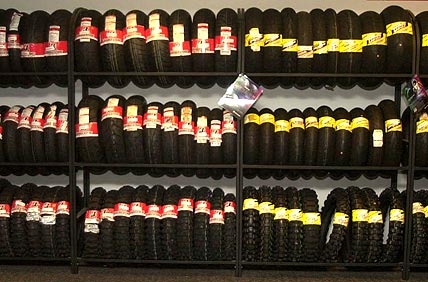

 What Happened to the Portcullis?
You must be logged in to post a comment.