X-Ray Scanners – WTO panel rules on EU-China dumping row

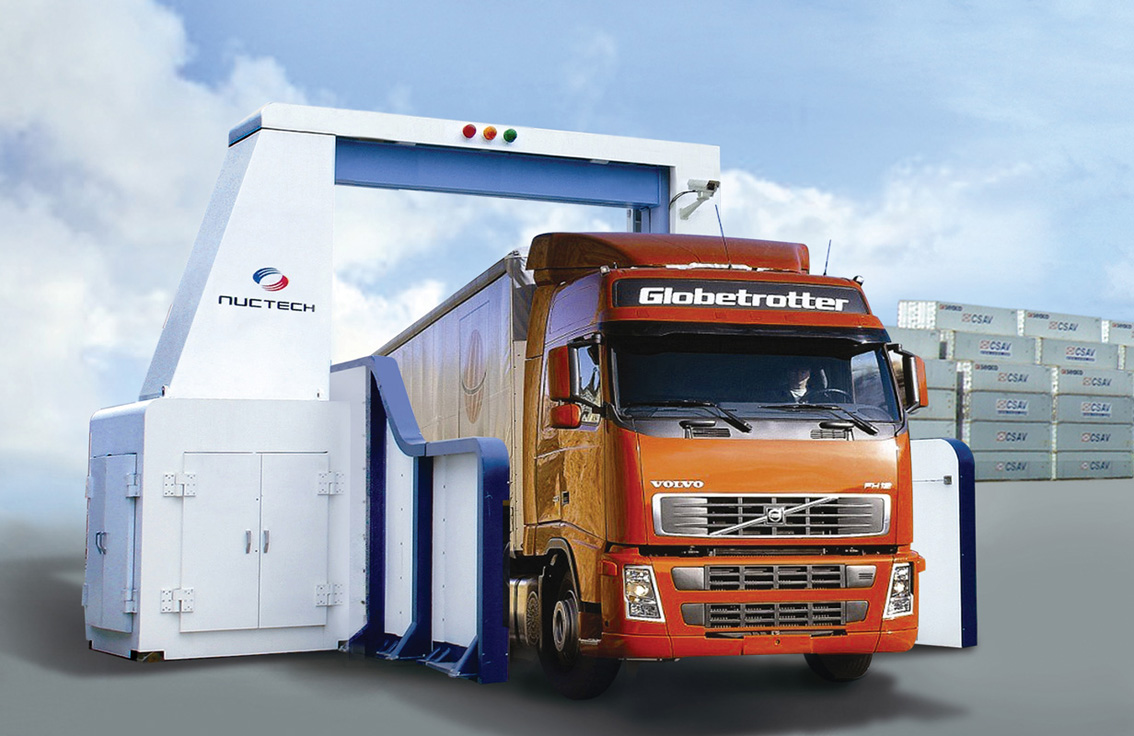
Nuctech Fast Scan Vehicle and Container inspection system

Nuctech Fast Scan Vehicle and Container inspection system

Part of the problem here is that the Chinese have a significant market share in this type of equipment. In a short period of 10 years they have outstripped some of the more fancied American and European players in this business. While the dispute in question raises ‘ethical’ questions of the Chinese, it does seem to be a matter of sour grapes.

China’s anti-dumping duties on imports of x-ray security scanners from the EU violated global trade rules, according to a WTO panel ruling that was issued yesterday. [WTO Dispute Settlement, DS425]

Brussels brought the dispute in July 2011 after Beijing imposed duties ranging from 33.5 to 71.8 percent on the x-ray scanners. (See Bridges Weekly, 25 January 2012) The EU exports approximately €70 million of these scanners to China annually.

China imposed the duties after the EU had applied anti-dumping duties on Chinese cargo scanners one year earlier, which some viewed at the time as a “tit-for-tat” move.

The panel report primarily focused on procedural issues in Beijing’s investigation, specifically regarding how China calculated the anti-dumping margin, loosely defined as the difference between the price – or cost – in the foreign market and the price in the importing domestic market.

Beijing included more expensive “high-energy” scanners – which do not “look remotely like” the cheaper scanners, according to the panel report – in calculating the average domestic price, even though only cheaper “low-energy” scanners were exported. The panel found that this price comparison was “not consistent with an objective examination of positive evidence” required under WTO rules.

The panel also found that Beijing did not comply with certain due process and transparency requirements before imposing the duties.

The panel did not rule with the EU on all points, however, noting that Brussels had not established that Beijing had acted inconsistently in certain other procedural matters.

“I expect China to remove the measures immediately,” EU Trade Commissioner Karel De Gucht said on Tuesday in response to the panel ruling. “I will not accept tit-for-tat retaliation against European companies through the misuse of trade defence instruments.”

Under WTO rules, both sides have 60 days to appeal the ruling. In a statement, China’s Ministry of Commerce indicated that they would make a serious assessment of the case and reserved the right to appeal.

African lament – regional integration too slow

National Planning Commission Minister - Trevor Manual

National Planning Commission Minister – Trevor Manual

South African Minister in the Presidency in charge of the National Planning Commission Trevor Manuel says Africa has a lot to learn from the ongoing European economic crisis in order to avoid making the same mistakes. Delivering a presentation under the theme “Africa and the European Financial Crisis — Opportunities and Risks” at the AMH Conversations dinner in Harare on Monday, Manuel said while the European Union (EU) moved at a fast speed towards convergence “we in Africa have been rather painfully too slow about convergence”.

“In fact, it’s so bad for us as Africans that 21 years after the Abuja Treaty was adopted and set out exactly what we need to do if we want to get to an African common market…we still need to focus on regional building blocks,” he said.

“We aren’t building blocks, I am afraid that we are just pebbles without mortar to hold us together. Its not about EU, not about the US (United States), not about the IMF (International Monetary Fund) and World Bank, its about us and the way we relate to each other, and in this context it is fundamentally important that we talk to each other as Africans about some of the hard truths that confront us.”

The former South Africa Finance minister said regional integration required hard work, honesty and convergence, adding that in a global economy, African countries would not be able to survive as individual entities. “As individual countries, we will not make it in the world. We will be picked off and become markets for the rest,” he said.

“So we can’t look to the rest of the world. We have to look to each other in our neighbourhood and understand that’s where change will be driven from. As we learn from Europe we look at ourselves in understanding what we should not do.”

He said institutions mattered both in good times and during a crisis, adding that it mattered for Africa to understand the speed at which countries develop as it builds regional institutions. Manuel said the Lisbon accord brought everybody together in a short space of time without ensuring that each country in the EU was moving at the same rate.

Meanwhile, speaking at the same event, Finance minister Tendai Biti described regional integration as imperative. “For me, with great respect to our principals and leaders, my great disappointment is with the structure of our regional bodies,” he said.

“If you go into the main summit of a SADC meeting, we spend 90% of the time discussing Madagascar, Zimbabwe, Lesotho and now the Democratic Republic of Congo. The actual reports from key ministers like Ministries of finance, regional integration and trade are basically footnotes that Head of States just sift through.” Source: Newsday (Zimbabwe).

Comment: The sad reality of it all is that it is Africa’s politicians which drive this process – they preside over the regional secretariat’s. Its time to provide the necessary guidance to the regional bodies. Moreover, if the ultimate goal is an African Union, why are multiple (overlapping) regional economic unions being promoted?

USCBP and EU sign C-TPAT Mutual Recognition

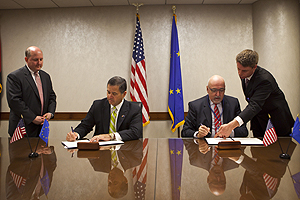
U.S. Customs and Border Protection (CBP) and the European Union (EU) signed today a Mutual Recognition Decision between CBP’s Customs-Trade Partnership Against Terrorism (C-TPAT) program and the EU’s Authorized Economic Operator (AEO) program.

U.S. Customs and Border Protection Acting Commissioner David V. Aguilar and European Union Taxation and Customs Union Directorate Director-General Heinz Zourek sign the Mutual Recognition Decision between CBP’s Customs-Trade Partnership Against Terrorism program and the EU’s Authorized Economic Operator Program.

CBP Acting Commissioner David V. Aguilar and Director-General Heinz Zourek, European Union Taxation and Customs Union Directorate (TAXUD) signed the decision, which recognizes compatibility between the EU and the U.S. cargo security programs.

“Today’s decision on the mutual recognition of the EU and U.S. trade partnership programmes is a win-win achievement: It will save time and money for trusted operators on both sides of the Atlantic while it will allow customs authorities to concentrate their resources on risky consignments and better facilitate legitimate trade,” said Director-General Zourek.

C-TPAT is a voluntary government-business initiative to build cooperative relationships that strengthen and improve overall international supply chain and U.S. border security. C-TPAT recognized that U.S. Customs and Border Protection can provide the highest level of cargo security only through close cooperation with the ultimate owners of the international supply chain such as importers, carriers, consolidators, licensed customs brokers, and manufacturers. Source: US CBP

Related article

European Union bans US X-Ray Body Scanners

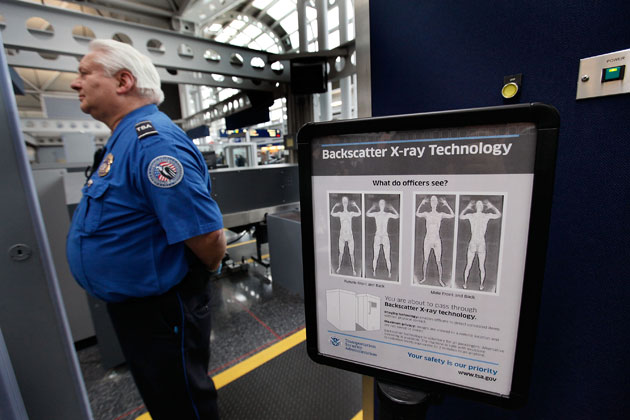
The European Union on Monday prohibited the use of X-ray body scanners in European airports, parting ways with the U.S. Transportation Security Administration, which has deployed hundreds of the scanners as a way to screen millions of airline passengers for explosives hidden under clothing. The EC, which enforces common policies of the EU’s 27 member countries, adopted the rule in order not to risk jeopardizing citizens’ health and safety.

As a ProPublica/PBS NewsHour investigation detailed earlier this month, X-ray body scanners use ionizing radiation, a form of energy that has been shown to damage DNA and cause cancer. Although the amount of radiation is extremely low, equivalent to the radiation a person would receive in a few minutes of flying, several research studies have concluded that a small number of cancer cases would result from scanning hundreds of millions of passengers a year.

European countries will be allowed to use an alternative body scanner, on that relies on radio frequency waves, which have not been linked to cancer. The TSA has also deployed hundreds of those machines – known as millimeter-wave scanners – in U.S. airports. But unlike Europe, it has decided to deploy both types of scanners.

The TSA would not comment specifically on the EU’s decision. But in a statement, a TSA spokesman said, “As one of our many layers of security, TSA deploys the most advanced technology available to provide the best opportunity to detect dangerous items, such as explosives. We rigorously test our technology to ensure it meets our high detection and safety standards before it is placed in airports,” he continued. “Since January 2010, advanced imaging technology has detected more than 300 dangerous or illegal items on passengers in U.S. airports nationwide.”

Body scanners have been controversial in the United States since they were first deployed in prisons in the late 1990s and then in airports for tests after 9/11. Most of the controversy has focused on privacy because the machines can produce graphic images. But the manufacturers have since installed privacy filters.

As the TSA began deploying hundreds of body scanners after the failed underwear bombing on Christmas Day 2009, several scientists began to raise concerns about the health risks of the X-ray scanner, noting that even low levels of radiation would increase the risk of cancer.

As part of our investigation, ProPublica surveyed foreign countries’ security policies and found that only a few nations used the X-ray scanner. The United Kingdom uses them but only for secondary screening, such as when a passenger triggers the metal detector or raises suspicion.

Under the new European Commission policy, the U.K. will be allowed to complete a trial of the X-ray scanners but not to deploy them on a permanent basis when the trial ends.These new rules ensure that where this technology is used it will be covered by EU-wide standards on detection capability as well as strict safeguards to protect health and fundamental rights.

Five-hundred body scanners, split about evenly between the two technologies, are deployed in U.S. airports. The X-ray scanner, or backscatter, which looks like two large blue boxes, is used at major airports, including Los Angeles International Airport, John F. Kennedy in New York and Chicago’s O’Hare. The millimeter-wave scanner, which looks like a round glass booth, is used in San Francisco, Atlanta and Dallas.

Within three years, the TSA plans to deploy 1,800 backscatter and millimeter-wave scanners, covering nearly every domestic airport security lane. The TSA has not yet released details on the exact breakdown. Source: ProPublica