Clearing Agents Cautious About EAC Single Customs Territory

The following article featured in The New Times (Rwanda) provides a snap shot of developments towards a future “Customs Union” in East Africa. While valid concerns are being expressed by traders, how close are the respective Customs administrations in terms of common standards (tariff, regimes, etc), and the application of common external border procedures? The rest of Africa should follow this process closely. Unlike the EU, where it is incumbent of prospective Customs Union members to first attain and implement minimum customs standards prior to accession, here you have a pot-pourri of member states who apply national measures aspiring to an ultimate regional standard. Who determines this standard? Who is going to maintain ‘watch’ over the common implementation of such standards? Forgive the long article – this is a very significant development for the African continent.

0c8d8_logo_of_east_african_community_eac_-63ae9With the East Africa Community integration process gaining pace rapidly, clearing and forwarding agents have been advised to set up shop at entry ports under the proposed single customs territory.

Angelo Musinguzi, the KPMG tax manager, who is representing traders on the team of experts negotiating the establishment of the single customs territory, challenged the agents to look at the opportunities that the policy brings instead of focusing on how it will harm their businesses. “You need to look at this as an opportunity for business expansion because this policy will remove trade tariff barriers, duplication of time-consuming and costly processes and corruption. This will improve efficiency and reduce the cost of doing business,” he said.

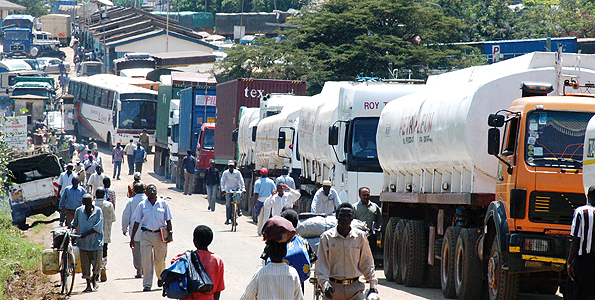
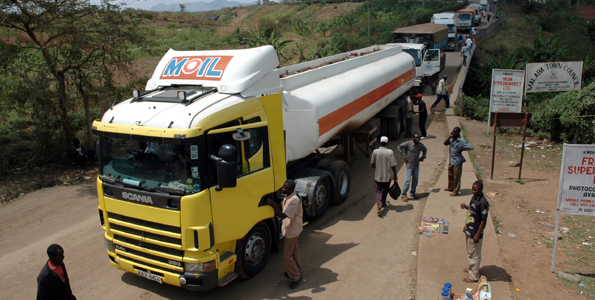
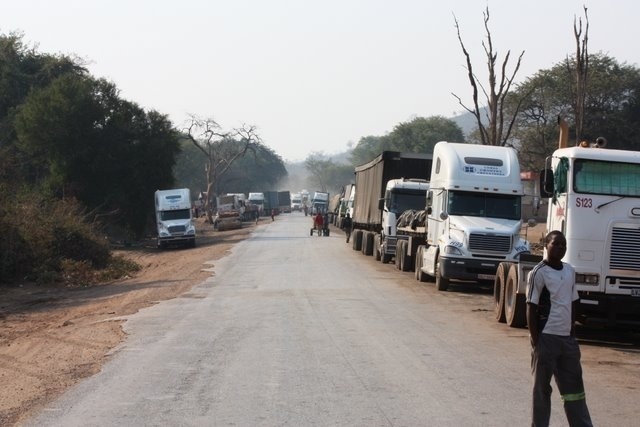
The advice follows a deal reached by Uganda, Kenya and Rwanda where top customs officials from landlocked Rwanda and Uganda will be stationed at Mombasa port to ensure quick clearing of goods and curb dumping of cheap products in the region. Under the deal, Kenya will create space for its partners to set up customs clearing units.

Rwanda was given the task of establishing the single customs territory at the recently-concluded meeting between Presidents Paul Kagame of Rwanda, Uhuru Kenyatta of Kenya and Uganda’s Yoweri Museveni held in Entebbe, Uganda. However, local clearing and forwarding agents as well as traders are skeptical about the deal and want the process delayed until Rwandan businesses are supported to become more competitive.

“There are issues we still have to examine critically before the policy is implemented. For example, who will collect revenue and how will it be collected? How will Rwanda share the revenue? Will we have a common legal framework? Will we share Kenya’s or Tanzania’s infrastructure?

Fred Seka, the Association of Freight Forwarders and Clearing Agents of Rwanda president, noted that the move could affect them negatively if it is not studied carefully. “We have already raised the matter with the Minister of Trade. Besides hurting small firms, the country will lose jobs when companies relocate to Mombasa or Dar es Salaam. That is a big concern for us,” Seka said.

He noted that some of the partner states have many trade laws that might affect their operations. “It would be better if a locally-licensed company is not subjected to any other conditions once it relocates to Mombasa,” Seka noted.

Mark Priestley, the TradeMark East Africa country director, said the research firm and other players were currently conducting studies on how the single customs territory can operate without harming any player. “The intention is not only to ensure that we get rid of barriers which have been hampering trade, but also reduce the cost of doing business within the region,” he said. He added, however, that it was too early for traders to be scared of the consequences of operating under the single customs territory.

Last year the Permanent Secretary in the EAC Ministry, stated that the model which will involve shifting customs operations from Rwanda to the ports of Mombasa, and Dar es Salaam, will lead to unemployment, revenue loss and adverse multiplier effects. According to the model, certificates of origin of goods would be scrapped, which, according to Kayonga, would lead to the suffocation of local industries as well as making the region a dumping ground for unnecessary products.

Scovia Mutabingwa, the Aim Logistics East Africa managing director, said there was need for more consultations on the operation of the single customs territory “to understand how it will work”. “We need to know where our bargaining power is in the region?” Mutabingwa said. She noted that there was a need to first harmonise other trade policies if the single customs territory is to benefit all businesses in the region. She pointed out that she had applied for a clearing and forwarding licence in Tanzania over one and half years ago, but she was yet to get it. “How shall we work in such countries?” she wondered.

Another clearing firm, urged those negotiating the deal to ensure uniformity in tax policies across the region. “In Rwanda, there is 100 per cent tax compliancy, but we know this is not the same in other countries. How will we compete favourably if such issues are not addressed?” she wondered.

While one needs at least $300,000 to open a business in Kenya or they have to give a stake in their company to a resident, non-Kenyan companies also pay higher taxes at 35 per cent corporate tax compared to 30 per cent for locals.

Tanzania still has over 63 trade laws, and to operate a clearing firm there you need to be a Tanzanian, according to Musinguzi.

The East African Community (EAC) Customs Union Protocol came into effect in July 2009 after it was ratified by Kenya, Tanzania and Uganda in 2004 and later by Rwanda and Burundi in 2008. The creation of the EAC customs union was the first stage of the four step EAC regional integration process.

When fully implemented, the customs union will consolidate the East Africa Community into a single trading bloc with uniform policies, resulting in a larger economy. By working together to actualise the customs union, partner states will deepen EAC co-operation, allowing their citizens to reap the benefits of accelerated economic growth and social development.

However, the customs union is not yet fully implemented because there is a significant level of exclusions to the common external tariff and tariff-free movement of goods and services.


EAC Way Ahead in African Trade Integration

English: Pascal Lamy.THE outgoing World Trade Organisation director general Pascal Lamy has rated the East African Community trading block as the most important in the African continent ahead of similar blocks in West and South Africa. He said EAC is three times more integrated than the West and South Africa.

“This region is a clear case that I think deserves a lot of attention…I have no doubt that this (EAC) will be the future,” Lamy said adding that the political goodwill from EAC leaders is the key distinguishing factor between EAC and other African trading blocks.

Lamy also described the African continent as the next growth frontier but added that some key bottlenecks such as not tarriff barriers, poor infrastructure and energy and corruption need to be addressed. The WTO boss cast doubt on the conclusion of crucial trade talks that can open international markets for African goods.

Rwanda Customs Process Made Easier for Tax Compliant Traders

Headquarters of the Rwanda Revenue Authority

Headquarters of the Rwanda Revenue Authority

Thirteen companies, three of them Rwandan, last week signed a Memorandum of understanding with Rwanda Revenue Authority to be accorded preferential treatment when clearing their goods at customs. The Authorized Economic Operator (AEO) is a regional trade facilitation program recommended by the world customs organization to ease trade and customs clearance for tax compliant and prominent importers and exporters.

Delay in clearing goods at customs is one of the major impediments to smooth trading within the East African Community (EAC). It also contributes to making the EAC region one of the most expensive places to do business despite being the second most growing economy in the world. The AEO creates some kind of obstacle-free zone where traders in the import or export business, known to be complaint with customs requirements, are accorded special treatment to ease the process of clearing their goods while in transit.

The pilot project will see how the system works in reality and the beneficiaries have all been informed of their rights and which ports or borders to claim them from. Rwanda customs officials issue special identifiers to the beneficiaries to help them identify the benefiting traders once their goods appear at any of the designated custom points. These identifiers will be recognizable everywhere in the five partner states of the EAC where the beneficiaries will pass and claim their privileges as AEO.

The growth of global trade and increasing security threats to the international movement of goods have forced customs administrations to shift their focus more and more to securing the international trade flow and away from the traditional task of collecting customs duties.

Recognizing these developments, the World Customs Organization (WCO) drafted the WCO Framework of Standards to Secure and Facilitate global trade (SAFE). In the framework, several standards are included that can assist customs administrations in meeting these new challenges and developing an Authorized Economic Operator programme is a core part of SAFE. Source: AllAfrica.com

EAC Traders Encouraged to Grab AEO Business Opportunities

EACThe EAC business community has been asked to take advantage of the Authorized Economic Operator (AEO) scheme that seeks to cut down costs of doing business in the East African member states.

The AEO programme, launched in Dar es Salaam on Wednesday, is an entity involving importers, clearing agents, transport companies authorized to import and move cargo within the EAC region with minimal inspections and other customs interventions at checkpoints.

The Permanent Secretary in the Ministry of East African Cooperation Dr Stergomena Tax, launching the World Customs Organisation (WCO)-AEO pilot programme said, “The AEO status can provide companies with significant competitive advantages in terms of supply chain certainty and reduced import costs and finally to the final consumer.”

Apart from reduced transport costs, Dr Tax said the programme would also pull down storage charges because of minimal customs border inspections as well as few checkpoints or road blocks for transit goods.

The Swedish Ambassador to Tanzania Mr Lennarth Hjelmåker said the AEO scheme is a broader compliance strategy to reward compliant traders with simplification benefits which are concrete and predictable.

“Regional integration and cooperation are factors which are important for development, including creation of favourable conditions under which private sector can operate and provide for economic growth with focus on sustainability,” he said.

Sweden, through the Swedish International Development Cooperation (SIDA), has been supporting the work carried out by the WCO-EAC-AEO programme since 2008. Speaking on behalf of the Tanzania Revenue Authority (TRA) Commissioner General Mr Saleh Mshoro, the revenues body’s Finance Director said efficiency and effectiveness of customs procedures can significantly boost the nation’s economic competitiveness.

The launching of AEO programme marks the beginning of a journey between the region’s revenues authorities and the business communities in facilitating smooth and win win trading activities. Source: Tanzania Daily News

SARS – Modernisation milestone materialising

Interfront logo2

Its been some time since I’ve penned an article on the South African Customs Modernisation Programme. Aside from it being the SA Revenue Service’s prerogative to communicate and publish notice of its internal developments and plans, some caution always needs to be exercised observing bureaucratic protocol, ensuring that the official message is forthcoming from SARS. Given the widespread interest in the programme as well as the development of the Interfront [formerly Tatis] integrated customs border management solution (iCBMs) as a wholly owned development of South Africa, I think it not out of place to inform the public interest on this matter. Readership of this blog has an extensive global following and a specific interest in Interfront developments.

Unlike ASYCUDA, Sofix, e-Biscus, and a host of other integrated Customs-tailored business solution offerings, Interfront’s solution for SARS will not include a client user frontend. In other words, the Interfront system (iCBMs) will essentially drive declaration backend processing. This comprises a fully integrated declaration validation and processing engine, supported by a sophisticated tariff engine and duty calculator; the latter offering future web-based services for customs users. In order to compliment the SARS corporate and standardised user interface approach, the iCBMs interfaces with SARS’s revenue accounting, trader registration, risk management, and case management workflow systems. Not only does this leverage cost savings and efficiencies, but ensures a unified ‘workspace’ for all of SARS employees.

Much of the Interfront technology is therefore hidden to the customs user, with traders experiencing an identical interface with SARS Customs, as it does today. From the outset of the Customs Modernisation Programme (July 2010), the approach has followed pragmatic migration of customs electronic clearance processing – across its 30 odd legacy systems – towards an integrated clearance process that could mimic the functionality featured on the new iCBMs. The modern technology and scalability of Interfront offers the ability and agility to enhance service levels and efficiencies to another level. At the same time, operational policies and procedures have been modernised with the aim and intent of meeting the requirements contained in Customs new Control and Duty Bills.

Much of the ‘change’ experienced by both customs officers and the trade over the last 2 years has prepared the country for the eventual migration to the new system. These have been significant, and at times painful changes, not without anxiety and apprehension. Over the last 6 months an even more painstaking and taxing effort has been expended by the Customs Modernisation Team, Interfront and other service providers in addressing a seamless harmonisation and switchover of customs business from disparate legacy systems to a new customs technology platform. The “Parallel Run” has witnessed the daily comparison of customs clearance data between the old and new systems, identification and logging of disparities (bugs), modification of the two environments to ensure the same result is achieved. This has not been an easy and simple process, as any country having undergone a system switchover can attest to.

This month, February 2013, service providers to the customs industry are readying their resources to commence user testing. This implies that service providers (computer bureaus) will engage their clients to prepare test cases for submission to customs to test the new Interfront process. Given that Customs legacy systems and Interfront have been synchronised to a high level of compatibility, the process for traders should not reveal much difference to what they have experienced over the period of modernisation over the last 2 years. One area of note will be the structure and content of Customs Response messages. Traders will have to familiarise themselves and test their interpretation of these messages to ensure they perform or respond appropriately to the instructions.

Satya Prasad Sahu - Technical Officer at the WCO provided members of SACU, SADC and the EAC comprehensive guidelines for the development of the GNC Utility Block concept in Africa (February 2012)

Satya Prasad Sahu – Senior Technical Officer at the WCO provided members of SACU, SADC and the EAC comprehensive guidelines for the development of the GNC Utility Block concept in Africa (February 2012)

In terms of compliance and compatibility with international developments, the new iCBMs is engineered on the WCO Data Model. All relevant simplification processes as exemplified in the Revise Kyoto Convention are likewise factored into its design, although not all of these will be immediately available with the initial rollout. Introduction of the new Customs Control and Duty Acts will require these principles to be fully functional and operational, however.

The WCO Data Model is the pivotal design component around which most of the new system’s business and validation rules are centred. This in itself is a major achievement as it bodes well for all future ‘cross border’, customs-2-customs connectivity initiatives. In this regard SARS is well advanced in bilateral and multilateral projects with key trading partners, for example IBSA (cross-global trilateral initiative), and in Africa, we are working with SACU, SADC, COMESA and the EAC to bring about regional customs connectivity. On a bilateral basis, initiatives with Swaziland, Mozambique and Zimbabwe are developing nicely. A significant contributor to cross border/cross global customs connectivity is undoubtedly the excellent work brought about by the dedicated members of the WCO’s Globally Networked Customs adhoc workgroup. In June last year, the WCOs policy Commission unanimously endorsed the GNC architecture and Utility Block approach. African customs connectivity efforts have likewise adopted this model which ensures harmonisation and uniformity in approach, legal dispensation, data exchange, risk management and procedure. The WCO moreover plays a overseeing role in many of these GNC and capacity building initiatives across the globe – this assists greatly in sharing and learning of experiences.

I would think that the above should be sufficient to wet the appetites of customs practitioners, traders, ICT technocrats, and perhaps even legislators and bureaucrats on developments in South Africa. Subsequent to the launch of Interfront SARS will make its ideas and strategy relating to forthcoming initiatives known to trade and the business community. A Year of Innovation? Yes, and hopefully a happy tale that will bode well for the South African trade and supply chain logistics community, and some good fortune for Interfront in its business development in the region and beyond!

EAC to punish Member States enforcing non-tariff barriers

Uganda, Malaba border crossing

Uganda, Malaba border crossing

The New Vision (Uganda) reports on a draft law which will punish countries that fail to implement agreed upon mechanisms to eliminate trade barriers has been submitted at the regional Parliament.

Jose Maciel, the TradeMark East Africa director of trade facilitation, noted that while most of the non-tariff barriers (NTBs), including road blocks and corruption have slightly declined, the proposed law in the East African Legislative Assembly, if enacted, would create the possibility of sanctions against stubborn states that do not enforce the check points. “It is important to give teeth to the system. We need to make it possible to impose sanctions for countries that do not eliminate NTBs,” said Maciel.

He was speaking at a Kenya Ports Authority (KPA) organised meeting with EAC media in Mombasa. TradeMark is a trade facilitating agency operating in the five states of East Africa. Maciel said non-tariff barriers like road blocks, which are easy to eradicate, are some of the biggest impediments to East Africa’s competitiveness.

States are not the only defaulting party to agreed upon positions on eliminating NTBs. P.J. Shah, a Mombasa entrepreneur, for instance notes that while Mombasa began 24-hour operations about three years ago, other agencies like banks and shipping lines are not operating 24 hours. The poor infrastructure such as rail and water systems, whose potential is yet to be optimised, also increase trade costs. Other NTBs include weighbridges and corrupt state enforcement agencies.

Regional trade experts and facilitation agencies such as Trade Mark East Africa agree that NTBs are known, and numerous researches have been done about them and their impact on trade. Although some efforts have been made to eradicate or reduce the salient ones such as road blocks, overall NTBs remain a major trade impediment.

Two thirds of goods are shipped in containers. TradeMark estimates that 20% of annual shipments face NTBs. TradeMark is also targeting to work with regional governments to harmonise 20 standards in a year, amongst the other efforts at making EAC more competitive.

During the Mombasa meeting, it was agreed that because sometimes there seems to be no communication between the different government agencies such as the Kenya Revenue Authority (KRA) and KPA, hinterland states suffer.

There should be a single authority that oversees them all and ensures enforcement. There are about 24 road blocks between Mombasa and Uganda’s border and another 21 in Uganda, four in Burundi and two in Rwanda. There are also 12 weighbridges in Kenya, five in Uganda and two in Rwanda.

“A well run efficient port can help shape economic growth and performance of the economy,” said Antony Hughes, a TradeMark official.

Mombasa handles about 20 million tonnes of cargo, 85% destined for Uganda and other hinterland states. Transit states always suffer the biggest brunt of NTBs and poor flow of information regarding imminent disruptions at the border. This was witnessed during the recent cash bond imposed by KRA that caught Uganda traders unaware, leading to massive clog ups of cargo and huge loss of value.

Comment: It appears that regional bodies such as the EAC are to get extraordinary powers to enforce rules over sovereign states. Would be interesting to learn whether these member states voted for such action, or if it is rather the ideal and persuasion of ‘foreign’ interests.

EAC Common Market – from the pot into the fire?

EAC Heads of State sign historic Common Market Protocol

Kenyan Finance Minister Njeru Githae has said that the East African member states are going to meet the December 31 deadline for the signing of the monetary union protocol despite skepticism over the issue. He said that out of the 100 articles on the monetary union, 85 have been agreed upon therefore, he said, he is optimistic that the deal will be signed by the set date. “We are learning from mistakes of the eurozone and we have decided to come up with harmonisation of methodology for statistics such as inflation rate, interest rates and the penalties for the countries that do not comply,” explained Githae on Friday. “We have also agreed on the amount of budget deficit that is acceptable and countries that do not meet the set mark will also face penalties.” Comment: What on earth will penalties for not setting the mark achieve – those unfortunate countries will not have the money to foot the debt let alone penalties, plunging the rest of the common market into fiscal anxiety?

However, the minister cautioned that the signing of the protocol will not immediately result in change of currency to adopt one for all the member states but would rather give the road map to implementation of a single currency. The monetary union was slated as the next step to regional integration after the EAC Customs Union in 2005 and a Common Market in protocol signed in 2010. The monetary integration was to help member states co-operate in economic and fiscal matters aimed at reducing the costs and risks of doing business across the boundaries. When fully implemented and a single currency is later introduced as a result, the EAC partner states would achieve removal of the costs of having to transact in different currencies and the risk of adverse exchange rate movements for traders and travelers. Source: The Star (Kenya)

Uganda prepares to introduce AEO

Authorised Economic Operators (AEO), a scheme focusing on compliant companies to facilitate trade starts before the year ends. The Uganda Revenue Authority (URA) Public and Corporate Affairs Assistant Commissioner Sarah Banage recently disclosed that AEO is meant to enhance compliance “by removing barriers for the most complaint taxpayer”.

“Under the scheme, the benefit of being complaint will be red-carpet treatment offered by URA,” she stated, adding, “we want to demonstrate that there are rewards for being compliant.” Banage cited electronic submission of declaration without supporting documents, pre-arrival clearance of cargo, and self-management of bonded warehouses as some of the benefits. Others are: priority treatment when cargo is selected for control, choosing the place for examination, automatic renewal of licences and withholding tax exemption status.

Because the relationship between URA and its clients is “symbiotic”, it is expected that there will be an increase in taxes, Banage argued. Potential beneficiaries of AEO are: agents, importers, exporters, shippers, internal container depot operators, and others involved in international shipment of goods, among others.

To be eligible, Banage said, one should be involved in international trade, have a good compliance history, be financially sound, install and use customs automated systems like e-tax and should implement the AEO compliance programme. To be authorized, companies/organizations will apply to the commissioner, after which a preliminary consultation is done.

“We will then determine who should formally apply. Officials will adjudicate submitted documents before a site is inspected to ensure compliance with guidelines,” she said. Subsequently, a one-year certificate will be issued.

“An AEO is an individual, a business entity or a government department that is involved in international trade and is duly authorized by the Commissioner of Customs of Uganda Revenue Authority.”

Banage said that implementing AEO does not only have short-term results but also resultant long-term benefits to the business community. These include reduction of the cost of doing business and increased turnover over time, among others. In the middle of April, customs officials held a breakfast meeting at Serena hotel, Kampala where Chief Executive Officers of major organizations were sensitized about the plan.

Later, customs officials interacted with personnel of the Auditor General, Export Promotion Board, the Trade, Industry and Cooperatives ministry, the Agriculture, Animal Industry and Fisheries ministry and Uganda National Bureau of Standards. Also at Serena, it was meant to “share with them the programme in order to capture their ideas,” according to Banage.

Weeks ago, URA asked companies to express interest in joining the scheme. Over 20 organizations applied and are currently involved in talks expected to culminate in attaining AEO status. “Admission to the scheme will depend on how the companies implement the compliance programme. By December, some companies should be authorized,” Banage added. Among others, those expected to benefit from the first phase are importers, clearing agents and transporters.

Regarding the East African Community (EAC), customs administrators have adopted an AEO policy framework. It was adopted in 2010 as a basis for implementing trade facilitation initiatives that drive economic development for the EAC. Under AEO’s mutual recognition arrangement, a government formally recognizes the AEO programme of another country, thereby granting benefits to the AEOs of that country. Under a regional project, companies in the five countries receive benefits related to the scheme. Among the benefits is priority treatment at customs points. Source: The Observer (Kampala) 

EAC authorities share cargo data online

East African tax authorities have launched an online system to share customs cargo information in the region. The system, RADDEx 2.0 (Revenue Authorities Digital Data Exchange), will enable the tax authorities to instantly know what is in transit in the region. Uganda Revenue Authority says RADDEx 2.0 is web-based, has more “functionality and better performance” and will be used by clearing agents. If cargo destined to Uganda poses any risk, notifications  will be sent via e-mail so that authorities can plan action prior to arrival of the cargo. All data on cargo will be sent to a central server at the East African Community headquarters in Arusha, Tanzania. Any East Africa partner state that needs data about expected cargo will interrogate the system, which will automatically provide feedback. The system was developed by IT and customs expert staff from Uganda, Kenya, Tanzania, Rwanda and Burundi and sponsored by USAID/COMPETE (Competitiveness and Trade Expansion Programme). Source: The New Vision, Uganda

East Africa – Harmonisation of Border Procedures

Operations of all agencies working at border posts should be harmonised if the East African countries are to easily facilitate movement of goods and persons at their borders, Trade Mark East Africa (TMEA) has said. TMEA is a multi-donor funded agency that provides support for increased regional trade and economic integration in East Africa.

It takes a trader importing goods from the EAC member countries an average of 30 minutes to process documents, at the Gatuna/Katuna border. Border agencies need to collaborate on planning, monitoring, organisation and other related activities to ease the movement of traders, according to Theo Lyimo, TMEA’s director of Integrated Border Management and One Stop Border Posts.

This was at the sidelines of a one-day workshop on the establishment of the Integrated Border Management Concept and presentation on the final design of Kagitumba One Stop Border Post facilities. “Integrated border management should have a system controlling all the agencies at the borders and this will help to eliminate all trade challenges affecting the region including high prices of products, high costs of transport and others,” he noted. He cited the Chirundu Integrated border management between Zambia and Zimbabwe which he said had totally cleared trade barriers between the two countries.

However, though the One Stop Border Post (OSBP) had been introduced at some borders of the EAC member countries, they are yet to yield the expected results as traders still encounter some challenges.

The establishment of Integrated Border Management has been recognised as one of the ten building blocks of Customs in the 21st Century, a new strategic perspective and policy agreed upon by heads of the world’s customs administrations to shape the role of Customs in the current century, a century with unique demands.

Better border management entails coordination and cooperation among all the relevant authorities and agencies involved in border regulatory requirements,” said Tusabe Jane Nkubana, chairman of the exporters association, welcomed the border management saying that traders have always been affected by delays at the border posts leading to an increase in the cost of goods.

Delays at the borders are some of the non-tariff barriers affecting us in the region, and if the operations of agencies are harmonised, this would reduce on the time we spend clearing goods at the borders. Transport costs in East Africa are regarded amongst the highest in the world damaging the region’s ability to trade competitively in the international market, according to economic experts. Source: AllAfrica.com