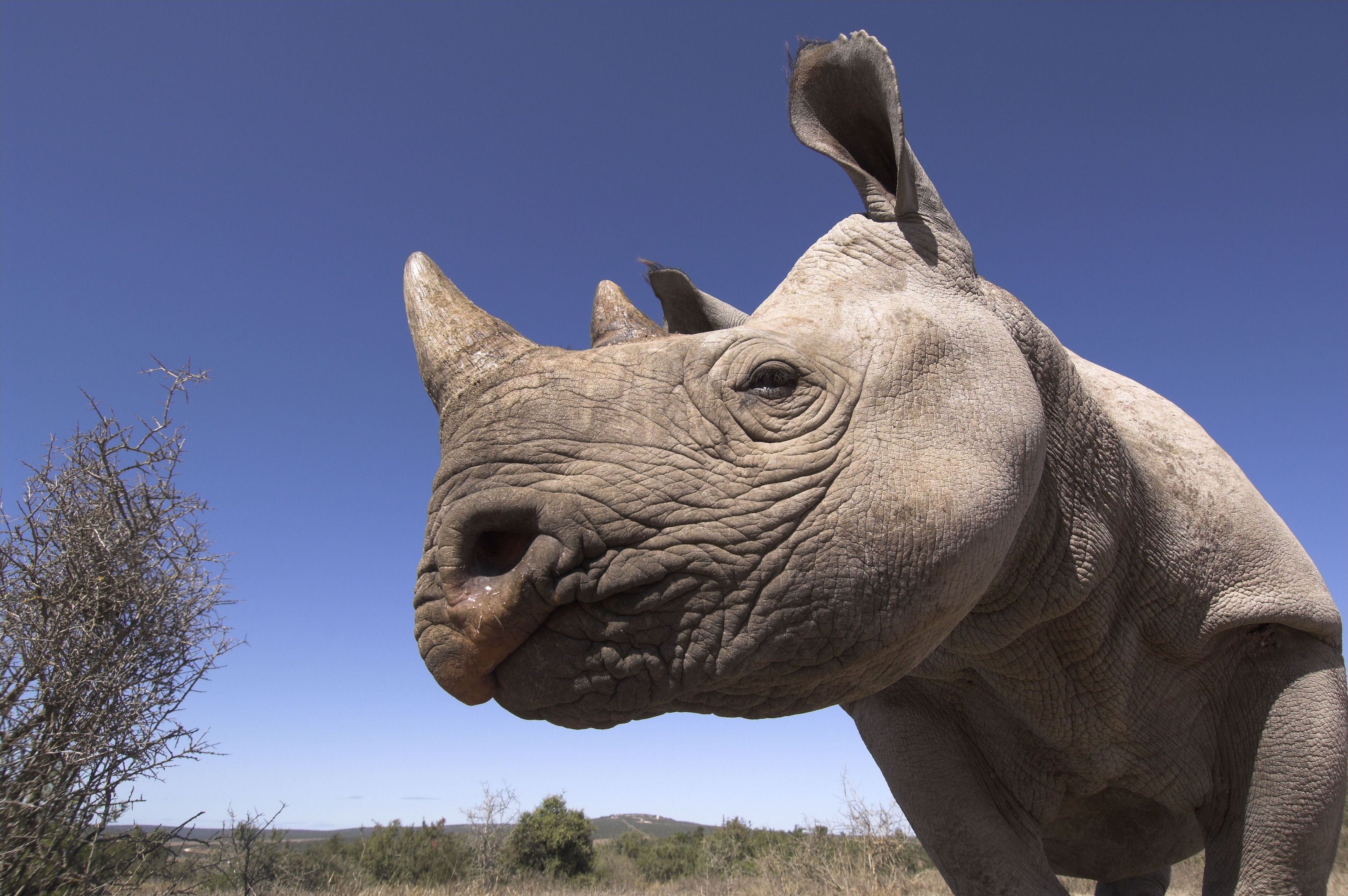
South Africa ‘Still Weighing Up’ Rhino Horn Trade Proposal

Desert black rhinoceros, South Africa [Picture credit: africagreenmedia.co.za

Desert black rhinoceros, South Africa [Picture credit: africagreenmedia.co.za

South Africa has made no final proposal on legalising the global rhino horn trade as a way of reducing the level of rhino poaching in the country, the Department of Environmental Affairs said on Friday, rebutting recent media reports on the issue.

Last year, the Cabinet authorised the department to explore the possible legalisation of the rhino horn trade at the 17th conference of the parties (COP) to the Convention on International Trade in Endangered Species of Wild Fauna and Flora (CITES), which takes place in 2016.

However, the department said, “no final proposal has been compiled, or decision made, regarding the future legal trade in rhino horn as an additional intervention to reduce the levels of poaching”.

The department said it had appointed a panel of experts, chaired by the department’s Fundisile Mketeni, to assist the inter-ministerial committee tasked by the Cabinet with weighing up a proposal on the trade in rhino horn.

The panel had started its work and would, in the coming months, listen to all sides of the trade debate before submitting a set of recommendations to the committee.

South Africa’s proposal would be tabled at CITES in 2016, and would be based on sound research, uninfluenced by any individuals or groups seeking to make a profit or by any group opposed to the country’s sustainable usage policies, the department said.

“South Africa believes that the decision to table a proposal at the next CITES COP is timeous, and may be a step towards addressing the scourge. South Africa is however not in any way insinuating that the possible trade in rhino horns would be a panacea to the problem of poaching.”

South Africa, which is home to more than 80% of the world’s rhino population, has been facing an onslaught from poaching syndicates since 2008. Since the start of this year alone, 442 rhinos have been poached and 123 suspected poachers arrested in the country.

The department has taken a number of steps in response, including increasing the numbers of rangers in its parks, as well as improving regional and international collaboration with both rhino “range” and rhino horn “consumer” countries. Source: SAnews.gov.za
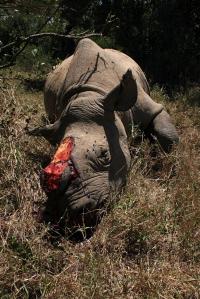
How the Groenewald Gang made millions off illicit wildlife trafficking

rhino-1Dawie Groenewald of South Africa and 11 conspirators were arrested in September of 2010 on 1,872 counts of racketeering, including illegal trade of rhino horns. Among those arrested are two veterinarians, Karel Toet and Manie Du Plessis, as well as several professional hunters. This case is one of the biggest wildlife cases seen in South Africa and has been postponed several times since 2010. It is currently scheduled for early May 2013.

Groenewald owns a big game farm in Polokwane, South Africa as well as Out Of Africa Adventurous Safaris. A burial site of over a dozen horn-less rhinos was found on his property in 2010. Investigators show that these rhinos are thought to have been purchased from the South African National Parks in 2007-2010. In order to increase his profit margin, Groenewald decided to slaughter the rhinos after removing their horns; thus eliminating any upkeep costs associated with live rhinos.

Rhino horns are worth up to $60,000 per kilo in parts of East Asia, namely China and Vietnam. They are thought to possess medicinal value, including curing cancer and small ailments such as fevers and headaches.  Rhino poaching in South Africa has been rising steadily over the past several years. According to South Africa’s Department of Environmental Affairs, approximately 588 rhinos were poached in 2012. One could point to China and Vietnam’s increased affluence as having increased this demand.

Investigators have so far seized $6.8 million in assets from Groenewald, Toet, and Du Plessis. They also uncovered Valinor Trading CC, a “closed company” Groenewald used to launder money. However, this was not Groenewald’s first run in with the law. Groenewald is a former police officer and was discharged because of his ties to a car smuggling ring allegedly outfitted by ZANU PF, the ruling party of Zimbabwe’s notorious Robert Mugabe. Groenewald was arrested in Alabama in April 2010 for importing an unlawfully hunted leopard trophy. He was banned from the U.S. and ordered to pay a $30,000 fine as well as a $7,500 fee to the buyer in Alabama.

There is some evidence that the Groenewald Gang is part of a bigger international syndicate of illegal wildlife trafficking headed by high-ranking officials in Zimbabwe.

Groenewald and his associates are out of business, but many more like them remain. Poaching is a big business, and like any illicit business only exists at the scale it does because of the global shadow financial system. Money that Valinor Trading CC conceals becomes an illicit financial flow, and eventually must be deposited in a financial institution somewhere. Authorities have frozen $6.8 million of Groenewald’s assets, but who knows how much more is hiding behind a shell company’s bank account in some far-off tax haven.

It makes no sense that while Western countries work to protect endangered and threatened species from people like Groenewald and his clients, they simultaneously undermine these same policy goals by allowing money to be easily concealed. Article by Regina Morales who is a Policy Intern at Global Financial Integrity.