WCO Remembers September 11

Picture of Kunio Mikuriya at the World Customs...

WCO's Kunio Mikuriya

To commemorate the 10th anniversary of 9/11, WCO Secretary General, Kunio Mikuriya stated that “security, in particular global trade security, became a priority policy objective and is now part of Customs’ existing border protection portfolio to prevent such attacks from re-occurring”.

“Customs administrations across the globe have made considerable efforts to counter security threats,” stressed the Secretary General. “It is therefore fitting that as we commemorate the anniversary of 9/11, we renew our firm commitment to continue to take speedy action against terrorism and other forms of organized crime,” he concluded.

In response to 9/11, over the last 10 years the WCO has developed many international standards including the renowned SAFE Framework of Standards to Secure and Facilitate Global Trade, and further supported national Customs administrations to implement the Framework through a vigorous and highly successful capacity building programme.

This Framework promotes supply chain security through the submission of advance cargo information, the application of risk management, the use of non-intrusive cargo scanning equipment, the development of Authorized Economic Operator (AEO) programmes, and partnerships between Customs administrations and between Customs and their trade stakeholders.

To further assist its Members and others who play a role in global trade security, the WCO has published a Research Paper – The Customs Supply Chain Security Paradigm and 9/11: Ten Years On and Beyond. Source WCO.

9/11 – The Significance for Customs

The tenth anniversary of 9/11 recalls a day of infamy for many, particularly those who lost loved ones, not to mention the sheer audacity and questionable motives of the respective attacks. It also marked a distinct period of change in the Customs, international travel and trade environments. For one, there is a not a single person involved in any of the above who has not felt the effects of a ‘shake up’. It is therefore relevant to recount this event and reflect on the explicit impact which the attacks in New York would have for Customs officers, worldwide.

WTC 6, an eight storey building –known as Custom House – was home to 760 officers of the US Customs Service. It was situated adjacent to the North Tower. Within 12 minutes of the first plane hitting the North Tower at about 8:46 am, all occupants (WTC 6) were safely evacuated. Stephen Barr of the Washington Post noted in an article titled, “Knowing the Drill Saved Lives at New York’s Customs House” on 18 September 2001 that ‘Federal agencies demonstrated coolheaded leadership during the crisis. Because of practice sessions held several times a year, employees knew what to do and where to go. In a day marked by unbelievable horror and confusion, old-fashioned fire drills helped one band of office workers to escape’.

Beneath the plaza level of US Customs House (WTC 6) was a large underground garage, separated off from the rest of the complex’s underground area and guarded under tight security. This was where the various government services parked their bomb-proofed cars and armoured limousines, counterfeit taxi cabs and telephone company trucks used for undercover surveillance and covert operations, specialized vans and other vehicles.

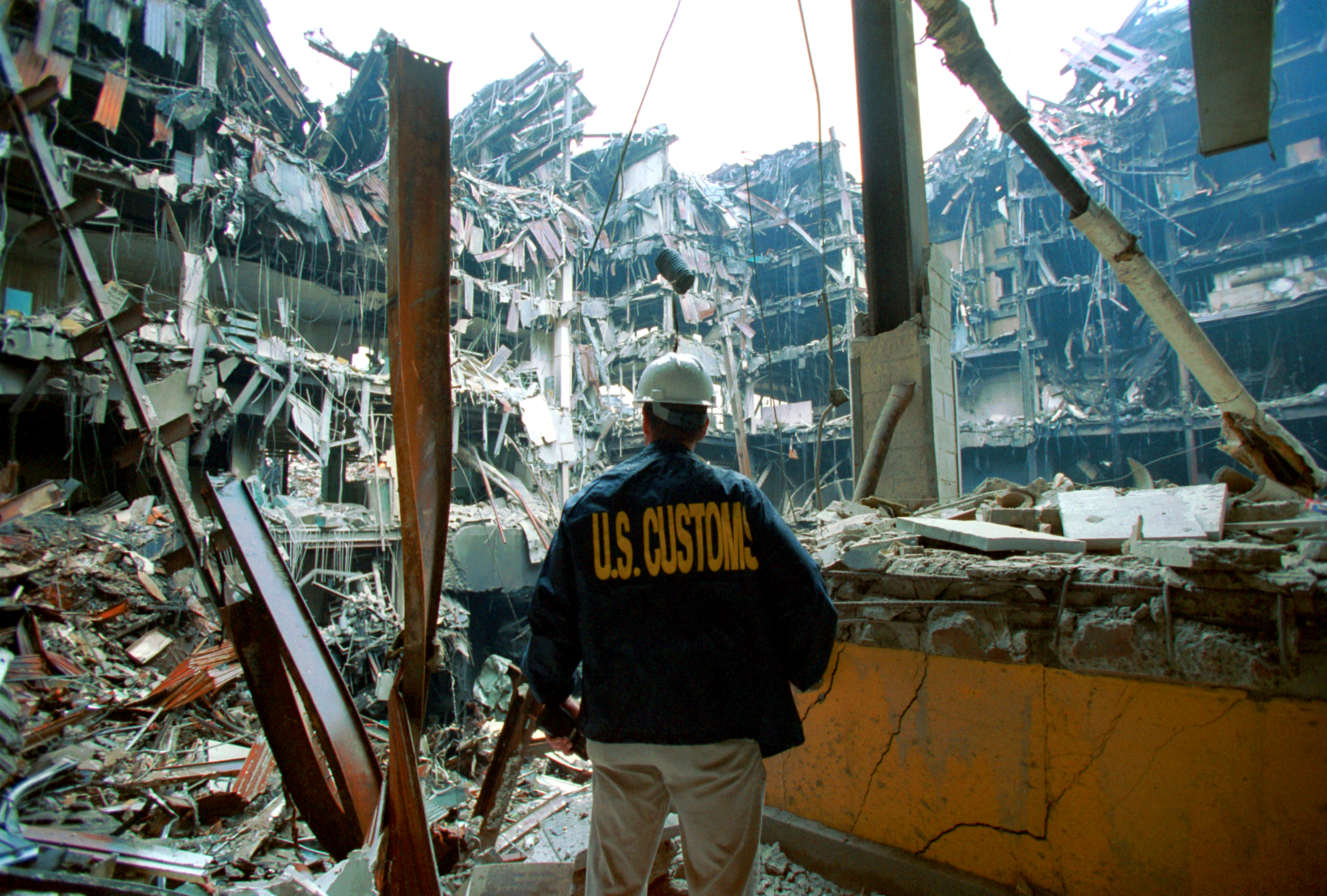
New York Customs House (WTC6) - AfterThe evacuation of WTC 6 was indeed timely, because at 9:04am a massive explosion shook the building, bellowing a huge plume of smoke 550 feet into the air. When the North Tower fell, the US Customs House (WTC 6) was crushed and totally incinerated. Much of the underground levels beneath it were also destroyed.

The Commissioner designate, Robert C. Bonner, commented “The sudden disruption to such a large and important area of Customs’ operations threatened to compromise the immediate security of ports of entry in the New York area and the integrity of ongoing Customs investigations and trade and enforcement activities. We faced an immediate need to relocate all 800 employees and to allow them to resume their work quickly so they could focus on border security. These men and women responded heroically to the challenge, setting up a temporary operations center within hours at nearby JFK airport. And, within three weeks of the attacks, they succeeded in relocating our New York Customs Office into new office space in Manhattan”. Click here to view the full testimony of Robert Bonner to the National Commission on Terrorist Attacks.

Customs evidence amongst the rubbleIn the months to follow, significant developments resulted in the institution of the Department of Homeland Security – the merger of the US Customs and Immigration Services – a gargantuan displacement of some 140 000 federal officials. (For SARS Customs officials – ours is but a picnic!). The full implications of 9/11 were to be felt by the international community in 2002 with the implementation of several ‘security/anti-terrorism’ measures that have undoubtedly changed the focus, intent of all customs administrations worldwide. Click here to visit the 9/11 image gallery.

Logistics Performance Index (LPI)

Customs and logistics users will in particular find the featured survey of interest, if not important. International Logistics encompasses an array of essential activities — from transport, warehousing, cargo consolidation, and border clearance to in country distribution and payment systems, involving a variety of public and private agents. The Logistics Logistics Performance IndexPerformance Index (LPI) and its indicators are a joint venture of the World Bank, logistics providers, and academic partners.The  LPI is a comprehensive index created to help countries identify the challenges and opportunities they face in trade logistics performance. 

The 2010 LPI points to modest but positive trends in key areas such as customs, use of information technologies for trade, and investment in private services. The LPI is a multidimensional assessment of logistics performance, rated on a scale from one (worst) to five (best). It uses more than 5,000 individual country assessments made by nearly 1,000 international freight forwarders to compare the trade logistics profiles of 155 countries. Germany and Singapore receive the highest ratings in the 2010 LPI with scores over 4.08. South Africa ranks 28th on the list with a score of 3.46, one position behind China (3.49), but 11 and 18 places better than Brazil (3.20) and India (3.12), respectively.

The LPI covers the performance of countries in six areas that capture the most important aspects of the current logistics environment:

  • Efficiency of the customs clearance process.
  • Quality of trade and transport-related infrastructure.
  • Ease of arranging competitively priced shipments.
  • Competence and quality of logistics services.
  • Frequency with which shipments reach the consignee within the scheduled or expected time.

One of the features of the LPI includes indicators of border procedures is the time taken to complete trade transactions.  Although this  is a relatively small fraction of total import time, such time increases significantly when goods are physically inspected. Core customs procedures converge strongly across all performance groups, but physical inspection—and even multiple inspections of the same shipment by different agencies—are much more common in low performance countries. The report moreover suggests that border agencies other than Customs tend to constrain the clearance process and ultimately the costs imposed on the private sector. 

Lloyd’s List now available on iPad and iPhone

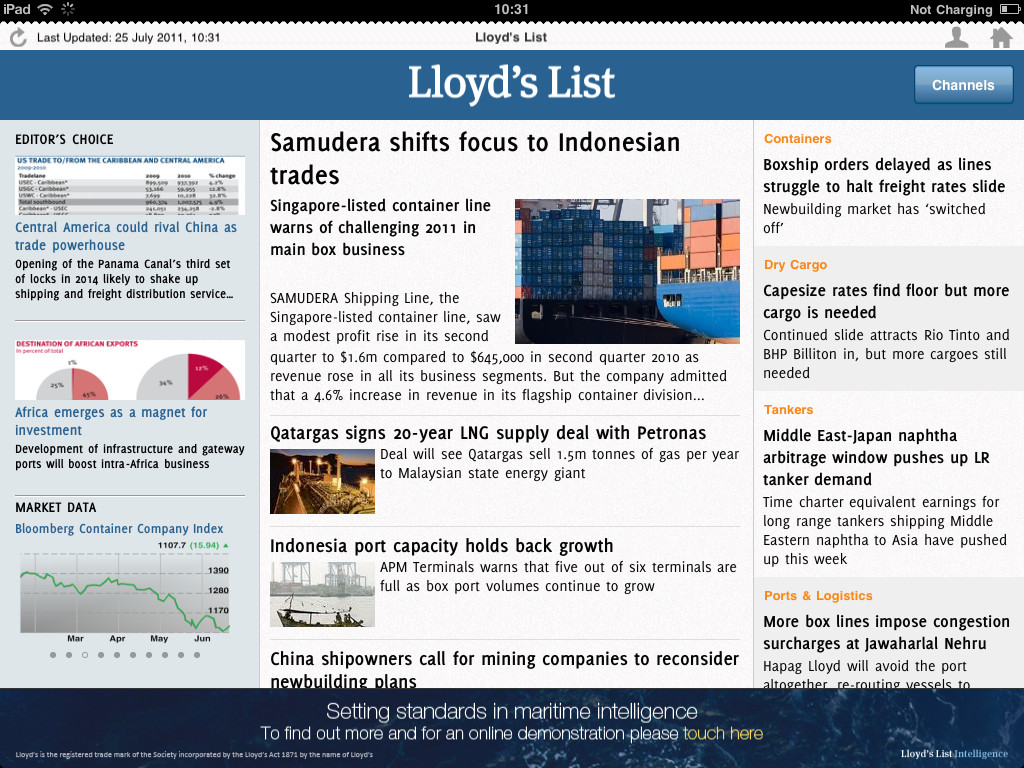
The Lloyd’s List App enables subscribers to access current news and market data anytime and anywhere. Once the news is uploaded, it is “cached” within the app, giving users the ability to read the latest headlines on the go without an internet connection. Stories are arranged in recency and categorised into channels Containers, Dry Cargo, Tankers, Ports & Logistics, Finance & Markets, Insurance, Ship Operations, and Regulation. Lloyd’s List subscribers can simply use their existing login details to access the new App. The App is free to download and has been formatted in keeping with mobile devices while retaining the familiar feel of Lloyd’s List.
Lloyds List iPhone-iPad App2

New Zealand Time Release Study 2010

NZ Time Release Study 2010Besides rugby, the Kiwis also do Customs pretty well. It is clear that Customs administrations outside of a revenue authority model can place more time and emphasis on the things that are meaningful. Perhaps South Africa will soon attain this level of performance reporting. Before this however, the ability of the impacted parties to report both spontaneously and reliably is a given.

The trading community are directly impacted by the response times. Not only does it affect whether or not storage and demurrage might occur, it also (more importantly) affects their local and international reputation as suppliers of choice. One of the methods used for the review of clearance procedures is to measure the average time taken between the arrival of the goods and their release. This facilitates Customs to identify both the problem areas and potential corrective actions to increase their efficiency. The use of automation and other sophisticated selectivity methods  allow Customs to improve compliance and at the same time improve facilitation for the majority of low risk goods.

The time required to release goods is also increasingly becoming the measure by which the international trading community assesses the effectiveness of a Customs administration. The WCO Time Release Study provides guidance for a Customs administration on the best way to apply this method of internal review.

US Customs agreement on border security upgrades

American terminology never ceases to amaze me – I wonder if they call their stakeholders “clients”?

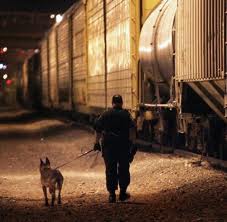
US Customs and Border Protection has announced a penalty Mitigation Decision under which Union Pacific (UP) has agreed to spend US$50 million to enhance the Mexico and United States rail supply chain CBP said the “Mitigation Decision” defines the steps that UP will take to invest US$50 million in security enhancements at critical junctures of the Mexico and US supply chain, and partnering with CBP to form a Rail Fusion Center to identify high-risk shipments.

US Penalty Mitigation DecisionCBP further said the decision provides that CBP will mitigate penalties assessed against UP if the railroad fulfils its obligations under the agreement. In recent years these penalties have become significant, as illegal controlled substances were discovered on trains originating in Mexico and arriving at US-Mexican border crossings. CBP Commissioner Alan D Bersin said: “It’s in the best interest of all that appropriate steps are taken to secure the US border against the smuggling of contraband. UP Chairman Jim Young said the agreement expands a relationship with CBP in which UP has already invested in technology, infrastructure, training and workforce resources to secure rail transportation across the border. Source: World Cargo News Online.

Zero Tolerance – the saga of 100% scanning continues

Various opinions on this subject have been voiced over the last 3 years – the threat of sea and airborne cargo being used as ‘a delivery mechanism’ for a nuclear or terrorist attack. Besides the US calling for 100% scanning of containerised cargoes at point of origin, the reality remains that less than 4% of seaborne containers are being scanned at port of departure.

Post 9/11, the US was quick to initiate a multi-layered approach to securing America against another terrorist attack. This entailed a number of domestic and extra-territorial programmes. At the bottom of each of these lies an authoritarian distrust or question mark against the integrity of entities involved in the international supply chain. In as much as these modern-day Customs’ initiatives aim to deal with tangible and intangible threats, one can begin to question the motives used by many governments and organisations in introducing such programs.

Last year, the US postponed it’s requirement for 100% scanning of inbound boxes by at least two years because of technical and funding issues. (Lets not forget the massive outcry from foreign countries of origin who envisaged their own ports coming to a standstill). The 2014 deadline, as it stands, would require any container heading to the US to be scanned for conventional as well as radioactive threats before being loaded at a foreign port.

However, in June 2011, US Homeland Security chief Janet Napolitano went on record saying that 100% scanning was “probably not the best way to go”. She said Congress was considering a “more layered approach” to container security, a combined system of scanning, data and risk analysis, physical checks and closer co-operation with ports and countries around the world.

Could it be that the promise of mega-deals for the ‘security industry’ is under serious threat given limited success and results from these ‘supply chain’ initiatives? One hears less and less about the awarding of multi-million dollar contracts for non-intrusive equipment. Funding is a big issue, and no less an issue is the question mark which countries of origin have regarding the direct intrusion these US-domestic policies have on their local economies and supply chains.

The WCO went a long way in accommodating and addressing the question of international terrorism which in the view of many helped curbed the ‘paranoia’ which prevailed post 9/11. Still the question of motive and opportunity spurred several organisations and governments to support the many bilateral developments that ensued. The EU Commission for one was infuriated by the bilateral overtures of the CBP and EU Custom’s administrations before diplomatic agreement prevailed.

The bottom line is that a nation’s domestic policy overrides that of the wants and whims of the more affluent states. Several donor programs nowadays offer ‘security equipment’ free of charge to countries packaged with ‘capacity building programmes’ to instil the desired mentality of the donor country or agency. Traditional forms of customs control and human initiative/intuition are being cast out on the trash heap as primitive everywhere, yet there is little to show for the billions of dollars spent on anti-terrorism measures year after year. However, reading the article – Zero Tolerance – you get the impression of a little desperation on the part of the engineers and manufacturers of nuclear based security equipment – almost wishing a further nuclear calamity to prove their point! Source of article: www.portstrategy.com

What is an Authorised Economic Operator (AEO)?

WCO LogoAlthough in its infancy here in South Africa, I thought I should share an interesting research paper on AEO developments across the globe. First, let’s define what it means to have AEO status? AEO status is given to a company who is considered to be reliable in their Customs-related operations. This includes customs compliance, appropriate record-keeping, proven financial solvency and security and safety standards. In principle, there are 3 types of AEO certificates — security and safety, customs simplifications, and full which includes customs simplifications/security and safety.

If you’re curious about which countries currently have AEO programs, the WCO has put together a compendium of 30 programmes currently operating in 56 countries.

The list has been divided into three areas — operational AEO programmes, AEO programmes to be launched in the near future, and Customs compliance programmes. While technically not AEOs, Customs compliance programmes can be regarded as an initial step towards the establishment of an AEO programme. Besides providing basic information on AEO and Customs compliance programmes, the Compendium also includes a short overview of AEO authorization procedures and benefits offered by programmes. The latter should be useful to South African traders participating in SARS’ “Trusted Trader” programme. Click here to access the WCO AEO Compendium

Durban Dig-out Port agreement soon!

An impending agreement between Transnet and the Airports Company SA (ACSA) over the price to be paid for the site of the old Durban International Airport can be expected by the end of September 2011. The agreement will allow Transnet to secure the strategic piece of land on the southern side of Durban for building a new deepwater container port.

While there is common agreement that the land should be secured for a new port which would be built when the time was right – estimates suggest that it will be required before 2020, Transnet and ACSA were reported to be at odds over the amount that the old airport site of 620ha is worth. ACSA was initially asking for at least R3 billion but is understood to have come down to R2 billion. Transnet was prepared to pay around R1 billion. Source: SA Ports.

World Customs Tariffs – post World War 1

I came across a document prepared by the Canadian Reconstruction Association titled – Tariff Policies Throughout the World – published in 1921. It comprises a survey of tariff legislation since the armistice (end of WW1), which shows that every important country in the world was protecting its own industries and striving to reduce its dependence upon outside sources of supply, and that “Protection” is established and accepted as the fiscal policy of the nations of the world more generally and firmly than ever before.

The story told by these tariff developments is absolutely one-sided, a world-wide resort to tariff protection, recognition of the value of industrial development and of the home market, and a general strengthening of protective systems.

Two significant statements by the governments of the day bear testimony to this fact. The Spanish Government summarized cogently the world tariff situation at the time: “Many countries have taken and are taking measures to prevent the invasion of their markets by foreign goods; tariff barriers are being raised and other restrictive measures adopted on all sides; the situation is developing towards a worldwide tariff war. The new customs tariff is an instrument prepared for use in a tariff war, if necessary.” Not less worthy of heeding is a statement issued by the Australian government: “customs duties which are not high enough to be effective are worse than useless.”

What a strange contrast to today’s circumstances where the WTO seeks at all costs to ensure the dismantling of all barriers – tariff and otherwise. Now read what things were like in our own backyard.

SOUTH AFRICA

Conditions during the war were, in effect, such as would have obtained under an almost prohibitive tariff and as a result the industries of South Africa experienced a tremendous development. The Minister of Finance in his budget speech in 1920, stated that no less than 2,000 new factories had been established in that Dominion since the fiscal year 1915-16, that in the past four years industrial production had increased 50% and that the country was advancing rapidly in the direction of becoming self-supporting in respect of all the necessaries of life. Protectionist sentiment in the Union is strong.

The budget introduced into the Union Parliament on April 15, 1921, provided for an increase of various customs duties, and the Government has announced its decision to appoint an Advisory Customs Tariff Board which will be called upon, among its other functions, to report on “what steps may be necessary to assist and develop the industries of the Union.”

Two recent developments indicate the attitude of South Africa in regard to protection and encouragement of domestic industries. In the Spring of 1921, in order to protect the shoe manufacturing industry of South Africa, principally against competition from the United Kingdom, the Government prohibited the importation of leather footwear, except under license, with the provision that licenses should be issued only for the importation of such shoes as the South African manufacturers were unable to produce. By a proclamation of May 11, 1921, the Government brought certain goods within the scope of the “dumping” clause of the Union customs tariff and the “dumping” duty has now been made applicable to wheat, flour, and wheat meal imported from Australia, the amount of such duty to equal the difference between the price at which these products are sold for home consumption in Australia and the price for which they were sold for export to South Africa, except that, as under the Canadian Customs Act, the special or dumping duty must not exceed 15 %.

The policy of the present South African Government (circa 1921) is frankly to enable South African industries to continue in operation, to encourage new manufacturing industries and the utilization of the resources of the Dominion, and to prevent the Union from becoming a dumping ground for other countries. While the question of revenue is being kept in mind, the maintenance of South African industries is regarded as still more important in the interests of the country as a whole. Source: Internet Archive


Is what’s good for China, good for everyone else?

Given current developments in the international supply chain, the following article would seem to advocate measures that would certainly pave the way for information exchange in the Customs environment. Somehow, I think this is a pipe dream –

The United States and the European Union have proposed to the WTO a set of principles that would remove barriers to cross-border data flows. Under principles, for instance, WTO member states would not prevent foreign service providers or their customers from “electronically transferring information internally or across borders, accessing publicly available information stored in other countries.” Governments would have to refrain from requiring information and communications technology (ICT) service providers to establish a local presence or use a local infrastructure. And, they would have to allow “full foreign participation” in their ICT sectors. The principles are apparently aimed at curbing Chinese censorship and protectionist measures. But they would also seem consistent with, among other things, the EU’s own restrictions on the transfer of personal data outside of the EU, occasional US decisions to restrict or impose conditions on foreign ownership of communications companies, and the FBI’s periodic proposals require communications providers to establish a point-of-presence in the United States in order to ease the Bureau’s access to communications. Source: Lexology.com

Australian Customs achieves one million sea cargo x-ray scans

Recently, Australian Customs and Border Protection staff celebrated the one millionth x-Australian Customs CEFray of a sea cargo container arriving in Australia. Staff witnessed the x-ray and unpacking of a recent seizure of 16.8 tonnes of illicit loose tobacco, worth almost $8 million in foregone duties and GST. The sea cargo container arrived from Indonesia and was selected for further examination based on anomalies detected during an x-ray at the Container Examination Facility (CEF) in Melbourne.

Container Examination Facilities across Australia, have been instrumental in many major seizures of illegal or prohibited items. In the last 13 months CEFs have detected:

  • 448 kilograms of heroin and opium
  • 396 kilograms of cocaine
  • 174 kilograms of amphetamines and chemical precursors
  • 82 million cigarette sticks
  • 258 tonnes of tobacco

Since the first Container Examination Facility was opened in November 2002, Customs and Border Protection has x-rayed one million containers at key ports around Australia including Melbourne, Sydney, Brisbane and Fremantle. Prior to the first facility opening, about 4,000 containers were examined each year. Today, Customs officers x-ray more than 101,500 containers each year. That’s a huge increase in physical assessments.

The facilities at Australian ports have container x-ray machines capable of x-raying up to four sea cargo containers at a single time. Source: Ministry of Home Affairs, Australia.

Comment: All I can say is this is an amazing feat! Africa truly has a long way to go.

Shakeup!

Unpacking of the Customs draft Bills reveals more and more surprises – despite the fact that there is still no site of the subordinate rules. Without any shadow of doubt, the ‘clearing and forwarding industry’ will be hardest effected by the ‘change’.  Why is this? Well there are a number of factors.

Firstly, this industry has always faced the immediate brunt of the law. Customs historical focus on the goods declaration – to ensure optimum revenue collection – has always relied on a high degree of competence and compliance from this sector.  As mentioned before, ITC has made significant inroads in this industry to the extent that specialisation in qualified entry clerks (for instance) is no longer an attribute in this sector. Consequential developments, and in particular, the creation of an deferment scheme gave ‘clearing agents’ even more flexibility to manage cash flow and minimise administrative burden. Several clerks and runners either lost their jobs or were otherwise absorbed in the company.  The first round of accreditation also gave forwarding brokers some leverage to accrue their client base. This did however prove ineffective from a compliance point of view especially where shady shippers merely used brokers for their apparent accreditation. Many brokers did however institute due diligence mechanisms to vet existing and prospective clients to ensure their own credibility and compliance with SARS.

Secondly, the specialised skills in valuation, tariff and trade remedies became more difficult to hold onto. This expertise will be found now mostly in the big ‘audit firms’. Still, the larger forwarding houses have retained some of these skills as it is vital to their overall service offerings to local conglomerates and multi-national clients.

Thirdly, the emergence of ITC service providers has likewise created a niche industry that for all intents and purposes seeks increased business knowledge and understanding of the customs compliance regime. Growth in this sector can be attributed to an organic increase in the need to service a greater and more mechanised supply chain. This has been particularly beneficial to the Customs Modernisation Programme as these entities have been relied on to champion the ICT change externally for Customs.

Naturally, the ‘clearing and forwarding’ sector will bound to feel some pain, as there would appear to be no less emphasis of Customs’ pressure on them to maintain ‘seemingly impossible’ levels of compliance. Forwarders would also no doubt feel some level of grievance in that there is still no visibility of parity in the supply chain. By this I mean the allocation and expectation of binding agreements (legal obligations) by SARS on other supply chain operators – carriers, transit sheds, terminals, etc.  Truthfully, this is being done albeit slow and tedious.

Change, despite all the anxiety it creates, brings about opportunity. My wish is that all parties recognise this and make the best of the situation, irrespective of the challenges. In this latter regard challenges relate to the mercenary-like approach of some role-players versus, honesty and business acumen of others. In todays’ world, being scrupulous and morally right does not always translate into being successful or prosperous. Modernisation implies that everyone changes! Some casualties are inevitable.

Next up: We’ll discuss the attributes of the bills in terms of liability, compliance and punitive measures.

Taiwan Customs expands e-seal initiative

Taiwan Customs together with its partner GS1 Taiwan has expanded the RFID initiative atthe country’s major ports to include active RFID. The Cargo Movement Security project launched in 2009 to investigate the use of an automated, RFID-based electronic seal (e-seal) system (see Taiwan Customs Officials Adopt RFID-enabled Container Seals), in an effort to eliminate the need for Taiwan Customs officers to escort containers from carrier yards to container terminals. Work on the project will continue through 2012, so that Taiwan Customs can upgrade the RFID e-seal system’s capabilities and fully extend it to import, export, transit and trans-shipment containers located at the island’s major ports.

The initial project involved EPC Gen 2 RFID; the team plans to add active RFID e-seal technology by the end of this year, for security management of in-land transportation. The Taiwanese government wants to leverage both active and passive RFID tags at all ports in Taiwan, in order to better ensure cargo and container safety, while reducing costs to logistics and shipping firms. E-seals incorporating active RFID technology and complying with the ISO 18185 e-seal standard will be used for the trans-shipment of containers between the country’s Keelung and Taipei harbors, as well as for air cargo at Taiwan Taoyuan International Airport, and at a terminal located outside the airport’s restricted area. In addition, GS1 Taiwan and the Taiwanese government have submitted a new RFID passive e-seal candidate standard to EPCglobal. Source: RFID Journal

Confidentiality of manifest information – tips for US importers and consignees

South African shippers take heart, this is a worldwide phenomenon. Check out the article below on how US shippers are addressing the issue.

Is there a foolproof method for importers or consignees to maintain confidentiality of identifying information listed on shipping manifests? Unfortunately, the short answer is “no.” While an importer or consignee may request that US Customs treat its identifying information as confidential, the infinite number of variations of this information (e.g., spelling of company name) precludes confidentiality for each possible variation.

There are, however, steps that importers and consignees can take to minimize risk in this area. Under federal law, the public may collect manifest data at every port of entry. Moreover, reporters may collect and publish names of importers from vessel manifest data unless an importer/shipper requests confidentiality. Specifically,

[a]n importer or consignee may request confidential treatment of its name and address contained in inward manifests, to include identifying marks and numbers. In addition, an importer or consignee may request confidential treatment of the name and address of the shipper or shippers to such importer or consignee. 19 CFR 103.31.

As many importers and consignees have learned, however, confidentiality is not assured even CBP grants such a request. A bill of lading may often contain a variant of a company name, and if that variant is not included on the confidentiality request, confidentiality will likely not apply to the information on that particular manifest. For example, if the John Smith Corporation requests confidentiality for its corporate name, and a manifest lists “J. Smith Corporation” or “John Smith Corp., Inc.”, confidentiality would not technically apply since these names were not within the scope of the confidentiality request. Nevertheless, the trade may take steps to mitigate this. To ensure the broadest confidentiality exemption, an importer or consignee may consider including in the confidentiality application:

  • Every variation of the names that has been used previous shipping documents
  • Likely variations of the name
  • Misspellings of the company name
  • Any D/B/A or A/K/A previously used
  • Names of sister companies, including those in other countries
  • All company addresses

Even if an importer or consignee diligently follows these suggestions, confidentiality is not 100% guaranteed. One incorrect keystroke by someone entering data in a document somewhere in the supply chain can result in a “new” variation of a company name that is not covered by a grant of confidentiality.

US Customs and the trade have had discussions about the shortcomings in this process. Perhaps that is why CBP has for the time being disabled an online form used to make confidentiality requests (NOTE: requests can still be mailed to CBP as specified in the regulations). To tighten up this process, one possible solution is to leverage IRS/EIN numbers instead of relying on guessing at spelling of names. Source: CustomsNow Blog