EU ‘green tax’ will hit South African exporters

At the expense of coming across a bit cynical – what exactly is the aim of the ‘carbon emission’ movement? We know it’s a United Nations initiative; that many politicians, ex presidents, scientists and climatologists warn against the use traditional energy sources and preach of cataclysmic consequences if we do not need heed their call; that it has become the latest excuse for more government imposed taxes; that the very mention of CO2 conjours up animosity between the rich and poor nations in much the same way as the mention of the WTO. Lets not forget there’s even a ‘Green Customs Initiative’ just so that we can all feel mutually inclusive.

An article just published by IFW-net.com suggests that exporting from South Africa could become even more expensive if the country’s free-trade deal with the European Union (EU) is brought to an end and replaced by a shipping tax next year. The current trade deal removes tariffs on 98% of South Africa’s exported goods. Trade between the two regions creates around R400 billion (US$48bn) a year. Seems like taxation is the West’s latest answer to the failing WTO overtures on free trade!

At the United Nations conference on climate change in Durban, the EC will announce plans to tackle emissions. The proposed shipping tax, aimed at lowering carbon emissions, is expected to dramatically increase the cost of imports into the EU.

The EU’s envoy to South Africa, said shipping and aviation was a main contributor to carbon emissions.“That is why we are quite persistent that a shipping and aviation tax must be included in any deal that hopes to limit carbon emissions.” he said.

The EU has also sparked controversy over its plan for Emissions Trading Scheme that will apply to all airlines flying through its airspace from 1 January 2012.

One way or the other, SARS gets the monopoly on collecting the tax, regardless of its form.

For an alternative view on ‘green stuff’ read “The Recession Hits the Green Movement“. It’s perhaps a lot closer to the truth than all the ‘saving-the-planet’ stuff being dished up by the mainstream media.

Non-declaration of hazardous containers

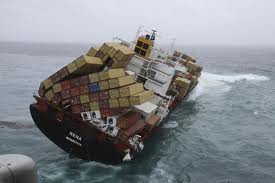
MV Rena off New Zealand Coast of TaurangaIn this age of heightened security it remains remarkable how carriers still willfully take custody and/or load ‘goods’ for which the contents thereof are unclear. True, carriers and intermediaries (fowarders/brokers) will correctly point at the ‘shipper’ (exporter) for not disclosing the details correctly. It also needs be mentioned that the cargo handler (packer of the container) is really key in all of this. It is this entity who has knowledge of what is being stuffed into the container. There is much debate on this matter, and a whole lot more work to be done in ultimately pinning down the responsible party. Given this state of affairs, most Customs administrations are happy to lay the responsibility and liability for lawful clearance on the party responsible for cargo reporting, i.e. the entity which ‘cuts’ the manifest. I dare say that the terms of sale (incoterms) also have an influence in terms of risk and liability here which adds some complexity to decision-making in time of misfortune. Take for instance the recent grounding of the M/V Rena off New Zealand earlier this month, where it has recently come to light that the wreck contains at least 21 containers which were not properly recorded on the ship’s manifest. Read articles below.

Upgrades and Downgrades

GNU-FDL, selbst fotografiert

Image via Wikipedia

The global shortage of intermodal shipping containers is making the companies that lease them rich. In a year that will probably go down as the worst in shipping history, a small group of companies is making a fortune. These are the companies that buy and then lease to major shipping lines the humble “box,” or intermodal shipping container. You know, those ugly rust- or gray-colored containers that sit atop 18-wheelers and block your view of the road and cause massive congestion and beaucoup emissions? And I bet you can’t name a single one of these companies. I couldn’t, until I started researching this article. They’re not exactly household names, but they should be for any investor worth his or her salt. Read the full article here! Source: The Maritime Executive

SARS now ‘officially’ on Facebook

SARS Facebook Page

SARS has recognised the value of social media and its contribution towards getting the message out to the user. It’s Facebook page is intended to improve communication with taxpayers and other stakeholders, thus will have an external focus. Interested parties can now access SARS’ Facebook page at the following link –  www.facebook.com/sarstax . SARS internal staff will however have to make use of a private PC or iPhone or iPad to access the page.

SARS “Trusted Trader” programme under the spotlight

With the implementation of the SARS Customs Modernization Program, accreditation has been revisited and SARS has taken a more robust approach.

South Africa is currently focusing on accreditation for customs procedures only. The Self-assessment Questionnaire was reworked and sent to a number of large importers, inviting them to participate in the “Preferred Trader Pilot Program.” Now more customs accreditation initiatives are underway.

In terms of a future focus on mutual recognition, bilateral discussion between EU and South Africa has commenced. The parties recently agreed to launch a customs project, financed under the Trade, Development and Cooperation Agreement (TDCA) facility, covering the implementation of the WCO SAFE Framework in South Africa. South Africa intends to align its Authorized Economic Operator (AEO) strategy with that of the EU to ensure that standards for both compliance and security match those of the EU.

The EU is South Africa’s main trading partner. The TDCA is the legal basis for relations between the EU and South Africa and provides the framework for cooperation in the social, economic, political and cultural field. Please click here for the full report – refer to  pages 32 -33 for South African AEO article. Source: Ernst & Young

The value of risk-based Non-Intrusive Inspection

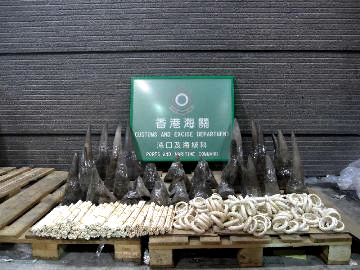
Rhino horn bust, Hong Kong CustomsOn 14 November 2011 Hong Kong Customs seized 33 rhino horns (weighing 86.54 kg), 758 ivory chopsticks (13.22 kg) and 127 ivory bracelets (9.2 kg) with a value of about 17.4 million Hong Kong dollars (over 1.6 million euro). Acting on risk assessment, a container on board a vessel arriving from Cape Town in South Africa and declared as containing “scrap plastic” was selected for inspection by Customs officers. Under x-ray examination, officers discovered the contraband concealed inside a package of plastic scrap placed at the rear end of the container.

This is one of the biggest seizures of rhino horns reported by Customs. Over the past two years, rhino horns have been seized by Customs in Belgium, China, Ireland, Kenya, Portugal, the Netherlands, South Africa and the United Kingdom.

Early November statistics from the South Africa National Parks authority show that 341 rhinos have been lost to poaching so far in 2011, compared to a record total of 333 last year. Most rhino horns are smuggled to Asia in particular China and Vietnam, where the unfounded rumour persists that rhino horn can cure cancer! This record seizure follows another made by Hong Kong Customs on 29 August 2011, when 794 pieces of African ivory tusks (1,898 kg) found inside a container were seized. Source: WCO.

A single bust like this invokes a number of things. Firstly an outrage amongst the general populace of the cruelty and greed concerned with the crime, and secondly, elation amongst law enforcement officers in making the bust. A bust such as this reinforces confidence in the initial commitment to procure inspection technology.

European Union bans US X-Ray Body Scanners

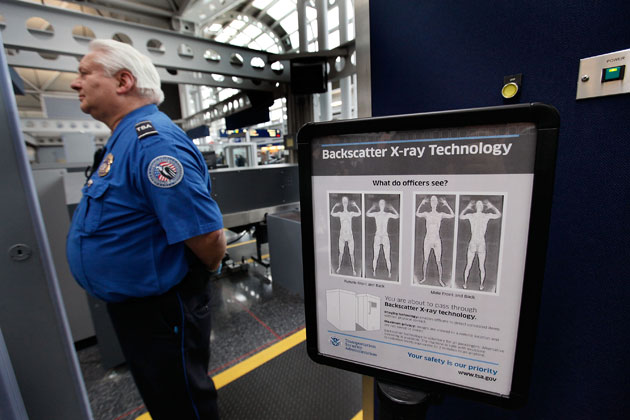
The European Union on Monday prohibited the use of X-ray body scanners in European airports, parting ways with the U.S. Transportation Security Administration, which has deployed hundreds of the scanners as a way to screen millions of airline passengers for explosives hidden under clothing. The EC, which enforces common policies of the EU’s 27 member countries, adopted the rule in order not to risk jeopardizing citizens’ health and safety.

As a ProPublica/PBS NewsHour investigation detailed earlier this month, X-ray body scanners use ionizing radiation, a form of energy that has been shown to damage DNA and cause cancer. Although the amount of radiation is extremely low, equivalent to the radiation a person would receive in a few minutes of flying, several research studies have concluded that a small number of cancer cases would result from scanning hundreds of millions of passengers a year.

European countries will be allowed to use an alternative body scanner, on that relies on radio frequency waves, which have not been linked to cancer. The TSA has also deployed hundreds of those machines – known as millimeter-wave scanners – in U.S. airports. But unlike Europe, it has decided to deploy both types of scanners.

The TSA would not comment specifically on the EU’s decision. But in a statement, a TSA spokesman said, “As one of our many layers of security, TSA deploys the most advanced technology available to provide the best opportunity to detect dangerous items, such as explosives. We rigorously test our technology to ensure it meets our high detection and safety standards before it is placed in airports,” he continued. “Since January 2010, advanced imaging technology has detected more than 300 dangerous or illegal items on passengers in U.S. airports nationwide.”

Body scanners have been controversial in the United States since they were first deployed in prisons in the late 1990s and then in airports for tests after 9/11. Most of the controversy has focused on privacy because the machines can produce graphic images. But the manufacturers have since installed privacy filters.

As the TSA began deploying hundreds of body scanners after the failed underwear bombing on Christmas Day 2009, several scientists began to raise concerns about the health risks of the X-ray scanner, noting that even low levels of radiation would increase the risk of cancer.

As part of our investigation, ProPublica surveyed foreign countries’ security policies and found that only a few nations used the X-ray scanner. The United Kingdom uses them but only for secondary screening, such as when a passenger triggers the metal detector or raises suspicion.

Under the new European Commission policy, the U.K. will be allowed to complete a trial of the X-ray scanners but not to deploy them on a permanent basis when the trial ends.These new rules ensure that where this technology is used it will be covered by EU-wide standards on detection capability as well as strict safeguards to protect health and fundamental rights.

Five-hundred body scanners, split about evenly between the two technologies, are deployed in U.S. airports. The X-ray scanner, or backscatter, which looks like two large blue boxes, is used at major airports, including Los Angeles International Airport, John F. Kennedy in New York and Chicago’s O’Hare. The millimeter-wave scanner, which looks like a round glass booth, is used in San Francisco, Atlanta and Dallas.

Within three years, the TSA plans to deploy 1,800 backscatter and millimeter-wave scanners, covering nearly every domestic airport security lane. The TSA has not yet released details on the exact breakdown. Source: ProPublica

Korea to implement Advance Manifest System

The Korea Customs Service (KCS) will introduce an Advance Manifest System in accordance with WCO standards as well as fulfill its own responsibilities as a governmental agency of duties for collection and border protection. This follows other major trading partners such as the U.S., Canada, EU and China who have already already adopted the Advance Manifest reporting. Known as KAMS, the new system will be implemented by KCS from 1st December, 2011. For more information click the hyperlink to download Korea Customs Advance Manifest System guideline.

Price of Modernisation – technology encroachment and people displacement

An interesting dynamic has developed with the introduction of ICT in business. In the customs and trade environment there are a few fundamental objectives around which technology has proven to be effective –

  • Elimination of tedious labour intensive paper delivery and manual distribution processes.
  • The ability to generate more work, in dramatically shorter timeframes thereby improving customer expectation and service delivery.
  • Seamless replication of a common message or instruction across a broad spectrum of stakeholder’s networks to enable better planning and execution of ‘the next steps’ in the supply chain process.
  • Rules driven automated processes that eliminate human intervention and more specifically, human intuition. Why? Because people make mistakes.

We see this everywhere. Electronic trading with your bank, customs broker, revenue service, or online shopping store. All these enterprises have developed (and to a large degree perfected) complex rules-based systems which work effectively 90% of the time. Your trouble occurs if your transaction happens to fall into the 10% category. Once again companies have recognised that there is a role for people to play. It also happens to be a conditioned environment based on the principle of tiers and handovers – the Call Centre. This is where the ‘customer’ generally encounters an ignoramus at first; and hopefully, through the process of escalation, finally speaks to someone with the knowledge to assist and resolve the enquiry. All the same, this is a faceless experience and the chances are you may never get to speak to that ‘consultant’ again, in the time of need.

In time the branch offices will close, with online facilities having become the way of life. No more need for the maintenance of real estate, storage vaults for paper records, and costly expenditure on people you once grew fond of as your local branch manager and friendly staff. Peace of mind has given away to convenience. The extent of technological advancement in many organisations is such that with payment mechanisms all being electronic, any impact or potential for disruption to day-to-day operations is virtually negated in the event of industrial action. The cost to business benefit of a new system far out-weighs the onerous responsibility of maintaining a traditional branch office – it’s a no-brainer!

In as much as man has been weary of progress since the invention of the wheel, so today, the average employee questions the rationale of it all, and where his/her future lies. And herein lies the dilemma – what to do with all the displaced people. In the private sector it’s rather simple (if not tragic) – just retrench the excess. For government departments and parastatal organisations, i.e. semi-autonomous branches of government, it’s not that easy. Nobody can be put out onto the street. It is therefore up to individual employees to consider their options. It’s time to wake up, you are still fortunate. Bursary programmes are available, so seek out an opportunity to improve your lot in life, perhaps in a totally different field from the one you have become accustomed to.

Reminder: People Run the Supply Chain

doesn’t this just sound so familiar? What a fine article by Chris Kane, Chief Strategy Officer of a family owned third-party logistics provider (3PL).

As the U.S. economy continues to struggle and unemployment remains high, our industry has focused on cost cutting through automation. Technology has undoubtedly helped us move more products more quickly and less expensively than ever before, but have we focused so much on automation and technology that we’ve neglected to identify how they affect the people in our supply chain?

I’m a distribution guy, so I’m the first to admit that technology provides visibility into our operations that makes my life much easier. A single report can tell me exactly where a specific load for any one of our customers is located in real-time. What it doesn’t tell me is how our people in the distribution center hustled to get the trailer loaded, even after a forklift problem, so that the driver didn’t miss his delivery window. Or how the driver’s skills helped her avoid an accident that would have destroyed the customer’s product. If I just look at that report, I miss the most important aspect of our business: the dedication of our people. When things go wrong (as they inevitably do), technology will only get us so far.

Is our industry fast paced? Absolutely. Do we need to utilize the technology available to be more efficient, more cost-effective and more competitive? Of course. But if we pursue those options exclusively, with little regard for the people running our operations, we’ve failed. Because at the end of the day, it’s the efforts of the people in the supply chain that get the product to its destination.

U.S. Customs may get more involved with export security

A top U.S. Customs and Border Protection (CBP) official said the agency is considering expanding its role to include verifying U.S. exporters’ security compliance, with any future program likely to be modeled after the agency’s Customs-Trade Partnership Against Terrorism (C-TPAT) program. C-TPAT sets security standards for imports and verifies compliance with those standards.

“The idea is being noodled around now” at CBP’s headquarters in Washington, said Dan Baldwin, executive director for cargo and conveyance security in CBP’s Office of Field Operations, during a Nov. 3 presentation at the Coalition of New England Companies for Trade (CONECT) 10th Annual Northeast Cargo Symposium in Foxborough, Mass.

The impetus for adding export security to CBP’s portfolio comes partly from the Obama Administration’s push to increase exports as a means of strengthening the U.S. economy. But much of the motivation traces back to exporters themselves.

Large exporters have been asking for a program that would verify their compliance with foreign governments’ cargo security programs, some of which are based on C-TPAT, Baldwin said. CBP plans to sign an agreement with the European Union regarding coordination between C-TPAT and the EU’s Authorised Economic Operator (AEO) security program by the end of this year, he said.

CBP already has some involvement with export security, notably on the U.S. borders with Mexico and Canada. The agency could play a bigger role than it currently does in enforcing limits on technology and licensed goods, Baldwin said.

“I think … the same process we use on the import side should be emulated on the export side,” he concluded. “I don’t think that’s going to be a heavy lift.”  Source: DCVelocity.com Comment: not likely if it means the CBP has to condescend to adapt its system to those of a foreign sovereignty!

Related articles

Assessing the Impact of 9/11

Following 10 years since the September 11, 2001, terrorist attacks , the National Consortium for the Study of Terrorism and Responses to Terrorism (START) has released a background report that explores the unique nature of the 9/11 attacks and examines terrorism trends pre- and post-2001. Key findings from the report include:

  • More people died in the 9/11 attacks than in all other US terrorist attacks from 1970 to 2010.
  • The 9/11 attacks involved the first terrorist hijackings in the United States since 1984.
  • There has not been a successful terrorist hijacking in the United States since 9/11.
  • Prior to 9/11, al-Qa’ida had successfully launched only three other terrorist attacks globally—having attacked the US embassies in Kenya and Tanzania in 1998 and the USS Cole in the Port of Aden in Yemen in 2000. Since 9/11, groups allied with al-Qa’ida are responsible for over 12,000 deaths worldwide. Globally, over 65,000 people have died in terrorist attacks since 2001, with an average of 7258 deaths in terrorist attacks per year.
  • From 1991-2000, the United States averaged 41.3 terrorist attacks per year. After 2001, the average number of US attacks decreased to 16 per year from 2002-2010.
  • From 2003-2007, there were no fatalities from terrorist activity in the United States. The full background report is available here!

Port Community Systems – a voyage of discovery

Port Community SystemSince the mid-1980’s the concept of port community systems have abounded in various guises. Portnet (now Transnet Port Terminals / National Ports Authority) initiated a drive around this time as well, however the maturity of B-2-B e-commerce, at the time, was in its infancy and there were simply not enough ‘takers’ due to the unknowns such as ‘cost’ and ‘what’s in it for me’. Similarly, the air cargo community – in Europe especially – operated what was called ‘cargo community systems’ (CCS), most of which were operated by a value added network operator who provided the infrastructure and together with an ‘industry/community’ project team developed all the necessary transaction interchanges to facilitate data exchange between participating trade and logistics entities. Some of these CCS’s interfaced with Customs, but mainly serviced the forwarding and cartage community. Towards the end of 1998, South Africa established its very own known as ZA-CCS. Like Portnet’s endeavour, it was perhaps ahead of its time with very few participants to support the anchor sponsor, being the South African Airways. Two years later SARS implemented its EDI programme, and so developed a new era in information exchange for the customs clearing fraternity. The number of service providers also increased to support a burgeoning need for ICT capability. Mainframe systems gave way to thin client and PC-based solutions making it all the more affordable and accessible to the greater trading community.

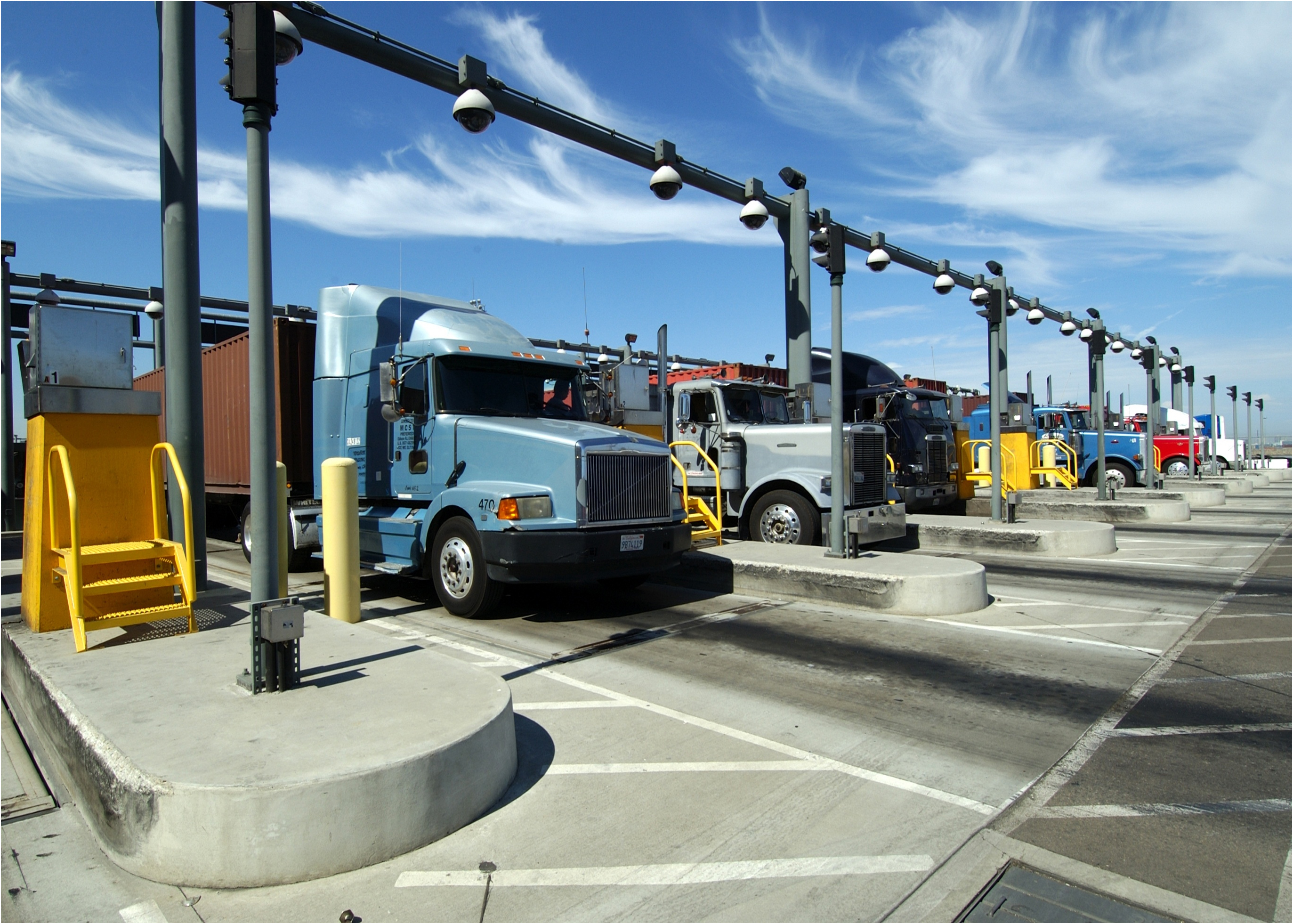
In the US, Los Angeles has spent considerably more installing security cameras than ports have spent in other countries on setting up a Port Community System. However these have yet to prove their worth in the lucrative US market. Much like the voyages of discovery to the New World 500 years ago, Port Community Systems are taking their time to spread beyond Asia and Europe. In the US, they are virtually unknown outside their uses in security and safety.

European ports have undoubtedly benefitted from PCS in varying forms. An outstanding system is Portbase, linking Rotterdam and Amsterdam in virtually every activity. So far, 40 different services are offered, with Notification of Dangerous Goods next in line. The big test in extending Portbase lies in fitting the programme into less homogenous conditions elsewhere.

At Gothenburg in Sweden, the most significant aspect was integrating with the government systems, regulations and requirements – especially in areas such as control of dangerous goods and waste disposal. The single window application is a key to success. Based on a module approach, three sub-programs – the Vessel Clearance System, Marine Service System, and Cargo Management System – cover the spectrum of operations linking port customers, users, management and government authorities.

In developed countries the differences are marginal when new systems are set up, because every port is already heavily computerised. In emerging markets even the most basic computer system can mean a huge step forward. It’s also a big plus when free trade agreements are signed. Customs administrations will zero in on the most efficient port as the designated Trade Zone or bonded manufacturing facility. The more efficient a port, the more likely that it will be used as a trade lane.

In the US, the focus of information exchange is almost solely on safety and security, a consequence of the 2001 terrorist attacks. Commercial and operational information sharing is almost non-existent, and the reason is the extremely competitive culture that pervades business.

The universal opinion is that terminal operators and port authorities jealously guard their business models and details from rivals. It’s all a case of ‘you jump in first’. There is a total refusal to be the first to set up a system – the competitors would be only too happy to plunder the information without giving anything back in return. In complete contrast, the approach to security and safety is “the more the better“. (In South Africa we refer to it as a ‘data rich’ environment). These are undoubtedly interesting times we live in. Source: PortStrategy.com.

Who’s data is it, anyway?

What with increased automation and the plethora of services becoming available to brokers, traders and specialist duty/tax recovery consultants, it would seem that the virtual nature of business has overlooked some key criteria which is cardinal for trader compliance with Customs. Lets deal with one of these – customs clearance (goods declaration) and cargo reporting (cargo manifest) information. Before I forget, as of June 2011, this also includes supporting documents. South African Customs law prescribes an obligation on traders to maintain documents (which includes any electronic transcription/version thereof)  for a statutory period of 5 years. This applies to all customs’ registrants and licensees.

While service providers (computer bureaus) provide a vital service in the provision and maintenance of software, hardware and communication services to the trade, site should not be lost of the fact that at any point in time, the trader may need to access, produce or submit documentation to support a claim or proof of their compliance in any customs matter. As one ‘provider’ recently exclaimed – since the inception of SARS’ electronic supporting document facility E@syScan, ‘gigabytes’ are now being transmitted over the internet. No doubt SARS endeavours have (or are) making service providers more profitable, but these also require a fair measure of support and ongoing maintenance to ensure such facility work at optimum performance. But, I’m digressing somewhat.

My point is that traders must have full rights, access and ownership of such data, including so-called product libraries. SARS has not imposed any view or directive on this matter, and has left it to the terms and conditions of the commercial agreement between the trader, broker and the service provider. Should a broker/trader wish to terminate his/her relationship with a service provider, the agreement should provide for a transfer of ‘customs transactional data’ from the service provider to the trade entity. There are no doubt instances of breach of contract which may cause either or both parties to sever the commercial relationship under a cloud. Nonetheless, my advice to the trader/broker is to ensure that their contractual agreement includes a clause which provides for the availability or transfer of ‘data’ to the trading entity in the event of a termination of the agreement. A ‘can’ of worms? Speak to me!

SARS Customs officials graduate

Customs Canberra Graduates 2011Twenty-four SARS officials, including senior managers and team leaders, were awarded certificates, diplomas and degrees by the University of Canberra following their successful completion of International Customs Law and Administration programmes. Professor Creck Buyonge of the University of Canberra and members of the SARS executive attended the ceremony. The graduates, from HR, Customs Operations, Customs Border management and Legal and Policy, were presented with their awards by Professor Buyonge and SARS executives at a special ceremony. (Creck Buyonge regularly authors articles on customs developments in Africa for WCONews)

Professor Creck Buyongi - Canberra UniversityProfessor Buyonge, who heads up the programme, said the ceremony was a special moment for the graduates and the culmination of their hard work and commitment. He thanked SARS for the support given to the candidates and said that this showed how SARS values its people.

The postgraduate courses offered by the Canberra University are for people who wish to pursue a career in customs and border management. They cater for current and future managers of customs administrations and other trade professionals who wish to expand their knowledge of international trade and customs issues. The courses provide the necessary skills and knowledge to help organisations meet the demands of today’s dynamic global economy. The latest theory and practice in international trade, customs and excise management, and ongoing research activities, ensure that the courses reflect the business of customs. No pre-existing legal qualification or experience is required to undertake these courses. Check out the University of Canberra website at http://customscentre.canberra.edu.au/ Source: SARSNews.