South Africa’s New Integrated Customs Border Management Solution

Amidst diverse expectations and feelings of excitement, anxiety and anticipation, the South African Revenue Service (SARS) migrated to its new integrated Customs and Border Management solution over the weekend of 17 August 2013. A new modern electronic solution Interfront can now rightfully claim some success even if it is an unseen component within a multi-layered, multi-technology solution of which South African Customs is now the proud owner. After 9 months of rigorous parallel testing between old and new, and a period of dedicated external testing with Service Providers of the customs business community, the decision to implement was formally agreed with trade a fortnight ago.

Interfront Customs and Border Solution (iCBS) replaces several key legacy systems, one of which has served South Africa for more than 30 years. The vast business and technical competence and skills which faithfully maintained and supported the old systems are to some extent in the wilderness now, but will hopefully find place within the new technology environment. While technology nowadays is particularly agile, and human physical placement at the coal face is under threat, organisations like SARS will always require customs technical business and policy competence to maintain the cutting edge.

There still remains an enormous amount of work to do regarding the alignment of the new clearance system with the specific guidelines, standards and principles of the WCO. With regional integration becoming more prominent on the sub-Saharan African agenda, the matter of ‘facilitation’ and ‘non-tariff barriers’ will inevitably become more prominent discussion points. Other salient features of the SAFE Framework of Standards such as Authorised Economic Operators and IT connectivity have already emerged as key developmental goals of a number of regional customs and border authorities. The timely introduction of Interfront places SARS in a pivotal position to influence and enable the required electronic linkages, crucial for the establishment of bi-lateral and multilateral trade agreements, transport corridors, and, support for ‘seamless’ multi-modal movement of cargo from port of discharged to its place of manifestation with limited intervention, based on the principles of risk management. Enjoy the Interfront video feature.


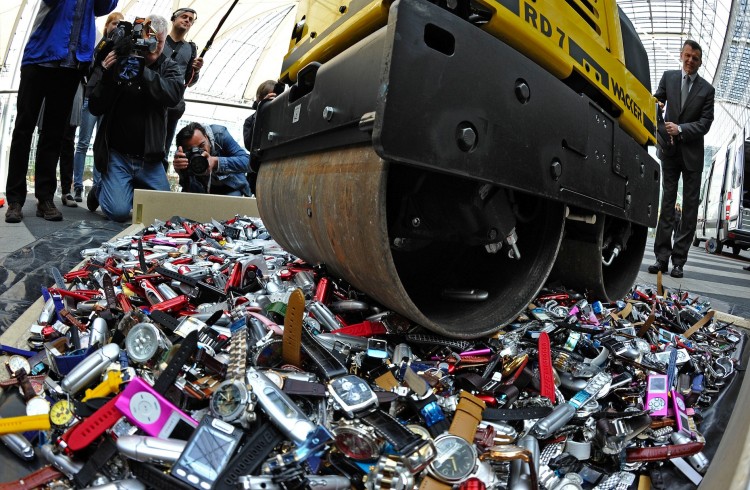
Drop in fake goods seized by EU Customs

Fake goods being destroyed

Fake goods being destroyed

Customs in the European Union (EU) detained almost 40 million products in 2012, suspected of violating intellectual property rights (IPR), with an original goods retail value of just under €1 billion, according to an annual report published by the European Commission.

The previous year, close to 115 million ’fake’ items had been seized, worth more than €1.27 billion. However, the number of recorded cases for detained goods last year was down only slightly on 2011.
This is thought to be due to the strong growth in small shipments of counterfeit merchandise ordered via the Internet.

Globally, 30% of the goods seized were cigarettes followed by a miscellany of goods (11%), packaging materials (9%), clothing (8%), toys (4%) and perfumes and cosmetics (3%). The vast majority were destroyed.

In terms of the number of cases, most of the detained goods had been shipped by air, post and express, whereas maritime container transport was the main mode for the number of articles seized.

In over 92% of all cases, Customs action was triggered whilst the goods concerned were under an import procedure.

“Customs is the EU’s first line of defence against fake products which undermine legal businesses,” said Algirdas Šemeta, Commissioner for Taxation, Customs, Anti-fraud and Audit.

He stressed that the annual report illustrated “the intensity and importance of the work being done by Customs in this field. I will continue to push for even greater protection of intellectual property rights in Europe, through our work with international partners, the industry and Member States.”

China was by far the principal origin of the fake goods. However, other countries were the primary source for specific product categories. For example, Morocco for foodstuffs, Hong Kong for CD/DVDs and tobacco product accessories (electronic cigarettes and the liquid fillings for them), and Bulgaria for packaging materials. Source: EU Commission

100% Scanning – Have all the Options been considered?

Port of Oakland - VertiTainer's  crane mounted scanner solution employs advanced passive scanning technology and sophisticated identification algorithms to detect and identify gamma and neutron sources in shipping containers as they are loaded or discharged from a container ship.

Port of Oakland – VertiTainer’s crane mounted scanner solution employs advanced passive scanning technology and sophisticated identification algorithms to detect and identify gamma and neutron sources in shipping containers as they are loaded or discharged from a container ship.

While the question of mandatory weighing of containers features high on the International Maritime Organisations’ (IMO) list of priorities, a recent post “Container Weighing – industry solution on the horizon“, reminded me of a solution which has been around for some time now, but for various reasons would appear to have been overlooked by authorities – or so it would appear. Readers and followers of this blog may well already have viewed the feature on VeriTainer’s gantry crane mounted radiation detection and identification system, called the VeriSpreader® – refer to the New generation NII technology page of this Blog.

The spreader is a device used for lifting containers and unitized cargo. The spreader used for containers has a locking mechanism at each corner that attaches the four corners of the container. A spreader can be used on a container crane, a straddle carrier and with any other machinery to lift containers. (Wikipedia)

The recent maritime disaster involving the breaking-in-half, and eventual sinking of the MOL Comfort gave rise to the question of overloaded container boxes. While government and international security-minded organisations have pursued methods to address breaches in the supply chain, it would seem that little ‘innovation’ has been applied to the problem – specifically in regard to minimizing the time and cost of routing containers via purpose-built inspection facilities.

At least three known radiation incidents have hit the headlines in recent times – namely Port of Genoa (2010), Port Elizabeth, New Jersey (Feb, 2013), and the most recent in the Port of Voltri (July, 2013). Each of these incidents warranted an emergency response from authorities with a consequential impact on Port Operations.  Unfortunately, advanced risk management systems and other security safeguards did not alert suspicion, allowing these ‘threats’ into the heart of the port, not to mention the radiation threat to port workers?

It could be argued that since the inception of government-led supply chain security, 2002 onwards, many of the world’s supply chains have built in ‘possible inspection’ into their export lead times. A trip to a purpose-built inspection facility will normally require diverting transport from its predestined journey to a land border crossing or seaport. Moreover, lack of predictability often causes delays with possible loss of business where ‘security’ measures delay the movement of cargo.

Several Customs and Border authorities have instituted ‘export-led’ compliance programmes which seek to create better regulatory awareness and expectation for shippers. While not without merit, these still impose an inherent cost to trade where in some instances, shipper’s are compelled to institute ISO-type security standards which for some require dedicated and skilled experts to entrench and maintain these throughout the organisation. So, while the development of increasing levels of compliance amongst supply chain operators will occur over time, what of government ‘Non-Intrusive’ inspection capability?

Port Technology International‘s Feb 2013 article – Future X-Ray Inspection Equipment to be based on Industry Standards – opined that “future developments in cargo screening are likely to follow a common innovation trajectory that is fostered by market needs and new technology, while being strengthened by existing intellectual property and evolving industry standards. Innovation is often perceived as a circular path beginning with customer needs that are identified by a technology developer. The developer then creates application technology in the form of products to meet those needs”.

Land and rail-based cargo screening technology has improved immensely over the last 10 years with improved safety (shielding), throughput (speed) and portability. Engineers have likewise realized the need to ‘fuse’ imaging and radiation threat detection technologies, all offering a more cost-effective package to the end-user. These are by and large the Customs and Border authorities worldwide who protect our territorial waters and ports. Yet, the approach remains ‘modality driven’ which has ensured a period of predictability for designers and manufacturers, not to mention their revenue streams. Given the container weighing – port radiation threats discussed earlier, perhaps it is time now for transport and enforcement authorities to consider technologies as developed by VeriTainer and Lasstec and define a specification for “100%” needs – could this be uniform? Not unlike Lasstec’s container-weighing solution that allows the weighing of containers during the loading cycle so not to disrupt the work flow, Veritainer’s VeriRAD solution uses a gantry crane ‘spreader’ to house its unique solution with specific emphasis to mitigate the threat of a ‘dirty bomb’.


Nairobi Airport gutted by Blaze

A small fire at Kenya‘s main airport swelled into a roaring inferno Wednesday that destroyed part of East Africa’s largest aviation hub and hampered air travel across the continent. Firefighters were desperately short of equipment in an area where the county government apparently lacks a single working fire engine. Crews needed hours to get the flames under control and at one point resorted to a line of officers passing water buckets.

The early morning blaze gutted the arrival hall, forcing authorities to close the entire airport and airlines to cancel dozens of flights. The flames also charred airport banks and foreign exchange bureaus. No serious injuries were reported. Michael Kamau, the cabinet secretary for transport and infrastructure, said the fire began at 5 a.m. in the immigration section of the arrivals hall.

The fire broke out on the 15th anniversary of the bombings by al-Qaida of the U.S. embassies in Nairobi and Dar es Salaam, in neighboring Tanzania. No terror connection to the fire was immediately evident, but the blaze revived long-standing safety concerns about Jomo Kenyatta International Airport.

Kenya’s anti-terror police boss, Boniface Mwaniki, said he was waiting for more information before completely ruling out terrorism. Authorities last week shut down several duty-free shops at the airport, and some Kenyan media reports speculated that disgruntled parties from the forced closings may have had motive to carry out an arson attack. No government official made such an accusation Wednesday.

International airlines, including South African Airways, Etihad and Emirates, cancelled flights to Nairobi. Qatar Air said its Nairobi flights were being rerouted to the Kilimanjaro airport in Tanzania. No U.S. carriers fly direct to Nairobi. Delta Air Lines, based in Atlanta, tried to open such a route in 2009, but the Transportation Security Administration rejected the plan because of security concerns.

The domestic and departure terminals, which are separated from the arrivals hall by a road, were undamaged. By the end of the day, the airport re-opened for domestic and cargo flights but remained closed to international flights. Officials planned to convert a domestic-flight area into an international terminal for the time being.

Nairobi County does not have a single working fire engine, the Daily Nation, a Nairobi newspaper, reported last month. One engine, the paper said, was auctioned in 2009 because the county had not paid a $100 repair bill. An Associated Press reporter at the airport Wednesday saw uniformed officers line up with buckets in hand, apparently to battle the blaze. Many of the units that battled Wednesday’s fire were from private security firms and had to fight airport traffic to get there.

Nairobi is the capital of East Africa’s largest economy, but public-sector services such as police and fire departments are hobbled by small budgets, corrupt money managers and outdated equipment or a complete lack of equipment. A top government official at the scene of the fire said an initial assessment shows that a complacent response helped a small fire grow into an uncontrollable conflagration. Some airport fire engines were not filled with water and others did not have personnel to drive them, said the official, who insisted on anonymity because he was not authorized to release details of an ongoing investigation.

Inbound flights were diverted to the coastal city of Mombasa, he said. Other flights were diverted to Dar es Salaam, the Kenyan cities of Eldoret and Kisumu and Entebbe, Uganda, according to Kenya’s Red Cross.

Kenya Airways, the country’s flagship carrier, diverted five flights to Mombasa and said all of its passengers in transit were being moved to hotels. The airline reported that one passenger and one employee suffered from smoke inhalation. Source: The Huffington Post

EAC – Top Regional Trading Block in Africa

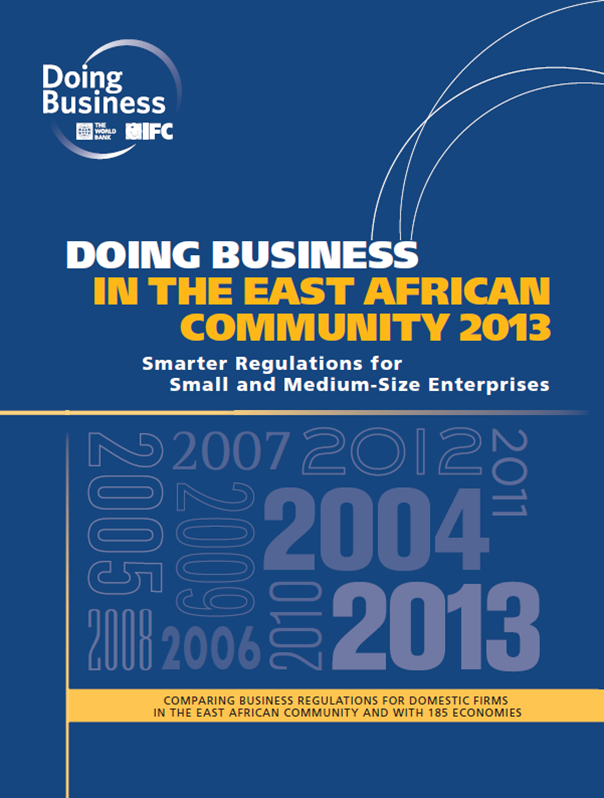
Doing Business EAC 2013Improving customs efficiency can boost trade volumes and reduce the cost of doing business in the region, the Doing Business in the East Africa Community 2013 survey (Click hyperlink to view the report) has indicated.

The study conducted by World Bank (WB) and the International Finance Corporation showed that a one day reduction in inland travel times could lead to a 7 per cent increase in exports. The report also noted that easing access to finance, improving infrastructure and empowering the private sector are key in the region’s integration process.

“Transport efficiency and a favourable business environment have a greater marginal effect on exports as they boss access to foreign markets, especially in low income economies,” it indicated. “Improving logistical performance and facilitating trade may have a larger effect on regional trade, especially on exports, than tariff reduction.”

Also, economies with efficient business registration, fair tax policies and efficient transport have a higher entry rate of new firms and greater business density, meaning that they are essential to ensure strong firm productivity and macro-economic performance.

According to the report, lowering costs for business registration improves formal job opportunities as more new firms hire skilled workers. “This strengthens other sectors, including the education sector and legal systems,” said Chantal Umuraza, the director of Chamber of Industries. “Economies that rank high on the ease of doing business tend to combine efficient regulatory processes with strong legal institutions that protect property and investor rights,” she added.

According to the report, financial market infrastructure, including courts, creditor and insolvency laws, as well as credit and collateral registries, improves access to credit and boosts trade. It also noted that entrepreneurs in EAC face weak legal institutions and complex regulatory processes compared with global averages and those of the developed economies.

Despite instituting some reforms, the survey found that East African Community businesses still faced huge obstacles, while economies in other regions had improved business regulations. “As a result, EAC member states’ rating in this area has stagnated at around 117 over the past four years,” the report showed. According to the report, it requires only eight procedures and 20 days on average to start a business in the East African region.

EAC economies accounted for two of the 11 regulatory reforms implemented in sub-Saharan Africa to make it easier for entrepreneurs to start businesses, the survey said. Rwanda still has the most efficient process in the EAC to start a business and 8th globally out of 185 countries surveyed. It is followed by Burundi at 28th position, Tanzania at 113, Kenya at 126 and Uganda trails at 144.

In general, 3 of 5 EAC economies rank well below the regional average in all areas measured by the survey. Burundi eliminated four requirements to have company documents notarised, to register the new company with the commercial court and the department of taxation. As a result, it moved up 80 places in the global ranking on the ease of starting a business, from 108 to 28.

On the whole, the report indicated, the region’ fares better than other regional trading blocs on the continent on the ease of starting a business. It was ranked 84th, way above 104th position for the Southern African Development Community (SADC). The Common Market for Eastern and Southern Africa (Comesa) is at 110th position while the Economic Community of West African States (Ecowas) ranks 127th. Source: AllAfrica.com

Container Weighing – industry solution on the horizon

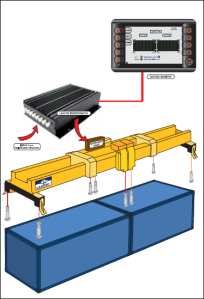
Click Picture for full report at porttechnology.org [Port Technology International – Container weighing device]

The International Maritime Organization (IMO) is expected to make the weighing of sea containers mandatory. The purpose is to make the entire container supply chain safer. This regulation is expected to be issued through the International Convention for the Safety of Life at Sea (SOLAS Convention) as a result of a number of accidents involving container losses and container stack collapses. The existing SOLAS regulation already obliges shippers to declare the correct container weights, but this is not always done. The new regulation is likely to require specifically that the container is actually weighed or calculated by reference to the contents, packing and securing materials and the tare weight of the container itself. Importantly, however, the regulation is anticipated to forbid the loading of containers unless the verified gross mass is available to the terminal and the ship’s master.

Practically speaking this means that the shipping lines may require terminals to verify container weights prior to being loaded onto their ships. There will, however, be a cost to it which the shipping lines are likely to pass on to their shippers. But besides added safety, there is another important aspect: optimising ship stowage which should reduce fuel consumption for the shipping lines. A ship is more stable at sea and consumes less fuel when the center of gravity is low and if the cargo is optimally distributed. Therefore, it is in the interest of the shipping lines to know the exact weights. Arguably, there are multiple aspects which determine fuel consumption of a ship, and some may be more important than stowage, but this is nevertheless a factor.

Determining container weights and related costs

First of all, to weigh a container and to use the load information to update the stowage plan, containers need to be weighed preferably at the completion of packing. Clearly, weighing export containers needs to be done sufficiently in advance for the stowage plan to be optimised. If the actual weight is not determined at the completion of packing, the port is in a prime position to provide this service or, indeed, to verify the documented weight. For containers that arrive at the port by road, rail or river an obvious ‘check point’ is during the inward process. Weighing with the quay side crane is too late, since the container position on the ship is determined well before loading.

Weights of transshipped containers should be verified at the original port of loading, but there will always be situations where this has not been physically possible. In that event, it can be said with certainty that every container, whether exported or transshipped, will pass through the stacking yard. It is therefore argued that equipping the stacking cranes with weighing systems best caters for all circumstances. Operators in those countries that require imported containers to be weighed may consider weighing with quay side cranes as well.

What does it cost to weigh a container? Let’s base the calculation on the capacity of a quay side crane which can typically load 100,000 twenty-foot equivalent unit (TEU) per year. Let’s also assume there are three rubber-tyred gantry cranes (RTG) or rail-mounted gantry cranes (RMGs) required per quay side crane. Let’s further assume a weighing system costs US$20,000 per stacking crane and it is amortised over three years. The cost per year to weigh 100,000 TEU is therefore US$0,20 per TEU. In addition to the capital expenditure for the weighing equipment, the terminal will incur some integration costs plus ongoing maintenance and administration costs, so let’s double this amount to US$0,40 per TEU. Weighing by the stacking cranes during the handling of the containers is also more economical than weighing with weigh bridges which very often involve manual intervention, when trucks are carrying two 20 foot containers which need to be individually weighed. Weighing in the stacking yard is therefore the fastest, most economical and non-disruptive way to the operation. Some terminals have calculated that they could offer their weighing services for US$1 per TEU and earn a profit with it. Continue reading →

Rotterdam – The signficance of ‘hinterland’ container services

Picture1BILK (Budapest Intermodal Logistics Center) Kombiterminál has become the first Hungarian terminal to join the InlandLinks network, comprising of nearly 40 terminals across the Netherlands, Belgium, Germany, Poland, Italy and Hungary.

InlandLinks, an initiative of the Port of Rotterdam Authority which was developed two years ago in cooperation with VITO (Dutch Inland Container Terminal Organisation), is an online platform for container terminals in the hinterland, offering intermodal services to and from the Port Rotterdam – Europe’s largest port complex

Rotterdam expects to see container flows triple over next 25 years in line with growth in world trade and the increasing size of container vessels. Of the 30 million TEU anticipated to be handled by the Dutch port in 2035, approximately 2 million are expected to be shipped in and out using smaller vessels from and to European ports. Some 18 million TEU will travel to and from the hinterland via intermodal transport, and the Port of Rotterdam hopes that InlandLinks will help to provide greater insight into better and more sustainable connections for this projected flow of cargo.

BILK, located in a suburb in the southeast of Budapest, consists of a railway station/marshalling yard, a bi-modal terminal for combined traffic, and a 70-hectare logistics centre. The terminal has the capacity to handle an annual traffic of 220,000 TEU. Source: Porttechnology.org


World Bank Mobilises Record Support for Africa

world-bank-logoThe World Bank Group committed a record US$14,7 billion in the 2013 fiscal year to support economic growth and better development prospects in Africa despite uncertain economic conditions in the rest of the global economy.

“The continent has shown remarkable resilience in the face of a global recession and continues to grow strongly,” said Makhtar Diop, World Bank Vice President for the Africa Region. “Africa is at the centre of the World Bank Group 2030 goals of ending extreme poverty and promoting shared prosperity, in an environmentally, socially, and fiscally sustainable manner.”

The World Bank approved US$8,25 billion in new lending for nearly 100 projects for the 2013 fiscal year. These commitments include a record US$8,2 billion in zero-interest credits and grants from the International Development Association (IDA), the World Bank’s fund for the poorest countries. This is the highest level of new IDA commitments by any region in the Bank’s history.

International Finance Corporation’s (division of the World Bank) total commitment volume in Sub-Saharan Africa, including mobilisation, grew to a record US$5,3 billion, 34% more than the year before. Similarly, IFC’s spending on Advisory Services programmes in the region increased to more than US$65 million, about 30% of IFC’s total. Supporting developmentally beneficial foreign direct investment into Sub-Saharan Africa is a priority for the bank in 2013.

SACU’s Choice – ‘Common policy or irrelevance’

imagesCA31PQJGThe Minister of Trade and Industry, Dr Rob Davies briefed the Parliamentary Portfolio Committee on Trade and Industry regarding the progress on the implementation of the five-point plan in Cape Town. This is a work programme which was approved by the 2nd Southern Africa Customs Union (SACU) Summit convened by President Zuma in 2011 premised on the following pillars;

  1. Work programme on cross-border industrial development;
  2. Trade facilitation;
  3. Development of SACU institutions;
  4. Unified engagement in trade negotiations and
  5. The review of the revenue sharing arrangement.

The five-point plan emerged from realization by SACU Member States of a need to move SACU beyond an arrangement held together only by the common external tariffs and the revenue sharing arrangement to an integration project that promotes real economy development in the region.

Minister Davies noted that progress on the implementation of pillars of the five- point plan is uneven. SACU has registered good progress on trade facilitation and there is greater unity of purpose in negotiations with third parties (Economic Partnership Agreement (EPA), SACU-India and Tripartite Free Trade Area).

However, there is limited progress on the review of the revenue sharing arrangement and hence lack of adequate financial support for the implementation of cross-border industrial and infrastructure development projects. The SACU revenue pool is raised by South Africa from customs and excise duties. Mr Davies told MPs that in 2013-14 the total disbursement from the revenue pool would be about R70bn of which the BLNS countries would receive about R48bn. There is also lack of progress on the development of SACU institutions as a result of divergences in policy perspectives and priorities of Member States.

Enabling provisions provide for the establishment of National Bodies and a SACU Tariff Board. The SACU Tariff Board will make recommendations to Council on tariffs and trade remedies. Davies added that, until these institutions are established, functions are delegated to the International Trade Administration Commission (ITAC) in SA.

The minister warned that the lack of agreed policies would hinder effective decision-making on regional integration and industrialisation, which had made little progress since the 2011 summit convened by President Jacob Zuma. South Africa believes SACU needs to move “firmly towards a deeper development and integration”.

Minister Davies said SACU risked becoming “increasingly irrelevant” as an institution if it did not develop beyond operating a common external tariff, and a “highly redistributive” revenue-sharing arrangement. The lack of progress in developing new SACU institutions was primarily due to policy and priority differences among members. “Against this background South Africa needs to reassess how best to advance development and integration in SACU.”

Among the disagreements on tariff setting between South Africa and its neighbours highlighted by Mr Davies, was that South Africa saw tariffs as a tool of industrial policy while they regarded them as a means of raising revenue. For example, the other Sacu members wanted to include the revenue “lost” on import tariff rebates offered by South Africa into the revenue pool.

The pool provides these countries with a major source of their national budget. Rebates were seen as revenue foregone for which additional compensation should be sought. South Africa, on the other hand, argues that the rebates (for example on automotive imports) are part of its total tariff package and serve to attract investment and boost imports and therefore, contribute to expanding the revenue pool, not diminishing it.

He emphasised the development of a common approach on trade and industrial policy as the prerequisite for establishing effective SACU institutions in future.

He highlighted that a discussion on appropriate decision-making procedures on sensitive trade and industry matters that takes into account SACU-wide impacts is required. Source: The Department of Trade & Industry, and BD Live.

South African Human Trafficking Bill Signed Into Law

PREVENTION AND COMBATING OF TRAFFICKING IN PERSONS BILLThe Prevention and Combating of Trafficking in Persons Bill has now been signed into law, giving South Africa, for the first time, a single statute that tackles human trafficking holistically and comprehensively. The legislative framework dealing with this issue had until now been fragmented.

The legislation dealing with sexual offences addresses the trafficking of persons for purposes of sexual exploitation only, while the Children’s Act addresses the trafficking of children specifically.

Besides creating the main offence of trafficking in persons, the new legislation also creates offences such as debt bondage, possessing, destroying or tampering with travel documents, and using the services of victims of trafficking, all of which contribute to innocent persons becoming victims of this modern-day form of slavery.

Penalties for these offences were appropriately severe, as a deterrent to would-be perpetrators. The main offence of trafficking in persons, for instance, attracts a maximum penalty of R100-million or life imprisonment or both in the case of a conviction. Compensation is furthermore payable by the perpetrators to their victims.

In addition to creating very specific offences that have a bearing on trafficking in persons, the legislation also focuses on the plight of the victims, providing them with protection and assistance to overcome their traumatic experiences. The new legislation gives effect to South Africa’s international obligations in terms of a United Nations Protocol.

While the legislation has been signed into law, its operationalization is dependent on regulations that are required to be made by a number of role-playing departments such as Home Affairs. Source: SAnews.gov.za

East African Single Customs Territory Will Cut Delays

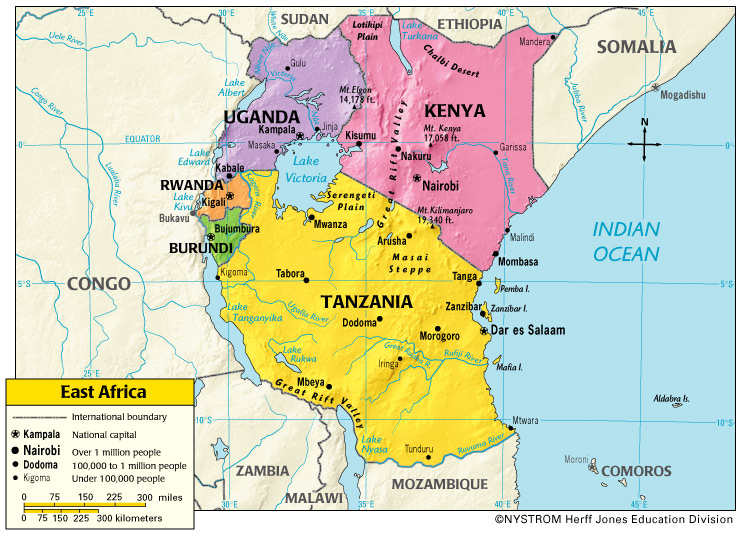
East%20Africa%20mapIn the spirit of stronger East African integration, the revenue authorities of Kenya, Uganda and Rwanda have started preparations for the implementation of a Single Customs Territory. The Commissioners’ General of the three East African countries deliberated on the mechanisms to operationalize the decisions of the heads of state who have continuously called for its fast tracking.

On June 25, 2013 at the Entebbe State House in Uganda, a Tripartite Summit involving the three heads of state issued a joint communiqué directing among other things the collection of customs duties by Uganda and Rwanda before goods are released from Mombasa. The leaders also agreed that traders with goods destined for warehousing should continue executing the general bond security.

During the meeting, the Commissioners’ General of the three countries put in place joint technical committees on ICT, Business Process, enforcement, change management, legal and human resource to discuss the implementation road map.

In a statement signed by the three Commissioners’ General, they said that the development of a Single Customs Territory will positively impact on the trading activities of the three countries as it will ensure that assessment and collection of taxes is done at the country of destination before cargo moves out of the port.

“As a result, the East African Community Customs Union will join the ranks of other Customs Union such as South African Customs Union and the European Union among others. Under this arrangement, restrictive regulations are eliminated as the corridor is now considered for customs purposes. For clarity, circulation of goods will happen with no or minimal border controls,” reads the statement in part.

Kenya said it would cut red tape holding up millions of dollars of imports into its landlocked neighbours Rwanda and Uganda, by letting the countries collect customs on goods as they arrive in its port at Mombasa. Goods can currently face long delays as agents process the paperwork to release cargoes from warehouses at east Africa’s biggest port, and later make separate arrangements to pay import duties at Kenya’s borders with Uganda and Rwanda.

Officials said the new system, due to be introduced in August, would clear inefficiencies and blockages seen as a major barrier to trade in the region. But clearing agents in Kenya said it could also cost thousands of jobs in warehouses, freight firms and almost 700 clearing and forwarding companies operating in the country.

Kenya, Uganda and Rwanda, together with Burundi and Tanzania, are members of the regional East African Community trade bloc, with a joint gross domestic product of $85 billion.

Kenyan tax officials said the new system would allow a “seamless flow of goods” and make it easier to stop goods getting through the system without customs payments. “Once cleared at the port, there will be no stoppages at borders and checkpoints along the corridor,” the Kenya Revenue Authority’s commissioner of customs, Beatrice Memo, told a news conference.

Under the system, Rwandan and Ugandan clearing agents and customs officials would be able to set up their own offices to clear cargo and collect taxes directly at the port. The Kenya International Freight and Warehousing Association said that meant up to half a million jobs could be lost to Uganda and Rwanda. “The Government has not consulted us … and we totally reject it,” said  Association chairman Boaz Makomere. Sources: East African Business Week (Kenya) & The New Vision (Uganda).

Nigerian Inland Port, Kano to Begin Operations This Year

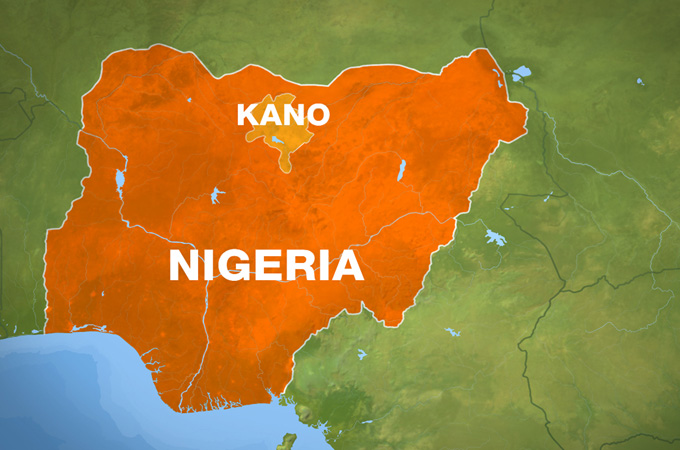
201215124949311580_20Kano Inland Container Port is scheduled to commence operations by the end of this year, Chairman Governing Board Nigerian Shippers Council, Lieutenant General Salihu Ibrahim (Rtd) has said.

According to him, all gray areas that cause the delay in the processing and documentation of Kano port which affects the commencement of operations has been resolved.

Speaking during an interactive dinner session organized by Nigerian Shippers Council, North West zone, the chairman stressed that the council is all out to ease some of the transaction difficulties faced by shippers in Nigeria. He added that commencing operation at the inland ports will absolutely ensure reduction of about 90% in the expenses incurred during shipments of goods. According to him, all things being equal, Kano inland port is hoped to be fully operational at the end of 2013. Source: Daily Trust (Nigeria)

A new instrument of the Technical Committee on Customs Valuation

wco - valuationA new instrument of the Technical Committee on Customs Valuation has recently been published. Advisory Opinion 4.15 provides guidance on a case where royalties have been paid to a third party licensor (in other words, the licensor is not the seller of the goods) and determines whether or not it is appropriate to include the royalty fee in the Customs value of the imported goods. Available from WCO Online Bookshop.

Mega ships: positive asset or terminals’ worst nightmare?

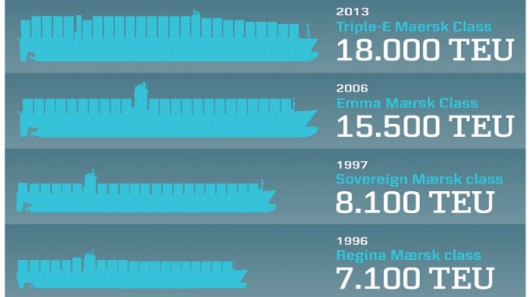
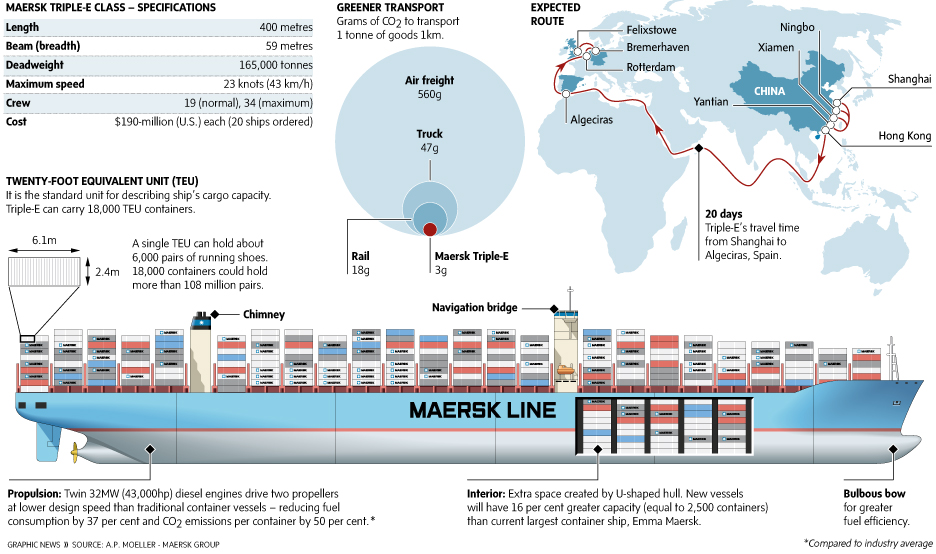
triple-e-maersk-worlds-largest-shipA Financial Times article reported Maersk’s Triple E Class (18,000 TEU) to be 26 percent more cost efficient than the current E class (15,000 TEU). – Wright, R (2011), Financial Times. ‘Big Ships: Container lines reach for scale’. Recent research into supply chain costs indicates that this is not obvious for the entire supply chain – Streng, M. (2012). Slow steaming: an economic assessment of lowering sailing speeds on a supply chain level’, Master Thesis Urban, Port and Transport Economics, Erasmus University Rotterdam.

The capital cost per TEU moved has increased even considering the increase in slot size of newer larger vessels. Due to the increase in transportation duration, the capital costs and insurance of goods transported have gone up. Further cost increase could be accounted for in the increase in time to market. Fast moving goods (such as consumer electronics) that need longer to get from the world’s production centres to the markets is also a cost. Shipping lines are demanding ever shorter port stays in order to make the economies of scale work. The bigger the ship, the greater the cost of hours lost in port, and an increased port stay is a diseconomy of scale.  Port Technology have published the following article which should be useful for shippers, freight forwarders, port planners in better understanding the economics of international shipping and logistics – Mega ships: positive asset or terminals’ worst nightmare?.

Triple E Class Specifications - (AP Moeller/MAERSK Group)

Triple E Class Specifications – (AP Moeller/MAERSK Group) [Click to Enlarge]

Hurdles before trans-border trade facilitation

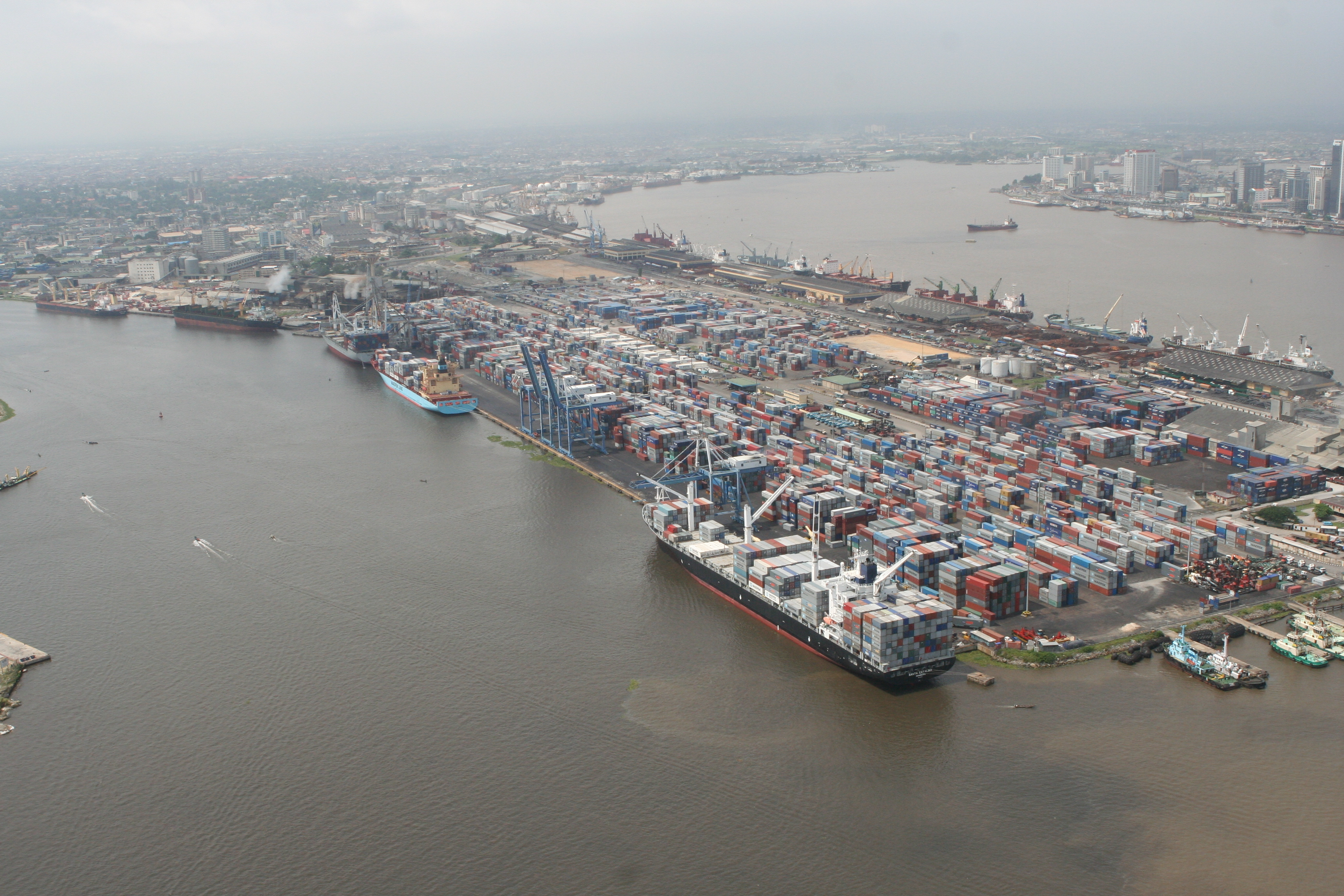
Port of Lagos, Nigeria

Port of Lagos, Nigeria

The following article, allbeit long, provides a good overview of trade facilitation developments in Nigeria. I doubt that there is a single country on the African continent that cannot draw some parallel experience contained in this article.

Trade across borders is not a new phenomenon. But the World Trade Organization is now championing the concept of trade facilitation among nations, which has been defined as simplication , harmonization, standardization and modernization of trade procedures.

Trade facilitation seeks to reduce trade transaction between businesses and government. This concept is receiving unprecedented attention globally and it is at the heart of numerous initiatives within the customs world.

The United Nations Centre for Trade facilitation and Electronic business (UN/CEFACT) in its recommendation No 4 of 1974, said trade facilitation programme ought to be guided by simplication, harmonization and standardization (of trade procedures) so that transaction becomes easier, quicker and more economical than before.

According to the body, there was need to eliminate duplication in formalities, process and procedures; align all national formalities, procedures operation and documentation with international conventions, standard and practices to develop international agreed format for practices, procedures, documentation and information in international trade.

Proponent of trade facilitation believed that if transaction cost in international trade is reduced, there could be creation of wealth, especially in developing countries where red-tapism and other procedural barriers to trade tend to be pronounced.

The organization for Economic Cooperation and Development (OECD) estimated recently that even one per cent reduction in such “hidden cost” would boost the global economy by $40 billion with most of these benefits going to the developing world. Trade facilitation therefore encourages, or perhaps requires countries to adopt means such as publishing their imports and export procedures, reducing the number of forms that importers and exporters are required to complete, allowing forms to be submitted on-line, and checking corruption at border post.

Nigeria, though a signatory to Kyoto 1974 and other convention on trade facilitation, is far from embracing the ideals of the global concept.

The president of the council of Managing Directors of Customs licensed Agents, Mr. Lucky Amiwero, said that although Nigeria was yet to comply with all the provisions of trade facilitation, it has the tools to facilitate international trade, such as the scanning machines and the e-platform.

“In Nigeria, the real cost of doing business is an impediment to trade facilitation. We have no good procedure for goods on transit to Niger and Chad. That has been taken over now by our neighboring countries. One of the key component of trade facilitation is charges which must be tied to services. We have shortcoming in that area. We are still working at cross purposes when other countries are busy harmonizing their import and export procedures”, he said.

In Nigeria, there is no one stop shop process for goods clearance as we have over 10 agencies superintending goods clearing procedure at the nation’s gateways.

“This is very bad and constitute hindrance to trade. The regulatory process is supposed to have been harmonized with other agencies to have a one stop procedures. Procedures are not published and not in line with WTO article which has to do with publication, regulation and administration of procedures. Our trading regime are expensive, our procedures are cumbersome. When others are simplifying and synchronizing their process of import and exports, our import and export procedures are lengthy. We have not been able to harmonise process and procedures and that is where we have a problem. If you still have to go through 100 per cent examination when we have the scanners, that is an impediment to trade,” Amiwero said; adding that the time spent to conclude business in Nigerian ports and border post is much higher than anywhere in the West African sub-region.

The level of corruption at the port border post is high and making them the most expensive business environment in Africa; as un-receipted charges far outweigh the official charges in the process of good clearing. Importers are still submitting hard documents instead of making use of e-devices, and going through the cumbersome process of clearing and receiving of consignments. Continue reading →