UK Forwarders object to New Air Cargo Surcharge

awb_welcomeIt is becoming more and more evident that every ‘automation’ project entails ‘more costs’. The benefits appear to lie in the ‘comfort’ of doing stuff at your keyboard. Much vaunted ‘cost-savings’ are a myth as technology encroaches every facet of global trading. The following is a fine example.

The trade association for UK freight forwarders and logistics service providers is encouraging its members to object to a Paper Air Waybill (AWB) Surcharge that airlines are planning for export AWBs that are not filed electronically. Robert Keen, director general of the British International Freight Association (Bifa), commented: “Bifa supports e-Commerce and e-Air Waybill implementation in the air cargo supply chain. However, we believe that implementation should create value for forwarders and airlines alike, and airlines need to recognise the costs that the originator of the information incurs to enter and transmit data.”

Keen continued: “Through our international body Fiata, Bifa will be voicing our objection to carriers that seek to apply yet another surcharge, and create yet another revenue stream, under the guise of supporting IATA’s – the airline industry body’s – e-Freight initiative, which aims to implement e-Freight worldwide.” Bifa is asking its members to join in the stand against the introduction of this surcharge by completing an online survey, which can be found here: http://www.surveygizmo.com/s3/1782849/Paper-AWB-Surcharge-Survey

The air freight sector missed IATA’s target last year of achieving 20% e-air waybill penetration “on feasible lanes”, achieving just 12%. The target for 2014 has been revised downwards to 22%, with a target for 45% e-AWB penetration by the end of 2015 and 80% by the end of 2016. IATA expects to see an acceleration of penetration levels this year, in part because of the introduction last year of the e-AWB Multilateral Agreement, to which around 70 airlines and more than 100 freight forwarders have now signed up.

But while there is increasing momentum among airlines and air cargo handlers, many forwarders remain unconvinced of the benefits. Chuck Zhao, process engineer project manager at US air cargo handler Consolidated Aviation Services (CAS), observes that only around 6% shipments out of the US are e-freight, largely because “those who cut the paper air waybills simply do not see the benefits of going paperless”.

Michael White, assistant director of cargo facilitation, security and standards for US air freight association Cargo Network Services (CNS) and regional manager of cargo for IATA, observed that there was a need for effective communication routes for the forwarders, especially small and medium-sized ones, to transmit their FWB & FHL messages – preferably a community system rather than via multiple airline portals. He said there was currently no community system in the US, but there were signs that companies are looking at that capability. Source: Lloydsloadinglist.com

Global container ports could handle 840m TEU a year by 2018

singapore-port

Port of Singapore

Projected throughput four years from now compares with 642m teu in 2013 and 674m teu projected for this year. The 2018 projection is double the 2004 throughput figure of 363m teu.

The combination of faster traffic growth and strong profit levels is attracting aggressive new players to enter the container terminal-operator business , according to the 11th Global Container Terminal Operators Annual Review and Forecast report published by shipping consultancy Drewry. It says Africa and Greater China are the regions that will see the most rapid growth.

Overall , growth rates are expected to average an annual 5.6% in the five years to 2018, compared with 3.4% in 2013. That will boost average terminal utilisation from 67% today to 75% in 2018, Drewry forecasts.

“The sector’s strong financial performance and accelerating growth is encouraging new market entrants and renewed merger and acquisition activity in the container ports sector,” said Neil Davidson, senior analyst in Drewry’s ports and terminals practice. “Financial investors are particularly active at present, attracted by typical ebitda margins of between 20% and 45%.”

Drewry has also added two companies to its league table of 24 terminal operators it considers to be global. Both China Merchants Holdings International and Bolloré Group have been growing aggressively. In the case of CMHI further acquisitions are particularly likely. Other operators, such as Gulftainer and Yilport are also expanding rapidly and are challenging for inclusion in Drewry’s league table.

The composition of the top five players, when measured on an equity teu throughput basis, has changed little from last year, except new entrant CMHI which is now in fifth place. PSA again heads the table, by virtue of its scale and 20% stake in Hutchison Port Holdings which comes second. APM Terminals is third, followed by DP World.

Drewry said that by 2018, it expects both HPH and APM Terminals to be vying closely for the top spot in terms of capacity deployed. Most portfolio expansion will be through greenfield or brownfield terminals in emerging markets, led by APM Terminals, International Container Terminal Services, HPH and DP World. “All port and terminal operators are experiencing a number of key industry trends, some of which have wide ramifications,” said Mr Davidson. “The most important trends are deployment of ever-larger containerships, expansion of shipping-line alliances, financial pressures on shipping lines, rapidly emerging international terminal operators and owners, financial investor churn, as well as the gathering pace of terminal automation.” Source: Lloydslist.com

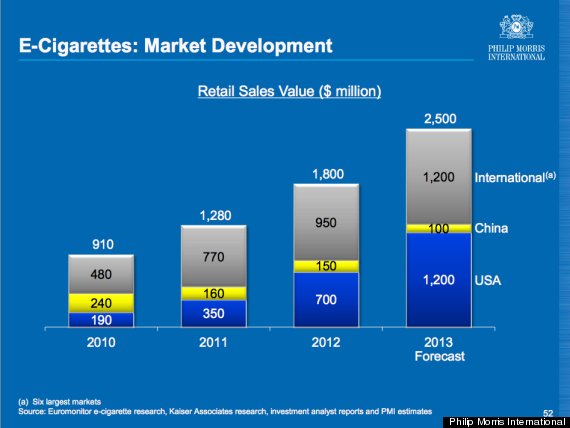
E-cigarettes increase on the back of traditional tobacco advertising – will regulation follow?

o-ECIGS-570It seems the ‘e-industry’ is the vehicle for the next generation of contraband and illicit goods and Im not alluding to the electronics and entertainment industry here. While the World Health Organisation urges a ban on marketing of e-cigarettes, will the need for governments to consider taxes on such become necessary …read on:

E-cigarettes are following in the footsteps of their none-lectronic predecessors by utilizing advertising means no longer available to traditional cigarettes and increasing their ad spending on techniques such as television commercials, promotions, events, sample giveaways, celebrity endorsers, and slogans such as “A perfect puff every time.”

Electronic cigarettes are battery-powered devices that heat a nicotine solution into a vapor inhaled by users. While the chemicals of tobacco cigarettes are not included, the addictive feature of nicotine remains. The use of e-cigarettes has climbed steadily, with 6 percent of all adult Americans and 21 percent of adult smokers trying them in 2011, nearly twice the rates in 2010, according to the Centers for Disease Control and Prevention.

Unlike tobacco cigarettes, which are heavily regulated, e-cigarettes are free from laws that limit their methods of marketing. As a result, brands such as Blu eCigs have spent $12.4 million on advertising for the first quarter of 2013, up from less than $1 million last year. They feature endorsements from actor Stephen Dorff and personality Jenny McCarthy. Traditional cigarette companies such as Lorillard and Reynolds are also getting in on the action by purchasing or launching their own lines of e-cigarettes.

The advertising itself even references tobacco cigarettes, with campaigns that seek to make smoking acceptable again. In a Blu eCigs ad, for example, Dorff praises e-cigarettes because they can be smoked “at a basketball game . . . in a bar with your friends . . . virtually anywhere,” adding, “Come on, guys, rise from the ashes.”

But with the increased profile may come regulation.

“It is beyond troubling that e-cigarettes are using the exact same marketing tactics we saw the tobacco industry use in the ’50s, ’60s and ’70s, which made it so effective for tobacco products to reach youth,” Matthew L. Myers, president of the Campaign for Tobacco-Free Kids, told The New York Times. “The real threat is whether, with this marketing, e-cigarette makers will undo 40 years of efforts to deglamorize smoking.”

WHO urges countries to adopt global guidelines that will end the indoor use of e-cigs. WHO also calls for a ban on marketing practices that could encourage children and non-smokers to use e-cigs.

States such as Indiana, New Jersey, North Dakota, Mississippi, and Utah have already extended restrictions on tobacco cigarettes to include e-cigarettes, while other states such as California and Pennsylvania are considering similar laws. Inhalation of e-cigarettes is prohibited on Amtrak trains and onboard U.S. planes.

The Food and Drug Administration is said to be planning the release of proposed regulations in October. Referencing a report from the financial group CLSA Americas, AdAge reported that the agency is expected to propose a ban on TV advertising to set limits on sales to minors, implement the possibility of a warning label, and restrict online sales. An FDA spokesperson said she could not comment on specifics of a proposed rule, but that the agency “intends to propose a regulation that would extend the agency’s ‘tobacco product’ authorities – which currently only apply to cigarettes, cigarette tobacco, roll-your-own tobacco, and smokeless tobacco – to other categories of tobacco products that meet the statutory definition of ‘tobacco product.’ Further research is needed to assess the potential public health benefits and risks of electronic cigarettes and other novel tobacco products.”

Why it matters: The increasing use and potential regulation of e-cigarettes may trigger another round of tobacco wars between industry and the government. Debate about the product remains – is it an alternative form of smoking, or a means of quitting, like nicotine gum? Should e-cigarettes be taxed and regulated like traditional tobacco products, with age limits, warning labels, and a ban on certain forms of advertising such as TV, or are they a separate and distinct category of products? If and when the FDA wades into the issue, the fight will truly begin. Source: Manatt Phelps & Phillips LLP

Related article

Tobacco Industry – When Thieves fall out?

Tobacco-Wars-350x207The Business Times article “BAT hauled to court over spy claims” published Sunday, 31 August reveals, if nothing else, a web of spying and skulduggery within the tobacco industry. Guaranteed we haven’t heard the last of this saga yet……read on:

British American Tobacco (BAT) could have its dirty linen aired in court following a sensational high court application launched by local “value brand” producer Carnilinx for alleged “corporate espionage”.

In the application, Carnilinx director Kyle Phillips claimed BAT paid Pretoria attorney Belinda Walter for commercially sensitive information she obtained while “infiltrating ” the company and the FairTrade Independent Tobacco Association (Fita) in 2012 and 2013. If this goes to trial, these spy claims could be extremely damaging for BAT, which is based in London and is the largest company listed on the JSE Securities Exchange, worth R1.26-trillion.

“BAT has used unlawful means to interfere in the business of the applicant. It has paid [Walter] monies to spy [on Carnilinx],” Mr Phillips claimed.

Ms Walter acted as the attorney to Carnilinx and as chairwoman of Fita, an industry body ostensibly established to represent South Africa’s smaller tobacco manufacturers.

Carnilinx is headed by Adriano Mazzotti, who donated cash to the Economic Freedom Fighters, which helped it to contest the May election.

Mr Mazzotti’s company is asking the court to interdict Ms Walter from providing any further information to BAT and to stop BAT unlawfully “interfering with its trade”.

Carnilinx’s application is based on Ms Walter’s “confession” during a meeting in February, in which she detailed her role as an informant for the government’s State Security Agency, which allegedly introduced her to Forensic Security Services (FSS).

This private security firm works for the Tobacco Institute of SA (Tisa), which represents the larger tobacco producers, notably BAT.

This journalist witnessed Ms Walter’s admissions at that meeting. In its legal papers, Carnilinx said FSS then “introduced Walter to BAT, to whom she would give information on the smaller manufacturers”.

Mr Phillips goes further, saying Ms Walter proposed creating Fita in the first place so “she could infiltrate all the smaller tobacco manufacturers”.

“The first Fita meeting was held late in 2012, at Walter’s offices, which Walter admits with her compliance and knowledge was bugged by FSS.

For the information she fed to BAT, Walter was paid,” he said. In Ms Walter’s opposing affidavit, filed on Friday, she claimed she was under “extreme emotional distress” during that meeting with Carnilinx in February, because of physical threats against her and her son.

She denied “any commercial or attorney-client relationship with BAT South Africa”, and said she was “nothing but a thorn in their side”.

When asked by the Sunday Times this week, Ms Walter did not deny that she fed information to BAT’s London office, or that she had knowingly allowed the first Fita meeting to be recorded by FSS. But she said the leaking of information was common practice among Fita members.

Instead, in her court papers, she mounted a scathing attack on her former client, Carnilinx.

“Carnilinx also attempts to paint a picture that they are ‘victims’, choir boys in the church choir. This is simply not the case,” she claimed.

Ms Walter said she could say “with confidence” that almost all Fita members provided information on each other to law-enforcement agencies about widespread “dealings in illicit products and criminal activities”.

She claimed Carnilinx employed “its own investigators to spy on competitors, rat out its competitors to law-enforcement agencies and provide substantial information on illicit trade of its competitors to the South African Revenue Service” (SARS), and that “at least one Carnilinx director is a paid SARS informant”.

Ms Walter resigned as attorney to Carnilinx, and soon after as chairwoman of Fita last November after becoming romantically involved with the head of SARS’s enforcement division, Johann van Loggerenberg.

That relationship ended “acrimoniously “, prompting Ms Walter to lay complaints with SARS against Van Loggerenberg, in which she claims he divulged confidential taxpayer information relating to his investigations into Carnilinx, among others.

Now Carnilinx is claiming Ms Walter “fed information on Carnilinx to SARS “. In response, Ms Walter alleged that Carnilinx was offered “tax leniency” in exchange for filing the application against her — an allegation Mr Mazzotti has denied.

Ms Walter has asked the court to order that if this case goes ahead, SARS and Mr Van Loggerenberg should be “forced to put pen to paper and make affidavits in response to my allegations of the corrupt conduct and collusion in this malicious and vexatious application”. Source: The Sunday Times (Business Times)

Related article

Reefer Owners Beware

reeferThe Department of Agriculture, Forestry and Fisheries appears to have adopted a concerning stance on the requirements of the Marine Living Resources Act regarding the licensing of vessels entering South African waters. The policy affects reefer vessels in particular and owners are advised to pay attention to this development.

Among other things, the act requires that every foreign-flagged fishing vessel entering the South African exclusive economic zone apply for and obtain a fishing permit. A ‘fishing vessel’ is defined in the act as any vessel, boat, ship or other craft which is used for, equipped to be used for or of a type that is normally used for fishing or related activities, and includes all gear, equipment, stores, cargo and fuel onboard. Further, the term ‘related activities’ is defined as including:

  • storing, buying, selling, transshipping, processing or transporting fish or any fish product taken from South African waters up to the time it is first landed or in the course of high seas fishing;
  • storing, buying, selling or processing fish or any fish product onshore from the time it is first landed;
  • refuelling or supplying fishing vessels, selling or supplying fishing equipment or performing any other act in support of fishing;
  • exporting and importing fish or any fish product; and
  • providing agency, consultancy or other similar services for and in relation to fishing or a related activity.

It is a criminal offence to undertake fishing or related activities without the requisite licence. The penalties for contravention include a number of measures which may be taken by a fishery control officer, such as seizure of the vessel concerned or the arrest of anyone whom the fishery control officer has reasonable grounds to suspect has committed an offence in terms of the act.

The act seems to be sufficiently clear; what is concerning is the manner in which fishery control officers are implementing it. For example, in a recent case the fishery control officers in Cape Town conducted a raid in the port and seized a reefer vessel which had called for medical assistance to a crew member and undertook subsequent repairs, on the grounds that the vessel had no fishing licence onboard. There was no suggestion by the officers that the vessel was actually engaged in fishing or related activities. Instead, the officers’ view was that an offence had been committed by the mere fact that the vessel was capable of carrying fish and had entered the South Africa exclusive economic zone without a fishing permit. On a plain reading of the act, no criminal offence had been committed on the facts of the case. The reasonable inference is that the fishery control officers had acted outside the scope of the act.

Perhaps the most worrying aspect was that, in the face of a legal challenge to the seizure notice, the fishery control officers took it upon themselves to arrest the master of the vessel with the assistance of the South African Police Services at 7:00pm before the vessel was due to depart, so that the master might be prosecuted in the magistrates’ court under the act unless he paid an admission of guilt fine.

The extent to which actions of this nature by the department will continue is unknown, but until the fishing industry or lobby groups can get a clear understanding of the department’s policy, it is advisable for reefer owners (in particular) to canvass the issue with their local port agents well in advance of calling at South Africa. Source: Bowman Gilfillan

France – Customs in High School Education

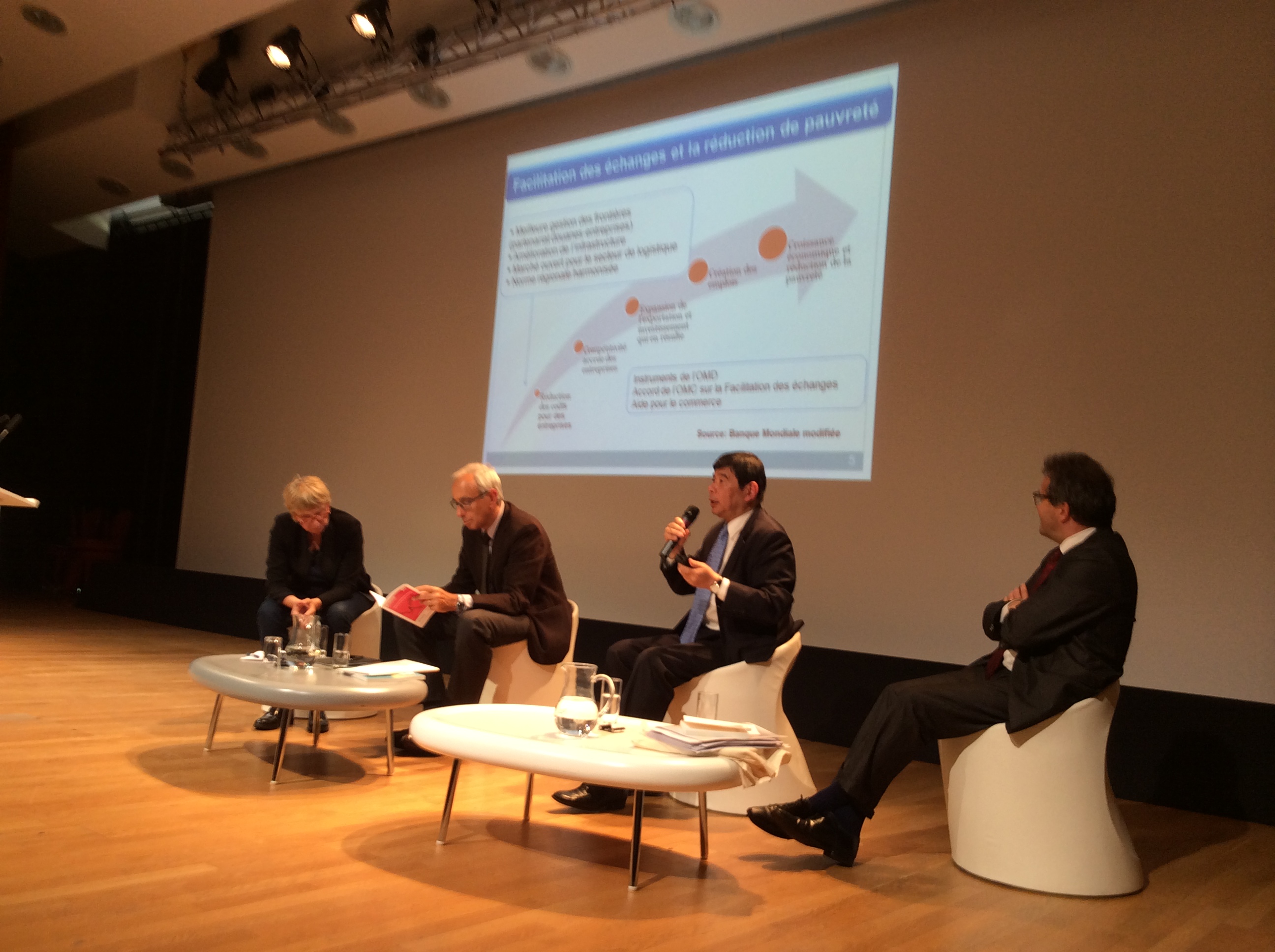
20140827%20154452At the invitation of the “Institut de l’Entreprise” in the framework of its programme “Entretiens Enseignants-Entreprises”, WCO Secretary General Kunio Mikuriya spoke at the Summer University’s conference entitled “La croissance en question(s)” (growth into question(s)) in the Veolia Campus, Jouy-le-Moutier, France on 27 August 2014.

Supported by the French ministry of Education and the Council of Economic Analysis, this forum gives the opportunity to high school teachers in economics and social sciences to exchange views with the business world. It also provides them with an opportunity to update their knowledge on current economic issues benefiting from the attendance of renowned economists and prominent business leaders.

260 High school teachers participated in the event and listened to a panel session on poverty reduction during which Secretary General Mikuriya explained the contribution of Customs through enhancing connectivity at the borders to secure and facilitate global supply chain. They were eager to understand how the WCO and Customs could play a significant role in trade facilitation to convey the messages to their classrooms. Source: WCO

Kuehne + Nagel introduces ‘industry-leading’ sea freight carbon calculator

imagesCAQOK2YRKuehne + Nagel has introduced what it claims is the freight forwarding industry’s most advanced environmental emissions calculator tool, providing “exact data” on sea freight and intermodal shipments.

K+N said it had been “continuously enhancing its CO2 emission calculating capabilities and is the first to offer its customers exact data instead of estimations”. The Global Seafreight Carbon Calculator (GSCC) allows calculations of CO2, SOx and NOx emissions for container and LCL movements from door-to-door.

Built upon the European Standard EN 16258, it said the GSCC is a planning support tool that helps customers to calculate and model complex supply chains. The underlying methodology of the programme is based on the Clean Cargo Working Group standards for CO2 emissions, whereby an individual trade lane-based CO2 footprint per gramme/TEU/km can be obtained. Additionally the GSCC features detailed information about SOx.

K+N said the GSCC also provides: real-time CO2 emissions; a calculation model for strategic carbon footprint simulation; a high-level overview of CO2 emissions for sea and intermodal transport; carrier-based CO2 emissions reports.

On request, Kuehne + Nagel can also provide customer-specific CO2 emission reports with its advanced Global Transport Carbon Calculator. This tool is designed to monitor carbon emissions from specific transport activities and the reports include actual ocean carrier emissions data provided by individual carriers.

K+N said the data was fully integrated into the KN Login platform and allows scalable reports per trade lane, region, country, mode of transport and carrier. Source: http://www.kn-portal.com

Kenya Blows Up Heroin Ship

BwNodecCIAAquJ4Kenya Defense Forces have destroyed a ship laden with heroin worth $11.3 million off the coast of Mombasa. The act is a message that the Port of Mombasa will no longer be a passage for the importation of illicit drugs, says the Head of State.

A reported 370 kilograms of heroin were blown up together with the stateless Al Noor ship on Friday in an operation witnessed by President Uhuru Kenyatta from a military helicopter overflying the Indian Ocean.

The vessel was mounted with explosives which were detonated some 16 nautical miles south of the coastal town of Mombasa, where it then sunk to the seabed.

A Mombasa High Court judge had earlier issued an order stopping the destruction of ship. A local lawyer had made a submission to stop the ship’s obliteration on behalf of his client, who was not named in court. However, presidential orders seemed to trump the court order.

Additionally, nine foreigners have been charged with trafficking the heroin at the Mombasa High Court. The drugs were seized from the 1,800 liters of the ship’s diesel reservoir on July 15 where they were concealed when it was intercepted off the Kenyan coast in Lamu by Kenya navy officers. Source: The Star (Kenya)

Related article

DHS Achieves Trusted Traveler Program Milestones

product_tsaprecheck_hero_750x200The U.S. Department of Homeland Security recently achieved two major milestones for its trusted traveler programs. The Transportation Security Administration Pre✓ application program, which began in December 2013, has now enrolled more than half a million travelers.

Additionally, U.S. Customs and Border Protection (CBP) has enrolled more than three million users in their trusted traveler programs: Global Entry, NEXUS and SENTRI. Together, all of these DHS trusted traveler programs provide an improved passenger experience, while enhancing security and increasing system-wide efficiencies.

TSA Pre✓ allows low-risk travelers to experience faster, more efficient screening at 118 U.S. airports nationwide currently. TSA Pre✓ is an expedited screening program that allows pre-approved airline travelers to leave on their shoes, light outerwear and belt, keep their laptop in its case and their 3-1-1 compliant liquids/gels bag in a carry-on in select screening lanes.

The TSA Pre✓ application program allows U.S. citizens and lawful permanent residents to directly enroll in TSA Pre✓. Once approved, travelers will receive a “Known Traveler Number” and will have the opportunity to utilize TSA Pre✓ lanes at select security checkpoints when flying on a participating carrier: Air Canada, Alaska Airlines, American Airlines, Delta Air Lines, Hawaiian Airlines, JetBlue Airways, Southwest Airlines, Sun Country Airlines, United Airlines, US Airways and Virgin America.

Upon arrival in the United States from abroad, Global Entry members are able to bypass the traditional CBP inspection lines and use an automated kiosk. With more than 70,000 new applicants each month, travelers enrolled in this program can scan their passport and fingerprints, answer the customs declaration questions using the kiosk’s touch screen and proceed with a receipt — the whole process only takes about one minute. Launched in 2008, as a pilot program, Global Entry is now a permanent program and has 51 locations in the U.S. and at CBP Preclearance stations in Canada. These locations serve 99 percent of incoming travelers to the United States. Source: dhs.gov

Canada Border Services Agency – raises customs and dutiability issues

EYIn one of the most important customs cases in years (Skechers USA Canada Inc. v The President of the Canada Border Services Agency (2013), AP-2012-073 (CITT), referred to in this article as Skechers Canada), the Canadian International Trade Tribunal (CITT) confirmed an aggressive interpretation by the Canada Border Services Agency (CBSA).

The case concerned additions to the transaction value for intercompany payments made outside of the invoice amount or transfer price that relate to design and development costs allocated to the importer.

As part of a recent enforcement trend of the CBSA toward assessing customs duty on intercompany management or other fees not included in the transfer price, the CBSA determined that the total research and development (R&D) intercompany fees paid by the Canadian company were part of the value for duty allocated over the goods actually imported.

In a potentially far-reaching decision, the CITT endorsed this decision for cases where the importer cannot demonstrate that the payments are unrelated to the goods.

The Skechers Canada case

The taxpayer in Canada purchased footwear from its US affiliate and established a transfer price for goods based on the US affiliate’s factory cost from the offshore manufacturer plus transportation, warehousing and an amount for profit.

This price included the cost of “assists” relating to the molds and samples that the US affiliates provided to the manufacturers for the successful models subsequently imported. It did not include, however, the value of the design work performed in respect of the development of unsuccessful prototypes or models (approximately 45,000 of the 50,000 models under development never made it to the final stage), nor the costs for the general R&D expenses of the US affiliate (salaries and overhead). Therefore, the taxpayer also made payments for these costs to the US affiliate under a cost-sharing agreement (CSA).

The fees paid by the taxpayer under this agreement were a function of the volume of import purchases. They were calculated based on operating profit of the taxpayer pursuant to the terms of the CSA and thus varied with volumes of imports and sales.

As noted, of the approximately 50,000 models under development, only 5,000 made it to the final cut, and of this only approximately 1,700 were imported to Canada. Accordingly, most of the payments for research and design and development under the CSA were not included in the transfer price.

The decision

Both parties to the dispute agreed that the Tribunal should use the “transaction value” customs valuation methodology (the adjusted transfer price). The issue concerned whether the payments for R&D under the CSA were “in respect of” the goods and therefore part of the “price paid or payable” pursuant to Subsections 45(1) and 48(4) of the act.

A basic provision of customs valuation is that the transaction value must include all payments made “in respect of” the goods. The taxpayer contended that the payments were for intangibles and not in respect of the goods as they were for developing the brand.

In a precedent-setting decision, the Tribunal held that all payments under the CSA relating to research, development and design were dutiable because they were, in the Tribunal’s words, “clearly in respect of the goods” given that the evidence disclosed that “the R&D payments most directly concern the footwear products themselves.”

There was one continuous process by which the research, design and development process flowed through the season to develop the footwear. Therefore, the activities and associated costs covered by the R&D payments can all be located somewhere along the continuum of that lengthy and interrelated process and the research and design efforts and associated fees were “directly aimed” at developing the models available for purchase each season by the taxpayer.

Thus, the Tribunal found that the costs were directly related to developing and designing the particular footwear that was imported. The payments and the imported goods were directly linked as the fees were calculated based on the taxpayer’s Canadian operating profit and, hence, if imports increased, so would the payments.

What does the Skechers Canada decision mean?

As a result of the decision, in Canada, at least for now, payments made by the Canadian purchaser to the overseas vendor for “research, design and development” costs, whether they result in actual production of the purchased models or are allocable to other non-imported models or aborted designs, are part of the value of the goods for customs purposes where the Canadian importer pays amounts that vary with sales and imports, to an affiliate under a CSA.

Impact on supply chain planning

The case is a wake-up call for many multinationals to consider customs planning rather than just income tax or logistics planning. Further, it highlights the need to be aware of, or to seek advice from advisors experienced with, the latest case law or CBSA policy. Customs compliance and leading practices for planning need to be considered along with any other savings to achieve the best overall efficiency for the supply chain.

Lessons learned?

First and foremost, a supply chain structure must be considered very carefully when importing goods into Canada, particularly through a supply chain involving affiliated parties. Often a direct sale from the manufacturer to the importer may have customs planning advantages.

Where there are purchases from a related party who sources the goods abroad, it is important to ensure that the transfer price is acceptable for customs valuation purposes and to confirm whether any adjustments are required for other payments, such as R&D costs and royalties. In a direct sale, “assists” must also be considered.

The onus is on the importer to prove that any payments made are not in respect of the goods under the act. This point is often overlooked. In this case, it was crucial as the Tribunal made its finding on the basis that the taxpayer did not discharge this onus. It is important to keep the importer’s onus of proof in mind when undertaking any customs duty planning and also when deciding to make any appeal against a determination.

This article was first published in EY´s Indirect Tax Briefing: July 2014

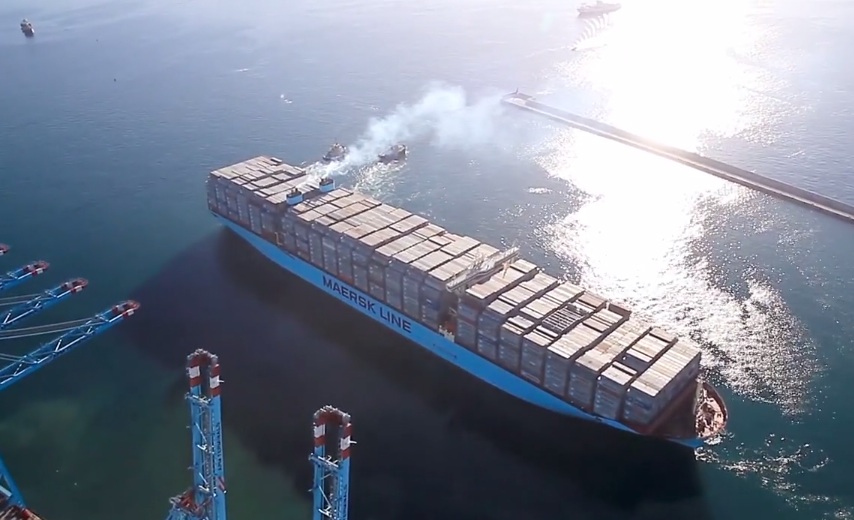
Triple-E Leaves Port of Algeciras with World Record Load

Triple-E-full-loaded

MV Mary Maersk departed Algeciras, Spain fully laden [Gcaptain.com]

On July 21, 2014, the MV Mary Maersk departed Algeciras, Spain with a world record 17,603 twenty-foot equivalent units (TEU), the most TEU’s ever loaded onto a single vessel.

MV Mary Mearsk is the third vessel in Maersk Line’s Triple-E class, which have nominal capacity of 18,270 TEU, although port restrictions have prevented the vessels from reaching full capacity.

“Algeciras has been preparing for full utilisation of the Triple-E for more than a year,” says Carlos Arias, head of the South Europe Liner Operations Cluster. “This included the upgrading of four existing cranes and the arrival of four new Triple-E cranes.”

After departing Algeciras, the vessel was bound for Tanjung Pelepas, Malaysia, which included a trip through the Suez Canal. Arias added that similar upgrades needed to be made at the port of Tanjung Pelepas, and this was the first occasion where both ends were ready. Source: Gcaptain.com

Global platform for young freight forwarder

SAAFFAs the winner of the Region Africa Middle East phase of the Young Freight Forwarder of the Year competition, Fortunate Mboweni of Bidvest Panalpina Logistics is now off to compete on a global platform.

Fortunate’s prize is to attend and participate in the FIATA World Congress in Istanbul in October this year. At this Congress Fortunate and the three other regional winners representing the Americas, Asia Pacific and Europe will compete to become the global winner.

The global winner will receive a total of five weeks training in New York and London, as well as at one of the IATA major centres, with all expenses paid by competition sponsors, the Transit Trade Club and International Air Transport Association. The competition was developed to encourage training in the freight forwarding industry and to further develop the professionalism of young people.

Winners were chosen from dissertations on how they handle all aspects of the international movement of goods that are not the usual run of the mill cargo. Fortunate’s dissertation was called ‘Multimodal transport operations in practice: radio actives and abnormals from and to South Africa.’

Fortunate is a channel controller at BPL and she is currently studying for the Generic Management NQF level 5 qualification. Source: http://www.transportworldafrica.com

US Customs launches new Passenger Control App

mobile-passport-control-app-by-cbpU.S. Customs and Border Protection (CBP) today announced the launch of the first authorized app to expedite a traveler’s entry process into the United States. Mobile Passport Control (MPC) will allow eligible travelers to submit their passport information and customs declaration form via a smartphone or tablet prior to CBP inspection. This first-of-its-kind app was developed by Airside Mobile and Airports Council International-North America (ACI-NA) in partnership with CBP as part of a pilot program at the Hartsfield-Jackson Atlanta International Airport. IPhone and iPad users can download the app for free from Apple’s App Store.

Eligible travelers arriving at Hartsfield-Jackson Atlanta International Airport will be able to use the app beginning Aug. 13. MPC is expected to expand to more airports later this year and to Android smartphone users in the future.

“CBP continues to transform the international arrivals experience for travelers by offering new and innovative ways to expedite entry into the United States, while maintaining the highest standards of security” said CBP Commissioner R. Gil Kerlikowske. “By offering this app to passengers, we hope to build upon the success we have already experienced with Automated Passport Control, which has resulted in decreases in wait times as much as 25-40 percent, even with continued growth in international arrivals.”

MPC currently offers U.S. citizens and Canadian visitors a more efficient and secure in-person inspection between the CBP officer and the traveler upon arrival in the United States. Much like Automated Passport Control, the app does not require pre-approval, is free-to-use and does not collect any new information on travelers. As a result, travelers will experience shorter wait times, less congestion and faster processing.

“Mobile Passport exemplifies the forward-thinking commitment CBP and airports have to improving the passenger experience when entering the United States,” said ACI-NA President and CEO Kevin M. Burke. “This partnership between CBP and ACI-NA also represents an outstanding example of industry and government working together to find smart, cost-effective solutions. We look forward to continuing our collaboration with CBP as Mobile Passport begins its roll-out at U.S. airports later this year.”

There are five easy steps to MPC:

  • Download the Mobile Passport Control App from the Apple App Store prior to arriving
  • Create a profile with your passport information
  • Complete the “New Trip” section upon arrival in the United States
  • Submit your customs declaration form through the app to receive an electronic receipt with an Encrypted Quick Response (QR) code. This receipt will expire four hours after being issued
  • Bring your passport and smartphone or tablet with your digital bar-coded receipt to a CBP officer

ACI-NA contracted with Airside Mobile in MPC’s technical development. Information about Mobile Passport, including how to download, user eligibility and other frequently asked questions, is available on the Travel section of the CBP.gov website and the Airside Mobile website.

MPC is just one part of CBP’s resource optimization strategy which is transforming the way CBP does business in land, air and sea environments. As part of its commitment to innovation, CBP last year rolled out Automated Passport Control, which is now available in 22 locations, and automated the I-94 form. CBP has also enrolled more than two million travelers in trusted traveler programs such as Global Entry, NEXUS and SENTRI. These programs allow CBP officers to process travelers safely and efficiently while enhancing security and reducing operational costs. Source: USCBP

Egypt Plans New $4b Suez Canal

Capesize bulk carrier at Suez Canal Bridge [www.maritemexecutive.com]

Capesize bulk carrier at Suez Canal Bridge [www.maritimexecutive.com]

Egypt has plans to build a new Suez Canal alongside the existing 145-year-old historic waterway in a multi-billion dollar project to expand trade along the fastest shipping route between Europe and Asia.

The project, to be run by the army, is a major step by new President Abdel Fattah al-Sisi to stimulate Egypt’s struggling economy and recalled some of the grand national programs of one of Sisi’s predecessors, army strongman Gamal Abdel Nasser.

The Suez Canal earns Egypt about $5 billion a year, a vital source of hard currency for a country that has suffered a slump in tourism and foreign investment since the 2011 uprising that preceded Mursi’s presidency.

An official in the Suez Canal Authority told Reuters the new canal was set to boost annual revenues to $13.5 billion by 2023. The new channel, part of a larger project to expand port and shipping facilities around the canal, aims to raise Egypt’s international profile and establish it as a major trade hub.

“This giant project will be the creation of a new Suez Canal parallel to the current channel of a total length of 72 kilometers (44.74 miles),” Mohab Mamish, authority chairman, told a conference in Ismailia, a port city on the canal.

He said the total estimated cost of drilling the new channel would be about $4 billion and be completed in five years, though Sisi said he hoped it would be finished within a more ambitious one-year deadline.

The original canal, linking the Mediterranean and Red Seas, took 10 years of brutal, poorly paid work by Egyptians, drafted at the rate of 20,000 every 10 months from “the peasantry”.

It slashed weeks if not months off journeys between Europe and Asia that otherwise necessitated a trip round Africa. Up to 20 Egyptian firms could be involved but would work under military supervision, he said.

Egypt has planned for years to develop 76,000 sq km (29,000 sq miles) around the canal into an international industrial and logistics hub to attract more ships and generate income.

Neil Davidson, senior adviser for ports and terminals at London-based Drewry Maritime Research, said the new canal would not necessarily generate greater trade but the development of a hub around it could prove lucrative.

“The strategic location of Egypt and the canal is a key advantage… being a key point where cargo can be distributed or worked on. This hubbing concept is extremely valuable,” he said.

Mamish, the chairman, said the project would involve 35 kilometers (22 miles) of “dry digging” and 37 kilometers (23 miles) would be “expansion and deepening”, indicating the current Suez Canal, which is 163 km (101 miles) long, could be widened as part of the project.

The Panama Canal linking the Atlantic and Pacific Oceans in Central America, is also being expanded with a third set of locks being built to allow bigger ships to pass through the waterway. That project is due to open in 2016.Among the bidders for the Suez project, according to Egypt’s Al Mal newspaper, was a group including state-run Arab Contractors and consultancy firm James Cubitt and Partners. Another included McKinsey & Co management consulting firm. Source: Reuters