Rapiscan introduces advanced dual-view X-ray system

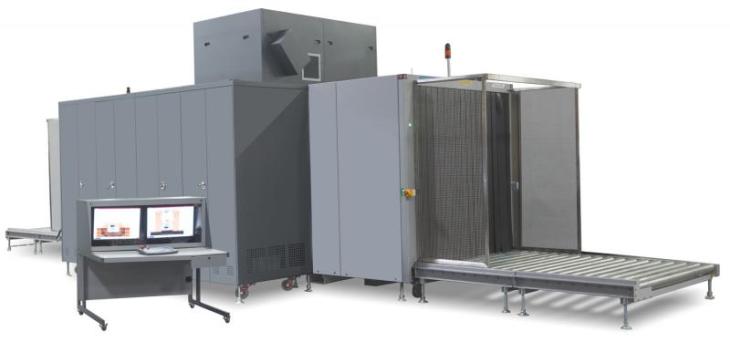
rapiscan_638dv-320_version2__largeThe new Rapiscan 638DV 320kV is an advanced dual-view X-ray system with a 1837 mm wide by 1800 mm high tunnel opening for screening ULD type, ISO standard, and large cargo pallet type freight.
The new 638DV 320kV features high penetration, dual-view technology and explosives and narcotics detection alert supporting secure inspection and higher throughput for air cargo screening and customs applications.

Detection of Explosives and Narcotics Alert
Target™ and NARCScan™ are designed to assist operators in the detection of a wide range of explosives and narcotics respectively in real time during the scanning process by marking a potential threat on the X-ray image. Rapiscan detection algorithms are based on regulatory material analysis techniques.

Dual View Advanced Technology
As mandated by US and EU regulators, the 638DV 320kV utilizes a dual-view technology which produces two simultaneous images (vertical and horizontal views) of the scanned object. It provides a more complete image, thereby reducing the need for repositioning and rescanning and enabling rapid, accurate and comprehensive threat detection.

Ease of Use Providing Highest Throughput
With over 14 image processing tools and detection alert algorithms, the feature-rich software allows the operator to more easily and accurately search for contraband. Source: Rapiscan

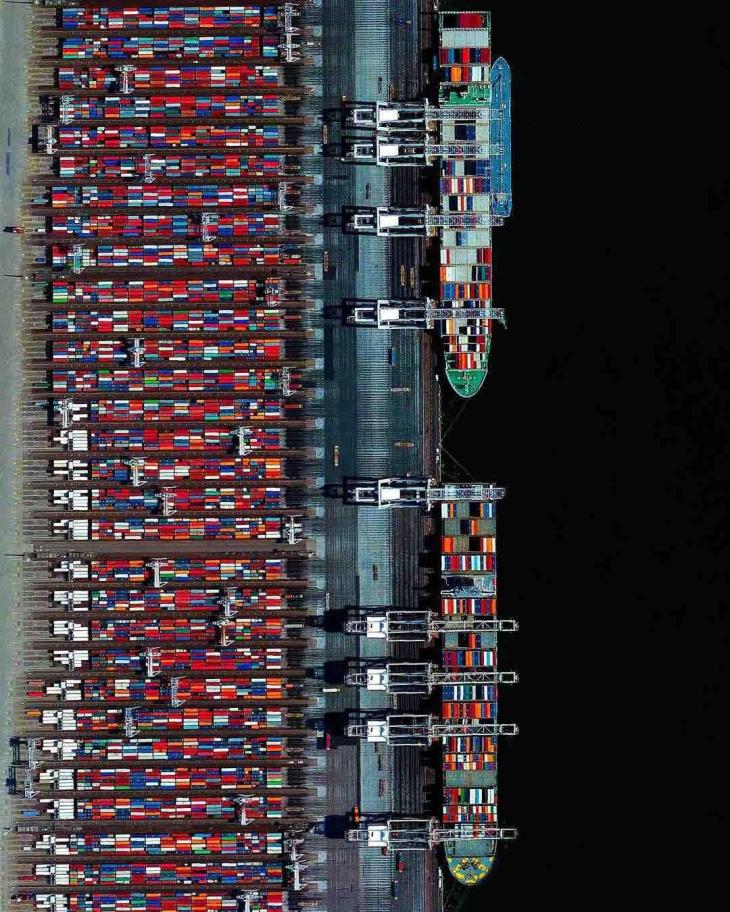
Aerial view of Rotterdam Container Terminal

Aerial view of Rotterdam Container Terminal

The Port of Rotterdam, Netherlands, is the largest port in Europe covering 105 square kilometers. (Picture: Benjamin Grant/Google Earth/Digital Globe)

SA Customs lends Detector Dog support to Mozambique

The SARS Customs Detector Dog Unit (DDU) recently deployed two trained detector dog handlers and dogs on foreign soil in Maputo, Mozambique. This forms part of a Customs co-operation agreement between the governments of South Africa and Mozambique.

The capacity-building programme provides for the training of at least eight detector dog handlers and dogs for Mozambique in over a period of 14 weeks followed by a ‘Train-the-Trainer’ programme for purposes of sustainability.

The deployment of SARS Detector Dog Handlers and dogs trained to interdict endangered species and narcotics in Maputo will promote and strengthen a  cross-border intergovernmental approach in the prevention and detection of smuggling of illicit, illegal goods or substances via ports of entry between Mozambique and South Africa.

The programme is designed to capacitate Mozambique Customs in the establishment of its own canine unit that will further enhance its current non-intrusive scanning enforcement capability at ports of entry and exit. Source and pictures: SARS

WCO issues New Guide for the Technical Update of Preferential Rules of Origin

SARS R78 million Airport Cash BustIn order to assist Members with the updating of their existing Rules of Origin in relation to changes in the Harmonized System, the WCO has issued the “Guide for the technical update of Preferential Rules of Origin“. The Guide is available for WCO Members only.
Classification and origin determination of goods are closely interlinked. It is therefore critically important to update Rules of Origin (i.e. Product Specific Rules) to ensure consistency between HS classification and origin determination. This would help to prevent misapplication of Rules of Origin, ensure efficient and effective revenue collection and facilitate trade. Source: WCO

WCO facilitates Data Model training for SARS

WCO Data Model Workshop, Pretoria, South Africa, Dec. 2015

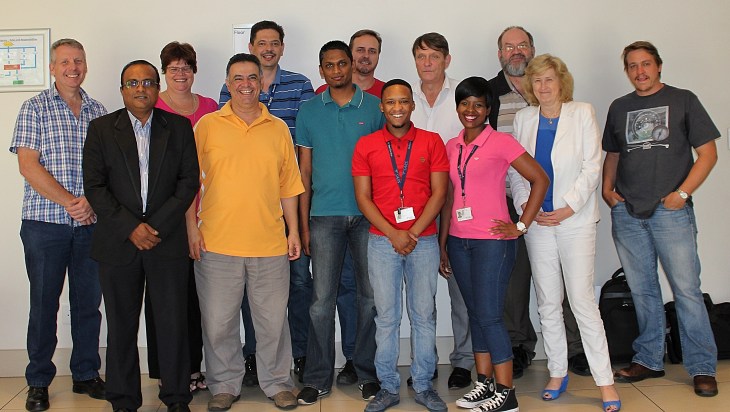
SARS’ EDI and Customs Business Systems representatives with WCO Data Model facilitators Mr. Giandeo Mungroo (2nd from the left) and Ms. Sue Probert (2nd from the right) [Photo – SARS]

Officials of the South African Revenue Service (SARS) last week attended a WCO workshop on the Data Model facilitated by Ms. Sue Probert and Mr. Giandeo Mungroo. The event, held in Pretoria, South Africa was sponsored by the CCF of China as part of the WCO’s Capacity Building endeavours to promote the adoption and use of customs standards and best practice amongst it’s  member states.

The workshop was requested by SARS ahead of new technical and systems developments and requirements informed by SARS’ new Customs Control and Duty Acts. Moreover, there are also political ambition to institute a Border Management Agency for the Republic of South Africa. All of this requires that SARS Customs has a robust electronic tool to assist the organisation in mapping national data requirements according to specific needs.

Besides the use of a value added Data Model tool – GEFEG, it is imperative for the organisation to develop capacity in the knowledge and understanding of the WCO Data Model. SARS has successfully EDI (Electronic Data Interchange) for the last 15 years with various local supply chain trading partners and government agencies. Over the last few years SARS has been actively pursuing and promoting IT connectivity with regional trading partners with the express purpose to extend the benefits of eCommerce across borders.

GEFEG.FX software is used to model data formats and develop implementation guidelines for data interchange standards such as UN/EDIFACT. It is a software tool that brings together modelling, XML schema development, and editing of classic EDI standards under a unified user interface, and supports the development of multilingual implementation guidelines.

Version 3 of the WCO Data Model brought about a distinct shift towards an ‘all-of-government’ approach at international borders with the introduction of the GOVCBR (Government Cross Border Regulatory) message. The message and underlying data requirements facilitate the exchange of customs and other government regulatory information to support a Single Window environment.

WCO Data Model not only includes data sets for different customs procedures but also information needed by other Cross-border Regulatory Agencies for the cross-border release and clearance at the border. The WCO Data Model supports the implementation of a Single Window as it allows the reporting of information to all government agency through the unique way it organizes regulatory information. This instrument is already 10 years old and is seeing increased use by WCO members.

Amongst the benefits derived from the workshop, SARS staff acquired the following competencies that will not only aid their work but business user support as well –

  • Competence in operating the tool to build a source control collaborative environment to support national and regional harmonization;
  • Competence to build a base to conduct national/ regional data harmonization based on the WCO Data Model to support national Single Window implementation as well as Regional Integration;
  • Competence to build systems/ electronic interfaces between Customs and its partner government agencies including a Border Management Agency; and
  • Provide needed competence to develop, maintain and publish national and regional information packages based on the WCO Data Model.

WCO declares 2016 to be the year of Digital Customs

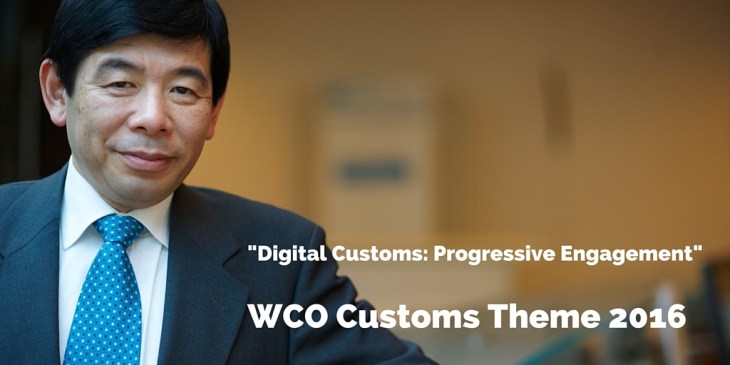
WCO Customs Theme 2016The Secretary General of the WCO, Kunio Mikuriya, announced today that 2016 will be dedicated to promoting the digitalization of Customs processes under the slogan “Digital Customs: Progressive Engagement.” WCO Members will have the opportunity to showcase and further promote their use of Information and Communication Technologies (ICT).
The term Digital Customs refers to any automated or electronic activity that contributes to the effectiveness, efficiency, and coordination of Customs activities, such as automated Customs clearance systems, the Single Window concept, electronic exchange of information, websites to communicate information and promote transparency, and the use of smart phones.

This new era of Digital Customs has transformed the way that Customs operates. Ultimately, it ensures progression – the enhanced ability of Customs Administrations to communicate, process goods, receive and exchange information, coordinate border activities, collaborate on law enforcement actions, and promote transparency. Improved technologies thus have the ability to positively impact and transform the Customs landscape through:

  • Improved compliance as a result of increased access to regulatory information and functions, as well as services, on the part of all international trade stakeholders;
  • Faster clearance times for legitimate trade;
  • Enhanced coordination between Customs units, as well as between Customs and other border regulatory agencies at the national and international level;
  • Increased transparency in regulatory processes and decision-making;
  • The use of performance measurement to improve Customs procedures and levels of integrity, such as through the techniques presented in the WCO Performance Measurement Contracts (PMC) Guide;
  • Enhanced detection of irregularities and illicit consignments through the collection and analysis of data.

Such positive outcomes will contribute significantly towards the realization of Customs’ objectives, including improved revenue collection, border security, the collection of trade statistics, and trade facilitation. “Border agencies are increasingly embracing digitalisation to enhance their effectiveness and efficiency.

The WCO has an extensive portfolio of instruments and tools to support WCO Members in their efforts to further adopt Digital Customs.” said WCO Secretary General Kunio Mikuriya.

“Over the course of 2016, I invite all WCO Members to promote and share information on how they are implementing and using digital technologies to advance and achieve their objectives.” Mr. Mikuriya added.

The WCO’s annual theme will be launched on International Customs Day, which is celebrated annually by the global Customs community on 26 January in honour of the inaugural session of the Customs Co-operation Council (CCC) which took place on 26 January 1953.

The WCO invites the Customs community to mark 26 January 2016 in their diary. Source: WCO

SA – Hub for computerised Regional Integration?

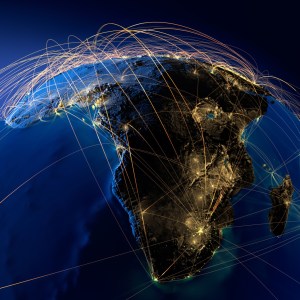
AfricaFrom time to time it is nice to reflect on a good news story within the local customs and logistics industry. Freight & Trade Weekly’s (2015.11.06, page 4) article – “SA will be base for development of single customs platform” provides such a basis for reflection. The article reports on the recent merger of freight industry IT service providers Compu-Clearing and Core Freight and their plans to establish a robust and agile IT solution for trade on the African sub-continent.
In recent years local software development companies have facilitated most of the IT changes emerging from the Customs Modernisation Programme. Service Providers also known as computer bureaus have been in existence as far back as the early 1980’s when Customs introduced its first automated system ‘CAPE’. They have followed and influenced Customs developments that have resulted in the modern computerised and electronic communication platforms we have today. For those who do not know there are today at least 20 such service providers bringing a variety of software solutions to the market. Several of these provide a whole lot more than just customs software, offering solutions for warehousing, logistics and more. As the FTW article suggests, ongoing demands by trade customers and the ever-evolving technology space means that these software solutions will offer even greater customization, functionality, integration and ease of use for customers.

What is also clear is that these companies are no longer pure software development houses. While compliance with Customs law applies to specific parties required to registered and/or licensed for Customs purposes, the terrain on which the software company plays has become vital to enable these licensees or registrants the ‘ability to comply’ within the modern digital environment. This means that Service Providers need to have more than just IT skills, most importantly a better understanding of the laws affecting their customers – the importers, exporters, Customs brokers, freight forwarders, warehouse operators, etc.

Under the new Customs Control Act, for instance, the sheer level of compliance – subject to punitive measures in the fullness of time – will compel Service Providers to have a keen understanding of both the ‘letter of the law’ as well as the ability to translate this into user-friendly solutions that will provide comfort to their customers. Comfort to the extent that Customs registrants and licensees will have confidence that their preferred software solutions not only provide the tools for trading, but also the means for compliance of the law. Then, there is also the matter of scalability of these solutions to keep pace with ongoing local, regional and global supply chain demands.

The recent Customs Modernisation Programme realised significant technological advances with associated benefits for both SARS and trade alike. For the customs and shipping industry quantification of these benefits probably lies more in ‘improved convenience’ and ‘speed’ of the customer’s interaction with SARS than cost-savings itself. My next installment on this subject will consider the question of cross-border trade and how modern customs systems can influence and lead to increased regional trade.

Rotterdam Maasvlakte II – World’s first Remote-Controlled Container Port

APM Terminals has released drone footage of its Rotterdam Maasvlakte II terminal. The terminal set a loading record last month on the Madison Maersk with 17,152 TEU loaded, including ten high above deck stowage.

The facility launches the world’s first container terminal to utilize remotely-controlled ship-to-shore (STS) gantry cranes. The cranes move containers between vessels and the landside fleet of 62 battery-powered Lift-Automated Guided Vehicles (Lift-AGVs) which transport containers between the quay and the container yard, including barge and on-dock rail facilities.

The Lift-AGV’s also represent the world’s first series of AGV’s that can lift and stack a container. A fleet of 54 Automated Rail-Mounted Gantry Cranes (ARMGs) then positions containers in the yard in a high-density stacking system. The terminal’s power requirements are provided by wind-generated electricity, enabling terminal operations, which produce no CO2, emissions or pollutants, and which are also considerably quieter than conventional diesel-powered facilities.

The facility, constructed on land entirely reclaimed from the North Sea, has been designed as a multi-modal hub to reduce truck traffic in favor of barge and rail connections to inland locations.

Construction began in May 2012, with the first commercial vessel call in February 2015.

2015 and 2016 are the years of ramping up operations and refining the terminal operating system. The 86 hectare (212 acre) deep-water terminal features 1,000 meters of quay, on-dock rail, and eight fully-automated electric-powered STS cranes, with an annual throughput capacity of 2.7 million TEU.

At planned full build-out, the terminal will cover 180 hectares (445 acres) and offer 2,800 meters of deep-sea quay (19.65 meters/64.5 feet depth), with an annual throughput capacity of six million TEUs. Source: Maritime Executive

WCO supported Sub – Saharan Africa Customs Modernization Programmes – 3rd Newsletter

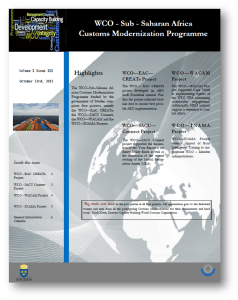
WCO Capacity Building Magazine 3rd Edition.ashxThe WCO – Sub – Saharan African Customs Modernization Programme funded by the government of Sweden comprises four projects, namely the WCO- EAC CREATe , the WCO– SACU Connect, the WCO– WACAM and the WCO– INAMA Projects. In their totality, the projects support regional Customs Unions in Africa in their mission to facilitate trade without compromising the security of their country and the safety of their citizens. The newsletter will appear quarterly and will inform on ongoing tasks as well as give an overview of future activities. Source: WCO

WCO News – October 2015 Edition

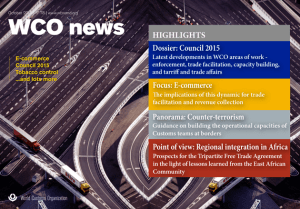
WCO News N°78 - October 2015The October 2015 Edition focuses on the subject of e-Commerce, among’st other developments at the WCO. There’s a discussion on a new book which provides insight into the economic benefits of implementing a single window system, as well as a review of a book titled  ‘The Politics of Trade and Tobacco Control’.

Other articles include an overview of Russia’s Training Centre for NII System experts; Prospects for Africa’s Tripartite Free Trade Agreement in the light of lessons learned from the East African Community and a panorama of diverse discussion articles concerning Customs standards, education, and Customs response to challenges posed by a world of rampant crime and natural disasters. Download and enjoy! Source: WCO

Authorities discover Sophisticated ‘Super’ Drug Tunnel between California and Mexico

Authorities on both sides of the US-Mexico border have shut the 10th drug-smuggling tunnel to San Diego in more than a decade, a passageway Mexican authorities on Thursday attributed to the cartel of fugitive kingpin Joaquin “El Chapo” Guzman.

A sophisticated, super tunnel was discovered by federal officials Wednesday night near San Diego, leading to the arrest of 22 people and confiscation of 12 tons of marijuana estimated at $6 million.

The tunnel, originating from the Mexican border city of Tijuana, is about eight football fields in length, with the last quarter-mile crossing US territory before ending beneath a carpet warehouse in the busy Otay Mesa industrial district of San Diego, US and Mexican officials said.

The tunnel was uncovered through intelligence gathered by US federal agents who infiltrated a Mexican drug-smuggling ring during the past six months, according to Laura Duffy, the US Attorney in San Diego.

It marked the 10th subterranean passageway from Mexico to Otay Mesa discovered since 2002. Like those and dozens of others found along the nearly 3 200km border in the last decade, the latest tunnel was equipped with lighting, ventilation and a rail system for moving goods, authorities said.

Two Mexican government security officials, speaking on condition of anonymity, told Reuters the latest passage belonged to the Guzman-led Sinaloa drug cartel.

Duffy said US officials were less certain that Sinaloa was behind the new tunnel, based on the comparatively unfinished, dangerous nature of the tunnel shaft on the US side.

“We usually see ladders going down and staircases,” she said.

“This particular tunnel drops 32 to 35 feet straight down.”

Duffy said US federal agents moved to seize control of the tunnel on its north end on Wednesday after a shipment of 2 tons of marijuana arrived there, and six men were arrested, two of whom were to be arraigned on federal drug-smuggling charges on Thursday.

Mexican agents seized 10 tons of marijuana awaiting shipment through the passage at the Tijuana side, and authorities expect to find more contraband when a thorough search of the tunnel is made, Duffy said.

Guzman, the world’s most wanted drug trafficker, escaped in July from a Mexican maximum-security prison through a mile-long tunnel that surfaced right inside his cell.

His escape sparked a massive manhunt, and Mexico’s government said on Friday that Guzman had suffered injuries to his face and leg after recently beating a hasty retreat from security forces. Source: IOL

An interesting take on SADC developments and the lack of progress

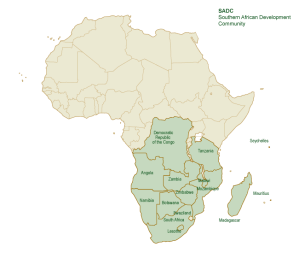
AfricaMap_SADCThe following article titled ‘Cross-border projects dependent on cost’ was recently published by Transport World Africa. It deals essentially with cross border logistics and provides an insight into regional infrastructure and logistics projects – successes, failures and their impact on transport logistics. It emphasizes the need for greater and closer public and private partnerships, but alas sovereign states appear to be more focused inwardly on their domestic affairs. 

Implementers of projects have the knack of focusing on what they know very well, often leaving out what they do not know. Usually, this comes back to bite them. An example is in the integration of leadership. Countries in the Southern African Development Community (SADC) region compete with each other for demand and capacity provision, which results in the inflated cost of logistics.

Rather, countries should work together. Integrating ports and funding is relatively easy. What is not available is integrated leadership in the region (excluding heads of various states), agreeing that SADC is ‘one country’. Logistics planning is still done at the country level, which is not practical, because then supply chains are being developed that are competing with each other. The sector should be cautious about acceleration, and about what is funded. One example is Transnet, whose plans should fit into regional plans, but right now they do not.

The softer issues in project development often go ignored, but they are at times the most important. There should be a halt to focusing mainly on mega-projects, since they take time and money, as well as resulting in complications (excluding Grand Inga). Despite this, mega projects do create a common vision for a region. Do sponsors have the capacity to support these projects? Institutional capacity is certainly needed. At the political level, southern Africa has done well, top–down approaches are there, but things go off course when there is the attempt to get others to plug-in to this.

One-stop border posts are very important. It was cautioned that the region must be careful not to follow the architecture of colonial extraction, which means focusing on intra-Africa trade rather than too great a focus on ports and exports. Government and private sector must both drive natural winners and losers in markets. There is sufficient funding and policies, but project preparation is limited. What is needed is to decide how to make hubs of excellence, and decide who is going to do what.

The high-level work has been done, but now the sector is facing an implementation challenge. Governments do not do regional integration very well. The private sector does the regional integration, and they suffer most when it does not work. Regional infrastructure will not happen unless there is public support for it. The most successful cross-border project was a PPP: the M4 toll road. This had a large economic impact.

Also, the Port of Maputo has been successful in generating income. Ports without land side integration are useless. Projects need a soft-issue mediator; otherwise there are great ideas, but no implementation. The private sector should not see itself as a messiah, but should rather have a sense of responsibility for developing supply chains. There needs to be a clear understanding of soft issues, clear legal and policy understanding, and communication. SADC has been driving the implementation of harmonisation of vehicle load management for twenty years. A mediator between the public and private sector (such as Maputo Corridor Logistics Initiative (MCLI) is absolutely necessary.

It is a stark reality how little intra-African trade there is. To address this there should be a clear target for development in future. In Namibia, there are efforts to focus on the positives in regards to transport development, even with limited resources. Namibia has been independent for 25 years; 15 years ago the Walvis Bay Corridor was created as a focus on regional integration and regional development. There are 2.2 million people in Namibia, which means a small economy.

There is no real choice but to take into consideration the region and recognise the value Namibia can add. In regards to planning, in 1995 it developed its first transport master plan, and in 2014 it developed its second transport master plan (this was twenty years apart). In February 2015, it developed a logistics master plan to develop Namibia into a logistics hub in the region. It has focused on transport modes because it has a port emphasis. It started roads development.

Currently, Namibia is building its first dual-carriage road (65 km), which is a big step for such a small economy. It would like to do more with sufficient funding. Namibia is also looking into what to do with aviation. As a whole, the country is trying to develop as an alternative trade route for southern Africa. Five to seven years ago, Walvis Bay was just a fishing port, but now R500 million is coming into Namibia’s economy through this post (from zero rand 10 years ago). Namibia is trying to create a better alternative in the SADC region. Now it is looking to focus on developing the manufacturing sector. Namibia is working with South Africa to develop partnerships (excluding transport corridors to production corridors). Continue reading →

South Africa Registers First Vessel in 30 Years

[Picture:  tropic maritime photos, Australia]

[Picture: tropic maritime photos, Australia]

For more than 30 years, the South African Maritime Safety Authority (SAMSA) has not had a registered vessel. The M/V Cape Orchid, a bulk carrier, is its first vessel registered since 1985.

While South African imports $102 billion and exports $97 billion each year, the Cape Orchid is the country’s first registered vessel and is currently transporting iron ore from Saldanha Bay to China.

The 172,600-dwt bulker is owned by Vuka Marine, which is a joint venture between South Africa’s Via Maritime Holdings and Japan-based K-Line. South Africa will also soon register the Cape Enterprise, a 185,900 dwt vessel, which is also owned by K-Line during next few weeks.

The SAMSA and the South African Department of Transport hope that Vuka Marine’s registration will l encourage other vessel operators join the nation’s flag registry. More than 12,000 foreign flagged ships call South Africa each year, which is the gateway for African trade.

South Africans own about 19 vessels including three petroleum tankers, which are all registered in foreign countries. The country’s key ports are Cape Town, Durban, Port Elizabeth, Richards Bay, and Saldanha Bay. Its prime container port is Durban, which handled about 2,712,975 boxes last year.

Border Management Agency (BMA) Bill introduced into Parliment

The BMA Bill No.39058Cabinet [has] approved the introduction of the Border Management Agency (BMA) Bill, 2015 into Parliament. The Bill aims to establish the BMA, which will balance secure cross-border travel, trade facilitation and national security imperatives within the context of South Africa’s regional, African and international obligations. This single authority for border law enforcement provides the potential for more cost-effective services, enhanced security and better management of the border environment. Source: Statement on the Cabinet meeting of 23 September 2015 (SA Government)

War Against Ivory Smuggling

Smuggled Ivory

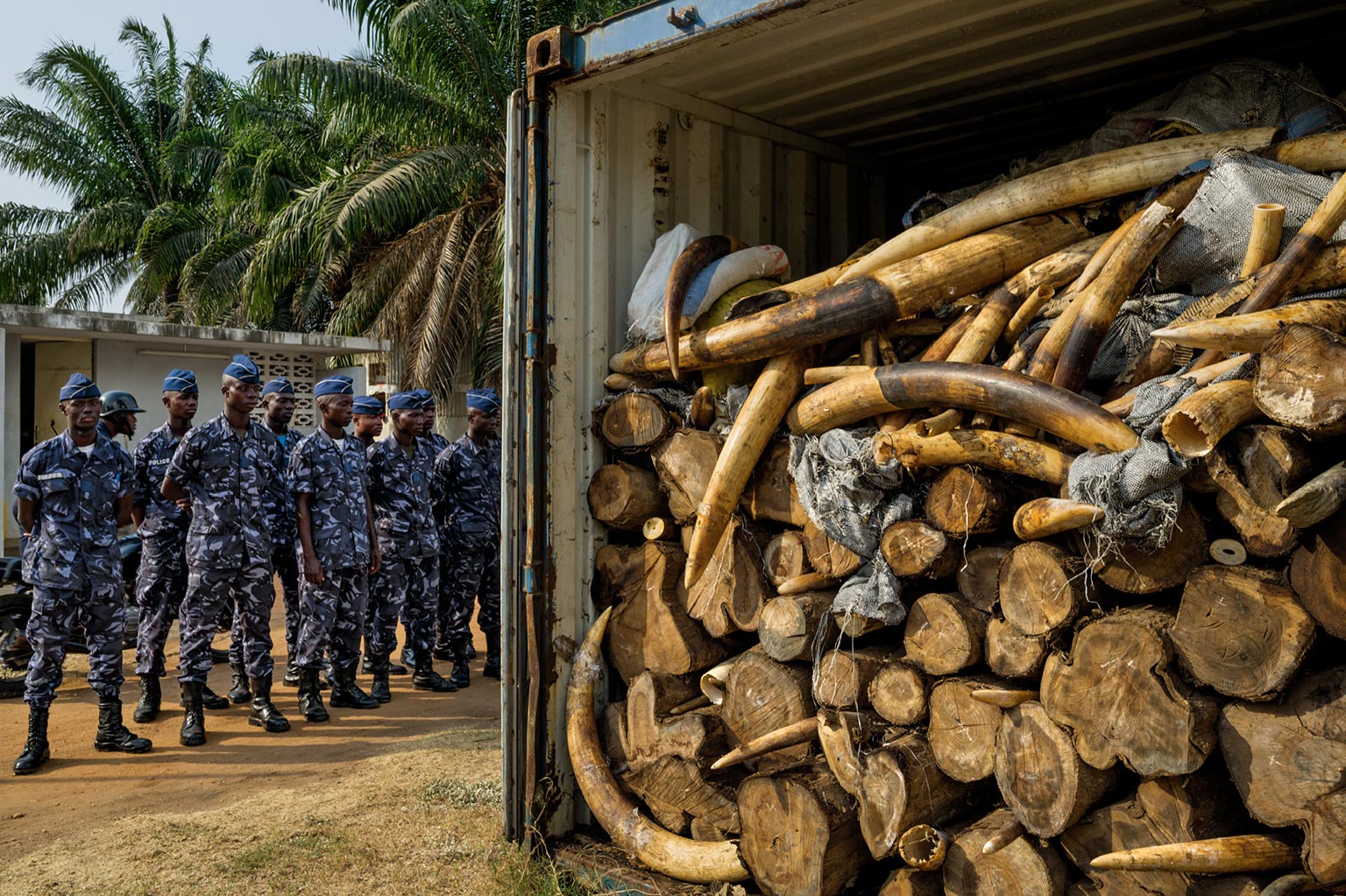
In January 2014, while x-raying a Vietnam-bound container declared to hold cashews, Togolese port authorities saw something strange: ivory. Eventually, more than four tons was found, Africa’s largest seizure since the global ivory trade ban took effect in 1990. [Photo: Brent Stirton, National Geographic]

Last year, one of Kenya’s most adored elephants, Satao, was killed for his ivory. Poachers shot the bull elephant with a poisoned arrow in Tsavo East National Park, waited for him to die a painful death, and then hacked off his face to remove his massive tusks.

Poachers continue to kill an estimated 30,000 elephants a year, one every 15 minutes, fueled to a large extent by China’s love of ivory. Thirty-five years ago, there were 1.2 million elephants in Africa; now around 500,000 remain.

A recent documentary, 101 East, released by Al Jazeera, traces the poaching of elephants and smuggling of ivory from Tanzania’s port of Dar es Salaam through the port of Zanzibar to Hong Kong and Shanghai.

Hong Kong is one of the busiest ports in the world. It handled nearly 200,000 vessels last year and is a key transit hub for smugglers transporting ivory from Africa to China. Between 2000 and 2014, customs officials seized around 33 tons of ivory, taken from an estimated 11,000 elephants.

With the huge challenge faced by customs and other law enforcement agencies in West Africa, wildlife crime is on the rise. Regional traffickers and organized crime groups are exploiting weak, ineffective and inconsistent port controls throughout the region.

U.N. Action in Africa
To address the issue, the United Nations Office on Drugs and Crime (UNODC) organized a workshop in Accra, Ghana, from August 25 to 27 August, and in Dakar, Senegal, from August 31 to September 2. The objective was to provide training for national law enforcement agencies to better fight wildlife crime through the control of maritime containers. The workshop was led by trainers and experts from UNODC, the World Customs Organization (WCO) and the CITES Management Authority.

The Container Control Programme has been developed jointly by UNODC and WCO to assist governments to create sustainable enforcement structures in selected sea and dry ports to minimize the risk of shipping containers being exploited for illicit drug trafficking and other transnational organized crime. The implementation of the program is an opportunity for UNODC to work with governments in establishing a unit dedicated to targeting and inspecting high-risk containers.

UNODC, in partnership with WCO, delivers basic training programs and provides technical and office equipment. For example, the equipment connects the units to the WCO’s ContainerCOMM – a restricted branch of the Customs Enforcement Network dedicated to sharing information worldwide on the use of containers for illicit trafficking.
Sustainability.

UN Secretary-General Ban Ki-moon argues: “Illegal wildlife trade undermines the rule of law, degrades ecosystems and severely hampers the efforts of rural communities striving to sustainably manage their natural resources.”

Wildlife trade is a transnational organized crime that raises profits of about $19 billion annually. In addition, it is often linked to other crimes such as arms trafficking, drug trafficking, corruption, money-laundering and terrorism – that can deprive developing economies of billions of dollars in lost revenues.

Shipping
It’s hardly surprising that many of the big ivory seizures made in recent years have been detected in shipping containers, says Dr. Richard Thomas, Global Communications Coordinator for the environmental organization TRAFFIC. “Partly that’s due to the sheer quantity of ivory being moved (the largest-ever ivory seizure was 7.1 tons) – which from a practical and cost point of view makes sea carriage more attractive than air carriage.

“Also in the smugglers’ favor is the huge numbers of containers moved by sea. Some of the big ports in Asia deal with literally thousands of containers per day. Obviously it’s not practical or feasible to inspect each and every one, and that’s something the organized criminal gangs behind the trafficking rely upon.”

There’s lots of issues to be dealt with, says Thomas: For example, even when an enforcement agency makes a seizure, it’s not easy to find out who actually booked the passage for the container and who knew precisely what was in it and actually put it there. “That’s one area where transport companies can collaborate with enforcement agencies to assist follow-up enquiries. Obviously companies have records of where the container is headed too, obviously key information for follow-up actions,” says Thomas.

TRAFFIC recently ran a workshop in Bangkok under the auspices of the Wildlife Trafficking Response, Assessment and Priority Setting (Wildlife TRAPS) project, targeting the movement of illicit wildlife cargoes across borders.

“The transport industry can serve as the eyes and ears of enforcement agencies as part of a global collaboration to eliminate the poaching and trafficking of illegal wildlife commodities,” said Nick Ahlers, Leader of TRAFFIC’s Wildlife TRAPS project.

“To be successful, the entire logistics sector needs to be part of a united push to eliminate wildlife trafficking from supply chains. In particular, we would welcome participation from major shipping lines and the cargo and baggage-handling sector.”

If nothing is done to stop the ivory trade, Africa’s wild elephants could be gone in a few decades. Source: Reuters.

Related articles