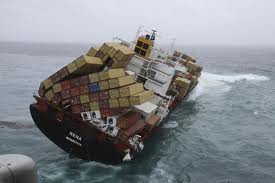
 In this age of heightened security it remains remarkable how carriers still willfully take custody and/or load ‘goods’ for which the contents thereof are unclear. True, carriers and intermediaries (fowarders/brokers) will correctly point at the ‘shipper’ (exporter) for not disclosing the details correctly. It also needs be mentioned that the cargo handler (packer of the container) is really key in all of this. It is this entity who has knowledge of what is being stuffed into the container. There is much debate on this matter, and a whole lot more work to be done in ultimately pinning down the responsible party. Given this state of affairs, most Customs administrations are happy to lay the responsibility and liability for lawful clearance on the party responsible for cargo reporting, i.e. the entity which ‘cuts’ the manifest. I dare say that the terms of sale (incoterms) also have an influence in terms of risk and liability here which adds some complexity to decision-making in time of misfortune. Take for instance the recent grounding of the M/V Rena off New Zealand earlier this month, where it has recently come to light that the wreck contains at least 21 containers which were not properly recorded on the ship’s manifest. Read articles below.
Category / Supply Chain Security
Korea to implement Advance Manifest System
The Korea Customs Service (KCS) will introduce an Advance Manifest System in accordance with WCO standards as well as fulfill its own responsibilities as a governmental agency of duties for collection and border protection. This follows other major trading partners such as the U.S., Canada, EU and China who have already already adopted the Advance Manifest reporting. Known as KAMS, the new system will be implemented by KCS from 1st December, 2011. For more information click the hyperlink to download Korea Customs Advance Manifest System guideline.
Reminder: People Run the Supply Chain
doesn’t this just sound so familiar? What a fine article by Chris Kane, Chief Strategy Officer of a family owned third-party logistics provider (3PL).
As the U.S. economy continues to struggle and unemployment remains high, our industry has focused on cost cutting through automation. Technology has undoubtedly helped us move more products more quickly and less expensively than ever before, but have we focused so much on automation and technology that we’ve neglected to identify how they affect the people in our supply chain?
I’m a distribution guy, so I’m the first to admit that technology provides visibility into our operations that makes my life much easier. A single report can tell me exactly where a specific load for any one of our customers is located in real-time. What it doesn’t tell me is how our people in the distribution center hustled to get the trailer loaded, even after a forklift problem, so that the driver didn’t miss his delivery window. Or how the driver’s skills helped her avoid an accident that would have destroyed the customer’s product. If I just look at that report, I miss the most important aspect of our business: the dedication of our people. When things go wrong (as they inevitably do), technology will only get us so far.
Is our industry fast paced? Absolutely. Do we need to utilize the technology available to be more efficient, more cost-effective and more competitive? Of course. But if we pursue those options exclusively, with little regard for the people running our operations, we’ve failed. Because at the end of the day, it’s the efforts of the people in the supply chain that get the product to its destination.
Homeland Security’s Private Sector Resources Catalog v.3
Being an importer, broker, carrier, or even just a plain old citizen in the USA implies you’re always going to get the most comprehensive guidance. Moreover you’re also going to need a fulltime lawyer or trade specialist to delve into and decifer the info – that’s why consultants make so much money.
The DHS has released version 3 of its Private Sector Resources Catalog targeted specifically towards private sector partners and encompassing the entire Department. This document collects the training, publications, guidance, alerts, newsletters, programs, and services available to the private sector across the Department. Recognizing the breadth and diversity of the available resources as well as the Department’s continually evolving work, this catalog will be updated regularly to publicize new resources and increase private sector awareness. Source: DHS
SARS and SARB – Closing the international trade transaction loop
 Since the recent implementation of the Import Verification System (IVS) by the South African Reserve Bank (SARB), local traders would have come to realise that processing a forex transaction at the local bank has come more and more under scrutiny. Why is this? For one, all import and export trade transactions processed through Customs are relayed electronically to the Reserve Bank. Historically, the Bank has been responsible to ensure that South Africa maintains good account in terms of its balance of payments, ensuring that fiscal inflows and outflows are fully and lawfully accounted for. For government to operate accurately, it needs to know exactly what is occurring in this space. On the one hand trade statistical information provides both the Bank and National Treasury vital information which informs its fiscal policies. Trade and Industry (DTI) likewise use trade statistics to maintain a grip in terms of trade policy which governs the duty structure on imported goods as well as oversee the effectiveness of various duty relief (rebate and drawback) schemes. Like all things new, the South African importer and exporter’s experience with the local commercial bank might prove a bit tedious and painful, given the added scrutiny and awareness of bank officials. These controls are however necessary and in keeping with government’s broader objective to ensure that fiscal and trade control measures compliment new enhanced supply chain security initiatives. To this end, SARB and SARS have initiated a dedicated line of support to facilitate query resolution.
US Customs agreement on border security upgrades
American terminology never ceases to amaze me – I wonder if they call their stakeholders “clients”?
US Customs and Border Protection has announced a penalty Mitigation Decision under which Union Pacific (UP) has agreed to spend US$50 million to enhance the Mexico and United States rail supply chain CBP said the “Mitigation Decision” defines the steps that UP will take to invest US$50 million in security enhancements at critical junctures of the Mexico and US supply chain, and partnering with CBP to form a Rail Fusion Center to identify high-risk shipments.
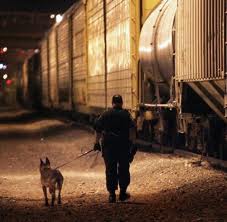 CBP further said the decision provides that CBP will mitigate penalties assessed against UP if the railroad fulfils its obligations under the agreement. In recent years these penalties have become significant, as illegal controlled substances were discovered on trains originating in Mexico and arriving at US-Mexican border crossings. CBP Commissioner Alan D Bersin said: “It’s in the best interest of all that appropriate steps are taken to secure the US border against the smuggling of contraband. UP Chairman Jim Young said the agreement expands a relationship with CBP in which UP has already invested in technology, infrastructure, training and workforce resources to secure rail transportation across the border. Source: World Cargo News Online.
Related articles
- USCBP commits to CTPAT Mutual Recognition Agreements (mpoverello.wordpress.com)
Zero Tolerance – the saga of 100% scanning continues
Various opinions on this subject have been voiced over the last 3 years – the threat of sea and airborne cargo being used as ‘a delivery mechanism’ for a nuclear or terrorist attack. Besides the US calling for 100% scanning of containerised cargoes at point of origin, the reality remains that less than 4% of seaborne containers are being scanned at port of departure.
Post 9/11, the US was quick to initiate a multi-layered approach to securing America against another terrorist attack. This entailed a number of domestic and extra-territorial programmes. At the bottom of each of these lies an authoritarian distrust or question mark against the integrity of entities involved in the international supply chain. In as much as these modern-day Customs’ initiatives aim to deal with tangible and intangible threats, one can begin to question the motives used by many governments and organisations in introducing such programs.
Last year, the US postponed it’s requirement for 100% scanning of inbound boxes by at least two years because of technical and funding issues. (Lets not forget the massive outcry from foreign countries of origin who envisaged their own ports coming to a standstill). The 2014 deadline, as it stands, would require any container heading to the US to be scanned for conventional as well as radioactive threats before being loaded at a foreign port.
However, in June 2011, US Homeland Security chief Janet Napolitano went on record saying that 100% scanning was “probably not the best way to go”. She said Congress was considering a “more layered approach” to container security, a combined system of scanning, data and risk analysis, physical checks and closer co-operation with ports and countries around the world.
Could it be that the promise of mega-deals for the ‘security industry’ is under serious threat given limited success and results from these ‘supply chain’ initiatives? One hears less and less about the awarding of multi-million dollar contracts for non-intrusive equipment. Funding is a big issue, and no less an issue is the question mark which countries of origin have regarding the direct intrusion these US-domestic policies have on their local economies and supply chains.
The WCO went a long way in accommodating and addressing the question of international terrorism which in the view of many helped curbed the ‘paranoia’ which prevailed post 9/11. Still the question of motive and opportunity spurred several organisations and governments to support the many bilateral developments that ensued. The EU Commission for one was infuriated by the bilateral overtures of the CBP and EU Custom’s administrations before diplomatic agreement prevailed.
The bottom line is that a nation’s domestic policy overrides that of the wants and whims of the more affluent states. Several donor programs nowadays offer ‘security equipment’ free of charge to countries packaged with ‘capacity building programmes’ to instil the desired mentality of the donor country or agency. Traditional forms of customs control and human initiative/intuition are being cast out on the trash heap as primitive everywhere, yet there is little to show for the billions of dollars spent on anti-terrorism measures year after year. However, reading the article – Zero Tolerance – you get the impression of a little desperation on the part of the engineers and manufacturers of nuclear based security equipment – almost wishing a further nuclear calamity to prove their point! Source of article: www.portstrategy.com
Is what’s good for China, good for everyone else?
Given current developments in the international supply chain, the following article would seem to advocate measures that would certainly pave the way for information exchange in the Customs environment. Somehow, I think this is a pipe dream –
The United States and the European Union have proposed to the WTO a set of principles that would remove barriers to cross-border data flows. Under principles, for instance, WTO member states would not prevent foreign service providers or their customers from “electronically transferring information internally or across borders, accessing publicly available information stored in other countries.” Governments would have to refrain from requiring information and communications technology (ICT) service providers to establish a local presence or use a local infrastructure. And, they would have to allow “full foreign participation” in their ICT sectors. The principles are apparently aimed at curbing Chinese censorship and protectionist measures. But they would also seem consistent with, among other things, the EU’s own restrictions on the transfer of personal data outside of the EU, occasional US decisions to restrict or impose conditions on foreign ownership of communications companies, and the FBI’s periodic proposals require communications providers to establish a point-of-presence in the United States in order to ease the Bureau’s access to communications. Source: Lexology.com
Related articles
- Managing the Challenges of WTO Participation (mpoverello.wordpress.com)
Securing the Global Supply Chain Without U.S. Leadership
In 2007 the European Union’s Framework Programme for Research and Technological Development (FP7) was established as “…a key tool to respond to Europe’s needs in terms of jobs and competitiveness, and to maintain leadership in the global knowledge economy.”
A new research component called the SMART-CM project (SMART Container Chain Management) was created within the 7th Framework Programme. Its purpose is to … advance technology implementation and research in order to overhaul the complete container door-to-door transport chain so that it is more efficient, secure, market driven, and competitive. It systematically analyses current processes and systems, produces new innovative concepts for processes and technologies, and demonstrates all these in a set of 2 world scale Demonstrators covering 4 supply chain corridors.
Read the full article – Securing the Global Supply Chain Without U.S. Leadership.
USCBP commits to CTPAT Mutual Recognition Agreements
The Customs-Trade Partnership Against Terrorism (C-TPAT) is a voluntary public-private supply chain security initiative. C-TPAT members – including importers, carriers, consolidators, licensed customs brokers, and manufacturers – voluntarily adhere to cargo security standards in exchange for a range of benefits, such as reduced CBP inspections and priority border processing.
C-TPAT Mutual Recognition (MR) Arrangements facilitate bilateral trade by extending reciprocal recognition to qualifying foreign customs programs, thereby enabling members of the foreign programs to receive the benefits of C-TPAT membership. MR Arrangements indicate that security requirements, standards, and verification procedures of foreign industry partnership programs are substantially equivalent to those of C-TPAT.
CBP currently has MR Arrangements with only five countries: Canada, Japan, Jordan, New Zealand, and South Korea. These five countries have accounted for about 20 percent of US trade since 2004.
CBP has indicated that it is committed to growing the number of C-TPAT MR Arrangements. In December 2010, at a Transatlantic Economic Council meeting, US and EU officials discussed the possibility of implementing a MR Arrangement between the United States and the European Union by October 31, 2011.
In a June 2011 report, the US Chamber of Commerce called for CBP to develop a MR Arrangement with Mexico.
You can read up more in the fact file on USCBP Mutual Recognition Agreements and for a non-US perspective, you will find an excellent essay on Mutual Recognition of AEOs which I found on the World Customs Journal website.
Penalties for non-compliant Cargo Reporters
Recently SARS issued a communication signalling its intention to penalise non-conforming cargo reporters as of 1 July 2011, if they fail to report their cargo manifests electronically to SARS. Following international practice, all parties who engage in the contract of carriage of goods internationally are obliged to report the details of such cargoes. While customs has traditionally placed more emphasis on the correctness of the goods declaration alone – due to it being the sole means of duty and tax assessment and collection of revenue, the introduction of measures to safeguard the supply chain and combat other forms of nefarious activities, implies that all supply chain operators are ‘known’ and share in the responsibility for their actions and activities.
Perhaps seen in this guise, the whole matter of supply chain security encompassing the universal adoption of the Authorised Economic Operator (AEO) concept seems less appealing than it did a few years ago. Yes, Customs wants to know more and more about your business and who you do business with. Freight forwarders / Clearing Brokers have borne much of the brunt from customs over the years, it’s now time for parties involved in the conveyance of cargoes to come forward and be counted.
Because international shipping by its very nature transcends borders, it has always been difficult for national authorities to apply effective controls over information and parties who in all honesty are representatives/agents for those supplying the ‘original’ shipping documents. What the law now says is that those acting on behalf of foreign principles, liable for the import leg of imported goods are obligated to submit the ‘manifest information’ of those goods (electronically) to SARS.
For those customs brokers who operate as freight forwarders, this is in essence a further requirement which SARS places on your organisation. In essence a freight forwarder has a dual requirement with SARS – declaring the manifested contents of a consignment, as well as making due clearance for regulatory compliance and payment of duties. Another party with a similar dilemma are certain ‘ground handlers’, specifically those who are contractually responsible for the inbound operations of foreign air carriers, as well as the deconsolidation of aircargo upon arrival in their transit shed. They too must report the aircargo manifests electronically to SARS, and secondly to report the outturn of such goods, once unpacked for temporary storage and customs clearance and release.
The NVOCC or Vessel’s Agent must also report all cargo – for which they are contractually responsible – for the inbound leg into the Republic. These parties represent the foreign carrier and must consequentially report the carrier’s manifest (electronically) to SARS.
SARS is for now focussing principally on the reporting of master and house (sea and air)cargo manifests in this phase. Other reports are to follow.
Details for the registration for reporting electronically to SARS’ Automated Cargo Management (ACM) system have been widely distributed, and for sake of convenience are available for download here.
Consequences for non-compliance post 1 July 2011
SARS has put into place mechanisms to identify non-reporters. In such instances customs officers will call for administrative penalties to the extent of R1000,00 for each ‘manifest’ not reported. Moreover, should SARS take measures to ensure that these penalties are not ‘passed on’ to the importer – this would surely defeat the object of SARS’ intentions? Shortly, we’ll discuss the future matching of electronic cargo reports and goods declarations, but first lets endeavour to accomplish the first milestone.
Related articles
- Addressing Apathetic Compliance Mentality – Part 2 (mpoverello.wordpress.com)
- Addressing Apathetic Compliance Mentality – Part 3 (mpoverello.wordpress.com)
- Addressing Apathetic Compliance Mentality – Part 1 (mpoverello.wordpress.com)
- Automated Cargo Management – Whipping up Industry Awareness (mpoverello.wordpress.com)
Addressing Apathetic Compliance Mentality – Part 3
In conclusion of this topic, let’s consider the importance of both cargo and goods clearance. The goods declaration attests to the admissibility of goods according to the Customs tariff, valuation, origin, and all other government regulatory requirements. The cargo declaration and associated cargo reports allow Customs to confirm that what has been cleared has in fact been physically out-turned and accounted for. Moreover, in the case of transit movements, it allows Customs to track cargo movements.
It is therefore not difficult to understand that any non-participating party will undoubtedly impact on whether or not an importer receives his/her goods timeously. It is true to state that until now, the emphasis on valid clearance and release has been placed at the doorstep of the clearing and forwarding agent – the party that presents the goods declaration to Customs. In essence this is little more than a data validation exercise. It does not in any way prove the location of the goods, and the quantities received. Neither does it prove that the correct formalities have been applied as concerns the handling and temporary storage of the goods upon arrival.
What benefit is this to the country if Customs can only satisfactorily control the goods declaration? For exports this is even more nonsensical – after clearing goods for export, how often does it happen that no physical shipment leaves the country for one or other reason; and in such instances are these transactions cancelled with Customs? True, Customs should not be a barrier to trade, but it must still account to the fiscus and trade and industry with accurate trade statistics. Therefore, Customs information requirements are crucial to much more than just the clearance of goods. The SA Reserve Bank is likewise a recipient of Customs data whereupon it monitors foreign exchange and payments.
The difference now is that SARS requires this information in advance, and electronically. To re-iterate – the first phase of ACM is to ensure the registration of all sea and air cargo reporters and the consequential compliance of the cargo data which they submit. As alluded to in Part 2, SARS will continue its liaison with the business community and will mobilise campaigns shortly to get all remaining parties registered. Supply chain security is a myth if certain operators fly under the radar. The consequence of non-participation implies that importers (and exporters) will unwittingly find themselves at the wrong end the stick once SARS commences formal manifest/declaration matching.
Should SARS penalise the importer, exporter or clearance broker, where a cargo reporter fails to submit a manifest? Certainly not, the consequential delay of the latter’s action would have already damaged the his/her reputation, if not the viability of the consignment concerned. Therefore it is important for any ‘qualifying’ cargo reporter to come forward and register. As unsettling as this may sound, it is the best way to clean up the industry and bring it in line with requirements that are ‘standard’ practice in other parts of the world.
Interested parties can open the ACM Fact File, which provides the necessary details and information for registration. Further details will also be available on the Customs Modernisation webpage, shortly.
Research stuff: Supply Chain, Optimization and Compliance
Logistics operators, shippers, trade practitioners and customs officials will all find something useful visiting Management Dynamics Incorporated. They provide several white papers of educational interest. So if you’re looking for information relating to current trends in international shipping, this is a good place to start.
Addressing Apathetic Compliance Mentality – Part 2
Now that Africa has sufficiently patronized the demands of the west and the east, it’s time to focus on the realities in our own back yard – charity begins at home. At this juncture it is a good reminder that had the WCO not had a non Anglo-American chairperson post 9/11, the present climate in Customs could have been a whole lot different from what it is today….someone that had the mind and intent to ensure that ALL of the customs world should have a bite at the ‘modernization’ cherry, not just those paying the highest subs.
The tidal wave of US initiated security measures peeved many foreign governments and at one point even threatened a stand-off between the US and the European Commission over its unilateral approach to annex key European ports to its Container Security Initiative (CSI) programme. Needless to say most international carriers rallied their support for heightened security measures in exchange for ‘green lane’ treatment for their goods arriving in the US. Never before (in living memory) has Customs (in the US that is) been able to impose such influence on the international trading community – all for its own domestic policy.
Now, unless I’m seriously mistaken local freight forwarders, NVOCCs, consolidators and carriers must at some time or another be confronted with ‘advance security reporting requirements’ for China, EU and North American bound consignments. This being the case, the least your local authority is asking is that you extend the same courtesy here.
It is no understatement that SARS values the time, effort and goodwill of many locally based forwarders, transporters, and their service providers. The input and cooperation gained from fortnightly gatherings of the Cargo Reporting Technical Workgroup is a minor revelation to say the least. It is the dedication of these who stave off the mite which SARS may inflict on non-compliant and apathetic operators, for now.
The co-creation spirit of SARS/Trade interaction therefore implies that SARS considers the latter’s recommendations in pursuit of attaining the desired outcome – a fully automated cargo reporting system, involving known parties committed to the seamless processing of import and export cargoes, creating a real market opportunity for foreign investors and traders. At this point let’s consider a process going forward –
- Participating cargo reporters (freight forwarders, NVOCCs, and carriers) will continue their efforts to ramp up their performance concerning the submission of manifests (master and house level). SARS will monitor all electronic exchanges and provide continued feedback to these parties on performance and progress.
- Those (cargo reporters) concerned with cargo outturns, arrival schedules and reports, discharge and load listings, and gate control reports (container depots, transit shed operators, ground handlers, off airport degroupers, and terminal operators), will continue their efforts in testing such electronic exchanges with SARS until an appointed time for ‘live’ operation is determined. Live operation will include the coordination and sequencing of cargo manifests and most important – the issuance of ‘release’ based on manifest/declaration matching.
- SARS will redress its approach in communication (direct and through the media) with industry stakeholders. This will follow a more focused outreach, in layman’s language, which will leave no doubt in any party’s mind as to what SARS’ cargo reporting requirements are.
- It is acknowledged that the industry umbrella organisations SAAFF, SAASOA, and ACOC can only do as much according to the extent of their membership. SARS will therefore encourage increased urgency by these associations in bringing their respective constituencies in line with cargo reporting requirements. SARS is satisfied that these association’s membership comprise at least 80-90% of international cargo reporters in the country.
- Simultaneously, SARS will –
- Continue its discussion with stakeholders to bring finality relating to cargo outturn, manifest versus declaration matching, acquittal and exception reporting expectations.
- Finalise and publish the required legislation for the new cargo reporting requirements. Upon publication SARS will have the necessary means to enforce such new provisions as well as the punitive measures associated with non-reporting of manifest and conveyance reports.
- Broach 2nd phase requirements with stakeholders. This will include discussion and prioritization of remaining modes of transportation (rail and road).
None of the above is beyond the means of reality. To re-iterate, without the abovementioned building blocks in place, there is little chance of extending benefits on an AEO basis. A successful supply chain operation requires all members – be they traders, cargo reporters, third-party logistic providers, port, and airport operators – to act in concert with one another. In Part 3 (the final part), I will discuss the consequences of any party’s non-compliance with cargo reporting requirements.
Reference Handbook – Supply chain security initiatives
Here’s something for several of my blog visitors and subscribers – the CLECAT customs handbook on the various supply chain security initiatives, worldwide. CLECAT is a European association which represents the interests of some 20 national organisations of European freight related service providers. Notwithstanding the emergence of various international guidelines and standards in regard to supply chain security, the reality is that these standards must by default embody national and regional realities. This in itself creates an immediate departure from, exception to, or subset of the so-called ‘standard’. Nonetheless, it is always useful to understand these realities.
 What Happened to the Portcullis?
You must be logged in to post a comment.