Global Free Zones of the Future 2010/11 Winners

Dubai Airport Free ZonefDi Magazine’s first global ranking of economic zones has awarded Shanghai Waigaoqiao Free Trade Zone the title of Global Free Zone of the Future 2010/11.

Shanghai Waigaoqiao Free Trade Zone (WFTZ), the largest free-trade zone in China, has been recognized by fDi Magazine as the ‘Global Free Zone of the Future 2010/11’. This is in part due to the large number of companies that have set up operations in Shanghai WFTZ; more than 9000 companies – accounting for one-third of all foreign companies moving into Shanghai – have set up in this zone. Shanghai WFTZ also came top in the categories of ‘Best Facilities’ and ‘Best Port Zone’.

Economic zones based in the United Arab Emirates dominated the Free Zones of the Future 2010/11 ranking, with seven of the top 25 zones coming from the UAE. Not only did Dubai Airport Free Zone rank as second overall, it also ranked second in the ‘Best FDI Promotion Strategy’ and ‘Best Transportation’ categories.

The top three in the ‘Best Economic Potential’ category was led by the city of San Luis Potosi in Mexico, followed closely by Industrial Estates in Thailand and the Jebel Ali Free Zone in the UAE. Clark Freeport in the Philippines, Togo Export Processing Zone, and Chittagong Export Processing Zone in Bangladesh were the top three in the ‘Best Cost Effectiveness’ category.

fDi Magazine’s rankings, which took more than four months to compile, ranked eight UAE zones in the ‘Best Transportation’ top 10, with Jebel Ali Free Zone and Dubai Airport Free Zone taking the top two positions and Dubai Media City and Dubai Knowledge Village ranking joint in third position. Dubai Media City, Dubai Airport Free Zone and Dubai Knowledge Village also claimed the top positions in the ‘Best FDI Promotion Strategy’ category.

The independent judging panel scored Dubai Knowledge Village, Dubai Media City and Ajman Free Zone (UAE) as the top three zones in ‘Best Incentives’.

South Carolina Foreign Trade Zones 21 & 38, topped the ‘Best Airport Zone’ category, followed by Aqaba Special Economic Zone (Jordan), Tanger Free Zone (Morocco), El Paso FTZ 68 (US) and Bahrain International Airport. Source: FDIntelligence.com

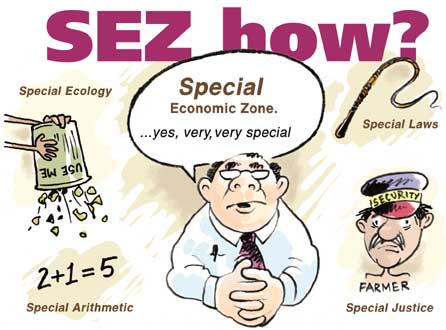
Special Economic Zones – how special?

Despite having burned its fingers with Industrial Development Zones (IDZs), which involved a few fiscal benefits (shrouded in legalese) and billions in infrastructure, Trade and Industry has gone into overdrive to push its new policy on special economic zones (SEZs). It has relaxed ‘locality’ for one, i.e. such zones need not be located in close proximity to an international port or airport. Moreover, SEZs are now being promoted to ‘compliment’ existing IDZs and not replace them as was erroneously suggested in an earlier post.

While the South African Department of Trade and Industry (the dti) is conducting public hearings on the matter, it is perhaps relevant to consider what the Free Market Foundation (FMF) – a think-tank on limited government and economic freedom – has to say on the matter. The content of the report might well attract support from some in the business community involved with manufacturing, distribution and logistics. Read the FMF’s evaluation of the dti’s SEZ Policy here!

While there are not many trade remedies available to local business many prospective requests have over the last decade been presented to establish so-called distribution centres/hubs and ‘virtual bonded warehouses’, which have not borne much fruit mainly due to the lack of a legal framework for their operation. Moreover, in government there is always a cautious resistance to liberalisation in customs and trade laws (they directly impact the fiscus) in the absence of viable risk mitigation strategies or remedies. Perhaps it has something to do with the dwindling public sector skills and experience levels available to conduct effective audits; although, the big audit firms would readily contest this and advocate the outsourcing of such function to the private sector. As the development of more sophisticated systems in SARS come on stream, ICT will no longer be an obstacle. Through increased automation comes the availability of additional human resources who can be up-skilled to perform audit work. Both Tax and Customs Modernisation programmes bare testimony to this.

The establishment of the IDZ programme (circa 2000) was fraught with inter-departmental tensions around the so-called benefits and concessions to be made available to foreign investors. The lack of a clear framework did not allow for much ‘liberalisation’ of controls and fiscal benefits. In fact the customs dispensation offered procedures and facilities to IDZs identical to that available in the national customs territory. Tax holidays and relaxed red tape are characteristic of some of the more successful SEZs around the world, as the article will attest. The dti’s latest SEZ Bill and Policy do not hint to any great length how things will be different this time round. There is however some firm calls within government to consider relaxed labour regulations – the test however lies in whether the policy makers have the appetite (or vision) to permit liberalisation in this area. I have a simple view on this matter – (i) create a favourable economic environment focusing development on SMMEs and entrepreneurship, and (ii) get the standard customs procedures and controls right through modernisation and there will be no need for ‘tax holidays’ and economic zones in this country!

Having difficulty understanding economic zones?

You can be forgiven if you have a clouded understanding of what an economic zone is. Countries develop different types of free economic zones (FEZs) as a tool to generate employment opportunities, promote and diversify exports, increase technology transfer and attract investment flows. Developing and emerging economies use FEZs as “economic laboratories”, “incubators” or showcases of a generally strong enabling environment and a competitive market for investment. In order to achieve the intended objectives of zones, governments offer a range of incentives from fiscal to regulatory such as export duty exemptions, streamlined customs and administrative controls and procedures, liberal foreign exchange policies and income tax incentives. Governments have been experimenting with the use of policy tools in ensuring the effectiveness of their zones; however they have not always been successful. Nowadays, governments are trying to move away from the traditional zones with the traditional set of objectives and policy tools to either more comprehensive or sector specific zones. In addition, they are trying to incorporate other development policy instruments to their policy packages to tackle other issues such as skills development, rural development and green growth while achieving the traditional objectives.

The first type of FEZs mostly took the form of free ports – customs free areas within seaports offering little more than warehousing and trade facilities. Over time, some free ports developed into customs-free zones in which light manufacturing and other processing took place. The next step was the development of export processing zones, which encourage more complicated manufacturing operations with the purpose of exporting. Later, special economic zones (SEZs) and specialized zones (SZs) evolved. SEZs offer a wider array of sectors including manufacturing and services that target both foreign and domestic markets. In addition, they permit on-site residence and provide all facilities to employees and hence could be viewed as standalone cities. On the other hand, specialized zones (SZs) focus on specific industries by providing the appropriate infrastructure and building on the concepts of clusters.

The terminology applied to free economic zones, in literature and common usage, is highly confusing. Words like “free zones”, “free trade zones”, “customs-free zones”, “special economic zones”, “export processing zones”, etc. are in practice used almost interchangeably. This reflects the implementing authorities’ linguistic preferences as much as functional differences between different kinds of zones.

Common to most FEZs is the fact that they are ring-fenced enclaves (with the exception of Single Factory/Private EPZs) that enjoy special regulatory, incentive and institutional frameworks that are different from the rest of the economy. The different classifications of FEZs are as follows:

  1. Free trade zones (FTZs; also known as commercial free zones): are fenced-in, duty-free areas, offering warehousing, storage, and distribution facilities for trade, trans-shipment, and re-export operations.
  2. Export processing zones (EPZs): are industrial estates aimed primarily at attracting export-oriented investments. They cover usually a wide array of manufacturing industries.
  3. Private zones/Single factory processing zones: provide incentives to individual enterprises regardless of location.
  4. Special economic zones (SEZs): are larger estates and could be considered cities on their own. They usually cover all industrial and service sectors and target both foreign and domestic markets. They provide an array of incentives ranging from tax incentives to regulatory incentives. In addition, they permit on-site residence.
  5. Specialized zones (SZs): targeted at specific sectors or economic activities. Examples of SZs include science/technology parks, petrochemical zones, logistics parks, airport-based zones, and so on. They may restrict the access of companies in non-priority sectors, and their infrastructure is mostly tailored according to their sectoral targets.

The distinction between the different kinds of zones must involve an element of judgment and sometimes zones fall in between categories. South Africa’s Industrial Development Zones (IDZs) combine elements of both 1 and 2 above. Most free zones restrict the access of certain categories of investors, without necessarily being classified as specialized zones. Also, it is not very clear how “special” a free zone’s regulatory environment must be before it can be classified as a SEZ. FEZs in their general definition can include a combination of characteristics from all the previously identified FEZs. I guess that while you still dont have a clear understanding of what an economic zone is, I hope the above has shed a little more light on the subject?

Draft Taxation Laws Amendment Bill, 2011 – Impact on Customs

As if the myriad of changes affecting the Customs industry are not enough, there’s some more important considerations for customs traders and practitioners, soon, posed by the Draft Taxation Laws Amendment Bill [2011].

Goods Sold in Bond. For the purposes of the VAT Act, the Bill proposes that ‘the value to be placed on the importation of goods into the Republic which have been imported and entered for storage in a licensed Customs and Excise storage warehouse but have not been entered for home consumption shall be deemed to be the greater of the value determined in terms of subsection (2)(a) or the value of acquisition determined under section 10(3) if those goods while stored in that storage warehouse are supplied to any person before being entered for home consumption.’

Duty free goods imported on a temporary basis. Goods imported in terms of Rebate Item 470.03, which are duty free, will in future have to be declared under a specific rebate sub-item for duty free goods. In addition, provision is also to be made for the importer of duty free goods, where the importer is contractually entitled to keep a portion of the goods manufactured, processed, finished, equipped or packed in lieu of payment for the operations carried out, that importer must:
a) export those goods within the 12 month period, or
b) process a goods declaration for payment of the VAT on the goods retained and pass a voucher of correction amending the quantity and value of the original declaration.

New tax incentives for Industrial Development Zones. Government is seeking to renew its efforts to enhance the Industrial Development Zone (IDZ) regime to encourage industrial development within certain geographical areas. The main focus of the incentive is to promote capital expenditure. Greenfield projects receive an additional 55% allowance and brownfield projects receive a further 35% additional allowance. The additional allowance for greenfield projects located in IDZ’s will be increased to 100% (instead of the current 55%) and to 75% for brownfield projects (instead of the current 35%).This change will be welcomed by IDZ Operators that are constantly looking for ways to make IDZ’s more attractive. In terms of the Customs and Excise Act, it should be noted that duty rebate and VAT dispensations ONLY apply to entities establishing licensed premises within the customs controlled area of an IDZ.

For more information on the above please click here!

The Draft Taxation Laws Amendment Bill, 2011 is available on the SARS website.