Future X-Ray Insepction Equipment to be based on Industry Standards

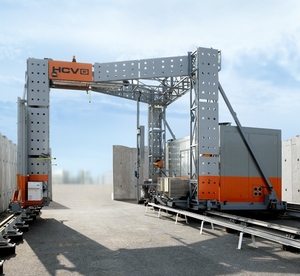
Smiths Detection HCV Scanner setup routine (Picture credit - Mercator Media)

Smiths Detection HCV Scanner setup routine (Picture credit – Mercator Media)

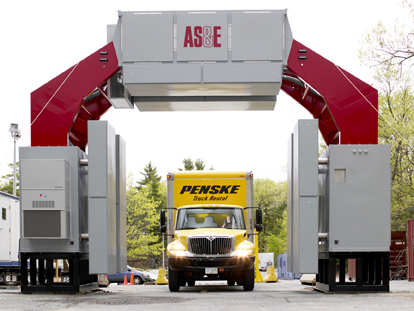
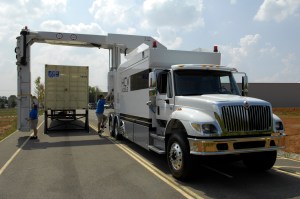
Innovative technology for the non-intrusive inspection of cargo and vehicles has rapidly emerged over the last decade to become a significant factor in port and border protection and homeland security. Several hundred high-energy mobile and fixed-site X-ray inspection stations are deployed throughout the world to examine passenger cars, trucks, trains, and shipping containers that transport goods bound for international destinations. Behind the scenes, cargo screening technology continues to be a story of innovation and change, driven by keen competition and a common mission to improve global security.

Early cargo screening systems were relatively slow and expensive to operate. They produced a limited resolution single-energy X-ray image, often using an isotope source such as Cobalt-60. The imaging software was rudimentary, and limited to simple controls such as pan and zoom, while computer processing speeds significantly limited inspection throughput. By contrast, most systems today are accelerator-based, which allows for higher energies, faster operation, and more precise controls. These systems incorporate software that takes advantage of improved computing platforms and features increasingly sophisticated analytics – this power has paved the way for the use of dual-energy accelerator sources and advanced detectors to facilitate material discrimination, enabling inspectors to identify threat objects more quickly, based on their composition.

Future developments in cargo screening are likely to follow a common innovation trajectory that is fostered by market needs and new technology, while being strengthened by existing intellectual property and evolving industry standards. Innovation is often perceived as a circular path beginning with customer needs that are identified by a technology developer. The developer then creates application technology in the form of products to meet those needs. With numerous competitors in the market, suppliers are motivated to continually improve their products. However, a more nuanced understanding incorporates the role of component technologies and the core capabilities of the technology developer. Each of these constituents influence and are influenced by their respective technology and regulatory standards, which then ultimately impact the products available to the customer. For the full report with diagrams, Click Here!

Component technologies and their standards are often driven by the needs of other markets and may only be tangentially connected with the market of interest. Consequently, developers often have minimal influence on these technology standards but will benefit by leveraging the investments already made by other organizations. ‘Components’ may be subassemblies (such as a computer graphics card) or entirely separate systems (such as a cloud computing service) that can be incorporated into a screening system to provide a complete customer solution. System providers benefit from these parallel technologies and component standards because they provide innovative insights and functional capabilities, such as interoperability, interchangeability, and known performance characteristics. In the case of cargo screening, there are many component technologies that are potential sources of future innovation. A few notable examples are described later in the report.

Because cargo screening is a youthful market with changing customer requirements and technology that is evolving to meet those requirements, existing industry standards are still in flux. This is beneficial for the cargo screening industry in that it provides ample room for innovation and development. As cargo screening technology continues to evolve and mature, the community will develop consensus in more areas and create additional standards. However, the standards process is slow and seldom speaks to the most current technology issues in an industry. For example, material discrimination is an important new feature offered by many cargo screening systems, yet there is little guidance from current industry standards to assess the performance of this technology. Source: www.porttechnology.org

SARS Customs launches its Water Wing

SARS Customs Waterwing

SARS plans to operate jet skis (such as pictured above) along its vast river borders. [Picture – SARS]

Last week four Customs officers received their qualifications from the South African Maritime Safety Authority (SAMSA) after having successfully completed their written and practical examinations. The officers who hail from the Northern Cape region will commence active patrol and enforcement operations along the northern border between South Africa and Namibia.

The SARS Water Wing skippers received their SAMSA category R certificates after completing a four-day training course at the Van Rhyn Dam in Benoni.

The officers will from next week begin patrolling the Orange River, the border between South Africa and Namibia, where there are suspected illegal trans-border transactions taking place, especially in abalone, diamonds, narcotics and rhino horn.

“These officials are now qualified skippers with category R licences which will enable them to patrol inland waters such as rivers, dams and harbours. The success of this pilot programme now enables us to actively assist in enforcing the Customs and Excise Act without being totally dependent on other departments,” said Hugo Taljaard, Senior Manager: Detector Dog Unit (Oversight).

He said that although the two jet skis will mostly be used in the Nakop area, they will also be utilised as far as Cape Town harbour in the small craft side of the harbour. There are plans to expand the unit. Customs’ first water wing boat is currently being constructed and more details about its deployment will be communicated in due course.  The jet skippers all agreed that it was quite exciting to be part of this pilot programme. “I never in my wildest dreams thought that one day I would be doing something like this,” remarked one candidate.  “Having jet skis will increase our visibility and this will serve as a deterrent to illegal trans-border traders,” added another.

Over the last 6 years SARS has steadily been increasing its visible policing and enforcement capability across the country’s vast land and sea borders. The hugely successful Detector Dog programme has attracted much national and regional attention. SARS also has plans to increase its existing non-intrusive inspection (NII) capability. Currently Durban, South Africa’s sole CSI port, is the only port with a dedicated X-ray scanning facility. Source: SARS Communications Division and self.

Nigerian Trade Procedures – Customs, Freight Forwarders on a warpath

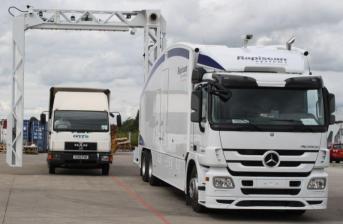
Mobile-scanner installed at Apapa Port as part of DI contract

Mobile-scanner installed at Apapa Port as part of DI contract

Destination Inspection takeover – it seems that all is not well. A stand-off between officers of the Nigeria Customs Service (NCS) and members of the freight forwarding community is festering over trade facilitation issues. The  long association between officials of the Nigeria Customs Service (NCS) and big time freight forwarders, including association leaders may have gone sour. THISDAY checks at the ports revealed that most leaders of freight forwarding associations are on the warpath with the Customs. The agents are aggrieved over what they described as high handedness on the implementation of trade policies by the Customs. They alleged that the Customs has in a bid to meet revenue targets embarked on measures that will force most traders who are mainly their clients out of business.

It is lead to believe that made some leaders of customs agents associations work against the Customs Service concerning the take-over of Destination Inspection from agencies handling the project. The Federal Government had extended the contracts of the Destination Inspection Agents (DIAs) by six months at a time that the Customs had prepared to take over the scheme. Customs had trained about 2000 officers for the scheme. The Service, it was gathered had also planned to inherit the scanning machines from the DIAs before the contract was extended. Indications are that the contracts may be further extended by more than one year at the expiration of six months. Since the extension was announced, many leaders of customs agents have not come out openly to condemn it.

Bone of Contention – When the NCS failed to introduce duty benchmark at the ports last year, the relationship between the it and freight forwarders has changed.Customs issues Debit Note (DN) to recover what is lost due in terms of under-valuation, this has often been abused as importers and their customs agents negotiate what to pay with some of the valuation officers responsible for this. So, the management of the Customs believed that the only way to address this problem was a duty benchmark which saves the importer. The idea of the benchmark was to check revenue losses as a result of under-valuation of goods coming into the country. However, the benchmark arrangement was dropped on the order of the Presidency. Since then, the Service has adopted other means to ensure that no revenue is lost, a development that has angered the clearing agents.

Duty Targets – With a revenue target of N1trillion last year, the Customs had worked hard to ensure that it meets its revenue target. The Service realised about N800bn. Freight forwarders are bitter that so many containers have been abandoned by their owners at the ports due to high-handedness by the Customs in terms of outrageous DNs on the goods. A member of National Association of Government Approved Freight Forwarders (NAGAFF) told THISDAY that the amount being issued as DN is such that many importers have been unable to pay. A top official of NAGAFF who did not want to be quoted said that it appears there is a grand plan by some officials of customs to frustrate some importers out of business by issuing outrageous DNs. “In some cases, the DN is such that the importer will be at total loss after clearing the goods. We have appealed to the management of the customs about this thing, but their officers have failed to come down on the value placed on these goods. Source: This Day (Nigeria)

Nigeria – Customs Ready (or not) for Destination Inspection Role

Nigeran flagTrade House of Representative Committee on Customs, has expressed satisfaction with the Nigeria Customs Service (NCS) preparedness to take charge of the destination inspection scheme at the expiration of the six months extension granted the Service Providers by the government. Chairman of the committee, Hon. Sabo Nakudu, who disclosed this during the tour to access the performance of service providers, commended the scanners provided by the service providers as part of the contract with the federal government.

Nakudu, however frowned at the Risk Assessment Report (RAR), issued by the service providers which he said is plagued with so much controversies. He noted that the basic reason for the tour, was to confirm the preparedness of the Customs to take over and to ensure that what the service provider delivered, are as expected. According to him, “In most cases, there are instances whereby this risk assessment report are duplicated or un-utilized and instances where a particular consignment being issued with different amount.

“Agencies found (to be involved) in this regard by the committee will be probed to ensure that refund is made to the federal government on the percentages gotten from the RAR duplication.” He warned.

Nakudu maintained that the service is ready and capable of taking over the scheme from the service providers at the expiration of the extension at the end of the six months period. In his words, ” I am convinced that the Customs are trained and as you can see, the scanners are in order, but our major problem is the area of the risk assessment report, because that is where the revenue comes in from.

He also, frowned at the services of connectivity to Web Fontaine, which powers the Automated System of Customs Data (ASYCUDA), over deficiencies in its service delivery, saying that, government pays the firm $6 million monthly, without any commensurate investment and efficiency to show for it.

The committee however toured the scanning operations site in the Lagos Ports Complex, Apapa and the Tin Can Island Port Complex, and also inspected Cotecna Destination Inspection Limited (CDIL) and Global Scan Systems facilities respectively. Source: Allafrica.com

I think Nigeria has made a bold (and correct) decision to adopt responsibility for control over its mandate. Many service providers will disagree as do many of the global audit firms who believe that the field of Customs Audit (including AEO) is best outsourced to their domain. It just shows that when business opportunity in the commercial (private sector) domain is not as easy to come by how the focus turns on what public domain opportunity lies in wake for them. The more service providers/consultants in government, the more consultants are needed to oversee what the original ones are doing! This is the sad situation in South Africa at the moment.

Belissima!

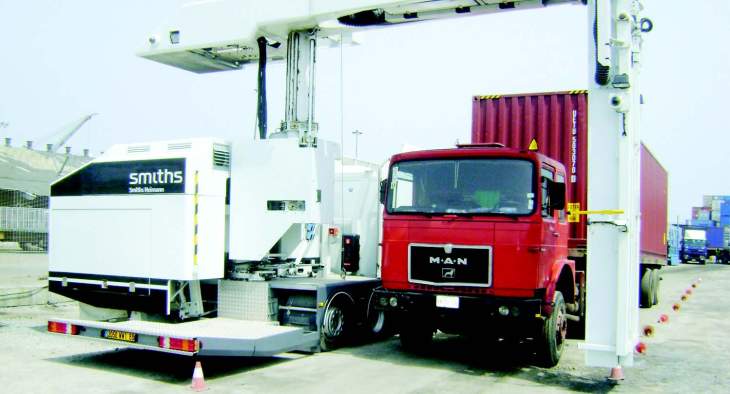
HCVG Inspection System - Smiths Detection

HCVG Inspection System – Smiths Detection

Smiths Detection has announced a €19m contract with the Italian Customs Agency to supply high-energy X-ray cargo scanners for deployment at six major ports including Naples, Genoa and Bari. According to Smith’s – “We have worked closely with Italian customs for many years, not only supplying detection systems but also providing the highest standard of after-market service. This latest contract underlines the continuing success of our customer-driven approach.”

The HCVG inspection systems, which can detect contraband, narcotics and weapons, will also be used for confirming cargo details to ensure customs and excise duty and trade taxes are in order. Click here for more technical details of the HCVG inspection system 

Able to inspect up to 20 containers, trucks or vans an hour, the gantry-mounted scanners can penetrate steel 330mm thick. A detailed X-ray image, which features organic and inorganic material discrimination using viZual imaging software, is produced by a single scan of the load.

Smiths Detection offers advanced security solutions in civil and military markets worldwide, developing and manufacturing government-regulated technology products that help detect and identify explosives, chemical and biological agents, radiological and nuclear threats, weapons, narcotics and contraband. It is part of Smiths Group, a global leader in applying integrated, advanced technologies to markets in threat and contraband detection, energy, medical devices, communications and engineered components. Smiths Group employs around 23,000 people in more than 50 countries. Source: Business Wire

Cargo Inspection – SGS ready to hand over to Customs

NigerianCustoms-BadgeAt the wake of call by some stakeholders for extension of concession period for direct inspection (DI) service providers at the nation’s ports, one of them, Societe Generale de Surveillance SA (SGS) Scanning Nigeria Limited, has reiterated its readiness to handover its cargo scanners and related services under the DI scheme to the Nigeria Customs Service (NCS) by the end of this month in line with the concession contract it entered into with the federal government through the ministry of finance. SGS Scanning Nigeria Limited,having fulfilled its contractual obligations under the DI scheme, is looking forward to a smooth takeover of its DI activities by NCS officers from January 2013.

In 2005, SGS, along with two other service providers was awarded a seven-year contract that commenced in January 2006, to supply cargo scanning machines on a build, operate and transfer basis (BOT) as well as training services and technical support on risk management, valuation and classification.

SGS has delivered on the deployment of cargo scanners and also trained more NCS officers than was stipulated in its contract. In addition, the company, in August this year, concluded the special training of 80 Customs officers tagged ‘DI Transition Team’ at the NCS Ikeja Training School, as part of her winding down activities. Additionally, SGS carried out renovation of some of the NCS training school facilities and provided computers and other equipment.

Furthermore, SGS believes all the NCS officers sent to us for training have been well prepared to take over the DI activities as from January 2013. (Comment: One would hope that the article appended below – Nigerian Customs officials cannot operate scanners – is dated or otherwise inaccurate. It would be grossly unwise for any arm of government to undertake this responsibility unprepared.) The seven-year DI Scheme can be regarded as a transition phase from the former Pre-shipment Inspection Scheme(PIS) to the next phase of NCS development. Therefore, the conclusion of our DI contract on December 31 will be a milestone for NCS.

Having been in Nigeria for more than 50 years, SGS will continue to support the economic transformation efforts of government should the opportunity arise. The company has been in Nigeria since 1957. Source: Leadership (Abuja)

Portable multi-purpose airport scanner

Flatscan portable scanner

Flatscan 27 portable scanner

Mondial Defence Systems provide the full range of CBRNe (Chemical, Biological, Radiological, Nuclear and Explosive) solutions to government, military and civil agencies.

The FlatScan 27 is a highly innovative flat portable battery-powered X-ray photodiodes system that has been specifically designed for high-speed and high-resolution inspection tasks. It incorporates a state-of-the-art 2D (two-dimensional) self-contained robust scanning detector, a laptop computer and a CP120B or CP160B portable constant potential X-ray generator to deliver real-time image processing. FlatScan 27 was developed in cooperation with specialised EOD (Explosive Ordnance Disposal) teams and comprises various unique features, specifically to meet any emergency situation. The technology will predominantly be of interest for applications used by the military, police, prisons and customs.

The FlatScan 27 comprises a large number of unique technological features and delivers a versatile and highly thin detector (thickness of just 55mm). This detector means that large objects with dimensions up to as much as 535 x 412mm can be scanned in just one attempt, even in situations where they might be located in very inaccessible places (e.g. close to a wall).

Flatscan 27 providing material discrimination and conventional scanning capability

Flatscan 27 providing material discrimination and conventional scanning capability

Furthermore, the FlatScan 27 delivers an excellent image quality with a high penetration capability (up to 34mm of steel at 160kV, 0.5mA). This is possible as a result of its sensitivity, the 800 microns resolution and the ability it offers for slowing down the speed of the scanning detector.

The FlatScan technology can be extended through a variety of options including materials separation. This involves the colour coding of a package to indicate whether the components inside are organic or inorganic in nature. This option delivers extra insight to the operator when making an informed judgment relating to the contents of suspect objects or packages.

The detector is equipped with a battery that lasts for two hours, while the two X-ray source cells each enable the development of up to 200 images. It should be noted that in cases of long-lasting laboratory applications, both items can be powered by optional mains power supplies.

For quick on site intervention, the FlatScan 27 detector can be easily transported in a backpack, while all accessories are stored in a carrying case. For more information visit – http://www.mondial-defence.com


Dog-inspired scent detector sniffs out explosives and narcotics

A team of UCSB researchers have mimicked the anatomy of a dog’s nose to build a highly effective scent detector that could be used to sniff out explosives and narcotics (University of California)

Combining nanotechnology and microfluidics, researchers at UC Santa Barbara have created a high-performance detector that draws inspiration from the anatomy of a dog’s nose to accurately identify substances – including explosives and narcotics – from very small concentrations of airborne molecules.

Able to detect smells ten thousand times as faint as humans can, a dog’s nose is an invaluable asset to police forces around the globe. So, when UCSB researchers set out to build an effective electronic nose that could assist homeland security, they already knew where they could find the perfect design.

By modeling the way in which a dog’s nose efficiently absorbs and then concentrates airborne molecules, the researchers were able to produce a device with remarkable performance, capable of capturing and identifying molecules in concentrations as low as one part per billion – as well, or better, than their furry counterparts.

Within the paperclip-sized chip, a network of microscale channels twenty times thinner than a human hair picks up the molecules and increases their concentration by a factor of up to a million. The molecules then interact with nanoparticles that amplify their spectral signature, and a miniature spectrometer detects their composition. The results from this analysis are then compared to a comprehensive database to find the closest match, identifying the molecule with a high degree of accuracy.

Even though it was first intended for use in explosives detection (the design will soon be commercialized for homeland security applications) this technology has much more far-reaching applications. Because it can be used to identify a very wide variety of molecules, the researchers say it could be easily adapted to detect narcotic substances, food that has spoiled, or even as a diagnostic tool that can identify disease, including certain forms of cancer. Source: http://www.gizmag.com.


The Case for Screening-as-a-Service

In an interview with The Maritime Executive, Peter Kant, executive vice president for Rapiscan Systems informed that the primary business of a port is serving as a hub for water-borne commerce and all of the logistics that entails, with each port competing for the business of shippers and container operators. Every investment made by a port authority, from a crane to a dredge to a security checkpoint, must be based on how this activity will not only position the port to current customers, but how it will affect the attraction of future customers.

Increasingly, however, these investments are including more and more security needs, from container scanning equipment to operator training to security architectures. Security, and in particular security screening, is not the core business of a ports authority, but compliance with national and international guidelines demands that certain security standards be met, or losing customers will be the last of a port authority’s worries.

But even though security screening is an absolute necessity, many ports are looking to get out of the security game altogether. But will the departure from security make ports less secure…or could it actually enhance cargo scanning operations?

The Heavy Burden of Screening
As mentioned earlier, port authorities are not experts when it comes to security, especially a task as granular as cargo screening. It’s not just about a “mean guard and a magnet” when it comes to screening anymore, and this especially holds true to the world of maritime cargo. First, the right technology must be installed, a solution that can effectively analyze cargo for potential contraband or threats, both conventional and radioactive. Then, a port authority must determine the best location for the screening checkpoint, and oversee the construction of the location, both in terms of port impact and traffic optimization.

Next come the installation and calibration of the scanning technology, as well as the hiring and training of security operators. The authority must also establish a workflow for what happens when a container is flagged – what requires a manual inspection? Who approves such an operation? What remediation must take place after the fact?

The fact of the matter is, cargo scanning isn’t just about putting containers through an X-ray machine. It’s much, much more than that, and consumes enough time that establishing and running a checkpoint can adversely affect port business.

But there is an easier way to run cargo screening operations. Port authorities are experts in maritime commerce, so why shouldn’t they turn to experts in security screening to run cargo scanning operations?

Cargo Scanning-as-a-Service
Rather than trying to become cargo screening experts overnight, port authorities can take advantage of a major trend in the overall security world: security-screening-as-a-service. Essentially, port operators form a partnership with an experienced security screening solutions provider, tasking the provider, not the port, with the onus of establishing and running a cargo scanning checkpoint.

Other than the obvious benefit of freeing the port authority from the security logistics headache, why turn to cargo screening as a service? For one, 100 percent screening in the United States has not gone away…at least not yet. But even if the requirements on cargo entering the USA are loosened, port screening for contraband is not going to decrease – in this economic climate, governments want to ensure that everything that can be taxed is taxed. This is a nightmare scenario for port authorities to deal with, but one with which screening solutions provider are comfortable. With their experience in the field, these providers can find the right equipment and checkpoint set-up to be as thorough and detailed as needed when it comes to cargo scanning, ensuring that not only are potential threats detected, but any contraband can be swiftly dealt with by the appropriate authorities.

Going with an experienced screening partner can also add radiation detection capabilities, a growing problem in the world of maritime commerce. Radioactive materials, either improperly labeled or being shipped as contraband, can shut ports down for days and are impossible to detect via conventional cargo screening technologies. By utilizing screening-as-a-service, however, port authorities can place this additional burden on the solutions provider, which has the experience and the right capabilities to detect radiation alongside conventional contraband and threats.

Training of security operators is another headache that cargo scanning as a service eliminates for the port. The difference between a major international incident and millions of dollars in fines can hinge entirely on the competency of a security screening operator. Do port authorities really want to be responsible for the skills of these professionals, especially when it’s in a field far outside of their comfort zones?

With cargo scanning as a service, training falls into the lap of the solutions provider, a task with which they are well familiar. Because they have built, installed and maintained the security technologies selected, these organizations best understand how to train professionals on the ins-and-outs of analyzing scanned images and detecting potential threats and contraband.

The service also gives ports a major competitive advantage, as a well-designed, specially-staff cargo scanning checkpoint makes the entire security process far easier for customers to deal with. Throughput is often increased, meaning that cargo makes it to its end destination more quickly and with fewer roadblocks, a paramount concern for shippers everywhere. Even a few hours delay can be costly, especially when perishable goods like imported produce are involved.

The Real World
Perhaps most importantly, cargo-scanning-as-a-service is not a pipe dream or some theoretical solution for ports. It’s already in practice and being used by some of the largest customs and port operations in the world.

The Ports Authority of Puerto Rico, for example, utilizes cargo-screening-as-a-service from a customs perspective, ensuring that no contraband is entering the island through its major ports. By enlisting an outside, specialized security solutions provider, the Port has increased throughput without sacrificing the integrity of its customs or security operations.

The Mexican Customs Authority has also turned to a wide-ranging cargo-screening-as-a-service solution for their operations, both land-locked and maritime. The major project has just recently been undertaken, but ultimately the vast majority of Mexican ports will soon be turning to screening-as-a-service when it comes to cargo, freeing the ports to focus on the business, not contraband detection.

Detecting threats and contraband via maritime cargo is not going to get any easier. If anything, smugglers, criminals and terrorist organizations are becoming more and more clever when it comes to getting illicit goods, weapons and hazardous materials across national borders. Port authorities trying to stay one step ahead of these issues are in for a struggle, as other aspects of the port business suffer.

Keep the port operator’s attention where it belongs (on the port) and let specialized experts handle the cargo scanning burden. It’s proven, it works, and it’s the best way forward to maritime prosperity and safety. Source: The Maritime Executive

Dynamic X-Ray imaging – detecting objects or living creatures

The conventional image (left) and the dynamic image (right) of a pack of rice containing mealworm larvae

The conventional image (left) and the dynamic image (right) of a pack of rice containing mealworm larvae

X-ray inspection systems are a standard feature in many ports. These X-ray systems have the unique ability to non-destructively image the contents of entire cargo containers in just a few seconds. It is a difficult task, however, to identify what is in the container based on the obtained X-ray images. The superposition of two images with different contrasts – like in dual-energy X-ray imaging – can enhance the effectiveness of the detection. A novel X-ray imaging technology now introduces an entirely new type of contrast based on movement. This technology can be combined with existing single-energy and dual-energy X-ray imaging methods, opening new possibilities in port security applications.

One important application of the dynamic imaging technology could be finding stowaway pests in the cargo. Stowaway pests travel hidden within transported goods and may damage the cargo while being shipped. In addition to this, potentially invasive species often travel as stowaway pests and arrive to new territories unnoticed. Although better part of these exotics are harmless, approximately 20 to 30 percent of the introduced species are pests and cause major environmental and economic problems. Read the full article here! Source: Porttechnology.com

Detector dog unit expanding its paw print across the country!

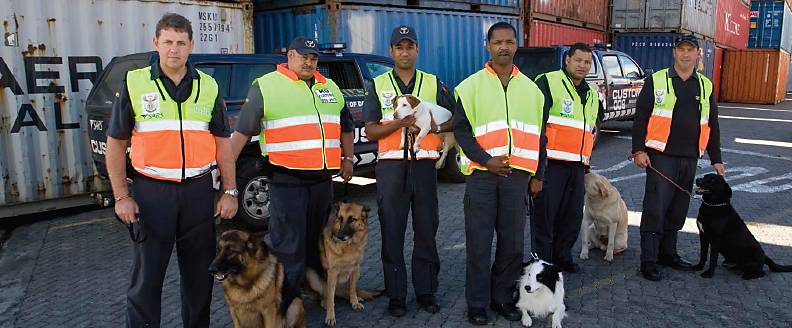
On a subject close to my heart. The National Detector Dog Unit of the South African Revenue Service (SARS) is getting a boost with more than 70 new dogs and handlers being trained to make up a number of new dog units around the country. Apart from filling a couple of current vacancies, the new recruits will form part of Detector Dog Units in Port Elizabeth, Zeerust, Mahamba, Vioolsdrift, Nakop, Maseru Bridge and an expanded Mpumalanga unit. All the additional units are expected to become operational in the first quarter of 2013.

“By next year, most of the major land, sea and air ports should have their own detector dog units (DDU),” said the senior manager of the DDU, Hugo Taljaard. “The ultimate aim is to have dog units at every port, with a total of 500 new handlers and dogs needed. However, this is a long-term (four-year) project, aimed at enhancing our non-intrusive capabilities at ports of entry to prevent cross-border smuggling.”

The SARS Detector Dog Unit has also been asked recently to assist with training in Namibia and Angola, following the assistance we gave the Mauritius Revenue Authority (MRA) to establish a Detector Dog capability. The DDU continues to see major successes countrywide, with a recent copper bust in the news last weekend.

Detector dog Umaga, an 18-month old German Shepherd, sniffed out 84kg of copper at the Beit Bridge border post during his first operation. Umaga recently completed his training as a copper sniffer dog. The copper was concealed in luggage in a trailer entering South Africa. Umaga is the second sniffer dog to be trained to sniff out copper. Milo, a five-year-old Labrador, has also already nosed out his first contraband copper. There has been an increase in the smuggling of copper wire across the border into South Africa, since copper has a much higher value here than in the other member states of the Southern African Development Community. The increase has meant that Customs has had to beef up its ability to detect contraband copper. The wire is usually concealed in compartments under trucks.

The Detector Dog Unit was the first in the world to train “dual application dogs”, Hugo explained. So instead of being trained or “imprinted” to detect only one scent, they are able to detect a combination of scents, e.g. narcotics and currency, tobacco and endangered species. Both Milo and Umaga are dual dogs and they can detect narcotics/tobacco and copper wire. The explosives detector dogs are the only dogs not dual trained due to the safety risk.

The dogs are an integral part of our Customs workforce and are seen as officers in their own right. They are therefore looked after with the utmost care and attention and are even provided with special reflector jackets, cooler jackets for the heat and dog shoes made to protect their feet from hot surfaces. Source: SARS Communications Division

Nigerian Customs Boss unveils new scanners

The Comptroller General, Nigerian Customs Service (NCS), Alhaji Inde Dikko Abdullahi, said that ports users would henceforth complete their business transactions within 24 hours. Speaking at the formal unveiling of the gantry scanner procured by Societe Generele Surveillance (SGS) Nigeria at Onne, Eleme Local Government Area, Rivers State, he said the new scanning facilities would boost the 48-hour target for clearance of goods at the ports, noting that it would complement government’s efforts toward reducing the cost of doing business at the ports.

Special training for a select team of 80 NCS officers has been concluded. The team is expected to take over services and operations in the Destination Inspection scheme as from January 1, 2013. The training covered all aspects of the DI activities being handled by SGS for NCS with emphasis on actual risk analysis and processing of the importer’s final document resulting in classification and valuation opinion.

Managing Director of SGS Scanning Nigeria Limited, Mr. Nigel Balchin, in his address at the occasion, said the mobile cargo scanners were capable of scanning about 34 trucks per hour as against 16 per hour by the fixed cargo scanners. Each had double tunnel that enabled it scan two trucks at the same time with equal image quality as the fixed scanner. “At SGS we are committed to quality service delivery. We are very glad to be part of this success story and we look forward to Nigeria Customs Service taking charge of the DI programme. The knowledge you have acquired is for the benefit of Nigeria Customs Service and ultimately that of the Nigerian economy. We wish you the best in your future endeavours”, he said.

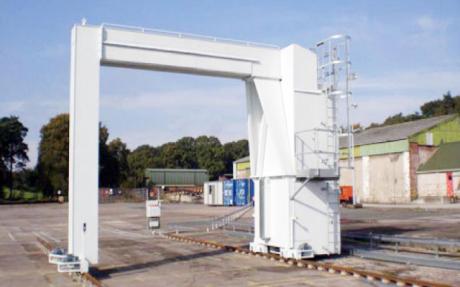
The image quality of the relocatable gantry scanners is on par with a fixed scanner. Trucks remain stationary during scanning (the scanner moves on rails) unlike a fixed scanner where the truck is pulled through the scanner on a conveyor that’s more vulnerable to maintenance issues. The scanner is mounted above ground unlike a fixed scanner where one of the detectors is four metres underground. In addition, a relocatable gantry scanner can be re-deployed to an alternative site, in a relatively short time, in case of any expansion or new development.

SGS is one of the service providers contracted by the Federal Government to assist the NCS facilitate trade through risk management and use of non-intrusive inspection (x-ray cargo scanning) of imports routed through the nation’s air and sea ports as well as approved borders. The company is currently providing cargo scanning services in Bahrain, Cameroon, Haiti, Madagascar, Uruguay and has completed provision of scanning services in Gambia, Kosovo and Mexico.  Source: Leadership.ng

Optimising a layered port security system

Today, there are many different security inspection technologies available. These technologies may be combined in an attempt to achieve a better result. How the systems are combined strongly affects the results achieved, and different applications may require different combinations. This paper will examine several examples.There are three major applications for screening technology today: Revenue enhancement, contraband detection, and nuclear weapons of mass destruction detection (WMD). Several technologies that can be used are: Portal monitors, gamma ray imagers, high-energy X-ray imagers, and neutron systems. Matching the application and the technology correctly is critical. Port Technology International has published a paper on port security optimization, which addresses the various technologies and approaches towards optimisation of threats, namely revenue, weapons of mass destruction, and contraband highlighting the need for layered technology inspection systems to reduce false positives and enhance enforcement detection capabilities. Read the paper here! Source: Porttechnology.org

WCO News – 60 year Anniversary Edition

The Organization is celebrating its 60th anniversary, an occasion which gives the global Customs community the chance to reflect on where the WCO began, where it is now, and where it hopes to go in the future. This issue highlights some of the WCO’s milestones past and present, we take a brief look at the WCO’s historical beginnings and subsequent development, follow one man’s forty year Customs journey, look at the history of containerization: the box that changed the world, and even step back to 1969 when the Apollo 11 touched down on the surface of the moon. In this dossier, not only does the WCO look back with pride, but also looks forward with optimism, conscious of the fact that the WCO has served the global Customs community with dedication for sixty years, and will continue doing so to ensure that Customs administrations remain well-positioned to deliver effective and efficient services around the world. Also in this issue –

  • Doorless containers now a reality,
  • US/EU mutual recognition programme,
  • New guidelines included in WCO Revenue Package,
  • Globally Networked Customs,
  • GS1 and the WCO,
  • Algeria Customs and performance management,
  • Georgia’s success in rooting out corruption,
  • Hong Kong moves forward with its e-Lock plans.

Source: http://www.wcoomd.org

Advanced security imaging technology

DebTech is the technology business unit of De Beers, one of the top ranking diamond mining companies in the world. DebTech specialises in the development, manufacture, supply and worldwide support of innovative products and services for applications in diamond exploration, sorting and security.

The Scannex full body, low dose, X-ray scanning system was developed during the early 1990s for the primary purpose of deterring the theft of diamonds by diamond mine employees. The Scannex unit has application in many areas where contraband detection is required, such as airports, international sports events, prisons, border control and other high security installations.

The system produces high resolution and high contrast full body X-ray images of personnel. A single scan takes approximately ten seconds and the person being scanned remains stationary and is protected from the moving parts of the machine. The X-ray level required per scan is equivalent to that experienced on a two hour international flight. This allows an individual to be scanned up to 200 times per year and still not exceed the US Department of Health recommended safe limit for public exposure. The images are displayed on digital monitors and trained image analysts are able to identify items of a nonanatomical nature that may be concealed on or within the body.

To assist in the identification of foreign objects, human anatomical features are de-emphasized in the displayed images. This has the additional advantage of protecting the dignity of the individual being scanned. The display software comes standard with several image enhancement functions to further assist identification of suspect items. The display system is designed such that the viewing monitors can be located remotely from the scanning booth. This not only contributes to the protection of the scanned subject’s privacy but also decreases the opportunity for collusion between the scanned subject,the scanner operator and the image analyst. Up to four monitors may be connected to a single scanner to increase the rate of people being scanned. At the De Beers Namibian operations up to 90 scans per hour have been regularly achieved through one unit.

The Scannex system is optimised to differentiate diamond,a material with relatively low X-ray absorption properties, from human anatomical features. This also enables the system to indicate the presence of other materials with similar low X-ray absorption properties, such as explosives, drugs, plastic fluid containers and syringes. Metallic items, including knives, guns and detonator wire are very prominent in the full body images by virtue of their significantly higher X-ray absorption properties.

For counter terror and border control applications that do not require the high performance characteristics of the original Scannex unit, DebTech is currently developing a smaller footprintand lower capital cost addition to the Scannex range. This is planned to be available late 2012. For the full report click here! Sources: Port Technology International and debtech.com