ZIMRA, Business to form Customs Forum

The Zimbabwe Revenue Authority (ZIMRA) is working in partnership with organised businesses associations in crafting a Memorandum of Understanding, creating the Zimbabwe Customs to Business Forum, an official has said. ZIMRA’s commissioner for customs and excise Mr Happias Kuzvinzwa said last week that the forum was a platform for his organisation and business to collaborate on issues of compliance, policy, capacity building, integrity and technical engagements. He was addressing delegates at the Shipping and Forwarding Agents’ Association of Zimbabwe 8th annual conference held in Beitbridge last week. Mr Kuzvinzwa said the interim steering committee was finalising the draft MoU and terms of reference.

“The forum is a prelude to the implementation of the authorised economic operator scheme. Membership of this forum is open to the businesses affiliated to recognised associations and shall be governed through a steering committee which is a higher committee, and standing committees which are lower committees chaired and constituted by both ZIMRA and business.

“The standing committees are organised in clusters for easy management of programmes. We expect all the concerned parties to sign the MoU soon upon its finalisation” he said.

Mr Kuzvinzwa added that in line with the SAFE framework of standards, ZIMRA would soon be plotting the authorised economic operators. He said the scheme sought to reward all compliant operators in the supply chain who meet the set criteria. He added that groundwork had been done and teams will be conducting stakeholder consultations and awareness workshops next month. “I would also want to urge the freight industry to embrace as a culture and operation ethos integrity, voluntary compliance, relevant competencies, and information technology.

“Missing these industry risks is being packed into the dustbin of history as you become irrelevant and classified as non-tariff barriers.” he said. Mr Kuzvinzwa added that ZIMRA was also in the process of putting in place a border agency single window through ASYCUDAworld. He said all border agencies would be connected to the workflow process through ASYCUDAworld to ensure that respective mandates are coordinated and streamlined.

“Discussions are at an advanced stage with other border agencies on the implementation of the single window and Beitbridge has been selected to pilot the programme with ZIMRA providing computer workstations at their respective offices,” he said.

Source: The Herald (Zimbabwe)

TKC Pilot – linking regional Customs systems through the “Cloud”

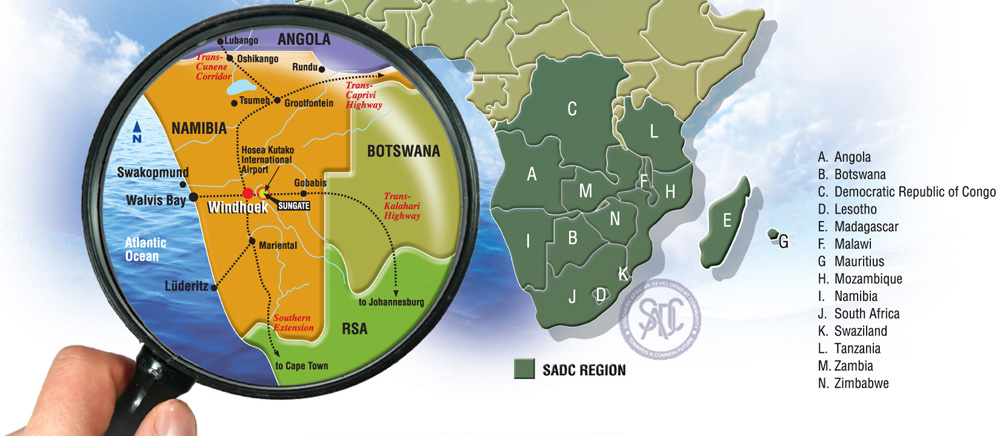
FTW Online recently published an update on recent developments occurring along the Trans-Kalahari Corridor (TKC). It suggests that customs systems throughout the SADC region could soon be talking to each other through the Internet, if the pilot project between Namibia and Botswana is successful. During July 2011, the Southern African Trade Hub unveiled a plan to initiate a pilot programme to link the ASYCUDA systems of Namibia and Botswana via Microsoft’s Cloud Computing technology. Both Microsoft and USAID are partners in this initiative seeking to enable the two customs systems to communicate with each other through a secure portal. View the keynote presentation at the 2011 World Customs Organization IT Conference and Exhibition – Seattle, Ranga Munyaradzi (SATH) and Namibian Customs Commissioner, Bevan Simataa, were invited on-stage to elaborate on this initiative – click here!

According to Oscar Muyatwa, executive director of the Trans-Kalahari Corridor Secretariat, the initiative holds the prospect of opening up African opportunities in the United States for exports, as it is being supported by USAID as part of the African Growth and Opportunities Act (AGOA). Both Namibian and Botswana Customs officials are to be trained in Cape Town over the next few months. The TKC Secretariat believe this initiative will bring about its vision of a ‘automated corridor’. Further ahead the TKCs envisages the establishment of One Stop Border Posts (OSBPs) to reduce border dwell and transit times. Muyatwa says ‘The ‘cloud’ will maintain vast volumes of transit data that will assist future planning along the corridor as well as revenue and budgeting forecasts’. Source: FTW Online.

Comment: lest there be any confusion amongst Customs users, traders and carriers, the concept of cloud computing in the Customs sphere is very ‘clouded’ at this point. What needs to be considered is the ‘ownership’, rights to ‘access’ and ‘integrity of use’ of such information. Furthermore, as this is a first-of-its-kind initiative (in Africa at least); it would be highly recommended that the participants and developers ‘share’ details of the approach with other SACU members in order to better understand the programme. Up to this point it is very unclear how the developer has gone about the integration of customs information, for instance, since ‘users’ have not been fully involved in the scope, proof-of-concept or design of the system. 

Related articles

Enhancing South Africa’s and Africa’s development through Regional and Continental Integration

Hardly a week goes by without some or other African politician waxing lyrical about continental integration, continental trade diversification, and a wholesome analysis of the ‘barriers’ which prevent the African continent  from reaching its full economic potential. No doubt I’m a bit biased in relaying the recent ‘public lecture’ of our deputy President Kgalema Motlanthe at the University of Finlandread the full speech here! Plenty of insight clearly delineating a plethora of barriers; yet, are we African’s so naive not to have identified these barriers before? Evidently yes.

In recent weeks, on the local front, we have learnt that One Stop Border Posts (OSBPs) is the solution to non-tariff barriers. This topic was drilled amongst the press till it got boring. The focus soon thereafter shifted to the implementation of a border management agency (BMA) – all of government under one roof – so simple. The reality is that there is no silver-bullet solution to African continental integration. Of this, affected business, Customs administrations and the international donor community is acutely aware. While the WTO and the multitude of trade lawyers will ‘yadder’ on about ‘diversification’ in trade, the reality is that Africa’s raw materials are even more sought after today than at an any time before. Certainly those countries which contain vast resources of oil and strategic minerals are about to reap the benefits. So why would African countries be concerned about diversification when the petro-dollars are rolling in? Perhaps greed or lack of foresight for the medium to long-term well-being of countries and their citizens? The fact remains, without homegrown industries producing goods from raw materials, most of  Africa’s eligible working class will continue to be employed by foreign mineral moguls or the public service.

Several customs and infrastructure solutions have over the last few years emerged with the usual credential of “WCO or WTO compliant”. Africa has been a guinea pig for many of these solutions – ‘experiments’ if you prefer. Literally millions of dollars are being spent every year trying out so-called ‘best-of-breed’ technology which users unfortunately accept without much questioning. The cart is being placed before the horse. Why? because the underlying route cause/s are not being identified, understood (sufficiently) and prioritized. Insofar as there exists no silver bullet solution, neither is there a single route cause in most cases. Unfortunately, donor aid often comes with its own pre-conceived outcomes which don’t necessarily tie in with those of the target country or the well-being of the continent.

While governments like to tout the ‘big-hitting’ projects, there are several ‘less exciting’ (technical) areas which countries can address to kick-start the process. One of these has even been recognised by the likes of the World Bank and OECD notwithstanding capital-intensive programs which promised much and have not delivered fully on their promise.  The issue at hand is the harmonisation of customs data. It might at first sound irrelevant or trivial, yet it is the key enabler for most Customs Modernisation initiatives. While there is still much anticipation in regard to the forthcoming deliberation and outcome of the WCO’s Globally Networked Customs (GNC) initiative at June’s WCO Policy Commission session in Brussels, there is significant support for this approach on the African continent. The momentum needs to be maintained.

 Related articles

South Africa – Cyber thunder in the clouds

The following article is very pertinent to any organisation or group considering cloud computing. Soft-marketing tends to delude would-be users into believing they will have full control over their data, and as such, is fully secure. Even in the international Customs and Border Management space there is lots of talk on this subject, yet very little substance. Unfortunately, organisations and individuals are slaves to the technology they use which fashions not only their work ethic but attitudes as well. It is no longer true that technology is a ‘tool’. More time and money is spent these days on technology choice than on training and education. In fact technology is so important it influences law-making and business operations, rendering human discretion obsolete in many instances. Therefore it is imperative that organisations involve business and legal experts in their systems development. 

The recent spate of hackings and electronic security breaches serves to highlight the endemic threat and associated cost of cyber crime. Globally, organisations are forced to reconsider their cyber security measures as cyber criminals become more audacious and technologically innovative. Crimes can take place in both the physical and the electronic medium, with the possibility of technology infrastructure being used as both a “subject” and an “object” of a crime.

The criminal justice system faces a number of challenges in the successful prosecution of cyber crimes. While the Electronic Communications and Transactions Act of 2002 does create a framework for criminalising cyber crimes, including hacking, it does not provide any concrete preventative measures to combat cyber crime. The technical and often remote nature of cyber crimes, including multi-jurisdictional issues where cyber criminals are operating abroad, often prevents prosecutors from being able to present viable cases and bring cyber criminals to book.

Fortunately, the South African government has acknowledged that more proactive measures are required to address the scourge of cyber crime. Cabinet has recently approved a National Cyber Security Policy published by the Department of Communication. The policy creates, among other things, a platform for the creation of a number of structures that would be responsible for analysing and responding to the threat of cyber crime with the ultimate objective of mitigating the effects of cyber crime in South Africa. The State Security Agency has been tasked with responsibility and accountability for the implementation of cyber security measures. It is hoped that this policy and the measures it intends to implement results in the prevalence of cyber crime in South Africa being effectively addressed and countered. Organisations should, in addition to any measures being taken by government, continue to carefully assess their cyber security measures proactively, including by implementing robust systems, particularly in instances where personal data is processed (which includes the collection, recording, transferring or storing of such personal information). The Protection of Personal Information Bill requires the implementation of “appropriate” security safeguards where an individual’s personal information is processed. What will be considered appropriate will need to be determined on a case by case basis and with reference to steps taken in foreign jurisdictions, which may provide guidance in interpreting this requirement.

On account of the fact that there is no way to precisely document the far reaching effects of cyber crime, individuals, organisations and government must ensure that a more cautious and prudent approach is adopted to manage security in any electronic environment. Source: SAPA

GNC – not just another acronym, but the latest Customs buzz-word

WCO - Globally Networked Customs

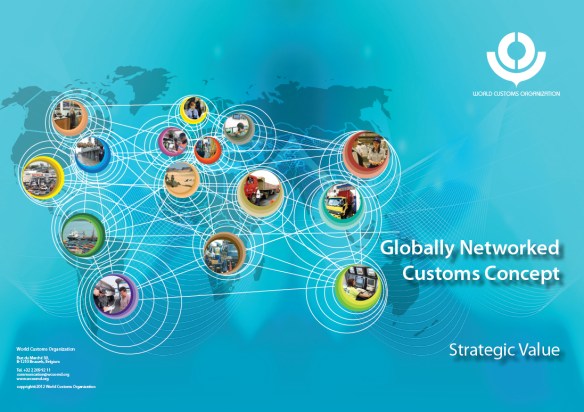
With the WCO Council Sessions later in June this year, it is opportune to discuss perhaps one of the single most important developments in Customs Inc, the “Globally Networked Customs (GNC)” concept which aims to realize connectivity, data exchange, and cooperative work amongst the world’s customs administrations.

GNC is set to play a very important role in promoting trade facilitation, enhancing trade efficiency and safeguarding trade security; it will also greatly influence international rules and the development of the customs end-to-end operational process. By and large the SAFE Framework, WCO Data Model and the Revised Kyoto Convention provide specific standards for the development and implementation of national customs legal, procedural and automated systems. It is the GNC that will in future “industrialise” and harmonise Customs-2-Customs (C2C) information exchange requirements which underpin a country’s bilateral and multilateral trade agreements.

Briefly the need for GNC arises from the exchanges of information underpinning International Agreements in the commercial domain. These take time and are costly to implement. They are all different from each other creating diversity both for Members and trade. This is because each one of these agreements is built anew, handcrafted and tailor-made to meet the needs at hand. This approach will not scale up and countries broking an increasing number of International Customs Agreements are already encountering difficulty to maintain their delivery plan in line with their international policy ambitions. Below you will find links to 2 documents explaining the GNC. More information on the GNC will be provided once approved by the WCO’s Policy Commission later on in June 2012. Source: WCO.

Related articles

Advancing the argument for sealing cargo and tracking conveyances

South African Customs law provides for a seal integrity regime. This consists in provisions for the sealing of containerised sea cargo as well as sealable vehicles and trailers. These requirements have, however, not been formally introduced into operation due to the non-availability (until recently) of internal systems and cross-functional procedures that would link seal integrity to known entities. To explain this in more layman’s terms, it is little use implementing an onerous cargo sealing program without systems to perform risk assessment, validation of trader profiles and information exchange. It’s  like implementing non-intrusive inspection (X-ray scanning) equipment without backward integration into the Customs Risk Management  and Inspection environment and systems. It has often been stated that a customs or border security programme is a layered approach based on risk mitigation. None of the individual elements will necessarily address risk, and automation alone will likewise not accomplish the objective for safe and secure supply chains. Moreover, neither will measures adopted by Customs or the Border Agency succeed without due and necessary compliance on the part of entities operating the supply chain. It therefore requires a holistic strategy of people, policy, process and technology.

In the African context, it is surmised that the business rationale will be best accomplished with a dual approach on IT connectivity and information exchange. Under the political speak there are active attempts within SACU, SADC, COMESA and the EAC to establish electronic networks to facilitate and safeguard transit goods. Several African states are landlocked and are not readily accessible, some requiring multiple transit trips through countries from international discharge in the continent to place of final destination. National laws of each individual country in most instances provide obstacles to carriers achieving cost effective means in delivering cargoes. Over and above the laws, there exists (regrettably) the need to ‘grease palms’ without which safe passage in some instances  will not be granted. Notwithstanding the existence of customs unions and free trade areas, internal borders remain the biggest obstacle to facilitation.

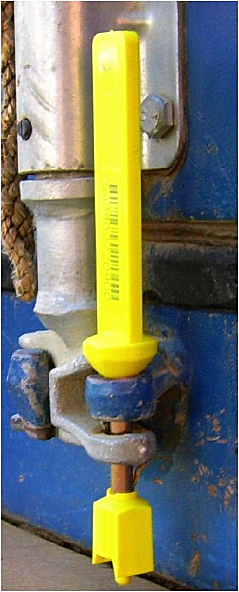
Several African logistics operators already implement track and trace technology in the vehicle and long-haul fleets. This has the dual purpose of safeguarding their assets as well as the cargoes of their clients which they convey. Since 9/11, a few customs administrations have formally adopted ISO PAS 17712 within their legislation to regulate the use of high security seals amongst cargo handlers and carriers. In most cases this mandates the use of high security ‘mechanical’ bolt seals. However, evidence suggests there is a growing trend to adopt electronic seals. Taiwan Customs for one has gone a significant way in this regard. Through technological advances and increased commercial adoption of Radio Frequency Identification (RFID) technology the costs are reducing significantly to warrant serious consideration as both a viable and cost-effective customs ‘control’ measure.

Supply chain custody using RFID as an identifier and physical security audit component – as provided for in ISO 17712 – is characterized by the following:

  • it uniquely identifies seals and associates them with the trader.
  • the seal’s unique identity and memory space can be used to write a digital signature, unique to a trader on the seal, and associating that seal with a customs declaration.
  • using customs trader registration/licensing information, together with infrastructure to read seal information at specified intervals along a route to create a ‘bread-crumb’ audit trail of the integrity of the cargo and conveyance.
  • using existing fleet management units installed in trucks to monitor seal integrity along the high risk legs of a cargo’s transit.
  • record the seal’s destruction at point of destination.

Looking forward to the future, it is not implausible for customs and border authorities to consider the use of RFID:

  • as a common token between autonomous customs systems.
  • to verify and audit that non-intrusion inspections have taken place en-route, and write that occurrence to the seal’s memory with the use of an updated digital signature issued to the customs inspection facility.
  • to create a date and time stamp of the cargo’s transit for compliance and profile classification – to confirm that transit goods have actually left the country as well as confirm arrival at destination (to prevent round tripping).
  • Lastly to archive a history of carrier’s activities for forensic and/or trend analysis.
This is a topic which certainly deserves more exposure in line with current regional developments on IT-connectivity and information exchange. A special word of thanks to Andy Brown for his contribution and insight to this post.
Related articles

WCO/SACU – IT Connectivity and Data Exchange

WCO-SACU IT Interconnectivity and Data Exchange Conference

On the occasion of International Customs Day, in January earlier this year, the World Customs Organisation dedicated 2012 as the year “Connectivity”, which encapsulates people connectivity, institutional connectivity and information connectivity among the members of the global Customs community.

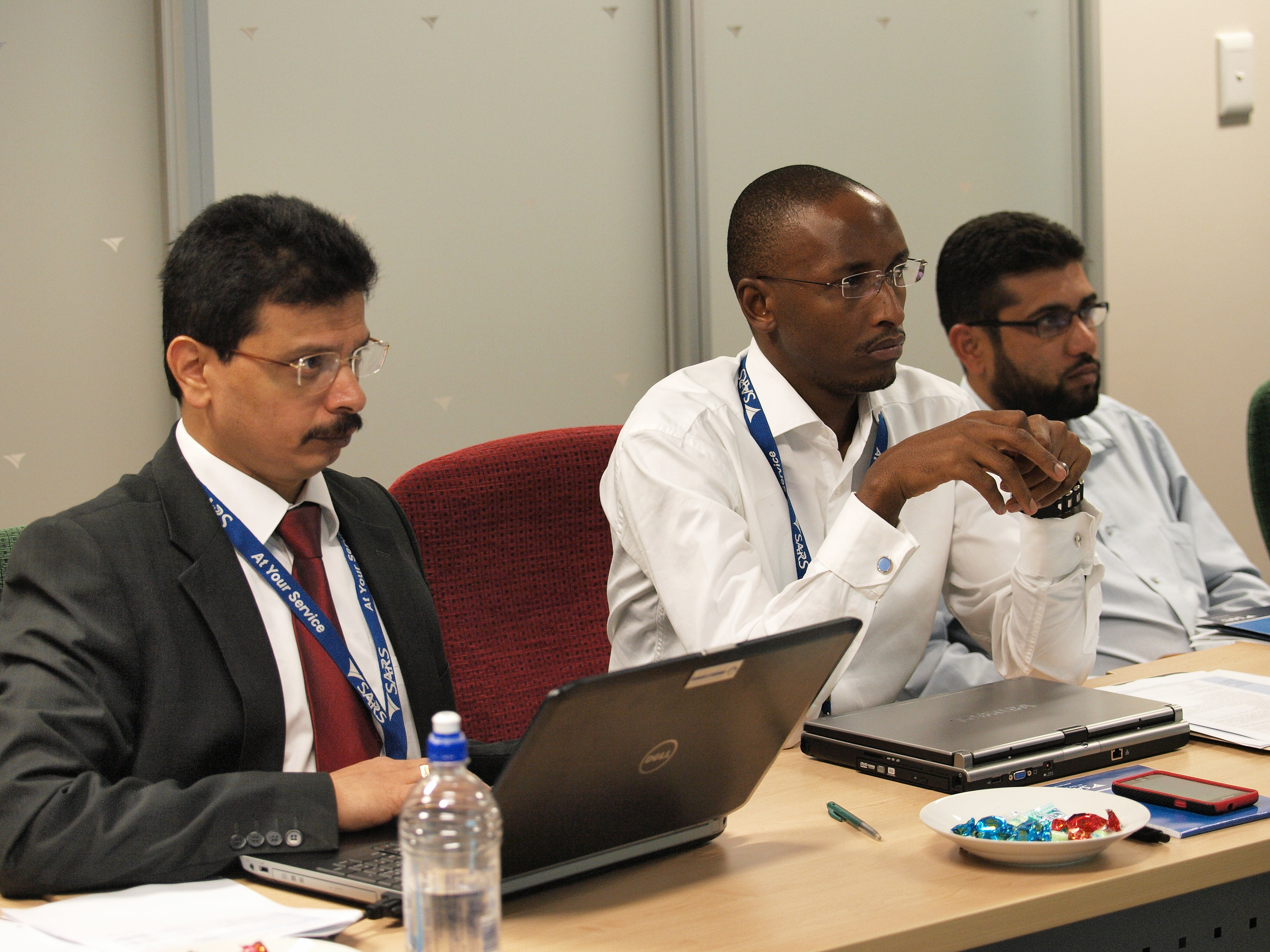
Over the last week and a half delegates from the WCO, SACU, UNCTAD, SADC and COMESA have been hosted at SARS, Pretoria to discuss and deliberate over an approach to implement ‘IT connectivity’ within the Southern African region. During the first week representatives from UNCTAD, SACU and SARS were briefed on important developments at the WCO on IT-Interconnectivity and Information Exchange. We were privileged to have Mr. Satya Prasad Sahu, Technical officer from the WCO – a leading expert in all matters of ICT in international customs matters – present the developments towards finalisation of a future international customs standard called “Globally Networked Customs” (GNC). It entails a structured approach that will enable customs authorities to formulate and document bilateral or regional ‘standards’ on a variety of Customs-to-Customs topics, for instance Authorised Economic Operators, Cross Border Information Exchange, Risk Management, etc. A representative from UNCTAD presented a synopsis of the proposed ‘cloud computing solution’ which the Trans Kalahari Corridor (TKC) plans to pilot between Namibia and Botswana along the TKC route in the next few months. During the course of this week, delegates , under the guidance of Satya, prepared a proposed approach for information exchange between members of the Southern African Customs Region. This document is based on the GNC Utility Block structure (defined by the ad Hoc Committee on Globally Networked Customs at the WCO) and served as the basis for discussion for Week 2.

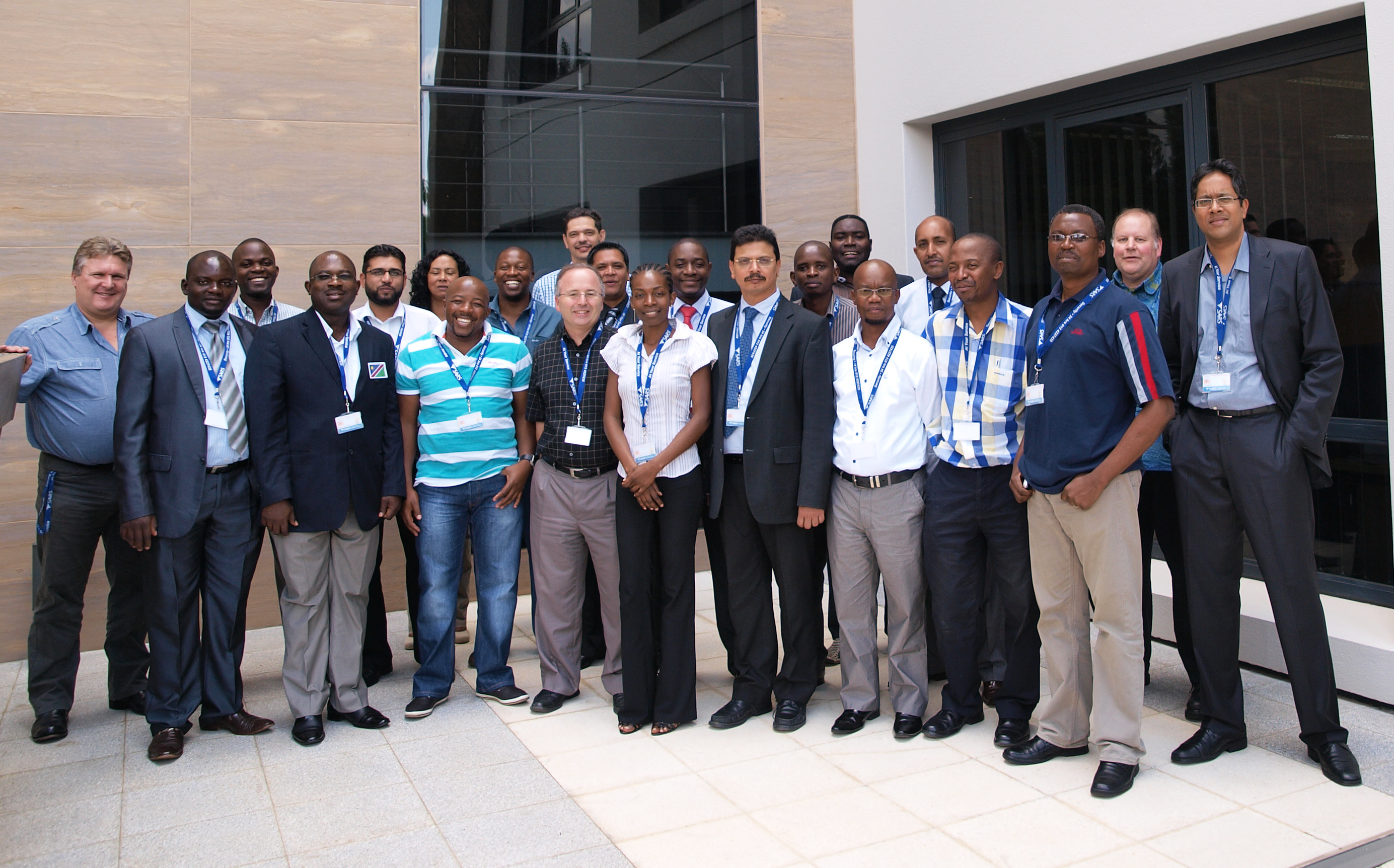
Mr. SP Sahu (WCO) and delegates from SACU SecretariatWeek 2 saw the arrival of customs and IT representatives from COMESA, SADC, UNCTAD, SACU as well as a delegation from Mozambique Customs. Mr. Sahu was invited to chair the session, given his vast experience on the subject matter as well as international experience in national and regional customs ICT programmes. Delegates were treated to various lectures on the GNC, a comprehensive overview of developments on ASYCUDA (Customs solution developed by UNCTAD), various updates from within the customs region – Botswana, Namibia, Lesotho, Swaziland, Mozambique and SARS. Beyers Theron informed delegates of ongoing developments of the SARS Customs Modernisation Programme as well as key implications for neighbouring countries. SARS presented a live demonstration of SARS’ Service Manager solution, navigating through all the functionality now available to SARS Customs officials. Of significant interest to all was the new iPod inspection tool. This technology is given prominent feature in the latest edition of WCO News.

A large portion of the week was, however, spent on deliberating the proposed scope and content of the draft Utility Block on Information Exchange in the Southern African Region. Significant progress was been made to attain first, a common understanding of the scope as well as the implications this has for participating countries. Delegates will return home with a product with which to create awareness and solicit support in their respective countries. Over the next few months SARS will engage both SACU and SADCOM (combined SADC and COMESA trading blocs) to establish firm commitments for information exchange with customs administrations in these regions. This conference is significant for SARS and South Africa as a whole as it provides a uniform, standardised and practical approach for engagement with other international trading partners. To view photographs of the conference please click here!

WCO News – February 2012 Edition

WCONews Edition February 2012Herewith a link to the latest edition of WCO News, providing a wealth of customs news and developments from across the globe. This edition focuses almost entirely on regional initiatives involving C-2-C information exchange. On pages 20 to 22 you’ll read about new developments emerging on customs inter-connectivity and information exchange in the Southern African Region. At this time, a conference lead by the WCO, involving representatives from UNCTAD, SACU, SADC and COMESA and SARS is taking place in Pretoria to establish a firm framework for introduction of customs information exchange. I will devote a dedicated article on these developments shortly, as this has implications for the business community as well. Also, don’t miss the feature on South Africa’s modernisation developments, pages 29 and 30. Besides the usual editorials this edition includes –

  • WCO Secretary General launches Year of Connectivity.
  • Evolving technology landscape and its impact on Customs.
  • Latest developments in Latin America, Southern Africa and Europe.
  • West Africa implements airport task forces to fight drug trafficking.
  • South Africa to roll out mobile Customs controls.
  • Operation “Short Circuit” successes and challenges.
  • WCO Tariff and Trade Affairs Directorate

WCO – 2012 is the year of Connectivity

WCO 60 Years AnniversarySecretary General of the WCO, Kunio Mikuriya, is pleased to announce that 2012 will be dedicated to promoting connectivity, including enhanced cooperation and communication, under the slogan “Borders divide, Customs connects”.

“Connectivity encompasses people-to-people, institutional, and information linkages that underpin and facilitate the achievement of Customs’ main goals,” said the Secretary General. “This theme is particularly relevant as the WCO prepares to commemorate its 60th anniversary in 2012,” he added.

The Year of Connectivity will be launched on International Customs Day, celebrated annually by the global Customs community on 26 January in honour of the inaugural session of the Customs Co-operation Council (CCC) which took place on 26 January 1953.

In 1994, the CCC adopted the informal working name “World Customs Organization” to better reflect its worldwide growth in membership which now totals 177 Customs administrations.

Customs and its stakeholders are urged to be innovative and creative in taking forward the connectivity theme in all its facets throughout 2012. The WCO invites the Customs community to diarise 26 January. Source WCO.