The World Customs Organization (WCO) is proud to announce the release of the WCO Data Model Version 4.2.0, marking a significant step forward in the digitalization and harmonization of customs procedures worldwide. This latest version introduces two critical data sets: Customs Bonds and Certificates of Origin, providing WCO Members with tools to streamline operations, and enhance the efficiency of digital customs processes.
The WCO Data Model provides a comprehensive framework for standardizing data elements in cross-border trade. Version 4.2.0 builds on this foundation by incorporating standardized data sets that support key customs processes.
Key Highlights of Version 4.2.0:
Customs Bonds Information Package: This new data set enables WCO Members that require surety-issued customs bonds to streamline and digitalize their bonds submission processes. By adopting this standard, Members can reduce administrative burdens, enhance compliance, and automate obligation management to protect revenue. Importantly, the standardized approach also reduces the time and costs required for implementation, enabling Members to achieve operational efficiency and faster deployment of digitalized customs bond processes.
Certificate of Origin Information Package: Developed using the dataset created by the Technical Committee on Rules of Origin (TCRO), this package empowers Members to digitalize electronic Certificates of Origin (eCOs). This digitalization improves validation of product origin, helping to combat fraud and ensure fair trade practices.
The WCO Data Model Version 4.2.0 is now available to WCO Members and stakeholders. The WCO encourages its members to adopt and implement this latest version to fully realize the benefits of standardized and digitalized customs procedures.
Mombasa port projects an increase in transshipment cargo after Kenya lifted the seven-year ban of stripping of cargo in containers at the port before onward delivery by dhows and barges to Zanzibar and Pemba.
The Kenya Revenue Authority (KRA) announced reintroduction of stripping, which is destuffing containerised cargo, after putting in place measures to curb smuggling, where before cargo is diverted in the ocean and finds its way into the East African Community (EAC) market.
The move is expected to cut the cost of container charges, considering that the boxes will be returned to the shipping line on time, since they will not be leaving the port as before.
Millers Association’s representative at the Mombasa port Naseeb Mbarak said the reintroduction of stripping would reduce the cost of transporting cargo to Zanzibar and Pemba by returning containers on time.
“Smaller traders will also benefit out of this as they can now import in groups,” he said. Mombasa-based clearing and forwarding agent Roy Mwanthi said the two destinations are the main transshipment destinations for Mombasa and the move will increase cargo numbers.
“Last year, Mombasa registered exceptional growth in transshipment traffic, which recorded 491,666 twenty-feet equivalent units (Teus), reflecting an extraordinary increase of 280,593 Teus and translating into 132.9 percent growth against 2023. With these numbers, stripping will surpass 500,000 units which will mean more Mombasa port revenues,” Mr Mwanthi said.
In 2018, the KRA in a public notice banned the stripping of containers destined for Zanzibar and Pemba. Before the ban, cargo destined for Zanzibar was being redirected to ports closer to the destination, such as Dar es Salaam, Tanga, or Zanzibar itself under a different manifest.
In November 2022, the Tanzania Revenue Authority (TRA) wrote to KRA requesting a review of the ban on stripping to facilitate their importers in Zanzibar and Pemba.
“KRA reviewed the same and granted indulgence on the stripping of cargo to Zanzibar and Pemba under conditions. In this regard, the earlier public notice issued is hereby set aside in line with this communication,” said the notice by KRA.
Before the ban, the volumes of cooking oil and other food stuff destined for Pemba and Zanzibar surpassed the consumption capacity of the two islands as a result of cargo diversion and smuggling.
KRA also seized different products, including edible oil cleared at Old Port in the go-downs of Mombasa, emanating from cargo stripped at the port of Mombasa.
To avert cargo diversion and control stripping, the KRA has prohibited changing the status of goods through manifest amendments.
The taxman said goods from the port of Mombasa have to be entered under the Single Customs Territory Framework (SCT) in Zanzibar before they are allowed into the islands.
“The shipments are to be cleared under SCT arrangement on duty paid basis and verified by TRA (Tanzania Revenue Authority) officers stationed in Mombasa before stripping and shipment. KRA enforcement to supervise stripping and loading of the cargo in the port before shipment,” read the notice dated April 8, 2025, and signed by customs officer Nicholas Ngeera.
Mr Ngeera said KRA will continue to liaise with the Kenya Ports Authority (KPA) to ensure that standard operating procedures and best practices on transshipment are implemented to protect and facilitate legitimate business.
Investigations by KRA and TRA show risks and challenges regarding transshipment cargo stripped at the port of Mombasa with increased cases of smuggling adversely Zanzibar islands and Pemba reported.
KRA also flagged med prolonged risks posed by stripping of cargo at the Port of Mombasa.
Last month, while in Mombasa, Zanzibar’s Minister of State in the President’s Office (Labour, Economy, and Investments), Sharif Ali Sharif, said delays in cargo delivery from Mombasa have historically caused shortages and price hikes in Zanzibar thus need to streamline transshipment process.
“Our cargo from China and the Middle East is first offloaded in Mombasa but, due to a lack of reliable transshipment, it often takes weeks or even months to reach Zanzibar. This has contributed to price increase for essential goods,” he said.
He said that the government had introduced tax exemptions and reductions on essential goods to keep prices reasonable.
With stripping of cargo reintroduced, Zanzibar expects a smoother supply of goods and ensures food security and price stability.
The Nigeria Customs Service (NCS) has facilitated Nigeria’s first shipment to Kenya under the African Continental Free Trade Area Agreement (AfCFTA), with Lucky Fibres, a subsidiary of the Tolaram Group, making its first shipment.
During a visit to the Apapa Area Command on Wednesday, last week to ensure proper documentation and verification of the shipment, Olusegun Olutayo, Senior Trade Expert and Lead of Trade Enablement at the Nigeria AfCFTA Coordination Office, noted that the shipment from Nigeria to Kenya, specifically to the port of Mombasa, demonstrates the collaborative spirit of AfCFTA.
“It is not that we are doing it alone; I have already sent a message to the Secretariat in Ghana that there will be a shipment under AfCFTA to Kenya. I have also communicated with the AfCFTA implementation committee in Kenya. So this is the spirit we are building to ensure that we increase intra-African trade,” Olutayo noted.
He emphasised the critical role of the service as the Designated Competent Authority (DCA) under AfCFTA, leveraging its expertise to ensure seamless trade.
“The Nigeria Customs Service has been fantastic; they are ready to facilitate trade. Once they hear that there is an issue, particularly around AfCFTA, you will see everybody ready to support and facilitate it, which is the essence of true trade facilitation.”
On 30 June 2024, the World Customs Organization (WCO) Council approved a Resolution of the Customs Co-operation Council on Strengthening Customs-Industry Resilience. This new Resolution, developed under the leadership of Australia, responds to the growing need for collaboration between Customs administrations and industry partners to ensure global security and economic stability amidst rapid technological advancements, environmental challenges, and other emerging threats. Recognizing the critical role Customs played during the COVID-19 pandemic, the Resolution seeks to evolve the Customs-Industry relationship from a focus on trade facilitation to building resilience in the supply chain.
The Resolution emphasizes the importance of committing to resilience as a strategic priority, encouraging Customs administrations to review and develop robust business continuity plans that are prepared for disruptive global events. It also highlights the need for innovative partnerships, urging the reaffirmation of existing relationships while fostering new collaborations. A key component of the Resolution is the enhancement of digitalization and the adoption of paperless trade practices, advocating for the use of secure digital formats for risk assessment and clearance processes.
Building trust through increased data sharing and information exchange is another crucial element, with a specific focus on strengthening relationships with Authorized Economic Operators (AEOs) and enhancing the benefits of AEO programmes. Capacity-building activities are also encouraged to ensure Customs and Industry can respond agilely to disruptions. The Resolution calls on the WCO to support Members in implementing these measures, particularly through the enhancement of AEO programmes and cooperation with international industry stakeholders. Monitoring of the Resolution’s implementation will be overseen by the Permanent Technical Committee and the Enforcement Committee.
The Private Sector Consultative Group (PSCG) is invited to support the actions reflected in this Resolution by driving industry engagement through its global network. This Resolution marks a significant step towards creating a more resilient global trade environment by fostering stronger partnerships and leveraging digital technologies to build a secure and efficient supply chain capable of withstanding future disruptions.
A new edition of the WCO magazine is available covering insights of performance management in several countries. Of particular mention for the Southern African Customs Union are two articles on recent timed release studies conducted in the region, in Namibia and between Eswatini and South Africa.
View of Durban city and harbour, South Africa – Hongqi Zhang
Africa’s biggest harbour will be partly owned and operated by the Philippines’ International Container Terminal Services Inc., a first for South Africa’s national ports company.
The company, ICTSI, has been selected as an equity partner to run and expand Durban Container Terminal Pier 2.
Almost three-quarters of the freight volume moved through the eastern port goes through the terminal, accounting for 46% of South Africa’s total port traffic, according to state logistics company Transnet.
This agreement “is a key catalyst for repositioning the Port of Durban as a container hub port,” Transnet said in a statement on Monday.
South Africa is seeking to boost private participation in its ports, the poor performance of which is a drag on the economy. In a 2021 World Bank index of container port performance, Durban ranked 364th out of 370, and two other Transnet ports were in the bottom 10.
Transnet will own a 50% plus one share in a new company that will manage the terminal for 25 years and will seek to boost its annual capacity to 2.8 million twenty-foot equivalent units, or TEU’s, from 2 million, it said.
Ultimately Transnet wants to boost Durban’s total container capacity to 11.4 million TEUs from 3.3 million. ICTSI, which operates terminals across six continents, was one of six bidders for the contract, Transnet said. It didn’t specify whether ICTSI will pay for its stake or whether it will have to fund the expansion.
An announcement on the port of Ngqura will follow, Transnet said.
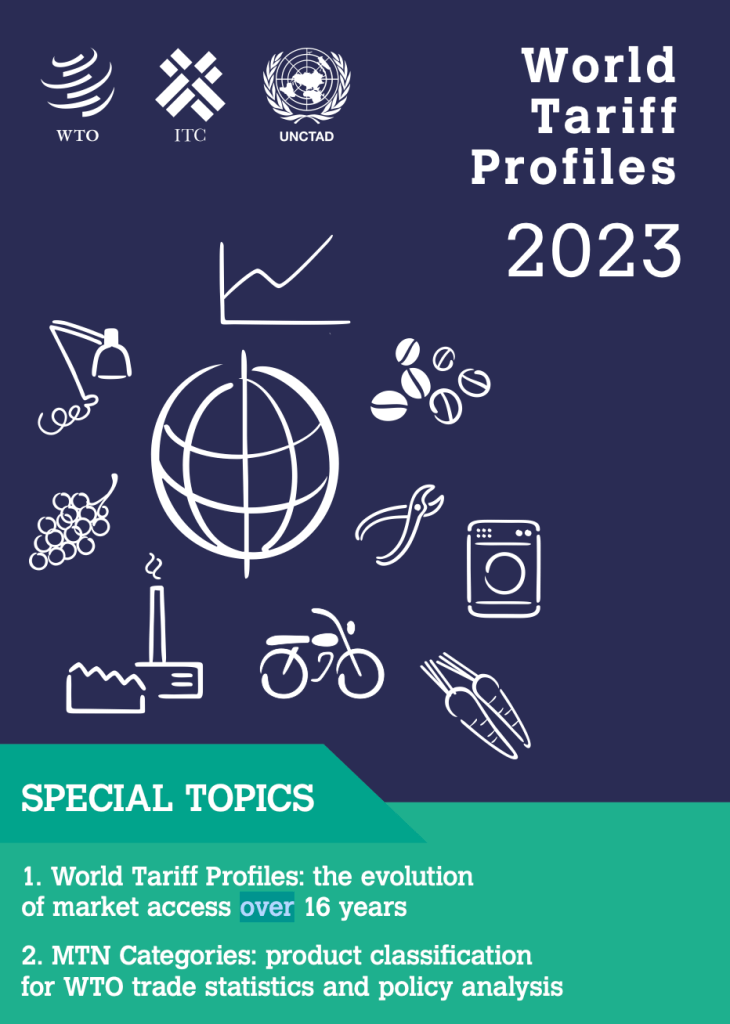
The WTO issued today (6 July) the 2023 edition of “World Tariff Profiles”, an annual publication providing comprehensive information on tariffs imposed on imports by over 170 countries and customs territories. The report — jointly prepared with the International Trade Centre and the United Nations Conference on Trade and Development (UNCTAD) — also provides data on non-tariff measures, such as anti-dumping actions, countervailing duties and safeguard measures.
One-page profiles provide an overview of each economy’s tariffs broken down by product group. The profiles also show the tariffs imposed by its main trading partners.
Summary tables provide comparisons of the average “bound” or maximum tariff each economy may apply to imports and the average tariffs it applies in practice. Data is provided for agricultural and non-agricultural products as well as for “all products”. Import and export profiles provide comparisons on the value of imports for each economy, the level of export diversification, and relevant tariff data.
The publication also contains two special topics. The first analyzes the evolution of market access over 16 years of “World Tariff Profiles”, highlighting trends for applied and bound tariffs across product groups, regions and level of development. It reveals a modest improvement in trade opening, with the average tariff for all products declining from 10.1 per cent in 2006 to 8.9 per cent in 2021.
The second topic looks into the product classification system used by the WTO for trade statistics and policy analysis. It underlines that the 2023 version of the WTO’s Multilateral Trade Negotiations (MTN) Categories, containing a new two-tier structure for 22 MTN categories with a total of 72 MTN sub-categories, will facilitate more precise analysis of trade patterns.
The following is a blog article by Taku Fundira, published via Tralac dated 28 March 2023.
The African Continental Free Trade Area (AfCFTA) which is set to be the largest free trade area (FTA) in the world with 54 of the 55 members of the Africa Union being signatories to the Agreement. The AfCFTA if fully implemented, is expected to provide a major opportunity for African countries to attract Foreign Direct Investment (FDI), diversify exports, boost intra-African trade, boost growth, reduce poverty, foster economic inclusion, and promote sustainable economic development.
Currently, countries are not trading under the AfCFTA trading regime, however, Phases I and Phase II negotiations have been completed albeit tariff concessions and rules of origin (RoO) negotiations for some products are still underway. These two issues, partly attribute to the reasons why it is not yet possible to trade under the AfCFTA. Phase III negotiations are currently underway and include protocols on additional topics such e-commerce. Trade and Women and Youth in Trade Protocol which was added to the AfCFTA agenda has since been concluded is expected to be approved later in 2023.
The Guided Trade Initiative
Despite countries, not yet trading fully under the AfCFTA, a pilot initiative called; the Guided Trade Initiative (GTI) which aims to stress test trading in goods between member countries within the operational, institutional, legal and trade policy environment under the AfCFTA was launched in Accra on 7th October 2022. Eight countries are participating in this pilot. Tanzania following Rwanda, Kenya, and Ghana, have begun trading under the GTI. The AfCFTA GTI has identified 96 products, including tea, coffee, processed meat products, sugar, and dried fruits, to be traded among the participating countries. Tanzania aims to sell 10 products under the AfCFTA’s GTI including coffee and glassware. Plans are underway to have a similar GTI for services subject to State Parties agreeing on modalities.
Initial assessment of the GTI reveals that there remain significant challenges for African countries to trade smoothly and boost intra-African trade mainly because non-tariff barriers (NTBs) to trade remain prevalent, massive infrastructure gaps especially transport infrastructure pose a threat to the success of not only the GTI but also to the AfCFTA. For Africa to make the most of free trade, the continent must address these challenges. Estimates suggest most African landlocked countries face high transport prices which are three to four times more than in most developed countries. Several institutional, political and other factors that combine to limit competition, encourage corruption, discourage investment and encourage informal activity attribute to the prevalent high prices in Africa.
Non-tariff trade costs extremely high
Latest available data from the World Bank on non-tariff trade costs (NTTCs) reveal that on average goods traded between African states accrue 292% ad valorem equivalent (AVE) in NTTCs. Non-tariff trade costs include among others, transport costs; direct and indirect costs associated with differences in languages and currencies, cumbersome import, and export procedures. Despite commitments by regional economic communities (RECs) to reduce NTTCs through mechanisms such as the NTB online monitoring mechanism under the Tripartite FTA and under the AfCFTA demonstrate the importance of ensuring that NTBs do not impede intra-Africa trade, reducing NTTCs.
Tralac has produced an infographic on intra-Africa NTTCs using the ESCAP – World Bank Trade Cost Database which can be found on the tralac website and it reveals the following:
Over a 10-year period (2011 – 2020) there have been no significant changes in non-tariff trade costs (NTTC). NTTCs decline by 2% CAGR (compound annual growth rate) over the review period (2011-2020).
Agricultural products’ NTTC remain much higher than manufacturing products’ NTTCs over the review period (2011-2020), although declining relatively much faster over the last 5 years relative to manufacturing products’ NTTCs. Between 2016 and 2020, agricultural and manufacturing NTTCs declined by 2.5% (CAGR) and 1.4% (CAGR) respectively.
The average intra-Africa NTTC on agriculture and manufacturing in 2020 (latest available data) is 330% (AVE) and 253% (AVE).
Intra-REC NTTCs are lower than between RECs (inter-REC)
COMESA has the highest average intra-REC NTTCs (285% AVE) and EAC has the lowest (135% AVE)
ECOWAS has the highest average inter-REC NTTCs (347% AVE) and EAC has the lowest (269% AVE)
ECOWAS – EAC inter-REC average NTTCs are the highest at 416% (AVE) followed by ECOWAS – COMESA at 389% (AVE)
SADC and COMESA’s inter-REC average non-tariff trade costs are more or less the same at 300% (AVE) and 306% (AVE) respectively
Based on these findings it is not surprising why intra-Africa trade has remained low averaging 18% of Africa’s global trade over the past decade. Intra-Africa trade remains regional and limited to neighbouring countries partly due to these NTTCs which if left unchecked will hamper the goals of the AfCFTA. Therefore, their reduction can be a gamechanger for the AfCFTA and more specifically for African economic development.
Trade facilitation key to reducing NTTCs
The extent to which the AfCFTA will be effective to reduce trade costs depends importantly on governments addressing NTBs, including in services markets. Trade facilitation becomes key to the success of reducing NTTCs, by improving trade and customs procedures as well as facilitating the relationship between businesses and government agencies at the border to reduce costs, while protecting the intended regulatory objectives. Estimates from the UNECA (United Nations Economic for Africa) project that intra-Africa trade could double through enhanced trade facilitation and the reduction of NTBs in the AfCFTA.
The AfCFTA Agreement provides a legal framework with specific undertakings for trade facilitation and the elimination of barriers contained in Annex 3 on Customs Co-operation and Mutual Administrative Assistance; Annex 4 on Trade Facilitation; and Annex 8 on Transit. Annex 3 deals with trade facilitation in customs administration. Within RECs efforts to reduce NTBs have yielded significant progress (e.g., Tripartite FTA NTBs monitoring mechanism), however more needs to be done on trade facilitation as little progress has been made here.
What needs to be done?
A limited number of Strategic Corridors has been identified considering their potentialities to facilitate sustainable, efficient, smart, resilient, fair, affordable, secure, and safe mobility and trade within Africa.
State parties should be serious about implementing their trade facilitation obligations or fulfilling their duties under the AfCFTA Agreement and therefore legally binding and justiciable mechanisms should be put in place to ensure transparency, certainty and predictability. These must be complemented by regional and national instruments and measures. In effect Member States should implement their binding obligations. State parties’ customs authorities/agencies should be capacitated and coordinated. This would go a long way in improving trade facilitation governance in Africa and leveraging AfCFTA benefits.
Financing the AfCFTA and associated trade facilitation measures will go a long way in ensuring the success of regional integration in Africa. Furthermore, transport infrastructure should be prioritised. It is important to note that projects are already in progress to boost the development of continent-wide infrastructure. For example, Tanzania’s construction of the Standard Gauge Railway Project is expected to provide a safe and reliable means for efficiently transporting people and cargo to and from the existing Dar-es-Salaam port. Other large projects underway include the Trans-Maghreb Highway in North Africa, North-South Multimodal Corridor, the Central Corridor project, and the Abidjan-Lagos Corridor Highway project.
In conclusion, reducing the NTTCs will be a gamechanger for the AfCFTA. What’s needed is for Member States to rise to the occasion by concluding the outstanding negotiations, especially resolving teething issues with respect to specific products especially outstanding RoO issues and finalising tariff concessions. Furthermore, the political, social, and economic environment should be managed both at the regional and national levels with the ultimate goal of ensuring the success of the AfCFTA.
he WTO Trade Facilitation Agreement (TFA) led to a US$ 231 billion increase in trade, particularly in agriculture, according to estimates for the first couple of years of its implementation presented to the Committee on Trade Facilitation on 22 March. Developing members and least-developed country (LDC) members that have made commitments under the landmark agreement posted the most gains, the estimates find.
Based on estimates for the years 2017-2019, WTO economists attribute to the TFA an average 5% increase in global agricultural trade, 1.5% in manufacturing trade and 1.17% in total trade. These increases are largely driven by the trade growth in LDCs, where agricultural exports rose by 17%, manufacturing exports by 3.1%, and total exports by 2.4% under the TFA. The estimates further point to a 16-22% increase in agricultural trade between developing members that have made TFA commitments. These estimates are conservative, as large gains have already been realized, particularly in manufacturing, in anticipation of the Agreement’s entry into force and by developed members making full commitments since the start of the TFA’s entry into force, as noted in previous studies.
In 2015, the WTO forecast that complete implementation of the TFA could lead to an increase of up to 2.73% in global trade flows by 2030. The latest estimates note that as the benefits of the Agreement continue to be realized, the trade and welfare gains are likely to expand. Stronger increases for manufacturing trade may still be detected after more years of TFA implementation for developing members as well. The latest estimates are part of the Secretariat’s ongoing work tracking the impact of the TFA.
The TFA, which entered into force on 22 February 2017, contains provisions for expediting the movement, release and clearance of goods, including goods in transit. It also sets out measures for effective cooperation between customs and other appropriate authorities on trade facilitation and customs compliance issues. It further contains provisions for technical assistance and capacity building in this area.
The TFA is the first WTO agreement in which developing members and LDC members can determine their own implementation schedules and seek to acquire implementation capacity through the provision of related assistance and support. Developed members were required to implement all provisions of the TFA from its entry into force. As of 22 March 2023, notifications submitted by WTO members indicate that they have committed to implement 76.1% of TFA obligations.
The estimates were presented at the meeting of the Committee on Trade Facilitation upon WTO members’ request, in line with recommendations from the first review of the TFA in 2021. The next TFA review is scheduled for 2025.
At the meeting, the Committee also considered notifications from members regarding TFA measures, presentations of national experiences and suggestions to enhance trade facilitation implementation, and specific concerns on customs procedures. The next committee meetings are scheduled for 15-16 June and 3-5 October.
The following article featured in the 1st Issue of the WCO Newsletter 2023. It is authored by Anthony Buckley, Chair of Customs Knowledge Institute. The article argues that a formal plan for building and managing Customs knowledge is necessary for a Customs brokerage to operate effectively. The components of such a plan are discussed, as well as the determinants that may affect the choices made. The discussion refers also to general issues of Customs knowledge acquisition, management and updating. The considerations apply to all Customs practitioners and trading businesses.
The number of possible games of chess is greater than the number of atoms in the observable universe according to Claude Shannon. In Customs, there are many more variables than the 32 pieces on a chessboard. In any transaction, we have the interested parties, the type of transaction, the goods involved, the route being followed, the intended procedure, the non-tariff controls, the rates of duty and the liability for payment, each of them with many possible variations, combinations, and types of supporting evidence. On that basis, it seems that every single movement of goods across a Customs border is unique, at least in some minor way. How does a Customs broker meet the expectation of a client, who expects the broker to be familiar with every possible variation?
As if the challenge of complexity is not enough, the broker is also expected to maintain records of all transactions and retrieve them in various formats as required by customers and Customs administrations.
In practice, of course, we find ways of doing things that are theoretically impossible. Most Customs movements fall into certain categories and are handled accordingly, by operators familiar with one or a few of the categories. High value complex transactions are handled by teams with a mix of expertise, at considerable expense. Low value consignments use simplified procedures and reduced checking. Significantly, evidence[1] suggests that many transactions proceed despite errors, sometimes of significant effect. Thus, when considering “Customs knowledge”, we must distinguish between what is necessary for all, and what is essential only for certain functions.
All economic operators must have a general understanding of what Customs is, how it controls trade, what its legal structure is, what rights, entitlements and obligations attach to the operator and to the Customs authorities, the importance of compliance with legal requirements, and the costs of non-compliance. For many who buy and sell internationally, their knowledge does not proceed far beyond this general understanding, except perhaps for some detail concerning the particular goods they trade.
For a Customs broker, this level of knowledge is only the beginning.
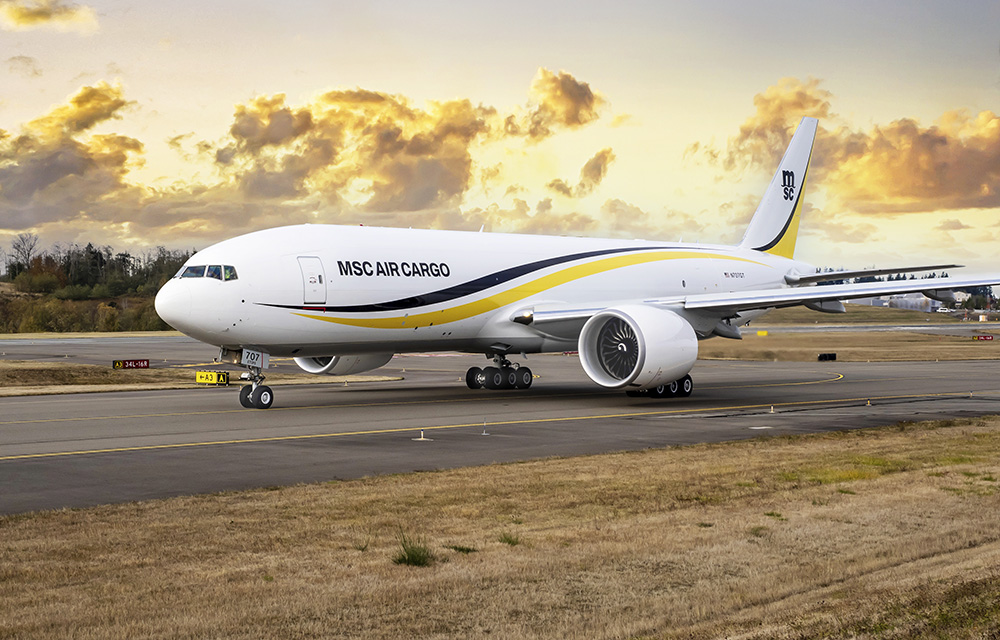
MSC has taken the next step in developing its Air Cargo solution with the delivery of the first MSC-branded aircraft, built by Boeing and operated by Atlas Air. The B777-200 Freighter will fly on routes between China, the US, Mexico and Europe.
Jannie Davel, Senior Vice President Air Cargo at MSC, said: “Our customers need the option of air solutions, which is why we’re integrating this transportation mode to complement our extensive maritime and land cargo operations. The delivery of this first aircraft marks the start of our long-term investment in air cargo.”
Jannie Davel brings extensive air cargo experience, having worked in the sector for many years, most recently heading Delta’s commercial cargo operations, before joining MSC in 2022.
He said: “Since I started at MSC, I have spoken to numerous partners and customers right across the market and it is very clear that air cargo can enable a range of companies to meet their logistics needs. Flying adds options, speed, flexibility and reliability to supply chain management, and there are particular benefits for moving perishables, such as fruit and vegetables, pharmaceutical and other healthcare products and high-value goods.
We are delighted to see the first of our MSC-branded aircraft take to the skies and we believe that MSC Air Cargo is developing from a solid foundation thanks to the reliable, ongoing support from our operating partner Atlas Air.”
Atlas Air, Inc., a subsidiary of Atlas Air Worldwide Holdings, Inc. (Nasdaq: AAWW), is supporting MSC on an aircraft, crew, maintenance and insurance (ACMI) basis. This aircraft is the first of four B777-200Fs in the pipeline, which are being placed on a long-term basis with MSC, providing dedicated capacity to support the ongoing development of the business.
The B777-200F twin-engine aircraft has been commended for its advanced fuel efficiency measures. It also has low maintenance and operating costs, and, with a range of 4,880 nautical miles (9,038 kilometres), it can fly further than any other aircraft in its class. It also meets quota count standards for maximum accessibility to noise sensitive airports around the globe.
FIATA is proud to bring its members a pragmatic solution to move from paper documents to paperless FIATA BLs, which can be issued directly through their everyday tools. The FIATA solution improves the level of security of the FIATA BL in comparison to the paper version, making use of blockchain technology to authenticate the documents and provide an audit trail. Conscious of the various challenges which remain to be overcome to achieve worldwide adoption and legal recognition of electronic exchange of data, the paperless FBL is an answer to the needs of the industry for improved access and exchange of trade documents. The document issuer can decide in which format (s)he wishes to share the original unaltered document with its stakeholders: in paper form or as a PDF. Based on its eFBL data standard, FIATA has developed an API service, available free of charge to all software providers, allowing them to connect with FIATA to create secured paperless FBLs.
As of today, seven software providers have already signed an agreement with the Federation to implement the solution: AKANEA, Cargowise, CargoX, edoxOnline (Global Share), InfoSysTech-IST, Nabu and Usyncro. We are very pleased to announce that the paperless FBLs can start to be issued as of today with edoxOnline, InfoSysTech-IST and Usyncro who have already finalised the implementation.
FIATA encourages all TMS’s, eBL providers and other software providers to join them and implement their solution to offer this new service to their customers. All technical specifications are available on FIATA’s GitHub repository.
The solution, developed by FIATA partner Komgo, will help to reduce fraud risks, as each document is recorded on an immutable ledger and will be verifiable at any time by all stakeholders interacting with the document. Stakeholders will be able to either scan the QR code at the top right of the document, or directly upload the PDF on FIATA’s verification page to access the document audit trail which will
certify the validity of the document,
the identity of its issuer, and
the integrity of its content.
Souleïma Baddi, CEO of Komgo, when asked to comment on the paperless FBL launch said: ‘Documents are the bedrock of international trade, but they don’t operate like we need them to and they’re susceptible to fraud and forgery, that happens quite often.
Trakk is the digital ecosystem of trust for trade documents. I am thrilled to see FIATA joining all companies, financial institutions, warehouses and others who are using Trakk to protect their documents against fraud.’
‘WiseTech Global congratulates FIATA on the launch of their electronic bill of lading.’ The company continued: ‘This initiative will support transparency and security across the supply chain and will help companies to accelerate their digitalisation efforts. It was a pleasure to work with FIATA on this initiative. CargoWise customers will be able to request a connection to FIATA’s eFBL from June 2022.’
‘FIATA is very excited to embark on this important milestone of its digital journey which paved the way for great opportunities for the future of freight forwarders’, said FIATA Director General Stéphane Graber.
The WTO has launched a new WTO data portal to provide easy access to key databases offering trade statistics and information on WTO members’ trade-related measures.
The new portal allows users to navigate a wide range of WTO databases covering trade in goods, services, dispute settlement, environmental measures, trade-related intellectual property rights and more.
One of the databases is the “WTO Stats portal“, which allows users to access and download time series statistics on trade in goods and services on an annual, quarterly and monthly basis. It also contains market access indicators providing information on governments’ bound, applied and preferential tariffs as well as non-tariff information and other indicators.
The data portal will be regularly updated to take account of new systems and updates.
The WTO data portal is available here. The WTO Stats portal can be accessed directlyhere.
The 26th/27th Meetings of the SAFE Working Group (SWG) were held successfully from 11 to 14 April 2022. The virtual meetings brought together more than 260 delegates representing Customs administrations, the Private Sector Consultative Group (PSCG), other international organizations and academia.
In his opening remarks, Mr. Pranab Kumar Das, WCO Director of Compliance and Facilitation, highlighted that the SWG had reached an important juncture as the new three-year SAFE review cycle 2021-2024 was about to enter into discussions. It was pointed out that 17 years after it was first published, the SAFE Framework of Standards (FoS) had garnered substantial interest from WCO Members. During the meetings, Guyana became the 172nd WCO Member to express its interest in implementing the SAFE FoS.
With a view to continued enhancement of the AEO criteria and provisions to strengthen the SAFE FoS, WCO Members made several new proposals to revise the Framework. The SWG also received feedback from the private sector on the urgent need to enhance the harmonization of SAFE and AEO implementation. In this context, the SWG heard a presentation by the WCO Anti-Corruption and Integrity Promotion (A-CIP) Programme on maintaining the integrity and transparency of AEO implementation.
On this occasion, the SWG reviewed and adopted the new Work Plan for 2022-2024, which reflected the critical activities the SWG will carry out over the next two years until 2024, in parallel with the SAFE review cycle. The SWG also received an update on the development of new features for the Online AEO Compendium (OAC) and the other extensive work underway in collaboration with other international organizations in the areas of security and facilitation.
Against the backdrop of the WCO’s theme for 2022, the panel discussion on “Scaling up Customs Digital Transformation by Embracing a Data Culture and Building a Data Ecosystem” attracted significant interest from Members and the private sector. The experienced speakers from Member Customs administrations, the private sector and the Secretariat enriched the discussions by sharing their best practices on using data for enhancing risk management and monitoring AEO programmes.
As a way forward, the SWG agreed that efforts will be reserved for a comprehensive review to assess and monitor SAFE implementation for greater harmonization of AEO programmes globally.
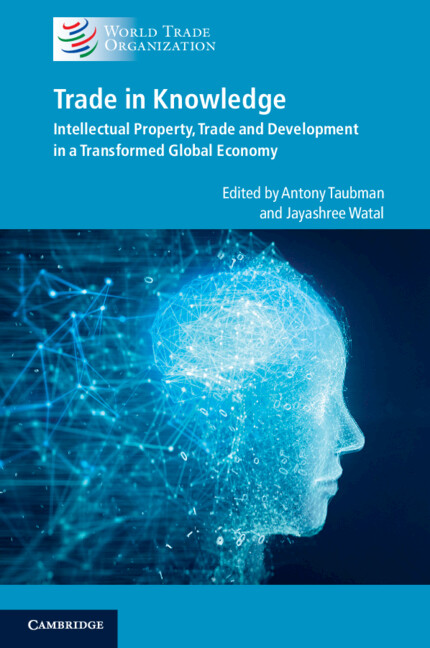
The WTO has launched a new book entitled “Trade in Knowledge: Intellectual Property, Trade and Development in a Transformed Global Economy” on 31 March. At the launch event, a wide cross-section of contributors to the publication discussed how their research and analysis had a bearing on current issues lying at the intersection of development, trade, technology and the diffusion of knowledge.
Drawing together insights from a diverse range of leading international scholars and analysts, the publication explores how to build more inclusive, up-to-date and precise ways of measuring knowledge flows, discusses how more nuanced and effective use of these data may guide policymakers and provides insights into the prospects for knowledge-based social and economic development, moving legacy models and adapting to the realities of the contemporary knowledge economy. The book also proposes ideas for updated systems of governance that promote positive sum approaches to the creation and sharing of the benefits of knowledge as a public good, with a view to informing planning for development.







 What Happened to the Portcullis?
You must be logged in to post a comment.