‘Around the World in Freighty Ways’

I found the following book review on AllAboutShipping.co.uk and I’m sure the featured book will appeal to many of you associated with shipping, containers and trade in general.Around the World in Freighty Ways
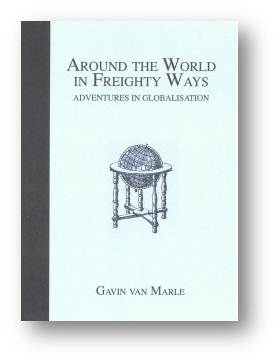
A unique first-hand account of the inner workings of globalisation from the heady days of manic growth in the noughties, Around the World in Freighty Ways is a personal travelogue with a difference. Covering over 50,000 miles with not a flight in sight, Gavin van Marle’s anthology puts into perspective the unsung heroes of world trade, the simple shipping container and the freight people who move them throughout the world.

The urge to travel is irresistible for those who have it in their genes. For Gavin and his equally restless wife Alex, what better way to slake their thirst to explore the wide horizons than to take a three-year honeymoon around the globe. If more justification for such a noble quest was required, they would report on the wondrous and rapid developments in freight transport that were occurring between 2002 and 2005.

The result is this compilation of articles, columns and thoughtful opinions entitled Around the World in Freighty Ways, which is published today by Right River Press Ltd., of London.

Both Gavin and Alex are professional journalists and have extensive experience in the freight industry. Their travels brought much insight into the varied and often ingenious ways the freight industry coped with, and indeed facilitated, the remarkable expansion of trade and economic growth between 2002 and 2005. As Gavin comments, “The humble container has done for globalisation what Alexander Graham Bell did for the internet – made it possible.”

The couple’s adventures however encompass not just freight experiences but also a variety of tales and a breadth of encounters that enable an astute, insightful and sometimes irreverent view on bureaucratic incompetence and political ineptitude. Many are laced with passionate descriptions of social inequality and gallant struggles for survival.

However, it is the similarity of basic human characteristics that shine through time and again as the episodes unfurl. As Gavin points out, it may in fact be the good fortune of people whose business it is to move freight around the world to recognise that, “Regardless of nationality, the vast majority of people share the same ambitions, hopes and fears, and that for most, joy and contentment comes simply from being nice to each other.”
Port Expansion Africa 2014 – increasing capacity of East African Ports

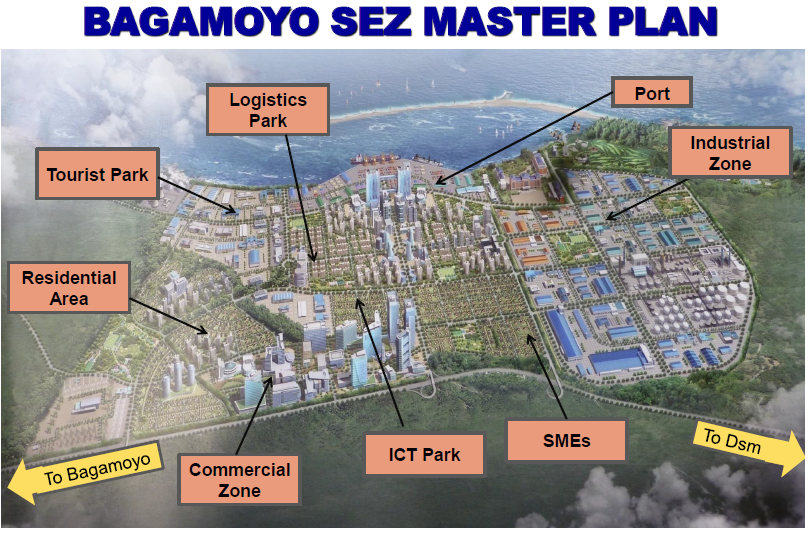
Artist's impression of the Bagamoyo SEZ Masterplan - Source: http://www.ansaf.or.tz/Investment%20...0(%20EPZA).pdf

Artist’s impression of the Bagamoyo Port and SEZ Masterplan – Source: http://www.ansaf.or.tz/Investment%20…0(%20EPZA).pdf

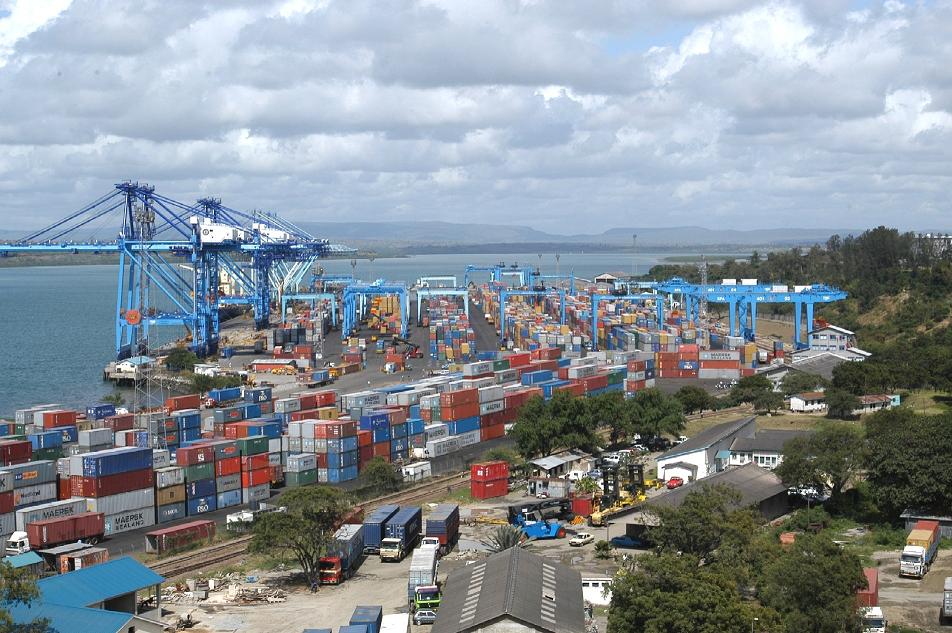
Growing volumes of cargo at all African ports has forced port authorities and operators to increase capacity, analyse operations to increase efficiency, and employ measures to allow bigger ships into their ports. The East Africa Region has various projects underway. The new Lamu Port in Kenya costing $5.3 billion (Reuters.com) and the Bagamoyo port in Tanzania costing $11 billion (The East African) are examples of countries preparing for the ever-growing port capacity needs. When completed in 2017, Bagamoyo will become the biggest container terminal in Africa: with a planned cargo of 20 million TEU a year; it will be 20 times larger than the port at Dar-es- Salaam and likely to rank in the top 10 terminals in the world in terms of volume capacity.

Reconfiguring port layout, and increasing berths at existing ports and conducting dredging more often, have been other strategies that numerous ports have employed to meet this need. Port of Maputo will be undertaking dredging to increase its channel depth from 11 meters to 14 meters this year, to allow larger vessels entry (Dredgingtoday.com). Tanzania will invest $523 million for new berths 13 and 14 to more than double its container capacity at Dar es Salaam Port (Tradeinvestafrica.com).

Source: portexpansioneastafrica.com

Related articles

Port of Singapore – Gateway to Asia

Earlier this year Reuters featured a series of excellent photographs by Singapore-based photographer Edgar Su, who spent time documenting working life in and around the Port of Singapore. Connected to more than 600 ports in some 120 countries, Singapore is one of the world’s busiest shipping hubs, and is often called the gateway to Asia. It plans to increase its total capacity dramatically as it competes with other massive ports in the region such as Shanghai, Hong Kong and Shenzhen in China and Busan in South Korea. Source: Reuters

Dawn of a new era – 24,000 TEU container ships

5_triple-eFormer Head of Germanischer Lloyd and one of the first in the world to predict the arrival of 18,000 TEU ships, anticipates that container ships will eventually exceed 400m in length and will go beyond 19,000 TEU. “There is no technical limitation,” said Dr. Klein . But first, the ports need to be ready to handle the next generation of container ships. Although ship designers have been talking about vessels with a capacity up to 24,000 TEU, indications are that shipping lines were not looking beyond 19,000 TEU vessels as at present.

According to Ocean Shipping Consultants (OSC), a British firm of shipping consultants, preparations for 24,000-TEU sized ships are already underway and the first could be on the building blocks as early as 2016. Ships of this capacity, which is 5,000 TEU bigger than the Triple-E class, would be 430m in length and 62m in width but with a draught not exceeding 16m. OSC says that technical feasibility studies show that at-sea costs for a 24,000 TEU vessel would be 23.1% lower than that of a 12,500 TEU vessel and 17.4% lower than that of a 16,000 TEU vessel.

As reported by Ports & Ships, the appearance of these supersized ships will herald a surge in transshipment activity, which will have a detrimental effect on port terminal operators and ports alike which would have to cope with sudden increases in container activity. This would compound onto road and rail activity as well, placing further burdens on already creaking logistical systems. According to Transnet capital projects Marc Descoins, project director for the new Durban Dig Out Port, calculations that include ships of up to 22,000-TEU capacity have been factored in.

“Ships of this capacity won’t immediately be coming to South African ports,” he told Ports & Ships this week, adding that in consultation with Drewry, Transnet was advised that eventually the Triple-E class would cascade down onto North-South routes and that it would be wise to factor these in. “Our planning includes the likelihood that eventually ships of up to 22,000-TEU can be expected, so the new port will cater for this.”

Further afield – Remote-controlled ships: Can they be the future? Visualise a cargo ship with no crew and no bridge, operated remotely by a captain from a cabin on dry land. It could happen within a decade, believes the Vice President of Innovation in Marine Engineering and Technology at Rolls-Royce Holdings LLC. The technology solutions aren’t in place yet, but all the pieces are there. It is a matter of developing the technology and putting it together into systems. Rolls-Royce has been working on designs for remote-controlled cargo vessels as a first step toward overcoming widespread industry scepticism.

The European Union is funding a $ 4.8 million research project to study the feasibility of a ship operating autonomously until it nears port and a crew is taken aboard. The project, Maritime Unmanned Navigation through Intelligence in Networks, has the acronym MUNIN. In Nordic mythology, Munin was the raven sent out daily to fly around the world to gather information or the God Odin. For now though, remote-controlled cargo ships remain for beyond the horizon, unmanned ships may be technically possible, but they don’t fit a legal and regulatory environment that’s taken centuries to develop and would take years to change. Source: Ports & Ships and the Financial Times

Mexico – Recognising WCO Policies and Standards in the wake of Organised Crime

Port of Lazaro Cardenas Mexico [www.puertolazarocardenas.com.mx]

Port of Lazaro Cardenas Mexico [www.puertolazarocardenas.com.mx]

At the beginning of May the Mexican authorities detained the 73,700 dwt Jian Hua with this following on from the earlier seizure of 119,000 tonnes of iron ore in storage at the port.

At the end of April the Mayor of Lazaro Cardenas was arrested and accused of kidnapping, extortion and links to organised crime and in November last year federal troops took over the security and customs functions at the port of Lazaro Cardenas and remain in charge today.

The main aim of these measures is to eradicate the influence of the violent criminal organisation the Knights Templar, whose base of operations is the south western state of Michoacan where the port of Lazaro Cardenas is located.

Knights Templar, through the corruption of customs and other officials, has been using the port of Lazaro Cardenas for the extensive import and export of illegal drugs. The iron cargoes are one of many ‘business diversifications’ by the cartel but as the Jian Hua shipment proves are illegal in that the documentation associated with this cargo showed production at a mine that is not yet authorised for legal operation.

For years the state of Michoacan has basically been lawless and the area around the port of Lazaro Cardenas has been a battleground between the various drug gangs with the Knights Templar being in ascendancy since 2010.

Since, however, the entry of federal agencies into the state, and notably the Mexican navy into the port of Lazaro Cardenas, the influence of Knights Templar has gone into severe decline. The cartel has basically lost control of its biggest business. They have also felt the wrath of a public uprising, the sharp end of which are armed vigilantes backed by federal forces.

The optimistic view is that the port of Lazaro Cardenas will become ‘clean’ again with the demise of Knights Templar and the arrangements it had with other drug cartels. The negative view is that another cartel will step into Knight Templar’s shoes and the port will again find itself under external control and home to illegal activities.

Short steps

The lesson here, as independent organisations such as Control Risks emphasise, is that it is a few relatively short steps before a major port gateway can be comprehensively penetrated by criminal organisations. The conditions that created an opening for Knights Templar are not unusual in Latin America in Control Risks’ view.

For these reasons, and many others associated with port efficiency, it is very important to have secure and professional agencies active in ports that are specialists in security and border management. It is also important to realise in this context that considerable assistance is available from external agencies such as the World Customs Organisation (WCO) to establish the proper controls and security checks. Further, that it is often only by the use of independent agencies or organisations that comprehensive experience and know-how can be deployed to achieve this – the arms’ length approach which can circumvent internal corruption.

If corrupt elements are in place there will inevitably be resistance to change but an external agency forcing the pace of change, based on global experience, will play a major part in overcoming such elements.

Taking the WCO as an example, among other things it functions as a forum for dialogue and exchange of experiences between national Customs delegates. The WCO offers its members a range of conventions and other international instruments, as well as technical assistance and training services provided either directly by the secretariat, or with its participation. The secretariat also actively supports its members in their endeavours to modernise and build capacity within their respective national Customs administrations.

The WCO’s efforts to combat fraudulent activities are also recognised internationally. The partnership approach championed by the WCO is one of the keys to building bridges between Customs administrations and all the stakeholders in the transport chain. Source: Port Strategy

New CTU Code – IMO Approves Container Weight Verification Requirement

containerThe Maritime Safety Committee (MSC) of the IMO has approved changes to the Safety of Life at Sea (SOLAS) convention that will require verification of container weights as a condition for loading packed export containers aboard ships.

Misdeclared container weights have been a long-standing problem for the transportation industry and for governments as they present safety hazards for ships, their crews, and other cargo on board, workers in the port facilities handling containers, and on roads. Misdeclaration of container weights also gives rise to customs concerns. The approved changes to the convention will enter into force in July 2016 upon final adoption by the MSC in November 2014. In order to assist supply chain participants’ and SOLAS contracting governments’ implementation of the container weight verification requirement, MSC also issued a MSC Circular with implementation guidelines.

MSC also approved a new Code of Practice for the Packing of Cargo Transport Units (CTUs), including intermodal shipping containers. The new CTU Code, which will replace the current IMO/ILO/UNECE Guidelines for packing of CTU, has already been approved by the UNECE (United Nations Economic Commission for Europe) and will now go to the International Labour Organization (ILO) for approval. The CTU Code provides information and guidance to shippers, packers and other parties in the international supply chains for the safe packing, handling and transport of CTUs.

Of particular interest for regulatory authorities is Chapter 4 – “Chains of responsibility and information” which deals with the parties responsible for the provision of information and other security and regulatory requirements concerning containers as they are transported across the supply chain.

The World Shipping Council (WSC), whose members represent about 90 percent of global containership capacity, has been a leading advocate for the container weight verification requirements and has worked cooperatively with the IMO for over seven years to see them materialize. WSC has also participated in the group of experts that developed the new CTU Code.

“In taking these decisions, the IMO has demonstrated its continuing leadership in trying to ensure the safe transportation of cargo by the international shipping industry,” said WSC President & CEO, Chris Koch. “We congratulate the IMO Secretary General and the IMO member governments for developing and approving these measures that, when properly implemented and enforced, should provide for long-needed improvement to maritime safety. The SOLAS amendments and related implementation guidelines regarding container weight verification represent a collaborative effort that we were pleased to be a part of and we look forward to final adoption of the amendments in November 2014.”

The new CTU and supporting material can be accessed at the UNECE website here. Also See the World Shipping Councils webpage here for chronological information about the container weighing issue. Source: Maritime Executive

South African Port Handbook Launched

South African Port Hanbook [SAOGA]Following a successful SAOGA (South African Oil & Gas Alliance) has launched the second edition of the South African Port Handbook at the Offshore Technology Conference in Houston during the first week of May 2014. The book is available in a user-friendly .pdf format on the internet. To view the online version in an e-book format please click the hyperlink – SA Port Handbook. For a downloadable (.pdf) version of the book please visit SAOGA’s website.

Port of Antwerp calls for global ‘port-ranking’ standards

Port of Antwerp [Picture -  Porttechnology.com]

Port of Antwerp [Picture – Porttechnology.com]

Port of Antwerp has issued its 2013 Annual Report which contains an interesting ranking of the largest ports worldwide.

According to the Port of Antwerp, throughput figures of different ports cannot be compared as ports do not use uniform definitions: some ports (most importantly Singapore) apparently use freight tons (metric tons or volume tons, whichever is higher).

According to Antwerp’s estimates, Singapore handles slightly more than 400m tons, instead of the 560m tons reported by the Maritime and Ports Authority of Singapore. However, their ‘correction factor’ may not be accurate.

Port of Antwerp’s definition of throughput is focused on ‘international throughput’. That is a debatable definition, as it leads to the exclusion of domestic traffic by seagoing vessels. For this reason, and partly because the Chinese ports apparently also include barge traffic in total volumes, the Chinese ports of Shanghai and Ningbo are substantially smaller in Antwerp’s figures than in their own statements.

So, surprisingly, the largest port of the world according to Antwerp’s annual report is Rotterdam! This goes to show that their effort is not intended as a marketing effort to favour Antwerp. If that was the case, they could have taken the port area to identify the largest port. This indicator puts Antwerp firmly on top as Europe’s largest port, with about 13,000 hectares, compared with Rotterdam’s more than 10,000 hectares. But clearly, the port area is an indicator of limited value, both due to differences in the definitions and for its limited relevance.

The Antwerp ranking does demonstrate the variety of definitions used in measuring port throughtput. For instance, in Europe ports throughput numbers do not fully match with Eurostat’s throughput data. This variety of definitions does not only apply to throughput, but also for other indicators such as modal split and employment in ports. That hampers international comparisons, benchmarking as well as academic research.

An authorative effort to create global standards would be good news for the port industry. Source: Porttechnology.com

19,000 TEU boxships – thats the capacity for now say Ship Owners

According to observers, some of the ships that appear in the table above (Alphaliner) with a flow rate of 19 official thousand TEUs could  in fact could also load a thousand more. [http://www.lagazzettamarittima.it/]

According to observers, some of the ships that appear in the table above (Alphaliner) with a flow rate of 19 official thousand TEUs could in fact could also load a thousand more. [http://www.lagazzettamarittima.it/]

Containership capacity growth appears to have reached a plateau for now, with no owners or operators looking to go beyond 19,000 teu. Nevertheless, technical experts expect larger containerships to eventually enter service, once infrastructure constraints have been overcome.

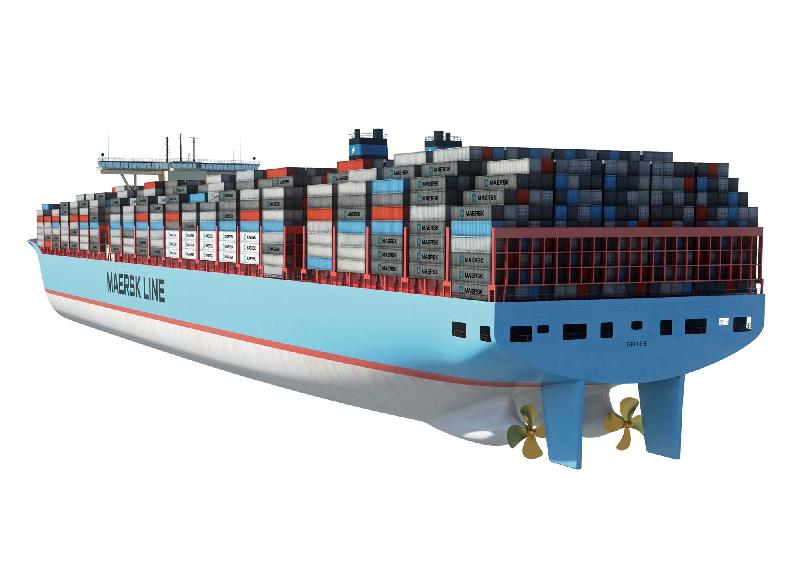
At the moment, though, the biggest ships in the pipeline are for China Shipping, with CSCL Globe due for delivery in November reported to have a nominal capacity of 19,000 teu. United Arab Shipping Co has 18,800 teu vessels on order; Mediterranean Shipping Co will soon be receiving 18,400 teu ships, while Maersk’s Triple-Es have a nominal intake of 18,270 teu. CMA CGM has recently upgraded ships on order, which will now be around 17,800 teu. What they all have in common is their length, just under 400 m, which is regarded as the practical maximum for now, according to Marcus Ihms, containership expert at classification society DNV GL.

Beam is another potential limiting factor, with cranes needed to handle broader ships, and the greater rolling forces of a very wide vessel making it inadvisable to load cargo on deck. Where designers can obtain additional capacity within those limitations is through the siting of the engine room or accommodation block. Moving the engine room, for example, can create as much as 250 teu of extra cargo space.

What is clear, he told the Containerisation International-Lloyd’s List Global Liner Shipping conference in Hamburg, are the economies of scale of the larger ships that are now being delivered. The slot costs of, say, a 21,000 teu ship, are as much as 10% lower than for a 14,000 teu vessel.

An 18,000 teu ship would still have cheaper slot costs than a 14,000 teu vessel even at 90% rather than 100% utilisation. Although ship designers have been talking about vessels of up to 24,000 teu, Mr Ihms told delegates that no carriers were thought to be looking beyond 19,000 teu right now.

However, ships of more than 400 m have been built in the past, most notably the 564,650 dwt ultra large crude carrier Jahre Viking, which was 458 m long. ER Schiffahrt chief executive Hermann Klein told Containerisation International that he expected ship sizes to continue growing, albeit not as rapidly as in recent years Dr Klein, the former head of Germanischer Lloyd and one of the first in the world to predict the arrival of 18,000 teu ships, anticipates that containerships will eventually exceed 400 m in length and so go beyond 19,000 teu. “There is no technical limitation,” he said.

But first, the ports need to be ready to handle the next generation of containerships. That will require larger cranes, dredging, higher bridges in some cases, and other infrastructure investments. Source: Lloydsloadinglist.com

Singapore accuses 11 freight forwarding firms of price-fixing

ccsThe Competition Commission of Singapore (CCS) has issued a Proposed Infringement Decision (PID) against 11 freight forwarding companies and their Singapore subsidiaries / affiliates. CCS provisionally finds that the Parties have infringed section 34 of the Competition Act by collectively fixing certain fees and surcharges, and exchanging price and customer information in relation to the provision of air freight forwarding services for shipments from Japan to Singapore.

CCS commenced investigations after receiving an application for immunity under CCS’s Leniency Programme from one of the Parties involved in the alleged cartel. In CCS’s provisional view, information received during the course of the investigation evidences that the Parties were competitors and attended meetings in Japan where they exchanged information, discussed and agreed on certain fees and surcharges in relation to air freight forwarding services for shipments from Japan to other countries, including Singapore. The PID is limited to anti-competitive agreements and/or concerted practices involving the Japan to Singapore route.

The PID is a written notice setting out the facts on which CCS makes its assessment of the Conduct and its reasons for arriving at the proposed decision. It is issued to give the parties concerned an opportunity to respond to the PID and provide any other information to CCS by way of representations. CCS will consider all representations made before deciding whether to issue an infringement decision.

In this regard, all the Parties have 35 working days from the receipt of the PID to make their representations. All the information and evidence put forward by the Parties will be taken into consideration by the CCS should it issue a final decision in relation to the Conduct.

The case is the latest in a long line of investigations into the freight transport sector by competition authorities around the world over the past decade, a process that began with air freight carriers before spreading to freight forwarders, container shipping lines and rail freight operators.

The competition authorities in the US and the EU have issued penalties totaling more than US$2 billion, with the US imprisoning several senior executives judged to have participated in cartel activity. Singapore’s PID is limited to anti-competitive agreements or practices involving the Japan to Singapore route. Source: Competition Commission of Singapore 

Change on the Horizon – 2014 Container Shipping Outlook

AlixPartners 2014 Outlook for Container ShippingThe 2014 outlook for the container shipping industry appears bleak. According to AlixPartners’ 2014 Container Shipping Outlook, the industry as a whole remains buried under a growing mountain of debt amid continued market turbulence. And this is hardly breaking news. With few exceptions, the industry has struggled for the better part of the past decade. What is new is the impact that that widespread financial distress is finally having on carriers and other key stakeholders: we are now seeing a number of profound structural changes to the industry—changes that may result in broad-ranging impacts on the major market participants.

For detailed analysis download the full report from AlixPartner’s website. Source: alixpartners.de

Outlook and reliability of African ports in question

Port of Mombasa

Port of Mombasa

The reliability of African ports for import and export traffic is likely to deteriorate before getting better, according to Portoverview.com which advises importers, exporters and traders in planning their supply chain to and from the continent.

Speaking earlier this week at the Cool Logistics Conference in Cape Town, Africa. Portoverview.com’s Victor Shieh said almost 2,000 incidents were recorded on its portal over the last 16 months, with an average of one weather-related incident per day for South Africa alone.

Current congestion issues will remain a problem whilst port infrastructure is renewed over the next years. However, we see African hinterland connections beyond the terminal gates as the biggest challenge facing shippers,” Shieh emphasised.

In a study presented at the conference, road and rail construction as well as investment in port infrastructure were identified as the main positive developments recorded on the portal.

Greenfield sites along the African coast are cited as having the greatest potential to improve cargo efficiency. Projects such as the 2.5 million teu site at Lekki in Nigeria and the 5 million teu expansion at Tangier-Med, in Morocco, will require similar investments on the intermodal leg to succeed.

Recent research by SeaIntel Maritime Analysis, which is co-owner of the portal, revealed that African exporters have no more than an average 60% chance that their containers will arrive on time in Asia with the percentage falling to 55% for Europe.

“For shippers – especially ones who produce and distribute perishable products – that’s a real challenge” commented Morten Berg Thomsen, a shipping analyst at SeaIntel.

Helen Palmer, director, Sutcliffe’s Maritime, a UK-based shipping agent told Lloyd’s Loading List.com that as far as ro-ro traffic was concerned she was not aware of any serious congestion and delays into African ports

“I can’t speak for box traffic but in the case of ro-ro into ports such as Mombasa, in East Africa, transit is extremely smooth with trucks waiting on the quayside as soon as the ship’s ramp comes down. Dar es Salaam, is perhaps a little less straightforward but certainly nothing major,” she said. Source: Lloydsloaddinglist.com

11 Million cigarettes wash up on Devonshire coast

The container ship Svendborg Maersk was battered by hurricane winds as it crossed the northern stretch of the Bay of Biscay on February 14th. Battling 30-foot waves and working through winds of 60 knots the ship arrived only to find that a large chunk of her cargo had been swept overboard. The ship was originally heading from Rotterdam to Sri Lanka.

The shipping giant initially reported that only 70 containers had been lost in the storms. However, last Wednesday this number skyrocketed to 517 – the largest recorded loss of containers overboard in a single incident. Countless more are supposed to have been damaged when six of the bays tilted over.

Maersk have suggested that almost 85 percent of the containers were empty, with the rest containing mostly dry goods and frozen meats. They also reinforced the fact that none of the containers were carrying harmful substances and that many had sunk in the turbulent seas.

Nevertheless, French authorities have been on the lookout for floating containers, which can be hugely problematic for other shipping vessels, alongside a huge environmental risk. According to New Zealand marine insurer Vero Marine, a 20-foot container can float for up to two months, whilst a 40-foot container may float up to three times longer.

Already, containers have been surfacing as far away as the coast of East Devon, United Kingdom. The 40-foot container washed up at Axmouth, near Seaton and is estimated to contain 14 tonnes of cigarettes. Police were immediately called in to cordon off the area and scare away any would-be smokers hoping to make a steal and sneak off with a portion of the 11 million cigarettes (refer to picture gallery).

As of yet, there has never been a requirement for shipping lines to report container loses to the International Maritime Organisation (IMO)or any other international body. In 2011, the World Shipping Council estimated that around 675 containers were lost at sea, whilst the Through Transport Club, which insures 15 of the top 20 container lines, has suggested that the number is closer to 2,000.

However, other sources suggest that this is nowhere near the true number, with some citing as many as 10,000 lost at sea each year. Analysts have suggested that one of the reasons such loses can occur are due to the lack of accuracy when weighing containers before transit. Some shippers have been found to understate the weight of containers in order to reduce shipping costs. Such misinformation can lead to uneven strain on a vessel as it transverses the seas.

One of the most notable incidents occurred in 2007 when the MSC Napoli ran aground off the English coast, breaking up and spilling 103 containers worth of toxic cargo, polluting five miles of the South Western coast. The UK marine accident investigation board ruled that the accident was due to cargo being loaded in such a way that it exceeded the baring weight of the hull girders, resulting in a structural failure across the ship. The report concluded that if such loses are to be prevented, it is essential that containers be weighed before embarkation. Source: Port Technology

Rapid progress on City Deep Container Terminal upgrade

Rapid progress is being made on a multimillion rand contract awarded by Transnet Capital Projects to Concor Civils for the construction of new concrete paving, civil services and electrical lighting at its City Deep Container Terminal. The terminal is currently being upgraded as part of Transnet’s rolling capital investment programme.

The container terminal at City Deep is known to be the largest “dry port” in the world and the City Deep area has been declared an IDZ (Industrial Development Zone) by the Gauteng government. (?)

The contract is scheduled for completion in May 2014 and includes the removal of 36 500 m3 of existing concrete paving, 110 000 m3 of earthworks, the installation of a new drainage system and all service ducting and manholes for lighting, fire mains, CCTV equipment, 360 t of mesh reinforcing and the placing of approximately 146 000 m2 of concrete paving.

The Concor Civils team is making use of as many emerging contractors as possible to supply services such as pipe laying, ducting and manholes and has undertaken to employ about 90 general workers at peak from the local community at a cost of some R10 million. These temporary workers will be given on the job training in basic technical skills, as well as in life skills. Source: Transport World Africa

Africa – Strange Deliveries by DHL in 2013

Gorilla-weekinbrief-bigAn unusual cargo list has been released by DHL Express Sub-Saharan Africa of their 2013 deliveries.

In Kenya live human eyes are transported frequently. Sumesh Rahavendra, head of marketing for DHL Express Sub-Saharan Africa, said: “The corneas have an extremely short lifespan and are therefore highly perishable, which possess a significant challenge to us.

“What adds to the complexity is the fact that the recipient is booked and prepped for surgery while the cornea is in transit.

“The successes of these deliveries rely on prior customs releases, dedicated delivery vehicles and a passionate team of certified international specialists on the ground.

“When there is no margin for error and the result could affect another person’s opportunity for sight, every stop is pulled out from pickup to delivery.”

Rahavendra continued: “One unique shipment to mention is a 32kg consignment of Haggis which was moved from the UK to Tanzania for an event.

“The Scottish delicacy was swiftly transported through Customs and delivered in time for the prestigious event.”

For conservation, there was a transport of butterfly larvae in Kenya. Rahavendra said: “Any delay in the transport process would result in the premature hatching of the butterflies, from which they would not have survived. Following a similar operational process as the transport of the corneas previously mentioned, another successful, yet another unique delivery was completed.”

Another astonishing delivery was 1.7 tons of fresh flowers sent from Johannesburg to Douala in Cameroon for a wedding.

This personal request came from a customer whose two sons were getting married on the same day,” said Rahavendra.

“Fast forward a few short hours, and a splendor of colour was delivered to the event in time for the all-important nuptials.”

Other strange and prompt delivery requests included transporting nine gorillas across two continents, a specific heart internal defibrillator, the Rugby World Cup Webb Ellis trophy, and a customer’s laundry from the UK to South Africa for dry cleaning!

Rahavendra said. “Although sometimes challenging and stressful, such requests certainly help bring a smile to our faces on a busy day.” Source: APO (African Press Organization)