TPT’s Pre-advice for Export Containers

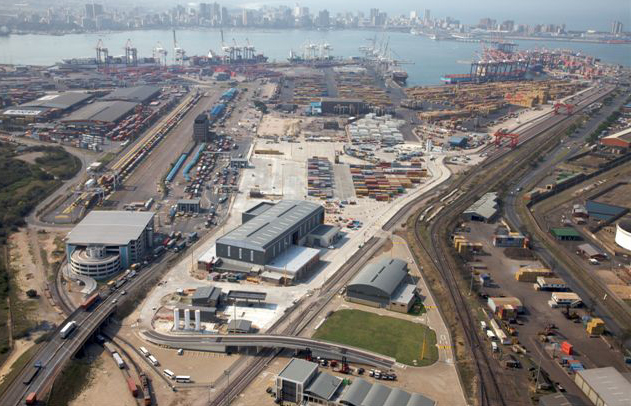
Durban Container TerminalIt has been enquired by some whether or not Transnet‘s Pre-Advice for Export Container’s initiative is aligned with SARS Customs Modernisation. First of all its important to delineate the process and requirement. Transnet Port Terminal’s Pre-Advice is an electronic exchange (COPARN) between the carrier and TPT. As such it is an arrangement which satisfies the Terminal’s advance reporting requirements of impending export container delivery to a container terminal. In time it will feed Customs’ gate-in reporting requirements.

From a Customs perspective, this initiative is an important development which fills another piece of the supply chain puzzle. As such it is not in contradiction to anything planned for by SARS – rather its somewhat ahead of Customs at this point in time. It is just not possible to synchronise inter-departmental and inter-company project developments. Each has its own financial/procurement cycles and operational deliverables, and in certain cases legal prescription. At the same time it is true that supply chain operators bear the brunt of untimely and non-coordinated initiatives. Nonetheless, they are important while at the same time vital for the country’s future economic growth and stability.

SARS and SARB – Closing the international trade transaction loop

SA Reserve Bank, PretoriaSince the recent implementation of the Import Verification System (IVS) by the South African Reserve Bank (SARB), local traders would have come to realise that processing a forex transaction at the local bank has come more and more under scrutiny. Why is this? For one, all import and export trade transactions processed through Customs are relayed electronically to the Reserve Bank. Historically, the Bank has been responsible to ensure that South Africa maintains good account in terms of its balance of payments, ensuring that fiscal inflows and outflows are fully and lawfully accounted for. For government to operate accurately, it needs to know exactly what is occurring in this space. On the one hand trade statistical information provides both the Bank and National Treasury vital information which informs its fiscal policies. Trade and Industry (DTI) likewise use trade statistics to maintain a grip in terms of trade policy which governs the duty structure on imported goods as well as oversee the effectiveness of various duty relief (rebate and drawback) schemes. Like all things new,  the South African importer and exporter’s experience with the local commercial bank might prove a bit tedious and painful, given the added scrutiny and awareness of bank officials. These controls are however necessary and in keeping with government’s broader objective to ensure that fiscal and trade control measures compliment new enhanced supply chain security initiatives. To this end, SARB and SARS have initiated a dedicated line of support to facilitate query resolution.

Is what’s good for China, good for everyone else?

Given current developments in the international supply chain, the following article would seem to advocate measures that would certainly pave the way for information exchange in the Customs environment. Somehow, I think this is a pipe dream –

The United States and the European Union have proposed to the WTO a set of principles that would remove barriers to cross-border data flows. Under principles, for instance, WTO member states would not prevent foreign service providers or their customers from “electronically transferring information internally or across borders, accessing publicly available information stored in other countries.” Governments would have to refrain from requiring information and communications technology (ICT) service providers to establish a local presence or use a local infrastructure. And, they would have to allow “full foreign participation” in their ICT sectors. The principles are apparently aimed at curbing Chinese censorship and protectionist measures. But they would also seem consistent with, among other things, the EU’s own restrictions on the transfer of personal data outside of the EU, occasional US decisions to restrict or impose conditions on foreign ownership of communications companies, and the FBI’s periodic proposals require communications providers to establish a point-of-presence in the United States in order to ease the Bureau’s access to communications. Source: Lexology.com