A study in Corruption and Firm Behavior

Extensive literature argues that reducing trade costs can substantially increase income and improve welfare in trading countries, particularly in the developing world where these costs are highest. In 2007, a shipping a container from a firm located in the main city of the average country in Sub-Saharan Africa was still twice as expensive, and six times more time-consuming, than shipping it from the US. It was also twice as expensive and just as time-consuming as shipping a similar container from India or Brazil, according to the World Bank. As a result, a significant portion of international aid efforts has in recent years been channeled to reducing trade costs and improving logistics in the developing world. Evidence is growing on how corruption in transport networks can significantly increase the cost of moving goods across borders.

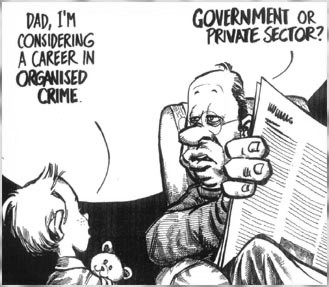
A recent paper “Corruption and Firm Behaviour” investigates how different types of corruption affect company behavior. Firms can face two types of corruption when seeking a public service: cost-reducing, “collusive” corruption and cost-increasing “coercive” corruption. Using an original and unusually rich dataset on bribe payments at ports matched to firm-level data, the authors observe how firms respond to each type of corruption by adjusting their shipping and sourcing strategies. Cost-reducing “collusive” corruption is associated with higher usage of the corrupt port, while cost-increasing “coercive” corruption is associated with reduced demand for port services. Data suggests that firms respond to the opportunities and challenges created by different types of corruption, organizing production in a way that increases or decreases demand for the public service. This can have important implications for how we identify and measure the overall impact of corruption on economic activity. The data further allows us to understand the bribe setting behavior of different types of public officials with implications for the design of anti-corruption strategies.

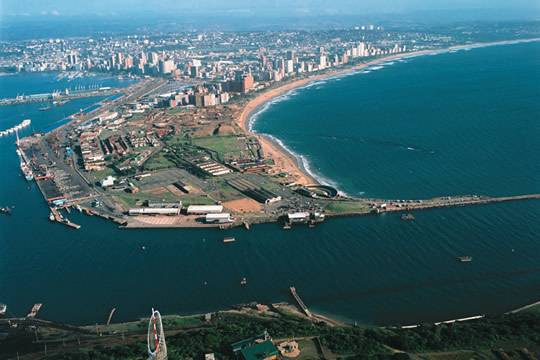
In our setup, firms have the choice to ship through two ports: Maputo in Mozambique, and Durban in South Africa. The majority of firms in our sample are equidistant to both ports while a subset of firms will be significantly closer to the more corrupt port of Maputo. Survey data revealed that the choice of port is driven primarily by the interaction between transport and corruption costs at each port. Transport costs are linear to the distance between each rm and the ports, while corruption costs are determined by the type of product the firm ships. Our main measure of the distortion caused by corruption is how rms shipping products that are more vulnerable to corruption will opt to go the long way around to avoid a closer, but more corrupt port. We also nd suggestive correlations between the level and type of corruption rms face at each port, which directly affects the cost of using port services, and firms’ decision to source inputs from domestic or international markets.

Source: Corruption and Firm Behavior (December 2011) by Sandra Sequeira and Simeon Djankov.

Related articles

Trade costs and corruption in Ports of Durban and Maputo

Recent years have brought an increased awareness of the importance of trade costs in hindering trade, particularly in the developing world where these costs are highest, says a report in the latest edition of Port Technology. The most salient type of trade costs have often been tariff duties and costs associated with the physical transportation of goods. As a result, several countries embarked on extensive programmes of tariff liberalisation and a significant portion of aid effort was channelled to investments in hard transport infrastructure, such as rebuilding railways and ports (the World Bank alone devotes more than 20 percent of its budget to transport infrastructure projects worldwide).

More recently, new light has been cast on the importance of a different type of trade cost: the cost imposed by the soft infrastructure of transport, defined as the bureaucratic infrastructure handling the movement of goods across borders. While there are many possible sources of inefficiencies stemming from the soft infrastructure of transport, recent research is beginning to document the role played by corruption in transport bureaucracies in driving trade costs. This article provides an overview of this research.

Research into corruption

Corruption can take many forms and emerge in many different phases of the process of clearing goods across borders. Sequeira and Djankov (2011) documented in great detail the ways in which port corruption emerges in Durban and Maputo in Southern Africa – this report is featured in my next post. This research was based on a unique dataset of directly observed bribe payments to each port bureaucracy for a random sample of 1,300 shipments.

The study began by defining two broad categories of port officials that differed in their administrative authority and in their discretion to stop cargo and generate opportunities for bribe extraction: customs officials and port operators. In principle, customs officials hold greater discretionary power to extract bribes than regular port operators, given their broader bureaucratic mandate and the fact that they can access full information on each shipment, and each shipper, at all times. Customs officials possess discretionary power to singlehandedly decide which cargo to stop and whether to reassess the classification of goods for tariff purposes, validate reported prices of goods, or request additional documentation from the shipper.

Regular port operators, on the other hand, have a narrower mandate to move or protect cargo on the docks, and at times even lack access to the cargo’s documentation specifying the value of the cargo and the client firm. This category of officials includes those receiving bribes to adjust reefer temperatures for refrigerated cargo stationed at the port; port gate officials who determine the acceptance of late cargo arrivals; stevedores who auction off forklifts and equipment on the docks; document clerks who stamp import, export and transit documentation for submission to customs; port security who oversee high value cargo vulnerable to theft; shipping planners who auction off priority slots in shipping vessels, and scanner agents who move cargo through non- intrusive scanning technology.

The organisational structure of each port created different opportunities for each type of port official to extract bribes: the high extractive types -customs agents- or the low extractive types -port operators. These opportunities were determined by the extent of face to face interactions between customs officials and clearing agents, the type of management overseeing port operations, and the time horizons of each type of official.

Durban and Maputo

In Durban, direct interaction between clearing agents and customs’ agents was kept to a minimum since all clearance documentation was processed online. In contrast, all clearance documentation was submitted in person by the clearing agent in the Port of Maputo. The close interaction between clearing agents and customs officials in Maputo created more opportunities for corrupt behaviour to emerge in customs relative to Durban.

In Maputo, port operators were privately managed but in Durban, most terminals (for containerised cargo) were under public control, with very lax monitoring and punishment strategies for those engaging in corrupt behaviour. Private management in Maputo was associated with fewer opportunities for bribe payments due to better monitoring and stricter punishment for misconduct. As a result, the organisational features of each bureaucracy determined that the high extractive types in customs had more opportunities to extract bribes in Maputo, while the low extractive types in port operations had more opportunities to extract bribes in Durban. While corruption levels were high in both ports, bribes were higher and more frequent in Maputo relative to Durban.

Finally, port officials with opportunities to extract bribes at each port differed in their time horizons. Customs in Maputo adopted a policy of frequently rotating agents across different terminals and ports, and since bribes varied significantly by the type of terminal at the port, customs agents were aware of the risk of being assigned to terminals with lower levels of extractive potential. On the other hand, port operators in Durban had extended time horizons given the stable support received from dock workers’ unions. Customs officials were therefore the high extractive types with the shortest time horizons, the broadest bureaucratic mandates and more opportunities to interact face to face with clearing agents. As a result, they extracted higher and more frequent bribes, relative to port operators in Durban (the low extractive types) who had longer time horizons and narrower bureaucratic mandates. Source: Port Technology.

South Africa – Considering Rhino Horn Trade

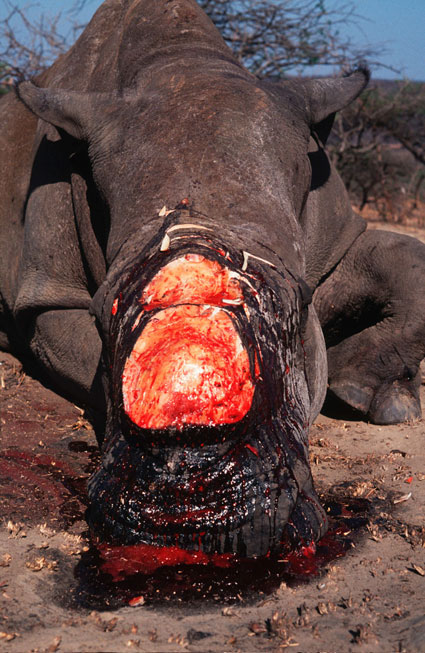
South Africa is considering whether to approach the international community with a proposal to trade in rhino horn, Environment Minister Edna Molewa told MPs on Wednesday. Opening debate in the National Assembly on her department’s budget, she said this included engaging “major role players, including international and regional partners [and] potential consumer states”.

Molewa’s remarks come 10 months ahead of the 16th congress of the Convention on International Trade in Endangered Species (Cites), set to take place in Bangkok, Thailand, in March next year. According to reports, South Africa is sitting on an estimated 20-ton stockpile of rhino horn; some of it in private hands, some stored by conservation authorities. The price of the horn, should the Cites moratorium on trade be lifted, has been estimated at more than R500,000 a kilogram.

Molewa has declined to say how much rhino horn is held by government-managed parks and reserves.”Due to security risks, the department cannot publicly announce the amount of stocks being held by these agencies”. On Wednesday, she said her department was involved in an “extensive” preparatory process ahead of the Cites congress.

“This will include discussions on whether or not to approach the international community with a proposal to trade in rhino horn.” On the rhino poaching crisis in South Africa, Molewa said 199 rhino had been killed so far this year. “We are very, very deeply concerned,” she told the House. Earlier, briefing journalists at Parliament, Molewa said South Africa would not table a document at the next Cites meeting calling for the rhino horn trade moratorium to be lifted.

“No, not this time around. We are still considering all options, as well as probabilities towards that direction. We have not decided yet. Let it be clear. “We are still doing some very serious work in analysing whether we need to move in that direction or not.”

Among the things that needed to be done before trade could be resumed was “to ensure we get to know who the partners are on the other side”.Policies had to be in place “that do not allow any shenanigans to operate in the system,” Molewa said. “There are just too many things to do before we can place the discussion before the conference of parties. We are not yet there.”

Hmmmm! Would seem that the temptation for monetary profit is so compelling – R500,000/kg. Given the frequent outbursts at incidence of poaching and the horror pictures which normally accompany such reports how about burning the rhino horn reserves? That will send a clear message on government’s concern and intent.There exists a similar parallel where the importation of second-hand motor vehicles are banned in South Africa, but condoned because certain neighbouring countries want them. The old adage – ‘laws are meant to be broken’ comes to mind.  Source: SAPA

Decay in ‘morals’ – irrational and corrupt behaviour

My recent post – Harbour mafia busted! – prompts a serious look at human judgement and the cause and effects of corrupt behaviour. The tragedy of the hit on Johan Nortje brings to reality the result of playing with danger. Those that will subsequently be convicted, most likely never conceived this ‘danger’ at the moment of their initial courtship with the criminal underworld. Neither did they perceive that a fellow law enforcement colleague would bear the brunt of their wrong-doing. That’s the reality of consequence of choice.

The origin of customs collection and control dates back more than 2000 years, as do attempts to undermine a country’s fiscal and economic security. Therefore the scourge of corruption is as old as the laws which gave rise to ‘controls’ at borders and ports of entry. The levying of taxes has always resulted in attempts to circumvent the payment thereof. Corruption of senior officials and politicians is the Achilles heel of poor and developing countries. It is a crime that is largely invisible but its consequences can be far reaching. It destroys confidence and morale in law enforcement structures, and robs local laborers and companies trying to etch out a decent living.

Over the centuries, and particularly the latter decades, governments and their law enforcement arms have fought against fraud in various ways. Populous countries (in the past) always had an abundance of people to staff the Customs or Border agency. Above all it was important for the government of the day to be seen as providing employment, hence a measure of comfort at election time. The close-knit command and control of port and border officials under strict observation of their respective port commanders – who in the past had ultimate control over their regions – proved effective in the main in preventing cross border crimes. However, the emergence of bootlegging and the mafia in the 1930’s (USA) proved a real challenge given that these ‘movements’ had an enormous amount of money to neutralise uncooperative customs officials and law enforcement officers. Buying the cooperation of officials left ‘blackmail’ hanging over the heads of the unfortunate officers. In many cases, breaking silence or turning state witness meant possible assassination for the individual and possibly his family as well. Yet, let it be said that such cross-border crime was very much tangible by way of the persons and the modus operandi involved. No, I’m not suggesting it was easy to contain, but it was certainly a whole lot more visible and localised for the authorities to contend with and address. Still, the manpower and the cost to deploy large task forces on the ground were inhibitive for law enforcement agencies.

Today, the world of ‘illicit goods’ is global; the operators can direct activities from the remotest parts of the world thanks to the information super-highway and all means of information and communication technology available today. Similarly, technology ensures near real-time payments to willing participants in crime. Despite this, the matter of ‘illicit goods’ remains a physical movement requiring ‘people’ to arrange and oversee transportation, and distribution to the buyer. It is a well-known fact that the movement of ‘illicit goods’ has a corresponding financial pipeline through which the profits of crime are channeled. Law enforcement has a challenge in trying to piece these activities together. This will involve cooperation of multiple agencies to bring about a result. More often than not, the selfish ambition of one or other agency overrides the collective approach to smash a syndicate. Once again its the age of key performance areas and indicators, and outcomes based initiatives which get ahead of the real issue – to neutralise an enemy. Today furthermore, unfortunately, its better to secure a huge penalty or forfeiture than to apprehend criminals and face months if not years in court – the revenue target is the primary goal. Money drives both the state and the criminal underworld.

Maybe I will be censured yet. Nonetheless, I will conclude with exercising some freedom of expression concerning views on what I believe fundamentally contributes to criminal and irrational behaviour. The democratic way of modern life has indeed perpetuated a lot of freedoms. With this, however, comes a corresponding responsibility and ability to discern between what is right or wrong. Freedom comes in both guises, sometimes simultaneously so as to confuse the mind – not unlike the ‘forbidden fruit’ in the Garden of Eden – making a choice between the right or wrong path. A flaw in democracy is that it tends to present everything in a “yes we can!” mentality. What this does is ‘challenge’ the individual or group to ‘achieve’. There might be little wrong with this, however, there are no documented guidelines on how to ‘achieve’, hence it is concluded that one must ‘achieve at all costs’. So what has this to do with corruption? The multiplicity of (false) ‘comforts’ offered by the modern world tend to excite the senses and numb the conscience. After all democracy tends to advocate equality in everything, so what can be wrong with a bit of excess, since one has freedom of choice? Wrong! unfortunately, this is the very mentality which drives ‘corrupt’ behaviour. There will always be consequences. Add to this indiscretion some measure of peer pressure, jealousy, or avarice and you have a recipe for a corrupt organisation.

The causes are multi-facetted –

  • The blatant disrespect of corporate structures in not recognising the need for staff to spend quality time with their families. (Less work = less profit and poor returns)
  • Parents too focused on personal gain or pleasing the shareholder, rather than tending to the real needs of their children to build honest citizens.
  • Ill-disciplined ‘educators’ who care little about their ‘learners’ and more about their rights!
  • Law enforcement agencies focused on revenue collection rather than law enforcement.
  • Lack of knowledge amongst politicians and heads of government agencies as to what their real mission ought to be.
  • Lack of a real support base within law enforcement agencies to deal with the threats being faced by their organisation.
  • Lack of role models in our society.

Is it little wonder then that the majority of tendencies today follow corruption? I’ve yet to note a single statesman (sorry states-person) who is morally upright. I would however like to concede that at least that maverick Prof. Jonathan Jansen (University of the Orange Freestate) is not afraid to stand up and talk straight.

Those interested in the topic of organised crime in Africa should can an interesting analysis (below) which the Internet has freely allowed me to obtain. ICT is without doubt a necessary evil!

Related articles

Durban – Harbour mafia busted!

A 3-year covert investigation into a multi-billion rand racket at the Durban harbour has exposed an international mafia, allegedly bribing customs and police officials to allow in container-loads of contraband.

This week, a former Sars customs official was taken by surprise when Hawks and Sars investigators swooped on his Umbilo home and arrested him on 80 counts of alleged corruption. Etienne Kellerman, 47, a former Sars anti-corruption task team member, appeared in the Durban Regional Court on Tuesday. He was released on R100 000 bail and the matter was adjourned to next week. Kellerman is suspected of receiving substantial benefits for allowing contraband through. It is alleged that Sars lost millions of rand in revenue as a result. He resigned from Sars three years ago, days after he was quizzed by Sars investigators about his alleged role in the racket. His job had been to profile and identify high risk companies and containers entering the country.

A further seven Sars officials from Durban and Johannesburg were suspended for their alleged roles in the smuggling racket. Hawks investigator and project manager of this undercover operation, Colonel Brian Dafel, said that in coming weeks they would swoop on 100 more suspects in the country, including Sars officials, police and syndicate members, on charges ranging from racketeering, corruption, money laundering, extortion, murder and attempted murder.

Warrant Officer - Johan NortjeHe said the investigation was triggered by informers who tipped them off about the alleged crooked activities and racketeering at the harbour. The undercover investigation was a joint operation by the Hawks, Sars, independent law enforcement agencies and other key role players, Dafel said. He said they were also closing in on suspects believed to have ordered the hit on Warrant Officer Johan Nortjé, an officer in the police’s protection security service. He was responsible for investigating smuggling of goods and drugs through Durban harbour. A hit was allegedly ordered on his life days after he made a R100m counterfeit bust at the harbour. Nortjé was gunned down outside his Montclair home on January 17 last year, 10 days after he had made the bust.

“Nortjé was one of the few honest cops. He was aware of the container racket and was determined to expose it. He was killed because he was hampering the operation of the syndicate members,” Dafel said.

“This is a very dangerous investigation that involves extremely high levels of corruption. “Durban harbour is the biggest port authority that handles 40 percent of the containers nationally. In the past two years, during this investigation, we have seized over R1 billion worth of counterfeit goods and contraband.” He said that several witnesses had been placed in witness protection programmes as they feared for their lives. “People’s lives have been threatened and hits have been ordered. But, none of this will deter this investigation.

Dafel told the Daily News that investigations had revealed that certain SARS and police officials were working in teams between KZN and Gauteng. “This could not be done alone. They worked in groups, including those who cleared the documentation to those who inspected the containers and gave them the final clearance.

Thousands of containers pass through the harbour daily and it is impossible to check each and every one. That is how the counterfeit goods and contraband got through so easily. The syndicate members also communicate through cellphones making it a very smooth operation. He said every member of the syndicate was paid for his or her role in allowing the illegal goods through. The potential value of the illegal commodities was between R10 and R20 million for each container. The international mafia pays bribes of up to R30 000 per container that is allowed to pass through customs undetected. It is reported that one of the biggest problems is the clearing agents who work in cahoots with the police and syndicate members.

Dafel said many of the SARS and SAPS officials who were being investigated stood accused of allowing counterfeit goods or contraband to enter the country illegally, or under-evaluating containers. Since the investigation started, much stricter measures are in place at the harbour making it difficult to smuggle goods into the country. “We have closed the gap significantly for any form of corruption to take place. Also, staff know that they will be arrested and charged if they break the law,” Dafel said.

He said they were also working closely with people abroad and international law enforcement agencies to close in on the racketeers. “There are big name international companies, mainly from China, that are also being investigated. In fact, the goods imported from China are the biggest problem.” Source: Daily News E-edition

Related articles

The value of risk-based Non-Intrusive Inspection

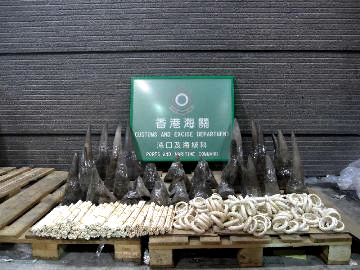
Rhino horn bust, Hong Kong CustomsOn 14 November 2011 Hong Kong Customs seized 33 rhino horns (weighing 86.54 kg), 758 ivory chopsticks (13.22 kg) and 127 ivory bracelets (9.2 kg) with a value of about 17.4 million Hong Kong dollars (over 1.6 million euro). Acting on risk assessment, a container on board a vessel arriving from Cape Town in South Africa and declared as containing “scrap plastic” was selected for inspection by Customs officers. Under x-ray examination, officers discovered the contraband concealed inside a package of plastic scrap placed at the rear end of the container.

This is one of the biggest seizures of rhino horns reported by Customs. Over the past two years, rhino horns have been seized by Customs in Belgium, China, Ireland, Kenya, Portugal, the Netherlands, South Africa and the United Kingdom.

Early November statistics from the South Africa National Parks authority show that 341 rhinos have been lost to poaching so far in 2011, compared to a record total of 333 last year. Most rhino horns are smuggled to Asia in particular China and Vietnam, where the unfounded rumour persists that rhino horn can cure cancer! This record seizure follows another made by Hong Kong Customs on 29 August 2011, when 794 pieces of African ivory tusks (1,898 kg) found inside a container were seized. Source: WCO.

A single bust like this invokes a number of things. Firstly an outrage amongst the general populace of the cruelty and greed concerned with the crime, and secondly, elation amongst law enforcement officers in making the bust. A bust such as this reinforces confidence in the initial commitment to procure inspection technology.

What is the Framework Convention on Tobacco Control?

The trade in tobacco products is long recognised for its links to the criminal underground and illicit goods.Notwithstanding the efforts of health bodies, it seems that the ‘habit’ is on the increase, and so too is the trade in illicit tobacco products. Enforcement officers will find the Draft protocol to eliminate illicit trade in tobacco products of interest to their profession.

The Framework Convention on Tobacco Control (FCTC) is the world’s first global public health treaty. It is also the first treaty negotiated under the auspices of the World Health Organization (WHO). The treaty entered into force in February 2005. It was signed by 168 of the 192 WHO member states and more than 170 WHO member states have become parties to the convention. List of signatories and parties to the WHO FCTC.

The FCTC provides an internationally co-ordinated response to combating the tobacco epidemic, and sets out specific steps for governments addressing tobacco use, including to:
•    Adopt tax and price measures to reduce tobacco consumption;
•    Ban tobacco advertising, promotion and sponsorship;
•    Create smoke-free work and public spaces;
•    Put prominent health warnings on tobacco packages;
•    Combat illicit trade in tobacco products.

Border Management Agency – Government promises finalisation by 2014

Lebombo border lineIt must be over a decade since the South African government entertained the notion of a border management agency (BMA). Initial attempts were made along the lines of a collaborative departmental approach to securing and administering the plethora of controls. None of the attempts has had any success in meshing together a workable solution. Perhaps the best essay on the subject remains Jonny Steinberg’s “An overview of South African border control: 1994-2004“.  

A recent article by Leon Engelbrecht, editor of DefenceWeb, suggests that the ‘thought process’ behind the establishment of a BMA has not moved beyond the pre-democracy stance of a military emphasis at the countries border posts and borderlines. Unlike other parts of the world where ‘border security’ retains a customs and immigration character – if only just – details of this country’s endeavours appear to favour military and police type controls which bodes little hope for intra SACU/SADC trade developments. Unless a strong leader, having an acute understanding of both trade and security, heads up such BMA, there is little hope that the initaitve will ever materialise. Lets just wait and see.

SARS clampdown nets R40.8m in illegal vehicles

For some, particularly government enforcement agencies and the motor industry will laud such a headline. Read the full article on FTWOnline .

The real question is why South Africa allows the importation and storage of these vehicles for subsequent re-exportation? This also implies the continued operation of licensed warehousing facilities for a commodity which seemingly is impossible to monitor and control. If the illegal importation of second-hand motor vehicles was outlawed we wouldn’t have to print such a headline, nor would enforcement agencies have to waste scarce resources and taxpayers money in counteracting such a threat. There is an argument that political and social conditions in our neighbouring BLNS states necessitate the ‘exportation’ of cheap vehicles to the people in these countries. Yet, this implies full customs controls at the internal land border posts between South Africa and the SACU states. Unfortunately, SARS provides little more than domestic VAT control at these borders which beckons the question why this practice is allowed.

Customs Day – let’s not forget the heroes!

While the world’s customs administrations prepare to celebrate International Customs Day, the grim reality of the fight against crime stares back at us right here in our own back yard. Just a few days ago, customs officers and investigators learnt of the sudden and tragic death of their colleague Johan Nortje, who was gunned down in his driveway in Durban. Johan was a counterfeit investigator.

It is ironic that while customs administrations spend a lot of time in developing electronic systems in the fight against crime, little thought is in fact given to the ‘risks’ facing the official on the ground. In this age of data systems, proactive risk assessment, and frontline scanning it still remains the responsibility of a ‘human’ officer to make the ‘judgement calls’ and ‘physical intervention’ where necessary. Let’s hope this incident does not go unheeded. It helps little if a lot of time and money is spent on ‘capacity building’ and there is not a plan to retain and safeguard these ‘intellectual’ interests.

Customs in literature

I thought I should share some comments in regard to certain published works which relate to Customs.

First up is a book introduced to me by a learned colleague – The Great Hedge of India, by Roy Moxaham. It is the story of a huge hedge the British built from Pakistan across India. Moxhan discovered though a much bigger story of oppression and how a large corporation sought to dominate a people. The hedge – the proverbial Customs line – was built to control the movement of taxable commodities like salt and had a huge impact on the lives of Indians. The British East India company‘s salt tax affected every one, but none more so than the poor of India. The company made huge profits from the tax in the 1700s and 1800s, [also visit:  History of excise in India for additional insight]. Many British aristocrats and businessmen made fortunes from their investments in the British East India company. After the British government took over the rule of India from the British East India company, it could have stopped the salt tax, but didn’t – what’s changed in the modern world.The World Trade Organization is doing just the same today (at the behest of the G8), under the banner of free trade agreements which technically cripple the economies of developing nations. A truely eye-opening story!

Another thought-provoking work is titled – “Illicit” authored by Moisés Naím. It tells a sensational tale of how smugglers, traffickers and copycats are Hijacking the Global Economy. The book is regrettably devoid of the kind of firsthand reporting from the field that would have made the subject matter really jump off the page. Yet Naím creates a picture of illicit trade which demonstrates that, far from taking place in a shadowy underworld, such activity is inextricably linked to legitimate commerce and directly affects all of us. In Naím’s view, globalization’s “diffusion of power to individuals and groups” and away from sovereign states has created a “smuggler’s nirvana,” in which the lines between legitimate and illegitimate economic activity are blurred and criminal networks possess an unprecedented degree of political influence.

Making matters worse, the widening gap between global haves and have-nots—what Naím calls “geopolitical bright spots and black holes”—has increased the incentive for individuals and groups on both sides of the divide to participate in illicit activities. The remedy? In addition to offering a bevy of specific policy ideas, Naím urges readers to move away from simplistic moral denunciations and to focus, instead, on reducing the demand for criminals’ goods and services and on weakening the incentives for ordinary people to become involved in their enterprises.

This book is important in two very big ways: the first, the one that most are noticing, is that it documents very ably the fact that crime pays–the author has done a superb job of itemizing the global illegal trade industry in a manner that could be understood by anyone, and the bottom line is frightening in that illicit trade is perhaps $2 trillion a year, while legal trade is between $5 trillion and $10 trillion. Off-the-books bartering and immoral invoicing within corporations are additional reducers of government tax revenue–import export tax fraud in the USA is known to be $50 billion a year ($25 rocket engines going out, $10 pencils coming in).

The second reason this book is important – the real value of this book – is in documenting the revenues lost to government. Legalizing prostitution has economic as well as public health implications. Reducing the arms trade, where the US is the greatest exporter of violence and bribery, has implications across ethnic conflict, stability, water and oil conservation, and so on. Eliminating counterfeiting and illegal immigration would have enormous implications for positive constructive government revenue. Eliminating crime, and corporate crime, provides the financial foundation for restoring the democratic contract, the social contract, with the working class and the middle class.

Finally, on a more practical note, I would be lacking if I did not include reference to the Dictionary of International Trade. This compendium is the most respected and largest-selling dictionary of trade in the world. It is used by importers, exporters, bankers, shippers, logistics professionals, attorneys, economists and government officials in more than 100 countries worldwide. Every business has its own language, lexicon and lingo, and international trade is no exception. Consider: ad valorem, C-TPAT, most favored nation, FAST, antidumping, NAFTA, countertrade, FOB, ocean bill of lading, letter of credit, FTZ, Harmonized Tariff Schedule, IMF and chaebol. International trade is a business where “I think I know” isn’t good enough. What you don’t know can really hurt you.

Comment: On the national front Customs administrations are indeed focussed on a multiplicity of cross-border and international threats. The very fact that politicians squabble over the legal framework and structure of the Customs organisation bears testimony to both the concern and confusion which continues to prevail in governments across the globe. Little wonder illicit operations prevail. In most cases, this new-found interest in the global counterfeit and trafficking industry is seized upon by politicians and administrators to fashion a new form of ‘hybrid’ organisation – the Border Security Agency. For the customs officer on the ground it is both confusing and challenging. Most officials are only now getting used to the Revenue Authority model which many governments, upon the suggestion or insistence of the World Bank, adopted to improve revenue collection. Since 9/11, all this has changed. Even the most ardent proponents of the ‘revenue authority’ model have had to concede – on the international stage – the need for more focus and investment in their Customs administrations. This all takes a lot of money, which few governments can afford. The bottom line is that most hold more dearly their desire to secure the ‘national revenue ticket’, and continue to pay lip-service to the fundamental question of ‘customs control’.