Shortage of Helium – challenges for Cargo Security and potential contractual dilemma for Security Agencies

While the topic of non-intrusive detection equipment there has been much-a-do about the shortage of helium over the last 18 months, the impact this may have for existing investments in scanner and radiation detection equipment poses an even more ominous question, particularly those countries and agencies having already invested in US-based technology.
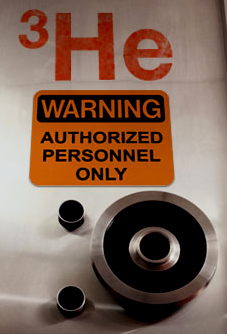
The demand for nuclear detectors exploded (if you’ll pardon the expression) from 8,000l/year to ten times that in 2008 due to increased efforts to stop nuclear proliferation and terrorism. But production of helium-3, a critical element in nuclear detection technology, has not kept pace and existing stockpiles are quickly dwindling. Alternatives are currently in the early stages of development and researchers have found several promising leads; when an alternative is found, current radiation detection equipment will have to be replaced with the new technology.

Helium-3 is a decay product of tritium, a heavy isotope of hydrogen used to enhance the yield of nuclear weapons, but whose production stopped in 1988. The half-life decay of tritium is about 12 years, and the U.S. supply for helium-3 is fed by harvesting the gas from dismantled or refurbished nuclear weapons. However, production of helium-3 hasn’t kept pace with the exponential demand sparked by the Sept. 11 attacks.

Projected demand for the non-radioactive gas in 2010 is said to be more than 76,000 litres per year, while U.S. production is a mere 8,000 litres annually, and U.S. total supply rests at less than 48,000 litres. This shortage wasn’t identified until a workshop put on by the Department of Energy’s Office of Nuclear Physics in August 2008. Between 2004 and 2008, about 25,000 litres of helium-3 annually was entering the U.S. from Russia. Right around the time of the August workshop, Russia decided it was “reserving its supplies for domestic use.
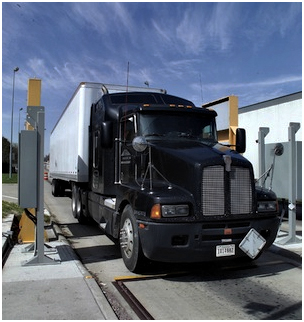
Helium-3 is primarily used in security applications as it is highly sensitive to the neutrons that are emitted by plutonium. Roughly 80 percent of helium-3 supplies are used for national security. Since 9/11 demand for radiation detectors increased sharply, however production failed to increase. The shortage is reported to severely effect even the handheld and backpack detectors used by the U.S. Coast Guard, Customs and Border Protection, and Transportation Security Administration. A representative of General Electric Energy, which manufactures radiation detectors, said, “Up to six different neutron-detection technologies may be required to replace helium-3 detectors” for its four main uses and “[a] drop-in replacement technology for helium-3 does not exist today.” When an acceptable alternative is found, current radiation detection equipment will have to be replaced with the new technology. In the meantime, industrial manufacturers of detection equipment have been diversifying their helium-3 sources and turning to recycling old helium-3 canisters.

In June 2011, however, General Electric (GE) did announce that it had introduced a new radiation detection solution using boron-10 (10B) to detect radiation in border security applications. These detectors are key components of radiation portal monitors used in a wide range of applications including screening at borders and in seaports. GE is the only company to date to manufacture an alternate neutron detection technology for deployment in radiation portal monitors.

It still needs to be seen how manufacturers will deal with their existing customers. Concerned Customs Administrations and Security Agencies should be reviewing the terms and conditions of their supply agreements in the meantime. Future acquisitions will no doubt look at Helium-3 based technology with sceptism unless they are uninformed.

Sources: WIRED, General Electric
Mobile Customs Control – Great minds think alike

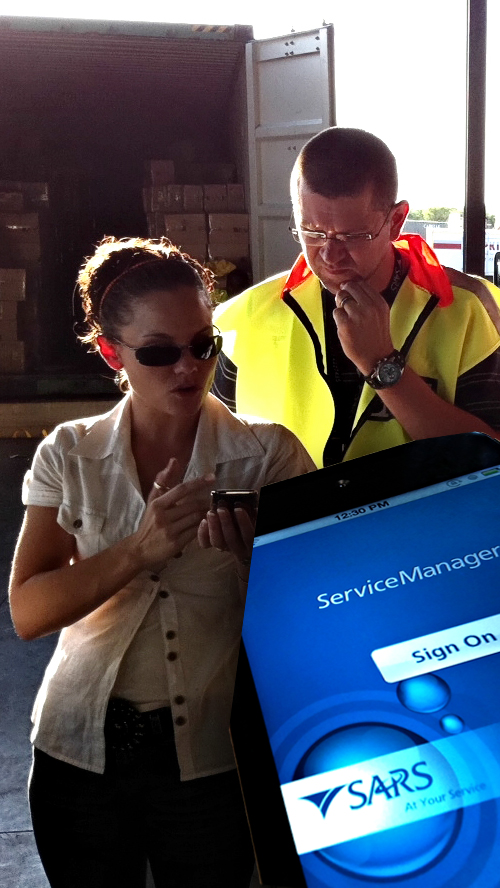
Beitbridge inspection area6 December 2010 saw the rollout of a new electronic tool for customs inspectors at Beitbridge border post. The need for a hand-held device was identified following the rollout of a new workflow system, called Service Manager, to various Customs offices over the past few months. Although the changes introduced recently were aimed at moving Customs to a totally paperless environment, customs inspectors still had to print out their instructions on paper, manually write down the inspection results and then recapture these onto the system back in the office.

The use of an iPod by a Customs officer to conduct a physical inspection at Beitbridge this week introduces significant enhancements over the previous manual process. SARS has been liaising with iPod experts in various countries around the world over the past few months to develop this function and procure the devices.

The solution comprises an Apple iPod Touch which has been configured to operate SARS’ automated inspection workflow application – Service Manager. The introduction of a hand-held device therefore means that all the functions of Service Manager are now at the inspector’s finger-tips. Inspectors receive their instructions on the iPod, capture the results and make recommendations which then go to the finalisation/adjustment inspector. They can even take photographs with the iPod if they need further clarification on the goods they are inspecting. Inspectors no longer have to go back and forth to the office and their next job can be assigned to them on the spot. This is expected to substantially reduce the time spent on physical inspections and minimise human error.

Initially 34 iPods were procured for Beitbridge, WiFi technology was made available at the port and training of affected staff undertaken. All physical inspections at Beitbridge were being conducted with iPods and will be rolled out to the other Customs border posts throughout 2012.

While SARS’ solution is the first known Apple solution of its kind, similar solutions have been introduced recently within the US Bureau for Customs and Border Control and the Australian Border Control Agency offering varying types of functionality, including the integration of RFID technology by the Australians to monitor and track cargo movements. Life for Customs officers is a whole different and will continue to evolve if it expects to remain in touch with modern era fraud and scams.

USCBP Receives 2nd Unmanned Aircraft System

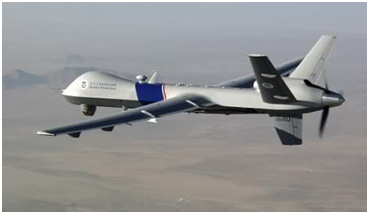
U.S. Customs and Border Protection received a second Unmanned Aircraft System Predator-B at the Naval Air Security Operations Centre in Corpus Christi, Texas—the first of two UAS’s funded through the Southwest Border Security Bill Supplemental. The UAS will provide critical aerial surveillance for U.S. Border Patrol agents stationed along the Texas-Mexico border.

The CBP UAS Program operates Predator-Bs from operation centres in Arizona and Texas which allows CBP to deploy unmanned aircraft along the Southwest border from the eastern tip of California across the common Mexican land borders of Arizona, New Mexico and Texas.

The UAS Operations Centre in Corpus Christi supports counter-drug operations in the Western Caribbean and Eastern Pacific, disaster relief and humanitarian support in the Gulf Coast region, and rapid deployment throughout the southern tier of the U.S. and the Western Hemisphere.

View a videofile – http://www.dvidshub.net/video/embed/105254

Since its inception, the CBP UAS program has flown more than 11,500 UAS hours supporting border security operations and disaster relief and emergency response, including various state governments and the Federal Emergency Management Agency. These border security efforts have led to the seizure of approximately 46,600 pounds of illicit drugs and the detention of approximately 7,500 individuals suspected in engaging in illegal activity along the Southwest Border. Source: CBP

Empty container depots adding to industry’s costs?

FTW published an article recently in regard to ‘empty container depots’ and their apparent negative impact on cost and response to industry needs. It was duly noted that while so much focus was accorded to Port delays, little is said about the additional costs caused by empty container depots. Many of these in fact hold, clean and distribute empty containers on behalf of shipping lines some of whom are not equipped to service the industry due to ill-equipped facilities.

Shipping lines complain about the turnaround of their vessels at the port, but take little interest in ensuring a quick turnaround of vehicles at their appointed container depots. The report continues: “Transporters are delayed for hours at major depots while waiting for containers to be turned in, cleaned and then released for export cargo. Most of these depots do not work 24 hours in line with the port and transporters, which further limits the ability of transporters and industry to perform”. I think this deserves some further thought and consideration, and for this I’ll provide a customs-slanted view.

Firstly, in other parts of the world, the same mentality prevails whenever a port or customs system is replaced or upgraded – an avalanche of vitriolic sentiment, followed by line operators threatening to institute port delay surcharges and the like. To place matters into true perspective – yes, the port and customs services are there for the benefit and support of the supply chain, and should run and be maintained to offer efficient operation even in the event of catastrophe or a burgeoning logistics market demanding increased capacity and responsiveness. 9/11 provided a catalyst for Customs Inc. to initiate an unheard of demand on trade to increase its internal security mechanisms and even provide information in advance of the lading of a vessel at a foreign port. The US lines were the first to climb on the band wagon in support of heightened security and quickly acted to ensure that their regional offices were able to assist foreign shippers in supplying the required ‘advanced information’ at a nominal charge – varying between $25 and $60 per bill of lading. Sure, this was the cost necessary to ensure lines met their new stringent reporting requirements to the US Homeland Security to obviate possible penalties of $5,000 and up. Nonetheless, the same lines, when asked to provide the local authorities the same courtesy, recoil and look for all sorts of excuses to avoid the subject. Sure, it is understood that only the US has the right to make such demands, not any anyone else. I have followed most other advance cargo reporting requirements with similar amusement.

You see, lines were prepared to make suitable arrangements for US-bound containers such as pre-booking empty containers. Now when the requirement is extended to other parts of the world there is an immediate issue. Simply, and as the article correctly deduces, supply chain security implies that everyone changes – even the empty container depots.

As the local port authorities and your customs service are spending millions in upgrades to meet the demands of the future, so too is the same required of trade. Unlike commercial entities, your customs service remains one of the few who in the world that has not instituted a customs service fee. Certain traders and intermediaries in the industry might complain that recent developments at SARS have seen their costs increase due to new transactional requirements, for example the electronic supporting document issue. This I will discuss on its own in a separate post. The bottom line is that the FTW article is an important cue for those container depots concerned to get their act together. The heat will undoubtedly be turned up on them once SARS introduces its new export clearance and cargo reporting requirements. South Africa needs smaller to medium enterprises offering dedicated services. Perhaps it’s time for the lines (those who operate such facilities) to consider outsourcing these activities to more dedicated enterprises. Read the FTW article here!

9/11 – The Significance for Customs

The tenth anniversary of 9/11 recalls a day of infamy for many, particularly those who lost loved ones, not to mention the sheer audacity and questionable motives of the respective attacks. It also marked a distinct period of change in the Customs, international travel and trade environments. For one, there is a not a single person involved in any of the above who has not felt the effects of a ‘shake up’. It is therefore relevant to recount this event and reflect on the explicit impact which the attacks in New York would have for Customs officers, worldwide.

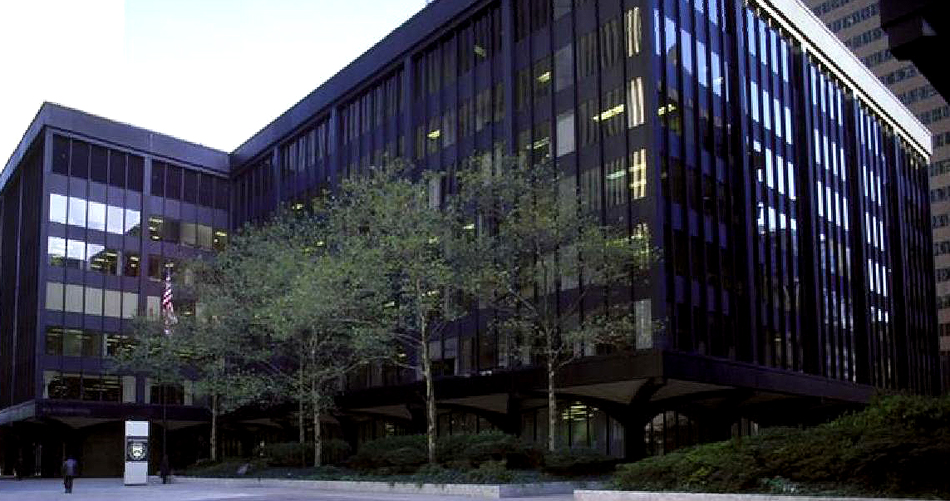
WTC 6, an eight storey building –known as Custom House – was home to 760 officers of the US Customs Service. It was situated adjacent to the North Tower. Within 12 minutes of the first plane hitting the North Tower at about 8:46 am, all occupants (WTC 6) were safely evacuated. Stephen Barr of the Washington Post noted in an article titled, “Knowing the Drill Saved Lives at New York’s Customs House” on 18 September 2001 that ‘Federal agencies demonstrated coolheaded leadership during the crisis. Because of practice sessions held several times a year, employees knew what to do and where to go. In a day marked by unbelievable horror and confusion, old-fashioned fire drills helped one band of office workers to escape’.

Beneath the plaza level of US Customs House (WTC 6) was a large underground garage, separated off from the rest of the complex’s underground area and guarded under tight security. This was where the various government services parked their bomb-proofed cars and armoured limousines, counterfeit taxi cabs and telephone company trucks used for undercover surveillance and covert operations, specialized vans and other vehicles.

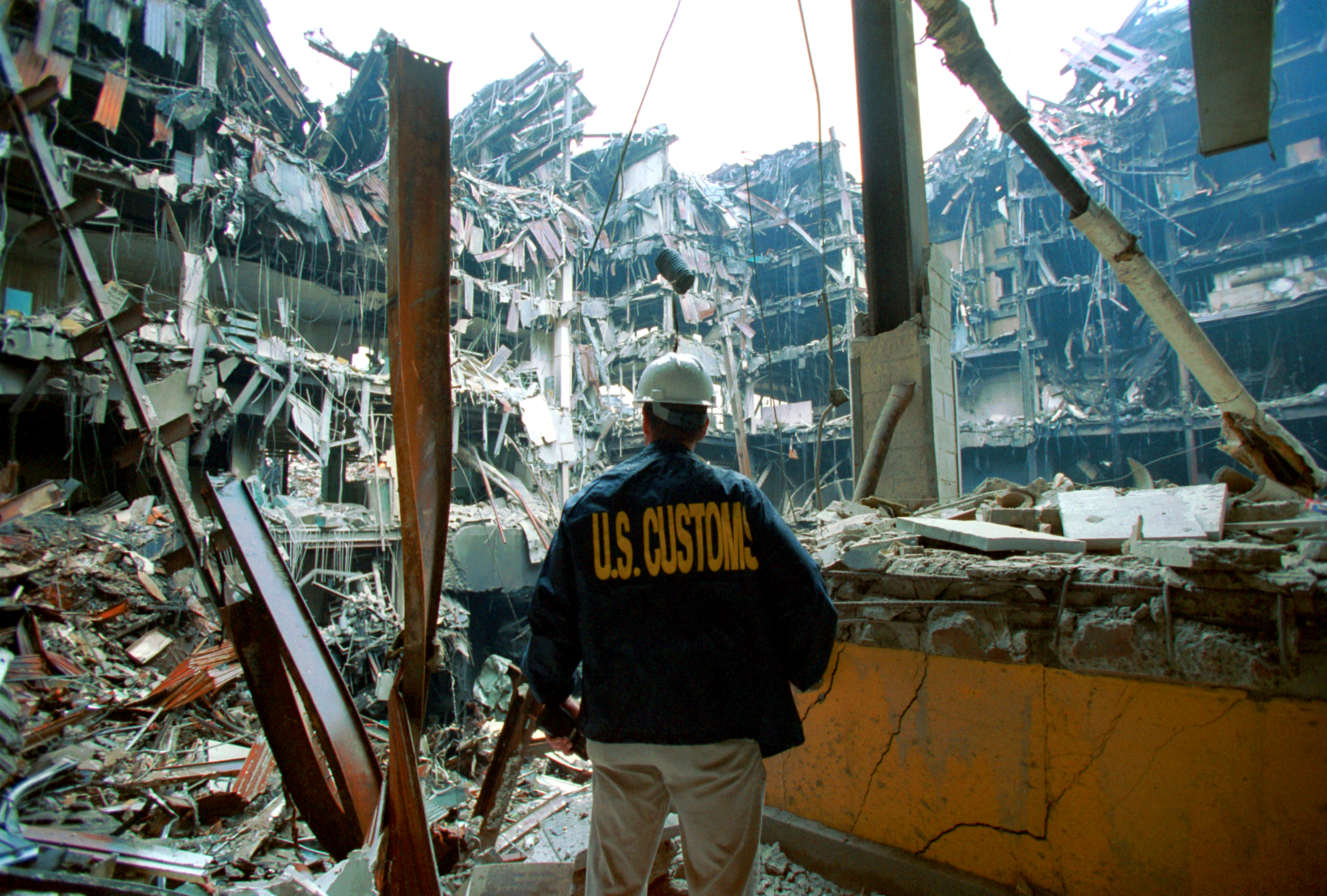
New York Customs House (WTC6) - AfterThe evacuation of WTC 6 was indeed timely, because at 9:04am a massive explosion shook the building, bellowing a huge plume of smoke 550 feet into the air. When the North Tower fell, the US Customs House (WTC 6) was crushed and totally incinerated. Much of the underground levels beneath it were also destroyed.

The Commissioner designate, Robert C. Bonner, commented “The sudden disruption to such a large and important area of Customs’ operations threatened to compromise the immediate security of ports of entry in the New York area and the integrity of ongoing Customs investigations and trade and enforcement activities. We faced an immediate need to relocate all 800 employees and to allow them to resume their work quickly so they could focus on border security. These men and women responded heroically to the challenge, setting up a temporary operations center within hours at nearby JFK airport. And, within three weeks of the attacks, they succeeded in relocating our New York Customs Office into new office space in Manhattan”. Click here to view the full testimony of Robert Bonner to the National Commission on Terrorist Attacks.

Customs evidence amongst the rubbleIn the months to follow, significant developments resulted in the institution of the Department of Homeland Security – the merger of the US Customs and Immigration Services – a gargantuan displacement of some 140 000 federal officials. (For SARS Customs officials – ours is but a picnic!). The full implications of 9/11 were to be felt by the international community in 2002 with the implementation of several ‘security/anti-terrorism’ measures that have undoubtedly changed the focus, intent of all customs administrations worldwide. Click here to visit the 9/11 image gallery.

US Customs agreement on border security upgrades

American terminology never ceases to amaze me – I wonder if they call their stakeholders “clients”?

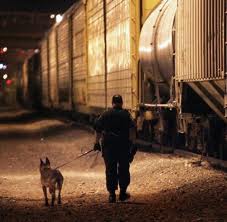
US Customs and Border Protection has announced a penalty Mitigation Decision under which Union Pacific (UP) has agreed to spend US$50 million to enhance the Mexico and United States rail supply chain CBP said the “Mitigation Decision” defines the steps that UP will take to invest US$50 million in security enhancements at critical junctures of the Mexico and US supply chain, and partnering with CBP to form a Rail Fusion Center to identify high-risk shipments.

US Penalty Mitigation DecisionCBP further said the decision provides that CBP will mitigate penalties assessed against UP if the railroad fulfils its obligations under the agreement. In recent years these penalties have become significant, as illegal controlled substances were discovered on trains originating in Mexico and arriving at US-Mexican border crossings. CBP Commissioner Alan D Bersin said: “It’s in the best interest of all that appropriate steps are taken to secure the US border against the smuggling of contraband. UP Chairman Jim Young said the agreement expands a relationship with CBP in which UP has already invested in technology, infrastructure, training and workforce resources to secure rail transportation across the border. Source: World Cargo News Online.

Confidentiality of manifest information – tips for US importers and consignees

South African shippers take heart, this is a worldwide phenomenon. Check out the article below on how US shippers are addressing the issue.

Is there a foolproof method for importers or consignees to maintain confidentiality of identifying information listed on shipping manifests? Unfortunately, the short answer is “no.” While an importer or consignee may request that US Customs treat its identifying information as confidential, the infinite number of variations of this information (e.g., spelling of company name) precludes confidentiality for each possible variation.

There are, however, steps that importers and consignees can take to minimize risk in this area. Under federal law, the public may collect manifest data at every port of entry. Moreover, reporters may collect and publish names of importers from vessel manifest data unless an importer/shipper requests confidentiality. Specifically,

[a]n importer or consignee may request confidential treatment of its name and address contained in inward manifests, to include identifying marks and numbers. In addition, an importer or consignee may request confidential treatment of the name and address of the shipper or shippers to such importer or consignee. 19 CFR 103.31.

As many importers and consignees have learned, however, confidentiality is not assured even CBP grants such a request. A bill of lading may often contain a variant of a company name, and if that variant is not included on the confidentiality request, confidentiality will likely not apply to the information on that particular manifest. For example, if the John Smith Corporation requests confidentiality for its corporate name, and a manifest lists “J. Smith Corporation” or “John Smith Corp., Inc.”, confidentiality would not technically apply since these names were not within the scope of the confidentiality request. Nevertheless, the trade may take steps to mitigate this. To ensure the broadest confidentiality exemption, an importer or consignee may consider including in the confidentiality application:

  • Every variation of the names that has been used previous shipping documents
  • Likely variations of the name
  • Misspellings of the company name
  • Any D/B/A or A/K/A previously used
  • Names of sister companies, including those in other countries
  • All company addresses

Even if an importer or consignee diligently follows these suggestions, confidentiality is not 100% guaranteed. One incorrect keystroke by someone entering data in a document somewhere in the supply chain can result in a “new” variation of a company name that is not covered by a grant of confidentiality.

US Customs and the trade have had discussions about the shortcomings in this process. Perhaps that is why CBP has for the time being disabled an online form used to make confidentiality requests (NOTE: requests can still be mailed to CBP as specified in the regulations). To tighten up this process, one possible solution is to leverage IRS/EIN numbers instead of relying on guessing at spelling of names. Source: CustomsNow Blog

USCBP commits to CTPAT Mutual Recognition Agreements

The Customs-Trade Partnership Against Terrorism (C-TPAT) is a voluntary public-private supply chain security initiative. C-TPAT members – including importers, carriers, consolidators, licensed customs brokers, and manufacturers – voluntarily adhere to cargo security standards in exchange for a range of benefits, such as reduced CBP inspections and priority border processing.

C-TPAT Mutual Recognition (MR) Arrangements facilitate bilateral trade by extending reciprocal recognition to qualifying foreign customs programs, thereby enabling members of the foreign programs to receive the benefits of C-TPAT membership. MR Arrangements indicate that security requirements, standards, and verification procedures of foreign industry partnership programs are substantially equivalent to those of C-TPAT.

CBP currently has MR Arrangements with only five countries: Canada, Japan, Jordan, New Zealand, and South Korea. These five countries have accounted for about 20 percent of US trade since 2004.

CBP has indicated that it is committed to growing the number of C-TPAT MR Arrangements. In December 2010, at a Transatlantic Economic Council meeting, US and EU officials discussed the possibility of implementing a MR Arrangement between the United States and the European Union by October 31, 2011.

In a June 2011 report, the US Chamber of Commerce called for CBP to develop a MR Arrangement with Mexico.

You can read up more in the fact file on  USCBP Mutual Recognition Agreements and for a non-US perspective, you will find an excellent essay on Mutual Recognition of AEOs which I found on the World Customs Journal website.

Homeland Security Demands Mozilla Remove Firefox Extension That Redirects Seized Domains

Apparently, the folks at the Department of Homeland Security (DHS) are not at all pleased with the very, very simple Firefox extension, called MAFIAAfire, that negates Immigration & Customs Enforcement‘s (ICE) domain seizures, by automatically rerouting users to alternate domains. Apparently, DHS demanded that Mozilla take the extension down from its listing of Firefox extensions claiming that the add-on “circumvented” DHS’s seizure orders. Thankfully, Mozilla didn’t just fold, but instead left it up and sent DHS a list of questions concerning the request. The list of questions is really fantastic, as it goes way beyond the direct request to really get to the heart of the questionable nature of ICE’s activity with domain seizures. Read the full article at Techdirt.