Aerotropolis for Gauteng…stuff’s about to happen

Oliver Reginald Tambo International Airport (east of Johannesburg) to become Africa's first aerotropolis

Oliver Reginald Tambo International Airport (east of Johannesburg) to become Africa’s first aerotropolis

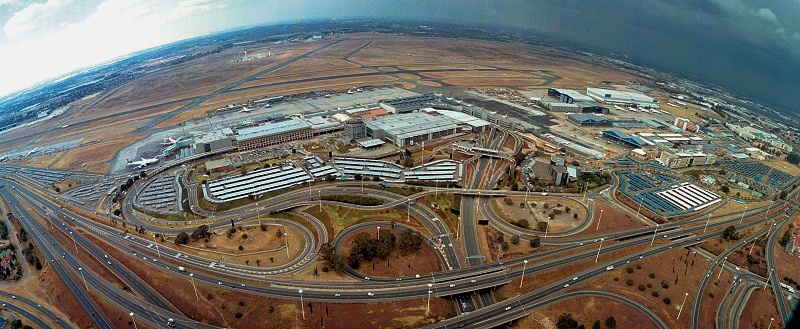
The Gauteng Provinicial government has announced that Africa’s busiest airport, OR Tambo International Airport is set to become the location for the continent’s first aerotropolis. Work on the development of the aerotropolis, centred at OR Tambo International Airport, seeks to leverage public and private sector investment at the airport and surrounding areas. In supporting industrial development in this precinct, approval has been granted for the creation of an Industrial Development Zone (IDZ) in the area surrounding the airport. Heard this all before, but what’s different this time around?

An aerotropolis is an urban plan in which the layout, infrastructure, and economy is centered around an airport, existing as an airport city. It is similar in form and function to a traditional metropolis, which contains a central city core and its commuter-linked suburbs.The term was first proposed by New York commercial artist Nicholas DeSantis, whose drawing of a skyscraper rooftop airport in the city was presented in the November 1939 issue of Popular Science.The term was revived and substantially extended by academic and air commerce expert Dr. John D. Kasarda in 2000, based on his prior research on airport-driven economic development. Wikipedia

Jack van der Merwe, who successfully oversaw the development of the Gautrain project, has been appointed to lead the initiative of developing the aerotropolis. The proposal for the airport to become a terminal city with air, rail and road networks fuelling economic development. It is envisaged to include a commercial component, hotel, conferences, exhibitions and a residential component.

One of the key initiatives of the national government is the e-Thekwini-Free State-Gauteng freight and logistics corridor, known as the Strategic Infrastructure Project 2 (SIP2), which seeks to improve the movement of goods from the Durban port to Gauteng, and to business enterprises nationally as well as in southern Africa.

City Deep/Kazerne cargo terminals and the planned Tambo-Springs Freight and Logistics Hub are to be the focal points for the movement of goods for the export market. Phase 1 of the City Deep/Kazerne Terminal expansion and roads upgrade was underway at the continent’s largest and busiest in-land container terminal. This includes a redesign and upgrading of the roads network in and around the City Deep Terminal to provide for better flow of freight traffic and linkages with the national highways – the cost of the road works would amount to R122 million. At some point the issue of non-tariff barriers to import/export trade will need to be discussed…..and overcome.

Transnet has completed the first phase in the actual improvements of the terminal. It will be investing R900 million in upgrading the terminal. A detailed road design work, including feasibility studies and the development of a master plan, are underway for the Tambo-Springs Inland Port. Now, we’re talking…….

Gauteng  Province is to get 2 484 new modern trains as part of the Passenger Rail Agency of South Africa (PRASA) rolling stock for fleet recapitalisation and refurbishment programme.

The province will be making major investments in road infrastructure in the coming financial year and these include reconstruction and upgrading of the R55 (Voortreker Road) to a dual carriageway road between Olievenhoutbosch and Pretoria West; rehabilitation of the remaining section between Main Road and Maunde Street in Atteridgeville; reconstruction and upgrading of William Nicol Drive (K46) between Fourways and Diepsloot as well as reconstruction and improvement of the remaining section of the Old Pretoria to Cullinan Road between the Chris Hani Flats and Cullinan, among others. Wow, and the toll fees?

The department has been allocated a budget of R4.77 billion for the 2013/14 financial year. Of this amount R1.4 billion has been earmarked for roads maintenance and upgrading, R1.7 billion for public transport operations and R802 million for the running cost of the Gautrain Management Agency. Source: EngineeringNews

So, all-in-all, the above together with other recent noises of incentives and benefits for foreign and local investors in SEZs, the future holds some promise and interest…..

Boost for Intra-African, BRICS Trade

BRICS-logoSouth African companies, including foreign companies based in South Africa, stand to benefit from relaxed cross-border financial regulations and tax requirements, Finance Minister Pravin Gordhan announced in Cape Town on Wednesday.

Delivering his 2013 National Budget speech in Parliament, Gordhan said that outward investment reforms that applied as part of a new set of “gateway to Africa” reforms would also apply to companies seeking to invest in countries outside of Africa, including in the BRICS (Brazil, Russia, India and China) countries

Boost for cross-border trade

These reforms include the relaxation of cross-border financial regulations and tax requirements on companies in South Africa, as well as reforms making it easier for banks and other financial institutions in South Africa to invest and operate in other countries.

Brand South Africa welcomed these moves as being in line with South Africa’s National Development Plan (NDP), which acknowledges the global shift of economic power from West to East, while also highlighting the rise of Africa.

“This is an important step to enabling trade and supporting regional integration,” Brand South Africa CEO Miller Matola said in a statement following Wednesday’s Budget speech.

Gordhan said Africa now accounts for 18 percent of South Africa’s exports, including nearly a quarter of its manufactured exports, and that the SA Reserve Bank had approved over 1 000 large investments into 36 African countries over the last five years.

Southern Africa development projects

South Africa is also helping to fund several development projects in the wider southern African region, with the Development Bank of Southern Africa (DBSA) accelerating investment into neighbouring countries, particularly in the field of electricity generation and transmission and road transport.

Added to this, South Africa’s Industrial Development Corporation (IDC) last year funded 41 projects in 17 countries to the tune of R6.2-billion. Most of these projects were in industrial infrastructure, agro-processing and tourism.

State company Eskom was also now considering investing in several regional generation and transmission projects outside South Africa. (Comment: I would have thought Eskom would ensure the money was spent on the local South African electrical grid! After having its expected 16% tariff increase halved last week, its quite incredible that such a notion can be in the cards. The South African public are truely being kept in the dark!!!)

Gordhan said there was a proposal to pool the foreign exchange reserves of the five BRICS member countries, with the idea of using this to support one another in times of balance of payments or currency crisis. Brazil, Russia, India, China and South Africa collectively hold reserves of US$4.5-trillion.

He said work was under way to create a trade and development insurance risk pool, with the aim of setting up a sustainable and alternative insurance and reinsurance network for BRICS members. Source: SA News.gov.za

Government heeds the call – Tax Holidays for SEZs

Minister Pravin Gordhan and his 'budget team' on their way to parliment [Picture credit-SARS]

Minister Pravin Gordhan and his ‘budget team’ on their way to parliament [Picture credit – SARS]

After more than a decade of fruitless marketing and billions spent on capital investment, Budget 2013 brings some hope of a turn-around and better fortunes for economic development zones in South Africa.

Minister of Finance, Pravin Gordhan announced, what is an unprecedented move. to bolster support for government’s Special Economic Zone (SEZ)programme. Investors in such zones are expected to qualify for a 15% corporate tax rate, and in addition, a further tax deduction for companies employing workers earning less than R60,000 per year.

This is a significant development in that the previous dispensation under the Industrial Development Zone (IDZ) programme only afforded prospective investors a duty rebate and VAT exemption on imported goods for use in the Customs Controlled Area (CCA) of an IDZ. The reality is that these benefits were simply not enough to woo foreign company’s to set up shop in our back yard, let alone existing big business in South Africa to relocate to these zones. Mozambique, next door, has had much success as are other African countries through the offering of company tax holidays with the introduction of export-focussed special manufacturing facilities.

The SEZ (so it would seem) differs little from the IDZ approach save the fact that the former does not require the location of the economic zone at an international airport, seaport or border crossing. As such, an existing IDZ may ‘house’ a special economic zone, thus maximizing return on investment.

Recent developments in SA Customs realise a provision permitting foreign entities to register as importers or exporters under the ‘foreign principal’ clause in the Customs and Excise Act. Approval of such is dependant on the foreign principal establishing a business relationship with a South African ‘Agent’. This ‘agent’ is required to be registered with the SA Revenue Service as the party representing a ‘foreign principal’ in customs affairs. At this point, the provision is being applied to business entities in BLNS countries who import or move bonded goods into or from South Africa.

Future global application of this provision could boost the possibilities of a broader range of investor to favourably consider SEZ opportunities in South Africa. This option will, no doubt, not go unnoticed by the big audit firms seeking to broker ‘cross-border’ customs facilities for their multi-national clients. I perceive that more introspection is still required concerning ‘non-resident’ banking facilities and transfer pricing issues to enable the global application of the foreign principal concept. But after all this seems a good case for trade liberalisation. Add to this the forthcoming launch of Customs new integrated declaration processing system that will (in time) offer simplified electronic clearance and expedited release facilities for future SEZ clients.

Jamaica plans global logistics hub

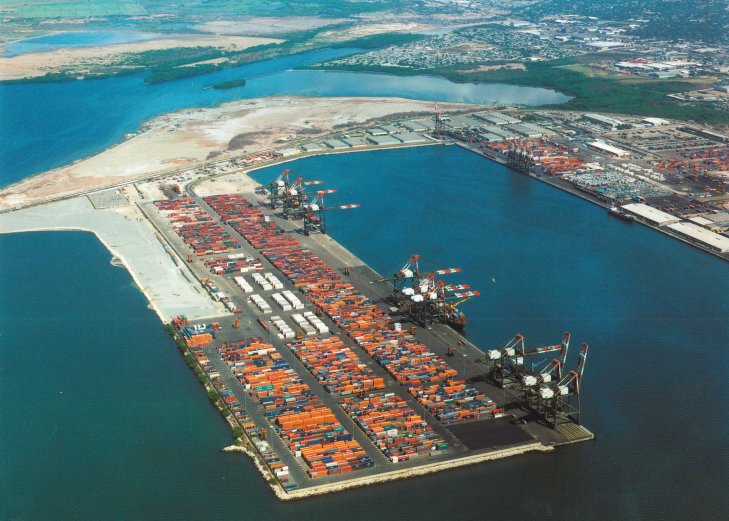
The Port of Kingston – ripe for development

The Port of Kingston – ripe for development

The Government of Jamaica has revealed ambitious plans to turn the Caribbean island in to a global logistics hub – and high level talks have already begun with the aim of increasing volumes of sea cargo.

Projects under discussion include developing the Port of Kingston ahead of the expansion of the Panama Canal and the development of a new commodity port to be built in eastern Jamaica which will specifically handle petroleum products, coal, minerals and grain.

At the same time, there is talk of constructing an air cargo airport to help with increased volume of boxes and the construction of large scale ship repair docks to service the increasing volume of post-panamax vessels.

Dr Eric Deans, chairman of the Logistics Task Force, said a market of 800 million people, including the USA and Brazil, can be accessed readily from Jamaica. He said trade opportunities are due to “burst wide open with the expansion of the Panama Canal scheduled to be completed in 2015; the multi-billion stimulus package by Brazil for World Cup 2014 and Olympics 2016; and the growing middle class in Latin America.”

He added that a critical aspect of the global logistics hub initiative is the broadening of bilateral collaborations with Jamaica’s global partners, and encouraging private sector investment and financing through private-public partnerships (PPPs).

Talks regarding the set-up of special economic zones are already underway with local and foreign investors.

The Jamaica Ministry of Industry, Investment and Commerce, which is spearheading the initiative, says that it will help give the country a global logistics supply chain that is able to compete with the likes of Singapore, Dubai and Rotterdam.

Perhaps this initiative could spur on our local authorities to actually move on ‘logistics hubs’ here in South Africa. While the huge expansion plans for our existing harbours, railroads are pursued, it is high time that the likes of Tamboekiesfontein, for instance, and other privately initiated transit hubs are taken seriously, and in an integrated manner to benefit commerce and trade in the Southern African region.

 Related articles

Nigeria – Maximizing Opportunities in Free Trade Zones

Lagos Free Trade Zone

Lagos Free Trade Zone

So how come FTZs, IDZs, EPZs, etc are working in other African countries and not here in South Africa? This Day Live (Nigeria) offers some of the critical success factors which delineate such zones from the normal economic operations in a country. Are we missing the boat? The extent of economic and incentive offering can vary substantially between the different economic and trade zone models – some extremely liberal while others tend to the conservative. Obviously the more liberal and free the regulations are the more stringent the ‘guarantees’ and controls need to be. However, in today’s e-commercial world, risk to revenue can more than adequately be mitigated and managed with through risk management systems. Manufacturing and logistical supply chain operations are likewise managed in automated fashion. I guess the real issue lies in governments appetite for risk and more particularly its willingness to relax tax and labour laws within such zones. Furthermore, a sound economic roadmap demonstrating backward linkages to the local economy and outward linkages to international markets must be defined. Herein lies some of the difficulties which have plagued South African attempts at such economic offerings – no specific economic (export specific) goals. Limited financial/tax incentives for investors, and poor cooperation between the various organs of state to bring about a favourable investment climate.

Free Trade Zones (FTZs) are at the crux of the growth attributed to emerging markets. All the BRIC nations have used the FTZs as a buffer to economic meltdown particularly in the wake of the most recent financial and economic crises. The “great recession” of 2007 – 2009 saw the BRIC nations growing at the rates of 7% to 13%. Consequently, the importance of FTZs as well as maximizing opportunities therein cannot be over-emphasized. The literature defining FTZs vary, but they all have the following characteristics in common:

  • A clearly delimited and enclosed area of a national customs territory, often at an advantageous geographical location, with an infrastructure suited to the conduct of trade and industrial operations and subject to the principle of customs and fiscal segregation.
  • A clearly delineated industrial estate, which constitutes a free trade enclave in the customs and trade regime of a country, and where foreign manufacturing firms, mainly producing for export, benefit from a certain number of fiscal and financial incentives.
  • Industrial zones with special incentives set up to attract foreign investors, in which imported materials undergo some degree of processing before being re-exported.
  • Fulfilling their roles in having a positive effect on the host economy, regulators look at FTZs from a nationalist perspective. Inevitably, they seek the following benefits:
    • Creating jobs and income: one of the foremost reasons for the establishment of FTZs is the creation of employment.
    • Generating foreign exchange earnings and attracting foreign direct investment (FDI): measures designed to influence the size, location, or industry of a FDI investment project by affecting its relative cost or by altering the risks attached to it through inducements that are not available to comparable domestic investors are incentives to promoting FDI. Implicit in this statement lies the definition of FTZ. Other traits that are recognizable when discussing FDI’s include specially negotiated fiscal derogations, grants and soft loans, free land, job training, employment and infrastructure subsidies, product enhancement, R&D support and ad hoc exceptions and derogations from regulations. In addition to FDI, by promoting non-traditional exports, increased export earnings tend to have a positive impact on the exchange rate.
    • Transfer of technology: trans-national corporations (TNCs) are a dominant source of innovation and direct investment by them is a major mode of international technology transfer, possibly contributing to local innovative activities in host countries. It is a government’s primary obligation to its citizenry to provide attractive technology, innovative capacities and mastering, upgrading, and diffusing them throughout the domestic economy. Nevertheless, through national policies, international treaty making, market-friendly approaches, a host country gravitates from providing an enabling environment to stronger pro-innovation regimes that perpetually encourage technology transfer.

FTZs can be both publicly (i.e. government) and or privately owned and managed. Governments own the more traditional older zones, which tend to focus more on policy goals that are primarily socio-economic. They emphasize industry diversification, attracting FDI, job creation and the like. Privately-owned FTZs have the advantage of eliminating government bureaucracy, are more flexible, and are better prepared to deal with technological changes. The global trend towards privatization has made privately-run zones more popular and a number are highly successful. The role of government in the case of privately-run zones is to provide a competitive legal framework with attractive incentive packages that meet the World Trade Organization (WTO) requirements.

FTZ Operations in Nigeria

FTZs were established in 1991 in order to diversify Nigeria’s export activity that had been dominated by the hydrocarbon sector. By 2011, there were nine operational zones; ten under construction; and three in the planning stages. The governing legislation includes the Nigeria Export Processing Zones Act (NEPZA) and the Oil and Gas Export Free Zone Act (OGEFZA). Zones may be managed by public or private entities or a combination of both under supervision of the Authority. For the full article go to – This Day Live