Nigeria vs South Africa – size matters, but so does development

Flag-Pins-Nigeria-South-AfricaWhat matters more: the size of the pie or how many mouths it has to feed? It depends whether you’re eating pies, or selling them.

Most of Nigeria’s 170-million people live below the poverty line, so many complained they didn’t feel any richer when the oil producing nation’s statistics bureau announced on Sunday the economy had replaced South Africa as the continent’s biggest. Nigeria’s 2013 GDP was rebased up to an estimated nearly $510-billion – a “pie” one and half times the size of South Africa’s, but feeding more than three times as many people.

But development economists argue that their attention should be on improving the health, education and incomes of ordinary Nigerians, many of whom struggle to feed their families. In 2013, the Economist Intelligence Unit rated Nigeria the worst place for a child to be born out of 80 countries surveyed.

“Really what matters in the end is per capita, how well our individuals are doing,” World Bank chief Africa economist Francisco Ferreira said after the statistical change in Abuja.

“I don’t want to rain on Nigeria’s parade … but what matters are living standards for everyone.”

In GDP per capita terms, Nigeria is looking healthier than before rebasing: per capita GDP was $2 688 last year, from an estimated $1 437 in 2012. Yet that masks growing inequality: at around 60%, absolute poverty in Nigeria is stubbornly high despite five years of average 7% annual GDP growth.

But are better living standards for all really what matters to investors looking to cash in on a big economy? On a per capita basis, Botswana, Mauritius and Seychelles are among Africa’s top five richest states. None has a population of more than two-million, so they are admired but cannot claim heavyweight status when it comes to competing with other African countries for the attention of foreign investors.

“Seychelles is the only African country listed under ‘very high human development’. But when did you last hear Seychelles mentioned during discussions on global political economy?” commentator Azuka Onwuka wrote in Nigeria’s Punch newspaper.

“A high GDP means external … investors pay more attention. The US and Europe no longer look down on China and India.”

Population Power

Nigeria’s potential is predicated on its large population. Economist Jim O’Neill notably included it in his MINT group of countries, alongside Mexico, Indonesia and Turkey, which he thinks will join the BRICs (Brazil, India, Russia, China) he named as the emerging economies shaping the world’s future.

All have large, swelling populations, with a demographic bulge around the soon-to-be-most-productive younger generations. For businesses deciding where to invest next, a consumer market of 170-million beats the Seychelles’ 85 000.

“Size matters,” Oscar Onyema, chief executive of the Nigeria Stock Exchange, said. “Size means you will be able to do … projects you would not have considered in smaller economies.”

For retailers targeting customers at the bottom of the socioeconomic pyramid, a national income spread around more households – lower GDP per capita, in other words – might actually be a good thing, many economists argue. If you are selling washing powder or fizzy drinks, better a large number of consumers on modest incomes than a small number of wealthy. There is only so much cola most people can drink.

For Kenyan industrialist Manu Chandaria, chairperson of Comcraft Group, which sells ironware, including corrugated roofs and pots and pans, Nigeria has massive potential. Comcraft is in 18 locations there, despite the fact that its Nigeria manager has been kidnapped three times by criminal gangs – a common risk facing businesses in southern Nigeria.

“Nigeria is just colossal,” he told the Reuters Africa Summit in Nairobi. “Everybody needs to eat. Everybody needs shelter … Anybody that brings in money needs a pot to cook in, they need a roof – so we are in the right place.”.

Inequality is Risky

Higher up that pyramid, living standards matter more. In this regard South Africa, which still has poverty but also a big middle class and an advanced consumer society, beats Nigeria.

Africa’s top energy producer relies heavily on oil, which tends to concentrate wealth in an elite at the top of the social scale – good for luxury goods firms like LVMH and Porsche, both of which have thriving operations in Nigeria.

But retailers targeting a broader consumer class say Nigeria still needs better infrastructure and a more diversified economy to achieve its full potential as a mass market.

“Until the country invests more in infrastructure, invests more on other activities outside of oil, until that starts to develop the economy … I think the potential is not like it is in South Africa,” said Mark Turner, Africa Director for Massmart Holdings, a unit of US retailer Wal-Mart. Massmart currently has two stores in Nigeria, with another opening in the coming weeks – compared with 300 in South Africa.

Turner said he could see the company opening as many as 15 stores in Nigeria, if the country could deepen development. Yet the market attraction of Nigeria’s growing middle class is already there – Shoprite just opened a store in Kano, despite the threat of an insurgency in the north, and a Massmart ‘Game’ store will soon join it there.

But Nigeria’s growing inequalities add to “political risks, as a result of perceived marginalisation,” said Razia Khan, chief Africa economist at Standard Chartered Bank. Unless something is done to lift the impoverished masses, the risk of social unrest, already being reaped in a bloody insurgency in the destitute northeast and oil theft in the south, will grow.

She said: “The pressure on the authorities to create some sort of social safety net in response will be significant.”

Source: Engineeringnews.co.za

South Africa falls in 2014 global logistics rankings

jll_year_of_the_distribution_center_wide_imageSouth Africa has been ranked number 34 out of 160 countries in the World Bank’s 2014 Logistics Performance Index (LPI), which is topped by Germany, with Somalia ranked lowest. Africa’s largest economy remained the continent’s highest placed LPI participant, but South Africa’s position was well off its 2012 ranking of 23 and its position of 28 in 2010.

In February, the World Bank argued in a separate report on South Africa that the country’s high logistics costs and price distortions were an impediment to export competitiveness. That report noted, for instance, that South Africa’s port tariffs on containers were 360% above the global average in 2012, while on bulk commodities they were 19% to 43% below the global average. Similar commodity biases existed in the area of rail freight.

But the new report, titled ‘Connecting to Compete 2014: Trade Logistics in the Global Economy’, still clustered South Africa as an “over-performing non-high-income” economy along with Malaysia (25), China (28), Thailand (35), Vietnam (48) and India (54).

The report draws on data arising from a survey of more than 1 000 logistics professionals and bases its LPI rankings on a number of trade dimensions, such as customs performance, infrastructure quality, and timeliness of shipments. Besides China, South Arica also performed above its ‘Brics’ counterparts of Brazil (65),Russia (90) and India.

Germany was followed in the top 10 by other developed economies, namely Netherlands, Belgium, the UK, Singapore,Sweden, Norway, Luxembourg, the US and Japan. Among low-income countries, Malawi, Kenya and Rwanda showed the highest performance.

The report warns that the gap between the countries that perform best and worst in trade logistics remains large, despite a slow convergence since 2007. The gap persists, the study asserts, because of the complexity of logistics-related reforms and investment in developing countries. This, despite strong recognition that poor supply-chain efficiency is the main barrier to trade integration.

However, senior transport economist and founder of the LPI project Jean-François Arvis stresses that a country cannot improve through developing infrastructure, while failing to address border management and other supply-chain issues.

Logistics performance is strongly associated with the reliability of supply chains and the predictability of service delivery for producers and exporters, the report notes, adding that supply chains are only as strong as their weakest links. They are also becoming more and more complex, often spanning many countries while remaining critical to national competitiveness.

“It’s difficult to get everything right. The projects are more complicated, with many stakeholders, and there is no more low-hanging fruit,” Arvis argues.

The report also finds that low-income, middle-income and high-income countries will also need to adopt different strategies to improve their standings in logistics performance. “Comprehensive reforms and long-term commitments from policymakers and private stakeholders will be essential. Here, the LPI provides a unique reference to better understand key trade logistics impediments worldwide.” Source: Engineering News

Related articles

African States urged to begin prioritising economic transformation

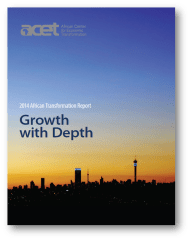
2014 Africa Transformation ReportThe inaugural Africa Transformation Report ranks Mauritius as the most economically transformed country out of 21 sub-Saharan African countries measured in its African Transformation Index, which takes account of a country’s economic diversification, export competitiveness, productivity, state of technology upgrading and human wellbeing.

The continent’s largest economy, South Africa, ranks second and Côte d’Ivoire third, while Nigeria, Burundi and Burkina Faso prop up the index.

The ranking has been included within a larger 207-page study, which cautions that, while many African economies are growing strongly, most economies are not transforming sufficiently to support a sustainable reduction in poverty, inequality and unemployment.

Six of the world’s fastest growing economies are currently in Africa, including Angola, Nigeria, Ethiopia, Chad, Mozambique and Rwanda, while several others are expanding at growth rates of over 6% a year. However, much of this grow is still premised on the extraction and export of natural resources and is not being broadly spread, leaving more than 80% of the continent’s labour force employed in low-productivity farming, or informal urban business activities.

Compiled over a three-year period by Ghana’s African Centre for Economic Transformation (ACET) in partnership with South Africa’s Mapungubwe Institute for Strategic Reflection (Mistra), the study urges African governments to position economic transformation ahead of growth at the centre of their economic and development policies.

Speaking at a launch in Johannesburg, lead author and ACET chief economist Dr Yaw Ansu said growth was “good” and had arisen as a result of macroeconomic reforms, better business environments and higher commodity prices.

“But economic transformation requires much more,” Ansu stressed, arguing that countries needed to diversify their production and exports, become more competitive and productive, while upgrading the technologies they employed in production processes.

ACET president Dr KY Amoako said the transformation narrative had already been accepted by the African Union in its Vision 2063, as well as by the African Development Bank and the United Nations Economic Commission for Africa. He added that the African Transformation Index provided policymakers with a quantitative measure for assessing their transformation performance and for guiding future strategies.

Mistra executive director Joel Netshitenzhe argued that to turn growth into an “actual lived experience” for Africa’s citizens there was the urgent need to form national social compacts between government, business and civil society to support transformation.

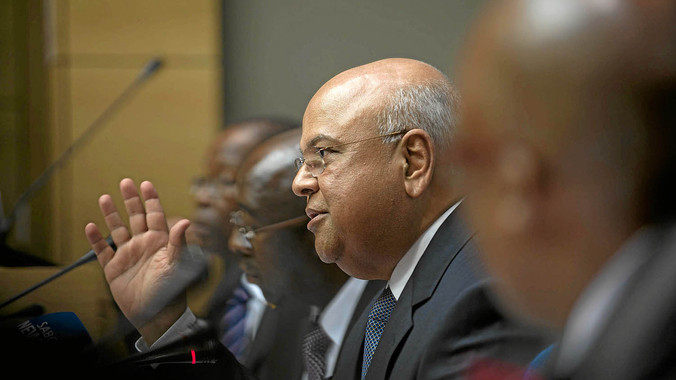
Finance Minister Pravin Gordhan emphasised the same point in his recent Budget address, when he highlighted the work being done to secure a social compact to reduce poverty and inequality and raise employment and investment. Gordhan stressed this could not be a “pact amongst elites, a coalition amongst stakeholders with vested interests. Nor can it be built on populist slogans or unrealistic promises”.

“Our history tells us that progress has to be built on a vision and strategy shared by leaders and the people – a vision founded on realism and evidence,” the Minister stressed.

Netshitenzhe also highlighted the report’s emphasis on coupling growth with social development. “In fact, rather than merely being a consequence of economic growth, a reduction in poverty and general human development can be part of the drivers of economic growth.”

The report highlights key transformation drivers as being:

  • Fostering partnerships between governments and the private sector to facilitate entrepreneurship, investment and technology upgrading.
  • Promoting exports, particularly outside of the natural resources sector.
  • Building technical knowledge and skills.
  • And, pushing ahead with regional integration.

Four transformation pathways are also highlighted, including labour-intensive manufacturing; kick-starting agroprocessing value chains, improving the management of oil, gas and minerals; and boosting tourism.

“It’s good that we are growing – we are no longer the hopeless continent. We can transform this hope into reality, but to do that governments must put transformation at the top of their agendas,” Ansu asserted.

He also called on African citizens to begin to demand transformation. “Ask your government, how come we are not diversifying? How come our productivity remains stuck? How come our technological levels and our exports are not growing?” Source: Engineering News

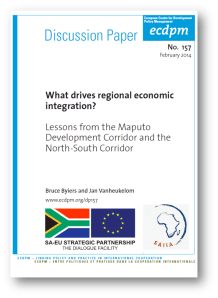
What drives regional economic integration? Lessons from Maputo Development Corridor and North-South Corridor

ECDPM - SAIIAThis study is part of the ECDPM-SAIIA project on the Political Economy of Regional Integration in Southern Africa (PERISA). The PERISA project aims to inform and facilitate dialogue on the political economy drivers of regional integration in Southern Africa. It focuses particularly on the role of South Africa in this process with a view to better informing relations between the European Union and South Africa. Regional economic integration is essential for Africa’s development. While integration is taking place across the continent, it is not happening at the pace and the scope that the institutional architects in the Regional Economic Communities and their member states have agreed upon. Southern Africa is no exception. In looking for answers as to what obstructs or what drives regional integration, this study focuses on one particular type of integration process: cross-border transport corridors.

All Regional Economic Communities in Southern Africa have embraced transport corridors (also referred to as Spatial Development Initiatives) as key development tools. Adopting a corridor approach means engaging with a wide range of actors with different interests and influence along key transport routes that link neighbouring countries and ports. This includes the full range of government agencies that control borders for security, revenue collection, and regulatory purposes as well as infrastructure, transport, trade and economic ministries as well as a range of private sector actors from small-scale informal traders and producers to transporters and major international investors as well as port, rail and road operators.

The analysis focuses on the North-South Corridor and the Maputo Development Corridor. The North-South Corridor links Dar es Salaam in Tanzania to Durban in South Africa through Zambia, Zimbabwe and Botswana. The Maputo Development Corridor links Gauteng Province in South Africa to Maputo in Mozambique. The analytical focus is on South Africa and Mozambique, while from the multi-country North-South Corridor the focus in this paper is on Zambia, a potential key beneficiary of the initiative. Source: ECDPM.org

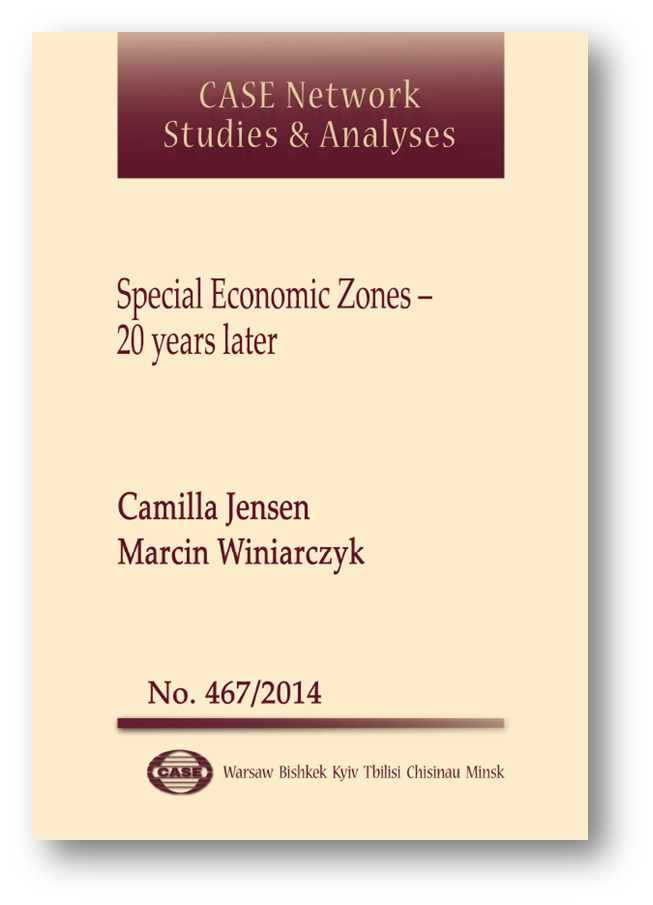
Poland SEZs – Case Study 20 years after

CASE Study - SEZs in PolandIn “Special Economic Zones – 20 years later” Camilla Jensen and Marcin Winiarczyk offer a panel data evaluation of the effectiveness of Poland’s regional policy since 1994. The policy was originally initiated to foster new economic activity in designated greenfield zones in high unemployment areas at the beginning of Poland’s transition. Over time the policy has evolved and many areas including areas that encompass economic activities from the socialist period have been adopted into the scheme.

The main incentive tool for new investors to locate in the SEZs are income tax reductions. In exchange Poland is expected to get new, environmentally friendly and export oriented investments that offer additional job placements. The econometric evaluation shows that the policy has been successful mainly on one criteria which is to attract foreign direct investment into the Polish SEZs. More qualitative and long-term development oriented targets such as instilling environmental friendly behaviour are lagging behind.

Comparing the wage developments in and out of the zones also suggests that industries and activities located in the zones are less skill intensive and therefore also less prone to catapult Poland into its next developmental phase, which is a skill-intensive innovation driven economy. Therefore, the authors conclude that to instil among investors in SEZs better behavioural models that will lock investors into a future oriented development path, it is necessary to consider other incentives and initiatives. Read the full report at this link! Source: CASE Research

South African Futures – 2030

SA2030-Paper-SliderThis recent publication, by Jakkie Celliers, executive director and co-founder of the Institute for Security Studies, sets out a trilogy of economic and political scenarios. While it may be of nominal interest to the man in the street, I would think that potential foreign investors would certainly consider its import. It is available in PDF or EPUB formats at the following link.

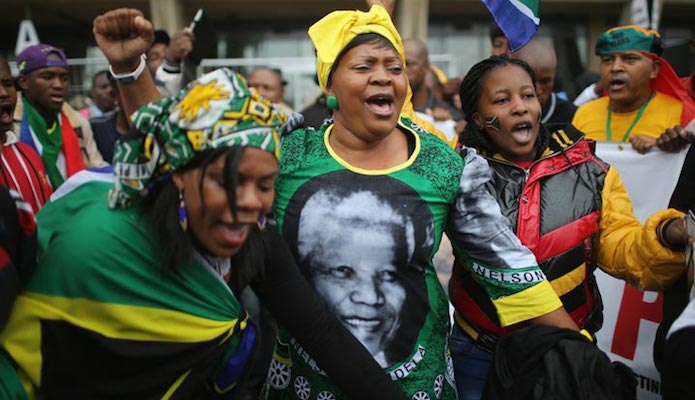
The paper presents three scenarios for South Africa up to 2030: ‘Bafana Bafana’, ‘A Nation Divided’ and ‘Mandela Magic’. The nation’s current development pathway, called ‘Bafana Bafana’ is the well-known story of a perennial underachiever, always playing in the second league when the potential for international championship success and flashes of brilliance are evident for all to see.‘Mandela Magic’, on the other hand, is the story of a country with a clear economic and developmental vision, which it pursues across all sectors of society. Competition is stiff and the barriers to success are high. The scenario of ‘A Nation Divided’ reflects a South Africa that steadily gathers speed downhill as factional politics and policy zigzagging open the door to populist policies.

The impact of the policy and leadership choices that South Africans will make in the years ahead, explored in this paper, is significant. The South African economy could grow 23 per cent larger in ‘Mandela Magic’ compared with its current growth path (‘Bafana Bafana’). The paper concludes with seven strategic interventions required to set South Africa on the most prosperous ‘Mandela Magic’ pathway. Source: Institute for Security Studies

Africans roast South Africa for lack of openness

Chris Kirubi is a leading Kenyan businessman [www.kenyan-post.com]

Chris Kirubi is a leading Kenyan businessman [www.kenyan-post.com]

Frustration over Africa’s disparate tax, travel, investment and trading regimes boiled over yesterday as Chris Kirubi, a leading Kenyan businessman and one of the wealthiest people on the continent, tore into South Africa’s failure to be a leading light in opening up the continent for business. Kirubi was a participant in a panel discussion at the “Africa: The Outlook, the Opportunity” event hosted by former New York City mayor Michael Bloomberg in downtown Johannesburg.

To underscore his frustration, the outspoken Kirubi questioned why African travel businesses kept going to Europe and North America to sell African tourism, leaving behind Africans like him who needed no further convincing about visiting Africa. “Open markets are not happening yet. We must open markets for people, goods and services,” Kirubi said. “South Africa needs to take leadership by opening up for smaller countries. How many of us have been allowed to invest here?”

His sentiments on the issue of openness were echoed by Reserve Bank governor Gill Marcus, who said the focus in Africa should be about co-operation and less about competition. Marcus, who seemed rather at ease five days after a slide in global emerging market currencies prompted her to hike interest rates, said the issue was “how do we use our different strength to benefit Africa as a whole”. She said co-operation would be particularly critical in dealing with three core challenges facing the continent: water, food and energy.

To illustrate what was possible if African governments worked together to create a more open investment environment, Aigboje Aig-Imoukhuede, the vice-president of the Nigerian Stock Exchange (NSE), said there was an emerging notion in west Africa, in terms of which Ghana was seen as the gateway and Nigeria as the destination.

He added that the NSE was planning to visit the JSE in the coming months to explore areas of possible co-operation. In that regard, as an economic powerhouse, South Africa had an important role to play in reshaping how Africa did business, not only with the rest of the world but more importantly with itself.

“There are major issues we are not addressing and it is an issue of laws,” added Kirubi, who is also the east Africa chairman of a joint venture with Tiger Brands, South Africa’s biggest consumer goods company.

On tax, he asked why South Africa and Kenya did not have a tax agreement and why he needed to go via Mauritius each time he needed to open a holding company. “We have a problem. We’ve got to wake up.”

Finance Minister Pravin Gordhan was also among the panellists. He acknowledged that there were “huge challenges” in the mining sector, but reiterated the need for perspective on issues relating to labour strikes. “There is a lot of good work being done. In the next few years, skills development and training will be [enhanced] a lot more.” Source: Business Report

Landmark East and Southern African Customs forum focuses on modernisation

WCO ESA_Snapseed

Participants from all 24 members of the WCO’s Eastern and South African region attended the forum. [SARS]

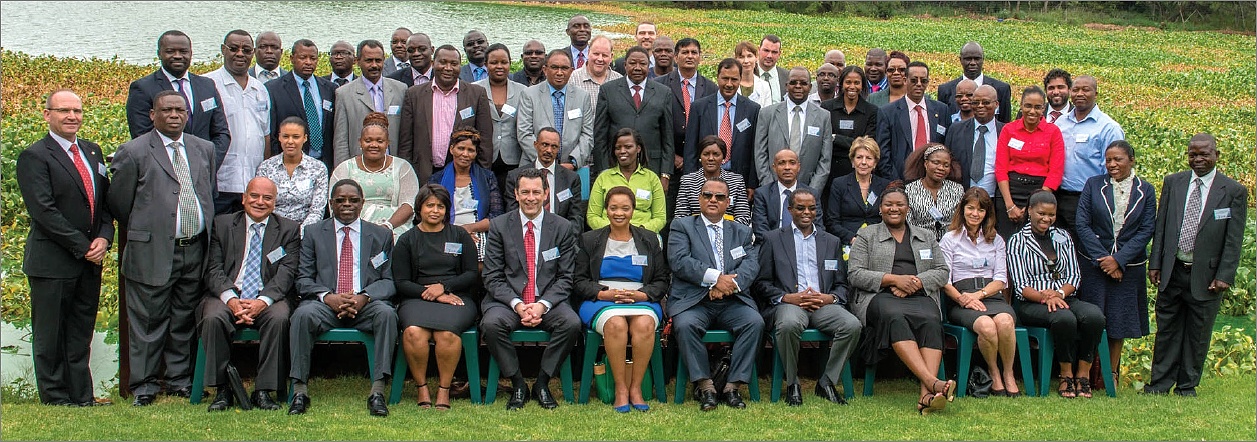
Customs officials from 24 eastern and southern African countries met in Pretoria this week to share knowledge and experience with regard to the successful modernisation of Customs administrations.

Opening the three-day forum, Erich Kieck, the World Customs Organisation’s Director for Capacity Building hailed it as a record breaking event.

“This is the first forum where all 24 members of the Eastern and Southern African region (ESA) of the WCO were all in attendance,” he noted. Also attending were officials from the WCO, SACU, the African Development Bank, Finland, the East African Community and the UK’s Department for International Development (DFID).

Michael Keen in the 2003 publication “Changing Customs: Challenges and Strategies for the Reform of Customs Administrations” said – “the point of modernisation is to reduce impediments to trade – manifested in the costs of both administration incurred by government and compliance incurred by business – to the minimum consistent with the policy objectives that the customs administration is called on to implement, ensuring that the rules of the trade game are enforced with minimum further disruption”

The three-day event witnessed several case studies on Customs modernisation in the region, interspersed with robust discussion amongst members. The conference also received a keynote addressed by Mr. Xavier Carim, SA Representative to World Trade Organisation (WTO), which provided first hand insight to delegates on recent events at Bali and more specifically the WTO’s Agreement on Trade Facilitation.

The WCO’s Capacity Building Directorate will be publishing a compendium of case studies on Customs Modernisation in the ESA region during the course of 2014.

WCO ESA members – Angola, Botswana, Burundi, Comoros, Djibouti, Eritrea, Ethiopia, Kenya, Lesotho, Madagascar, Malawi, Mauritius, Mozambique, Namibia, Rwanda, Seychelles, Somalia, South Sudan, Swaziland, South Africa, Tanzania, Uganda, Zambia and Zimbabwe.

This slideshow requires JavaScript.

Source: SARS

Massive SADC Gateway port for Namibia

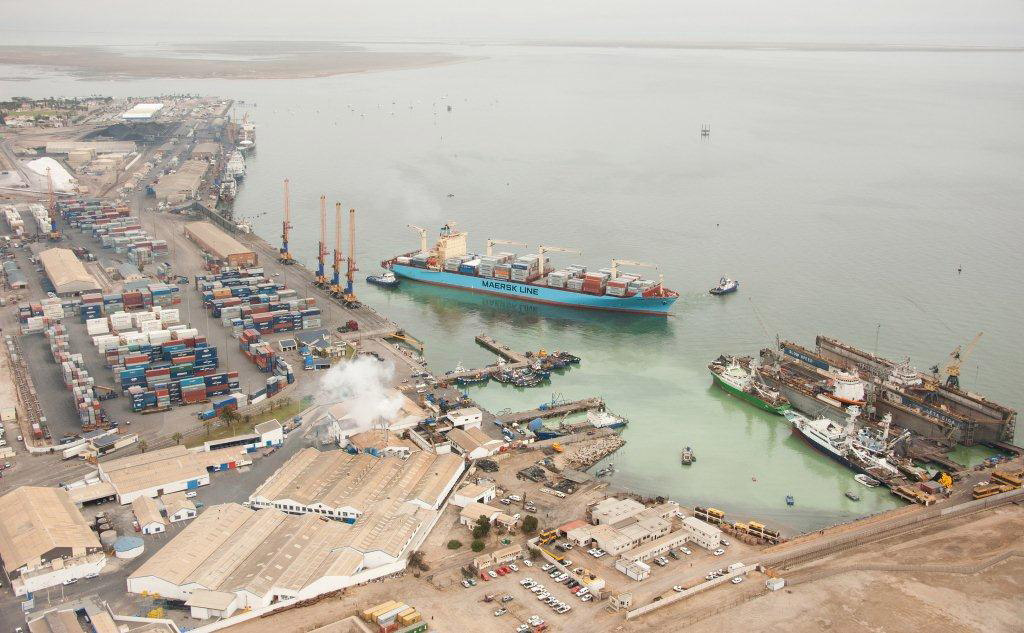
An aerial view of the port of Walvis Bay. NamPort is seeking a green light from Cabinet to spend over N$3 billion on the expansion of the harbour (Namibian Sun)

An aerial view of the port of Walvis Bay. NamPort is seeking a green light from Cabinet to spend over N$3 billion on the expansion of the harbour (Namibian Sun)

NamPort has recently commenced a massive N$3 billion construction project to build a new container terminal, but plans even more extravagant expansion in the years to come, according to its executive for marketing and strategic business development, Christian Faure. He expanded on the planned multi-billion dollar Southern Africa Development Community (SADC) Gateway Terminal envisioned for the area between Swakopmund and Walvis Bay this week.

“The SADC Gateway terminal is still in the concept phases,” stressed Faure. “This development was considered the long term plan for the Port of Walvis Bay’s expansion, but plans have been brought forward mainly due to the construction of the new fuel tanker berth facility and the Trans-Kalahari railway line initiative for the export of coal from Botswana. This development is not to be confused with the new container terminal currently under construction at the port,” he said.

Already NamPort has completed pre-feasibility studies and is currently busy with geo-technical evaluations to determine the structure of the ground in the area to be dug out, he said. NamPort is also positively engaging the Municipality of Walvis Bay on the land itself, and other role players that may be impacted, he said. “This is a massive development and to put it into perspective, the current port is 105 hectares in size. The SADC Gateway port is 10 times that with a size of 1 330 hectares. The new container terminal will add 40 hectares,” said Faure.

With Namibia’s reach to more than 300 million potential consumers in the SADC region, the port of Walvis Bay is ideally positioned as the preferred route to emerging markets in Botswana, Zambia, Zimbabwe, Angola, Malawi and the Democratic Republic of Congo.

Faure explained that several mega projects have surfaced in the last few years that will not be feasible without the SADC Gateway terminal, including the Trans-Kalahari Railway Line, Botswana coal exports through Namibia, mega logistics parks planned in NDP4, the budding crude oil industry, large scale local mining product exports, as well as magnetite, iron ore and coal exports from Namibia.

The SADC Gateway Port project (also sometimes called the North Port) will extend the existing harbour to the north of Walvis Bay between Bird Island and Kuisebmond. It will cover a total for 1330 hectares of port land with 10 000 meters of quay walls and jetties providing at least 30 large berths. The new port will also feature world class ship and rig repair yards, and oil and gas supply base, more than 100 million tons worth of under cover dry bulk terminal, a car import terminal and a passenger terminal, he explained.

The SADC Gateway Port will also feature a liquid bulk terminal for very large crude carriers, dry ports and backup storage areas, break bulk terminals, small boat marinas and a new high capacity rail, road, pipeline and conveyor link to the area behind Dune 7. Source: Informate, Namibia

Construction of Bagamoyo port to commence – January 2014

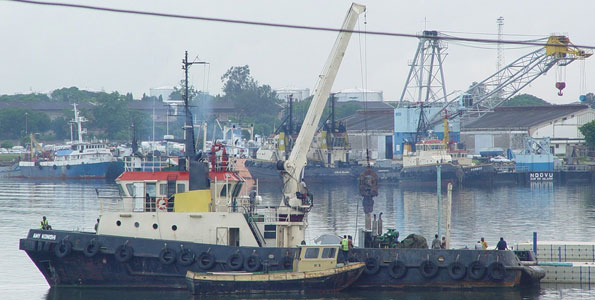
An aerial view of Dar es Salaam port, whose limitations stakeholders hope the new Bagamoyo port will replace. (Tanzania Daily News)

An aerial view of Dar es Salaam port, whose limitations stakeholders hope the new Bagamoyo port will replace. (Tanzania Daily News)

Construction of Bagamoyo port is expected to commence early this month, the government has revealed.

Scheduled for completion in 2017, the Bagamoyo port will have the capacity to handle twenty times more cargo that of Dar es Salaam Port, which is currently the country’s largest port.

This was revealed recently in Dar es Salaam by the Permanent Secretary in the Ministry of Finance, Dr Servacius Likwelile during the signing of two framework agreements and two exchanges of letters between the government of Tanzania and the People’s Republic of China which granted 89bn/- to finance implementation of various projects in the country.

“The construction of Bagamoyo port will commence on January 6, this year after the signing of the construction agreement between Tanzania and China on that same day,” noted Dr Likwelile.

The construction of Bagamoyo port comes almost in time as Tanzania is losing a lot of trade and commerce opportunities because of inefficiency of the Dar es Salaam port.

According to Tanzania’s Ambassador to China Philip Marmo, the over USD10 bn/- Bagomoyo port project will add to the economy as the port will have the capacity to handle 20 million containers a year compared to the Dar es Salaam port which handles only 800,000 containers a year.

“The Bagamoyo port construction project will entail the building of a 34 kilometre road joining Bagamoyo and Mlandizi and a 65 kilometres of railway connecting Bagamoyo with the Tanzania-Zambia Railway (TAZARA) and Central Railway. The port will be of high standard. We are building a fourth generation port,” said Marmo.

According to Marmo, the Chinese stand to gain from Tanzania’s future Bagamoyo port because it will facilitate China-bound shipments of minerals from Zambia, Zimbabwe and the Democratic Republic of Congo (DRC) via the Indian Ocean.

The construction of the Bagamoyo port is among the 16 recently signed development projects agreement between Tanzania and China, orchestrated by President Jakaya Kikwete and Chinese President Xi Jinping during Xi’s state visit to Dar es Salaam in March last year.

Speaking of the recently 89bn/- Chinese financial aid for implementation of various projects in the country, Likwelile said it involved the first framework agreement on economic and technical cooperation between Tanzania and China under which a gratuitous aid amounting to 52bn/- will be provided to support implementation of projects that will be agreed upon by the two governments at a later stage.

“Under the second framework agreement, the government of China will make available to the Tanzanian government an interest free loan amounting to 26bn/ to support implementation of projects also to be agreed upon by the two governments,” he added.

He further mentioned the Chinese donation of furniture and equipment worth 1.3bn/- to the Mwalimu Nyerere International Convention Centre as well as equipment worth 400m/- donated to the Prevention and Combating of Corruption Bureau (PCCB) office.

During the signing function, the Chinese government also donated to the ministry of Foreign Affairs and International Cooperation 91 vehicles worth 9bn/- including 45 limousines and 46 buses. Source: The Guardian & ippmedia.com

Related articles

2014 – EU’s Revised Trade Rules to Assist Developing Countries

European-Commission-Logo-squareThe European Union’s rules determining which countries pay less or no duty when exporting to the 28 country trade bloc, and for which products, will change on 1 January 2014. The changes to the EU’s so-called “Generalised System of Preferences” (GSP) have been agreed with the European Parliament and the Council in October 2012 and are designed to focus help on developing countries most in need. The GSP scheme is seen as a powerful tool for economic development by providing the world’s poorest countries with preferential access to the EU’s market of 500 million consumers.

The new scheme will be focused on fewer beneficiaries (90 countries) to ensure more impact on countries most in need. At the same time, more support will be provided to countries which are serious about implementing international human rights, labour rights and environment and good governance conventions (“GSP+”).

The EU announced the new rules more than a year ago to allow companies enough time to understand the impact of the changes on their business and adapt. To make the transition even smoother for exporting companies, the Commission has prepared a practical GSP guide.

The guide explains in three steps what trade regime will apply after 1 January 2014 to a particular product shipped to the EU from any given country. It also provides information on the trade regime that will apply to goods arriving to the EU shortly after the New Year.

The changes in a nutshell:

  • 90 countries, out of the current 177 beneficiaries, will continue to benefit from the EU’s preferential tariff scheme.
  • 67 countries will benefit from other arrangements with a privileged access to the EU market, but will not be covered by the GSP anymore.
  • 20 countries will stop benefiting from preferential access to the EU. These countries are now high and upper-middle income countries and their exports will now enter the EU with a normal tariff applicable to all other developed countries.

For the finer details of the revised EU rules visit: http://europa.eu/rapid/press-release_MEMO-13-1187_en.htm?locale=en

Experts Caution Against Rush into Trade Facilitation Agreement

Bali 2013A rather lengthy article published by Third World Network, but entirely relevant to trade practitioners and international supply chain operators who may desire a layman’s understanding of the issues and challenges presented by the WTO’s proposed agreement on ‘Trade Facilitation’. I have omitted a fair amount of the legal and technical references, so if you wish to read the full unabridged version please click here! If you are even more interested in the subject, take a look through the publications available via Google Scholar.

A group of eminent trade experts from developing countries has advised developing countries to be very cautious and not be rushed into an agreement on trade facilitation (TF) by the Bali WTO Ministerial Conference, given the current internal imbalance in the proposed agreement as well as the serious implementation challenges it poses.

“While it may be beneficial for a country to improve its trade facilitation, this should be done in a manner that suits each country, rather than through international rules which require binding obligations subject to the dispute settlement mechanism and possible sanctions when the financial and technical assistance as well as capacity-building requirements for implementing new obligations are not adequately addressed.”

This recommendation is in a report by the Geneva-based South Centre. The report, “WTO Negotiations on Trade Facilitation: Development Perspectives”, has been drawn up from discussions at two expert group meetings organised by the Centre.

Noting that an agreement on trade facilitation has been proposed as an outcome from the Bali WTO Ministerial Conference, the South Centre report said that the trade facilitation negotiations have been focused on measures and policies intended for the simplification, harmonization and standardization of border procedures.

“They do not address the priorities for increasing and facilitating trade, particularly exports by developing countries, which would include enhancing infrastructure, building productive and trade capacity, marketing networks, and enhancing inter-regional trade. Nor do they include commitments to strengthen or effectively implement the special and differential treatment (SDT) provisions in the WTO system”.

The negotiations process and content thus far indicate that such a trade facilitation agreement would lead mainly to facilitation of imports by the countries that upgrade their facilities under the proposed agreement. Expansion of exports from countries require a different type of facilitation, one involving improved supply capacity and access to developed countries’ markets.

Some developing countries, especially those with weaker export capability, have thus expressed concerns that the new obligations, especially if they are legally binding, would result in higher imports without corresponding higher exports, which could have an adverse effect on their trade balance, and which would therefore require other measures or decisions (to be taken in the Bali Ministerial) outside of the trade facilitation issue to improve export opportunities in order to be a counter-balance to this effect.

According to the report, another major concern voiced by the developing countries is that the proposed agreement is to be legally binding and subject to the WTO’s dispute settlement system. This makes it even more important that the special and differential treatment provisions for developing countries should be clear, strong and adequate enough. The negotiations have been on two components of the TF: Section I on the obligations and Section II on special and differentiated treatment (SDT), technical and financial assistance and capacity building for developing countries.

Most developing countries, and more so the poorer ones, have priorities in public spending, especially health care, education and poverty eradication. Improving trade facilitation has to compete with these other priorities and may not rank as high on the national agenda. If funds have to be diverted to meet the new trade facilitation obligations, it should not be at the expense of the other development priorities.

“Therefore, it is important that, if an agreement on trade facilitation were adopted, sufficient financing is provided to developing countries to meet their obligations, so as not to be at the expense of social development,” the report stressed.

The report goes on to highlight the main issues of concern for a large number of developing countries on the trade facilitation issue. It said that many developing countries have legitimate concerns that they would have increased net imports, adversely affecting their trade balance. While the trade facilitation agreement is presented as an initiative that reduces trade costs and boosts trade, benefits have been mainly calculated at the aggregate level.

Improvements in clearance of goods at the border will increase the inflow of goods. This increase in imports may benefit users of the imported goods, and increase the export opportunities of those countries that have the export capacity.

However, the report noted, poorer countries that do not have adequate production and export capability may not be able to take advantage of the opportunities afforded by trade facilitation (in their export markets).

“There is concern that countries that are net importers may experience an increase in their imports, without a corresponding increase in their exports, thus resulting in a worsening of their trade balance.”

Many of the articles under negotiations (such as the articles on ‘authorized operators’ and ‘expedited shipments’) are biased towards bigger traders that can present a financial guarantee or proof of control over the security of their supply chains. There is also the possibility that lower import costs could adversely affect those producing for the local markets.

“The draft rules being negotiated, mainly drawn up by major developed countries, do not allow for a balanced outcome of a potential trade facilitation agreement,” the report asserted.

New rules under Section I are mandatory with very limited flexibilities that could allow for Members’ discretion in implementation. The special and differential treatment under section II has been progressively diluted during the course of the negotiations. Furthermore, while the obligations in Section I are legally binding, including for developing countries, developed countries are not accepting binding rules on their obligation to provide technical and financial assistance and capacity building to developing countries.

The trade facilitation agreement would be a binding agreement and subject to WTO dispute settlement. The negotiating text is based on mandatory language in most provisions, which includes limited and uncertain flexibilities in some parts.

Therefore, if a Member fails to fully implement the agreement it might be subject to a dispute case under the WTO DSU (Dispute Settlement Understanding) and to trade sanctions for non-compliance.

“Many of the proposed rules under negotiations are over-prescriptive and could intrude on national policy and undermine the regulatory capacities and space of WTO Member States. The negotiating text in several areas contains undefined and vague legal terminology as well as ‘necessity tests’, beyond what the present GATT articles require.”

Continue reading →

Beira – Zimbabwe road to be rebuilt by China

A truck leaves the border post at Machipanda to drive down the Beira Corridor, which links the port of Beira to Zimbabwe. This has always been a strategically crucial route for trade in Southern Africa. (The Guardian)

The Mozambican government intends to invest $400 million in the full rehabilitation of the road from the port of Beira to Machipanda, on the border with Zimbabwe.

Minister of Public Works, Cadmiel Muthemba, announced the rehabilitation of the road, which is about 300 kilometres long, will begin in February 2014. The finance is a loan from the Chinese export-import bank (Exim Bank).

Muthemba said that the road will be substantially widened. Along its entire length the road will be at least a four-lane highway, and in places, such as the approaches to Beira, it will have six lanes.

“The road will have roundabouts at particularly busy areas, such as the Inchope crossroads (where the road meets Mozambique’s main north-south highway), Chimoio city, and the towns of Gondola and Manica”, said the Minister.

Along some stretches the road will be elevated, notably along the Pungue flats. This is where the current road runs alongside the Pungue River. When the Pungue bursts its banks, which happens frequently during Mozambican rainy seasons, the road is swamped, and sometimes the flooding is serious enough to interrupt traffic to and from Zimbabwe.

Raising the road above the level of the river will be expensive, but will ensure that traffic flows in all weathers.

The Beira-Zimbabwe road will be farmed out for maintenance to a private company, which will charge motorists through toll gates.

So far, the only major road in the country with toll gates is the Maputo-South Africa motorway, operated by the South African company Trans-Africa Concessions (TRAC).

At the moment, the Beira-Zimbabwe road is in a poor and dangerous condition. In order to avoid gaping potholes, motorists frequently cross into the opposite lane, risking collisions with vehicles gong in the other direction. Emergency repairs between Beira and Inchope, which should have been finished in mid-April, are months behind schedule, and the Sofala provincial government is considering cancelling the contracts with the companies concerned.

The road is of key importance to the trade, not only of Zimbabwe, but of other landlocked southern African countries, including Zambia, Malawi and even parts of the Democratic Republic of Congo.

The road that branches off the Beira-Zimbabwe highway at Tica and leads to the district of Buzi, will be tarred, Muthemba announced. This is budgeted at $150 million, and the money will come from the Indian Eximbank. Work on the Tica-Buzi road will begin this year.

But Muthemba lamented that there was no money available to rehabilitate the road from Inchope to Caia, on the south bank of the Zambezi. This is a key part of the north-south highway, and it needs thorough rehabilitation.

“We aren’t sitting back with arms crossed”, said Muthemba. “With the few financial resources we have, we are working on the most critical sections, until we find the money for a complete rehabilitation”.

However, a complete rehabilitation of this road was carried out less than a decade ago. Indeed, in May 2007, the then Minister of Industry and Trade, Antonio Fernando, boasted in the Mozambican parliament, the Assembly of the Republic, that the Inchope-Caia road, “used to be a nightmare”, but had been rebuilt to such a high standard that it resembled a racing track. Source: Mozambique News Agency


SA Trade Policy Goes Against Integration Tide

South African Trade & Industry Minister Rob Davies

South African Trade & Industry Minister Rob Davies

South Africa has adopted a new trade policy approach aimed at looking at its own interest first, despite a drive for more regional integration to sustain Africa’s trade growth with the rest of the world. Importers of several products have been experiencing dramatic increases in tariffs from South Africa, as well as an increase in anti dumping and safeguard measures aimed at protecting South African industries.

Trade and Industry Minister Rob Davies this week approved the increase of tariffs on frozen poultry following an application by the local poultry industry. George Geringer, a senior manager at PwC, said regional trade relations had been put on the back burner in favour of measures to protect South African manufacturing industries against cheaper imports.

“Government realised that manufacturing as a percentage of gross domestic product has declined from about 40% to about 12% in the past 20 years,” Mr Geringer said at the 16th Africa Tax and Business Symposium hosted by PwC in Mauritius.

Trade between Africa and the rest of the world has increased by more than 200% in the past 13 years, with optimism from the World Bank that Africa could be on the brink of an economic takeoff, similar to that of China and India two decades ago.

A key element for Africa to sustain the trade growth is regional integration to build economies of scale and size, in order to compete with other emerging markets – but limited resources, internal conflict and the lack of a mechanism to monitor the integration process is blocking it, says trade analyst from PwC.

South Africa has been regarded as the “champion” of the Southern African Development Community (Sadc). Sadc member countries eliminate tariffs, quotas and preferences on most goods and services traded between them. The member countries include Mauritius, Mozambique, Namibia, Swaziland, Botswana and the Democratic Republic of Congo.

The assistant manager at PwC’s international trade division, Marijke Smit, said less than 10% of African nations’ trade was with each other, compared with 70% between member states of the European Union. Benefits of regional integration include increased trade flows, reduced transaction costs, and a regulatory environment for cross-border networks to flourish. Ms Smit said an unsupportive business environment and cumbersome regulatory framework, weak productive capacity, inadequate regional infrastructure, poor institutional and human capacity, and countries’ prioritising their own interests stood in the way of integration.

Mr Geringer referred to the new action plan endorsed by leaders from the African Union in January last year. The plan will see the creation of a continental free-trade area by 2017. The enlarged free-trade area will include Sadc, the East Africa Community and the Common Market for South and East Africa (Comesa). The trade bloc will include 26 nations in three sub-regions. Source: BDLive.com

Pravin Gordhan named Finance Minister of the Year

Pravin Gordhan - Finance Minister of the Year 2013 (Mail & Guardian)

Pravin Gordhan – Finance Minister of the Year 2013 (Mail & Guardian)

Finance Minister Pravin Gordhan (former chairperson of the World Customs Organisation) has been named the Finance Minister of the Year for 2013 in sub-Saharan Africa by the Emerging Markets website, the finance ministry said on Sunday.

The website’s citation stated that Gordhan, appointed in 2009 at the height of the economic crisis, had been praised by analysts, the ministry said in a statement.

This was because South Africa especially was more exposed than other emerging markets to dangers stemming from the eventual pullback of quantitative easing by the US’s Federal Reserve.

Emerging Markets provides news, analysis and commentary on economic policy, international economics and global financial markets, with a special focus on emerging markets.

In his acceptance speech in Washington DC, where he has been attending the annual meetings of the World Bank and the International Monetary Fund, Gordhan thanked Emerging Markets for its recognition of South Africa and its economic team.

‘We are terrible managers’
“Minister Gordhan was critical of the sudden change in the narrative about emerging markets, which up until the second quarter of this year were praised for managing their economies very well,” the ministry said.

“[Emerging markets contributed] more than 50% to global economic growth and for lifting large numbers of people above the poverty line.”

Gordhan said: “Three months later, we are apparently fragile and we are terrible managers of our economies. We the emerging markets are here to stay.

“We live in an interconnected world, and more importantly, we live in an interdependent world. There is no decoupling from you, the advanced economies, and there is no decoupling from us, the emerging markets.” Source: Mail & Guardian/Sapa