Aussie Customs and Border charges put under probe

Aussie Customs & Border Charges ReviewThere are only three weeks left to put in a submission to a government review which puts customs and border charges – worth $3 billion to border agencies – under the microscope.

The Joint Review of Border Fees, Charges and Taxes will look at ways to streamline and improve existing borders fees, charges and taxes. This includes visa application charges, passenger movement charges (the old departure tax) and Department of Agriculture fees levied on imports, such as container chargers and import declaration charges.

Immigration Minister Scott Morrison says it costs $6 billion each year to administer Australia’s borders.

“We must ensure that border fees and charges do not provide a disincentive to trade and travel that adds value to our economy,” he said.

Cost recovery, both now and in the future, is also an important focus of the review, as is charting the outcome of recent changes to visa application charges.

The review is being led by the Australian Customs and Border Protection Service (ACBPS) and the Department of Immigration and Border Protection (DIBP) and will be conducted jointly with the Department of Agriculture.

Some other fees and charges are outside the scope of the review: the Goods and Services Tax (GST), export fees, Customs Duty (including refunds, Tariff Concessions, Drawbacks) and fees and charges recovered by the Department of Agriculture such as inspections, treatments and export certification.

The Department of Agriculture is currently completing its own review into cost recovery. The inquiry was announced by Minister for Immigration and Border Protection Scott Morrison in September and the closing date for submissions is October 31.

An industry consultation paper , available on Australian Customs website tells you more about the review. Recommendations to the government should be finalised by April 2015. Source: GovernmentNews.co.au

DRC – Tale of woe as Customs System brings Trade to a Halt!

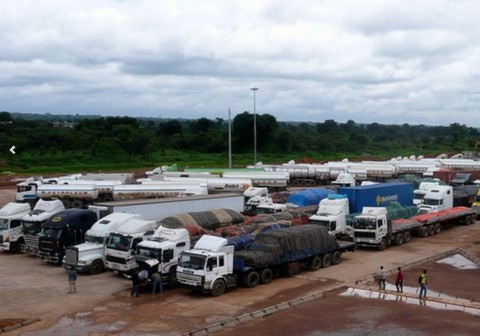
Kasumbalesa1Democratic Republic of Congo’s (DRC) border post with Zambia, one of Africa’s busiest land frontiers, went high-tech, with a web-based customs system that was meant to improve efficiency and eradicate corruption. It’s not quite working to plan. As officials struggle to get to grips with the new system and DRC’s decrepit phone network groans under the weight of data, the Kasumbalesa border post 300 km (200 miles) north of Lusaka has almost ground to a halt, according to drivers and freight operators. The result is a tailback of trucks stretching at least 20 km into Zambia and a spike in prices in Lubumbashi, impoverished DRC’s second city, which has lost its one proper road link to the outside. The bottleneck is bad even by African standards but it throws into stark relief the problems governments face as they try to remove the numerous bureaucratic and physical barriers to intra-regional trade across the poorest continent.

The Kasumbalesa blockage is being felt 100 km away in Lubumbashi, a bustling mining city of several million who rely on the 450 trucks a day that normally pass through the border laden with everything from biscuits to cement to paraffin. Shop owners are stockpiling and prices of staples such as casava powder – known locally as fufu – have gone up 50 percent in three weeks. “This has already had a big effect. It is causing lots of problems for the population,” Lubumbashi resident Charles Pitchou said.

Kasumbalesa – at the heart of the relatively prosperous and developed Copperbelt – was meant to be an example of how to do it properly, a frontier handed over to a private firm to make customs run like clockwork.

In one of the first public-private partnerships on African borders, an Israeli-run firm called Baran Trade and Investments won a 20-year concession in 2009 to build a “one-stop” customs post and operate it for 20 years. (Makes one wonder why the countries have a Customs authority in the first place?) With $5 million of Baran’s own money and a $20 million loan from the Development Bank of Southern Africa, the Zambia Border Crossing Company (ZBCC), as the subsidiary was known, had a streamlined Kasumbalesa up and running in 2011. Local media reports suggested much-reduced crossing times. However, Lusaka canceled ZBCC’s contract in late 2011 when President Rupiah Banda lost an election and his successor, Michael Sata, ordered investigations into a slew of state deals struck by his predecessor. TheBaran deal never went out to public tender and the fees charged to trucks – $19 per axle – were too high. It also said giving control of the border to an outside concessionaire was a threat to national security and that the reduction in waiting times was not as dramatic as the firm said. Baran’s chief executive, contacted via ZBCC’s website, did not respond to requests for comment.

With Baran gone, the state-run border posts muddled through until September, when DRC upgraded its systems from ‘Sydonia++’, a set-up widely used in the 1990s, to a web-based successor called ‘Sydonia World’, freight operators and regional trade experts said. Although UNCTAD was pushing use of ‘Sydonia World’ as far back as 2002, the data burden was too much for DRC’s computer networks, which crashed.

“The system is very good but if you don’t have a decent Internet connection, it doesn’t work,” said Mike Fitzmaurice, a South African logistics consultant and editor of online trade journal Freight Into Africa. National government spokesman Lambert Mende said a vice finance minister had been despatched from Kinshasa, 1,500 km away, to resolve the problem.

Zambia too is pulling out the stops to get the border moving again in a region important to its economy. “We need to have a normal flow of goods and services because this affects the entire region,” deputy trade minister Miles Sampa told Reuters. One stop-gap solution has been to scan documents in low-resolution black-and-white, rather than full color, to ease the data burden. But even if the two sides iron out the immediate snafu, the fiasco has provided another example of the dream of a seamless, integrated African border crossing falling short of reality.

Zimbabwe and Zambia upgraded their Chirundu border to a one-stop frontier in 2009 but crossing times have only dropped from 38 hours before to 35 now, according to Fitzmaurice, who compiles weekly records on delays. By contrast, customs clearance within the 114-year-old Southern African Customs Union (SACU) – South Africa, Botswana, Namibia, Lesotho and Swaziland – can be as little as 30 minutes. “Once you go north of SACU, into Zimbabwe, Zambia, wherever, there’s no such thing as a ‘good’ border post,” Fitzmaurice said. “The concept behind all these systems is good but the implementation just falls down every time.” Source: Lusaka Voice

South African Customs launches new X-Ray Inspection Facility in Durban

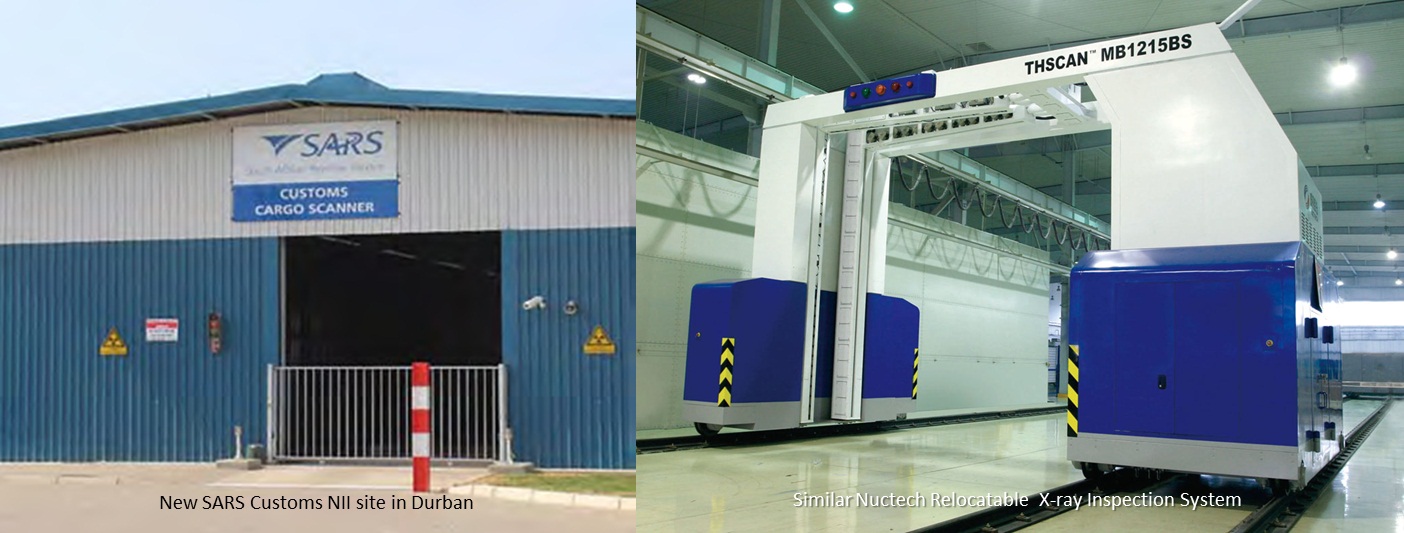
SARS Customs New NII Ste - DurbanSARS Customs recently launched its new X-Ray cargo inspection facility adjacent to the Durban Container Terminal in the Port of Durban. Following the trend as in other countries, SARS has identified non-intrusive inspection capability as part of its ‘tiered’ approach to risk management.

In 2008, SARS introduced its very first mobile x-ray scanner which was located inside the Durban container terminal precinct as part of South Africa’s participation in the US Container Security Initiative (CSI). While it has proven itself in the development of Customs NII capability, its location and lack of integration with other Customs automated tools has limited its success.

The new Customs inspection facility is a step-up in technology and automation – a Nuctech MB 1215HL Relocatable Container/Vehicle Inspection System. It has some significant advantages over the original mobile version namely –

  • An efficient and cost-effective security solution with a relatively small footprint (site size).
  • 6 Mev dual energy X-Ray technology with high penetration (through 330 mm of steel).
  • High throughput of 20-25 units of 40ft container vehicles per hour.
  • A unique modular gantry design which improves system relocatability.
  • Self-shielding architecture which requires no additional radiation protection wall.
  • Advanced screening and security features such as organic/inorganic material discrimination.
  • High quality scanning image manipulation tools allowing the customs image reviewer the ability to verify and distinguish the contents of a vehicle or cargo container.

Since its launch more than 350 scans have been performed. Suspect containers were sent for full unpack resulting in various positive findings.

The new relocatable scanner is easier to operate and significantly faster than the mobile scanner. In addition, scanned images are now automatically integrated into SARS Customs case management and inspection software making case management both seamless and efficient.

It is anticipated that until October 2014, both the new scanner and the existing mobile scanner operations will co-exist. During this time, the new scanner will operate risk generated cases directly from SARS automated risk engine. Unscheduled or random interventions will continue to occur at the old scanner site, which operates 24/7.

Plans are in place to decommission the mobile scanner after October 2014. The new scanner will then operate on a 24/7 basis.

A dedicated webpage for SARS Customs Detector Dog Unit

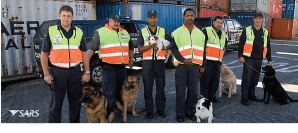
Picture1Due to overwhelming interest in the SARS Customs Detector Dog Unit, a dedicated page is now included – see the Detector Dog ‘tab’ at the top of this webpage for a direct link, or click here!

France – Customs in High School Education

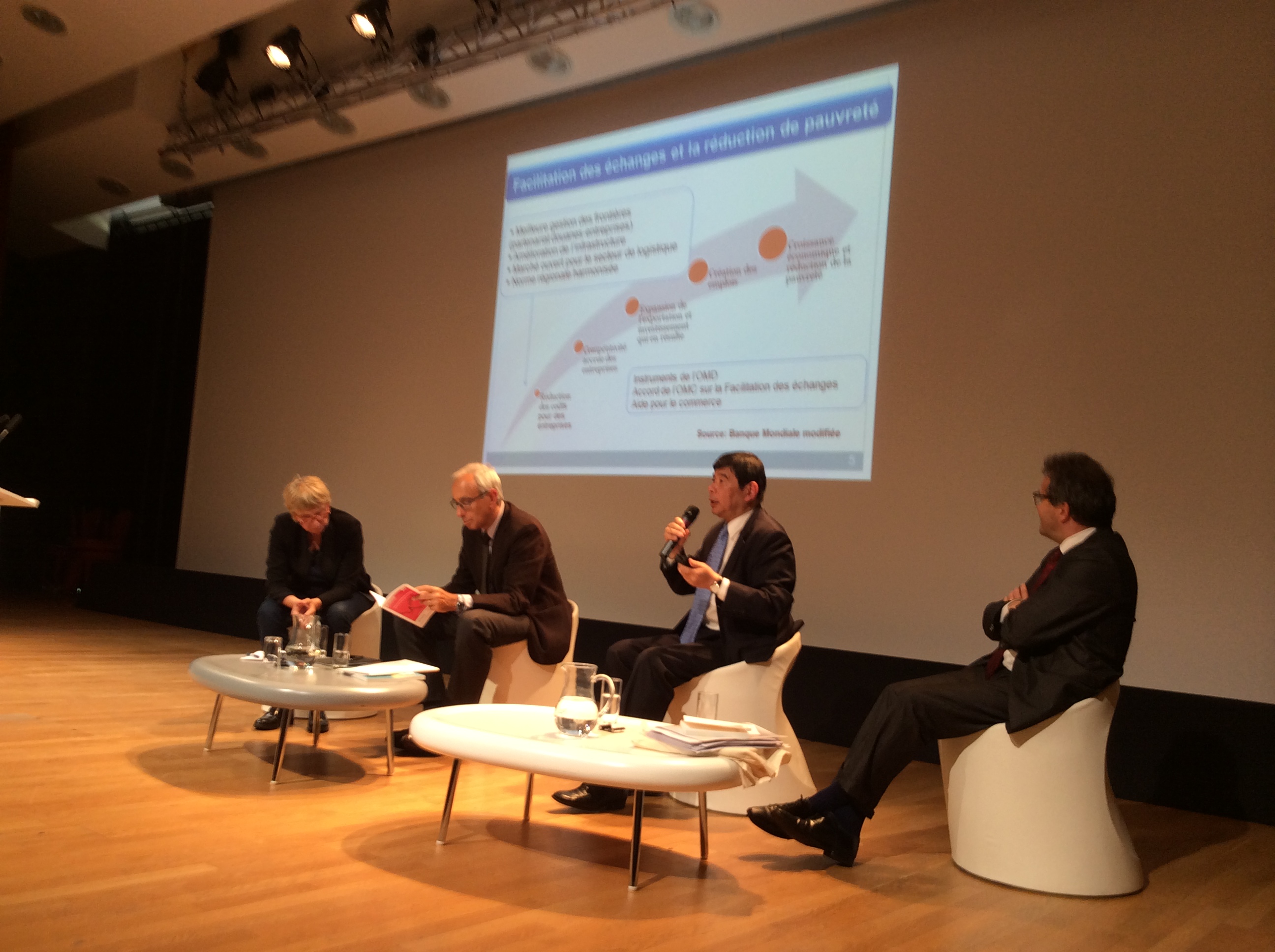
20140827%20154452At the invitation of the “Institut de l’Entreprise” in the framework of its programme “Entretiens Enseignants-Entreprises”, WCO Secretary General Kunio Mikuriya spoke at the Summer University’s conference entitled “La croissance en question(s)” (growth into question(s)) in the Veolia Campus, Jouy-le-Moutier, France on 27 August 2014.

Supported by the French ministry of Education and the Council of Economic Analysis, this forum gives the opportunity to high school teachers in economics and social sciences to exchange views with the business world. It also provides them with an opportunity to update their knowledge on current economic issues benefiting from the attendance of renowned economists and prominent business leaders.

260 High school teachers participated in the event and listened to a panel session on poverty reduction during which Secretary General Mikuriya explained the contribution of Customs through enhancing connectivity at the borders to secure and facilitate global supply chain. They were eager to understand how the WCO and Customs could play a significant role in trade facilitation to convey the messages to their classrooms. Source: WCO

Canada Border Services Agency – raises customs and dutiability issues

EYIn one of the most important customs cases in years (Skechers USA Canada Inc. v The President of the Canada Border Services Agency (2013), AP-2012-073 (CITT), referred to in this article as Skechers Canada), the Canadian International Trade Tribunal (CITT) confirmed an aggressive interpretation by the Canada Border Services Agency (CBSA).

The case concerned additions to the transaction value for intercompany payments made outside of the invoice amount or transfer price that relate to design and development costs allocated to the importer.

As part of a recent enforcement trend of the CBSA toward assessing customs duty on intercompany management or other fees not included in the transfer price, the CBSA determined that the total research and development (R&D) intercompany fees paid by the Canadian company were part of the value for duty allocated over the goods actually imported.

In a potentially far-reaching decision, the CITT endorsed this decision for cases where the importer cannot demonstrate that the payments are unrelated to the goods.

The Skechers Canada case

The taxpayer in Canada purchased footwear from its US affiliate and established a transfer price for goods based on the US affiliate’s factory cost from the offshore manufacturer plus transportation, warehousing and an amount for profit.

This price included the cost of “assists” relating to the molds and samples that the US affiliates provided to the manufacturers for the successful models subsequently imported. It did not include, however, the value of the design work performed in respect of the development of unsuccessful prototypes or models (approximately 45,000 of the 50,000 models under development never made it to the final stage), nor the costs for the general R&D expenses of the US affiliate (salaries and overhead). Therefore, the taxpayer also made payments for these costs to the US affiliate under a cost-sharing agreement (CSA).

The fees paid by the taxpayer under this agreement were a function of the volume of import purchases. They were calculated based on operating profit of the taxpayer pursuant to the terms of the CSA and thus varied with volumes of imports and sales.

As noted, of the approximately 50,000 models under development, only 5,000 made it to the final cut, and of this only approximately 1,700 were imported to Canada. Accordingly, most of the payments for research and design and development under the CSA were not included in the transfer price.

The decision

Both parties to the dispute agreed that the Tribunal should use the “transaction value” customs valuation methodology (the adjusted transfer price). The issue concerned whether the payments for R&D under the CSA were “in respect of” the goods and therefore part of the “price paid or payable” pursuant to Subsections 45(1) and 48(4) of the act.

A basic provision of customs valuation is that the transaction value must include all payments made “in respect of” the goods. The taxpayer contended that the payments were for intangibles and not in respect of the goods as they were for developing the brand.

In a precedent-setting decision, the Tribunal held that all payments under the CSA relating to research, development and design were dutiable because they were, in the Tribunal’s words, “clearly in respect of the goods” given that the evidence disclosed that “the R&D payments most directly concern the footwear products themselves.”

There was one continuous process by which the research, design and development process flowed through the season to develop the footwear. Therefore, the activities and associated costs covered by the R&D payments can all be located somewhere along the continuum of that lengthy and interrelated process and the research and design efforts and associated fees were “directly aimed” at developing the models available for purchase each season by the taxpayer.

Thus, the Tribunal found that the costs were directly related to developing and designing the particular footwear that was imported. The payments and the imported goods were directly linked as the fees were calculated based on the taxpayer’s Canadian operating profit and, hence, if imports increased, so would the payments.

What does the Skechers Canada decision mean?

As a result of the decision, in Canada, at least for now, payments made by the Canadian purchaser to the overseas vendor for “research, design and development” costs, whether they result in actual production of the purchased models or are allocable to other non-imported models or aborted designs, are part of the value of the goods for customs purposes where the Canadian importer pays amounts that vary with sales and imports, to an affiliate under a CSA.

Impact on supply chain planning

The case is a wake-up call for many multinationals to consider customs planning rather than just income tax or logistics planning. Further, it highlights the need to be aware of, or to seek advice from advisors experienced with, the latest case law or CBSA policy. Customs compliance and leading practices for planning need to be considered along with any other savings to achieve the best overall efficiency for the supply chain.

Lessons learned?

First and foremost, a supply chain structure must be considered very carefully when importing goods into Canada, particularly through a supply chain involving affiliated parties. Often a direct sale from the manufacturer to the importer may have customs planning advantages.

Where there are purchases from a related party who sources the goods abroad, it is important to ensure that the transfer price is acceptable for customs valuation purposes and to confirm whether any adjustments are required for other payments, such as R&D costs and royalties. In a direct sale, “assists” must also be considered.

The onus is on the importer to prove that any payments made are not in respect of the goods under the act. This point is often overlooked. In this case, it was crucial as the Tribunal made its finding on the basis that the taxpayer did not discharge this onus. It is important to keep the importer’s onus of proof in mind when undertaking any customs duty planning and also when deciding to make any appeal against a determination.

This article was first published in EY´s Indirect Tax Briefing: July 2014
New Zealand Customs ‘Cash Dogs’ go International

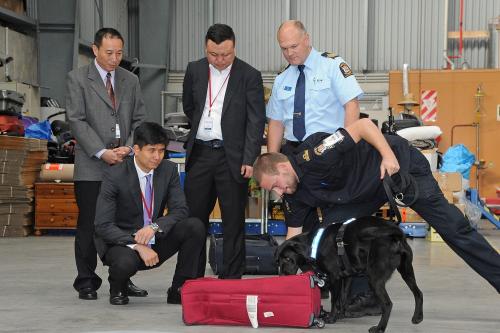
Detector Dog Rajax demonstrates his cash-sniffing abilities during training at a NZ Customs facility

Detector Dog Rajax demonstrates his cash-sniffing abilities during training at a NZ Customs facility

Customs Minister Nicky Wagner today welcomed a new partnership between New Zealand, Hong Kong and Chinese Customs to develop cash detector dog capabilities in the region.

Officials from Hong Kong Customs and the General Administration of China Customs’ Anti-Smuggling Bureau have been in Auckland to learn how drug dogs are trained to detect cash, so they can progress similar programmes in their own Customs administrations.

“It’s fantastic we’re able to assist Hong Kong and China to build this special capability, as detecting undeclared or hidden cash is an increasing priority for many Customs authorities as evidence shows following the money trail can lead to cracking serious organised crime such as drug smuggling.

“Having Hong Kong and China Customs detector dogs sniff both drugs and cash will disrupt drug smuggling and money laundering by transnational syndicates, with flow-on benefits for us in New Zealand,” Ms Wagner says

New Zealand shares formal agreements and a close customs-customs operational relationships with both Hong Kong and China, with the agencies working together to target the illicit drug trade through cross-border efforts.

Officials spent a week getting an overview from Customs’ Source: NZ Government (contributed by M Reddy)

U.S. and Kenya sign Customs Mutual Assistance Agreement

kenya-usa-flagThe U.S. signed a Customs Mutual Assistance Agreement (CMAA) with Kenya marking a significant milestone in collaboration on security and trade facilitation between the two countries. U.S. Customs and Border Protection (CBP) Deputy Commissioner (Acting) Kevin McAleenan signed the agreement on behalf of CBP and U.S. Immigration and Customs Enforcement (ICE) and Minister of the Treasury Henry Rotich signed the agreement on behalf of Kenya.

“Customs Mutual Assistance Agreements are valuable tools in the enforcement of our laws as they facilitate information sharing between international partners,” said Deputy Commissioner (Acting) Kevin McAleenan. “This agreement will expand our efforts to combat illicit cross-border activities and will enable us to continue our work to prevent, detect and investigate customs offenses.”

“Today’s signing represents the United States and Republic of Kenya’s joint commitment to elevate cooperation to safeguard our borders through the exchange of information and mutual assistance to combat customs law violations,” said ICE Principal Deputy Assistant Director Thomas S. Winkowski. “U.S. Immigration and Customs Enforcement, together with our partners at CBP, looks forward to future cooperative enforcement efforts with the Kenya Revenue Authority.”

The U.S. has now signed 71 CMAAs with other customs administrations across the world. CMAAs are bilateral agreements between countries and enforced by their respective customs administrations. They provide the legal framework for the exchange of information and evidence to assist countries in the enforcement of customs laws, including duty evasion, trafficking, proliferation, money laundering, and terrorism-related activities. CMAAs also serve as foundational documents for subsequent information sharing arrangements, including mutual recognition arrangements on authorized economic operator programs.

The U.S. – Kenya CMAA was signed at CBP headquarters as part of the U.S. – Africa Leadership Summit in Washington, D.C. The Summit included meetings between President Obama and 51 African heads of state. Source: GSN Magazine

WTO Trade Facilitation Agreement – Dead!

The World Trade Organisation headquarters in Geneva [AFP Photo]

The World Trade Organisation headquarters in Geneva [AFP Photo]

The World Trade Organization got a surprise setback on Thursday when India, pushing for concessions on agricultural stockpiling, vetoed plans for universal customs rules. The deal could have added $1 trillion and 21 million jobs to the world economy.

The July 31 deadline on the first proposal for major global economic reform in two decades – a series of customs procedures known as “trade facilitation” – left negotiators empty-handed after India refused to sign up to it.

India, with its large number of poor and new nationalist government, had demanded the exclusive right to subsidize and stockpile grains which is not permitted by WTO rules.

The WTO, experiencing what may be its worst setback in its 19-year history, reluctantly admitted defeat.

We have not been able to find a solution that would allow us to bridge that gap,” WTO Director-General Roberto Azevedo told negotiators in Geneva just hours before the deadline was set to lapse.

Some analysts are of the opinion the failure represents the beginning of a new era of trade deals, which will depend more on individual economies forging their own initiatives, as opposed to attempting to force global reform.

Today’s developments suggest that there is little hope for truly global trade talks to take place,” Jake Colvin at the National Foreign Trade Council, a leading US business group, told Reuters.

The vast majority of countries who understand the importance of modernizing trade rules and keeping their promises will have to pick up the pieces and figure out how to move forward.

Whether or not other countries will pick up the dropped ball and try to move forward despite the loss is not yet clear, but the present mood is noticeably downbeat.

We’re obviously sad and disappointed that a very small handful of countries were unwilling to keep their commitments from the December conference in Bali, and we agree with the Director-General that action has put this institution on very uncertain new ground,” US Ambassador to the WTO Michael Punke told reporters.

Meanwhile, there is speculation that some countries may decide to go ahead with the plan without India’s support.

However, Azevedo said that while the world’s largest economies had choices on how to respond to the failed talks, the poorest economies would suffer the brunt of the fallout.

If the system fails to function properly then the smallest nations will be the biggest losers,” he said. “It would be a tragic outcome for those economies – and therefore a tragic outcome for us all.

Source: Russia Today (contributed by V Singh)

Related articles

New drug analyser to save New Zealand Customs time and money

New Zealand Customs Minister Nicky Wagner says the introduction of a new state of the art drug analyser will free up hundreds of hours a year for more enforcement work at the border.

The handheld device, a Thermo Scientific FirstDefender RM, shoots a laser beam into an unknown substance, accurately identifying it in a matter of seconds.  Customs purchased it with money recovered under the Proceeds of Crime (Recovery) Act.

“The device will drastically reduce the number of substances that have to be sent away for expensive testing, with savings expected to pay for it in less than six months.

“Its effectiveness will allow Customs officers to spend at least 520 more hours each year on frontline border work because they can make decisions quickly on what investigative action, if any, is required.

In addition to the drug analyser, Customs is building a laboratory in Auckland to test unidentified chemical samples.

“The enhanced capability will help to achieve outcomes sought in the government’s Methamphetamine Action Plan and allow Customs to identify an increasing number of new psychoactive substances stopped at the border,” Ms Wagner says.

More than 11,000 substances can be identified almost instantly by the FirstDefender analyser.  It can penetrate through certain types of packaging, so opening a packet or bottle may not be necessary, which also means a safer working environment for officers. Source: New Zealand Customs (contributed by Mogen Reddy)

New Customs Control Act published

Customs Duty ActThe Customs Control Act, 2014 (Act No. 31 of 2014) and the Customs & Excise Amendment Act, 2014 (Act No. 32 of 2014) were published in the Government Gazette on 23 July 2014. For copies of these documents lease click here!

The first batch of draft rules has also been circulated in terms of the Customs Control Act, 2014 for comment with the deadline for comments looming – 29 July 2014. The ‘draft rules’ can be located by clicking here.The rest of the rules will follow in due course. Source: SARS

All stakeholders – doing business with SARS Customs – are collectively urged to take the time and opportunity to review the draft rules as they provide further detail to the future requirements and obligations for transacting Customs business when the Customs Duty and Control Acts come into operation.

New feature on SARS website – Customs Bills History

For those interested or concerned with the status of the Customs Bills from their first circulation until now, a ‘new’ SARS webpage contains all the official copies of the Draft Bills released for public comment in 2009 and in 2010 up until they were introduced in Parliament in October 2013. All the versions of the Bills after their introduction in Parliament are available as well, up to the final versions after publication in the Government gazette as Acts of Parliament.

These Acts, when they come into operation, will replace the current Customs and Excise Act, 1964 and provide for new modernised customs legislation. The Customs and Excise Amendment Act, 2014 will amend the 1964 Act to the extent that only the excise provisions will still be in force.

New WCO HS standards coming into force on 1 January 2017

OMD_7760The WCO Council, at its 123rd/124th Sessions in June 2014, adopted a Recommendation that lists recommended amendments to the Harmonized System (HS) nomenclature which will enter into force on 1 January 2017 (HS 2017).

This Recommendation is being promulgated under the provisions of Article 16 of the HS Convention, which implies that HS Contracting Parties now have six months to notify the WCO Secretariat of an objection to a recommended amendment.

Since the entry into force of the current version of the HS (HS 2012), the HS Committee has been revising this version of the HS nomenclature for almost five years. HS 2017 will be the sixth version of the HS since the Convention entered into force in 1983. HS 2017 will enter into force for all HS Contracting Parties, but will exclude any amendments objected to during the six month timeframe.

The new version of the HS includes 234 sets of amendments. Environmental and social issues are a major feature of these amendments, due to the importance of the HS as a global tool for collecting trade statistics and monitoring trade. This is borne out by the fact that the HS Convention currently has 150 Contracting Parties, making it the WCO’s most successful international instrument to date.

The majority of the recommended amendments were broached by the Food and Agriculture Organization of the United Nations (FAO):

  • Amendments relating to fish and fishery products are aimed at further enhancing the coverage of species and product forms which need to be monitored for food security purposes, and the better management of resources.
  • Amendments relating to crustaceans, molluscs and other invertebrates are motivated by the importance of the trade in and consumption of these species in their various product forms.
  • Amendments relating to cuttlefish and squid enlarge the coverage of the present HS codes for these species, in order to have all these species grouped together.

The classification of forestry products has also been modified, in order to enhance the coverage of wood species and get a better picture of trade patterns. The modification will enable trade data on tropical wood to be identified, resulting in better statistics on the trade in tropical wood and better data on the use of non-tropical hardwoods. In addition, the amendments include new subheadings for the monitoring and control of certain bamboo and rattan products.

Furthermore, HS 2017 amendments aim to provide detailed information on several categories of products that are used as antimalarial commodities. This will facilitate classification work, and the trade in these life-saving products.

The amendments also introduce specific subheadings to facilitate the collection and comparison of data on the international movement of certain substances controlled under the Chemical Weapons Convention.

New subheadings have also been created for a number of hazardous chemicals controlled under the Rotterdam Convention and for certain persistent organic pollutants (POPs) controlled under the Stockholm Convention. In some cases, there is a confluence of control regimes for chemicals by both the Rotterdam and Stockholm Conventions.

In addition, new subheadings have been created for the monitoring and control of pharmaceutical preparations containing ephedrine, pseudoephedrine or norephedrine, and for alpha-phenylacetoacetonitrile (APAAN), a pre-precursor for drugs.

Other amendments resulted from changes in international trade patterns. Headings 69.07 (unglazed ceramic products) and 69.08 (glazed ceramic products) were merged to take account of the fact that the main subheadings within these headings concern products which are essentially no longer manufactured, and the industry and trade no longer make a distinction between unglazed and glazed ceramic products, whilst new products with a very high trade volume are classified under subheadings 6907.90 and 6908.90 (“Other”).

Furthermore, for purposes of adapting the HS to current trade practices, certain important products will be separately identified in either existing or new subheadings.

Advances in technology are also reflected in the amendments, inter alia, the size criteria for newsprint, light-emitting diode (LED) lamps, multi-component integrated circuits (MCOs), and hybrid, plug-in hybrid and all-electric vehicles.

Finally, the HS 2017 Recommendation includes amendments to clarify texts to ensure uniform application of the nomenclature. For example, the regrouping of monopods, bipods, tripods and similar articles in a new heading, namely 96.20. Source: The WCO

New Customs Duty Act, No.30 of 2014 published

Customs Duty ActThe Customs Duty Act, 2014 (Act No. 30 of 2014) was published in Gazette 37821 today and a copy thereof is available on the SARS Website at the following hyperlink – Acts Administered by the Commissioner.

The purpose of this Act is to provide for the imposition, assessment, payment and recovery of customs duties on goods imported or exported from the Republic; and for matters incidental thereto.

Take note that this Act is not in force as yet.It will come into operation the date that the proposed Customs Control Act (still to be published) takes effect, as indicated in section 229. That date will be announced by the President by Proclamation in the Gazette. The implementation will occur when SARS and the industries are ready, which means that the relevant rules and processes need to be in place. Source: SARS

WCO 2014 Photo and Poster Competition

Winning Entry 2014 - Iceland Customs - Fifty Years of Change (WCO)

Winning Entry 2014 – Iceland Customs – Fifty Years of Change (WCO)

This years entries are a combination of photography and poster themes. Please click this link to view an e-book of all the entries. Congratulations to Customs Iceland for their winning entry titled -“Fifty Years of Change”. Source: WCO