Kenya – Drugs Found on Auto Carrier in Port of Mombasa

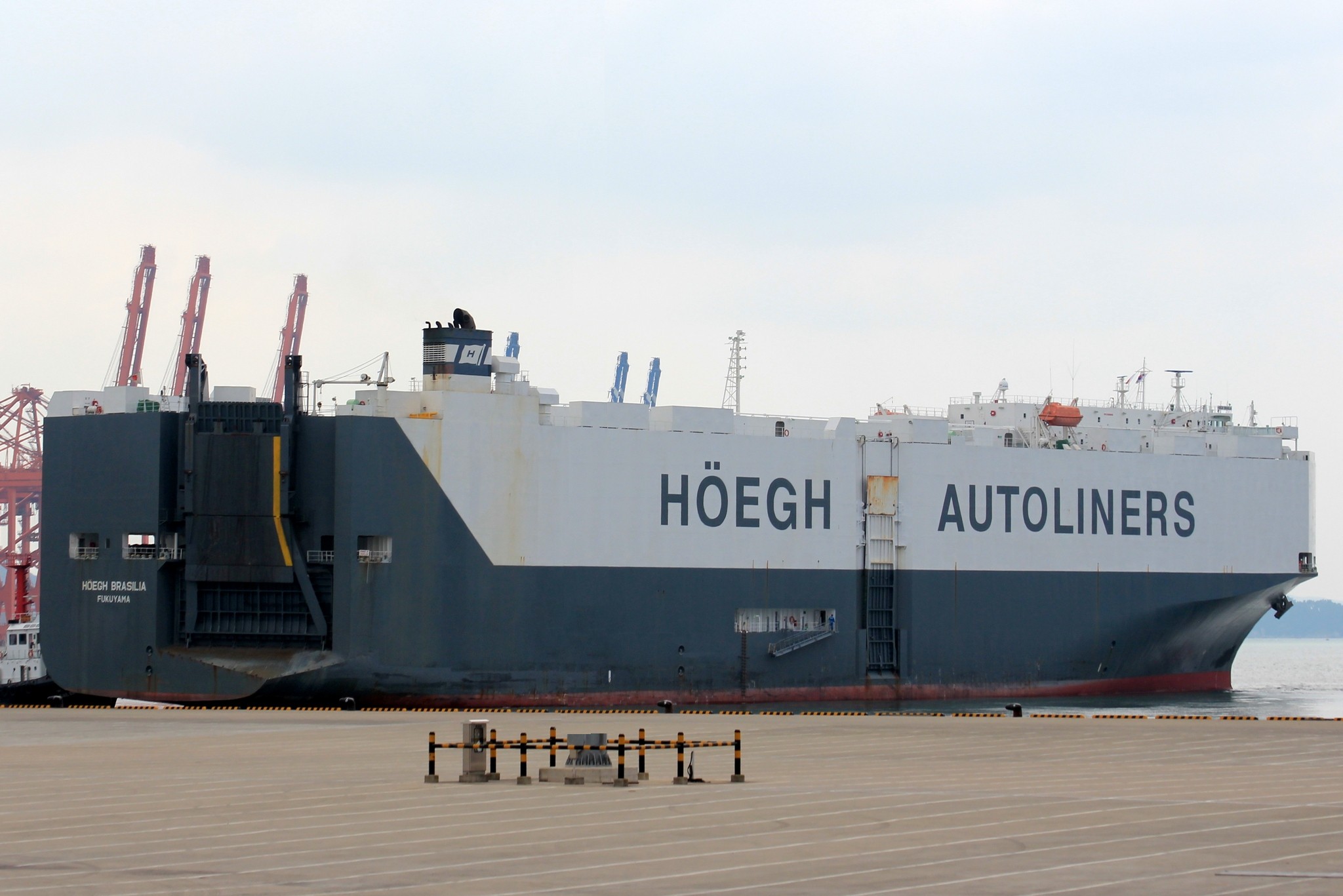
hoeghKenyan and U.S. authorities found drugs aboard the Höegh Autoliners “Pure Car/Truck Carrier” (PCTC), which was detained at Port Mombasa on September 17. The crew of the ship has been arrested and currently being questioned by authorities.

According to authorities, cocaine was found inside the tires of three military trucks aboard the Hoegh Transporter, a Singapore-flagged car carrier.

Kenyan officials raided the vessel after receiving a tip from the U.S. Federal Bureau of Investigation (FBI) that the vessel had been loaded with the coke at India’s Port of Mumbai.

Kenyan soldiers and security personnel shut down the port for hours before seizing the ship and halting operations. Mombasa, which is Africa’s largest port, serves as the main gateway for imports and exports in the region.

East Africa is a major shipping route for Afghan narcotics bound for Europe. Maritime forces have been unable to curb the flow of drug transport in the region.

The Höegh Transporter was built in 1999 and was transporting nearly 4,000 vehicles, including about 250, which are to be used for peacekeeping missions in South Sudan. Source: Maritime Executive

EU fighting Customs Fraud – JRC research leads to new legislation

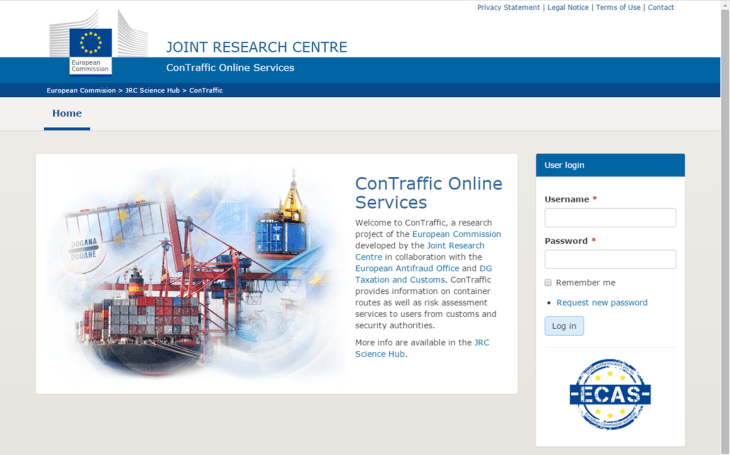
ConTraffic HomepageA new regulation adopted by the European Parliament and the Council will allow customs to access information to track the origins and routes of cargo containers arriving in the EU to support the fight against customs fraud both at EU and national level. The Joint Research Centre (JRC) has been instrumental in the conception and adoption of this legislation as it provided the scientific evidence on the importance of analysing the electronic records on cargo container traffic.

The EU customs authorities have been long aware that information on the logistics and actual routes of cargo containers arriving in Europe is valuable for the fight against customs fraud. However, they had very limited ways to obtain such information and no means to systematically analyse cargo container traffic both for fraud investigations as well as for risk analysis. On the other hand, the ocean carriers that transport the cargo containers, as well as their partners and clients, have easy on-line access to the so-called Container Status Messages (CSM): electronic records which describe the logistics and the routes followed by cargo containers.

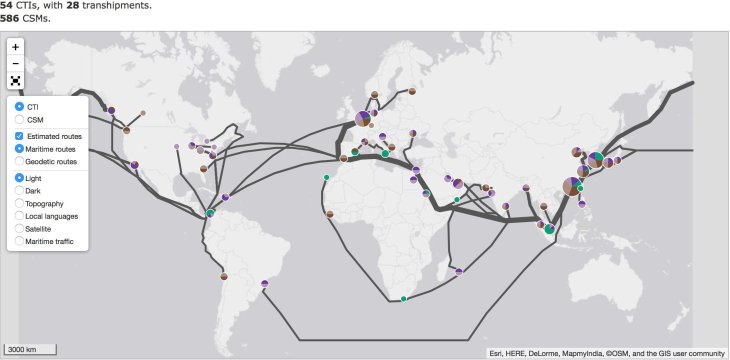
jrc-cargo-container-routes-world-mapIn collaboration with the European Anti-Fraud Office (OLAF), the JRC has worked extensively on how to exploit CSM data for customs anti-fraud purposes. The JRC proposed techniques, developed the necessary technology, and ran long-term experiments involving hundreds of EU customs officers to validate the usefulness of using CSM data. The results of this research led the Commission to bring forward a legislative proposal that would enable Member States and OLAF to systematically use CSM data for these anti-fraud purposes. It also served to convince Member States of the value of the proposed provisions.

The financial gains from the avoidance of duties, taxes, rates and quantitative limits constitute an incentive to commit fraud and allow the capacity to properly investigate in cases, such as mis-declaration of the origin of imported goods. The information extracted from the CSM data can facilitate the investigation of some types of false origin-declarations. With the new legislation an importer will no longer be able to declare – without raising suspicions – country X as dispatch/origin of goods if these were transported in a cargo container that started in country Z (as indicated by the CSM data).

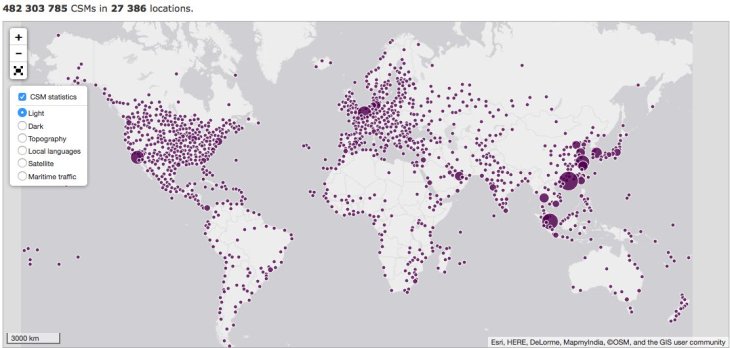
jrc-csm-dataset-world-map (1)The technologies, know-how and experience in handling CSM data, developed by the JRC through its experimental ConTraffic platform, will be used by OLAF to set up the system needed to implement this new legislation applicable as from 1 September 2016. The JRC will continue to analyse large datasets of CSM records (hundreds of millions per year) as these are expected to be made available through the new legislation and will continue to support not only this new regulation but to exploit the further uses of this data notably for security and safety and real-time operations. Its focus will be on data mining, new automated analysis techniques and domain-specific visual analytics methods. Source and Images: EU Commission

Dubai and Saudi Customs host IPR awareness workshop

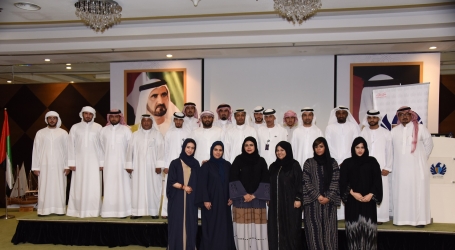
dubai-customs-holds-ipr-awareness-workshopDubai Customs has held an Intellectual Property Rights workshop with the participation of eminent Customs delegations from the Kingdom of Saudi Arabia and the Kingdom of Bahrain. Representatives of the Ministry of Economy, Abu Dhabi Customs, Dubai Health Authority and a host of personnel from Dubai Customs were also present.

The attending delegates praised Dubai Customs efforts in raising IPR awareness and the role it plays in educating and involving specialists of stakeholder entities, whether on the state government level or at the GCC level. Such efforts are directed towards tightening the grip on counterfeiters, better serving manufacturers, investors and traders rights and ultimately protecting consumers from the consequences and threats posed by illicit trade in fake goods.

Yousuf Ozair, Director of Intellectual Property Rights Department at Dubai Customs stated on this occasion, “Dubai Customs places IP Rights on the top of its priorities, and is always keen on forging better ties and reinforcing cooperation with local and GCC customs authorities and administrations in order to achieve optimal results in combating the trading of infringed items.

“We always seek to present our officers with the latest training courses on the means and methods of combating counterfeit trading. This is done in tandem with our partners in the private sector and the trademark owners, who are granted such regular platform to present their products and the latest techniques for detecting infringed items that surely affect their market shares.”

Ozair also pointed out that the consolidated efforts of the Unified IPR Task Force(established in 2006) in collaboration with all government entities within the UAE had proved very efficient in deterring attempts of illegal import of counterfeit products via customs ports. “In 2014, over 300 seizures of IPR-infringing items were recorded, covering a wide range of products worth more than AED 36 Million, and in the Q1 of 2015, more than AED 4 million worth of counterfeit goods were seized in 40 cases,” he said.

Yousef Al Hashemi, Jebel Ali Customs Center’s Management Director, said, “Dubai Customs has been doing well in terms of trade facilitation and protection of society against all potential risks and threats, by developing and utilizing the latest smart information technology in inspection and examination operations. Such adaptation represents our efficient response to the growing Dubai foreign trade, helping us to achieve the optimal balance between trade facilitation and compliance.”

The attending trademark owners, Hello Kitty, Mars, Wipro, Burberry, Hermès, Barcelona, Botiga and Emerson have also presented the audience with the tools and techniques on identifying copied products from genuine ones.

Dubai Customs directs major effort to the advocacy and awareness campaigns on IPR, seeking to educate the public about the serious dangers of consuming counterfeit products on their health and safety. As many as 48 such awareness events were organized in 2014, benefiting a total of 11,800 people. Source: Dubai Customs

German Customs dispute disrupts plywood imports from China

Laminated woodThe importance of tariff classification and its impact on statistical and economic data – German imports of hardwood plywood from China continue to be affected by a dispute between the German trade and customs officials. In the last three years, customs officials, particularly at the port of Bremerhaven, have been checking Chinese plywood to ensure that boards are cross-laminated rather than laid parallel to each other.

According to German customs, boards should be reclassified as Laminated Veneer Lumber (LVL) if not fully cross-laminated. This is frequently the case with lower-quality Chinese plywood manufactured using small veneer pieces for the cores. LVL incurs a higher rate of duty of 10% compared to 7% for plywood. Roughly 40% of Chinese hardwood plywood deliveries into Germany were reclassified in this way in 2012.

German import merchants and the timber trade federation GD Holz have held talks with German customs to try to more clearly define which products should be considered plywood and which LVL. According to GD Holz, these talks have been unproductive so far and customs continue to reclassify Chinese plywood. Several German importers have now filed lawsuits and results are still pending. At the same time, GD Holz report that since 2014, several importers have been reimbursed for some instances of excessive duty paid. However, customs has not revealed why reimbursements were offered in some cases but not in others.

The uncertainty created by the dispute in Germany may partly explain the recent rise in imports of Chinese hardwood plywood into ports in Belgium and Netherlands. German buyers may be avoiding excess duty by buying from stocks landed in these neighbouring European countries.

The reclassification process has led to inconsistencies in the statistical data on German hardwood plywood imports. Data derived from Eurostat indicates that German imports fell by 18.3% to 34,700 cu.m in the first five months of 2015. This followed a decline of 5.5% to 103,000 cu.m for the whole year 2014.

However, the Eurostat data deviates from figures published by the German Federal Statistical Office (Destatis) which indicate a 62% increase in German hardwood plywood imports from China in the first quarter of 2015. On enquiry, Destatis note that they have adjusted their data downwards for 2014 to take account of plywood reclassified as LVL.

However Destatis have not yet made the same adjustment to the 2015 data. As a result, Destatis data on deliveries to Germany appear to surge this year. Overall, once all adjustments are made, Destatis reckon German imports of Chinese hardwood plywood in the first five months of 2015 were probably around the same as last year.

SARS R78 million Airport Cash Bust

Johannesburg – They [smugglers] had cash stashed in 11 pieces of luggage including four backpacks – R78 million destined for the United Arab Emirates.

But eagle-eyed customs officials at OR Tambo International Airport were on to them and confiscated the bags with R23m and $3.775m in notes.

On the same day, R50m worth of cocaine stashed in hair product bottles was seized at the same airport, in one of the biggest crime-busting days at OR Tambo.

On Monday, SA Revenue Service (Sars) officials said five people had been arrested after being caught with the undeclared cash as they were about to leave South Africa.

“Risk profiling earlier by Sars custom officials identified the passengers, and led to their apprehension as they boarded the aircraft at 9.45pm.

“Upon noticing the officials, the passengers retreated and headed back to the entrance of the boarding gate. At this point, officials closed the boarding gate door and the passengers were compelled to wait for the Sars officials,” Sars said.

When asked whether they had any currency, one of the passengers apparently said he had R100 000 and that the other members of the group had currency with them.

“The five individuals were escorted back to immigration at international arrivals, booked back into South Africa and escorted to customs.”

Sars spokesperson Luther Lebelo said the bags with the cash had been handed over to the SA Reserve Bank.

“The matter has been handed over to the SA Reserve Bank for further investigations. Once the bank is satisfied that there is an element of criminality, they can take the matter to the police,” he said.

The arrests on Friday – details of which were released on Tuesday – followed a R50m drug bust at the airport. National police spokesman Brigadier Vishnu Naidoo said the consignment of cocaine, weighing about 143kg, was one of the largest drug recoveries at a South African port of entry.

“The drugs were hidden in 147 hair products bottles and were found during a routine inspection at the cargo section. The consignment arrived from Brazil, and information displayed on the cargo indicated it was in transit to Cotonou, Benin, in West Africa,” he said.

Other drug busts at OR Tambo over the past month include:

  • The confiscation of 60 000 Viagra tablets with a street value of R6m at the airport’s mailing centre.
  • Cocaine weighing 3.46kg and valued at R993 020, found in the backpack of a passenger in transit from Sao Paulo and headed for Lagos, Nigeria.
  • Sixty-five packages of crystal meth valued at R4.2m, confiscated while being loaded into a bakkie in the cargo area.
  • Heroin valued at R201 810 destined for Spain and Ireland, discovered along with 2kg of cannabis at the airport’s mailing centre.

Source: The Star

US Customs seizes fake Gucci and Louis Vuitton handbags

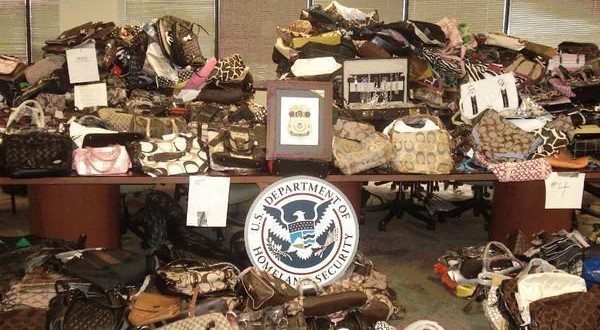
USCP Counterfeit stuffThousands of counterfeit designer handbags have been uncovered by federal officers in a shipping container at Miami’s seaport.

Customs and Border Protection officials say a recent review confirmed there were 1,200 fake Gucci handbags and 1,195 Louis Vuitton handbags in the container. The bags were initially seized Aug. 19 in a shipment from China.

Authorities say the handbags are worth more than $1 million if sold as legitimate.

Investigators began examining cartons containing the handbags after noting that they were not declared on any import documents. The shipment included 825 other cartons of clothes, shoes and similar apparel.

Last year CBP seized more than 23,000 counterfeit items nationally worth about $1.2 billion.

Customs Vietnam make 2nd huge Ivory Bust in a fortnight

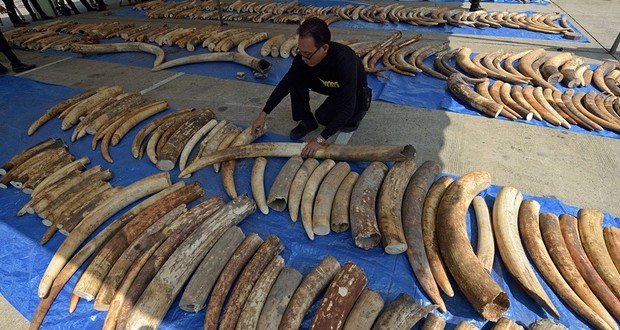
Vietnam Custom ivory seizureCustoms officers in central Vietnam have seized a tonne of ivory and four tonnes of the scaly hide of the pangolin, according to authorities today.

Officials found the contraband on Tuesday inside a shipping container labelled as carrying red beans from Malaysia that arrived at the central port city of Da Nang on Aug 10.

“This is the largest amount of ivory and pangolin smuggling we have discovered in Da Nang,” Dang Van Toan, the port’s head of customs, told the German Press Agency.

The pangolin is an endangered type of armoured anteater found in parts of Asia and Africa. The flesh is sold as an exclusive, but illegal, meat, and the hide is used for traditional medicine and fashion.

The weight of the hides found this week corresponds to around 4,000 individuals, Le Xuan Canh, former head of the Institute of Ecology and Biological Resources, told DPA. Tuesday’s haul brings to nearly eight tonnes the total of tusks, horns and hide from endangered species impounded over the past two weeks in Da Nang.

Last Friday the port’s customs officers seized more than two tonnes of elephant tusks. Eight days earlier they confiscated nearly a tonne of elephant tusks and rhinoceros horns, authorities said.

The three shipments were posted to two local companies, which have denied any knowledge of the smuggling, said Pham Van Thieng, deputy head of the central region’s anti-smuggling team.

Trafficking of endangered species and their parts violates international law. Like elephant ivory and rhino horn, pangolin is considered a sign of status among some of Vietnam’s wealthy elite.

Ivory worth $4.4m seized in Vietnam

Vietnam Ivory Seizure

Customs officers in Vietnam seized more than two tons of elephant tusks, eight days after confiscating an ivory shipment weighing nearly a ton, authorities said. Picture: Pornchai Kittiwongsakul

Customs officers in Vietnam seized more than two tons of elephant tusks, eight days after confiscating an ivory shipment weighing nearly a ton, authorities said on Monday.

The estimated 4.4 million dollars worth of ivory was disguised as logs and hidden within a shipment of timber from Nigeria.

The cargo was posted to the same company listed as the receiver for nearly a ton of elephant tusks and rhinoceros horn from Mozambique that was discovered on August 13, said Ho Xuan Tam, Da Nang Customs Department spokesman.

Company officials have denied wrongdoing.

The poaching of elephants and rhinoceros and the trafficking of their tusks and horns are outlawed under international efforts to protect endangered species. But the illicit trade from Africa to Asia has grown with rising prosperity creating demand in Vietnam and China.

While elephant ivory is valued for its aesthetic appeal, folk superstitions prize rhino horn for its supposed medicinal and aphrodisiac qualities.

A single gram of ground rhino horn possesses a street value of 133 dollars. Rhino killings reached a record 1 215 last year, 10 times the number killed in 2009, according to the conservation group WildAid. Source: IOL

TFA – Africa is on the move! Why not go faster?

WTO LogoThe following article is published with the kind permission of the author, Tapia Naula who is Principal Transport Economist at African Development Bank, based in the Ivory Coast. He is an international project manager and transport economist with experience in logistics business, research and trade facilitation. This article is a must for anyone associated with or working on the TFA on the African sub-continent, and a bit of a wake up call to those countries who have as yet done little or nothing to progress their participation.

In the World TFA Cup Asia is leading Africa 72 – 35. The first scores of the WTO Trade Facilitation Agreement are out as member countries submit their Category A notifications. Initial results of the African first series are somewhat unfulfilling. Some teams are playing defensive even if attacking tactic is the only way to win.

In December 2013, WTO members concluded negotiations on a Trade Facilitation Agreement (TFA) at the Bali Ministerial Conference, as part of a wider “Bali Package”. Among trade facilitation practitioners the Agreement was received with great enthusiasm: finally there was a legal instrument, which is concrete enough to make a difference! TFA will enter into force once two-thirds of members have completed their domestic ratification process. Section I contains substantive provisions in 12 main Articles. The members are required to categorize and notify each provision of the Agreement as either A, B or C Category. The A Category commits a country to implement the provision upon entry into force of the TFA, or one year after for LDC’s. For B-Category there will be a transitional period. C-Category provisions are allowed a transitional period, technical assistance and capacity building.

First, let it be said loud and clear: the WTO TFA is an excellent collection of modern trade and transport facilitation instruments in one folder. In developing countries its implementation would mean reforms that would save time, money and efforts for regular business people and consumers. These reforms may be painful but the countries that can do it, will be the future winners of their regional competition and they will be the ones that will most benefit from joining the global value chains. TFA is the best vehicle for poverty reduction invented so far and that is why it is so important.

In August, 2015, 14 African countries and 25 Asian countries had submitted notifications for category A provisions. Asian countries had “accepted” 72 % of all the provisions as A-Category commitments on average where the respective share of the African countries is only 35 %. On Article-level African countries lag behind on every Article except one (Table 1).

In addition to the low overall share of category A-notifications, the African notifications generally look like “random picks” of sub-paragraphs, compared to many Asian members that have commonly chosen the strategy of basically accepting the whole Agreement and making exceptions for certain few paragraphs according to their particular needs.

Were African governments well-informed of the impact and substance of each paragraph – or are they just being cautious, perhaps trying to delay the final commitment? The patterns between African and Asian countries are in any case different.
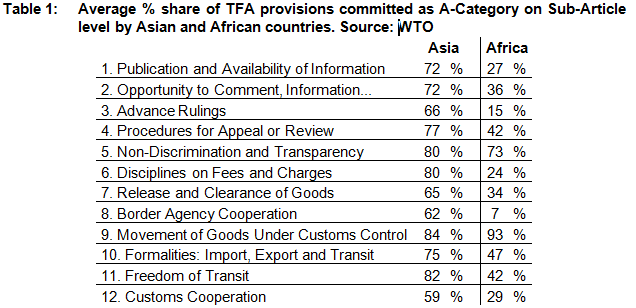
Table 1

TFA includes also “low hanging fruit” – sections that require little technical expertise to be implemented. At least some of these should have been easy for member countries to accept. “Publication and Availability of Information” is one of those sections. Access to information through internet is routine and affordable. It should not require transition periods or particular technical assistance. Donors are even competing to assist governments with such low cost and high-return activities. Still, less than one third of the African Governments notified this Article.

Here are some other peculiar findings:

  • Out of 14 African countries only Morocco accepted “Border Agency Cooperation” as A –Category provision. Three of the others countries that did not notify it are landlocked countries;
  • Only four out of 14 African countries had fully notified “Freedom of Transit.” Transit challenges in Africa are probably the single most significant source of inefficiency in trade logistics;
  • One of the foundations of modern customs management is the introduction of Risk Management. Only 3 out of 14 African countries had notified this provision;
  • Only Morocco notified Trade Facilitation Measures for Authorized Economic Operators (AEO), which gives certain privileges to traders and transport operators, who show high level of compliance to regulations. One wonders why Kenya, Uganda, Rwanda, Burundi and Tanzania did not notify it as we know that an AEO program is being piloted in the East African Community;
  • Only Senegal notified the sub-Article on Single Window, which is probably the most important one of the whole Agreement. Senegal perhaps deserves this honor – being the first truly African-based single window country – and also representing the good practice of SW management. Yet, according to the African Alliance for e-Commerce, currently there are at least 16 other single windows either already operational or under development in Africa. Why weren’t these developments recognized?

Despite the above “peculiarities” the African situation is fortunately nowhere near as somber as the A-Category notifications indicate. There are plenty of trade and transport facilitation initiatives under implementation – and Africa is indeed “on the Move.” We should on one hand side make sure that the valuable TFA Agreement is not becoming a separate formal process alongside the practical actions on the ground, but rather a framework for coaching governments in climbing up the stairs toward greater competitiveness. On the other hand, the countries should not ignore the existing achievements. A lot has been achieved in Africa in recent years and this process should go on and gain speed. Some sub-regions, which have been less successful in this field need  benchmarks, encouraging and coaching. This is where African and international organizations can play a role.

Although the direct cost of TFA implementation is relatively low, the indirect cost may be extremely high. The indirect cost concerns existing structures, which generate income for organizations and individuals, who often greatly benefit from the status quo. Some governments have entered into concessions outsourcing critical government functions such as pre-customs clearance operations and processing and submissions of declarations to customs. Western firms have efficiently seized the opportunity and negotiated deals, which guarantee profits for in many cases for decades to come. Single Windows in certain countries are good examples for these. In an unnamed Southern African country for example, humanitarian aid is exempt from taxes and duties in import. If however a UN agency for example imports a container of pharmaceuticals worth five million USD, it will have to pay for a Single Window fee of 42,500 USD! Such Ad Valorem fee arrangements are against the TFA. Such concessions are often built inside structures, which profit from the concessions and in exchange – protects its operations and continuity. This is why they are difficult to tackle. This is an example of the problematics that African policy makers must deal with when taking a position in committing in TFA provisions. It may be a whole lot more complicated than what it looks like.
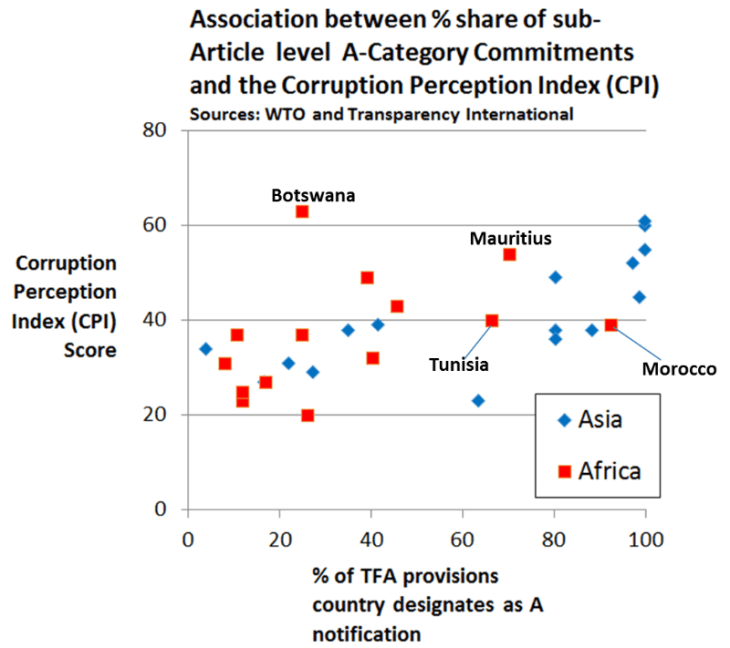
Association between % Share of Sub-Article Level A-Category Commitments and the Corruption Perception Index Score (CPI). Sources: WTO and transparency International.

The diagram above shows the association of share of the provisions that have been covered by A-Category notifications and the Corruption Perception Index (CPI) score of the countries. For African countries the correlation is moderate (correlation co-efficient: 0.42) but for Asian countries the association is strong (correlation co-efficient: 0.73). The association of the two variables is understandable: the less corruption a country has (the higher the CPI rank is), the more reforms the government is in liberty to conduct (the higher coverage of TFA as A-category Notifications).

We need to better understand the underlying reasons why policymakers cannot let reforms take off. Traditions, corruption and outdated structures are usually the biggest obstacles. These cannot be overcome by merely providing short-term technical assistance and bench-marking the world best practices but only strong political leadership can make the change. Developing partners should raise this topic on the highest political level and “live together” through the reforms with the counterparts.

The Northern Corridor (Kenya, Uganda, Rwanda) provides an encouraging example how multiple reforms can be carried out in very short time. Only two years ago it took staggering 27 days to transport a container from Mombasa Port and deliver it in Kigali, Rwanda. Today it takes only seven days. The improvement was enabled by series of reforms, which were championed by the Heads of States of the Corridor member countries. The example proves that major improvements can indeed be achieved in very short time. On the other hand, even with the most sophisticated instruments, reforms will not succeed if there the high-level ownership is not there. Author: Tapio Naula
Pakistan and China Customs to accelerate establishment EDI

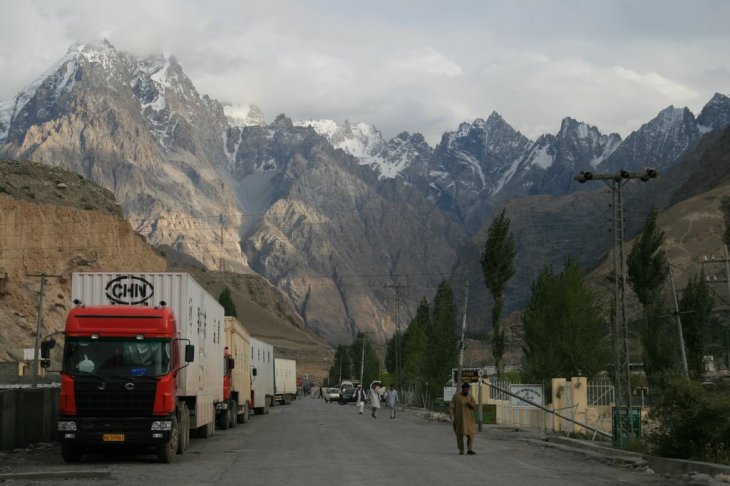
Sost_Pakistan_Customs_and_Chinese_TrucksPakistan Customs’ experts are in China to make further progress on the establishment of direct Electronic Data Interchange (EDI) with the trusted and neighbouring country to reduce the incidences of revenue losses.
The sources told Customs Today that Chief Customs Automation Abdul Qadir, Director Majid Yousfani, Riaz Chaudhary and Azeem from PRAL flew to China on August 9 to hold series of meetings with the Chinese counterparts to make further progress on the EDI.

The sources said, that the EDI will help access trade documents on real time basis from computers of cross-border customs stations. The directorate had exchanged the technical documents with China for EDI, the sources said, adding that the Chinese Customs had given feedback and counter proposal on the technical documents.

In order to expedite finalisation of the EDI arrangement, earlier a meeting with the Chinese Customs for exchange of data relating to the certificate of origin between the two countries was held on February 2 to 4, 2015 in Beijing. And, this is the second meeting of Pakistan Customs officers with the Chinese Customs, sources added.

It is recalled here, that Federal Board of Revenue had issued an alert regarding mis-declaration in imports from China under 50 HS Codes. The Board also showed concerns on the un-warranted concessions granted under various SROs covering preferential or free trade agreements.

The Board had advised verification of suspected Certificates of Origin directly through the commercial missions of Pakistan abroad, discouraging mis-classification of goods to obtain concessions and extending benefits only to goods which strictly matched the description provided in respective SROs.

It may be mentioned, that the export data of China customs for CY 2013 was cross matched with the import data of Pakistan Customs for same period and it transpired that in respect of 376 tariff lines the import value declared before Pakistan Customs was short by $2.437 billion recorded by China Customs as export value to Pakistan.

Moreover, in respect of 13 tariff lines the import value declared before Pakistan Customs was in excess of $829 million that that recorded by China Customs as export value to Pakistan. This is indicative of possible mis-classification of those goods which attract higher rates of duty but are cleared as goods attracting lower rates. Source: CustomsToday

CBP Launches “Know the Facts” Awareness Campaign

Know the FactsU.S. Customs and Border Protection Commissioner R. Gil Kerlikowske formally rolled out the “Know the Facts” campaign today. The campaign, launched on July 20 in Mexico, El Salvador, Guatemala, and Honduras, encourages those considering attempts to illegally enter the U.S., to “Know the Facts” and avoid embarking on the dangerous trek north only to be returned to their country.

“This campaign is designed to educate would-be travelers in Central America and Mexico about the realities of the journey north human smugglers have no regard for human life,” said CBP Commissioner R. Gil Kerlikowske. “It is critical that they are aware of the facts behind U.S. immigration policies before risking their lives. There are no ‘permisos.’”

The campaign is designed to increase awareness of U.S. immigration policies and enhanced enforcement on the U.S. border, clearly and simply stating the facts behind U.S. immigration policies. Source: USCBP

The BMA Bill – a little more for stakeholders to ponder over

The BMA Bill No.39058In recent months ‘Joe Public’ has witnessed developments relating to new visa requirements regarding international travel to and from South Africa. Tourism and the hospitality industry have been impacted in no small way while government has now established a committee to investigate the claims to the effect that the country’s tourism industry has been severely impacted.

It is now commercial trade’s time to consider the next set of legal requirements emanating from the Department of Home Affairs which, in the main, affect legislation under other departments and organ’s of state – in particular SARS Customs. Interested parties can find/download the document by clicking the link http://www.gpwonline.co.za/ and searching for eGazette No.39058.

In essence function of the Border Management Agency (BMA) Bill is – To provide for the establishment, organisation, regulation and control of the Border Management Agency; to provide for the transfer, assignment, and designation of law enforcement border related functions to the Border Management Agency; and to provide for matters connected thereto.

Be sure to digest the content of the Schedules to the Bill which contain the extent of the ‘meat’ and authority which the proposed Border Management Agency will exert if, or once approved. The Department of Home Affairs (DHA) invites comments to the draft Bill which must reach DHA no later than 14 September 2015.

Watch Ghana President’s reaction to Corruption

The following video is somewhat dated, but reports still abound regarding corruption within the Customs division of the Ghana Revenue Authority. The video appears to be about 4 years old. The president, John Evans Atta Mills, seen here rebuking staff at the Port of Tema, has since passed on. His message is nevertheless timeless and should be heeded by all customs officials across the continent.

EAC Compliant Companies Awarded Regional AEO Certificates

EAC CompliantThirteen compliant companies across East Africa were awarded Regional Authorized Economic Operator (AEO) certificates jointly by Partner States Commissioners of Customs and Director Customs, EAC at a ceremony held at Serena Kampala, Uganda on 24th July 2015.

The Commissioner Customs, URA Mr. Dickson Kateshumbwa who represented the URA Commissioner General was the chief guest during the award ceremony. The Chief Guest observed that with the award of Regional AEO certificate, the project had now come of age and indeed puts EAC on the global map of being the first region to implement a regional AEO programme. The Director Customs, Mr. Kenneth Bagamuhunda congratulated the thirteen companies and remarked that the AEO programme will go a long way in supporting the SCT implementation and eventually spur the growth of intra and extra trade. The SCT Coordinators recited each company profile before all the commissioners and Director Customs awarded the Regional AEO certificate to each of the awardees.

The companies were selected after meeting the set admissibility as set out in the AEO selection criteria. The awarded companies participated in the project pilot phase of the project but have continued to demonstrate and maintain high compliance to the set standards. The companies, from different sectors have continued to move consignments under the AEO scheme and in return have been offered benefits that are now currently under review to ensure they are not only tangible but are attractive enough to draw interest from other traders. Source: WCO

The SACU Utility Block – My Export is Your Entry

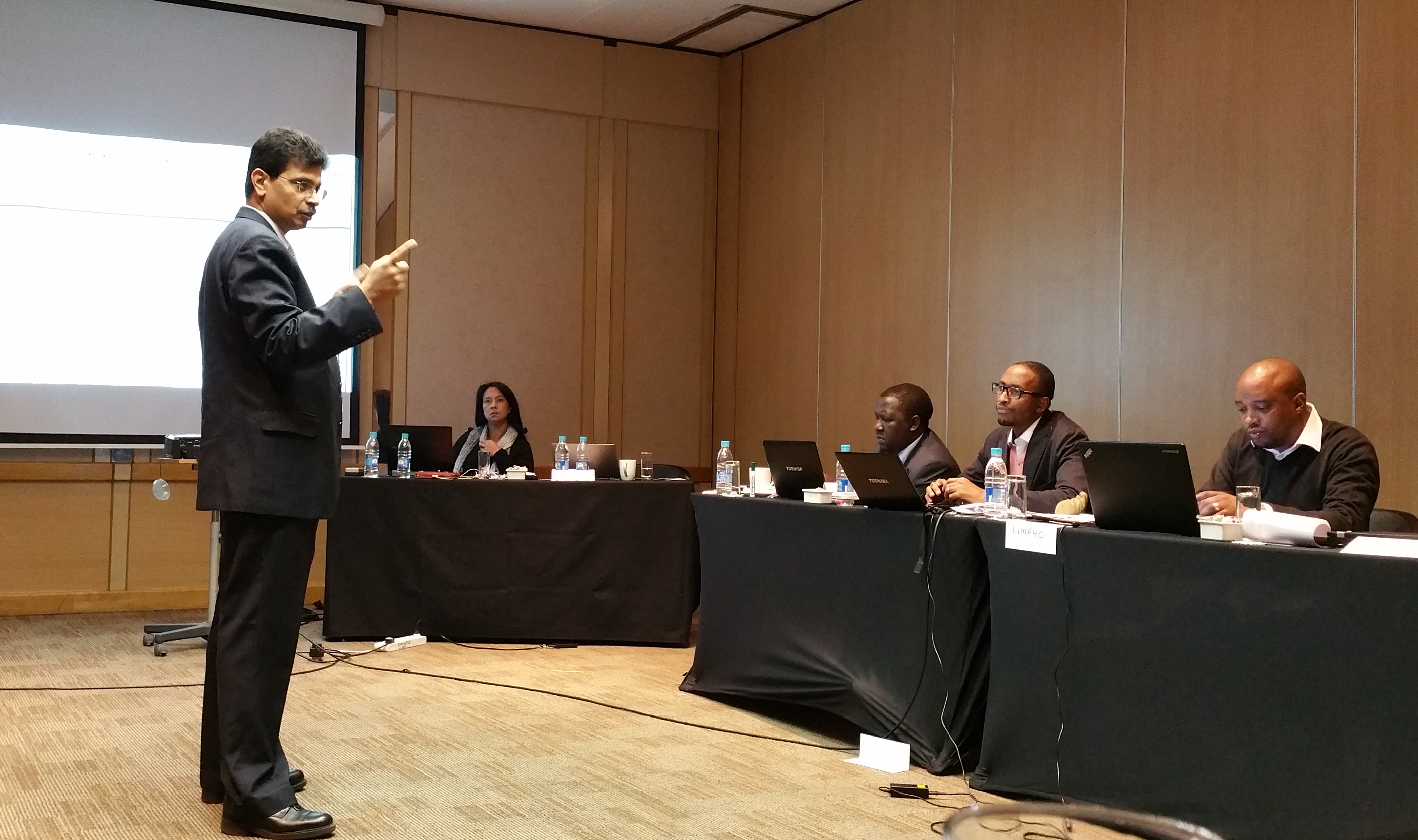
SACU IT Connectivity ConferenceRepresentatives from the Southern African Customs Union (SACU) gathered in Johannesburg, South Africa recently to refine requirements towards the development IT connectivity and electronic data exchange to facilitate cross-border customs clearance in the region. The workshop was convened by the SACU Secretariat under the sponsorship of the Swedish government and technical support from the World Customs Organisation.

Work already commenced way back in 2012 on this initiative. Progress in the main has been hampered by the legal agreement which to date not all members of the Customs Union have ratified. One of the features of this initiative, however, has been the continuity of support rendered by the WCO.

This event was indeed fortunate to secure – once again – the services of S.P. Sahu, former head of Information Technology at the WCO. After his secondment to the WCO he is now back in his home country where he is the Commissioner for Single Window based in Delhi, India.

S.P’s years of experience in both the technical and operational spheres of customs and the international supply chain enable him to articulate concepts and solutions in a manner which are practical and simple to understand. The workshop recognised the need to accelerate border processes and to this end the border process should be limited to physical examination, inspection, release; declaration processes should be done away from borders.

While simple enough in theory, the notion of clearance away from borders could pose challenges. Many of Africa’s borders – including those of a ‘One Stop’ kind – have not fully embraced the need to integrate processing and synchronize Customs activities. The challenge posed by ‘regional integration’ is one of surrendering national imperatives for a common regional good. It imposes a co-ordination of and development towards ‘regional objectives’ with the same level of purpose as national states do for their domestic agenda’s. In the case of SACU, it challenges member state’s stance on what real benefits the customs union should aspire to, beyond the mere sharing of the common revenue pool.

The outcome of the workshop resulted in a more refined, do-able scope and objective. With Mr. Sahu’s experience and guidance, the revised Utility Block (UB) speaks to all facets (legal, operational and technical) of the ‘regional agreement’ to the extent it specifies in the required detail the programme of action required on the part of the member stats as well as the SACU Secretariat. Refinement of the UB includes the removal from scope of the Release Message, Manifest Information and bond/guarantee message for the purpose of simplification of customs processes.

What remains are –

  • An Export & Transit Message – which includes the Unique Consignment Reference (UCR) validated and approved by the Export/Exit country.
  • An Arrival Confirmation/Notification Message – where the arrival date time would be when the import country recognises goods as received and places the goods under its customs procedure.
  • A Control Results Message – which includes the results of data matching, inspection and risk assessment based on agreed business rules.

In support of the above, SACU recently agreed on a framework of a UCR which must be further discussed and agreed upon by the respective member states. The UCR is a structured reference number which will be used by customs administrations of the respective member states to ‘link up’ import declaration data with the corresponding ‘export declaration’ data electronically exchanged by the export country.

Regional traders who have electronic clearance and forwarding capability will also play a role in the exchange of data through the exchange of the UCR on export and transit information with their counterparts or clients in the destination country. Once the exchange of data is operational between member states, it will be imperative for the importer to receive/obtain the UCR from the exporting country and apply it to his/her import declaration when making clearance with Customs.

The SACU Utility block will be tabled at a future Permanent Technical Committee meeting of the WCO for consideration and approval. A Utility Block is a concept structure which is proposed under the WCO’s Globally Networked Customs (GNC) initiative which seeks to aid and assist its members in the operationalisation of Mutual Administrative Assistance agreements.