WCO makes the “Technical Guidelines on Advance Rulings for Classification, Origin and Valuation” publicly available

WCO - Technical Guidelines on Advance Rulings for Classification, Origin and ValuationThe World Customs Organization (WCO) has made the “Technical Guidelines on Advance Rulings for Classification, Origin and Valuation” publicly available. These guidelines were developed in order to support the implementation of Article 3 (Advance rulings) of the Bali Ministerial Decision on the Agreement on Trade Facilitation (TFA) and shared only among the WCO Members.

The purpose of publishing this document is to further enhance the transparency of the WCO’s work in this area as well as to provide additional information to any interested party. The Technical Guidelines are available here. Source: WCO

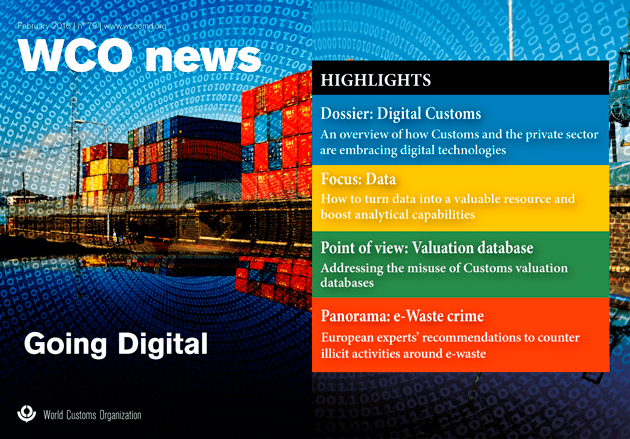
WCO News – New Edition February 2016

WCO News Feb 2016Another bumper edition of customs news, views and success stories (click here to view!). Several countries showcase their modernization and digital developments under the theme “Digital Customs” from declaration management systems, carnet systems to paperless procedures for AEO’s. Nice to see an article featuring South African Customs once again.

There’s also a section featuring articles on ‘big data’. Learn about Canada’s approach to private sector stakeholder engagement. You’ll also find some interesting points of view regarding use and misuse of valuation databases and a whole lot more.  Source WCO

WCO accredited Customs Modernization Advisors and Mercator Programme Advisors

The WCO, in its effort to assist Members with Strategic Planning activities and WTO TFA implementation held two back to back accreditation workshops in Pretoria, South Africa. These events were held during the week of 1-5 February 2016 and 8-12 February 2016, were funded by the United Kingdom within the framework of the WCO-DFID ESA project and HMRC-WCO-UNCTAD project and organizationally supported by the South African Revenue Service.

24Customs officers from the WCO ESA and WCA regions participated in the workshops and were assessed against the Customs Modernization Advisors (CMAs) and Mercator Programme Advisors (MPAs) required profile through a series of testing exercises, presentations, role-plays, group activities and plenary discussions.

Participants were also required to demonstrate their knowledge and strategic application of core WCO tools and instruments and the WTO Trade Facilitation Agreement along with their potential to facilitate discussions with senior Customs and other officials in a strategic context.

At these two events 15 participants successfully completed step 1 of the accreditation process as they demonstrated their potential to become CMA’s/MPA’s during the range of workshop activities.

From the five WCO CMA/MPA accreditation events held to date a total of 41 participants have been assessed as being suitable to become CMAs and MPAs under step 1 of the accreditation process and will be invited to participate in TFA implementation support missions under the Mercator Programme in order to complete the accreditation process. It is expected that the successful candidates are made available by their Customs administrations for further support missions in the future. Source: WCO

East African countries set-up of cargo control unit

KRA-Customs-Transit-Control

Kenya Revenue Authority Commissioner-General John Njiraini announces the implementation of a common customs and transit cargo control framework to rid Mombasa port of corruption

Four East African countries on Tuesday agreed to fast-track implementation of a common customs and transit cargo control framework to enhance regional trade.

Commissioners-general from the Kenyan, Ugandan, Rwandan and Tanzanian revenue authorities said adoption of an excise goods management system would curb illicit trade in goods that attract excise duty across borders.

They said creation of a single regional bond for goods in transit would ease movement of cargo, with taxation being done at the first customs port of entry.

The meeting held in Nairobi supported formation of the Single Customs Territory, terming it a useful measure that will ease clearance of goods and reduce protectionist tendencies, thereby boosting business.

Implementation of the territory is being handled in three phases; the first will address bulk cargo such as fuel, wheat grain and clinker used in cement manufacturing.

Phase two will handle containerised cargo and motor vehicles, while the third will deal with intra-regional trade among countries implementing the arrangement.

The treaty for establishment of the East African Community provides that a customs union shall be the first stage in the process of economic integration.

Kenya Revenue Authority (KRA) commissioner-general John Njiraini said the recently introduced customs and border control regulations were designed to enhance revenue collection and beef up security at the entry points.

“At KRA, we have commenced the implementation of a number of revenue enhancement programmes particularly on the customs and border control front that will address security and revenue collection at all border points while enhancing swift movement of goods,” he said.

To address cargo diversion cases, the regional revenue authorities resolved that a joint programme be rolled out to reform transit goods clearance and monitoring processes. Source: DailyNation (Kenya)

Revision of Correlation Tables between HS2012 and HS2017

HS_HandbookFollowing the accepted complementary amendments to the Harmonized System Nomenclature listed in the Council Recommendation of 11 June 2015, the Correlation Tables between the 2012 and 2017 versions of the HS have been revised. The revised Correlation Tables show the correlation resulting from both the amendments to the Nomenclature which have been accepted as a result of the Council Recommendation of 27 June 2014 and the complementary amendments to the Nomenclature which have been accepted as a result of the Council Recommendation of 11 June 2015.

For more details visit the WCO website.

Positive future for Electronic Bills of Lading

BIMCO E-Bill of LadingPaper bills of lading have been used throughout the world to document and effect international trade for centuries. Yet whilst the world has become increasingly digitalised the paper bill of lading has, on the whole, remained a constant feature of global trade. Its continued use is mainly due to its combination of three legal characteristics that it has developed over time: (i) it is a receipt of the goods carried; (ii) it provides evidence of the terms of the contract of carriage; and (iii) it is a document of title to the goods. It is these characteristics that have, until relatively recently, foiled attempts to replace the paper bill of lading with an electronic equivalent. However, with the inclusion of an electronic bills of lading clause in BIMCO’s NYPE 2015 time charter form, as well as the International Group of P&I Clubs’ approval of the coverage of three electronic trading systems, the dominance of the paper bill of lading may well be coming to an end.

Reed Smith LLP Ship Law blog posts an interesting article in regard to change in law and the impact of e-commerce on bills of lading.

Issues with the paper system
Whilst the paper bill of lading has been used for centuries it is not without its faults, the principal problems being that:

  • Carriers are obliged to discharge the goods carried on production of an original bill of lading: this is particularly problematic today given both the speed of transport and the fact that the cargo may be sold multiple times during carriage. As a result of this the bill of lading is often not delivered to the consignee in time, and the carrier is often required to accept a letter of indemnity. This indemnity does not, however, remove the carriers’ liability under the bill of lading and creates an additional administrative burden and cost to the trade.
  • The paper system is hugely expensive (such cost is estimated to be between 5 – 10% of the value of the goods carried each year).
  • A paper bill of lading may be forged with relative ease and carriers are liable for misdelivery against a forged bill of lading.

Benefits of an electric bill
The electronic bill of lading or e-bill, in theory, addresses many of the flaws of the paper system, bringing with it a number of advantages:

  • It can be sent around the world instantaneously, hugely lowering the administrative burden of trade (especially where cargo is subject to multiple transfers of ownership during carriage).
  • Any amendments or corrections required can be made far more efficiently and cost effectively.
  • Electronic payment systems, and related advances in security, make an electronic system considerably more secure than its paper equivalent. This is obviously subject to cyber issues.

These benefits will cut the administrative costs of trade significantly and reduce, if not eradicate, situations where carriers discharge their cargo against letters of indemnity.

So why so slow on the uptake?
One of the main reasons the widespread use of the e-bill has been slow to proliferate stems from the fact that it is not treated in the same manner, legally, as its paper equivalent. Significantly:

  • A paper bill of lading is a document of title, enabling it to be negotiated and transferred as possession of the bill is evidence of title to the goods. This is not automatically the case at law with an e-bill.
  • The Hague Rules / Hague Visby Rules (HR / HVR) apply to a contract of carriage by reference to the bill of lading, or similar document of title, and it has been less clear whether they would apply to any electronic trading system used. The solution developed to these legal obstacles is essentially a multiparty contract. This takes the form of a set of rules to which users of an electronic trading system are all required to subscribe to use that system. Such rules then set out the specific form of electronic trading documentation to be used and that the consequences of using such documentation shall mirror the position at law as if they were paper bills of lading.

This, however, means that electronic trading systems such as BOLERO, which has been in existence since the 1990s, are only able to function between their members (i.e. those that have agreed to the uniform set of rules and systems that will govern their transactions). Where a member of an electronic trading system enters into a transaction with a non-member, the electronic system cannot be utilised and a paper bill of lading is issued. This feature has limited their growth, as electronic trading systems are only really effective once they have a large number of members, but are not cost-effective for traders to join until they have a large number of members.

The present situation
The benefits of electronic trading systems are particularly tangible to container carriers (as there is often a separate bill of lading for each container carried) and as such have been utilised by liner companies before wider adoption in the industry. However, the efficiencies of electronic trading systems are not confined to the container industry alone and with members of the largest trading companies, trade finance banks, mining companies and oil majors using such systems, it is clear that they are becoming increasingly prevalent in the shipping industry as a whole.

The growth of the use of electronic trading systems in the wider shipping industry is something that BIMCO, by including an e-bills clause in its latest iteration of the NYPE form, has also recognised. In sum the new clause provides that:

  • use of an electronic trading system is at charterers’ option;
  • owners shall subscribe to the system elected by charterers, provided such a system is approved by the International Group of P&I Clubs;
  • charterers shall pay any fees incurred by owners in subscribing to such elected system; and
  • charterers shall indemnify owners for any liabilities incurred arising from the use of the elected system, so long as such liability does not arise from owners’ negligence.

The International Group of P&I Clubs have now ‘approved’ three electronic trading systems (BOLERO, essDOCS and E-title). An ‘approved’ system is one that is found to replicate the legal characteristics of a paper bill (namely (i) as a receipt; (ii) a document of title; and (iii) a contract of carriage which incorporates the HR / HVR). This means that the International Group of P&I Clubs will provide cover for any liabilities arising under carriage covered by these three electronic trading systems (or any such other subsequently ‘approved’ system), provided that such liability would also have arisen under a paper bill. However, members should be advised that risks connected with the use of a non-approved electronic trading system will not be covered.

The use of an electronic trading system does, however, lead to other risks from things such as hacking, systems collapse, e-theft and viruses, none of which are traditionally covered by P&I clubs and would need to be insured separately. In this regard, essDOCS (which is now used throughout 71 countries by over 3,300 companies) has insurance cover of up to USD $20 million per electronic bill of lading for “eRisks” resulting from an electronic crime or electronic system failure.

With the rise in usage of electronic trading systems, the recent judgment in Glencore v MSC (albeit currently under appeal) provides a timely reminder that the release of cargo should only be made in accordance with the contract evidenced by the bill of lading, even where an electronic release system for cargo is being operated. In this instance cargo was released on presentation of a PIN, despite no provisions for this in the bill of lading, two of the released consignments of cargo were misappropriated and the carrier was held liable.

The future?
With the International Group of P&I Clubs’ approval of three electronic systems, the inclusion of an electronic bills of lading clause in BIMCO’s latest NYPE form and the proliferation of the use of electronic trading systems throughout the wider shipping industry, it is clear that the use of electronic trading systems is increasing. Whilst there is no doubt that we can expect teething problems as the industry continues to adapt to such electronic trading systems, and the cyber risks they may bring, it seems that the efficiencies are too great to be ignore. Source: Ship Law log / ReedSmith

R12-million drug bust at OR Tambo Airport

SARS Customs intercepted a male traveller from Tanzania carrying narcotics worth over R12-million at OR Tambo International Airport yesterday (24 January 2016).

The bust took place when the 36-year old man, who was carrying two large suitcases, was asked to put his luggage through the Customs scanner. The scanner image revealed 10 clear plastic bags that contained a white crystal substance.

Upon investigation this turned out to be 10 bags of Ephedrine. The total weight of the consignment was 40.20 kg with an estimated street value of R12 060 000. The man has been handed over to the South African Police Service and he is expected to appear in court. Source and photos: SARS

Rapiscan introduces advanced dual-view X-ray system

rapiscan_638dv-320_version2__largeThe new Rapiscan 638DV 320kV is an advanced dual-view X-ray system with a 1837 mm wide by 1800 mm high tunnel opening for screening ULD type, ISO standard, and large cargo pallet type freight.

The new 638DV 320kV features high penetration, dual-view technology and explosives and narcotics detection alert supporting secure inspection and higher throughput for air cargo screening and customs applications.

Detection of Explosives and Narcotics Alert
Target™ and NARCScan™ are designed to assist operators in the detection of a wide range of explosives and narcotics respectively in real time during the scanning process by marking a potential threat on the X-ray image. Rapiscan detection algorithms are based on regulatory material analysis techniques.

Dual View Advanced Technology
As mandated by US and EU regulators, the 638DV 320kV utilizes a dual-view technology which produces two simultaneous images (vertical and horizontal views) of the scanned object. It provides a more complete image, thereby reducing the need for repositioning and rescanning and enabling rapid, accurate and comprehensive threat detection.

Ease of Use Providing Highest Throughput
With over 14 image processing tools and detection alert algorithms, the feature-rich software allows the operator to more easily and accurately search for contraband. Source: Rapiscan

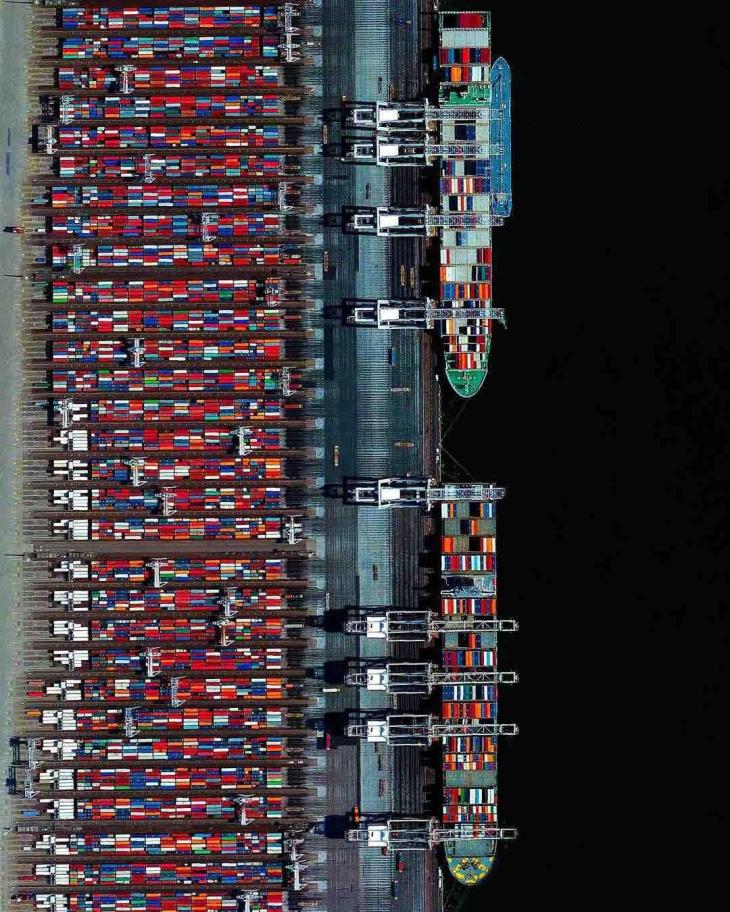
Aerial view of Rotterdam Container Terminal

Aerial view of Rotterdam Container Terminal

The Port of Rotterdam, Netherlands, is the largest port in Europe covering 105 square kilometers. (Picture: Benjamin Grant/Google Earth/Digital Globe)

SA Customs lends Detector Dog support to Mozambique

The SARS Customs Detector Dog Unit (DDU) recently deployed two trained detector dog handlers and dogs on foreign soil in Maputo, Mozambique. This forms part of a Customs co-operation agreement between the governments of South Africa and Mozambique.

The capacity-building programme provides for the training of at least eight detector dog handlers and dogs for Mozambique in over a period of 14 weeks followed by a ‘Train-the-Trainer’ programme for purposes of sustainability.

The deployment of SARS Detector Dog Handlers and dogs trained to interdict endangered species and narcotics in Maputo will promote and strengthen a  cross-border intergovernmental approach in the prevention and detection of smuggling of illicit, illegal goods or substances via ports of entry between Mozambique and South Africa.

The programme is designed to capacitate Mozambique Customs in the establishment of its own canine unit that will further enhance its current non-intrusive scanning enforcement capability at ports of entry and exit. Source and pictures: SARS

WCO issues New Guide for the Technical Update of Preferential Rules of Origin

SARS R78 million Airport Cash BustIn order to assist Members with the updating of their existing Rules of Origin in relation to changes in the Harmonized System, the WCO has issued the “Guide for the technical update of Preferential Rules of Origin“. The Guide is available for WCO Members only.

Classification and origin determination of goods are closely interlinked. It is therefore critically important to update Rules of Origin (i.e. Product Specific Rules) to ensure consistency between HS classification and origin determination. This would help to prevent misapplication of Rules of Origin, ensure efficient and effective revenue collection and facilitate trade. Source: WCO

SA – Hub for computerised Regional Integration?

AfricaFrom time to time it is nice to reflect on a good news story within the local customs and logistics industry. Freight & Trade Weekly’s (2015.11.06, page 4) article – “SA will be base for development of single customs platform” provides such a basis for reflection. The article reports on the recent merger of freight industry IT service providers Compu-Clearing and Core Freight and their plans to establish a robust and agile IT solution for trade on the African sub-continent.

In recent years local software development companies have facilitated most of the IT changes emerging from the Customs Modernisation Programme. Service Providers also known as computer bureaus have been in existence as far back as the early 1980’s when Customs introduced its first automated system ‘CAPE’. They have followed and influenced Customs developments that have resulted in the modern computerised and electronic communication platforms we have today. For those who do not know there are today at least 20 such service providers bringing a variety of software solutions to the market. Several of these provide a whole lot more than just customs software, offering solutions for warehousing, logistics and more. As the FTW article suggests, ongoing demands by trade customers and the ever-evolving technology space means that these software solutions will offer even greater customization, functionality, integration and ease of use for customers.

What is also clear is that these companies are no longer pure software development houses. While compliance with Customs law applies to specific parties required to registered and/or licensed for Customs purposes, the terrain on which the software company plays has become vital to enable these licensees or registrants the ‘ability to comply’ within the modern digital environment. This means that Service Providers need to have more than just IT skills, most importantly a better understanding of the laws affecting their customers – the importers, exporters, Customs brokers, freight forwarders, warehouse operators, etc.

Under the new Customs Control Act, for instance, the sheer level of compliance – subject to punitive measures in the fullness of time – will compel Service Providers to have a keen understanding of both the ‘letter of the law’ as well as the ability to translate this into user-friendly solutions that will provide comfort to their customers. Comfort to the extent that Customs registrants and licensees will have confidence that their preferred software solutions not only provide the tools for trading, but also the means for compliance of the law. Then, there is also the matter of scalability of these solutions to keep pace with ongoing local, regional and global supply chain demands.

The recent Customs Modernisation Programme realised significant technological advances with associated benefits for both SARS and trade alike. For the customs and shipping industry quantification of these benefits probably lies more in ‘improved convenience’ and ‘speed’ of the customer’s interaction with SARS than cost-savings itself. My next installment on this subject will consider the question of cross-border trade and how modern customs systems can influence and lead to increased regional trade.

An interesting take on SADC developments and the lack of progress

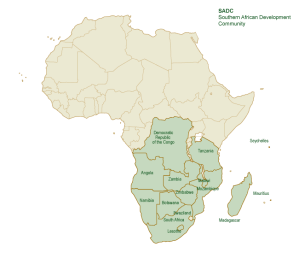
AfricaMap_SADCThe following article titled ‘Cross-border projects dependent on cost’ was recently published by Transport World Africa. It deals essentially with cross border logistics and provides an insight into regional infrastructure and logistics projects – successes, failures and their impact on transport logistics. It emphasizes the need for greater and closer public and private partnerships, but alas sovereign states appear to be more focused inwardly on their domestic affairs. 

Implementers of projects have the knack of focusing on what they know very well, often leaving out what they do not know. Usually, this comes back to bite them. An example is in the integration of leadership. Countries in the Southern African Development Community (SADC) region compete with each other for demand and capacity provision, which results in the inflated cost of logistics.

Rather, countries should work together. Integrating ports and funding is relatively easy. What is not available is integrated leadership in the region (excluding heads of various states), agreeing that SADC is ‘one country’. Logistics planning is still done at the country level, which is not practical, because then supply chains are being developed that are competing with each other. The sector should be cautious about acceleration, and about what is funded. One example is Transnet, whose plans should fit into regional plans, but right now they do not.

The softer issues in project development often go ignored, but they are at times the most important. There should be a halt to focusing mainly on mega-projects, since they take time and money, as well as resulting in complications (excluding Grand Inga). Despite this, mega projects do create a common vision for a region. Do sponsors have the capacity to support these projects? Institutional capacity is certainly needed. At the political level, southern Africa has done well, top–down approaches are there, but things go off course when there is the attempt to get others to plug-in to this.

One-stop border posts are very important. It was cautioned that the region must be careful not to follow the architecture of colonial extraction, which means focusing on intra-Africa trade rather than too great a focus on ports and exports. Government and private sector must both drive natural winners and losers in markets. There is sufficient funding and policies, but project preparation is limited. What is needed is to decide how to make hubs of excellence, and decide who is going to do what.

The high-level work has been done, but now the sector is facing an implementation challenge. Governments do not do regional integration very well. The private sector does the regional integration, and they suffer most when it does not work. Regional infrastructure will not happen unless there is public support for it. The most successful cross-border project was a PPP: the M4 toll road. This had a large economic impact.

Also, the Port of Maputo has been successful in generating income. Ports without land side integration are useless. Projects need a soft-issue mediator; otherwise there are great ideas, but no implementation. The private sector should not see itself as a messiah, but should rather have a sense of responsibility for developing supply chains. There needs to be a clear understanding of soft issues, clear legal and policy understanding, and communication. SADC has been driving the implementation of harmonisation of vehicle load management for twenty years. A mediator between the public and private sector (such as Maputo Corridor Logistics Initiative (MCLI) is absolutely necessary.

It is a stark reality how little intra-African trade there is. To address this there should be a clear target for development in future. In Namibia, there are efforts to focus on the positives in regards to transport development, even with limited resources. Namibia has been independent for 25 years; 15 years ago the Walvis Bay Corridor was created as a focus on regional integration and regional development. There are 2.2 million people in Namibia, which means a small economy.

There is no real choice but to take into consideration the region and recognise the value Namibia can add. In regards to planning, in 1995 it developed its first transport master plan, and in 2014 it developed its second transport master plan (this was twenty years apart). In February 2015, it developed a logistics master plan to develop Namibia into a logistics hub in the region. It has focused on transport modes because it has a port emphasis. It started roads development.

Currently, Namibia is building its first dual-carriage road (65 km), which is a big step for such a small economy. It would like to do more with sufficient funding. Namibia is also looking into what to do with aviation. As a whole, the country is trying to develop as an alternative trade route for southern Africa. Five to seven years ago, Walvis Bay was just a fishing port, but now R500 million is coming into Namibia’s economy through this post (from zero rand 10 years ago). Namibia is trying to create a better alternative in the SADC region. Now it is looking to focus on developing the manufacturing sector. Namibia is working with South Africa to develop partnerships (excluding transport corridors to production corridors). Continue reading →

War Against Ivory Smuggling

Smuggled Ivory

In January 2014, while x-raying a Vietnam-bound container declared to hold cashews, Togolese port authorities saw something strange: ivory. Eventually, more than four tons was found, Africa’s largest seizure since the global ivory trade ban took effect in 1990. [Photo: Brent Stirton, National Geographic]

Last year, one of Kenya’s most adored elephants, Satao, was killed for his ivory. Poachers shot the bull elephant with a poisoned arrow in Tsavo East National Park, waited for him to die a painful death, and then hacked off his face to remove his massive tusks.

Poachers continue to kill an estimated 30,000 elephants a year, one every 15 minutes, fueled to a large extent by China’s love of ivory. Thirty-five years ago, there were 1.2 million elephants in Africa; now around 500,000 remain.

A recent documentary, 101 East, released by Al Jazeera, traces the poaching of elephants and smuggling of ivory from Tanzania’s port of Dar es Salaam through the port of Zanzibar to Hong Kong and Shanghai.

Hong Kong is one of the busiest ports in the world. It handled nearly 200,000 vessels last year and is a key transit hub for smugglers transporting ivory from Africa to China. Between 2000 and 2014, customs officials seized around 33 tons of ivory, taken from an estimated 11,000 elephants.

With the huge challenge faced by customs and other law enforcement agencies in West Africa, wildlife crime is on the rise. Regional traffickers and organized crime groups are exploiting weak, ineffective and inconsistent port controls throughout the region.

U.N. Action in Africa
To address the issue, the United Nations Office on Drugs and Crime (UNODC) organized a workshop in Accra, Ghana, from August 25 to 27 August, and in Dakar, Senegal, from August 31 to September 2. The objective was to provide training for national law enforcement agencies to better fight wildlife crime through the control of maritime containers. The workshop was led by trainers and experts from UNODC, the World Customs Organization (WCO) and the CITES Management Authority.

The Container Control Programme has been developed jointly by UNODC and WCO to assist governments to create sustainable enforcement structures in selected sea and dry ports to minimize the risk of shipping containers being exploited for illicit drug trafficking and other transnational organized crime. The implementation of the program is an opportunity for UNODC to work with governments in establishing a unit dedicated to targeting and inspecting high-risk containers.

UNODC, in partnership with WCO, delivers basic training programs and provides technical and office equipment. For example, the equipment connects the units to the WCO’s ContainerCOMM – a restricted branch of the Customs Enforcement Network dedicated to sharing information worldwide on the use of containers for illicit trafficking.
Sustainability.

UN Secretary-General Ban Ki-moon argues: “Illegal wildlife trade undermines the rule of law, degrades ecosystems and severely hampers the efforts of rural communities striving to sustainably manage their natural resources.”

Wildlife trade is a transnational organized crime that raises profits of about $19 billion annually. In addition, it is often linked to other crimes such as arms trafficking, drug trafficking, corruption, money-laundering and terrorism – that can deprive developing economies of billions of dollars in lost revenues.

Shipping
It’s hardly surprising that many of the big ivory seizures made in recent years have been detected in shipping containers, says Dr. Richard Thomas, Global Communications Coordinator for the environmental organization TRAFFIC. “Partly that’s due to the sheer quantity of ivory being moved (the largest-ever ivory seizure was 7.1 tons) – which from a practical and cost point of view makes sea carriage more attractive than air carriage.

“Also in the smugglers’ favor is the huge numbers of containers moved by sea. Some of the big ports in Asia deal with literally thousands of containers per day. Obviously it’s not practical or feasible to inspect each and every one, and that’s something the organized criminal gangs behind the trafficking rely upon.”

There’s lots of issues to be dealt with, says Thomas: For example, even when an enforcement agency makes a seizure, it’s not easy to find out who actually booked the passage for the container and who knew precisely what was in it and actually put it there. “That’s one area where transport companies can collaborate with enforcement agencies to assist follow-up enquiries. Obviously companies have records of where the container is headed too, obviously key information for follow-up actions,” says Thomas.

TRAFFIC recently ran a workshop in Bangkok under the auspices of the Wildlife Trafficking Response, Assessment and Priority Setting (Wildlife TRAPS) project, targeting the movement of illicit wildlife cargoes across borders.

“The transport industry can serve as the eyes and ears of enforcement agencies as part of a global collaboration to eliminate the poaching and trafficking of illegal wildlife commodities,” said Nick Ahlers, Leader of TRAFFIC’s Wildlife TRAPS project.

“To be successful, the entire logistics sector needs to be part of a united push to eliminate wildlife trafficking from supply chains. In particular, we would welcome participation from major shipping lines and the cargo and baggage-handling sector.”

If nothing is done to stop the ivory trade, Africa’s wild elephants could be gone in a few decades. Source: Reuters.

Related articles
South Africa – WCO ESA Regional Workshop on TFA implementation

ESA_Regional-WS_South-AfricaThe WCO Regional Workshop on Strategic Initiatives for Trade Facilitation and the Implementation of the WTO Trade Facilitation Agreement (TFA) – Mercator Programme – for the WCO East and Southern Africa (ESA) region was held from 15 to 17 September 2015 in Johannesburg, South Africa. It was hosted by the South African Revenue Service (SARS) representing the WCO Vice Chair of the ESA region, and financially supported by the United Kingdom Department for International Development (UK DFID) and the Ministry for Foreign Affairs of Finland. More than 100 participants from 21 ESA Members (Customs, Trade Ministries/equivalent Ministries), the WTO and other international organizations, development partners and the private sector participated in the event.

The Workshop was opened by the Commissioner of SARS, Mr. Thomas Moyane. He expressed his view that the WCO Mercator Programme created significant conditions for contributing to intra-African as well as international trade facilitation benefits. As Vice Chair of the ESA region, he hoped that the Workshop could recommend immediate actions for the region.

The Workshop raised a lot of interest and active discussions from a variety of well-prepared and informative presentations, including the role of the WCO in TFA implementation;  TFA regulations such as Article 23.2 on National Committees on Trade Facilitation (NCTF) and specific national and (sub-)regional examples of implementation approaches; experiences of Trade Ministries and several partner institutions active in the region; and discussions on further approaches to Capacity Building and TFA implementation, including in cooperation with Development Partners.

The region agreed on next steps forward, including on a regional focus on the establishment and maintenance of NCTFs (for instance further provision of replies to the respective WCO survey; identification of the situation within ESA Members); reporting the outcomes of the Workshop to the ESA Regional Steering Committee; encouragement of ESA Members who are not yet Contracting Parties to the Revised Kyoto Convention to accede to it as soon as possible (and/or to identify related Capacity Building needs) – as one concrete way to also support TFA implementation; and responsibility of the ROCB and the Vice Chair to continue collecting and publishing information on ongoing Capacity Building projects and work of partner organizations such as SADC, COMESA, SACU and UNCTAD especially in the TF(A) area in the region – while encouraging Members and partner organizations to share such information.

The Workshop was successfully concluded with positive feedback from Members, partner organizations and development partners. A summary document on the discussions held during the Workshop is currently under finalization by the Vice Chair’s office and the ROCB and will be circulated to all participants of the Workshop in due course. Source: WCO