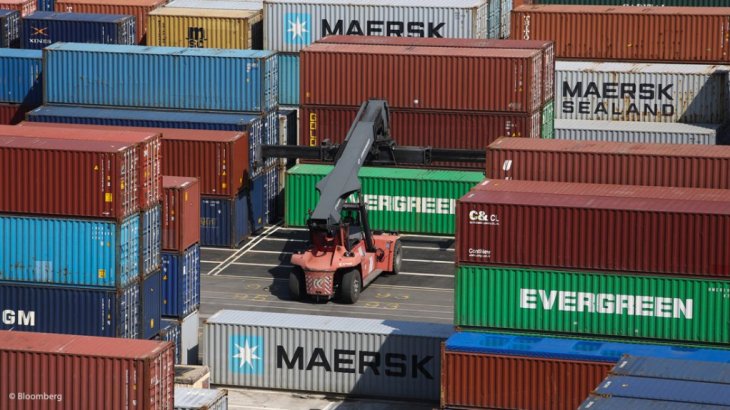
The WCO HS2017 Nomenclature – all the details

wco-hs2017

The World Customs Organization (WCO) has just released the 2017 edition of the Harmonized System Nomenclature, the world’s global standard for classifying goods in international trade, which will enter into force on 1 January 2017.

Used by over 200 countries and economic or Customs unions as well as by international organizations such as the United Nations Statistical Division (UNSD) and the World Trade Organization (WTO), the Harmonized System (HS) Convention currently has 154 Contracting Parties, making it the WCO’s most successful instrument to date.

The Harmonized Commodity Description and Coding System, also known as the Harmonized System (HS) of tariff nomenclature is an internationally standardized system of names and numbers to classify traded products. It came into effect in 1988 and has since been developed and maintained by the World Customs Organization (WCO) (formerly the Customs Co-operation Council), an independent intergovernmental organization based in Brussels, Belgium – Wikipedia

The 2017 Edition of the WCO’s HS Nomenclature includes 242 sets of amendments (including some complementary amendments): 85 relating to the agricultural sector; 45 to the chemical sector; 22 to the wood sector; 15 to the textile sector; 6 to the base metal sector; 25 to the machinery sector; 18 to the transport sector and an additional 26 that apply to a variety of other sectors.

The 2017 edition of the Harmonized System comprises a total of 5,387 separate groups of goods identified by a 6-digit code (compared to 5,205 in the 2012 edition).

Click here for the HS Nomenclature 2017 Edition.

HS-related Council Recommendations

The Council, at its 127/128 Sessions in July 2016, adopted two HS-related Recommendations amended consequential to the Council Recommendation of 27 June 2014 concerning the amendment of the HS Nomenclature. First is the revised Recommendation of 18 June 1996 on the insertion in national statistical nomenclatures of subheadings for substances controlled under the Chemical Weapons Convention. Second is the Recommendation on the use of standard units of quantity to facilitate the collection, comparison and analysis of international statistics based on the HS Nomenclature 2017 Edition. With the acceptance of the revised Recommendation, the version of 24 June 2011 has been revoked with effect from 1 January 2017.

Click here for the HS-related Council Recommendations.

Correlation Tables HS 2012 – 2017

Some corrections have been made in the tables correlating the 2012 and 2017 versions of the Harmonized System.

Click here for the Correlation Tables HS 2012 – 2017.

Source: WCO

SARS publishes updated EDI User Manual

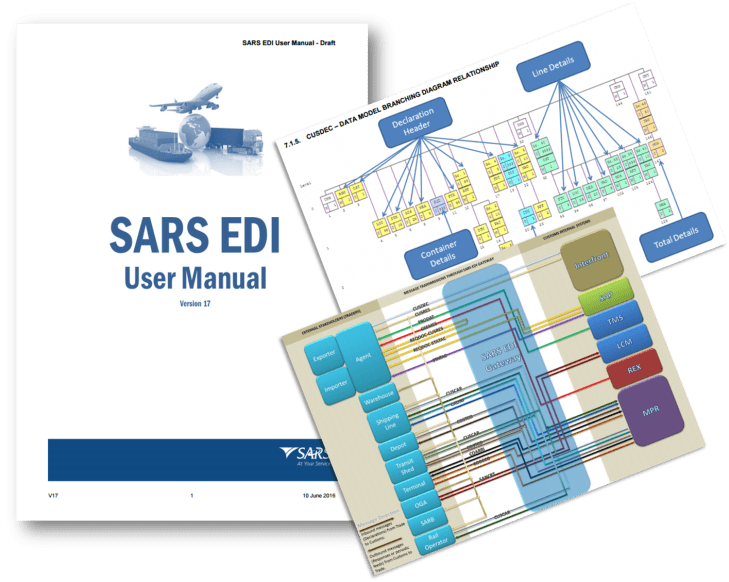
sars-edi-user-manualSARS has been operating Electronic Data Interchange (EDI) with its external stakeholders since 2001. More than 98% of all customs declaration (CUSDEC) transactions are today submitted electronically to Customs and the electronic submission of multimodal cargo reports (CUSCAR) is steadily increasing. Today, declaration processing is fully electronic end-to-end thanks to the availability of highly established EDI and Customs software service providers supporting the local customs and logistics community. SARS has also recently introduced a benefit for compliant cargo reporters who will be absolved of certain manual (paper) submission requirements once they attain an acceptable level of electronic submission compliance and data accuracy.

The ultimate objective is to ensure that all Customs-to-Business (C2B) transactions are electronic to enable full supply chain connectivity between the South African business community and Customs. This in turn enables the possibility of SARS accrediting or approving ‘supply chains’ as opposed to just individual trader segments (importers and exporters). The extent of electronic compliance is also a pivotal requirement for traders operating under the new Customs Control Act, to be enacted in the future.

SARS overall EDI capability extends further than declarations and cargo reports. In recent years Customs-to-Government (C2G) messaging has also been successfully established between SARS and the Department of Trade and Industry (dti) as well as the South African Reserve Bank (SARB). SARS is also engaging other government stakeholders concerning IT connectivity and data exchange.

Moreover, developments for cross-border Customs-to-Customs (C2C) data exchange are also in the pipeline and could come to fruition with the partner administrations in Mozambique and Swaziland in the foreseeable future. These initiatives will usher in increased supply chain connectivity through active use of the Unique Consignment Reference (UCR) between participating customs administrations. The ultimate objective here is the creation of mutual recognition benefits for local and cross-border traders based on their accreditation status agreed between the participating customs administrations.

The SARS Electronic Data Interchange (EDI) Manual (which can be downloaded from the SARS EDI webpage) has been updated with the latest versions of SARS Edifact Data Mapping Guides as well as improved diagrams explaining the functional composition of the various electronic messages specified for Customs processing. Also included are the requirements for registering as an EDI user with SARS.

The manual includes recent updates relating to cargo reporting (manifests) as well as the updated customs declaration message incorporating recent inclusion of customs surety, penalty and forfeiture requirements. The latter enhancement removes another document based requirement (the Form DA70 Provisional Payment) for Customs Brokers with the view streamlining data requirements, enhancing customs billing and customs status reporting with the trade and logistics community. This EDI Manual will be an important document over the coming months and years in that it will feature updated electronic requirements in support of the new Customs Control Act. Watch this space!

WCO’s “Guidelines”on Customs-Tax Cooperation

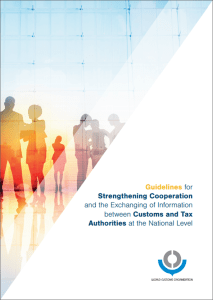
customs-taxThe “Guidelines for strengthening cooperation and exchange of information between Customs and Tax authorities at the national level” have been formulated with the support of WCO Members and development partners, especially the Organisation for Economic Co-operation and Development (OECD) and the International Chamber of Commerce (ICC). The Guidelines aim to provide reference guidance to Customs and Tax authorities who wish to go further in their cooperation and develop operational models which enable agencies to work together to their mutual benefit.

Although there is no limit to the ways in which these two agencies can work together, and countries should consider new and innovative methods based on their organizational structure, needs and operational requirements, the Guidelines highlight some overarching principles and associated benefits concerning enhancement of Customs-Tax cooperation.

The WCO Guidelines for Strengthening Cooperation and the Exchange Of Information between Customs and Tax Authorities at the National Level are intended to supplement the ongoing initiatives in this domain. The aim is to provide general, overarching principles for cooperation which take account of operational considerations, bearing in mind the different organizational structures and national requirements of countries. It is expected that these Guidelines will be useful to Member Customs administrations in developing a sustainable cooperation mechanism (including a MoU where needed) tailored to their unique situation, in close cooperation with their respective Tax authorities

In particular, the Guidelines provide a comprehensive overview of the enablers for mutual cooperation and the exchange of information, address the scope and remit of information exchange, cover different information exchange mechanisms, list the type of activities that Customs and Tax authorities may undertake together, and provide key principles and points to consider when developing a Memorandum of Understanding/Agreement (MOU/MOA). Source: WCO

WCO News – October 2016 Edition

wco-news

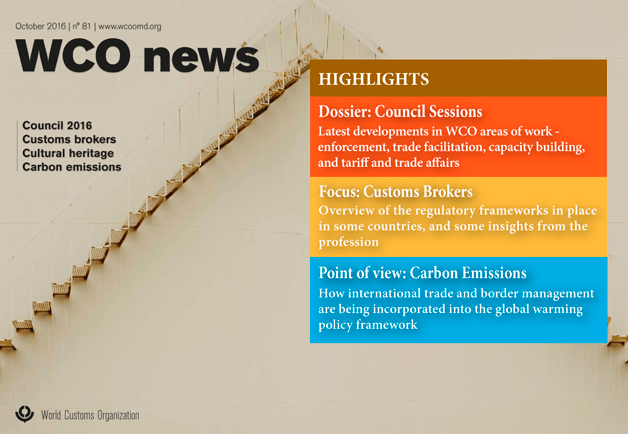
This edition of WCO News features a special dossier on the 2016 Council Sessions, in particular the latest developments in the core WCO areas of work: tariff and trade affairs, trade facilitation, enforcement, and capacity building.

It also puts a spotlight, in its focus section, on the Customs brokers profession, including the practices adopted by some Customs administrations related to licensing and regulatory regimes.

Other highlights include articles covering the quantification and taxation of carbon emissions, the protection of cultural heritage through enhanced cooperation between Customs officers and museum professionals, and much more.

The magazine is published and distributed free of charge three times a year, in February, June and October, and is available online or in paper format.

If you do not want to miss future issues of WCO News, the WCO  invites you to fill out the online subscription form – click here!

Source: WCO

NZ Customs to conduct WCO Cargo Targeting System pilot

nzc-wco

Photograph: (left to right) Philip Hague, Craig Chitty and Brian Cotton from New Zealand Customs Service’s Integrated Targeting Operations Centre (ITOC) are joined by the WCO’s Cristian Moldovan and Robert White for the launch of the WCO CTS air cargo pilot.

New Zealand Customs Service (NZCS) is assisting the WCO by conducting a pilot of the newly developed air cargo capability for the WCO Cargo Targeting System (WCO CTS). NZCS has extensive experience and expertise in cargo risk assessment and targeting and will be fully testing and evaluating the WCO CTS during a 3 month trial.

The WCO travelled to New Zealand during week commencing 10 October 2016 to launch the pilot and conduct training with NZCS personnel who will be using the WCO CTS. The findings of the pilot will be incorporated into the system before existing WCO CTS deployments are upgraded and the new capability becomes available to all WCO Members.

The enhancement of the WCO CTS to include conventional air cargo and express consignments comes 3 years after the WCO first launched the system for maritime containers. During that time the WCO CTS has been deployed to a number of WCO Members with more scheduled in the coming months

The WCO CTS is a cargo manifest risk assessment and targeting solution developed by the WCO for Customs administrations across the globe that require such capability. It allows those adopting the solution to implement international best practice cargo risk assessment including key pillars of the WCO’s SAFE Framework of Standards to Secure and Facilitate Global Trade.

For more information on the WCO CTS project please contact – cargotargetingsystem@wcoomd.org

WCO Workshop on Inland Depots in Lao PDR

inland-port-7The World Customs Organization (WCO) organized a National Workshop on Inland Depots under the sponsorship of the Customs Cooperation Fund (CCF)/Japan and the Japan International Cooperation Agency (JICA). It was held from 20 to 22 September 2016 in Savannakhet Province, Lao People’s Democratic Republic.

Twenty six Customs officers from the Lao Customs Administration participated in the workshop, along with guest Customs experts from The Former Yugoslav Republic of Macedonia, Japan and JICA. Mr. Somphit Sengmanivong, Deputy Director General of the Lao Customs Administration, opened the workshop. He highlighted the importance of Inland Depots as a national strategy to secure his country’s economic growth and sought participants’ active participation in the discussions on this topic.

Presently, there is no clear definition of “Inland Depot” and many similar terms, such as Dry Port, Inland Terminal, Free Trade Zone and Special Economic Zones, are used in the international logistics. During the three-day workshop, participants discussed the functions and a possible definition of Inland Depot from a Customs perspective.

AmatiComment – Inland container terminals serve as important hubs or nodes for the distribution and consolidation of imported and export destined cargoes. There are 16 Landlocked countries in Africa, which signifies the importance of hinterland logistics development and its consequential impact on regional trade groupings. Consequentially, it behooves governments to understand and support the logistics supply chain industry in maximizing inland transportation (multi-modal) infrastructures to achieve a common and mutually beneficial economic environment. Furthermore, the more facilitative these arrangements, the better opportunity there is for success and longer-term economic sustainability.

The WCO Secretariat made presentations on international standards for relevant procedures, including Customs warehouses, free zones, Customs transit, inward processing, clearance for home use and temporary admission. Experts from The Former Yugoslav Republic of Macedonia and Japan described their national and regional experience of Customs warehousing, and Customs transit procedures. The JICA expert presented the bonded procedures applied by neighbouring countries to Lao People’s Democratic Republic. Lao Customs administration explained their national system for Inland Depots and a logistics company of Lao PDR shared its expectations on inland depots.

On the last day, participants discussed the challenges and possible solutions to enhance the functional and efficiency of Lao’s Inland Depots. Possible solutions, such as the use of modern information technology, further cooperation with the private sector, clear regulations on relevant procedures, coordinated border management and international cooperation were considered. Source: WCO

Recommended reading

IBM unlikely to meet Oz Customs and Immigration merger deadline – fear of system failure

ibmThe Australian Broadcast Company (ABC) has been told IBM looks increasingly unlikely to hit its October 31 deadline and there are growing fears in the Department of Immigration and Border Protection that the risk of a system failure is rising, as the busy Christmas holidays loom and a long-running industrial dispute remains unresolved.

An IT failure could have serious national security implications as the mainframe will manage Australia’s border controls, including red flagging terror suspects attempting to enter or leave the country.

In response to a series of questions from the ABC, the department issued a statement saying: “This schedule remains under active review.”

“This is common to all major system changes in which the protection of operational capability and security protections remains the overarching priority,” the statement said.

The concerns about the enterprise-wide mainframe contract come in the wake of the high profile woes of another federal agency.

The Australian Bureau of Statistics was embarrassed by a census-night shutdown, which Prime Minister Malcolm Turnbull blamed on IBM.

The company is also currently embroiled in a Canadian payroll scandal, where tens of thousands of public servants have been underpaid, overpaid or not paid at all.

And that echoes the billion-dollar health payroll debacle in Queensland, after which the State Government banned its agencies from signing contracts with IBM.

Rand Corporation review of the merger between Immigration and Customs that said there was “an absence of a solid plan” for executing the integration.

Before Customs and Immigration merged in 2015, two companies had been delivering IT services — IBM for Customs; and CSC, another US information technology giant, for Immigration.

CSC lost the bid for the combined tender and was told in February that its contract would be terminated 20 months early, with the new finish date set at October 31, this year. That upped the ante on transferring enormous amounts of information between CSC-managed and IBM-managed data centres.

As that deadline approaches, fears have grown within the department that IBM is not ready and that the system might fail.

There have been meetings between IBM and officials as they war game solutions, which might include IBM hiring CSC’s workforce.

The total value through to 2019 of the mainframe contract is $509 million, and it is understood that the department does not have any more money to bolster the transition and is struggling to find the staff it needs within its own ranks to handle the change.

It is just one of many contracts IBM has with the Federal Government.

The department’s statement in response to the ABC’s questions also said it “has a robust risk management framework in place to address any potential risks that may arise from a large scale change to border systems”.

“IBM has had a long relationship with the former Australian Customs and Border Protection Service and has maintained a stable computing environment for critical border systems,” the statement said. Source: ABC

WCO addresses a “Ministerial Lekgotla” as an introduction to the CITES Conference in Johannesburg

kunio-addressing-cop17At the invitation of the South African Minister of Environmental Affairs, Secretary General Kunio Mikuriya addressed a “Ministerial Lekgotla” held in Johannesburg, South Africa, on 23 September 2016 as an introduction to the CITES CoP 17 World Wildlife Conference.

During the high-level panel session, Secretary General Mikuriya focused on the role of Customs in facilitating legal trade and intercepting illegal trade in wildlife and on its link to CITES and Sustainable Development Goals.

He highlighted the WCO Declaration on the Illegal Wildlife Trade, which had been adopted in 2014 and aimed at drawing the attention of policy makers to environmental crime and at raising the priority of Customs operations in this area.

He also referred to the INAMA project (started in 2014) for technical and capacity building assistance for Customs on risk management, collaboration with other law enforcement agencies and institution building to enhance integrity.  Cooperation with the transport industry was also part of the WCO efforts to improve compliance, as exemplified in the Royal Foundation Task Force Declaration on Transport, adopted earlier this year.

The presence in Johannesburg of high-level delegations also provided an opportunity for the Executive Heads of the International Consortium on Combating Wildlife Crime (ICCWC) to meet in order to further enhance the collaborative work with the CITES Secretariat, INTERPOL, the UNODC, the World Bank and the WCO.

Fianlly, Secretary General Mikuriya also had a series of bilateral meetings with key partners, including with Executive Director Erik Solheim of the United Nations Environment Programme. Source: WCO

BEPS Impact on Trade and Customs

Transcript of video
Todd Smith, principal in KPMG LLP’s Trade & Customs practice: We had over 350 people attend the webinar on Base Erosion and Profit Sharing (BEPS) from a Customs Perspective. I think the reason is because there hasn’t been a lot of discussion on how BEPS will impact customs.

I read all of the action items that the OECD published in October to identify where there would be crossover or an overlap on customs as it relates to BEPS. There clearly is going to be quite an impact.

For one thing, there is a lot of transparency that is being created overall by the BEPS initiatives, and customs auditors around the world are increasingly cooperating with the tax administrations around the world, so there will be a treasure trove of information for the customs auditors found within the Master File, the Local File and the CbC report, and just as tax administrators will use that information because of the information sharing, customs auditors will also use that information to identify targets for audits.

It will tell them, for example, where there is a related party transaction where they may not have had that information previously.

One of the big areas that we feel the customs function will be impacted by BEPS is where you have a situation where a company may need to convert a commissionaire to a buy-sell. When this happens, the importer of record could change, and more importantly the value that’s declared to customs under a commissionaire structure oftentimes is the third-party customer price. And when that entity converts to a buy-sell entity, the new buy-sell entity becomes the importer of record. It needs to achieve a margin, and the only way really to do that is to import that same product at a lower price.

And so the challenge is to convince the customs administration that the new price with the limited-risk distributor, for example, which is lower in its related party price, is still considered arm’s length, even though it’s less than the previous import value at the 3rd party customer price. Source: KPMG

Recommended reading

Streamlined export clearance ‘worth billions’

trusted-trader-transparent

A new customs program aimed at bringing Australia into line with other major trading nations could substantially cut costs when exporting to Asia.

The Department of Immigration and Border Protection (DIPB) believes that the benefits to the Australian economy of this streamlined export process could be worth up to $1.5 billion for every one per cent increase in efficiency of transport and logistics supply chains.

The pilot for the Australian Trusted Trader (ATT) program launched this month will eventually allow accredited export businesses to gain streamlined customs and security clearance in countries that have a mutual recognition agreement with Australia.

Similar programs have already been adopted by more than 58 international jurisdictions – including China, India, Japan, Singapore, Taiwan and South Korea – since being introduced by the World Customs Organisation (WCO) in 2005.

Known generally as Authorised Economic Operator (AEO) schemes, they provide a framework of standards for trading partners in recognising each other’s customs and security regimes.

According to the Centre for Customs and Excise Studies (CCES) at Charles Stuart University, the goods of exporters who are accredited to the New Zealand AEO scheme are 3.5 times less likely to be inspected or held up on arrival in the US.

Professor David Widdowson, head of school at CCES, and a leading advocate and advisor on the introduction of the ATT, says that accreditation to an AEO is often an imperative for many international supply chains.

“When exporters send goods overseas and they get held up, there’s basically two ways that countries are dealing with them,” he said. “There those that come from a known secure supply chain – such those where a mutual AEO agreement is in place – and they’re treated as low-risk; and then there’s the rest, which are treated as high-risk.

“Without being part of an AEO or trusted trader agreement, Australian exporters are more often likely to fall into the latter category.

“In some jurisdictions it can be very difficult to be accepted onto an AEO scheme as an importer, so big multinationals often actively look for partners and suppliers who are already accredited to a scheme in their own country – and won’t deal with anyone who isn’t. They don’t want to run the risk of their non-accredited parts of their supply chain compromising their status on the scheme.

“So we can see how AEOs are actually now being used by commerce as a key indicator of the standard that business is looking for in terms of protecting their international supply chain.”

The aims of the ATT include expedited border clearance, reduced or priority inspections and priority access to trade services. The DIPB will also explore the possibilities for duty deferral and streamlined reporting arrangements.

Accredited trusted traders are to be assigned an account manager within the DIPB, as a single point of contact to assist with customs and export issues across all federal departments.

To apply to enter the program, Australian exporters and supply-chain businesses – including freight-forwarders, brokers and logistics firms – first need to obtain a self-assessment questionnaire from DIPB.

The information submitted by the business is then audited by the DIPB to ensure that the necessary security systems and procedures are in place, before accreditation can be given. There is no licence or application fee for the program, and Prof Widdowson expects the process to take “a few weeks if it’s a major company or it could be a few days if it’s a medium-sized company”.

The pilot phase will be completed in this current financial year, and only four companies will be taking part initially: Boeing Aerostructures Australia, Devondale Murray Goulburn, Mondelez Australia and Techwool Trading.

Teresa Conolan, assistant secretary of the Trusted Trader and Industry Branch at the DIPB, said more companies would be included in the pilot as it progresses.

“We’re hoping to have around 40 companies over the 12 months in the pilot, across a range of business sectors, so we can actually test the processes and make sure they are not too burdensome,” she said.

“Over four years we’re expecting around 1500 companies to join the scheme – so it’s certainly not going to cover all business.”

Conolan added that preliminary discussions with some countries were already underway, though negotiations on agreements were unlikely to begin until the ATT was fully launched next July.

She said Australia’s key trading partners would be the priority, but expected the negotiations and implementation of agreements with some of them to take a further year.

The rollout of the pilot program follows years of pressure from the Australian business community to embrace AEO, after initial reluctance by the Australian Customs and Border Protection Service (ACBPS).

Following an article by The Australian Financial Review on March 20, 2013, which flagged Australia’s non-participation, business leaders sponsored a research study, undertaken by the CCES, which found that the scheme could be highly beneficial. Business groups began to lobby the federal government, by which time the ACBPS had reversed its attitude and agreed to consider implementing an Australian scheme.

For more information on the Australian Trusted Trader scheme, visit – trustedtraders@borders.gov.au

Also read:
High Aspirations for planned Tambo Springs Intermodal Hub

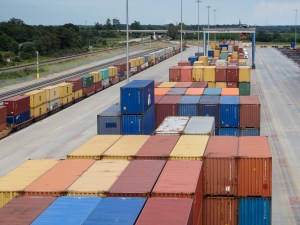
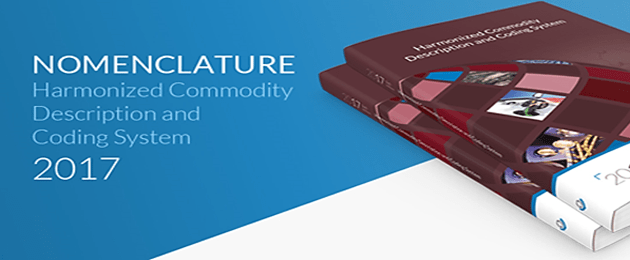
containersThe following was penned by a long-time customs acquaintance Aires Nunes da Costa, who has kindly permitted me to post his article titled “Why unpack containers in Durban if you can have containers at your door step in Gauteng within 24 hours?” which first appeared on LinkedIN.


The Tambo Springs initiative involves creating a significantly improved intermodal capability for the movement of freight to and from Gauteng. This is to be achieved by the operational twinning of the inland port with other seaport, inland and cross border locations. The connectivity i.r.o. these twinned locations is achieved via sea, rail, road and air linkages, ideally involving seamless movement of freight between modes.

The Tambo Springs development incorporates a next generation inland port with a state of the art rail terminal facility designed to be developed in phases, with an ultimate capacity of 1 m TEU’S p.a., as well as, a sprinter freight land bridge.

The key elements are as follows:-

Direct Traditional Rail Link to Durban Harbour

The Tambo Springs Terminal will be linked to the Durban Container Terminal which currently handles the bulk of all container freight moving in and out of Gauteng, via an efficient rail service. The fixed rail infrastructure for this link already exists to the Tambo Springs site. This state of the art Terminal facility is designed to significantly increase the rail capacity for container freight to/from Gauteng, while simultaneously reducing real costs and significantly improving levels of service via:

  • a new technology “greenfields” terminal being more efficient;
  • a reduction of congestion issues in and out of the new inland port due to its location;
    improved efficiency of port operations;
  • having the facility serviced by improved rolling stock commissioned by Transnet;
    Sprinter Freight Rail Link to Ngqura Harbour In the Coega IDZ (Port Elizabeth)

In addition to the direct rail link with Durban harbour, the initial phase of this programme involves the twinning of the Coega IDZ and its adjoining Deep Water Container Terminal at the Port of Ngqura with Tambo Springs. This is to be undertaken by means of a Public Private Partnership type structure which utilizes the Transnet capability between the two locations as well as the participation of SARS.

The service level to be achieved for the movement of the freight via this land bridge has a goal of “24 hours” as opposed to the current 3 to 5 days service level achieved at City Deep. This is to be achieved by capitalizing on the creation of high efficiency intermodal activities integrated with the port functions and feeder network.

Truck Freight Movement

The Tambo Springs Inland Port will function as a multimodal logistics gateway serving the Gauteng Catchment area. It therefore provides ease of movement between individual transportation modes in addition to facilitating manufacturing, warehousing and distribution activities.

The operational plan is therefore designed to accommodate long distance (FTL) truck traffic in addition to regional (LTL) freight movement.

The principle truck markets the inland port will attract include:

  • FTL long distance movement of time sensitive freight from other ports or metropolitan areas. This includes both cross docking and stuffing/de-stuffing facilities within the inland port;
  • Rail/truck (intermodal) movement where product utilizing the rail links is transferred to truck in order to each its final destination;
  • LTL truck and Van short distance movement of freight, including a regional metropolitan distribution function.

The next generation inland port therefore capitalizes both on rail and road transportation modes with a focus on increased movement of long distance freight by sprinter rail.

Intermodal Movement

In order to achieve seamless intermodal movement of freight between sea, rail, road and air transport, it is essential to link Tambo Springs with other inland port and hub locations. The creation of such a twinned Inland Port Network provides a means to effectively participate in the Global Supply Chain in a manner which optimizes both existing and new facilities to enhance capacity. Hence, for example, Tambo Springs would be linked to City Deep via rail and road linkages and to other hub locations in Gauteng and elsewhere.

A principle element of this approach is to create an efficient transportation service between all the individual entry/exit ports providing an improved level of service over and above that provided by a traditional network. The key to this is to rethink existing processes with a focus on efficiency savings in terms of the inbound and outbound process flow at Tambo Springs. This has been incorporated into the operational concept and addresses both operational and customs and regulatory efficiency issues as part of the supply chain. Source: Aires Nunes da Costa (Customs & Excise Specialist)

Davis Tax Committee pronounces on BMA

DTCRecent speculation concerning the Border Management Agency Bill have brought about reaction from both within government and industry. While there appears widespread support for a unified agency to administer South Africa’s borders, the challenge lies in the perceived administration of such agency given the specific mandates of the various border entities.

The Davis Tax Committee (DTC) was requested to provide a view on the affect of the proposed bill insofar as it impacts upon revenue (taxes and customs and excise) collection for the fiscus of South Africa.

The purpose of the Bill is to provide for the establishment, organisation, regulation and control of the Border Management Agency (BMA); to provide for the transfer, assignment, and designation of law enforcement border related functions to the BMA; and to provide for matters connected thereto. The functions of the BMA are (a) to perform border law enforcement functions within the borderline and at ports of entry; (b) to coordinate the implementation of its border law enforcement functions with the principal organs of state and may enter into protocols with those organs of state to do so; and (c) to provide an enabling environment to facilitate legitimate trade.

In short the DTC recommends that the functions and powers of SARS and the BMA be kept separate and that the Agency should not be assigned any of the current functions and powers of SARS with regard to revenue (taxes and customs and excise) collection and the control of goods that is associated with such collection functions. Of particular concern is the extraordinarily poor timing of the Bill. According to the 2014 Tax Statistics issued by SARS, the total of customs duties, import VAT, and ad valorem import duties collected amounted to R176.9 billion for the 2013-14 fiscal year. This was approximately 19% of the total revenue collected.

The DTC is of the view that to put so significant a contribution to the fiscus in a position of uncertainty, if the Bill were to be  implemented, is fiscally imprudent at this critical juncture for the South African economy. Follow this link to access the full report on the DTC website. Source: www.taxcom.org.za

WCO reviews Zimbabwe’s Authorized Economic Operator Framework

ZIMRA AEOFollowing an invitation from Zimbabwe Revenue Authority (ZIMRA), WCO successfully completed a review of Zimbabwe’s Authorized Economic Operator (AEO) pilot and developed a series of recommendations for a “next generation” AEO programme that takes into account the WCO SAFE Framework of Standards, the WCO Voluntary Compliance Framework and best practices from other WCO members, as outlined in the WCO AEO Compendium. The mission, which took place between July 18 and 22, built on the March 2016 Mercator scoping mission, which established a multi-year framework of support for Zimbabwe under the tailor-made track of the Mercator Programme and was delivered with the financial and technical support of Her Majesty’s Revenue and Customs (HMRC).
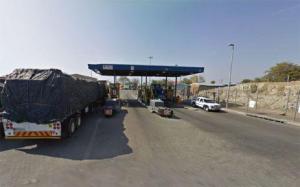
A total of 20 representatives from ZIMRA and 15 trade representatives, participated in a facilitated dialogue which provided the mission team with a comprehensive overview of ZIMRAs’ current AEO programme, while raising awareness and understanding of relevant international standards and best practices. Based on the review, the mission team identified a series of future capacity building activities and deliverables, which can be supported under the current multi-year Mercator Programme engagement with Zimbabwe. The WCO looks forward to continued collaboration with ZIMRA and HMRC and UNCTAD in the implementation of this plan. Source: WCO

Red Flags hang over BMA

Mesina-Beitbridge border crossing - Google MapsAccording to Eye Witness News, a draft law aimed at creating a new, overarching border control entity has run into problems.

Parliament’s Home Affairs Portfolio Committee has been briefed on the Border Management Authority Bill by the department, the South African Police Service (Saps) and National Treasury.

Cabinet approved the Bill in September 2015 to deal with weaknesses in the state’s ability to secure the country’s ports of entry.

The Bill proposes harnessing the responsibilities of Home Affairs, the police and the South African Revenue Service (Sars) among others in one agency under a commissioner.

The authority will take over the customs control functions currently undertaken by the South African Revenue Service. There are fears within the industry that it could compromise SARS’s achievements in modernising its customs administration that has facilitated the movement of goods across the border.

Red flags have been raised by both the SA Police Service and National Treasury over the Border Management Authority Bill.

Treasury’s Ismail Momoniat says while they support a single border control body, SARS must remain in charge of customs and excise and revenue collection.

“We’re talking of significant revenue collection, and that is a speciality… The Bill is a framework, it’s important it doesn’t generate uncertainty for an important institution like SARS.

The authority will be governed by a commissioner and overseen by an interministerial consultative committee, a border technical committee and advisory committees.

The SAPS’ Major General David Chilembe says the Constitution says South Africa must have a single police force. He says it may have to be amended if the new border authority takes over policing duties.

Chilembe also says the police, and not Home Affairs, should lead the new entity. Source: EWN.

“Customs” emoji

customsAlso known as “I am looking in your suitcase”, the rather dry “Customs” emoji will be familiar to overseas travellers everywhere. It’s especially handy if you find yourself in need of an emergency customs sign — simply print one of these out at font size 84,000. Alternatively, this emoji can also be used to warn traffic wardens of the dangers of reaching into giant oysters, which is definitely a thing, I imagine. The related “Cavity Search” emoji is due for release in 2017, possibly.