Chinese Customs Inspectors – Snow Storm is Business as Usual

Officers of Weihai Customs House (affiliated to Qingdao Customs District) remained at their posts and inspected the goods as heavy snow hits the Shandong Province in December 2014. During the two days of heavy snow, officers of Weihai Customs House had worked over time and to exercise control over ‘stopped’ consignments. Source: General Administration of Customs of the People’s Republic of China

Biggest bust of Rhino Horn at a South African airport

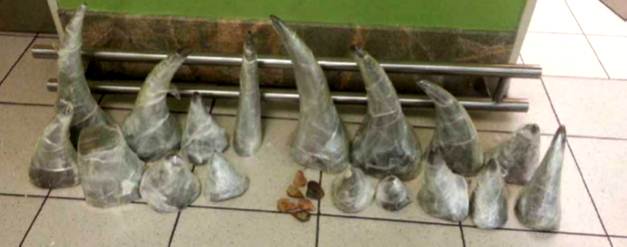
Biggest bust of Rhino Horn at a South African airportSARS Customs officers at OR Tambo International Airport (ORTIA) last week intercepted over 41kg of rhino horns – with a total value of over R4.5 million – transiting through the airport. This is the biggest ever seizure of rhino horn by the SARS Customs team at OR Tambo International, Johannesburg.

As a result of profiling two foreign nationals travelling from Maputo to Vietnam via Johannesburg,  their baggage was intercepted during a stop-over at ORTIA. A Customs detector dog “Mimmo” reacted positively to two bags. The tags found on the bags also did not correspond to the tags presented to Customs officials during the initial questioning of the passengers. This is a practice commonly found with narcotics smuggling syndicates.

The bags had a strong garlic and glue smell, (a tactic to distract detector dogs). Further to the plastic wrapped horns, the zips of the bags were also glued in an effort to keep the odour intact and to make the inspection difficult. Subsequent physical inspection of the bags by Customs officials revealed the rhino horn allegedly being smuggled by the two travellers. Source: SARS

South African Customs launches new X-Ray Inspection Facility in Durban

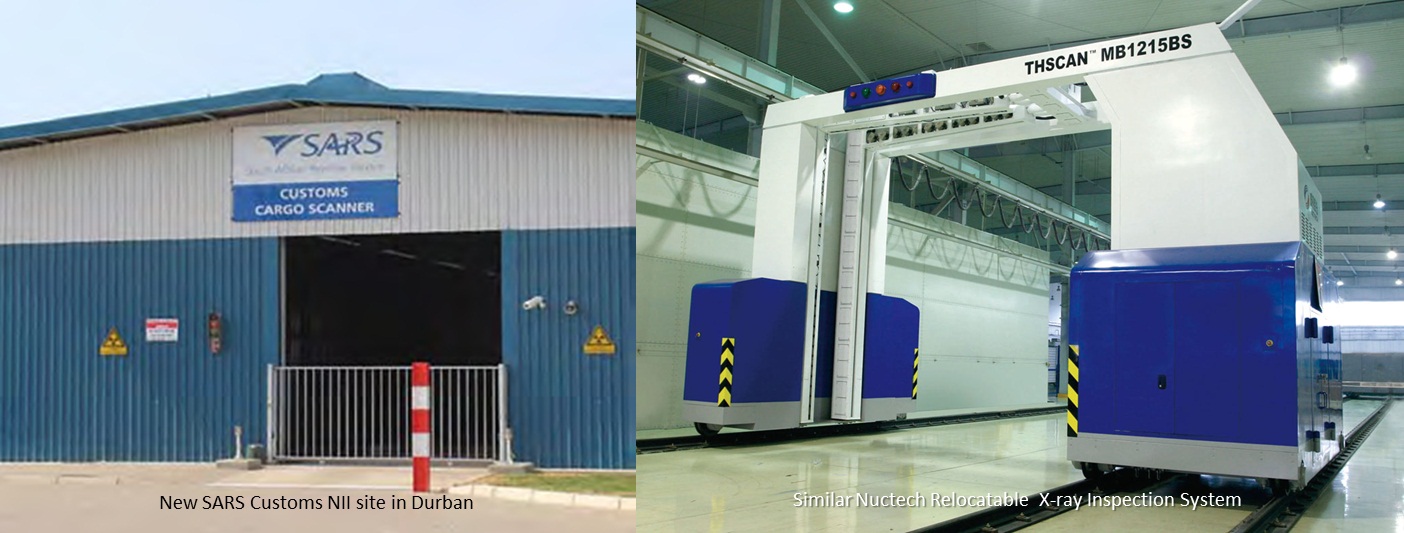
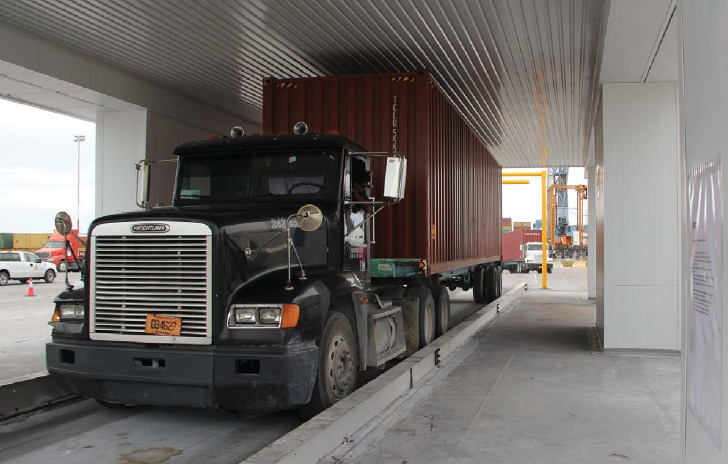
SARS Customs New NII Ste - DurbanSARS Customs recently launched its new X-Ray cargo inspection facility adjacent to the Durban Container Terminal in the Port of Durban. Following the trend as in other countries, SARS has identified non-intrusive inspection capability as part of its ‘tiered’ approach to risk management.

In 2008, SARS introduced its very first mobile x-ray scanner which was located inside the Durban container terminal precinct as part of South Africa’s participation in the US Container Security Initiative (CSI). While it has proven itself in the development of Customs NII capability, its location and lack of integration with other Customs automated tools has limited its success.

The new Customs inspection facility is a step-up in technology and automation – a Nuctech MB 1215HL Relocatable Container/Vehicle Inspection System. It has some significant advantages over the original mobile version namely –

  • An efficient and cost-effective security solution with a relatively small footprint (site size).
  • 6 Mev dual energy X-Ray technology with high penetration (through 330 mm of steel).
  • High throughput of 20-25 units of 40ft container vehicles per hour.
  • A unique modular gantry design which improves system relocatability.
  • Self-shielding architecture which requires no additional radiation protection wall.
  • Advanced screening and security features such as organic/inorganic material discrimination.
  • High quality scanning image manipulation tools allowing the customs image reviewer the ability to verify and distinguish the contents of a vehicle or cargo container.

Since its launch more than 350 scans have been performed. Suspect containers were sent for full unpack resulting in various positive findings.

The new relocatable scanner is easier to operate and significantly faster than the mobile scanner. In addition, scanned images are now automatically integrated into SARS Customs case management and inspection software making case management both seamless and efficient.

It is anticipated that until October 2014, both the new scanner and the existing mobile scanner operations will co-exist. During this time, the new scanner will operate risk generated cases directly from SARS automated risk engine. Unscheduled or random interventions will continue to occur at the old scanner site, which operates 24/7.

Plans are in place to decommission the mobile scanner after October 2014. The new scanner will then operate on a 24/7 basis.

New drug analyser to save New Zealand Customs time and money

New Zealand Customs Minister Nicky Wagner says the introduction of a new state of the art drug analyser will free up hundreds of hours a year for more enforcement work at the border.

The handheld device, a Thermo Scientific FirstDefender RM, shoots a laser beam into an unknown substance, accurately identifying it in a matter of seconds.  Customs purchased it with money recovered under the Proceeds of Crime (Recovery) Act.

“The device will drastically reduce the number of substances that have to be sent away for expensive testing, with savings expected to pay for it in less than six months.

“Its effectiveness will allow Customs officers to spend at least 520 more hours each year on frontline border work because they can make decisions quickly on what investigative action, if any, is required.

In addition to the drug analyser, Customs is building a laboratory in Auckland to test unidentified chemical samples.

“The enhanced capability will help to achieve outcomes sought in the government’s Methamphetamine Action Plan and allow Customs to identify an increasing number of new psychoactive substances stopped at the border,” Ms Wagner says.

More than 11,000 substances can be identified almost instantly by the FirstDefender analyser.  It can penetrate through certain types of packaging, so opening a packet or bottle may not be necessary, which also means a safer working environment for officers. Source: New Zealand Customs (contributed by Mogen Reddy)

Finnish Customs intercepted arms shipment on route to Ukraine

Tulli+KokkolaFinnish customs has intercepted a shipment of arms on its way to Ukraine, it said on Friday, with a Finnish newspaper saying it consisted of missile system parts.

The customs said it had stopped a shipment of “defense materials” at the Helsinki Airport in late June. Daily Helsingin Sanomat said the air cargo consisted of a large number of parts used to steer missiles.

“They were defense materials on the way to Ukraine,” Sami Rakshit, head of enforcement at Finnish customs told Reuters. “They did not have the required permits.”

The air shipment was only passing through Helsinki airport when the customs discovered it, the daily said. The newspaper did not know the country of origin of the shipment, saying it came from the Far East. Customs would not comment.

The customs is investigating who the intended recipient in Ukraine was, Rakshit said

Finnish military is aiding customs in investigating the exact use for the parts of the missile system.Source: Reuters (contributed by Zarina Taylor)

Rapiscan launches “Driverless” Cargo Inspection System

Rapiscan M60Rapiscan Systems has launched the new Driverless Eagle M60 cargo inspection system. It is a fully-automated vehicle screening system which can operate without the need of a driver and has been specifically designed to assist customs and border personnel in their detection of nuclear materials, explosives, weapons and contraband such as tobacco, alcohol and currency in trucks, cargo and containers.

Rapiscan’s driverless system requires no driver to be present during scanning, which the company says eradicates driver fatigue and driver work-shift changes; improves inspection rates and vehicle throughput; and removes risks associated with lone workers, health and safety incidents and potential human error. It can be driven on the road like a standard vehicle, allowing the unit to move between locations quickly and easily as required.

Once moved into position via a remote steering system, the M60 automatically detects two positional sensors — one placed at either end of the scan location. The positional sensors can be placed as far as 35 meters apart, allowing for oversized cargo or multiple units to be scanned in one pass.

As the scanning commences, additional sensors on the M60 make minor adjustments to the direction and position of the vehicle which ensures it consistently drives in a straight line between the two positional sensors. The system is designed not to deviate by more than 25mm from the center line.

The automated scan process is then monitored by a system operator who is housed in the M60’s onboard inspector’s office. This operator views the high resolution X-ray images produced by the system in real time.

Rapiscan was recently awarded two lucrative contracts for its vehicle and cargo inspection systems. On May 13, the company announced a $15 million order from an undisclosed Middle East customer. The order is for multiple Rapiscan Eagle M60 mobile inspection units, which the Driverless Eagle 360 is based on. This was followed by a $13 million order for an undisclosed “international customer,” again for Eagle inspection systems.

Rapiscan’s Eagle cargo and vehicle inspection systems are used by customs agencies, military organizations and homeland security operatives around the world. Eagle cargo and vehicle inspection systems use proprietary transmission X-ray technology that is able to penetrate well beyond the surface of a container or vehicle to provide comprehensive detection of threats.

A short film demonstrating the Driverless Eagle M60 in action can be seen here.

Mexico – Recognising WCO Policies and Standards in the wake of Organised Crime

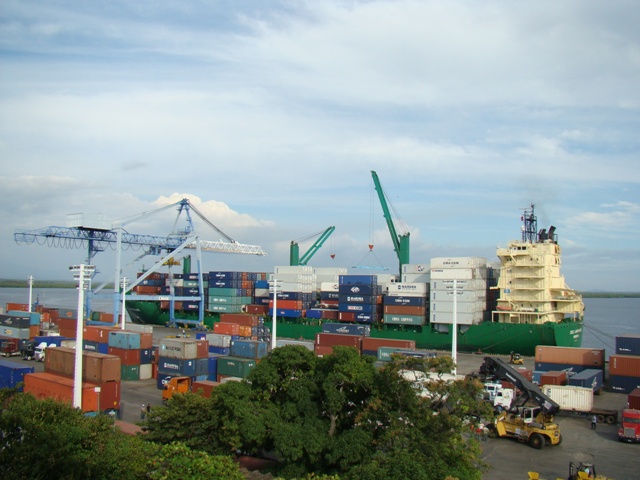
Port of Lazaro Cardenas Mexico [www.puertolazarocardenas.com.mx]

Port of Lazaro Cardenas Mexico [www.puertolazarocardenas.com.mx]

At the beginning of May the Mexican authorities detained the 73,700 dwt Jian Hua with this following on from the earlier seizure of 119,000 tonnes of iron ore in storage at the port.

At the end of April the Mayor of Lazaro Cardenas was arrested and accused of kidnapping, extortion and links to organised crime and in November last year federal troops took over the security and customs functions at the port of Lazaro Cardenas and remain in charge today.

The main aim of these measures is to eradicate the influence of the violent criminal organisation the Knights Templar, whose base of operations is the south western state of Michoacan where the port of Lazaro Cardenas is located.

Knights Templar, through the corruption of customs and other officials, has been using the port of Lazaro Cardenas for the extensive import and export of illegal drugs. The iron cargoes are one of many ‘business diversifications’ by the cartel but as the Jian Hua shipment proves are illegal in that the documentation associated with this cargo showed production at a mine that is not yet authorised for legal operation.

For years the state of Michoacan has basically been lawless and the area around the port of Lazaro Cardenas has been a battleground between the various drug gangs with the Knights Templar being in ascendancy since 2010.

Since, however, the entry of federal agencies into the state, and notably the Mexican navy into the port of Lazaro Cardenas, the influence of Knights Templar has gone into severe decline. The cartel has basically lost control of its biggest business. They have also felt the wrath of a public uprising, the sharp end of which are armed vigilantes backed by federal forces.

The optimistic view is that the port of Lazaro Cardenas will become ‘clean’ again with the demise of Knights Templar and the arrangements it had with other drug cartels. The negative view is that another cartel will step into Knight Templar’s shoes and the port will again find itself under external control and home to illegal activities.

Short steps

The lesson here, as independent organisations such as Control Risks emphasise, is that it is a few relatively short steps before a major port gateway can be comprehensively penetrated by criminal organisations. The conditions that created an opening for Knights Templar are not unusual in Latin America in Control Risks’ view.

For these reasons, and many others associated with port efficiency, it is very important to have secure and professional agencies active in ports that are specialists in security and border management. It is also important to realise in this context that considerable assistance is available from external agencies such as the World Customs Organisation (WCO) to establish the proper controls and security checks. Further, that it is often only by the use of independent agencies or organisations that comprehensive experience and know-how can be deployed to achieve this – the arms’ length approach which can circumvent internal corruption.

If corrupt elements are in place there will inevitably be resistance to change but an external agency forcing the pace of change, based on global experience, will play a major part in overcoming such elements.

Taking the WCO as an example, among other things it functions as a forum for dialogue and exchange of experiences between national Customs delegates. The WCO offers its members a range of conventions and other international instruments, as well as technical assistance and training services provided either directly by the secretariat, or with its participation. The secretariat also actively supports its members in their endeavours to modernise and build capacity within their respective national Customs administrations.

The WCO’s efforts to combat fraudulent activities are also recognised internationally. The partnership approach championed by the WCO is one of the keys to building bridges between Customs administrations and all the stakeholders in the transport chain. Source: Port Strategy

Containers conveying Mozambican MiGs stuck in Germany

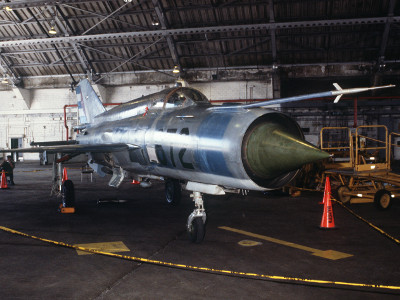
MiG-21_Fishbed_400x300Three MiG-21 fighter jets destined for Mozambique are stuck in Germany due to a lack of necessary permits. They are part of a batch of eight being shipped from Romania. Romanian company Aerostar is overhauling six MiG-21bis and two MiG-21UM trainer aircraft for the Mozambique Air Force and is also providing training for Mozambican MiG-21 pilots. Three MiG-21s were seen flying at Aerostar’s Bacau facility last year.

On Sunday Germany’s Der Spiegel reported that three MiG-21s were transported from the Romanian capital Bucharest by train in six containers and were to have been subsequently shipped to Mozambique from the Germany port of Bremerhaven. However, although the aircraft were declared according to procedure, their transport was done without the necessary permits and they were stopped. Der Spiegel reported that Germany’s public prosecutor will investigate the possible breach of arms control laws. The publication noted that Aerostar was found guilty of a similar incident in 2008. In 2012 German customs officials confiscated MiG-29 engines for Algeria and Tu-142 engines for India over the lack of necessary permits.

The Mozambique Air Force is slowly rejuvenating, considering that until recently it was almost entirely inoperable, suffering poor serviceability since independence from Portugal in 1975 and the collapse of the Soviet Union and its financial support in the early 1990s. The arrival of the MiG-21s will give the Air Force a jet capability not had in years, as its existing MiG-21s have fallen into disrepair and are grounded.

In addition to the MiG-21s, Mozambique has apparently bought two Aerostar Festival side-by-side light aircraft and will get an overhauled Aero Vodochody L-39ZO jet trainer. Late last year it emerged that Mozambique’s Air Force would also receive two second hand Antonov An-26B transport aircraft after they have been refurbished in the Ukraine. Source: Defence Web

Lesotho Revenue Authority launches Trade Portal

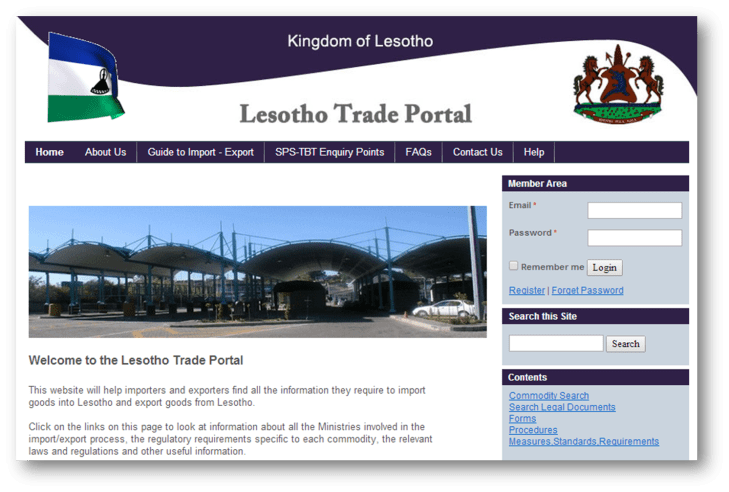
LRA Trade PortalThe Lesotho Revenue Authority (LRA) has undertaken an extensive Customs Modernisation Programme aimed at simplifying the processes and reducing the costs of ‘doing business’ at the border. Earlier this week, the LRA launched the Lesotho Trade Portal as an introduction of the first portion of these reforms which brings a commitment to transparency for all border users on expectations and procedures.  The launch of the portal will be followed by an introduction of simplified border procedures supported by the implementation of modern computerised systems using ASYCUDA World.

The LRA has been reorganising its structure the past year aligning it with organisational strategy, and alongside that as a result of the modernisation, there will be extensive restructuring to promote efficiency and professionalism in customs and across the LRA. Staff members are undergoing extensive training to prepare for the introduction of the new systems.

To facilitate legitimate trade and enhance compliance LRA will introduce risk based controls to enable legitimate trade to pass more freely through the border posts and following the recent pilot project, there will be a full introduction of a ‘Preferred Trader Scheme’ offering additional facilitation benefits to compliant traders.

Through use of modern technology LRA will speed up the inspection process as they will be coordinated and organised from dedicated inspection areas. There will eventually be an introduction of inland clearance to improve service delivery and clearance time.

To protect legitimate trade and reduce market distortion, there will be targeted anti-smuggling activities. This will be for deterrence of illicit and illegal goods as well as to protect the nation from prohibited importation of goods.

The Lesotho Business Partnership Forum has also voiced its unanimous approval of the Lesotho Trade Portal. It believes this milestone represents a major breakthrough in the relationship between business and government. It reveals a level of transparency in procedures and processes which business can only welcome as a sign of a more constructive and open approach to the management of government affairs.

Similarly, the traders and general public will participate in an extensive publicity campaign with announcement in the media as to how to get involved and benefit from the reforms.  A key tool in this process to keep everyone on the loop, will be the News section of Lesotho Trade Portal itself. This will be supported by an extensive communications programme and an education programme targeted at regular border users. Source: Lesotho Revenue Authority

Operation “Warehouse” – Joint Customs Operation prevents losses to the EU States

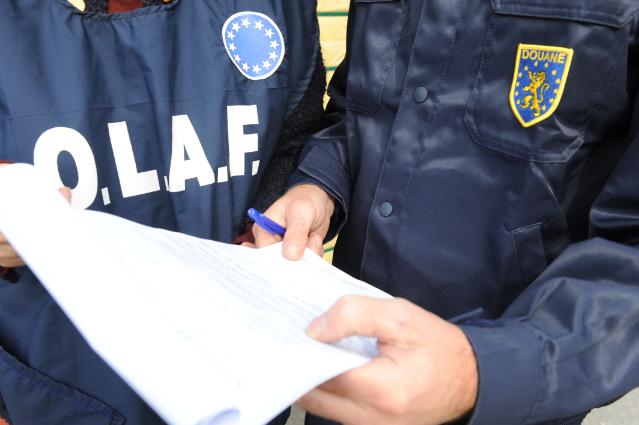
OLAFAlmost 45 million smuggled cigarettes, nearly 140.000 litres of diesel fuel and about 14.000 litres of vodka were seized during a major Joint Customs Operation (JCO). The Operation code-named “Warehouse” was carried-out in October 2013 by the Lithuanian Customs Service and the Lithuanian Tax Inspectorate in close cooperation with the European Anti-Fraud Office (OLAF), and with the participation of all 28 EU member states. As a result of Operation “Warehouse”, a significant potential loss to the budgets of the European Union and its Member States was prevented. According to preliminary estimates, this would have amounted to about € 9 million in the form of evaded customs duties and taxes. The final results of the Operation were discussed by the participants last week at a debriefing meeting in Vilnius and were made public today across Europe.

Algirdas Šemeta, Commissioner for taxation, customs, anti-fraud and audit, welcomed the very good results of the operation. “The fight against the smuggling of excise goods is one of our political priorities and we have launched a number of initiatives to better equip Europe against such harmful practices being run by organised criminal networks. JCO Warehouse is a good example of how the EU and Member States’ authorities can cooperate effectively to protect their revenue. Joint Customs Operations safeguard the EU’s financial interests and also protect our citizens and legitimate businesses”, he said. “Such Operations also highlight the added-value of OLAF in helping facilitate the exchange of information between our partners across Europe and in providing effective operational support.”

Operation “Warehouse” focused on cargo movement by road transport. It targeted the smuggling and other forms of illegal trade of excise goods such as mineral oil, tobacco products and alcohol throughout Europe. By using several complex scenarios in multiple EU Member States, fraudsters lawfully import goods into the EU but request a VAT and excise exemption by declaring the goods as subject to tax and duty exemption regimes (e.g. declaring the goods to be in transit). The trace of the goods is then lost through the fictitious disappearance of the traders or through a fictitious export. Fraudsters avoid paying VAT and excise duties, but the goods remain in the internal market, causing a substantial loss to the EU’s and Member States’ revenues.

JCO “Warehouse” was the first Operation carried-out in close cooperation with tax authorities to target excise and VAT fraud specifically, besides customs fraud. For the first time, customs and tax authorities cooperated on a European scale in a JCO. This is a significant achievement since the different competences and legal regimes applicable at national and EU level make it difficult to address complex fraud schemes with uniform measures. In this Operation, customs and tax authorities joined their expertise, resources and shared intelligence to prevent losses to the EU’s and Member States’ budget.

Eight seizures were made during the Operation. Among these, authorities seized 6.617.400 cigarettes in Sweden and Lithuania; 135.831 litres of diesel in Poland and the United Kingdom, and 14.025,6 litres of vodka in United Kingdom alone. Overall, 44.957.160 cigarettes were seized.

During the entire Operation “Warehouse”, OLAF provided organisational, logistical, financial and technical support to allow for an exchange of information and intelligence in real-time. This was coordinated from the Physical Operational Coordination Unit (P-OCU) at the OLAF premises in Brussels which facilitated direct communication with the national contact points. A group of liaison officers from some Member States representing all the participating 28 EU countries, worked from here during the Operation and experts from the Commission’s Directorate-General for Taxation and Customs Union provided support.

EUROPOL participated as an observer in the Operation. A representative of the office was present at the P-OCU during the operational phase of the operation. It was also possible to make direct cross-checks of suspect individuals and companies appearing during the JCO with EUROPOL via a secure internet connection. Source: EU Commission

Finance Ministry approves transition of destination inspection service from scanning providers to Nigeria Customs Service

NigerianCustoms-BadgeThis is a landmark and very brave decision by the Nigerian Government. All countries operating Build Operate Transfer (BOT) X-ray cargo scanning services should watch this development with interest.

Following the expiration of the Destination Inspection Contract Agreements between the Federal Government of Nigeria and Scanning Service Providers (SSPs), the President, Commander in Chief of the Armed Forces has directed the transition of Destination Inspection Service from contracted SSPs to the Nigeria Customs Service.

Accordingly, effective from 1st December 2013, Nigeria Customs Service has taken over full processing of all import transactions to Nigeria in accordance with the amended Import Guidelines of the Destination Inspection Scheme. Pursuant to this, all Scanning Service Providers (Cotecna, SGS and Global Scan) shall cease to approve new Form M, issue Risk Assessment Report (RAR) or perform Scanning operations for goods imported into Nigeria.

In international trade several destination countries require Pre-shipment inspection. Pre-shipment inspection, also called preshipment inspection or PSI, is a part of supply chain management and an important and reliable quality control method for checking goods’ quality while clients buy from the suppliers.

After ordering a number of articles, the buyer lets a third party control the ordered goods before they are dispatched to him. Normally an independent inspection company is assigned with the task of the PSI, as it is in the interest of the buyer that somebody not connected with the deal in any way verifies the amount and quality. This way the buyer makes sure, he gets the goods he paid for. Wikipedia

The SSPs shall handover all valid Form Ms and existing Valuation Database to the Nigeria Customs Service. However, the contract for provision of ICT infrastructural back up for the scheme currently being executed by Webb Fontaine is extended for a period of 18 months to ensure a smooth takeover by NCS.

As we enter this era, the Federal Ministry of Finance urges stakeholders and all Nigerians to give the Comptroller General of Customs and his team all the support necessary to manage a smooth and successful takeover. While no effort was spared in the build up to this process, we should all bear it in mind that transitions of this magnitude may throw up some implementation challenges. It will require the understanding of all Stakeholders to manage whatever initial challenges that may arise before the process fully stabilizes.

As part of the take-over plans, Help Desks and Dedicated Hotlines have been provided to enable Stakeholders and the general public channel complaints, observations and suggestions on the process to the Nigeria Customs Service. Help Desks are provided at Customs Headquarters, Abuja and other Commands across the Country. Such feedback can also be channeled directly through the following dedicated numbers: 09 4621597, 09 4621598 and 09 4621599.

The Ministry will like to convey the appreciation of Mr. President and all Nigerians to the Scanning Service Providers for services rendered to the Nation since the beginning of the Destination Inspection scheme in 2006.

Source: Businessnews.com.ng

Recent Happenings in the World of Customs Scanning

Herewith a collection of articles on customs non-intrusive inspection around the world. True to form, the acquisition and use of such technology is not without controversy of some sort.

Spanish Customs to use ‘Full-body See-through’ Scanner at Frontier

Backscatter Van

American Science and Engineering’s (AS&E) Z Backscatter Van

July 2013 – The Spanish Government is to deploy a ‘Mobile X-Ray Scanner’ at the frontier to detect cross-frontier smuggling of tobacco. A Panorama Investigation reveals the mobile X-ray scan technology mentioned is one installed and operated in a mobile vehicle (van) – it is system that is potentially dangerous!

These plans are said to be part of a strategy to crack-down on cigarette smuggling across the frontier, which they say is causing untoward damage to the Spanish economy. The regional special representative of ‘La Agencia Tributaria’ (Spanish Tax) Alberto García Valera, says he has found it necessary to spend money and invest heavily on new technologies to combat fraud and tax evasion in places like the Le Linea-Gibraltar Frontier.

‘La Agencia Tributaria’ purportedly placed an order with the American company American Science and Engineering (AS&E) for the delivery of this very sophisticated, hi-tech scan system known as the ZBV S-Class.

The ZBV or Z Backscatter Van, is a mobile X-ray vehicle screening system, it uses technology known as ‘Backscatter’ which provides a photo-like images of concealed objects, such as explosives, drugs, currency trade-fraud items and of course things like cigarettes, but the latter not exclusively so.

The ZBV X-Ray Scanning equipment is integrated into a standard van type vehicle, usually powered by a Mercedes or Chrysler engine. The ZBV creates a photo-like Z Backscatter images showing materials by directing a sweeping beam of X-rays at the object under examination, and then measuring and plotting the intensity of scattered X-rays…if you’re in your car, your body will get zapped by the X-Ray beams!

Read the full report by Panaorama (Gibralter) here!

Axis Cams Integrated with X-ray Scanners Secure Korean Airport Customs
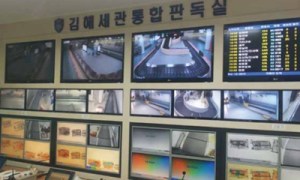
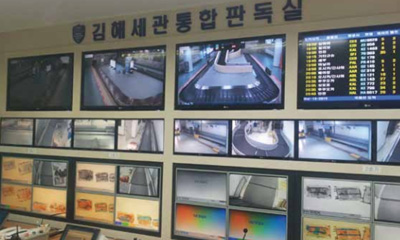
Korean Customs Integrated Control Room - Gimhae International Airport

Korean Customs Integrated Control Room – Gimhae International Airport

November 2013 – Korean Customs at Gimhae International Airport , Busan has introduced Axis network cameras and integrated it with the existing X-ray scanners for checked bags into one location. This has allowed Customs to manage its workforce more efficiently and enhance its monitoring capabilities through the “Choose and Focus” function.

An integrated X-ray viewing room has allowed Korean Custom’s management to divide the workforce into teams of two, and the accuracy of reading and individuals’ reading capabilities have been significantly improved. Since the reading staff has been grouped into teams, their level of fatigue has been reduced, and they can concentrate and read multiple X-ray scans at all times.

Network Cameras with panoramic function in each carousel monitor the CIQ customs, immigration and quarantine area that passengers must go through when departing or arriving. The cameras now permit Customs to accurately track and monitor travellers as they claim their baggage. All stages from Check-in of checked bags to their check-out are carefully recorded, resulting in disputes with travelers about lost or damaged bags can be smoothly resolved. The high-definition network cameras allow the entire route to be monitored for abnormal cargo. It is much easier to identify risks and monitor movement during incidents. Read the full report here! Source: asmag.com

Nigeria Customs takes inventory, evaluates scanning machines ahead of takeover

Nigeria Customs takes inventory, evaluates scanning machines ahead of takeover

Nigeria Customs takes inventory, evaluates scanning machines ahead of takeover

October 2013 – Nigeria Customs Service (NCS) has begun an inventory and evaluation of the scanning machines with a view to ascertaining the state of the machines ahead of the December 1, take over date.

In an exclusive interview with Vanguard at the Customs Headquarters in Abuja, service spokesman, Mr. Adewale Adeniyi, a Deputy Comptroller of Customs said that consultants and experts including the manufacturers of the scanners (Smith of France) were all brought to carry test of the machines.

Adeniyi also said that more than 500 of the newly recruited men and officers of the service will be deployed to both the information technology and scanning departments. He disclosed that in the course of evaluating the machines, it was discovered that maintenance of the scanners had been compromised.

He added that the development will not in any way stop the take over of the scanning machines by the Nigerian Customs Service. The Customs spokesman disclosed that the maintenance of the machines were sub-contracted to other consultants other than the manufacturers.

Adeniyi further disclosed that the integrity of the machines in terms of maintenance have been compromised. Source: www.energymixreport.com

Nicaragua – Fixed Rate to be Charged for Customs Scanning (Fail!)
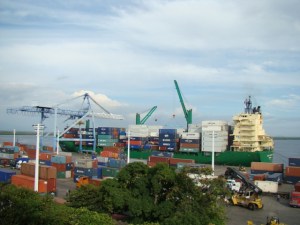
Port of Corinto, Nicaragua (Picture: Wikipedia)

Port of Corinto, Nicaragua (Picture: Wikipedia)

July 2013 – The government has recognized that it was a mistake charging for the scanner service based on the value of the cargo.

The presidential adviser for economic affairs, Bayardo Arce, believes the head of the Directorate General of Customs (DGA), Eddy Medrano, may have overstepped the mark in approving a contract with the company Alvimer Internacional y Compañía Limitada on the right to collect on the declared value of the goods that pass through the scanner system to be installed in the country’s customs offices.

“We have been made aware of this criterion of entrepreneurs and talked with President … and it is clear that a technical error was made,” the official, adding that the fee collected will be at a fixed rate as in the draft Law on Granting of Non Intrusive Inspection Services in National Security Border Controls, prior to the approval of Congress.

The concessionaire in charge of scanning services in Nicaraguan customs offices would recover its investment in 15 months and earn $220 million in the 15 year contract.

From all this money, 10% will go to the Directorate General of Customs (DGA). According to preliminary calculations made ​​by the Nicaraguan private sector, the company will invest about $22.4 million in the seven scanners to be installed in each of the seven Nicaragua customs offices, recovering its investment in just 15 months. Source: centralamericadata.com

French Customs staff numbers shrink as inspections become automated

THE number of French customs officials has fallen 25 per cent over the last 20 years to 16,662 with another 300 expected to go next year as surveillance becomes more computerised. Picture: Seanews Turkey

THE number of French customs officials has fallen 25 per cent over the last 20 years to 16,662 with another 300 expected to go next year as surveillance becomes more computerised. Picture: Seanews Turkey

The number of French customs officials has fallen 25 per cent over the last 20 years to 16,662 with another 300 expected to go next year as surveillance becomes more computerised. (Comment: by stark contrast French Doeane still have more staff than the South African Revenue Service, where the Customs compliment is around 2500 officers.)

“Ten years ago, 1.2 million containers a year arrived in the Port of Le Havre, with 560 customs staff and three agents of the competition and anti-fraud service,” said Bertrand Vuaroqueux of the National Union of Customs Officers. “Today, it’s 2.5 million containers, but only 400 staff.”

While the trend is EU-wide, it is more acute in France where the number of seizures of counterfeit goods has fallen by half since 2011 while 33 per cent of goods inspected in 2012 did not comply with EU rules, increase of 22 per cent from 2011.

Even the economy ministry, in charge of customs, hints at an official weakening of overall surveillance, Reuters reports. “The priority is no longer systematically to check vessels in coastal waters but to focus on the most important fraud cases,” it said in the draft 2014 budget.

European customs services are under orders to facilitate the flow of trade and make life easier for companies to avoid hobbling economic competitiveness.

Competition for business among European ports and airports has led to what critics call a race to the bottom between national customs services.

The big winners are Europe’s two largest ports, Antwerp and Rotterdam, where China has invested in making the 12-million-container-a-year megaport on the Maas/Rhine Estuary.

As the EU seeks a string of free-trade deals across the globe, Antwerp is building the world’s largest lock, wide as a 19-lane highway, to accommodate a new generation of giant ships.

Like its rival European ports, Antwerp is under pressure from importers to do checks quickly and efficiently. While only one to two per cent of goods entering Europe are physically inspected nowadays, online checks of digital paperwork are carried out on the basis of risk analysis.

The role of customs has also been changed by the single European market, which allows the free movement of goods inside the 28-nation EU and by globalisation which multiplied international supply chains, and by the economic crisis. Such trends may accelerate with new customs rules having customs declarations made at an office remote from the point of entry of the goods starting next month. “We will have to establish rules of engagement to ensure it doesn’t become a big sieve,” a European Commission source told Reuters. Source: Seanews.com

100% Container Scanning in Ports – a solution on the horizon?

Decision Sciences maintains that 100% container scanning is possible without bringingcommerce to a crawl (Credit: Maritime Professional)

Decision Sciences maintains that 100% container scanning is possible without bringing
commerce to a crawl (Credit: Maritime Professional)

The following article published by Maritime Professional describes a new technology, already in use by a major terminal operator, which appears to put the requirement for 100% scanning of all inbound containers back on track. The article has been doing the rounds on a social media platform with some sceptism still being shared on its viability as a ‘100%’ scanning solution. All the same its always interesting to learn of new innovations. I guess the US Treasury has spent billions sponsoring these types of tech-development so as to vindicate its original threat to the rest of the world! (For the PDF version please click here!)

In July 2007, U.S. legislators passed a law requiring 100% scanning of U.S. bound containers at their last foreign ports by the year 2012. That federal requirement nearly died a quick death recently but has received a reprieve of sorts. Originally scheduled to take effect July 1, Homeland Security Secretary Janet Napolitano in May of 2012 notified Congress that she would use her authority under the 2007 law to delay implementation by two years. Napolitano said systems available to scan containers would result in a negative impact on trade capacity and the flow of cargo, and that some foreign ports do not have the physical characteristics needed to install such systems. If the last part was true then, however, it may not necessarily be the case now.

As reported in our 1Q 2012 edition of MarPro, pilot efforts were established at several foreign ports under the Secure Freight Initiative (SFI) targeting in-bound containers for weapons of mass destruction (WMD) prior to loading. Objections by trading partners surfaced and were confirmed by the Government Accounting Office (GAO).

In her testimony before the Senate Commerce, Science and Transportation Committee, DHS Secretary Janet Napolitano said in part, “DHS has learned a great deal from these pilots, but it has also encountered a number of steep challenges. Some of these issues relate to the limits on current technology. Technology doesn’t exist right now to effectively and automatically detect suspicious anomalies and cargo. This makes scanning difficult and time-consuming. …Therefore, DHS is compelled to seek the time extensions authorized by law with respect to the scanning provision.” At the time DHS’s Science & Technology Directorate (S&T) had already spent nearly $10 million on efforts to develop a container security device; to no avail.

New Technology: New Hope for Compliance
As the U.S. government continues to try to find a solution to its own scanning requirements, it also continues to fund testing when a promising solution comes to light. In September of last year, Decision Sciences International Corporation (DSIC), a provider of security and detection systems, announced that it was awarded a $2.7 million contract by the DHS Domestic Nuclear Detection Office (DNDO) for an Advanced Technology Demonstration (ATD) of its Multi-Mode Passive Detection System (MMPDS). Under the contract, DSIC supports government testing of MMPDS intended to evaluate the system’s effectiveness and readiness for transition to production. Before that, Decision Sciences was awarded another contract – this one worth $400,000 – by the U.S. Department of Defense to test muon tomography based scanning systems capable of detecting explosives. 

The Multi-Mode Passive Detection System – how it works
Based in Chantilly, VA, with a development/production facility in Poway, CA, DSIC and its 27 employees and contractors hope to bring together hardware and software development, systems integration and cutting edge science to improve the safety and security of global commerce. Based on patented technology invented by scientists at the Alamos National Laboratory, the Multi-Mode Passive Detection System (MMPDS) was developed with private sector investment and expertise. MMPDS is billed as a safe, effective and reliable automated scanning device for detecting unshielded to heavily shielded nuclear and radiological threats. In reality, and as MarPro found out during a focused site visit in Freeport, Bahamas, the system does so much more.

DSIC’s passive scanning technology uses naturally occurring cosmic ray muons to detect potential threats in cargo, vehicles and other conveyances. DSIC President and CEO Dr. Stanton D. Sloane explains, “Equipment can generally be classified into two main categories; active and passive. Active systems include x-ray and/or radiation technologies. In other words, they add some sort of radiation or energy to the environment. Our system is 100 percent passive; we don’t generate any additional energy. We simply use the existing cosmic ray ‘muons’ to do the scanning. When cosmic rays hit the upper atmosphere, they create showers of atomic particles. One of the particles is a muon. High in mass, muons travel at near the velocity of light. Because of this, muons penetrate materials … even very dense materials … readily.

Normal cosmic radiation is 5000 muons per minute and penetrates through lead, steel, concrete and just about anything else. Sloane adds, “That’s really the breakthrough technology. We have upper and lower detectors. As the muons go through the upper detector we calculate their trajectory. As they go through the bottom detector, we calculate their trajectory and we look for a change in that track. The angular change of the track is a function of the density of the material that the muons go through. The denser the material that the muons penetrate, the larger the angular change.”

Beyond the efficacy of the system is its vivid imagery of the inside of the container it is scanning. With x-ray machines, if something is found, the container must be taken to the side, analysis performed and delays to the container magnified. Not so with Decision Sciences technology: false positives are eliminated because the density of typical items – and the dangerous ones too – can be catalogued.

Continue reading →

Mastermind Steps Up War Against Counterfeit Goods

cigaretteNow isnt this a surprise? – Mastermind Tobacco has stepped up the fight against counterfeit cigarettes in the Kenyan market, it announced yesterday (February 27, 2013). It said it has set up security teams in Nairobi, North Lake Zone, South Lake Zone, Meru, Central and Rift Valley. Focus will also be on borders such as Malaba, Chepkube and Lokichogio, the airports and ports.

“The investment in supply chain preventive security measures from the point of manufacture to the point of distribution has seen an improvement in preventing legitimate trade from being infiltrated by counterfeits,” said Mastermind in a statement. Quite rich for a company which was persona non-grata in South Africa for instance. Security teams for what? To assist delinquent Customs officials on what they do when the Mastermind truck arrives at the border?

Just a month earlier (January 2013) Mastermind featured a job advert on jobskenya24.com  (click hyperlink to read the job criteria) wherein one of the key criteria under qualifications and experience reads as follows –

“At least 10 years experience in Kenya Police Service, five (5) of which should have been as Assistant Commissioner of Police (ACP) especially in the Criminal Investigations Department or Anti-Bank Fraud Unit.”

So there you have it, somebody on the inside of government ear-marked for the job of overseeing investigations and no doubt border operations. See links below  on Mastermind’s historical exploits –