A new edition of the WCO magazine is available covering insights of performance management in several countries. Of particular mention for the Southern African Customs Union are two articles on recent timed release studies conducted in the region, in Namibia and between Eswatini and South Africa.
The World Customs Organization (WCO) is delighted to announce the release of an updated e-learning module on Time Release Study (TRS), now accessible on the CLiKC! platform.
The TRS is a strategic and internationally recognized tool designed to measure the average time taken to release or clear goods at borders. It tracks every step from the moment cargo arrives until its physical release.
This course provides practical guidance on conducting TRS, demonstrating how to execute each phase effectively. It starts with preparing for the study, then moves on to collecting, recording and analyzing data, and finally ends with the monitoring and evaluation phase.
In summary, these updates to the TRS module reflect the WCO’s commitment to bridging the gap between theory and practical application, empowering Customs professionals and stakeholders with the knowledge, skills, and tools necessary to conduct efficient, effective, and impactful TRS implementation tailored to diverse Customs environments.
The module’s comprehensive approach includes integrating real-world scenarios, interactive exercises, and role-playing activities to deepen understanding and immediate application of TRS methodologies. It also emphasizes developing detailed work plans, addressing data collection methods, sampling techniques, process ownership, stakeholder engagement, and data quality assurance for informed decision-making and process improvements. Ultimately, these updates facilitate the efficient execution of TRS assessments and actionable strategies, enhancing trade facilitation outcomes worldwide.
The course is now available to all WCO Members on CLiKC!, the WCO’s e-learning platform. The WCO achieved this update with the support of the State Secretariat for Economic Affairs of Switzerland (SECO) through the SECO-WCO Global Trade Facilitation Programme (GTFP).
The World Customs Organization (WCO)’s Accelerate Trade Facilitation Programme, as funded by the United Kingdom’s His Majesty’s Revenue and Customs (HMRC), in partnership with the SACU Secretariat and the South African Revenue Service (SARS), delivered a Workshop to support SACU Members to increase a harmonized approach towards implementing the SACU AEO Mutual Recognition Arrangement (MRA). The Workshop followed a blended approach, with virtual sessions taking place from 2 to 12 April and a Workshop hosted by SARS in Johannesburg, South Africa, from 15 to 19 April.
The SACU Secretariat’s Deputy Director of Trade Facilitation, Ms Maggie Ngoanamokgotho Tladi, underlined the SACU strategic priorities as approved by the SACU Council of Ministers, underscoring the region’s commitment to enhancing trade facilitation, investment promotion and regional integration through the AEO Programme. In this context, the Workshop focused on joint efforts to increase the uptake of the AEO Programme in the SACU member states as part of the SACU AEO MRA adopted in May 2023. This endeavour seeks to ensure a harmonized approach and clear benefits for traders with AEO status across respective SACU member countries while expanding the AEO Programme to economic operators beyond importers and exporters.
WCO experts from the Association of Southeast Asian Nations (ASEAN), the East African Community (EAC) and the European Union (EU) shared their experiences in designing and implementing their respective regional AEO Programmes and MRAs, thus contributing to the SACU deliberations on further developing its operational instruments. The Head of the WCO’s Accelerate Trade Facilitation Programme highlighted the importance of leveraging the benefits of the Customs-to-Customs partnership to share expertise, experience, and best practices to ensure traders can fully benefit from the potential that the SACU MRA offers.
The Workshop cemented the AEO concept’s importance in boosting economies and regional integration through various tools and instruments.
In addition, the participants were given tools on performance management by the WCO to identify potential Key Performance Indicators.
During the closing ceremony, Ms. Penny Bologo, Executive Accreditation SARS AEO Division, stated, “These insights will inform our strategies and shape our approach moving forward. I can confidently say that SACU has been empowered. This week, we have delved deeper into the AEO MRA and explored the practical tools for implementing our AEO Programme.”.
The WCO is looking forward to continuing its strategic multi-year partnership with its partner countries in the region (i.e. South Africa, Namibia, Eswatini and Lesotho) under the framework of the WCO Accelerate Trade Facilitation Programme and appreciates the collaborative efforts, support and participation of the SARS and SACU Secretariat in this regional partnership.
For more information on the WCO Accelerate Trade Facilitation Programme, please see here or contact capacity.building@wcoomd.org.
South Africa has requested WTO dispute consultations with the European Union concerning certain aspects of the regime imposed by the European Union on the importation of South African citrus fruit. The request was circulated to WTO members on 24 April.
South Africa is challenging the EU’s prohibition on the importation of South African citrus fruit affected by the fungus “citrus black spot” (Phyllotactic citricarpa). South Africa claims the EU measure appears to be inconsistent with various provisions of the WTO’s Agreement on Sanitary and Phytosanitary Measures.
Further information is available in document WT/DS624/1
This is the second dispute case initiated by South Africa regarding the EU’s import measures on citrus fruit. In July 2022, South Africa initiated a case challenging EU phytosanitary requirements for the importation of oranges and other citrus products related to the pest Thaumatotibia leucotreta, known as false codling moth (DS613).
What is a request for consultations?
The request for consultations formally initiates a dispute in the WTO. Consultations give the parties an opportunity to discuss the matter and to find a satisfactory solution without proceeding further with litigation. After 60 days, if consultations have failed to resolve the dispute, the complainant may request adjudication by a panel.
The following is a blog article by Taku Fundira, published via Tralac dated 28 March 2023.
The African Continental Free Trade Area (AfCFTA) which is set to be the largest free trade area (FTA) in the world with 54 of the 55 members of the Africa Union being signatories to the Agreement. The AfCFTA if fully implemented, is expected to provide a major opportunity for African countries to attract Foreign Direct Investment (FDI), diversify exports, boost intra-African trade, boost growth, reduce poverty, foster economic inclusion, and promote sustainable economic development.
Currently, countries are not trading under the AfCFTA trading regime, however, Phases I and Phase II negotiations have been completed albeit tariff concessions and rules of origin (RoO) negotiations for some products are still underway. These two issues, partly attribute to the reasons why it is not yet possible to trade under the AfCFTA. Phase III negotiations are currently underway and include protocols on additional topics such e-commerce. Trade and Women and Youth in Trade Protocol which was added to the AfCFTA agenda has since been concluded is expected to be approved later in 2023.
The Guided Trade Initiative
Despite countries, not yet trading fully under the AfCFTA, a pilot initiative called; the Guided Trade Initiative (GTI) which aims to stress test trading in goods between member countries within the operational, institutional, legal and trade policy environment under the AfCFTA was launched in Accra on 7th October 2022. Eight countries are participating in this pilot. Tanzania following Rwanda, Kenya, and Ghana, have begun trading under the GTI. The AfCFTA GTI has identified 96 products, including tea, coffee, processed meat products, sugar, and dried fruits, to be traded among the participating countries. Tanzania aims to sell 10 products under the AfCFTA’s GTI including coffee and glassware. Plans are underway to have a similar GTI for services subject to State Parties agreeing on modalities.
Initial assessment of the GTI reveals that there remain significant challenges for African countries to trade smoothly and boost intra-African trade mainly because non-tariff barriers (NTBs) to trade remain prevalent, massive infrastructure gaps especially transport infrastructure pose a threat to the success of not only the GTI but also to the AfCFTA. For Africa to make the most of free trade, the continent must address these challenges. Estimates suggest most African landlocked countries face high transport prices which are three to four times more than in most developed countries. Several institutional, political and other factors that combine to limit competition, encourage corruption, discourage investment and encourage informal activity attribute to the prevalent high prices in Africa.
Non-tariff trade costs extremely high
Latest available data from the World Bank on non-tariff trade costs (NTTCs) reveal that on average goods traded between African states accrue 292% ad valorem equivalent (AVE) in NTTCs. Non-tariff trade costs include among others, transport costs; direct and indirect costs associated with differences in languages and currencies, cumbersome import, and export procedures. Despite commitments by regional economic communities (RECs) to reduce NTTCs through mechanisms such as the NTB online monitoring mechanism under the Tripartite FTA and under the AfCFTA demonstrate the importance of ensuring that NTBs do not impede intra-Africa trade, reducing NTTCs.
Tralac has produced an infographic on intra-Africa NTTCs using the ESCAP – World Bank Trade Cost Database which can be found on the tralac website and it reveals the following:
Over a 10-year period (2011 – 2020) there have been no significant changes in non-tariff trade costs (NTTC). NTTCs decline by 2% CAGR (compound annual growth rate) over the review period (2011-2020).
Agricultural products’ NTTC remain much higher than manufacturing products’ NTTCs over the review period (2011-2020), although declining relatively much faster over the last 5 years relative to manufacturing products’ NTTCs. Between 2016 and 2020, agricultural and manufacturing NTTCs declined by 2.5% (CAGR) and 1.4% (CAGR) respectively.
The average intra-Africa NTTC on agriculture and manufacturing in 2020 (latest available data) is 330% (AVE) and 253% (AVE).
Intra-REC NTTCs are lower than between RECs (inter-REC)
COMESA has the highest average intra-REC NTTCs (285% AVE) and EAC has the lowest (135% AVE)
ECOWAS has the highest average inter-REC NTTCs (347% AVE) and EAC has the lowest (269% AVE)
ECOWAS – EAC inter-REC average NTTCs are the highest at 416% (AVE) followed by ECOWAS – COMESA at 389% (AVE)
SADC and COMESA’s inter-REC average non-tariff trade costs are more or less the same at 300% (AVE) and 306% (AVE) respectively
Based on these findings it is not surprising why intra-Africa trade has remained low averaging 18% of Africa’s global trade over the past decade. Intra-Africa trade remains regional and limited to neighbouring countries partly due to these NTTCs which if left unchecked will hamper the goals of the AfCFTA. Therefore, their reduction can be a gamechanger for the AfCFTA and more specifically for African economic development.
Trade facilitation key to reducing NTTCs
The extent to which the AfCFTA will be effective to reduce trade costs depends importantly on governments addressing NTBs, including in services markets. Trade facilitation becomes key to the success of reducing NTTCs, by improving trade and customs procedures as well as facilitating the relationship between businesses and government agencies at the border to reduce costs, while protecting the intended regulatory objectives. Estimates from the UNECA (United Nations Economic for Africa) project that intra-Africa trade could double through enhanced trade facilitation and the reduction of NTBs in the AfCFTA.
The AfCFTA Agreement provides a legal framework with specific undertakings for trade facilitation and the elimination of barriers contained in Annex 3 on Customs Co-operation and Mutual Administrative Assistance; Annex 4 on Trade Facilitation; and Annex 8 on Transit. Annex 3 deals with trade facilitation in customs administration. Within RECs efforts to reduce NTBs have yielded significant progress (e.g., Tripartite FTA NTBs monitoring mechanism), however more needs to be done on trade facilitation as little progress has been made here.
What needs to be done?
A limited number of Strategic Corridors has been identified considering their potentialities to facilitate sustainable, efficient, smart, resilient, fair, affordable, secure, and safe mobility and trade within Africa.
State parties should be serious about implementing their trade facilitation obligations or fulfilling their duties under the AfCFTA Agreement and therefore legally binding and justiciable mechanisms should be put in place to ensure transparency, certainty and predictability. These must be complemented by regional and national instruments and measures. In effect Member States should implement their binding obligations. State parties’ customs authorities/agencies should be capacitated and coordinated. This would go a long way in improving trade facilitation governance in Africa and leveraging AfCFTA benefits.
Financing the AfCFTA and associated trade facilitation measures will go a long way in ensuring the success of regional integration in Africa. Furthermore, transport infrastructure should be prioritised. It is important to note that projects are already in progress to boost the development of continent-wide infrastructure. For example, Tanzania’s construction of the Standard Gauge Railway Project is expected to provide a safe and reliable means for efficiently transporting people and cargo to and from the existing Dar-es-Salaam port. Other large projects underway include the Trans-Maghreb Highway in North Africa, North-South Multimodal Corridor, the Central Corridor project, and the Abidjan-Lagos Corridor Highway project.
In conclusion, reducing the NTTCs will be a gamechanger for the AfCFTA. What’s needed is for Member States to rise to the occasion by concluding the outstanding negotiations, especially resolving teething issues with respect to specific products especially outstanding RoO issues and finalising tariff concessions. Furthermore, the political, social, and economic environment should be managed both at the regional and national levels with the ultimate goal of ensuring the success of the AfCFTA.
he WTO Trade Facilitation Agreement (TFA) led to a US$ 231 billion increase in trade, particularly in agriculture, according to estimates for the first couple of years of its implementation presented to the Committee on Trade Facilitation on 22 March. Developing members and least-developed country (LDC) members that have made commitments under the landmark agreement posted the most gains, the estimates find.
Based on estimates for the years 2017-2019, WTO economists attribute to the TFA an average 5% increase in global agricultural trade, 1.5% in manufacturing trade and 1.17% in total trade. These increases are largely driven by the trade growth in LDCs, where agricultural exports rose by 17%, manufacturing exports by 3.1%, and total exports by 2.4% under the TFA. The estimates further point to a 16-22% increase in agricultural trade between developing members that have made TFA commitments. These estimates are conservative, as large gains have already been realized, particularly in manufacturing, in anticipation of the Agreement’s entry into force and by developed members making full commitments since the start of the TFA’s entry into force, as noted in previous studies.
In 2015, the WTO forecast that complete implementation of the TFA could lead to an increase of up to 2.73% in global trade flows by 2030. The latest estimates note that as the benefits of the Agreement continue to be realized, the trade and welfare gains are likely to expand. Stronger increases for manufacturing trade may still be detected after more years of TFA implementation for developing members as well. The latest estimates are part of the Secretariat’s ongoing work tracking the impact of the TFA.
The TFA, which entered into force on 22 February 2017, contains provisions for expediting the movement, release and clearance of goods, including goods in transit. It also sets out measures for effective cooperation between customs and other appropriate authorities on trade facilitation and customs compliance issues. It further contains provisions for technical assistance and capacity building in this area.
The TFA is the first WTO agreement in which developing members and LDC members can determine their own implementation schedules and seek to acquire implementation capacity through the provision of related assistance and support. Developed members were required to implement all provisions of the TFA from its entry into force. As of 22 March 2023, notifications submitted by WTO members indicate that they have committed to implement 76.1% of TFA obligations.
The estimates were presented at the meeting of the Committee on Trade Facilitation upon WTO members’ request, in line with recommendations from the first review of the TFA in 2021. The next TFA review is scheduled for 2025.
At the meeting, the Committee also considered notifications from members regarding TFA measures, presentations of national experiences and suggestions to enhance trade facilitation implementation, and specific concerns on customs procedures. The next committee meetings are scheduled for 15-16 June and 3-5 October.
Wamkele Mene, Secretary-General of the AfCFTA Secretariat
In order to support the implementation processes of the African Continental Free Trade Area agreement, Regional Economic Communities (RECs) need to make informed choices about how to reap the benefits presented by the agreement, while at the same time managing the challenges that may be encountered in the course of the implementation.
Wamkele Mene, Secretary-General of the AfCFTA Secretariat, stressed this Tuesday, June 7, on the occasion of the second coordination meeting of the CEOs of RECs, on the implementation of the AfCFTA held at the EAC Headquarters, in Arusha, Tanzania.
The meeting sought to take stock of the progress made since the last meeting in Accra in 2021.
The role of the continent’s eight RECs is critical especially as the latter are building blocks for the AfCFTA.
Mene said the implementation of the AfCFTA will likely influence future trade policies of the RECs.
“In this regard, effective collaboration between the RECs and the AfCFTA Secretariat is necessary to ensure that the AfCFTA outcomes are consistent with regional advancements in trade integration made thus far and the projections for the future,” Mene said.
“Therefore, the coordination meetings offer us an opportunity to listen to one another, to better understand our areas of difference, and to work together to build consensus around common positions critical to our success at creating an African Economic Community.”
African leaders mandated the AfCFTA Secretariat, the African Union Commission, and the RECs to develop a framework of collaboration to enhance complementarity, synergies, and alignment of programmes and activities to facilitate the effective implementation of the AfCFTA. The negotiation of the AfCFTA is now in phase two which covers investments, intellectual property rights, women and youth in Trade competition policy and digital trade.
It is Mene’s strong conviction that by agreeing on a workable framework which will strengthen the interdependence of RECs on the one hand, and strengthen the cooperation between RECs and the AfCFTA Secretariat on the other hand, “we will be taking steps critical to the success of the AfCFTA.”
“We have already received instructions from the Assembly of Heads of State and Government of the African Union to take all necessary steps to ensure the effective implementation of the AfCFTA, including facilitating commercially meaningful flow of goods and services under the AfCFTA preferential regime, across the continent. We were also instructed to develop a coordinated approach to the implementation of the AfCFTA Agreement, with the existing RECs as building blocks.”
Peter Mathuki, the EAC Secretary-General, noted that Africa is one of the world’s fastest-growing economies, but trade in goods and services accounts for an estimated 3% of global exports and imports on average.
As noted, the share of Intra African trade remains low: on average, 13% for intra-imports and 20% for intra-exports, while ExtraAfrican trade accounts for more than 80% of the total trade. Africa’s exports to the rest of the world consist of raw materials, such as oil, gas, minerals, and agricultural commodities, with little to no value addition.
Mathuki said: “There are many reasons why intra-Africa trade is low; these include differences in trade regimes (8 AU recognised RECs), inadequacies of trade-related infrastructure (poor intermodal connectivity), trade finance and trade information.
“Other constraints are customs, administrative and technical barriers, limited productive capacity, lack of factor market integration and inadequate focus on internal market issues.”
With a market of around 1.3 billion consumers and a GDP of $ 3.4 trillion, Mathuki reiterated, AfCFTA will unlock many opportunities in the continent and redesign the architectural framework of its economic systems.
“The eight AU recognised RECs are the official pillars of the African Economic Community (AEC) set out in the Abuja Treaty establishing the AEC. The RECs play a critical role in coordinating and submitting REC tariff offers, schedules, and commitments on trade in services and are fully involved in negotiations on outstanding issues,” Mathuki said.
“Active engagement and input from the private sector and interest groups at the national and REC level are needed to shape the AfCFTA trade regime and resolve challenges ahead.”
Amb. Liberata Mulamula, Tanzania’s Minister of Foreign Affairs, said her country commends the initiative of establishing collaboration between the AfCFTA and RECs towards implementation of the AfCFTA Agreement.
“Tanzania as a member of EAC Customs Union has ratified the AfCFTA agreement and is also a member of SADC and EAC. In order to have a meaningful implementation of the agreement, the United Republic of Tanzania needs to align its participation in the AfCFTA to that of the RECs as its member.”
“I am confident that this framework will underpin the interface between the AfCFTA and RECs Free Trade Area and laydown actionable policy proposals that would assist in ensuring coherent, coordinated and fully responsive collaboration between the AfCFTA and RECs.”
FIATA is proud to bring its members a pragmatic solution to move from paper documents to paperless FIATA BLs, which can be issued directly through their everyday tools. The FIATA solution improves the level of security of the FIATA BL in comparison to the paper version, making use of blockchain technology to authenticate the documents and provide an audit trail. Conscious of the various challenges which remain to be overcome to achieve worldwide adoption and legal recognition of electronic exchange of data, the paperless FBL is an answer to the needs of the industry for improved access and exchange of trade documents. The document issuer can decide in which format (s)he wishes to share the original unaltered document with its stakeholders: in paper form or as a PDF. Based on its eFBL data standard, FIATA has developed an API service, available free of charge to all software providers, allowing them to connect with FIATA to create secured paperless FBLs.
As of today, seven software providers have already signed an agreement with the Federation to implement the solution: AKANEA, Cargowise, CargoX, edoxOnline (Global Share), InfoSysTech-IST, Nabu and Usyncro. We are very pleased to announce that the paperless FBLs can start to be issued as of today with edoxOnline, InfoSysTech-IST and Usyncro who have already finalised the implementation.
FIATA encourages all TMS’s, eBL providers and other software providers to join them and implement their solution to offer this new service to their customers. All technical specifications are available on FIATA’s GitHub repository.
The solution, developed by FIATA partner Komgo, will help to reduce fraud risks, as each document is recorded on an immutable ledger and will be verifiable at any time by all stakeholders interacting with the document. Stakeholders will be able to either scan the QR code at the top right of the document, or directly upload the PDF on FIATA’s verification page to access the document audit trail which will
certify the validity of the document,
the identity of its issuer, and
the integrity of its content.
Souleïma Baddi, CEO of Komgo, when asked to comment on the paperless FBL launch said: ‘Documents are the bedrock of international trade, but they don’t operate like we need them to and they’re susceptible to fraud and forgery, that happens quite often.
Trakk is the digital ecosystem of trust for trade documents. I am thrilled to see FIATA joining all companies, financial institutions, warehouses and others who are using Trakk to protect their documents against fraud.’
‘WiseTech Global congratulates FIATA on the launch of their electronic bill of lading.’ The company continued: ‘This initiative will support transparency and security across the supply chain and will help companies to accelerate their digitalisation efforts. It was a pleasure to work with FIATA on this initiative. CargoWise customers will be able to request a connection to FIATA’s eFBL from June 2022.’
‘FIATA is very excited to embark on this important milestone of its digital journey which paved the way for great opportunities for the future of freight forwarders’, said FIATA Director General Stéphane Graber.
The 26th/27th Meetings of the SAFE Working Group (SWG) were held successfully from 11 to 14 April 2022. The virtual meetings brought together more than 260 delegates representing Customs administrations, the Private Sector Consultative Group (PSCG), other international organizations and academia.
In his opening remarks, Mr. Pranab Kumar Das, WCO Director of Compliance and Facilitation, highlighted that the SWG had reached an important juncture as the new three-year SAFE review cycle 2021-2024 was about to enter into discussions. It was pointed out that 17 years after it was first published, the SAFE Framework of Standards (FoS) had garnered substantial interest from WCO Members. During the meetings, Guyana became the 172nd WCO Member to express its interest in implementing the SAFE FoS.
With a view to continued enhancement of the AEO criteria and provisions to strengthen the SAFE FoS, WCO Members made several new proposals to revise the Framework. The SWG also received feedback from the private sector on the urgent need to enhance the harmonization of SAFE and AEO implementation. In this context, the SWG heard a presentation by the WCO Anti-Corruption and Integrity Promotion (A-CIP) Programme on maintaining the integrity and transparency of AEO implementation.
On this occasion, the SWG reviewed and adopted the new Work Plan for 2022-2024, which reflected the critical activities the SWG will carry out over the next two years until 2024, in parallel with the SAFE review cycle. The SWG also received an update on the development of new features for the Online AEO Compendium (OAC) and the other extensive work underway in collaboration with other international organizations in the areas of security and facilitation.
Against the backdrop of the WCO’s theme for 2022, the panel discussion on “Scaling up Customs Digital Transformation by Embracing a Data Culture and Building a Data Ecosystem” attracted significant interest from Members and the private sector. The experienced speakers from Member Customs administrations, the private sector and the Secretariat enriched the discussions by sharing their best practices on using data for enhancing risk management and monitoring AEO programmes.
As a way forward, the SWG agreed that efforts will be reserved for a comprehensive review to assess and monitor SAFE implementation for greater harmonization of AEO programmes globally.
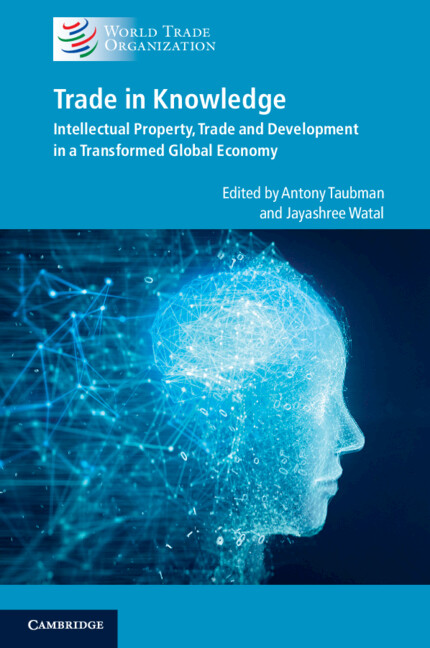
The WTO has launched a new book entitled “Trade in Knowledge: Intellectual Property, Trade and Development in a Transformed Global Economy” on 31 March. At the launch event, a wide cross-section of contributors to the publication discussed how their research and analysis had a bearing on current issues lying at the intersection of development, trade, technology and the diffusion of knowledge.
Drawing together insights from a diverse range of leading international scholars and analysts, the publication explores how to build more inclusive, up-to-date and precise ways of measuring knowledge flows, discusses how more nuanced and effective use of these data may guide policymakers and provides insights into the prospects for knowledge-based social and economic development, moving legacy models and adapting to the realities of the contemporary knowledge economy. The book also proposes ideas for updated systems of governance that promote positive sum approaches to the creation and sharing of the benefits of knowledge as a public good, with a view to informing planning for development.
Abu Dhabi Customs hosted a workshop recently with key Importers and Exporters discussing how TradeLens and digitized transportation documentation has the ability to streamline processes in customs declaration processes.
“Abu Dhabi Customs is excited to work with a group of importers and exporters to explore the benefits that collaboration using blockchain can offer to all those involved. This joint approach is critical to create time savings in the process and to improve access to international trade to all entities that trade with Abu Dhabi. We really believe TradeLens will be bringing a lot of benefits to our ecosystem here in Abu Dhabi”. – Yanal Qasim Mohammad Alkhasoneh, Division Director – Information Technology, Information Technology Division
“The collaboration across public and private entities towards a single shared goal was immensely encouraging. The gathering of industry leaders, authorities, and ocean carriers to jointly and openly address international transportation documentation highlights the desire to improve existing processes using innovative digital tools like TradeLens”. – Thomas Sproat, Global Head of Network TradeLens
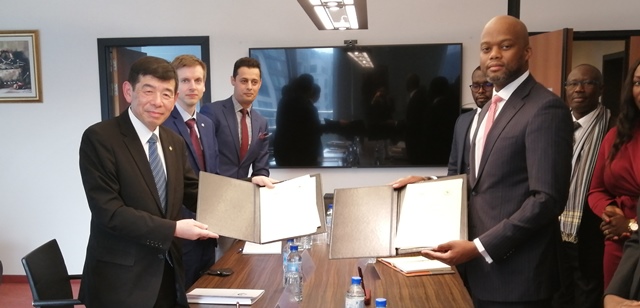
On 15 February 2022, Dr. Kunio Mikuriya, Secretary General of the World Customs Organization (WCO), and H.E. Mr. Wamkele Mene, Secretary General of the African Continental Free Trade Area (AfCFTA) Secretariat, met at WCO Headquarters to sign a Memorandum of Understanding (MoU). This MoU aims at strengthening the organizational capacity, transparency and effectiveness of African Customs administrations in a sustainable manner through cooperation between both Organizations.
In his remarks on this occasion, Secretary General Mene explained that it had been a long road since the establishment of the AfCFTA Secretariat. Today, 41 of its 54 Member States had duly ratified Rules of Origin for 87.7% of tariff headings agreed upon, to name but one milestone. He recalled the mandate of his Secretariat and stated that Customs’ involvement is essential in order to realise the ambitions laid out in the Agreement establishing the AfCFTA. He also noted that expectations were high and that communities were eager to start trading under the Agreement. The AfCFTA Secretary General then acknowledged the WCO’s expertise and role in delivering capacity building in highly-technical areas which were key for implementing the Agreement.
After congratulating his counterpart for the work done by the AfCFTA Secretariat, Dr. Mikuriya highlighted the areas where the WCO could contribute, including customs technical matters such as the Harmonized System, Valuation and Origin, as well as automation, risk management and trade facilitation which will yield economic benefits to the African continent.
He went on to outline the WCO’s long experience in developing capacity-building materials for Customs administrations and in donor coordination to ensure the efficient delivery of training. He reaffirmed WCO’s commitment to contribute to the regional integration efforts in Africa through customs modernisation.
The negotiations to finalise the tariff schedules and rules of origin (RoO) of the African Continental Free Trade Area (AfCFTA) are taking place during the last two weeks of January 2022. Senior Trade Officials (STOs) and the AfCFTA Council of Ministers (COM) will then meet to confirm the results or to decide the outstanding issues. Once the State Parties have agreed on the content of these important Annexes to the AfCFTA Protocol on Trade in Goods, they must be adopted. This is the responsibility of the African Union (AU) Assembly.[1]
Trade in goods under AfCFTA preferences can then begin among the State Parties presently trading with each other under most-favoured-nation (MFN) rates. (Non-State Parties will first have to accede to the AfCFTA Agreement in terms of Article 23 of the AfCFTA Agreement.)
Those State Parties that are members of Regional Economic Community (REC) Free Trade Areas (FTAs), Customs Unions (CUs) and other trade arrangements will continue to trade under existing preferential arrangements.
Article 19(2) AfCFTA Agreement provides that
“… State Parties that are members of other regional economic communities, regional trading arrangements and custom unions, which have attained among themselves higher levels of regional integration than under this Agreement, shall maintain such higher levels among themselves”.
Article 8(2) of the Protocol on Trade in Goods adds the following:
“… State Parties that are members of other RECs, which have attained among themselves higher levels of elimination of customs duties and trade barriers than those provided for in this Protocol, shall maintain, and where possible improve upon, those higher levels of trade liberalisation among themselves”.
However, there is also the practical requirement that the AfCFTA regime must be “customs ready”. It means that the tariff books of individual State Parties and of CUs such as the Southern African Customs Union (SACU), and presumably the East African Community (EAC) and the Economic Community of West African States (ECOWAS), need to be updated. AfCFTA columns will have to be added to these tariff books in order to ensure the new preferences will be enjoyed when customs officials and border control agencies clear goods under this new trade arrangement.
The updating of a tariff book normally happens through national legislative procedures such as the promulgation of a Government Gazette. Customs and other border officials can only act in terms of domestic legal instruments granting them the necessary powers. Trade agreements are not self-executing.[2]
The importation and exportation of goods entail detail procedures involving customs clearance. Customs clearance is the procedure of procuring permission, through its customs authority, to either take goods out of its territory (export) or have goods enter its territory (import). Failure to provide the correct paperwork will mean that goods cannot clear customs and enter the market of the country of destination.
The customs authority of a country is the administrative agency responsible for collecting tariffs and for controlling the flow of goods into and out of a country. Depending on local legislation and regulations, the import or export of some goods may be restricted or forbidden, and the customs agency enforces these rules. The customs authority is different from the immigration authority, which monitors persons who leave or enter the country, checking for appropriate documentation, apprehending people wanted by international arrest warrants, and impeding the entry of others deemed dangerous to the country. A customs duty is a tariff or tax on the importation or exportation of goods.
The approach taken by the World Customs Organisation (WCO) is to improve the security of borders, without unduly hindering legitimate international trade. The WCO initiative focusses on the entire international trade supply chain, rather than restricting customs’ interest to that aspect of the international trade transaction, when goods move across a border. The basic principle underpinning its work is to create an international mechanism for Customs Administrations to gain access to relevant information relating to international trade well in advance, for the purposes of risk management and risk assessment.[3]
The AfCFTA is a free trade agreement (FTA). This is an agreement between States that removes tariffs and other restrictions on goods which are traded between the State Parties, according to the applicable RoO. The main difference between a customs union and a free trade agreement is that even where zero (or reduced) tariffs are part of an FTA, extra bureaucracy is needed to take advantage of those tariffs. Exporting under an FTA means companies have to comply with a complex set of rules (known as preferential rules of origin) to prove that goods only come from countries who have signed up to the FTA and that such goods have been produced or manufactured in accordance with the applicable RoO. For a customs union, once the common external tariff has been paid for a product then it is in “free circulation”. Traders only have to prove the common external tariff has been paid on goods or parts they have used. This is easier to demonstrate than proving the origin of imported goods.
[2] Constitutional systems based on monism, may provide otherwise but will have other requirements to ensure that the executive branch of government respects the powers of the legislature.
System Shock: The $50 Trillion Industry Making a Huge Bet on Blockchain
Blockchain may one day eliminate inefficiencies and lack of transparency in supply chains. While slow in coming, this revolution would benefit not only customers and brands, but the “invisible” workers who power global trade.
In this episode of Bloomberg’s System Shock, we explore how cumbersome, paperwork-bound supply chains—like one stretching from kitchen refrigerators in Europe and the U.S. all the way back to a small farmer in Ecuador—are being transformed by that most modern of technologies.
The World Customs Organization (WCO) has joined hands, once again, with partner Annex D+ organizations (GATF, ITC, OECD, UNECE, UNESCAP, WBG and WTO) in supporting the Global Forum 2022 for National Trade Facilitation Committees (NTFCs). The Forum is being held from 1 to 4 February 2022 in a virtual mode and led by the United Nations Conference on Trade and Development (UNCTAD). It has brought together more than 500 participants, around half of which are members of their NTFCs.
In the high-level opening session, the speakers agreed on the need to ensure well-functioning, holistic and dynamic NTFCs, with their critical role in facilitating trade especially during the COVID-19 pandemic, through collaborative arrangements amongst all relevant public and private sector stakeholders. Embracing digital tools, the e-commerce growth and the importance of MSMEs and women traders were also highlighted by the speakers.
In his video address, Dr. Kunio Mikuriya, the Secretary General of the WCO emphasized the importance of trade facilitation during the COVID-19 pandemic recovery phase. Through simplifying and standardizing border procedures and creating transparent and predictable conditions for trade, Customs administrations facilitate legitimate business that, in turn, increases economic growth and job opportunities.
Secretary General Mikuriya mentioned a survey carried out in 2021, where the WCO took stock of the situation in the area of NTFCs, including the challenges and opportunities observed during the COVID-19 pandemic. Many NTFCs have put their work on hold, due to the inability to meet in person. However, in some instances NTFCs played an important role in addressing facilitation priorities during the pandemic, and have benefited from the sense of urgency generated by the crisis.
Dr. Mikuriya emphasized the need to strengthen the partnership among all relevant government authorities for improving border agency cooperation, which is essential in emergency situations. He reiterated the need to foster the dialogue and collaboration with the business community and underscored the private sector contribution to digitization, to conducting the Time Release Studies and in advancing Authorized Economic Operator (AEO) programmes, while taking into consideration the specific challenges of MSMEs.
The importance of increased diversity and inclusion in trade facilitation reforms, including improving the conditions for women traders was also highlighted. The WCO supports this agenda through its Network for Gender Equality and Diversity, amongst others.
The WCO reiterated its commitment to the TFA agenda in developing and least developed country Members through the WCO Mercator Programme.
The NTFC Forum was made possible with the support of the United Kingdom’s Her Majesty Customs & Revenue (HMRC) through the HMRC-WCO-UNCTAD Trade Facilitation Capacity Building Programme, which brings together the WCO and UNCTAD in a partnership for TFA implementation.
The whole address of the Secretary General can be found here.







 What Happened to the Portcullis?
You must be logged in to post a comment.