Zimbabwean Customs seizes 48kg illicit South African gold worth R20m

goldZimbabwean Customs (ZIMRA) seized 48 kg illicit gold worth R 20 million and arrested 46 people for initial investigations. Forged gold serial-number stamps, specially designed armoured vehicles, clandestine refineries, fake customs clearance papers and documents with links to the black market.

These and other pieces of evidence are the keys that the Hawks believe link a Zimbabwean and South African gold-smuggling syndicate to scores of buyers in Europe masquerading as dealers in precious metals. For two years police have been zeroing in on the syndicate, whose roots are in illegal gold mining in Zimbabwe. Inside were 48kg of gold bars valued at R20-million.On Friday, they acted. In the early hours teams from the Hawks, the Special Task Force and Crime Intelligence raided luxury homes and farms across Gauteng and the North West.

In one of the raids police discovered a walk-in vault at a warehouse outside OR Tambo International Airport. Inside were 48kg of gold bars valued at R20-million. They were being prepared for stamping with official South African gold serial numbers designating that the metal had been officially mined and refined in the country. Police sources say the gold was to have been flown to at least three European countries at the weekend before being smelted, re-refined and distributed.

A source with knowledge of the investigation has revealed the inner workings of the syndicate, from how and where the gold is mined to how corrupt customs and mining officials facilitate the metal’s passage across borders.(Now should’nt this prompt some serious cause for concern, if true?)

“The amount this syndicate has handled is immeasurable. We have known about them for two years and in that short time we have recovered R40-million,” he said.

“They have operated both in South Africa and Zimbabwe as well as other SADC [Southern African Development Community] countries for years, well before we even discovered them”

Illegal miners in Zimbabwe supplied the syndicate. “With the instability and corruption there [South Africa?] it’s dangerous but easy. Once they have the gold, runners take it to the border where, through corrupt officials, it is smuggled across disguised as things such as household products.”

The gold was taken to farms in and around Modimolle in Limpopo where illicit refineries smelted and refined it, the source said. With the help of South African mining officials, gold clearance documentation and special serial and insignia stamps were sourced.

“Once stamped you would never know the difference. We have placed it next to legitimate bars and it looks and feels the same.” He said the gold was distributed through legitimate channels in Europe.

“Those running the syndicate know what they are doing. They are well-connected and influential businessmen with ties to Africa, Europe, the US and Asia”.

“They are linked to the gold powerhouses of the world. These are not ‘mickey-mouse’ people. They are immensely powerful and extremely well connected to some of the world’s top legal firms. Within hours of Friday’s raids lawyers were arriving at their clients’ homes and businesses.”

He said police seized hundreds of official gold clearance documents, serial stamps and other paperwork with links to mines and importers and exporters. Source and picture: CustomsToday.com

World Wildlife Day – 2015

A Kenya Wildlife Services officer stands near a burning pile of 15 tonnes of elephant ivory seized in Kenya at Nairobi National Park [Picture - Carl de Souza - AFP]

A Kenya Wildlife Services officer stands near a burning pile of 15 tonnes of elephant ivory seized in Kenya at Nairobi National Park [Picture – Carl de Souza – AFP]

Illegal Cargo – Colombia Seizes China-flagged Ship

Image - Wikimedia.org

Image – Wikimedia.org

Colombian authorities detained a vessel operated by China’s largest shipping group for illegally transporting thousands of cannon shells, around 100 tons of gunpowder and other materials used to make explosives, the attorney general’s office said.

The Da Dan Xia, operated by Cosco Shipping Co, was headed for Cuba when it was stopped on Saturday in the northern port of Cartagena, on the Caribbean coast, after the materials were detected during an inspection. The cargo was listed in the records of the 28,451dwt ship as grain products. The captain of the Hong Kong-flagged vessel had been arrested, the attorney general’s office said. China’s Foreign Ministry spokeswoman Hua Chunying said the ship was carrying ordinary military supplies to Cuba and was not in violation of any international obligations.

“It is completely normal military trade cooperation. At present, China is communicating with the parties on this matter,” Hua said.

A Cosco Shipping official in the firm’s Guangzhou head office said the ship was operated by the company but added she was unaware of the incident. Cargo documentation the captain presented did not match the load the ship was found to be carrying, Luis Gonzalez, national director of the Colombian attorney general’s office, told reporters.

“Around 100 tons of powder, 2.6 million detonators, 99 projectiles and around 3,000 cannon shells were found,” Gonzalez added.

Photographs from the prosecutor’s office showed wooden cases inside a shipping container with labels stating Chinese defense manufacturer China North Industries Group Corporation as the supplier. The company, known as Norinco, is China’s biggest arms maker. It did not immediately respond to a request for comment.

The recipient was stated as importer Tecnoimport in the Cuban capital Havana. The Cuban company could not immediately be reached for comment. A man who identified himself as the Da Dan Xia’s first officer confirmed the ship had been detained in Colombia when Reuters called the vessel’s phone number on Wednesday. Source: Maritime Executive/Reuters

Its Annual Budget time – Tobacco, Tax and the Black Market

Cigarettes+XXX+smokingThe nation awaits the 2015 Budget Speech with trepidation to know if income taxes will rise. But there is unanimous certainty there will, as per usual, be an increase in ‘Specific Excise Duties’. The only question is by how much? Taxation of cigarettes and tobacco products appears to be the path of least resistance for tax-collectors. It receives little backlash from the wider public (unlike e-tolls) and even support in some quarters.

The imposition of the so-called “sin taxes” on cigarettes and liquor products, in addition to generating significant fiscal revenues, does serve an economic purpose. Unlike normal goods and “necessity” products, cigarettes are not an essential good which people need to survive. As far back as the 1700s, Adam Smith averred “Sugar, rum, and tobacco, are commodities which are nowhere necessaries of life … are therefore extremely proper subjects of taxation.” Again, the notion of the importance of tobacco to the fiscal basket is exemplified in utmost simplicity and honesty – if a politician, or an emperor in this case can be believed –

This vice brings in one hundred million francs in taxes every year. I will certainly forbid it at once – as soon as you can name a virtue that brings in as much revenue [Napoleon III (1800s) – reply when asked to ban smoking]

Despite all the furore over public health and governments efforts to decrease the demand for cigarettes, South Africa is no different to other nations – annual tobacco revenues to the state coffers amounts to around R10 Billion! Another round of sin tax increases in the upcoming budget appears inevitable, and these increases are spawning a range of unintended (but not unexpected) consequences – the illicit trade. Source: Polity.org / DNA Economics.

ZIM Police struggle to bust cigarette racket

CigarettesAn intricate web of smugglers, which reportedly involves manufacturers and middlemen, has been illegally carting cigarettes worth millions of dollars out of the country over the years, prejudicing the treasury of vital revenue.

Cigarette manufacturer, Savanna, has been fingered as one of the main culprits, while multinationals like BAT have also been mentioned in the illicit cross-border trade, mainly to South Africa.

Commonly smuggled brands include Remington Gold, Madison, Sevilles, Magazine Blue, Chelsea and Pacific Blue, manufactured by Savanna – which consistently denies smuggling.

A senior police sokesperson said “Even though we don’t always talk about it, we have managed to make significant arrests and the cases have been taken to court. The arrests include smuggling attempts at undesignated spots along the border and through official exit points such as Beitbridge”

A senior customs official told The Zimbabwean that cigarette smuggling, particularly through Beitbridge and Plumtree border posts, was difficult to arrest because of corruption.

“Policing at the border posts involves several agencies, namely the police, CIO (Central Intelligence Organisation), customs and special deployments from ZIMRA (Zimbabwe Revenue Authority). The problem is that these officers work in collaboration with the smugglers and haulage trucks and other containers carrying the cigarettes are cleared without proper checking. Hefty bribes are involved and the money is too tempting to resist,” said the customs official.

“You would be amazed how wealthy these officers have become. They have bought houses, luxury cars and send their children to expensive schools – yet their regular salaries are so low,” he added.

Immigration and customs officials, who also constantly liaise with their South African and Botswana counterparts and meet physically regularly, pretend to be checking the containers but clear them without completing the task, and know what the trucks and other carriers would be ferrying.

ZIMRA has four scanners for detecting contraband and an anti-smuggling team that also uses sniffer dogs, in addition to guard soldiers posted between the Zimbabwean and South African borders.

There are about 15 regular roadblocks along the Harare-Beitbridge road and 10 between Bulawayo and Plumtree that search trucks, buses and private cars. Despite this, the smuggling continues because of the collusion among the officials, said the source.

In early January, the Ferret team, a joint operation involving Zimbabwean and South African officers, intercepted a truckload of 790 Remington Gold cigarettes worth an estimated $119,000 destined for South Africa along the Masvingo-Beitbridge road. The smugglers were caught and arrested while offloading the cartons into small trucks. Source: The Zimbabwean

Greece – Contraband Cigarettes found aboard Abandoned Ship

The MV Amaranthus moored on the west coast of Zakynthos. [Photo: Hellenic Coast Guard]

The MV Amaranthus moored on the west coast of Zakynthos. [Photo: Hellenic Coast Guard]

Authorities in Greece are trying to piece together the source of a large quantity of smuggled cigarettes found onboard an abandoned ship at the Greek island of Zakynthos.

The Hellenic Coast Guard reports that the local Port Authority found a large amount of contraband cigarettes in the cargo hold of the Palau-flagged MV Amaranthus while moored along the west coast of Ionian Sea island. No crew were onboard the ship at the time.

The ship is scheduled to be taken to the port of Zakynthos where the cigarettes will be confiscated by Border and Customs officials as investigators try to determine the owner of the ship and source of cigarettes.

The initial inspection of the ship was part of crackdown on organized crime particularly targeted towards cigarette smuggling. Source: GCaptain.com

South Africa leads the Continent in Illicit Cigarette Trade

illicit cigarettesSouth Africa leads Africa in the illicit trade in tobacco and is listed among the top five illicit markets globally, according to the Tobacco Institute of Southern Africa, which represents tobacco growers, leaf merchants, processors, manufacturers, importers and exporters of tobacco products in SA.
More than R20bn in tax revenue has been lost in SA since 2010 due to the illicit trade in tobacco, the institute’s CEO, Francois van der Merwe, said on Wednesday. The problem is severe in SA, but Zambia, Namibia and Swaziland have estimated incidences of well above the global average of between 10% and 12%.

Mr van der Merwe said efforts to combat the illicit trade in tobacco were complicated by the links that the business had with transnational organised crime syndicates, some of which funded terrorism.

“The problem runs far deeper than enormous losses of fiscal income that could have been put to good use to bolster government efforts in education, infrastructure development and poverty alleviation,” said Mr van der Merwe.

He was speaking ahead of a meeting later in November of global, regional and local law enforcement, along with revenue and customs agencies in Cape Town, who will seek better ways to collaborate in addressing the illicit tobacco trade in sub-Saharan Africa.

“We have seen first hand what effective focus on combating illicit trade by government can achieve,” said Mr van der Merwe, ascribing a decrease in the illicit tobacco trade, from 31% to 23% this year, to better collaboration.

“This is in the most part due to the excellent efforts by the various law enforcement, customs and revenue, Treasury and defence departments in the South African government.”

Mr Van der Merwe said that although the declining numbers in SA were encouraging, this did not bode well for the rest of the region as organised crime was a moving target prone to shifting its focus to “easier” markets when it was under attack.

He claimed that those who traded in illicit products, whether cigarettes, alcohol, textiles or DVDs, or committed environmental crimes such as rhino poaching or abalone smuggling were most often also involved in other serious crimes and even the funding of terrorism and money laundering. Source: BDLive.co.za

Relate articles

Biggest bust of Rhino Horn at a South African airport

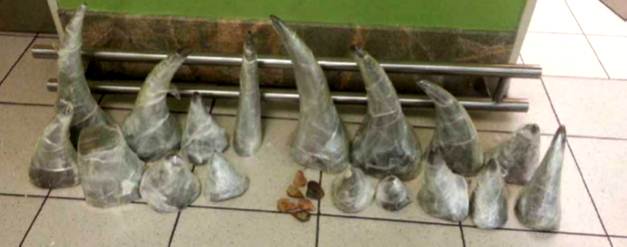
Biggest bust of Rhino Horn at a South African airportSARS Customs officers at OR Tambo International Airport (ORTIA) last week intercepted over 41kg of rhino horns – with a total value of over R4.5 million – transiting through the airport. This is the biggest ever seizure of rhino horn by the SARS Customs team at OR Tambo International, Johannesburg.

As a result of profiling two foreign nationals travelling from Maputo to Vietnam via Johannesburg,  their baggage was intercepted during a stop-over at ORTIA. A Customs detector dog “Mimmo” reacted positively to two bags. The tags found on the bags also did not correspond to the tags presented to Customs officials during the initial questioning of the passengers. This is a practice commonly found with narcotics smuggling syndicates.

The bags had a strong garlic and glue smell, (a tactic to distract detector dogs). Further to the plastic wrapped horns, the zips of the bags were also glued in an effort to keep the odour intact and to make the inspection difficult. Subsequent physical inspection of the bags by Customs officials revealed the rhino horn allegedly being smuggled by the two travellers. Source: SARS

A dedicated webpage for SARS Customs Detector Dog Unit

Picture1Due to overwhelming interest in the SARS Customs Detector Dog Unit, a dedicated page is now included – see the Detector Dog ‘tab’ at the top of this webpage for a direct link, or click here!

New drug analyser to save New Zealand Customs time and money

New Zealand Customs Minister Nicky Wagner says the introduction of a new state of the art drug analyser will free up hundreds of hours a year for more enforcement work at the border.

The handheld device, a Thermo Scientific FirstDefender RM, shoots a laser beam into an unknown substance, accurately identifying it in a matter of seconds.  Customs purchased it with money recovered under the Proceeds of Crime (Recovery) Act.

“The device will drastically reduce the number of substances that have to be sent away for expensive testing, with savings expected to pay for it in less than six months.

“Its effectiveness will allow Customs officers to spend at least 520 more hours each year on frontline border work because they can make decisions quickly on what investigative action, if any, is required.

In addition to the drug analyser, Customs is building a laboratory in Auckland to test unidentified chemical samples.

“The enhanced capability will help to achieve outcomes sought in the government’s Methamphetamine Action Plan and allow Customs to identify an increasing number of new psychoactive substances stopped at the border,” Ms Wagner says.

More than 11,000 substances can be identified almost instantly by the FirstDefender analyser.  It can penetrate through certain types of packaging, so opening a packet or bottle may not be necessary, which also means a safer working environment for officers. Source: New Zealand Customs (contributed by Mogen Reddy)

South Africa ‘Still Weighing Up’ Rhino Horn Trade Proposal

Desert black rhinoceros, South Africa [Picture credit: africagreenmedia.co.za

Desert black rhinoceros, South Africa [Picture credit: africagreenmedia.co.za

South Africa has made no final proposal on legalising the global rhino horn trade as a way of reducing the level of rhino poaching in the country, the Department of Environmental Affairs said on Friday, rebutting recent media reports on the issue.

Last year, the Cabinet authorised the department to explore the possible legalisation of the rhino horn trade at the 17th conference of the parties (COP) to the Convention on International Trade in Endangered Species of Wild Fauna and Flora (CITES), which takes place in 2016.

However, the department said, “no final proposal has been compiled, or decision made, regarding the future legal trade in rhino horn as an additional intervention to reduce the levels of poaching”.

The department said it had appointed a panel of experts, chaired by the department’s Fundisile Mketeni, to assist the inter-ministerial committee tasked by the Cabinet with weighing up a proposal on the trade in rhino horn.

The panel had started its work and would, in the coming months, listen to all sides of the trade debate before submitting a set of recommendations to the committee.

South Africa’s proposal would be tabled at CITES in 2016, and would be based on sound research, uninfluenced by any individuals or groups seeking to make a profit or by any group opposed to the country’s sustainable usage policies, the department said.

“South Africa believes that the decision to table a proposal at the next CITES COP is timeous, and may be a step towards addressing the scourge. South Africa is however not in any way insinuating that the possible trade in rhino horns would be a panacea to the problem of poaching.”

South Africa, which is home to more than 80% of the world’s rhino population, has been facing an onslaught from poaching syndicates since 2008. Since the start of this year alone, 442 rhinos have been poached and 123 suspected poachers arrested in the country.

The department has taken a number of steps in response, including increasing the numbers of rangers in its parks, as well as improving regional and international collaboration with both rhino “range” and rhino horn “consumer” countries. Source: SAnews.gov.za

E-Thread Provides Discrete Anti-Counterfeiting or Tracking Solutions

The E-Thread tag, shown here embedded in a spool of thread (RFID Journal)

The E-Thread tag, shown here embedded in a spool of thread (RFID Journal)

Several industrial linen companies in the United Kingdom and France are testing a new RFID tag that is literally woven into a textile or fabric product. The E-Thread, developed by French startup Primo1D, consists of an EPC ultrahigh-frequency (UHF) RFID chip connected to two 10-centimeter-long (4-inch-long) antennas—extending from opposite sides of the chip—integrated into a thread (which could be made from polyester, cotton, wool or plastic) that is then woven into garments, linens, luxury items or industrial products. Because the thread is nearly impossible to visually identify as an RFID tag, the company claims, it cannot be located and removed or disabled by counterfeiters or thieves, and its durability enables the tag to last as long as the textile into which it is woven.

The E-Thread technology—for which there are 20 patents pending—is available in three versions: one with a wired sensor to track such things as temperature or motion, one with a light-emitting diode (LED) built into it, and a third with an EPC UHF passive RFID chip and antenna to store and transmit data when interrogated. The LED version is intended for cosmetic purposes; when sewn into a garment, a car-seat cover or some other object, it could illuminate when wired to a power source. The sensor-based thread could be used in an athlete’s uniform to track his or her condition, but would also require a power source, such as a battery, to operate. To record that data, however, the sensor would need to be connected to some sort of data logger or computing device.

The RFID-enabled version is initially being tested by several companies that manage and launder linens and other textile products used by hospitals and hotels. Pilots of the RFID E-Thread are slated to continue for the next six months, allowing Primo1D the opportunity to make any necessary improvements before full-scale manufacturing and commercially releasing the product during the fourth quarter of 2015. The linen manufacturers undertaking the pilots are reading the tags built into threads in a variety of products, such as bedding or table cloths, and are putting those items through industrial laundry processes, as well as periodically reading the E-Threads, to test their durability.

The E-Thread provides an alternative to other RFID labels that must be sewn onto or adhered to a piece of fabric or garment. The shortcoming of RFID labels, he notes, is that counterfeiters or thieves can see them and thus remove them from products. In addition, store personnel often remove them once a product is sold. When it comes to high-value luxury apparel, the concern of retailers and brands is that an RFID label will be removed from a product, attached to a counterfeit version of that product, and then returned to the supply chain for sale in stores. With the E-Thread solution, a counterfeiter would not know the location of the RFID chip and antenna, and would thus be unable to place them on a counterfeit product. Potential thieves would not be able to find the E-Thread either, he adds—since it cannot be seen—and, therefore, would be unable to disable the tags in a store or other location with the intention of passing them through a reader undetected.

For those in the industrial laundry market, such as linens manufacturers and those using the linens, the thread is more secure than a label (which could be torn or knocked loose during the laundering process). The thread can be included in the fabric at the point of manufacture, thereby saving the step of sewing labels onto items.

The E-Thread RFID tag works with any standard UHF RFID reader, and can typically be interrogated at a range of up to 7 meters. In the case of laundry management, a company could receive bags of soiled linens from a customer renting its products, and could then transport the bags through a reader portal. Rather than opening every bag and then sorting through and visually accounting for each item contained within, users could simply create an electronic record of all goods received. For linen sorting, users would want to put each garment through a tunnel reader in order to identify it, one tag at a time, perhaps by placing items on a conveyor that passes through that tunnel. In that way, they could separate items based on type, or according to the particular customer using them.

The E-Thread will cost more than a standard UHF label, but will offer the feature of being discrete, thereby providing anti-counterfeiting capability and other functionality that standard labels cannot offer. Because the E-Thread is designed to be rugged enough for industrial washing, it is also expected to outlast the lifespan of the product into which it is sewn. With that in mind, the E-Thread tag could be read at the time of a product’s disposal, enabling a company to access data regarding how that item could be recycled.

The E-Thread will be sold in the form of a spool of thread, with the RFID tag built directly into the thread material. The thread’s length and the quantity of RFID tags embedded in a single piece of thread would vary, depending on a user’s requirements. Source: Rfid Journal

EU Gets Tough on Counterfeit Goods

European Parliament By Cédric Puisney (via Wikipedia)

European Parliament
By Cédric Puisney
(via Wikipedia)

On 25 February 2014 the European Parliament gave its approval to the Proposal for a Directive of the Parliament and of the Council to approximate the laws of the Member States relating to trade marks (recast).

The interesting new provisions contained in the proposal include certain measures which numerous organizations and enterprises across a broad range of sectors have long been calling for, in that they are intended to put an end to the freedom of transit of counterfeit goods through the customs territory of the EU even when those goods are destined for a country outside the Union. The measures approved in this regard are, specifically, the following:

  1. The holder of the trademark right may prevent goods coming from third countries and bearing a counterfeit trademark from entering EU territory.
  2. The holder of the right may take appropriate legal steps and actions against counterfeit goods. These include the right to request national customs authorities to implement measures to detain and destroy such goods under the new customs Regulation (EU) No. 608/2013.
  3. The holder of the right may also prevent the entry into the EU of small consignments of counterfeit goods, particularly in the context of sales over the Internet.

A small consignment is defined in Regulation (EU) No. 608/2013 as a postal or express courier consignment containing three units at most or having a gross weight of less than 2 kg.

Parliament proposes that in these cases the individuals or entities who ordered the goods should be notified of the reason why the measures have been taken and similarly be informed of their legal rights vis-à-vis the consignor.

The provisions thus approved in connection with small consignments follow on from the recent judgment of the Court of Justice in case C-98/13, published on 6 February 2014, in which it was held that, even where the sale of goods for own use had taken place through a website in a non-member country, the holder of the intellectual property right could not be deprived of the protection afforded by the customs regulation and the consequent power to prevent those goods from entering the European market, without there being any need first to ascertain whether the goods had previously been the subject of an offer for sale or advertising targeting European consumers.

In conclusion, the European Parliament has taken a great step forward in the fight against counterfeiting on all fronts and not just inside its territory. Source: ELZABURU

2 Rhinos and 30 Elephants Poached Every Day

With record levels of global ivory seizures in 2013, mostly in ports, a new Interpol report highlights the need for greater information sharing to enable a more proactive and effective law enforcement response against trafficking syndicates.

Large-scale ivory shipments – each one representing the slaughter of hundreds of elephants – point to the involvement of organized crime networks operating across multiple countries. Head of Interpol’s Environmental Security unit, David Higgins, said while there was a global recognition of the problems of elephant poaching and ivory smuggling, a more integrated approach was needed for a more effective response.

“Ivory seizures are clearly an important step in stopping this illicit trade, but this is just one part of a much bigger picture,” said Higgins. “If we are to target those individuals behind the killing of thousands of elephants every year, who are making millions at the cost of our wildlife with comparatively little risk, then we must address each and every stage of this criminal activity in a cohesive manner.

The report ‘Elephant Poaching and Ivory Trafficking in East Africa – Assessment for an effective law enforcement response’ was launched at the Canadian High Commissioner’s Residence in Nairobi, Kenya.

While poaching in Kenya has reduced due to more pressure by security agents on poachers, the country is being used as a transit route with the port of Mombasa becoming a favorite for poachers. The ivory is packaged in shipping containers for transport to the port, and interception of the majority of ivory has occurred in maritime ports with the loot hidden in shipment containers usually concealed by other lawful goods.

Uganda though a landlocked country is becoming a transit route for the ivory, mostly from Tanzania. Tanzania was the leading source of illegal ivory in the East African region last year. At the same time, the port of Mombasa accounted for the largest volume of seizures in Africa with a total of over 10 tonnes of illegal ivory intercepted between January and October 2013.

Approximately 30 elephants are killed in Tanzania daily amounting to more than 10,000 animals annually. An estimated 22,000 elephants were killed illegally continent wide in 2012.

Tanzania’s elephant population has continued to plummet in recent years and in Selous Game reserve which boasted the world second largest elephant population at 70,000 elephants in 2006, the numbers have fallen to an estimated 39,000 elephants in 2009 and currently stand at 13,084 elephants.

There is global concern about the problem. The Illegal Wildlife Trade Conference, held in London this month, agreed key actions to stamp out the illegal wildlife trade. During the conference, chaired by Foreign Secretary William Hague and attended by the Prince of Wales, the Duke of Cambridge and Prince Harry, world leaders from over forty nations vowed to help save iconic species from the brink of extinction.

The London Declaration contains commitments for practical steps to end the illegal trade in rhino horn, tiger parts and elephant tusks that fuels criminal activity worth over $19 billion each year.

Key states, including Botswana, Chad, China, Gabon, Ethiopia, Indonesia, Tanzania, and Vietnam, along with the US and Russia, have signed up to actions that will help eradicate the demand for wildlife products, strengthen law enforcement, and support the development of sustainable livelihoods for communities affected by wildlife crime. Continue reading →

Death by China

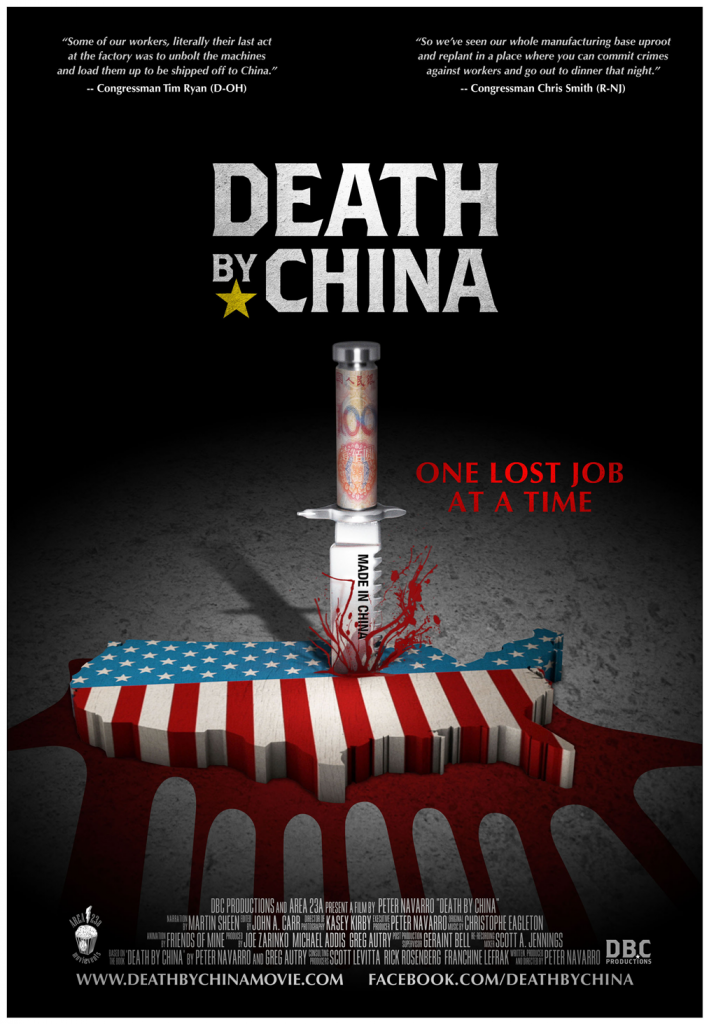
DeathByChina1013x1463-709x1024The featured documentary should be mandatory viewing for all small to medium company owners, economic and foreign trade advisers. While we are inclined to blame the Chinese for all prevailing economic woes, it is in fact the blatant greed of western CEO’s – multinational companies in particular – who have placed profit above prosperity of their country. The film clearly spells out the causes for the systematic destruction of the american economy and manufacturing base, all for the sake of shareholders and outrageous CEO bonuses. The rampant expansion of China in Africa should raise serious concerns for all sub-Saharan African citizens whose elected leaders appear happy, but oblivious, in courting the Chinese with little or no consideration of the realities of their economic and human rights track record.

DEATH BY CHINA is a documentary feature that pointedly confronts the most urgent problem facing America today – its increasingly destructive economic trade relationship with a rapidly rising China. Since China began flooding U.S. markets with illegally subsidized products in 2001, over 50,000 American factories have disappeared, more than 25 million Americans can’t find a decent job, and America now owes more than 3 trillion dollars to the world’s largest totalitarian nation. Through compelling interviews with voices across the political spectrum, DEATH BY CHINA exposes that the U.S.-China relationship is broken and must be fixed if the world is going to be a place of peace and prosperity. Visit – www.deathbychina.com for details on acquiring this powerful documentary.

“A truly life-changing, mouth-dropping documentary film…Peter Navarro’s ‘Death by China’ grabs you by the throat and never lets go.” Francesca McCaffery, Blackbook Magazine