Smart Containers – making headway

loginno3Technology once again demonstrates that it not only ‘enables’ but can also provide companies a ‘differentiator’ to get ahead of the competition – at least for a while. This is the second such innovation in recent weeks which addresses the needs of international shippers and logistics operators in meeting stringent security requirements while at the same time offering a compelling solution for supply chain auditability and the management of their assets. Furthermore, with more and more countries offering authorised economic operator (AEO) programs these same shippers and logistics operators will in the longer term enjoy a certain comfort from such technology investments through swifter customs clearance or green-lane treatment.

Two leading intra-Asia box lines are switching their entire container fleet to smart containers as they attempt to differentiate themselves from competitors. Hong Kong-based SITC Shipping Group and SIPG container shipping arm Hai Hua have both announced they will upgrade their entire container fleet to smart containers using products from Loginno. SITC, which has a fleet of 66 vessels with a total capacity approaching 2m teu, said it had decided to use smart containers to try to offer customers a different service to other carriers.

SITC Shipping Group Xue MingYuan said: “In a market with more and more homogeneous services, we have to think about why our customers would choose us over others.

“Being among the first to offer, as a standard service on all of our containers, full insight into their cargo movements and security, for a very low additional cost, we differentiate ourselves instantly, and hopefully save our customers a lot of logistic costs in their supply chain.”

This view was echoed by Hai Hua general manager JP Wang: “We have been looking for an affordable means to convert our fleet to smart containers. Shippers and Cargo owners have been long waiting for this service.”

Smart container technology has been around for a few years, but the cost of the technology and fears of damage and theft of the equipment has been enough to discourage its widespread take up. There have also been concerns from shipping lines about how to monetize the technology.

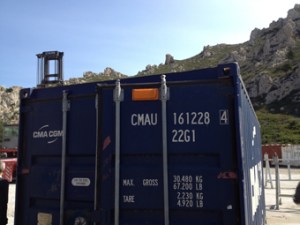
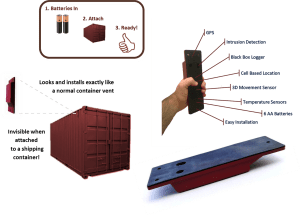
But the industry is gradually increasing its use of the technology. CMA CGM just recently announced a major initiative to introduce smart container technology to its fleet. Loginno chief technology officer Amit Aflalo said its device, which is slightly larger than a mobile phone, was inexpensive and easy to install. The device offers GPS, temperature monitoring, intrusion detection and a movement detector and can provide updates to mobile phones. Source: Lloyds Loading / Loginno

Forbes – Top 10 Container Ports

Forbes compiled the following list of the world’s top 10 container terminals. For more information visit this link!

CMA CGM – to introduce ‘smart’ containers to its box fleet

TraxensFrench shipping giant CMA CGM will start phasing in ‘smart’ containers this year, allowing the line and its customers to keep track of each box equipped with new sensors at all times. In an industry first, technology being developed with a start-up company, Traxens, would enable data on the location and condition of the container to be monitored at all times throughout a delivery.

The world’s third-largest container line and Ocean Three member said it had contributed to the capital increase of French firm Traxens that will enable CMA CGM to have access to an unprecedented amount of information on each container and offer clients what it describes as unique tracking solutions and real-time data collecting from all over the world.

Elie Zeenny, CMA CGM senior vice-president, Group IT Systems, said the technology would bring the shipping industry into a new era. This year, Traxens plans to equip the first CMA CGM containers with the patented technology so it will be possible to know in real-time not only a container’s position, but also its temperature, the vibrations it will be subjected to, any attempted burglary, the presence of traces of specific substances in the air or even the regulatory status of the cargo.

With its “4Trax” solution, Traxens offers the tracking of containers from cargo loading to their final destination, and the forwarding of data in real time to all actors in the multimodal transport chain. Traxens has also worked closely with French Customs in the development of its solution. In this regard the solution aims to record the legal status of the container (customs clearance) with the view to eradicate false declarations and counterfeits and to facilitate controls. Sources: Lloyds loading, CMA CGM and Traxens

Port of Shanghai – extends its lead as world’s busiest container port

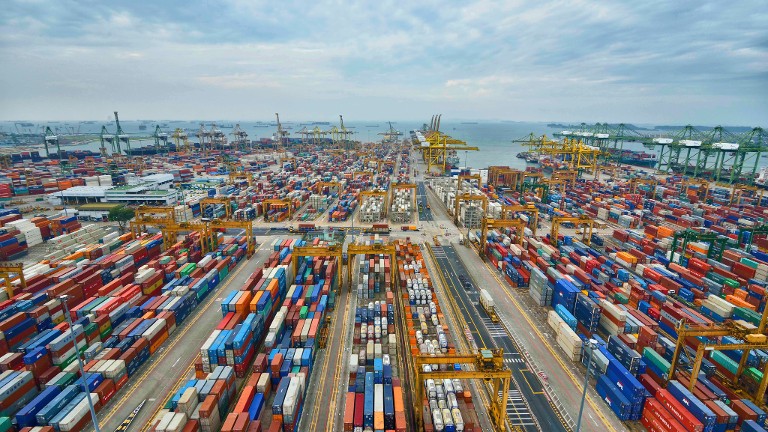
Port of Shanghai, China [Picture: DaliyMail.co.uk]

Port of Shanghai, China [Picture: DaliyMail.co.uk]

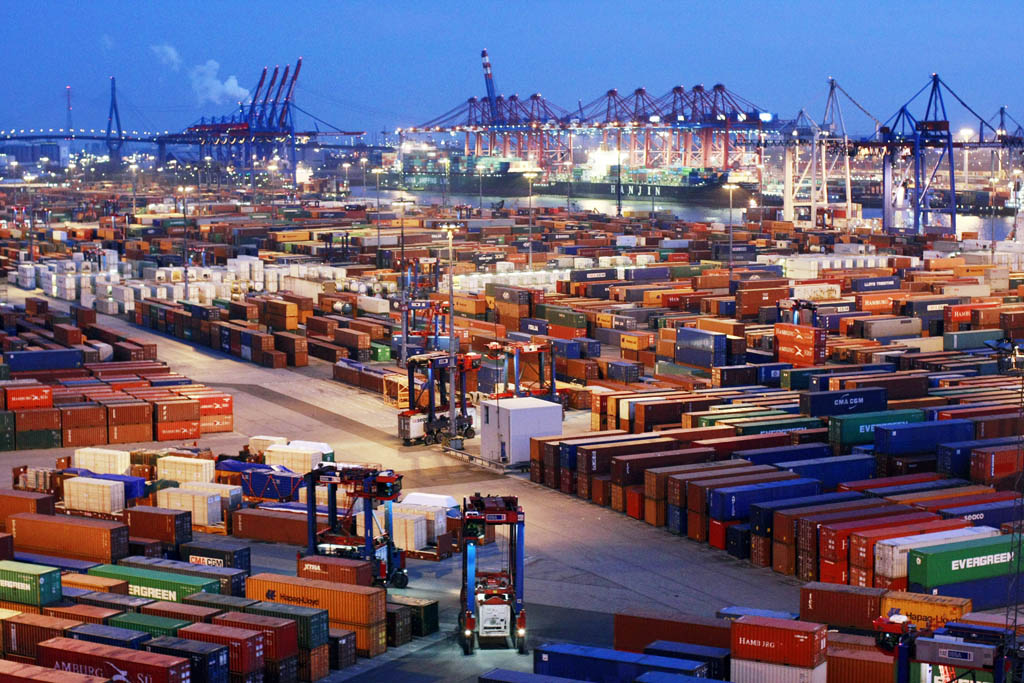
Shanghai retained its title as the world’s busiest container port for a fifth consecutive year after widening the gap with its closest rival Singapore.

Singapore handled 33.9 million 20-foot containers last year, according to a statement posted on the Maritime & Port Authority of Singapore’s website dated Jan. 16. Last month, Shanghai said it expects to process about 35.2 million boxes in 2014. A year before, the gap between the two ports was about 1 million boxes.

Shanghai, Shenzhen and other ports in China are dominating the global container-shipping market while the facility in Ningbo overtook South Korea’s Busan last year as the world’s fifth-busiest harbor. Seven of the world’s 10 top container ports were in China in 2013, with Hong Kong coming in fourth.

Shipping companies are adding larger container ships to meet demand as economic growth helped consumers to spend more money on clothes and food. Global trade last year probably grew 3.8 percent, according to the International Monetary Fund.

Global containerized trade reached 124 million boxes in the first 11 months of 2014, an increase of 4.3 percent from 118.9 million a year ago, according to Container Trade Statistics Ltd.

Geneva-based Mediterranean Shipping Co., the world’s second-largest container shipping company, currently operates the biggest vessel that can carry 19,224 boxes between Asia and Europe. Last year, China Shipping Container Lines Co. launched a ship that could carry about 19,100 containers. Source: Bloomberg/GCaptain

Port of Felixstowe hosts Worlds Biggest Container Ship

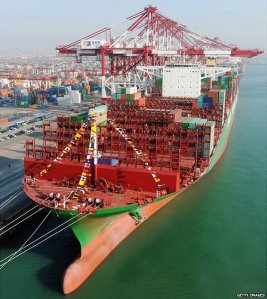
CSCL GlobeThe world’s largest container ship has arrived in the UK for the first time at the Port of Felixstowe. The Hong Kong-registered CSCL Globe, measuring more than 400m (1,313ft) in length is longer than four football fields placed end-to-end.
The record-breaking aspect of the Globe, owned by Shanghai-based China Shipping Container Lines and built-in South Korea, is its capacity. It can carry 19,100 standard 20ft containers. That’s estimated to be enough space for 156 million pairs of shoes, 300 million tablet computers or 900 million standard tins of baked beans.

Laid end-to-end, the maximum number of containers on board would stretch for 72 miles, the distance between Felixstowe and London, or Birmingham and Manchester.

The Globe’s period as the world’s biggest cargo ship is due to end later this month, however. The Oscar, owned by the Mediterranean Shipping Company and built by Daewoo in South Korea, is scheduled for its official launch on Thursday. Named after company president Diego Aponte’s son Oscar, it will be able to carry 19,224 20ft containers. Source: BBC News

CSCL Globe – the World’s New Largest Containership (for now)

Worlds Largest Container ship 2Hyundai Heavy Industries Co. in Ulsan, South Korea has just named the new title-holder for the world’s largest container ship; a 19,000 TEU giant for China Shipping Container Lines (CSCL) named CSCL Globe. CSCL Globe measures 400.0 m in length, 58.6 m in width and 30.5 m in-depth, and will be deployed on the Asia-Europe trade loop after being handed over to the owner later this month. The ship was ordered by CSCL back in May 2013 along with four other 19,000 TEU capacity ships for a total cost of $700 million.

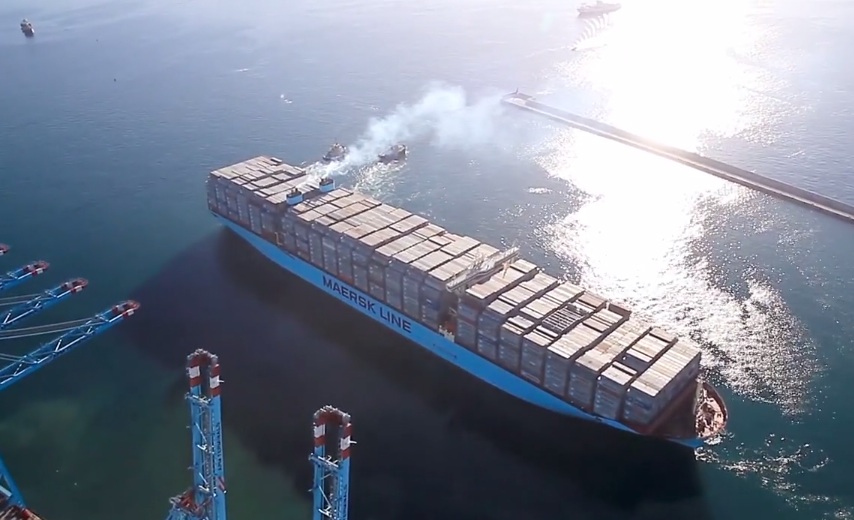
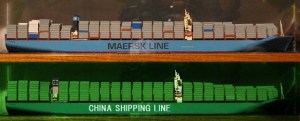
The series was originally planned to carry 18,400 TEUs, but were later updated by 600 TEU. For comparison, Maersk’s Triple-E’s have a TEU capacity of 18,000 and measure 400 meters long by 59 meters wide. Maersk Line has ordered a total of 20 of the ships from Daewoo Shipbuilding and Marine Engineering, also in South Korea, to be delivered by 2016.

Upon delivery, CSCL Globe will take over the title of world’s largest container ship from MV Maersk Maersk McKinney Moller and her Triple-E sister vessels, first delivered in July 2013. Before that, the title of was held briefly by MV CMA CMG Marco, a 16,020 TEU capacity container ship delivered to CMA CGM Group in November 2012. Source: gCaptain.com

Unusual Container Weight Fraud Uncovered

containerThe International Maritime Bureau has been alerted to a fraud involving a shipping container’s weight and size that is atypical of what one might out of a container weight fraud case; the tare weight, or unladen weight of the container itself was unrealistically falsified and much higher than the actual, correct weight of the container.
The IMB reports that the incident concerned a container of aluminium scrap in which the information outside the box was tampered with to show false weight and size. The fraud was uncovered by an IMB member after being notified of a significant weight shortage on the container, which arrived in the Far East from the Middle East.

During the investigation, the IMB member noted that the tare weight of the container, as shown on its door – and used by the shipper – was 3,680kg, while the cube, also shown on the door, was 2,700 cubic feet. While the numbers displayed were entirely acceptable for a 40 foot container, the box in question was a 20 foot one, according to the IMB. The shipper has since confirmed that the correct tare weight for the container should have been 2,200kg, much lower than what was declared.

An examination of the photos taken when the container was loaded revealed that the part of the door on which the figures were displayed was a slightly different color, which leads to the conclusion that the door had been repainted at some point, and the new, false figures were added after that. The IMB notes is not known when this was done and it is unlikely to be an isolated case.

The IMB says it has not come across a case before where a container has been repainted with incorrect weight and size information that in hindsight clearly cannot be correct for a 20 foot container, however it does have knowledge of a case where a label was placed over the container number of a stolen container to disguise the theft. The IMB says that this would be a more logical deception since carriers tend to focus on the container numbers themselves, and rely on the shipper to provide any other information required.

The IMB asks that others who detect similar container information tampering to report it so that it can attempt to establish a pattern that might indicate who is responsible and can issue suitable warnings to the industry if it proves widespread in the future.

Apart from being a fraud, mis-declaring the weight of containers can also pose a danger to the vessel and crew, as mis-declared container weights remains a contributing factor to incidents involving containers lost at sea.

This month, the International Maritime Organization’s Maritime Safety Committee is scheduled to adopt amendments to the International Convention for the Safety of Life at Sea chapter VI to require mandatory verification of the gross mass of containers, either by weighing the packed container or by weighing all packages and cargo items and adding the tare mass, in turn boosting the safety of container ships and crew.

The IMB stresses that in this case, the container owner has denied responsibility and the IMB member doubts its supplier was involved. Source: emaritimeexchange.com

Update – Important Clues to MOL Comfort’s Demise

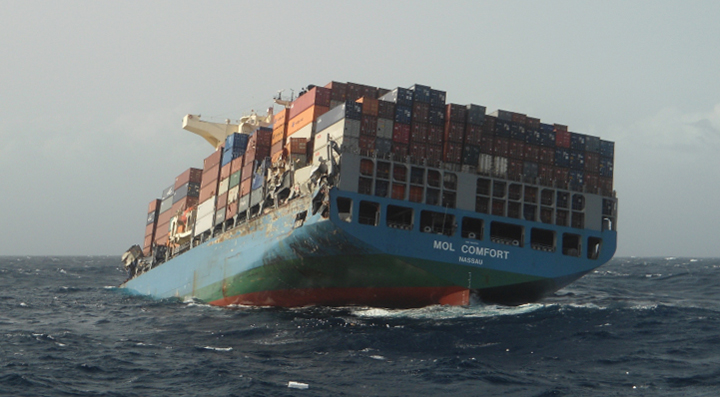
MOL-ComfortMany may recall the shocking pictures of MOL Comfort’s last voyage last year – images of a huge crack in the fully laden container ship on the high sea.

While conducting research for her PhD thesis at the Technical University of Denmark, Ingrid Marie Vincent Andersen, PhD had found clues prior to this incident suggesting the possibility of catastrophic failure was more real than previously thought.

Digging deep into the hydro-elastic structural response of container ships similar to the MOL Comfort, she had discovered some very interesting details.

Clearly, the ship had broken up when the hull girders failed, but what led to that failure was not so obvious. She, like many others, say it very likely had a lot to do with the cargo loading condition of the ship, but the full answer was quite a bit more complicated than that.

Anderson says the MOL Comfort and her sister vessels were simply under engineered by naval architects that didn’t fully account for enormous additional loads which were being placed on the ship.

“It is believed that the hydro-elastic effects and the effect of hull girder flexibility are capable of significantly amplifying the hull girder stresses and thus contribute to fatigue damage as well as to the extreme hull girder loading in container ships,” Andersen notes in her PhD thesis.

In her research, she studied ships in the 8000-9000 TEU range and discovered, “the hull girder vibrations due to hydro-elastic effects is capable of doubling the stress response amidships in some cases – also in the extreme loading cases.” Click here to witness a video of stress experienced on a container ship.

“I don’t think the incident was fatigue-related, but it could be due to under-estimation of the hydro-elastic effects on the wave-induced vertical bending moment at the design stage. The major uncertainty at the design stage is related to estimation of the wave loads,” notes Anderson.

Research published by Lloyd’s Register (LR) engineers Nigel White and Zhenhong Wang support Andersen’s research.

LR notes the principle design challenge inherent to large and ultra-large container ships is the combined effects of whipping, springing and warping/distortion of the hatch openings.

Until recently, Andersen notes that hydro-elastic effects have not been directly taken into account for in the classification societies’ design rules for container ships. In 2014, LR updated their design rules to reflect the discovery of much higher loadings inside the structure of container ships.

Andersen, White and Wang all cite strain data captured aboard a 2006-built CMA CGM 9,600 TEU container ship over a four-year period showing severe spikes in the vertical bending moment as wave strikes on the bow resonate down the ship.

Anderson notes that due to a large uncertainty around sea state conditions a vessel will encounter, maximum wave loading is subsequently uncertain. Wave loading is compounded by container ships that opt for greater cargo space forward, and thus greater bow flare such as on the MOL Comfort and the ultra-large 14,000 TEU+ sized vessels that are currently in operation.

These bending moments, according to their research can be upwards of 300 percent the traditionally calculated wave bending moment using linear ship motion codes – the ones that ships have traditionally been built to. The traditional codes have a realized safety factor of around 200 percent.

Anderson notes that due to a large uncertainty around sea state conditions a vessel will encounter, maximum wave loading is subsequently uncertain. Wave loading is compounded by container ships that opt for greater cargo space forward, and thus greater bow flare such as on the MOL Comfort and the ultra-large 14,000 TEU+ sized vessels that are currently in operation.

“The high strength steel used for the construction of the ship will result in a slightly lower natural frequency and possibly, together with the pronounced bow flare, making the vessel more susceptible to whipping vibrations,” adds Anderson.

Since the MOL Comfort sinking, all of the sister vessels to the MOL Comfort have been retrofitted with additional structural steel, but certainly other ships in that size range have not.

Considering the step changes being made in container ship design, logic would dictate that additional study and consideration be taken when designing and operating such vessels, including the installation of strain gauges to properly measure what is happening inside the ship. Source: gCaptain.com

24,000 TEU vessel on the way

[Picture: Alastair Wiper / Wired]

[Picture: Alastair Wiper / Wired]

Shipping lines such as Maersk may no longer be operating the world’s largest vessels, as new 24,000 TEU ships are said to traverse the waters soon.

David Tozer, container segment manager at Lloyd’s Register, said: “12 years ago researchers were looking at Malaccamaxes, 18,000 TEU vessels named after the Malacca Strait. People thought that this was absolutely crazy. But since then things have developed to the extent that we’ll soon see ships of 24,000 TEU. The volumes are there, so it’s going to happen.”

China Shipping Container Lines are said to be looking into 24,000 TEU vessels in order to bolster its fleet, according to Shipping Watch.

To read Port Technology’s piece on mega-ships not being the only solution, click here

David Tozer said: “We’re experiencing among our customers that the biggest carriers in front are working seriously with the giant ships and are looking into the future. They need to understand what the future is going to look like, and they need to take control and become part of it.”

Tozer went on to discuss the challenges of these larger vessels, stating: “Our job is to help people. We’ve studied the structural topics and we’ve looked into which problems these giant ships bring. First of all, there’s an insurance and safety issue where the two things are tied together.”

To take a tour of Maersk’s biggest vessel, click here

In addition to safety issues, larger vessels will carry global challenges, especially for the draft of the Suez Canal.

A process is currently underway in Germany to dredge the Elbe to make room for the new ultra-large vessels that are already sailing the world’s seas. Source: Port Technology

Container traffic to hit 1 billion TEU in 2020

-Dinesh Sharma, senior research manager at Drewry Maritime Advisors, says that global container throughput would rise between 5% and 5.5% a year up to the end of the decade. Speaking at a Ports & Terminals seminar in London, he cited ports in Africa and northern China as registering the strongest growth.

In his outlook, Sharma projected a 2020 global throughput volume of at least 1 billion TEU, up from 623 million TEU in 2013, with Asia accounting for 65% (650 million TEU) and transhipment traffic 32% (320 million TEU) of the total. This, he explained would compare with shares of 56% and 22.5% (140 million TEU), respectively, in 2013.

Within Asia, Sharma argued that China would become increasingly significant over the next seven years, citing that the country’s share of global container-handling activity would rise from 30% in 2013 to 40% in 2014. In 2000, China’s ports processed just 16% of a world total of 235 million TEU, a figure that reveals the spectacular growth that has occurred in the Asian country since it joined the World Trade Organisation in November 2001.
In a further assessment of the future, Sharma said the percentage of empty boxes handled would not change and would remain at about the 20% (200 million TEU) level in 2020.
Other interesting facts presented by the analyst showed that 22,000 TEU-sized ships would be in operation in 2020, the world population of super post panamax cranes would number over 2,000 units, compared with 1,160 units in service in 2013, and that the leading four global terminal operating companies would control an estimated 41% of all containers handled. Source: World Cargo News

South African Customs launches new X-Ray Inspection Facility in Durban

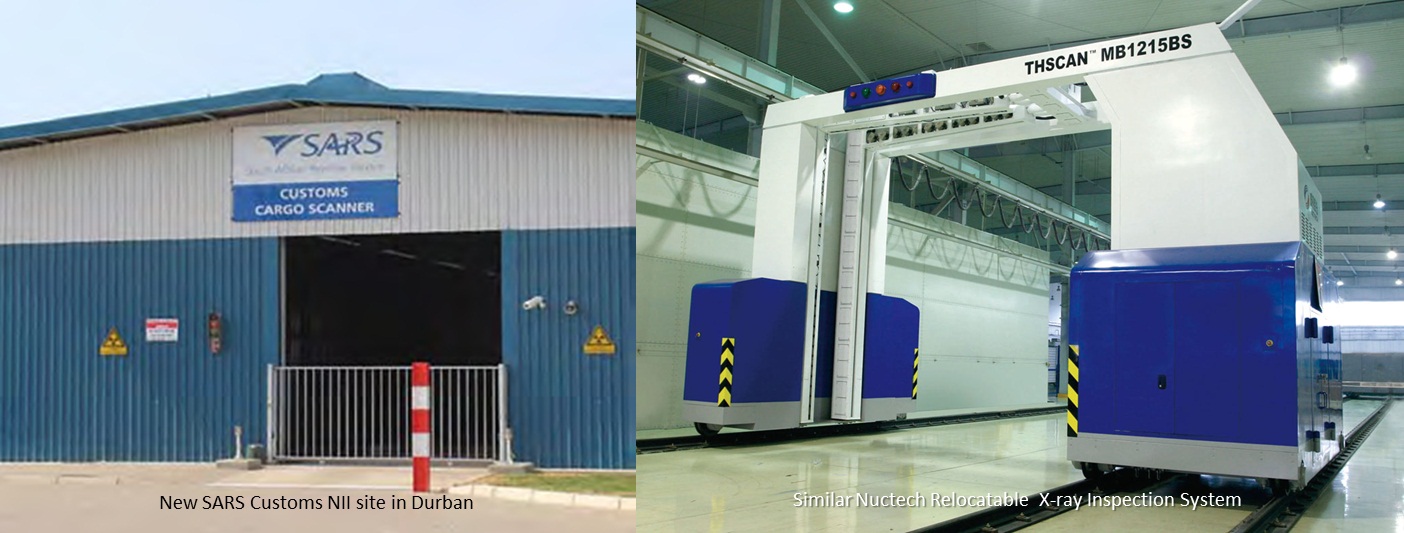
SARS Customs New NII Ste - DurbanSARS Customs recently launched its new X-Ray cargo inspection facility adjacent to the Durban Container Terminal in the Port of Durban. Following the trend as in other countries, SARS has identified non-intrusive inspection capability as part of its ‘tiered’ approach to risk management.

In 2008, SARS introduced its very first mobile x-ray scanner which was located inside the Durban container terminal precinct as part of South Africa’s participation in the US Container Security Initiative (CSI). While it has proven itself in the development of Customs NII capability, its location and lack of integration with other Customs automated tools has limited its success.

The new Customs inspection facility is a step-up in technology and automation – a Nuctech MB 1215HL Relocatable Container/Vehicle Inspection System. It has some significant advantages over the original mobile version namely –

  • An efficient and cost-effective security solution with a relatively small footprint (site size).
  • 6 Mev dual energy X-Ray technology with high penetration (through 330 mm of steel).
  • High throughput of 20-25 units of 40ft container vehicles per hour.
  • A unique modular gantry design which improves system relocatability.
  • Self-shielding architecture which requires no additional radiation protection wall.
  • Advanced screening and security features such as organic/inorganic material discrimination.
  • High quality scanning image manipulation tools allowing the customs image reviewer the ability to verify and distinguish the contents of a vehicle or cargo container.

Since its launch more than 350 scans have been performed. Suspect containers were sent for full unpack resulting in various positive findings.

The new relocatable scanner is easier to operate and significantly faster than the mobile scanner. In addition, scanned images are now automatically integrated into SARS Customs case management and inspection software making case management both seamless and efficient.

It is anticipated that until October 2014, both the new scanner and the existing mobile scanner operations will co-exist. During this time, the new scanner will operate risk generated cases directly from SARS automated risk engine. Unscheduled or random interventions will continue to occur at the old scanner site, which operates 24/7.

Plans are in place to decommission the mobile scanner after October 2014. The new scanner will then operate on a 24/7 basis.

Global container ports could handle 840m TEU a year by 2018

singapore-port

Port of Singapore

Projected throughput four years from now compares with 642m teu in 2013 and 674m teu projected for this year. The 2018 projection is double the 2004 throughput figure of 363m teu.

The combination of faster traffic growth and strong profit levels is attracting aggressive new players to enter the container terminal-operator business , according to the 11th Global Container Terminal Operators Annual Review and Forecast report published by shipping consultancy Drewry. It says Africa and Greater China are the regions that will see the most rapid growth.

Overall , growth rates are expected to average an annual 5.6% in the five years to 2018, compared with 3.4% in 2013. That will boost average terminal utilisation from 67% today to 75% in 2018, Drewry forecasts.

“The sector’s strong financial performance and accelerating growth is encouraging new market entrants and renewed merger and acquisition activity in the container ports sector,” said Neil Davidson, senior analyst in Drewry’s ports and terminals practice. “Financial investors are particularly active at present, attracted by typical ebitda margins of between 20% and 45%.”

Drewry has also added two companies to its league table of 24 terminal operators it considers to be global. Both China Merchants Holdings International and Bolloré Group have been growing aggressively. In the case of CMHI further acquisitions are particularly likely. Other operators, such as Gulftainer and Yilport are also expanding rapidly and are challenging for inclusion in Drewry’s league table.

The composition of the top five players, when measured on an equity teu throughput basis, has changed little from last year, except new entrant CMHI which is now in fifth place. PSA again heads the table, by virtue of its scale and 20% stake in Hutchison Port Holdings which comes second. APM Terminals is third, followed by DP World.

Drewry said that by 2018, it expects both HPH and APM Terminals to be vying closely for the top spot in terms of capacity deployed. Most portfolio expansion will be through greenfield or brownfield terminals in emerging markets, led by APM Terminals, International Container Terminal Services, HPH and DP World. “All port and terminal operators are experiencing a number of key industry trends, some of which have wide ramifications,” said Mr Davidson. “The most important trends are deployment of ever-larger containerships, expansion of shipping-line alliances, financial pressures on shipping lines, rapidly emerging international terminal operators and owners, financial investor churn, as well as the gathering pace of terminal automation.” Source: Lloydslist.com

Triple-E Leaves Port of Algeciras with World Record Load

Triple-E-full-loaded

MV Mary Maersk departed Algeciras, Spain fully laden [Gcaptain.com]

On July 21, 2014, the MV Mary Maersk departed Algeciras, Spain with a world record 17,603 twenty-foot equivalent units (TEU), the most TEU’s ever loaded onto a single vessel.

MV Mary Mearsk is the third vessel in Maersk Line’s Triple-E class, which have nominal capacity of 18,270 TEU, although port restrictions have prevented the vessels from reaching full capacity.

“Algeciras has been preparing for full utilisation of the Triple-E for more than a year,” says Carlos Arias, head of the South Europe Liner Operations Cluster. “This included the upgrading of four existing cranes and the arrival of four new Triple-E cranes.”

After departing Algeciras, the vessel was bound for Tanjung Pelepas, Malaysia, which included a trip through the Suez Canal. Arias added that similar upgrades needed to be made at the port of Tanjung Pelepas, and this was the first occasion where both ends were ready. Source: Gcaptain.com

Durban dig-out port plan likely to be delayed

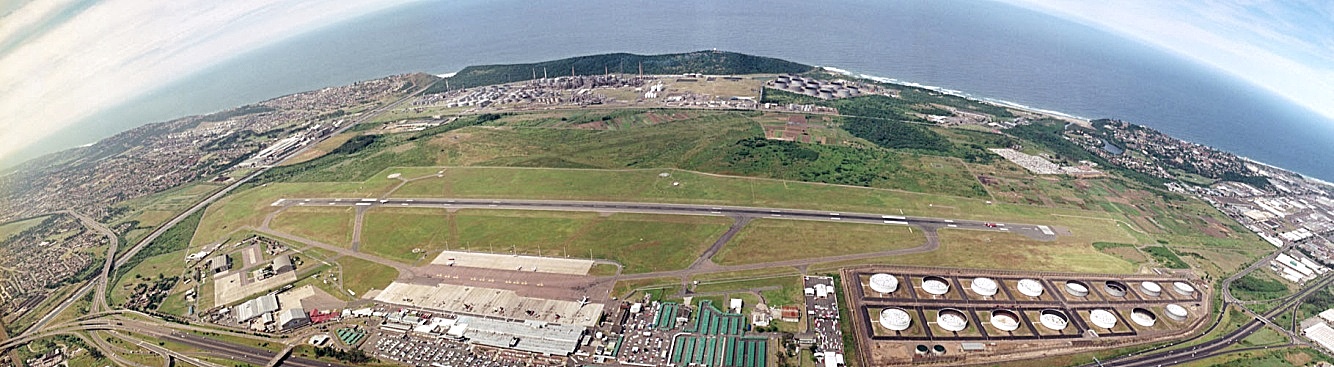
Old Durban airport - site for new Dig Out Port (Picture credit: ACSA)

Old Durban airport – site for new Dig Out Port (Picture credit: ACSA)

The first phase of Durban’s dig-out port, which was expected to generate hundreds of jobs and turn the city into the shipping hub of Africa, would not be ready by 2020 as planned, and the current harbour might have to be expanded to provide a short-term solution. This emerged at a KZN Freight Task Group meeting recently where Transnet dig-out port programme director Marc Descoins admitted that a new completion date was being investigated.

‘The actual start date of the new port is uncertain as we are still in the early design phase,’ Descoins said last night. Technical issues, such as the requirements for the construction of a new single buoy mooring to replace the existing one, were affecting timelines. Other factors affecting the development were being re-examined, but Descoins did not give further reasons for the delay.

Transnet was still tracking demand forecasts to ensure that capacity creation was aligned to demand, he said. Nevertheless it had other plans for port expansion to ensure capacity met this demand. If an alternative could be found to expand the capacity of the port, the dig-out port project at the old airport site could be set back by a few years, he said.

However, a previously discussed option – the expansion of the current port into the Bayhead area – was ruled out by Descoins, as complex problems involved in developing the area as an additional container terminal would take at least 15 years to resolve. Engineering and technical businesses in Bayhead did not appear shocked at the news yesterday, saying they knew expansion in the area would not happen.

One of the most seriously considered – and quickest – options would be for the container terminal on Pier 1 to be expanded in the direction of Salisbury Island. This would also provide Durban with increased container capacity. A decision on this could be made soon, but if this option was decided on, the dig-out port might be even further delayed as Transnet would not develop both projects and create unnecessary capacity in the short term.

However, the dig-out port project would not be cancelled, and preparations at the old airport site would continue, Descoins said. Transnet had warned that without the dig-out port Durban would not be able to meet medium- and long-term shipping capacity demand. The project would increase the volume of container trade at the Port of Durban from the current 2.69 million twenty-foot equivalent units (TEUs) to between 9 million and 12 million TEUs over 30 years.

Durban was also the first choice for a port upgrade because of its good infrastructure, although the road and rail systems need to be considerably upgraded. Completion of the feasibility study was scheduled for the end of 2015 followed by a four-year construction phase. The first ships were expected to come into the port in 2020. For this to have been achieved groundwork would have had to begin by the end of 2016. Transnet bought the old airport land in 2012 for R1.85 billion. Building the port was expected to cost R75bn to R100bn over the next 30 years.

Desmond D’Sa, chairman of the South Durban Community Environmental Alliance, was pleased with the delay, but said the project should be abandoned.

‘Why do we even need another port? It is only going to become another white elephant like the Coega Industrial Development Zone in the Eastern Cape.

‘This is all about people with big pockets, and the extra time will only allow corruption.’

Durban Chamber of Commerce and Industry chief executive Andrew Layman said imports and exports from the harbour were not accelerating as much as expected.

‘This is reflected in the international trading market. South Africa is not the flavour of the month.’

There had always been plans for expansion of the current harbour, he said.

‘This is because ships are bigger these days – it needs to be deepened and widened. So I don’t think it is a case of one or the other.

‘The need for the dig-out port is not as imminent as originally thought, and money is probably not as readily available either.’

Layman said it was not ‘a train smash’ as jobs had not been created yet, but it was unfortunate that job creation would be delayed.

‘It is understandable that it would be further delayed in the current climate.

‘It would be pre-emptive to start construction as the system still needs a lot of work, such as our tariffs, which are higher than most ports around the world, and our service delivery.’ Source: The Mercury

Related articles