Dumb, dumber’er, or just plain downright stubborn?

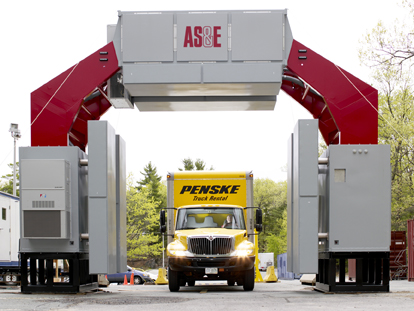
A US statutory requirement to scan all incoming containers at foreign ports will take effect at the beginning of July, a date thrown into sharp relief as the House of Representatives homeland security committee approved a revamped bill that retains the clause.

The draft bill gave the industry minor cause for cheer for unrelated reasons, as it will postpone the requirement for workers to renew their transportation worker identification cards in the absence of Department of Homeland Security regulations on biometric card readers. But the 100% scanning requirement has proved its resilience yet again.

Since 2006 shippers, spearheaded by associations that include the National Retail Federation, have been campaigning to get the requirement eliminated on grounds that it is impractical and costly and could trigger foreign government retaliation against cargoes originating from the US. US homeland security secretary Janet Napolitano has pointed out the impracticality of the law and proposed a two-year postponement.

These calls went unheeded in the house, as the homeland security committee on Wednesday approved the Securing Maritime Activities through Risk-based Targeting for Port Security Act, known as the Smart Port Security Act. The Smart Port Security Act reauthorises the Security and Accountability for Every Port Act, known as the Safe Port Act, which became law in 2007.

The Safe Port Act implements the 9/11 Commission’s recommendations, including the contentious provision that all US-bound containers will be scanned at origin from July 2012. A fig leaf in the Safe Port Act allows the homeland security secretary to grant waivers to individual ports, under conditions that are somewhat vague. Last year, a Safe port reauthorisation draft in the Senate proposed a broad waiver of the 100% scanning requirement.

With the clock now ticking to July 1, shippers were particularly anxious to get the house bill to remove the 100% scanning clause permanently.

The homeland security committee passed a version that allows DHS to recognise other countries’ trusted shipper programmes and allows the US Coast Guard to recognise other governments’ port security threat assessments, but stops short of jettisoning the 100% scanning clause.

Republican congresswoman Candice Miller, chair of the subcommittee on border and maritime security, hailed the new bill, saying: “Securing our waterways is an essential component of a layered approach to security.

“This bill enhances risk-based security measures overseas before the threat reaches our shores, emphasising a stronger collaborative environment between customs and border protection and the US Coast Guard in sharing port security duties and leveraging the maritime security work of our trusted allies.”

Comment: Huh!, to whom does this refer? Such a statement flies in the face of its own C-TPAT program and bilateral overtures with foreign ports (supposedly based on risk). Perhaps its time for the ‘trusted allies’ to deport CSI teams who have not necessarily endeared themselves to their respective host nations.

Source: Lloydslist.com

America – shees verry beeeeg!

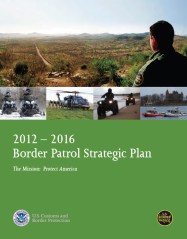
Publication of the latest USCBP Border Patrol Strategic Plan reflects and builds on the transformation of the United States’ relationships with Mexico and Canada, particularly in the areas of border management and security. The joint Declaration of Principles for the 21st-century border represents an enhanced and strengthened commitment to fundamentally restructure the way we manage our shared border. The depth and breadth of cooperation that occurs now between the United States and Mexico was unthinkable even a few years ago. Similarly, the Beyond the Border declaration between Canada and the United States has an equally significant potential in what is already our historically extraordinary relationship with Canada. These developments have created unprecedented opportunities with both Mexico and Canada, in which DHS and CBP will play a defining role, to improve our security and economic competitiveness – and CBP will play a defining role in taking advantage of those opportunities. The Border Patrol in turn is key to advancing CBP’s security agendas with Mexico and Canada, working with its law enforcement counterparts in each country to identify and mitigate threats.

The U.S. Border Patrol is a premier law enforcement organization, recognized around the world for expertise, capabilities, and professionalism. CBP’s officers and agents are the frontline, the guardians of the Nation’s borders. We honor and are proud of them, and we thank them for everything that they do to protect America and the American people. Source: CBP.gov

So there you have it – for a real dose of commercialized Customs and what it can do for the good folks in America, and anywhere else in the world for that matter, check out the strategic plan by clicking here! You’ll be forgiven if you thought you were reading an edition of Jane’s Defense & Security Intelligence & Analysis. Most customs and border management agencies around the world can only dream about such impressive kit! 

Related items

USCBP and EU sign C-TPAT Mutual Recognition

U.S. Customs and Border Protection (CBP) and the European Union (EU) signed today a Mutual Recognition Decision between CBP’s Customs-Trade Partnership Against Terrorism (C-TPAT) program and the EU’s Authorized Economic Operator (AEO) program.

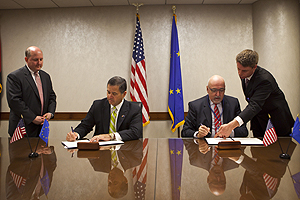
U.S. Customs and Border Protection Acting Commissioner David V. Aguilar and European Union Taxation and Customs Union Directorate Director-General Heinz Zourek sign the Mutual Recognition Decision between CBP’s Customs-Trade Partnership Against Terrorism program and the EU’s Authorized Economic Operator Program.

CBP Acting Commissioner David V. Aguilar and Director-General Heinz Zourek, European Union Taxation and Customs Union Directorate (TAXUD) signed the decision, which recognizes compatibility between the EU and the U.S. cargo security programs.

“Today’s decision on the mutual recognition of the EU and U.S. trade partnership programmes is a win-win achievement: It will save time and money for trusted operators on both sides of the Atlantic while it will allow customs authorities to concentrate their resources on risky consignments and better facilitate legitimate trade,” said Director-General Zourek.

C-TPAT is a voluntary government-business initiative to build cooperative relationships that strengthen and improve overall international supply chain and U.S. border security. C-TPAT recognized that U.S. Customs and Border Protection can provide the highest level of cargo security only through close cooperation with the ultimate owners of the international supply chain such as importers, carriers, consolidators, licensed customs brokers, and manufacturers. Source: US CBP

Related article

CBP – An ode in modesty

There’s nothing like beating the breast and extolling the homeland’s unselfish generosity for the benefit of mankind, or am I being facetious? Today’s post on the US Customs and Border Protection‘s website titled “CBP Leads World Customs Organization on Natural Disaster Responsiveness” , is a case in point. The reader is left in no doubt as to who was responsible for recent developments that provide for a Customs role in natural disasters. I read with interest New Zealand Customs‘ role in the Christchurch earthquakes last year – very understated and with empathy for the survivors. The WCO consists over 177 affiliated customs administrations / border agencies each of whom make some form of contribution to it’s various committees and resulting accords or standards. So what if CBP made a major contribution, its a cheap shot to boast at the expense of others who might also have contributed, if not to the same extent. Read the article here!

US and EU one step closer to Mutual Recognition agreement

The U.S. Customs and Border Protection (CBP) and the European Union Taxation and Customs Union Directorate (TAXUD) have agreed to language for the U.S.-EU Mutual Recognition Decision today which will lead to its signing in the Spring of 2012. Once signed, the Mutual Recognition Decision will recognize the respective trade partnership programs of the U.S. and the EU—CBP’s Customs-Trade Partnership Against Terrorism (C-TPAT) and the EU’s Authorized Economic Operator (AEO)—with reciprocal benefits.

In 2007, CBP and TAXUD initiated efforts to implement Mutual Recognition between C-TPAT and AEO. Mutual Recognition is an industry partnership program that creates a unified and sustainable security posture that can assist in securing and facilitating global cargo trade. Upon achieving mutual recognition with a foreign partner, one program may recognize the validation findings of the other program.

C-TPAT is a voluntary government-business initiative to build cooperative relationships that strengthen and improve overall international supply chain and U.S. border security. C-TPAT recognizes that U.S. Customs and Border Protection can provide the highest level of cargo security only through close cooperation with the ultimate owners of the international supply chain such as importers, carriers, consolidators, licensed customs brokers, and manufacturers. CBP currently has mutual recognition with: New Zealand, Canada, Japan, Korea and Jordan. Source: USCBP

Related articles

US Customs agreement on border security upgrades

American terminology never ceases to amaze me – I wonder if they call their stakeholders “clients”?

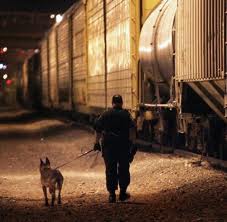
US Customs and Border Protection has announced a penalty Mitigation Decision under which Union Pacific (UP) has agreed to spend US$50 million to enhance the Mexico and United States rail supply chain CBP said the “Mitigation Decision” defines the steps that UP will take to invest US$50 million in security enhancements at critical junctures of the Mexico and US supply chain, and partnering with CBP to form a Rail Fusion Center to identify high-risk shipments.

US Penalty Mitigation DecisionCBP further said the decision provides that CBP will mitigate penalties assessed against UP if the railroad fulfils its obligations under the agreement. In recent years these penalties have become significant, as illegal controlled substances were discovered on trains originating in Mexico and arriving at US-Mexican border crossings. CBP Commissioner Alan D Bersin said: “It’s in the best interest of all that appropriate steps are taken to secure the US border against the smuggling of contraband. UP Chairman Jim Young said the agreement expands a relationship with CBP in which UP has already invested in technology, infrastructure, training and workforce resources to secure rail transportation across the border. Source: World Cargo News Online.

Zero Tolerance – the saga of 100% scanning continues

Various opinions on this subject have been voiced over the last 3 years – the threat of sea and airborne cargo being used as ‘a delivery mechanism’ for a nuclear or terrorist attack. Besides the US calling for 100% scanning of containerised cargoes at point of origin, the reality remains that less than 4% of seaborne containers are being scanned at port of departure.

Post 9/11, the US was quick to initiate a multi-layered approach to securing America against another terrorist attack. This entailed a number of domestic and extra-territorial programmes. At the bottom of each of these lies an authoritarian distrust or question mark against the integrity of entities involved in the international supply chain. In as much as these modern-day Customs’ initiatives aim to deal with tangible and intangible threats, one can begin to question the motives used by many governments and organisations in introducing such programs.

Last year, the US postponed it’s requirement for 100% scanning of inbound boxes by at least two years because of technical and funding issues. (Lets not forget the massive outcry from foreign countries of origin who envisaged their own ports coming to a standstill). The 2014 deadline, as it stands, would require any container heading to the US to be scanned for conventional as well as radioactive threats before being loaded at a foreign port.

However, in June 2011, US Homeland Security chief Janet Napolitano went on record saying that 100% scanning was “probably not the best way to go”. She said Congress was considering a “more layered approach” to container security, a combined system of scanning, data and risk analysis, physical checks and closer co-operation with ports and countries around the world.

Could it be that the promise of mega-deals for the ‘security industry’ is under serious threat given limited success and results from these ‘supply chain’ initiatives? One hears less and less about the awarding of multi-million dollar contracts for non-intrusive equipment. Funding is a big issue, and no less an issue is the question mark which countries of origin have regarding the direct intrusion these US-domestic policies have on their local economies and supply chains.

The WCO went a long way in accommodating and addressing the question of international terrorism which in the view of many helped curbed the ‘paranoia’ which prevailed post 9/11. Still the question of motive and opportunity spurred several organisations and governments to support the many bilateral developments that ensued. The EU Commission for one was infuriated by the bilateral overtures of the CBP and EU Custom’s administrations before diplomatic agreement prevailed.

The bottom line is that a nation’s domestic policy overrides that of the wants and whims of the more affluent states. Several donor programs nowadays offer ‘security equipment’ free of charge to countries packaged with ‘capacity building programmes’ to instil the desired mentality of the donor country or agency. Traditional forms of customs control and human initiative/intuition are being cast out on the trash heap as primitive everywhere, yet there is little to show for the billions of dollars spent on anti-terrorism measures year after year. However, reading the article – Zero Tolerance – you get the impression of a little desperation on the part of the engineers and manufacturers of nuclear based security equipment – almost wishing a further nuclear calamity to prove their point! Source of article: www.portstrategy.com

Confidentiality of manifest information – tips for US importers and consignees

South African shippers take heart, this is a worldwide phenomenon. Check out the article below on how US shippers are addressing the issue.

Is there a foolproof method for importers or consignees to maintain confidentiality of identifying information listed on shipping manifests? Unfortunately, the short answer is “no.” While an importer or consignee may request that US Customs treat its identifying information as confidential, the infinite number of variations of this information (e.g., spelling of company name) precludes confidentiality for each possible variation.

There are, however, steps that importers and consignees can take to minimize risk in this area. Under federal law, the public may collect manifest data at every port of entry. Moreover, reporters may collect and publish names of importers from vessel manifest data unless an importer/shipper requests confidentiality. Specifically,

[a]n importer or consignee may request confidential treatment of its name and address contained in inward manifests, to include identifying marks and numbers. In addition, an importer or consignee may request confidential treatment of the name and address of the shipper or shippers to such importer or consignee. 19 CFR 103.31.

As many importers and consignees have learned, however, confidentiality is not assured even CBP grants such a request. A bill of lading may often contain a variant of a company name, and if that variant is not included on the confidentiality request, confidentiality will likely not apply to the information on that particular manifest. For example, if the John Smith Corporation requests confidentiality for its corporate name, and a manifest lists “J. Smith Corporation” or “John Smith Corp., Inc.”, confidentiality would not technically apply since these names were not within the scope of the confidentiality request. Nevertheless, the trade may take steps to mitigate this. To ensure the broadest confidentiality exemption, an importer or consignee may consider including in the confidentiality application:

  • Every variation of the names that has been used previous shipping documents
  • Likely variations of the name
  • Misspellings of the company name
  • Any D/B/A or A/K/A previously used
  • Names of sister companies, including those in other countries
  • All company addresses

Even if an importer or consignee diligently follows these suggestions, confidentiality is not 100% guaranteed. One incorrect keystroke by someone entering data in a document somewhere in the supply chain can result in a “new” variation of a company name that is not covered by a grant of confidentiality.

US Customs and the trade have had discussions about the shortcomings in this process. Perhaps that is why CBP has for the time being disabled an online form used to make confidentiality requests (NOTE: requests can still be mailed to CBP as specified in the regulations). To tighten up this process, one possible solution is to leverage IRS/EIN numbers instead of relying on guessing at spelling of names. Source: CustomsNow Blog