Radiation Scare Disrupts Port Elizabeth

The Maher Terminal at Port Elizabeth has been cleared for danger after a radiation scare prompted a security response.

The Maher Terminal at Port Elizabeth has been cleared for danger after a radiation scare prompted a security response.

Misleading? No its Port Elizabeth – USA! Customs officials had suspicion about a shipping container that they were examining. An abnormally high radiation reading was detected, but CBP, FBI, the Port Authority of NY/NJ and other law enforcement officials initiated protocols to isolate and verify the source of the alarm.

According to New Jersey’s Star-Ledger, a Port Authority official said the container was filled with recycled paper, and a metal wire that bound the paper was the source of a positive reading for Caesium-137, a radioactive isotope formed during nuclear fission.

After review and confirmation from CBP’s Laboratories & Scientific Services, the container was deemed safe. The situation was resolved in less than two hours. Customs officials took control of the container and were moving it to a secure location.  Lengthy lines of trucks were at a standstill waiting to exit the port facility as the investigation was underway. At least 15 emergency response vehicles were on scene, along with various officers. Source: Maritime-Executive.com

Future X-Ray Insepction Equipment to be based on Industry Standards

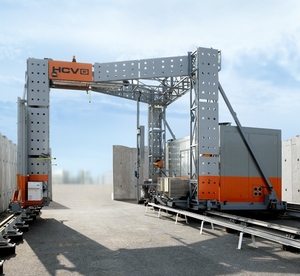
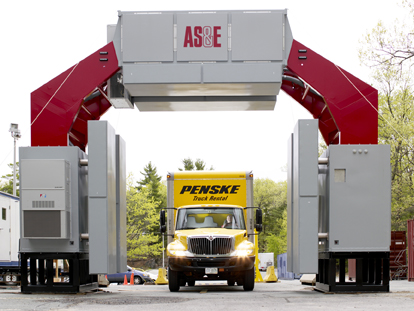
Smiths Detection HCV Scanner setup routine (Picture credit - Mercator Media)

Smiths Detection HCV Scanner setup routine (Picture credit – Mercator Media)

Innovative technology for the non-intrusive inspection of cargo and vehicles has rapidly emerged over the last decade to become a significant factor in port and border protection and homeland security. Several hundred high-energy mobile and fixed-site X-ray inspection stations are deployed throughout the world to examine passenger cars, trucks, trains, and shipping containers that transport goods bound for international destinations. Behind the scenes, cargo screening technology continues to be a story of innovation and change, driven by keen competition and a common mission to improve global security.

Early cargo screening systems were relatively slow and expensive to operate. They produced a limited resolution single-energy X-ray image, often using an isotope source such as Cobalt-60. The imaging software was rudimentary, and limited to simple controls such as pan and zoom, while computer processing speeds significantly limited inspection throughput. By contrast, most systems today are accelerator-based, which allows for higher energies, faster operation, and more precise controls. These systems incorporate software that takes advantage of improved computing platforms and features increasingly sophisticated analytics – this power has paved the way for the use of dual-energy accelerator sources and advanced detectors to facilitate material discrimination, enabling inspectors to identify threat objects more quickly, based on their composition.

Future developments in cargo screening are likely to follow a common innovation trajectory that is fostered by market needs and new technology, while being strengthened by existing intellectual property and evolving industry standards. Innovation is often perceived as a circular path beginning with customer needs that are identified by a technology developer. The developer then creates application technology in the form of products to meet those needs. With numerous competitors in the market, suppliers are motivated to continually improve their products. However, a more nuanced understanding incorporates the role of component technologies and the core capabilities of the technology developer. Each of these constituents influence and are influenced by their respective technology and regulatory standards, which then ultimately impact the products available to the customer. For the full report with diagrams, Click Here!

Component technologies and their standards are often driven by the needs of other markets and may only be tangentially connected with the market of interest. Consequently, developers often have minimal influence on these technology standards but will benefit by leveraging the investments already made by other organizations. ‘Components’ may be subassemblies (such as a computer graphics card) or entirely separate systems (such as a cloud computing service) that can be incorporated into a screening system to provide a complete customer solution. System providers benefit from these parallel technologies and component standards because they provide innovative insights and functional capabilities, such as interoperability, interchangeability, and known performance characteristics. In the case of cargo screening, there are many component technologies that are potential sources of future innovation. A few notable examples are described later in the report.

Because cargo screening is a youthful market with changing customer requirements and technology that is evolving to meet those requirements, existing industry standards are still in flux. This is beneficial for the cargo screening industry in that it provides ample room for innovation and development. As cargo screening technology continues to evolve and mature, the community will develop consensus in more areas and create additional standards. However, the standards process is slow and seldom speaks to the most current technology issues in an industry. For example, material discrimination is an important new feature offered by many cargo screening systems, yet there is little guidance from current industry standards to assess the performance of this technology. Source: www.porttechnology.org

Nigeria – Customs Ready (or not) for Destination Inspection Role

Nigeran flagTrade House of Representative Committee on Customs, has expressed satisfaction with the Nigeria Customs Service (NCS) preparedness to take charge of the destination inspection scheme at the expiration of the six months extension granted the Service Providers by the government. Chairman of the committee, Hon. Sabo Nakudu, who disclosed this during the tour to access the performance of service providers, commended the scanners provided by the service providers as part of the contract with the federal government.

Nakudu, however frowned at the Risk Assessment Report (RAR), issued by the service providers which he said is plagued with so much controversies. He noted that the basic reason for the tour, was to confirm the preparedness of the Customs to take over and to ensure that what the service provider delivered, are as expected. According to him, “In most cases, there are instances whereby this risk assessment report are duplicated or un-utilized and instances where a particular consignment being issued with different amount.

“Agencies found (to be involved) in this regard by the committee will be probed to ensure that refund is made to the federal government on the percentages gotten from the RAR duplication.” He warned.

Nakudu maintained that the service is ready and capable of taking over the scheme from the service providers at the expiration of the extension at the end of the six months period. In his words, ” I am convinced that the Customs are trained and as you can see, the scanners are in order, but our major problem is the area of the risk assessment report, because that is where the revenue comes in from.

He also, frowned at the services of connectivity to Web Fontaine, which powers the Automated System of Customs Data (ASYCUDA), over deficiencies in its service delivery, saying that, government pays the firm $6 million monthly, without any commensurate investment and efficiency to show for it.

The committee however toured the scanning operations site in the Lagos Ports Complex, Apapa and the Tin Can Island Port Complex, and also inspected Cotecna Destination Inspection Limited (CDIL) and Global Scan Systems facilities respectively. Source: Allafrica.com

I think Nigeria has made a bold (and correct) decision to adopt responsibility for control over its mandate. Many service providers will disagree as do many of the global audit firms who believe that the field of Customs Audit (including AEO) is best outsourced to their domain. It just shows that when business opportunity in the commercial (private sector) domain is not as easy to come by how the focus turns on what public domain opportunity lies in wake for them. The more service providers/consultants in government, the more consultants are needed to oversee what the original ones are doing! This is the sad situation in South Africa at the moment.

Belissima!

HCVG Inspection System - Smiths Detection

HCVG Inspection System – Smiths Detection

Smiths Detection has announced a €19m contract with the Italian Customs Agency to supply high-energy X-ray cargo scanners for deployment at six major ports including Naples, Genoa and Bari. According to Smith’s – “We have worked closely with Italian customs for many years, not only supplying detection systems but also providing the highest standard of after-market service. This latest contract underlines the continuing success of our customer-driven approach.”

The HCVG inspection systems, which can detect contraband, narcotics and weapons, will also be used for confirming cargo details to ensure customs and excise duty and trade taxes are in order. Click here for more technical details of the HCVG inspection system 

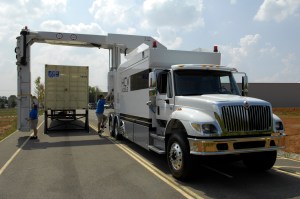
Able to inspect up to 20 containers, trucks or vans an hour, the gantry-mounted scanners can penetrate steel 330mm thick. A detailed X-ray image, which features organic and inorganic material discrimination using viZual imaging software, is produced by a single scan of the load.

Smiths Detection offers advanced security solutions in civil and military markets worldwide, developing and manufacturing government-regulated technology products that help detect and identify explosives, chemical and biological agents, radiological and nuclear threats, weapons, narcotics and contraband. It is part of Smiths Group, a global leader in applying integrated, advanced technologies to markets in threat and contraband detection, energy, medical devices, communications and engineered components. Smiths Group employs around 23,000 people in more than 50 countries. Source: Business Wire

Cargo Inspection – SGS ready to hand over to Customs

NigerianCustoms-BadgeAt the wake of call by some stakeholders for extension of concession period for direct inspection (DI) service providers at the nation’s ports, one of them, Societe Generale de Surveillance SA (SGS) Scanning Nigeria Limited, has reiterated its readiness to handover its cargo scanners and related services under the DI scheme to the Nigeria Customs Service (NCS) by the end of this month in line with the concession contract it entered into with the federal government through the ministry of finance. SGS Scanning Nigeria Limited,having fulfilled its contractual obligations under the DI scheme, is looking forward to a smooth takeover of its DI activities by NCS officers from January 2013.

In 2005, SGS, along with two other service providers was awarded a seven-year contract that commenced in January 2006, to supply cargo scanning machines on a build, operate and transfer basis (BOT) as well as training services and technical support on risk management, valuation and classification.

SGS has delivered on the deployment of cargo scanners and also trained more NCS officers than was stipulated in its contract. In addition, the company, in August this year, concluded the special training of 80 Customs officers tagged ‘DI Transition Team’ at the NCS Ikeja Training School, as part of her winding down activities. Additionally, SGS carried out renovation of some of the NCS training school facilities and provided computers and other equipment.

Furthermore, SGS believes all the NCS officers sent to us for training have been well prepared to take over the DI activities as from January 2013. (Comment: One would hope that the article appended below – Nigerian Customs officials cannot operate scanners – is dated or otherwise inaccurate. It would be grossly unwise for any arm of government to undertake this responsibility unprepared.) The seven-year DI Scheme can be regarded as a transition phase from the former Pre-shipment Inspection Scheme(PIS) to the next phase of NCS development. Therefore, the conclusion of our DI contract on December 31 will be a milestone for NCS.

Having been in Nigeria for more than 50 years, SGS will continue to support the economic transformation efforts of government should the opportunity arise. The company has been in Nigeria since 1957. Source: Leadership (Abuja)

Portable multi-purpose airport scanner

Flatscan portable scanner

Flatscan 27 portable scanner

Mondial Defence Systems provide the full range of CBRNe (Chemical, Biological, Radiological, Nuclear and Explosive) solutions to government, military and civil agencies.

The FlatScan 27 is a highly innovative flat portable battery-powered X-ray photodiodes system that has been specifically designed for high-speed and high-resolution inspection tasks. It incorporates a state-of-the-art 2D (two-dimensional) self-contained robust scanning detector, a laptop computer and a CP120B or CP160B portable constant potential X-ray generator to deliver real-time image processing. FlatScan 27 was developed in cooperation with specialised EOD (Explosive Ordnance Disposal) teams and comprises various unique features, specifically to meet any emergency situation. The technology will predominantly be of interest for applications used by the military, police, prisons and customs.

The FlatScan 27 comprises a large number of unique technological features and delivers a versatile and highly thin detector (thickness of just 55mm). This detector means that large objects with dimensions up to as much as 535 x 412mm can be scanned in just one attempt, even in situations where they might be located in very inaccessible places (e.g. close to a wall).

Flatscan 27 providing material discrimination and conventional scanning capability

Flatscan 27 providing material discrimination and conventional scanning capability

Furthermore, the FlatScan 27 delivers an excellent image quality with a high penetration capability (up to 34mm of steel at 160kV, 0.5mA). This is possible as a result of its sensitivity, the 800 microns resolution and the ability it offers for slowing down the speed of the scanning detector.

The FlatScan technology can be extended through a variety of options including materials separation. This involves the colour coding of a package to indicate whether the components inside are organic or inorganic in nature. This option delivers extra insight to the operator when making an informed judgment relating to the contents of suspect objects or packages.

The detector is equipped with a battery that lasts for two hours, while the two X-ray source cells each enable the development of up to 200 images. It should be noted that in cases of long-lasting laboratory applications, both items can be powered by optional mains power supplies.

For quick on site intervention, the FlatScan 27 detector can be easily transported in a backpack, while all accessories are stored in a carrying case. For more information visit – http://www.mondial-defence.com


Nigeria Customs – Exiting the era of ‘contracted services’

Goodluck Jonathan addressing the WCO in June 2012

As the Nigeria Customs Service (NCS) gets set to assume all hitherto contracted services from the service providers come December 31, 2012, kudos must be given to the administration of President Goodluck Jonathan for the political will which has brought this to fruition. This is a highly significant development that should encourage other African nations to follow suit.

Over the years, the functions of the Customs administrations have evolved from revenue collection to include protection of industries, protection of citizens, trade facilitation as well as trade security and environmental issues and Customs administrations have continued to improve with the dynamism brought about by the evolving global world.

Therefore, if any country must rely on contracting core Customs services to private companies, then such a country should as well disband its Customs administration. What this means is that no one can ‘Captain’ a ship better than a ‘Captain’, even the best pilot in the world would fail woefully when saddled with sailing a ship.

This is because, whilst it is necessary to contract some of these services to the private sector, such services are usually treated by benefiting firms as mere business ventures and as such, create a situation where governments use such contracts to benefit close allies, even as organisations will go to the extremes to secure such contracts, primarily for profit making.

Having critically studied the scenario, the World Customs Organisation (WCO), summed up that such practice usually results in a situation where there will be no trust in the Customs frontline and post clearance capability. This has prompted the Organisation to, in recent years, develop several diagnostic studies and programmes aimed at championing broader international Customs capability with high benefits to governments of its member countries.

Findings have however, shown that governments may choose the private-sector to complement its resources and capabilities in which supporting operations ranging from printing Customs legislation and tariff to designing Customs websites, repairing and maintaining facilities and equipment and conducting research into specific topics may be outsourced to private companies.

Core Customs responsibilities were also, through contracts with a government, outsourced to private companies that conduct pre-shipment Inspection (PSI) or Destination Inspection (DI) activities. As their names suggest, PSI activities are conducted in exporting countries in order to verify the quality, quantity, price and classification of such exported goods, while DI activities are carried out in combination with scanning technology on imported goods in importing countries.

However, this option, according to the world Customs body, has been observed to be usually more cost effective than in-house operations for many reasons including the stimulation provided by competition in the private sector.

It is therefore time that such organisations which front themselves with the ‘be all’ systems in Customs tariff and valuation appraisal rather seek a more practical and benefit-delivering model than one which not only scams governments of service and inspection fees, but also offers no benefit to trade.

Some of them offer government free cargo scanning equipment in exchange for a lucrative inspection fee. None of this is based on risk management and mostly purely profit focussed. The concept forgoes most, if not all the modern Customs principles and standards promoted by the WCO.

Rather than this concept which adds no value to trade, the focus of government should be capacity building for Customs officers; and with a commitment to capacity building under the Dikko-led management, the NCS now has capable hands to take-over the running of all its functions, and thereby retaining capital flight.

It is worthy to note that PSI and DI is normally introduced to enhance Customs functions as a stop-gap measure while waiting for Customs reforms and modernisation.

According to the WTO, as at November 2011, at least 25 countries, most of which are in sub-Sahara Africa, had contracts with private inspection entities for PSI and DI of which Nigeria was one of them, but this would no longer be after 31st December, 2012, when Nigeria would exit from that category.

Furthermore, it is also important to note that the WCO position is that such contracted core Customs services should not be considered as a permanent substitute for the Customs administration, but only as a temporary measure.

As a consequence of critical assessments of the performance of inspection companies and inefficient capacity-building and training activities, many Customs administrations have exited these outsourcing contracts and the WCO, with its accumulated knowledge, is able to assist its members with the process of discontinuing these contracts.

Nonetheless, there are certain circumstances where the hiring of inspection companies could be justified because of lack of expertise as in the case of post-conflict reconstruction situation. However, in such cases, contracts with PSI, DI companies as service providers should be accompanied by an active exit plan strategy within the context of a capacity-building or Customs modernisation programme. Even the PSI companies are in this case, expected to work in compliance with the WTO agreement on PSI and relevant WTO’s recommendations.

When Abdullahi Dikko, on assumption of office as Comptroller-General of the Nigeria Customs Service in 2009, began a campaign for the modernisation of the NCS as captured in his six point agenda with more emphasis on capacity building and improved welfare, he was criticised for embarking on such a capital intensive venture by many, who then didn’t believe in his vision. But today, the result of the huge investment on capacity building is evident as the NCS, come December 31, 2012, would pride itself among the 21st century Customs administrations, measuring with its counterparts in developed countries, by taking over full control of all Customs operations.

There are arguments that the outsourcing of supporting functions to the private sector enables the Customs administration to focus their scarce resources on their functions, but this is no longer the case with the NCS.

Facts have shown a sharp rise in the resources of the Service due to an improved revenue collection. Monthly collection has risen from the inherited N30 billion to N90 billion. The increased revenue collection has made it possible for Customs officers to have a 100 per cent salary increase and even freeing more resources for the acquisition of quarters for officers and men, renovation of Customs barracks nationwide, provision of staff buses, uniforms and clinics in most commands.

This landmark achievements have been made successful with the full deployment of the NICIS platform for e-Customs declaration and processing, manifest submission, duty payment and final release. Records show that e-manifest processing which usually took seven days and above in 2009, is now been processed same day. Same goes for e-remittance processing. Same transformation has being noticed in the number of processed SGDs which has risen from an average of 367,897 in 2009 to about 526,604 currently.

Summarily, it must be noted that the scanning aspect of the Customs supply chain security paradigm contributed to the evolution from pre-shipment inspection to destination inspection. Traditionally, many developed countries, especially in Africa, employ companies from developed countries to do pre-shipment inspection of imports to Africa primarily for classification and valuation purposes.

The pressure to consider exports as well as imports and for national security contributed to the emergence of destination inspection companies, where the Customs controls are conducted in the African country. This has reduced the internal costs of such service companies and increased their incomes but has done little or nothing to reduce checks at the border or import points. Source: Leadership (Nigeria)
The Case for Screening-as-a-Service

In an interview with The Maritime Executive, Peter Kant, executive vice president for Rapiscan Systems informed that the primary business of a port is serving as a hub for water-borne commerce and all of the logistics that entails, with each port competing for the business of shippers and container operators. Every investment made by a port authority, from a crane to a dredge to a security checkpoint, must be based on how this activity will not only position the port to current customers, but how it will affect the attraction of future customers.

Increasingly, however, these investments are including more and more security needs, from container scanning equipment to operator training to security architectures. Security, and in particular security screening, is not the core business of a ports authority, but compliance with national and international guidelines demands that certain security standards be met, or losing customers will be the last of a port authority’s worries.

But even though security screening is an absolute necessity, many ports are looking to get out of the security game altogether. But will the departure from security make ports less secure…or could it actually enhance cargo scanning operations?

The Heavy Burden of Screening
As mentioned earlier, port authorities are not experts when it comes to security, especially a task as granular as cargo screening. It’s not just about a “mean guard and a magnet” when it comes to screening anymore, and this especially holds true to the world of maritime cargo. First, the right technology must be installed, a solution that can effectively analyze cargo for potential contraband or threats, both conventional and radioactive. Then, a port authority must determine the best location for the screening checkpoint, and oversee the construction of the location, both in terms of port impact and traffic optimization.

Next come the installation and calibration of the scanning technology, as well as the hiring and training of security operators. The authority must also establish a workflow for what happens when a container is flagged – what requires a manual inspection? Who approves such an operation? What remediation must take place after the fact?

The fact of the matter is, cargo scanning isn’t just about putting containers through an X-ray machine. It’s much, much more than that, and consumes enough time that establishing and running a checkpoint can adversely affect port business.

But there is an easier way to run cargo screening operations. Port authorities are experts in maritime commerce, so why shouldn’t they turn to experts in security screening to run cargo scanning operations?

Cargo Scanning-as-a-Service
Rather than trying to become cargo screening experts overnight, port authorities can take advantage of a major trend in the overall security world: security-screening-as-a-service. Essentially, port operators form a partnership with an experienced security screening solutions provider, tasking the provider, not the port, with the onus of establishing and running a cargo scanning checkpoint.

Other than the obvious benefit of freeing the port authority from the security logistics headache, why turn to cargo screening as a service? For one, 100 percent screening in the United States has not gone away…at least not yet. But even if the requirements on cargo entering the USA are loosened, port screening for contraband is not going to decrease – in this economic climate, governments want to ensure that everything that can be taxed is taxed. This is a nightmare scenario for port authorities to deal with, but one with which screening solutions provider are comfortable. With their experience in the field, these providers can find the right equipment and checkpoint set-up to be as thorough and detailed as needed when it comes to cargo scanning, ensuring that not only are potential threats detected, but any contraband can be swiftly dealt with by the appropriate authorities.

Going with an experienced screening partner can also add radiation detection capabilities, a growing problem in the world of maritime commerce. Radioactive materials, either improperly labeled or being shipped as contraband, can shut ports down for days and are impossible to detect via conventional cargo screening technologies. By utilizing screening-as-a-service, however, port authorities can place this additional burden on the solutions provider, which has the experience and the right capabilities to detect radiation alongside conventional contraband and threats.

Training of security operators is another headache that cargo scanning as a service eliminates for the port. The difference between a major international incident and millions of dollars in fines can hinge entirely on the competency of a security screening operator. Do port authorities really want to be responsible for the skills of these professionals, especially when it’s in a field far outside of their comfort zones?

With cargo scanning as a service, training falls into the lap of the solutions provider, a task with which they are well familiar. Because they have built, installed and maintained the security technologies selected, these organizations best understand how to train professionals on the ins-and-outs of analyzing scanned images and detecting potential threats and contraband.

The service also gives ports a major competitive advantage, as a well-designed, specially-staff cargo scanning checkpoint makes the entire security process far easier for customers to deal with. Throughput is often increased, meaning that cargo makes it to its end destination more quickly and with fewer roadblocks, a paramount concern for shippers everywhere. Even a few hours delay can be costly, especially when perishable goods like imported produce are involved.

The Real World
Perhaps most importantly, cargo-scanning-as-a-service is not a pipe dream or some theoretical solution for ports. It’s already in practice and being used by some of the largest customs and port operations in the world.

The Ports Authority of Puerto Rico, for example, utilizes cargo-screening-as-a-service from a customs perspective, ensuring that no contraband is entering the island through its major ports. By enlisting an outside, specialized security solutions provider, the Port has increased throughput without sacrificing the integrity of its customs or security operations.

The Mexican Customs Authority has also turned to a wide-ranging cargo-screening-as-a-service solution for their operations, both land-locked and maritime. The major project has just recently been undertaken, but ultimately the vast majority of Mexican ports will soon be turning to screening-as-a-service when it comes to cargo, freeing the ports to focus on the business, not contraband detection.

Detecting threats and contraband via maritime cargo is not going to get any easier. If anything, smugglers, criminals and terrorist organizations are becoming more and more clever when it comes to getting illicit goods, weapons and hazardous materials across national borders. Port authorities trying to stay one step ahead of these issues are in for a struggle, as other aspects of the port business suffer.

Keep the port operator’s attention where it belongs (on the port) and let specialized experts handle the cargo scanning burden. It’s proven, it works, and it’s the best way forward to maritime prosperity and safety. Source: The Maritime Executive

Dynamic X-Ray imaging – detecting objects or living creatures

The conventional image (left) and the dynamic image (right) of a pack of rice containing mealworm larvae

The conventional image (left) and the dynamic image (right) of a pack of rice containing mealworm larvae

X-ray inspection systems are a standard feature in many ports. These X-ray systems have the unique ability to non-destructively image the contents of entire cargo containers in just a few seconds. It is a difficult task, however, to identify what is in the container based on the obtained X-ray images. The superposition of two images with different contrasts – like in dual-energy X-ray imaging – can enhance the effectiveness of the detection. A novel X-ray imaging technology now introduces an entirely new type of contrast based on movement. This technology can be combined with existing single-energy and dual-energy X-ray imaging methods, opening new possibilities in port security applications.

One important application of the dynamic imaging technology could be finding stowaway pests in the cargo. Stowaway pests travel hidden within transported goods and may damage the cargo while being shipped. In addition to this, potentially invasive species often travel as stowaway pests and arrive to new territories unnoticed. Although better part of these exotics are harmless, approximately 20 to 30 percent of the introduced species are pests and cause major environmental and economic problems. Read the full article here! Source: Porttechnology.com

Nigerian Customs Boss unveils new scanners

The Comptroller General, Nigerian Customs Service (NCS), Alhaji Inde Dikko Abdullahi, said that ports users would henceforth complete their business transactions within 24 hours. Speaking at the formal unveiling of the gantry scanner procured by Societe Generele Surveillance (SGS) Nigeria at Onne, Eleme Local Government Area, Rivers State, he said the new scanning facilities would boost the 48-hour target for clearance of goods at the ports, noting that it would complement government’s efforts toward reducing the cost of doing business at the ports.

Special training for a select team of 80 NCS officers has been concluded. The team is expected to take over services and operations in the Destination Inspection scheme as from January 1, 2013. The training covered all aspects of the DI activities being handled by SGS for NCS with emphasis on actual risk analysis and processing of the importer’s final document resulting in classification and valuation opinion.

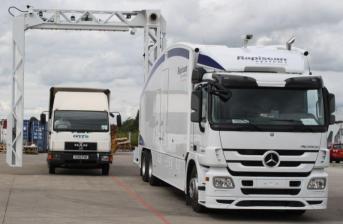
Managing Director of SGS Scanning Nigeria Limited, Mr. Nigel Balchin, in his address at the occasion, said the mobile cargo scanners were capable of scanning about 34 trucks per hour as against 16 per hour by the fixed cargo scanners. Each had double tunnel that enabled it scan two trucks at the same time with equal image quality as the fixed scanner. “At SGS we are committed to quality service delivery. We are very glad to be part of this success story and we look forward to Nigeria Customs Service taking charge of the DI programme. The knowledge you have acquired is for the benefit of Nigeria Customs Service and ultimately that of the Nigerian economy. We wish you the best in your future endeavours”, he said.

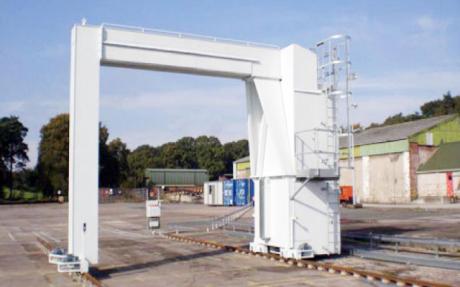
The image quality of the relocatable gantry scanners is on par with a fixed scanner. Trucks remain stationary during scanning (the scanner moves on rails) unlike a fixed scanner where the truck is pulled through the scanner on a conveyor that’s more vulnerable to maintenance issues. The scanner is mounted above ground unlike a fixed scanner where one of the detectors is four metres underground. In addition, a relocatable gantry scanner can be re-deployed to an alternative site, in a relatively short time, in case of any expansion or new development.

SGS is one of the service providers contracted by the Federal Government to assist the NCS facilitate trade through risk management and use of non-intrusive inspection (x-ray cargo scanning) of imports routed through the nation’s air and sea ports as well as approved borders. The company is currently providing cargo scanning services in Bahrain, Cameroon, Haiti, Madagascar, Uruguay and has completed provision of scanning services in Gambia, Kosovo and Mexico.  Source: Leadership.ng

Dumb, dumber’er, or just plain downright stubborn?

A US statutory requirement to scan all incoming containers at foreign ports will take effect at the beginning of July, a date thrown into sharp relief as the House of Representatives homeland security committee approved a revamped bill that retains the clause.

The draft bill gave the industry minor cause for cheer for unrelated reasons, as it will postpone the requirement for workers to renew their transportation worker identification cards in the absence of Department of Homeland Security regulations on biometric card readers. But the 100% scanning requirement has proved its resilience yet again.

Since 2006 shippers, spearheaded by associations that include the National Retail Federation, have been campaigning to get the requirement eliminated on grounds that it is impractical and costly and could trigger foreign government retaliation against cargoes originating from the US. US homeland security secretary Janet Napolitano has pointed out the impracticality of the law and proposed a two-year postponement.

These calls went unheeded in the house, as the homeland security committee on Wednesday approved the Securing Maritime Activities through Risk-based Targeting for Port Security Act, known as the Smart Port Security Act. The Smart Port Security Act reauthorises the Security and Accountability for Every Port Act, known as the Safe Port Act, which became law in 2007.

The Safe Port Act implements the 9/11 Commission’s recommendations, including the contentious provision that all US-bound containers will be scanned at origin from July 2012. A fig leaf in the Safe Port Act allows the homeland security secretary to grant waivers to individual ports, under conditions that are somewhat vague. Last year, a Safe port reauthorisation draft in the Senate proposed a broad waiver of the 100% scanning requirement.

With the clock now ticking to July 1, shippers were particularly anxious to get the house bill to remove the 100% scanning clause permanently.

The homeland security committee passed a version that allows DHS to recognise other countries’ trusted shipper programmes and allows the US Coast Guard to recognise other governments’ port security threat assessments, but stops short of jettisoning the 100% scanning clause.

Republican congresswoman Candice Miller, chair of the subcommittee on border and maritime security, hailed the new bill, saying: “Securing our waterways is an essential component of a layered approach to security.

“This bill enhances risk-based security measures overseas before the threat reaches our shores, emphasising a stronger collaborative environment between customs and border protection and the US Coast Guard in sharing port security duties and leveraging the maritime security work of our trusted allies.”

Comment: Huh!, to whom does this refer? Such a statement flies in the face of its own C-TPAT program and bilateral overtures with foreign ports (supposedly based on risk). Perhaps its time for the ‘trusted allies’ to deport CSI teams who have not necessarily endeared themselves to their respective host nations.

Source: Lloydslist.com

X-Ray Security Screening – Technologies & Global Market Outlook

Over the next five years, Homeland Security Research Corporation analysts forecast a growth at a CAGR of 10% of the global X-ray screening market, led by a dramatic expansion of the Chinese civil aviation (two out of three new airport projects are in mainland China) and internal security funding. Other key markets are terror-troubled India and the replacement market of the US and Europe.

Despite years of cutting edge weapon and explosives screening technologies RDT&E, there is no competitive modality on the horizon which challenges the cost-performance of 2D X-ray screening technologies. The global X-ray security screening market (including systems sales, service, and upgrades) is forecast to grow from $1.2 billion in 2011 to $1.9 billion by 2016.

The new report is the most comprehensive review of the multibillion dollar global X-ray security screening market available today. It analyses and forecasts the market by application, by geography and by business transaction. The report, segmented into 50 submarkets, offers for each submarket 2010-2011 data and 2012-2016 forecasts and analysis. In more than 300 pages, 90 tables and 150 figures, the report analyses and projects the 2012-2016 market and technologies from several perspectives, including:

  • Market forecast by application: Air cargo, Airport-cabin baggage, Secured facilities, Postal items, Supply chain cargo and People screening AIT
  • National and regional markets
  • X-Ray Technologies: conventional, backscatter, multi-view, coherent and dual energy x-ray
  • Systems sales, post warranty service and upgrade markets
  • Competitive environment: 16 leading vendors and their products
  • Market analysis: e.g., market drivers & inhibitors, SWOT analysis
  • Business environment: e.g., competitive analysis
  • Current and pipeline technologies

Source: Homeland Security Research Corporation

Hong Kong Customs Moves Forward With E-Lock Plans

The Hong Kong Customs and Excise Department (C&ED) reports that RFID-based container locks can effectively improve the security, convenience and visibility of the customs process for cargo entering the airport. In November 2011, C&ED began testing three types of electronic locks (e-locks) in order to speed up the process of performing customs checks on containers filled with cargo. The solution, known as the Intermodal Transhipment Facilitation Scheme (ITFS), was implemented as a way to streamline the clearance of cargo passing through customs at Hong Kong International Airport for cargo destined for areas both domestic and outside of Hong Kong. The installation and consulting services were provided by the Hong Kong R&D Center for Logistics and Supply Chain Management Enabling Technologies (LSCM), according to Frank Tong, LSCM’s director of research and technology development.

An electronic lock with an active RFID tag is being used to secure freight passing through
customs and Hong Kong International Airport, ensuring that the cargo remains tamper-free,
while also expediting the clearance process.

The Hong Kong C&ED estimates that the system reduces the amount of time required for clearing each container through customs, from two to three hours down to five minutes, since customs officials can now be assured that the containers have not been opened between their inspection at the border control point and their arrival at the airport. What’s more, the agency can now collect a digital record of where each container has been, along with when it was inspected.

Cargo is loaded into freight containers or directly onto trucks—such as those operated by United Parcel Service (UPS)—in Mainland China, and is then transported to a customs control point located at the border with Hong Kong, where C&ED officials inspect the cargo and clear it for entry into Hong Kong. Following that clearance, the shipment continues on to Hong Kong International Airport’s cargo terminal, where the goods are unloaded from the container or vehicle, and are placed into an air cargo container. Once this has occurred, the cargo is moved through another customs control point at the airport, where C&ED again inspects and approves or rejects its passage.

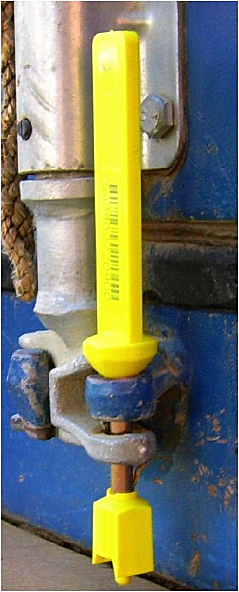
To speed up this process, the R&D Center implemented the use of an e-lock for the customs agency, consisting of a physical lock activated by a built-in active RFID tag, designed to receive a transmission from an RFID reader that allows the lock to be opened or closed. Three types of e-locks are currently being used, provided by three different vendors: Long Sun Logistics Development Ltd, CIMC Intelligent Technology Co. and CelluWare Research Laboratory. Each of the three products employs a different frequency—433 MHz, 315 MHz and 2.4 GHz—but all comply with the ISO 17712 standard for mechanical seals designed for freight containers.

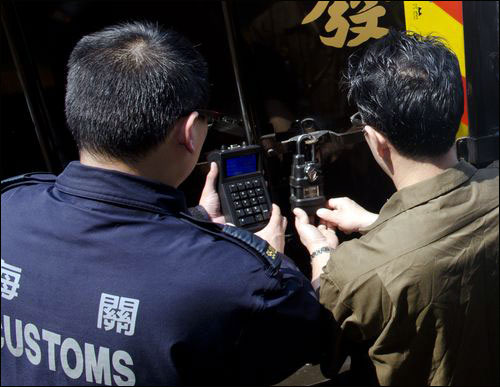
LSCM has installed fixed RFID readers (provided by the three e-lock vendors) at two border control points—Lok Ma Chau and Shenzhen Bay—as well as at Hong Kong International Airport. When a shipment first arrives at either border control point, C&ED’s staff attaches an e-lock, reads the ID number encoded on its built-in RFID tag via a handheld reader, and links that ID with the vehicle registration number of the truck transporting the container. The transporting company must pre-register each vehicle with the Hong Kong C&ED prior to its arrival; the truck’s ID number is listed in the agency’s database, and the customs official can confirm that the vehicle is, in fact, the one expected.

That data, along with the specific cargo being transported, is then stored on the Hong Kong C&ED’s integrated tracking software platform, developed by LSCM, which collects and processes the data and then displays it for customs officials when necessary. The system stores the e-lock ID number linked to the vehicle ID, and transmits instructions to the e-lock, along with a password, thereby causing it to lock. The device also requires a physical key, which remains in the driver’s possession. In this way, two actions must be completed before the container or vehicle can be unlocked: The e-lock must be electronically unlocked via a password from a customs official, and the driver must use a key to physically open the padlock.

The shipment is then transported approximately 42 kilometers (26 miles) to the airport. The e-lock comes with a built-in GPS device that tracks the vehicle’s location as it moves. In that way, the e-lock stores a record of where the vehicle has been. When the lock is later read at the airport, the back-end software compares the actual GPS data against the container’s expected route. The system can issue alerts in circumstances in which an e-lock is found to have lost a GPS signal, or, based on GPS data, the truck appears to have deviated from the intended route.

At Hong Kong International Airport, a C&ED official either selects the container for inspection, or simply instructs the system to issue an unlocking command with the matching password; the container is then brought to a site where the cargo is removed and then loaded onto an aircraft, says Steve Wai-chiu Chan, a C&ED special duties officer. If the container is selected for inspection, the e-lock remains locked. In this scenario, a truck driver would be instructed to await a C&ED officer, and would be unable to unlock the container without providing the proper password. The C&ED officer, upon arrival, would then use a handheld device to read the e-lock, instructing it to unlock by providing the necessary password.

LSCM installed a total of 38 readers at the two land border control points, five logistic hubs at the airport and a marine control point known as the Kwai Chung Customhouse, for items arriving by sea (at the Marine Cargo Terminal located at the airport). Altogether, by February of this year, 109 containers had been equipped with the e-lock device. An average of 100,000 consignments pass through the border daily, and the ITFS e-lock system is utilized for about 17 percent of that cargo.

The solution has enabled a faster customs clearance process, as well as providing a digital record of what was unlocked, and thus inspected, and when this occurred. The system also improves security, since only officers who know the proper password can access the container. Ultimately, Chan says, “it enhances the Hong Kong logistic industry’s competency and reinforces Hong Kong’s position as a world-class logistics hub.” Source: RFID Journal and a word of thanks to Andy Brown (Tenacent) for bringing the article to my attention.

America – shees verry beeeeg!

Publication of the latest USCBP Border Patrol Strategic Plan reflects and builds on the transformation of the United States’ relationships with Mexico and Canada, particularly in the areas of border management and security. The joint Declaration of Principles for the 21st-century border represents an enhanced and strengthened commitment to fundamentally restructure the way we manage our shared border. The depth and breadth of cooperation that occurs now between the United States and Mexico was unthinkable even a few years ago. Similarly, the Beyond the Border declaration between Canada and the United States has an equally significant potential in what is already our historically extraordinary relationship with Canada. These developments have created unprecedented opportunities with both Mexico and Canada, in which DHS and CBP will play a defining role, to improve our security and economic competitiveness – and CBP will play a defining role in taking advantage of those opportunities. The Border Patrol in turn is key to advancing CBP’s security agendas with Mexico and Canada, working with its law enforcement counterparts in each country to identify and mitigate threats.

The U.S. Border Patrol is a premier law enforcement organization, recognized around the world for expertise, capabilities, and professionalism. CBP’s officers and agents are the frontline, the guardians of the Nation’s borders. We honor and are proud of them, and we thank them for everything that they do to protect America and the American people. Source: CBP.gov

So there you have it – for a real dose of commercialized Customs and what it can do for the good folks in America, and anywhere else in the world for that matter, check out the strategic plan by clicking here! You’ll be forgiven if you thought you were reading an edition of Jane’s Defense & Security Intelligence & Analysis. Most customs and border management agencies around the world can only dream about such impressive kit! 

Related items

Advancing the argument for sealing cargo and tracking conveyances

South African Customs law provides for a seal integrity regime. This consists in provisions for the sealing of containerised sea cargo as well as sealable vehicles and trailers. These requirements have, however, not been formally introduced into operation due to the non-availability (until recently) of internal systems and cross-functional procedures that would link seal integrity to known entities. To explain this in more layman’s terms, it is little use implementing an onerous cargo sealing program without systems to perform risk assessment, validation of trader profiles and information exchange. It’s  like implementing non-intrusive inspection (X-ray scanning) equipment without backward integration into the Customs Risk Management  and Inspection environment and systems. It has often been stated that a customs or border security programme is a layered approach based on risk mitigation. None of the individual elements will necessarily address risk, and automation alone will likewise not accomplish the objective for safe and secure supply chains. Moreover, neither will measures adopted by Customs or the Border Agency succeed without due and necessary compliance on the part of entities operating the supply chain. It therefore requires a holistic strategy of people, policy, process and technology.

In the African context, it is surmised that the business rationale will be best accomplished with a dual approach on IT connectivity and information exchange. Under the political speak there are active attempts within SACU, SADC, COMESA and the EAC to establish electronic networks to facilitate and safeguard transit goods. Several African states are landlocked and are not readily accessible, some requiring multiple transit trips through countries from international discharge in the continent to place of final destination. National laws of each individual country in most instances provide obstacles to carriers achieving cost effective means in delivering cargoes. Over and above the laws, there exists (regrettably) the need to ‘grease palms’ without which safe passage in some instances  will not be granted. Notwithstanding the existence of customs unions and free trade areas, internal borders remain the biggest obstacle to facilitation.

Several African logistics operators already implement track and trace technology in the vehicle and long-haul fleets. This has the dual purpose of safeguarding their assets as well as the cargoes of their clients which they convey. Since 9/11, a few customs administrations have formally adopted ISO PAS 17712 within their legislation to regulate the use of high security seals amongst cargo handlers and carriers. In most cases this mandates the use of high security ‘mechanical’ bolt seals. However, evidence suggests there is a growing trend to adopt electronic seals. Taiwan Customs for one has gone a significant way in this regard. Through technological advances and increased commercial adoption of Radio Frequency Identification (RFID) technology the costs are reducing significantly to warrant serious consideration as both a viable and cost-effective customs ‘control’ measure.

Supply chain custody using RFID as an identifier and physical security audit component – as provided for in ISO 17712 – is characterized by the following:

  • it uniquely identifies seals and associates them with the trader.
  • the seal’s unique identity and memory space can be used to write a digital signature, unique to a trader on the seal, and associating that seal with a customs declaration.
  • using customs trader registration/licensing information, together with infrastructure to read seal information at specified intervals along a route to create a ‘bread-crumb’ audit trail of the integrity of the cargo and conveyance.
  • using existing fleet management units installed in trucks to monitor seal integrity along the high risk legs of a cargo’s transit.
  • record the seal’s destruction at point of destination.

Looking forward to the future, it is not implausible for customs and border authorities to consider the use of RFID:

  • as a common token between autonomous customs systems.
  • to verify and audit that non-intrusion inspections have taken place en-route, and write that occurrence to the seal’s memory with the use of an updated digital signature issued to the customs inspection facility.
  • to create a date and time stamp of the cargo’s transit for compliance and profile classification – to confirm that transit goods have actually left the country as well as confirm arrival at destination (to prevent round tripping).
  • Lastly to archive a history of carrier’s activities for forensic and/or trend analysis.
This is a topic which certainly deserves more exposure in line with current regional developments on IT-connectivity and information exchange. A special word of thanks to Andy Brown for his contribution and insight to this post.
Related articles