My recent post – Harbour mafia busted! – prompts a serious look at human judgement and the cause and effects of corrupt behaviour. The tragedy of the hit on Johan Nortje brings to reality the result of playing with danger. Those that will subsequently be convicted, most likely never conceived this ‘danger’ at the moment of their initial courtship with the criminal underworld. Neither did they perceive that a fellow law enforcement colleague would bear the brunt of their wrong-doing. That’s the reality of consequence of choice.
The origin of customs collection and control dates back more than 2000 years, as do attempts to undermine a country’s fiscal and economic security. Therefore the scourge of corruption is as old as the laws which gave rise to ‘controls’ at borders and ports of entry. The levying of taxes has always resulted in attempts to circumvent the payment thereof. Corruption of senior officials and politicians is the Achilles heel of poor and developing countries. It is a crime that is largely invisible but its consequences can be far reaching. It destroys confidence and morale in law enforcement structures, and robs local laborers and companies trying to etch out a decent living.
Over the centuries, and particularly the latter decades, governments and their law enforcement arms have fought against fraud in various ways. Populous countries (in the past) always had an abundance of people to staff the Customs or Border agency. Above all it was important for the government of the day to be seen as providing employment, hence a measure of comfort at election time. The close-knit command and control of port and border officials under strict observation of their respective port commanders – who in the past had ultimate control over their regions – proved effective in the main in preventing cross border crimes. However, the emergence of bootlegging and the mafia in the 1930’s (USA) proved a real challenge given that these ‘movements’ had an enormous amount of money to neutralise uncooperative customs officials and law enforcement officers. Buying the cooperation of officials left ‘blackmail’ hanging over the heads of the unfortunate officers. In many cases, breaking silence or turning state witness meant possible assassination for the individual and possibly his family as well. Yet, let it be said that such cross-border crime was very much tangible by way of the persons and the modus operandi involved. No, I’m not suggesting it was easy to contain, but it was certainly a whole lot more visible and localised for the authorities to contend with and address. Still, the manpower and the cost to deploy large task forces on the ground were inhibitive for law enforcement agencies.
Today, the world of ‘illicit goods’ is global; the operators can direct activities from the remotest parts of the world thanks to the information super-highway and all means of information and communication technology available today. Similarly, technology ensures near real-time payments to willing participants in crime. Despite this, the matter of ‘illicit goods’ remains a physical movement requiring ‘people’ to arrange and oversee transportation, and distribution to the buyer. It is a well-known fact that the movement of ‘illicit goods’ has a corresponding financial pipeline through which the profits of crime are channeled. Law enforcement has a challenge in trying to piece these activities together. This will involve cooperation of multiple agencies to bring about a result. More often than not, the selfish ambition of one or other agency overrides the collective approach to smash a syndicate. Once again its the age of key performance areas and indicators, and outcomes based initiatives which get ahead of the real issue – to neutralise an enemy. Today furthermore, unfortunately, its better to secure a huge penalty or forfeiture than to apprehend criminals and face months if not years in court – the revenue target is the primary goal. Money drives both the state and the criminal underworld.
 Maybe I will be censured yet. Nonetheless, I will conclude with exercising some freedom of expression concerning views on what I believe fundamentally contributes to criminal and irrational behaviour. The democratic way of modern life has indeed perpetuated a lot of freedoms. With this, however, comes a corresponding responsibility and ability to discern between what is right or wrong. Freedom comes in both guises, sometimes simultaneously so as to confuse the mind – not unlike the ‘forbidden fruit’ in the Garden of Eden – making a choice between the right or wrong path. A flaw in democracy is that it tends to present everything in a “yes we can!” mentality. What this does is ‘challenge’ the individual or group to ‘achieve’. There might be little wrong with this, however, there are no documented guidelines on how to ‘achieve’, hence it is concluded that one must ‘achieve at all costs’. So what has this to do with corruption? The multiplicity of (false) ‘comforts’ offered by the modern world tend to excite the senses and numb the conscience. After all democracy tends to advocate equality in everything, so what can be wrong with a bit of excess, since one has freedom of choice? Wrong! unfortunately, this is the very mentality which drives ‘corrupt’ behaviour. There will always be consequences. Add to this indiscretion some measure of peer pressure, jealousy, or avarice and you have a recipe for a corrupt organisation.
The causes are multi-facetted –
- The blatant disrespect of corporate structures in not recognising the need for staff to spend quality time with their families. (Less work = less profit and poor returns)
- Parents too focused on personal gain or pleasing the shareholder, rather than tending to the real needs of their children to build honest citizens.
- Ill-disciplined ‘educators’ who care little about their ‘learners’ and more about their rights!
- Law enforcement agencies focused on revenue collection rather than law enforcement.
- Lack of knowledge amongst politicians and heads of government agencies as to what their real mission ought to be.
- Lack of a real support base within law enforcement agencies to deal with the threats being faced by their organisation.
- Lack of role models in our society.
Is it little wonder then that the majority of tendencies today follow corruption? I’ve yet to note a single statesman (sorry states-person) who is morally upright. I would however like to concede that at least that maverick Prof. Jonathan Jansen (University of the Orange Freestate) is not afraid to stand up and talk straight.
Those interested in the topic of organised crime in Africa should can an interesting analysis (below) which the Internet has freely allowed me to obtain. ICT is without doubt a necessary evil!
Related articles
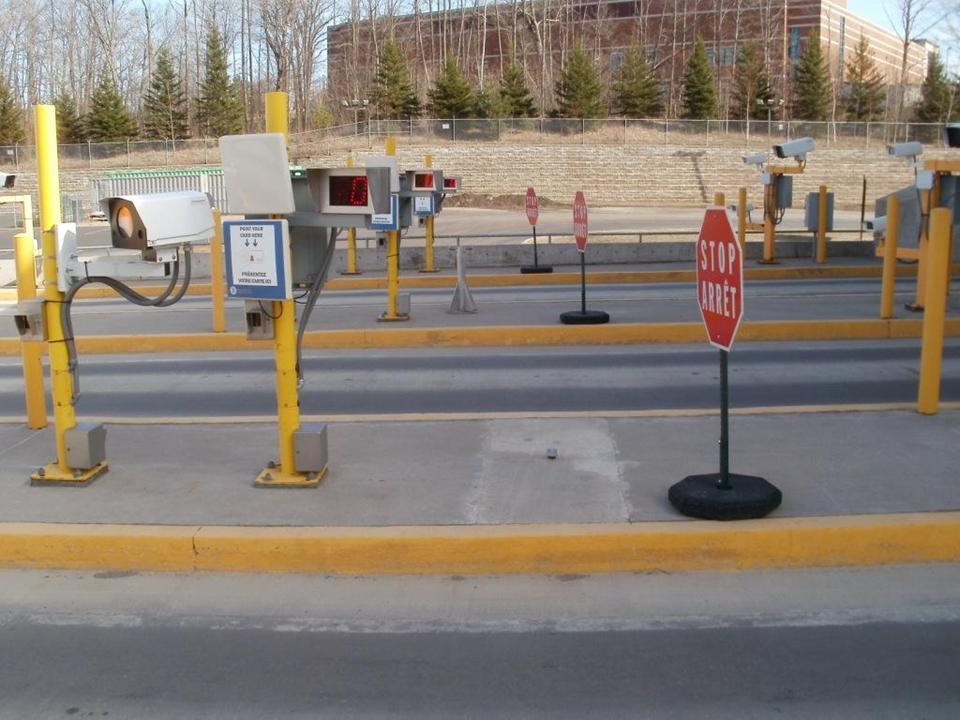
 Publication of the latest USCBP Border Patrol Strategic Plan reflects and builds on the transformation of the United States’ relationships with Mexico and Canada, particularly in the areas of border management and security. The joint Declaration of Principles for the 21st-century border represents an enhanced and strengthened commitment to fundamentally restructure the way we manage our shared border. The depth and breadth of cooperation that occurs now between the United States and Mexico was unthinkable even a few years ago. Similarly, the Beyond the Border declaration between Canada and the United States has an equally significant potential in what is already our historically extraordinary relationship with Canada. These developments have created unprecedented opportunities with both Mexico and Canada, in which DHS and CBP will play a defining role, to improve our security and economic competitiveness – and CBP will play a defining role in taking advantage of those opportunities. The Border Patrol in turn is key to advancing CBP’s security agendas with Mexico and Canada, working with its law enforcement counterparts in each country to identify and mitigate threats.



 What Happened to the Portcullis?
You must be logged in to post a comment.