BMA – This one is not implementable!

[Picture Credit: John Moore - Getty Images]

Border between South Africa and Zimbabwe [Picture Credit: John Moore – Getty Images]

The SA government is forging ahead with plans for a border management agency to handle all aspects of border control, from security to customs and plant and animal inspection – but MPs have said it can’t be done.

Home Affairs Minister Malusi Gigaba and his defence counterpart Nosiviwe Mapisa-Nqakula launched Operation Pyramid – a transitional arrangement to improve interdepartmental co-ordination – on Friday, while a draft bill to create the legal framework for the agency was tabled at a workshop in Pretoria earlier in the week.

But there are serious concerns about the ability of one entity to manage the diverse requirements of border control, which would require a huge single body that may prove unwieldy, while it would also need to assume some of the functions of the police and defence force. This would put it in conflict with the constitution, which provides for a single police service and defence force.

Section 199.2 of the constitution states the defence force is the “only lawful military force in the Republic”. Establishing a border management agency performing security functions in parallel with the police and SANDF would thus require a constitutional amendment, but this is just one among many challenges.

The need for such an agency arose in the first place because numerous national intelligence estimates had said the lack of co-ordination in the border environment resulted in “significant weaknesses, threats and challenges”.

Briefing Parliament’s police oversight committee this week, Brigadier David Chilembe, head of border policing, outlined steps that had been taken to get the agency off the ground, six years after President Jacob Zuma ordered it to be done.

The Department of Home Affairs, the lead agent in the project, had established a project office to oversee implementation, heads of affected departments had signed a multiparty agreement and sat on a committee together to co-ordinate their efforts, while an interministerial committee ironed out the policy questions.

The Government Technical Advisory Centre in the Treasury was working on the business case for the agency, Chilembe said.
The plan was to set up the agency in stages and identify the legal and operational implications at each stage so they could be addressed.

But a follow-up briefing on concerns raised by MPs after an oversight visit to the Lebombo border post near Komatipoort in Mpumalanga opened a window into the difficulties the agency will face.

The committee wrote a damning report on the Lebombo border post after a visit earlier this year, when MPs found the ceiling was collapsing because air-conditioning ducts dripped on to it, the door was shattered and the gate jammed, meaning it was possible to drive or walk through it without stopping.

Police complained they had to stand unprotected in the sun or rain and had to make their own travel arrangements from town.
Lieutenant-General Kehla Sithole said the problems originated in a 1998 agreement between Mozambique and South Africa for the post to be established as a “one-stop” facility, with officials sitting back-to-back under one roof.

Mozambique later said it had expected South Africa to pay for its construction, but the Treasury balked at this.The resulting limbo meant new facilities could not be built and neither could the existing ones be refurbished because the Public Works Department refused to upgrade buildings earmarked for demolition.

There were perceptions that the SA Revenue Service, which was the lead agency in the Border Control Operational Co-ordinating Committee – the body charged with harmonising the environment since 2001 – looked after its own interests first, leaving the SAPS short-changed in accommodation and office space.

MPs were shocked to hear an 80-room residential complex for SAPS personnel stood empty because police were expected to pay for it themselves but, unlike SARS officials, did not receive an accommodation allowance. As a result, they preferred to rent a shack in town and travel to the border post daily.

There was also no scanner at the border post, meaning truck cargos, for instance, could only be inspected manually. Opposition DA spokeswoman on police Dianne Kohler Barnard said this almost certainly meant the majority of vehicles went through the post unchecked, meaning it could easily be used for child trafficking, for example.

Sithole said the lack of a scanner was the result of a Treasury instruction for departments represented at the post to make a joint proposal for one to be procured, instead of each asking for their own – at a cost of millions a unit.

A “scanner committee” had been established in the late 1990s but, because one was provided for in the plans for the one-stop concept, it had yet to be bought.

Committee chairman Francois Beukman said MPs weren’t interested in the history of the problem, but rather in what would be done to get a scanner in place.

ANC MP Jerome Maake, supported by Leonard Ramatlakane, said after the presentation it was clear the border management agency couldn’t work. If it was established as a government department – one of three options on the table – this would create a “super department” that would reach into the functions of the others. This would confuse lines of accountability.

If it was established as a government component under an executive authority, or as a public entity, the other two options, it would run into the constitutional challenges related to the police and defence functions.

“All I see here is problems and I don’t see how they can be solved,” Maake said.

“Maybe you’re just afraid of telling the president, this animal can’t be implemented and you’re moving around it, on the periphery, afraid to just say, no – can we come up with something new?

“This one is not implementable.”

Source: Independant On Line (IOL)
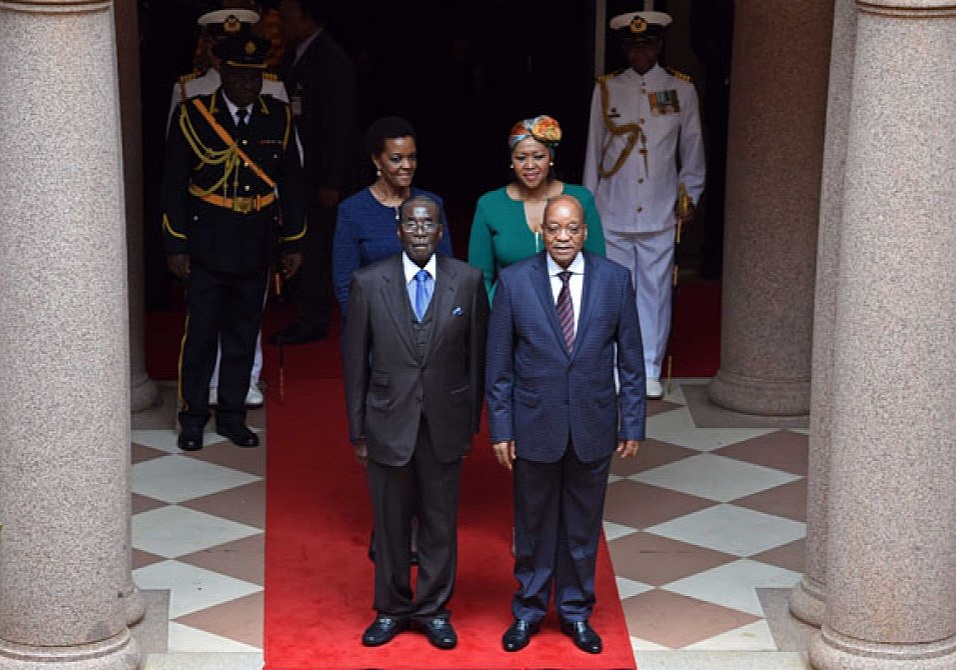
South Africa and Zimbabwe sign milestone Customs Mutual Assistance Agreement

robertmugabejacobzuma2015govtza_SnapseedSouth Africa and Zimbabwe have elevated bilateral relations with the signing of five agreements set to benefit both countries. The agreements were signed on Wednesday during President Robert Mugabe’s state visit to South Africa at the invitation of President Jacob Zuma. An agreement regarding mutual assistance between customs administrations between the two countries was also signed, which will further cooperation towards the establishment of a one-stop border post. This is viewed as a crucial milestone.

Zimbabwe tightens border controls on imported goods

Zimbabwe-flagZimbabwe has introduced custom-control measures aimed at reducing the inflow of smuggled and inferior goods, and boosting its revenue from customs duty. Goods being exported to Zimbabwe will have to undergo consignment verification from May 16.

The government’s customs officials are also tightening up inspections at the Beitbridge border post to stem the flow of cheap, illegal goods, which Zimbabwean companies blame for their financial woes.

Executive chairman of the European Union Chamber of Commerce and Industry of Southern Africa Stefan Sakoschek said on Thursday that “the general idea is for Zimbabwe to protect its borders from substandard goods, as well as from undervaluation”.

Mr Sakoschek said the consignment-based conformity assessment programme fell within the framework of the World Trade Organisation’s technical barriers to trade as well as the regulations of the General Agreement on Tariffs and Trade.

Exporters and clearing agents have been informed of the new consignment verification measures, which will ensure conformity to standards and the value of goods declared. A certificate will be issued for the consignments for presentation to customs officials on arrival in Zimbabwe. Goods without a certificate will be refused entry.

Targeted products include food and agricultural goods, building and civil engineering products, timber and timber products, petroleum and fuel, packaging materials, electrical and electronic appliances, body care products, automotive and transportation goods, clothing and textiles, engineering equipment, mechanical appliances and toys.

Trade Law Chambers director Rian Geldenhuys said the pre-shipment verification process would entail additional costs but should not contribute to further delays in shipment. Consignment verification was widely practised especially in developing countries as a way to ensure the collection of customs duty revenue, Mr Geldenhuys said.

“Underinvoicing is a huge problem throughout the world, especially least developed and developing countries which Zimbabwe is one of,” he said.

Trade Law Centre researcher Willemien Viljoen also said the assessments would entail additional costs. Much of the effect would depend on how the conformity assessments were implemented and the standards that would be applied, Ms Viljoen said.

The Zimbabwean government has appointed well-recognised French company Bureau Veritas as the conformity assessment company for verification purposes, and has given the assurance that “compliant exporters will be able to benefit from fast-track procedures reducing systematic intervention on their frequent exports to Zimbabwe.”

Zimbabwean Industry and Commerce Minister Mike Bimha was quoted by the Zimbabwean press as saying that Zimbabwe was being “flooded with sub-standard imports which do not meet quality, safety, health and environmental standards”.

These goods had a negative effect on the country’s economic development and the competitiveness of its industries, Mr Bimha said.

In terms of its four-year agreement with Bureau Veritas the Zimbabwean government will receive monthly royalty fees equivalent to 5% of all monies received for its services. This arrangement will eventually lapse when the Zimbabwe Standards Regulatory Authority is established to monitor and control imports, exports and local goods to ensure compliance with quality, health, safety and environmental standards. Bureau Veritas operates in 140 countries and offers pre-shipment services to SA, Ethiopia, Kenya, Somalia, Uganda and Côte d’Ivoire. Source: BDLive (Reporter: Linda Ensor)

Read also the following articles, published in Zimbabwean Situation – Govt moves to tighten border controls (September 2014) as well as Zim mulls one-stop border post (November 2014) which might suggest that entry arrival procedures at Zimbabwean ports of entry may not be that expeditious given a prominent focus on revenue collection.

Zimbabwean Customs seizes 48kg illicit South African gold worth R20m

goldZimbabwean Customs (ZIMRA) seized 48 kg illicit gold worth R 20 million and arrested 46 people for initial investigations. Forged gold serial-number stamps, specially designed armoured vehicles, clandestine refineries, fake customs clearance papers and documents with links to the black market.

These and other pieces of evidence are the keys that the Hawks believe link a Zimbabwean and South African gold-smuggling syndicate to scores of buyers in Europe masquerading as dealers in precious metals. For two years police have been zeroing in on the syndicate, whose roots are in illegal gold mining in Zimbabwe. Inside were 48kg of gold bars valued at R20-million.On Friday, they acted. In the early hours teams from the Hawks, the Special Task Force and Crime Intelligence raided luxury homes and farms across Gauteng and the North West.

In one of the raids police discovered a walk-in vault at a warehouse outside OR Tambo International Airport. Inside were 48kg of gold bars valued at R20-million. They were being prepared for stamping with official South African gold serial numbers designating that the metal had been officially mined and refined in the country. Police sources say the gold was to have been flown to at least three European countries at the weekend before being smelted, re-refined and distributed.

A source with knowledge of the investigation has revealed the inner workings of the syndicate, from how and where the gold is mined to how corrupt customs and mining officials facilitate the metal’s passage across borders.(Now should’nt this prompt some serious cause for concern, if true?)

“The amount this syndicate has handled is immeasurable. We have known about them for two years and in that short time we have recovered R40-million,” he said.

“They have operated both in South Africa and Zimbabwe as well as other SADC [Southern African Development Community] countries for years, well before we even discovered them”

Illegal miners in Zimbabwe supplied the syndicate. “With the instability and corruption there [South Africa?] it’s dangerous but easy. Once they have the gold, runners take it to the border where, through corrupt officials, it is smuggled across disguised as things such as household products.”

The gold was taken to farms in and around Modimolle in Limpopo where illicit refineries smelted and refined it, the source said. With the help of South African mining officials, gold clearance documentation and special serial and insignia stamps were sourced.

“Once stamped you would never know the difference. We have placed it next to legitimate bars and it looks and feels the same.” He said the gold was distributed through legitimate channels in Europe.

“Those running the syndicate know what they are doing. They are well-connected and influential businessmen with ties to Africa, Europe, the US and Asia”.

“They are linked to the gold powerhouses of the world. These are not ‘mickey-mouse’ people. They are immensely powerful and extremely well connected to some of the world’s top legal firms. Within hours of Friday’s raids lawyers were arriving at their clients’ homes and businesses.”

He said police seized hundreds of official gold clearance documents, serial stamps and other paperwork with links to mines and importers and exporters. Source and picture: CustomsToday.com

ZIM Police struggle to bust cigarette racket

CigarettesAn intricate web of smugglers, which reportedly involves manufacturers and middlemen, has been illegally carting cigarettes worth millions of dollars out of the country over the years, prejudicing the treasury of vital revenue.

Cigarette manufacturer, Savanna, has been fingered as one of the main culprits, while multinationals like BAT have also been mentioned in the illicit cross-border trade, mainly to South Africa.

Commonly smuggled brands include Remington Gold, Madison, Sevilles, Magazine Blue, Chelsea and Pacific Blue, manufactured by Savanna – which consistently denies smuggling.

A senior police sokesperson said “Even though we don’t always talk about it, we have managed to make significant arrests and the cases have been taken to court. The arrests include smuggling attempts at undesignated spots along the border and through official exit points such as Beitbridge”

A senior customs official told The Zimbabwean that cigarette smuggling, particularly through Beitbridge and Plumtree border posts, was difficult to arrest because of corruption.

“Policing at the border posts involves several agencies, namely the police, CIO (Central Intelligence Organisation), customs and special deployments from ZIMRA (Zimbabwe Revenue Authority). The problem is that these officers work in collaboration with the smugglers and haulage trucks and other containers carrying the cigarettes are cleared without proper checking. Hefty bribes are involved and the money is too tempting to resist,” said the customs official.

“You would be amazed how wealthy these officers have become. They have bought houses, luxury cars and send their children to expensive schools – yet their regular salaries are so low,” he added.

Immigration and customs officials, who also constantly liaise with their South African and Botswana counterparts and meet physically regularly, pretend to be checking the containers but clear them without completing the task, and know what the trucks and other carriers would be ferrying.

ZIMRA has four scanners for detecting contraband and an anti-smuggling team that also uses sniffer dogs, in addition to guard soldiers posted between the Zimbabwean and South African borders.

There are about 15 regular roadblocks along the Harare-Beitbridge road and 10 between Bulawayo and Plumtree that search trucks, buses and private cars. Despite this, the smuggling continues because of the collusion among the officials, said the source.

In early January, the Ferret team, a joint operation involving Zimbabwean and South African officers, intercepted a truckload of 790 Remington Gold cigarettes worth an estimated $119,000 destined for South Africa along the Masvingo-Beitbridge road. The smugglers were caught and arrested while offloading the cartons into small trucks. Source: The Zimbabwean

Important Implications of the WTO TFA on Landlocked Countries

WTO TFA implications for LLDCBackground

The Almaty Programme of Action (APoA): Addressing the Special Needs of Landlocked Developing Countries within a New Global Framework for Transit Transport Cooperation for Landlocked and Transit Developing Countries was adopted in 2003 as a response to the growing recognition by the international community of the special needs and challenges faced by the LLDCs. The Programme of Action emphasised five priority policy areas that landlocked and transit countries need to address to resolve the access problems of LLDCs: Transit policy and regulatory frameworks; Infrastructure development; International trade and trade facilitation; International support measures, and Implementation and review.

As one of the priority areas of the APoA, international trade and trade facilitation (streamlining customs and other border procedures) has taken on renewed focus, especially in light of the WTO Bali Ministerial Conference in December 2013, at which WTO members reached consensus on a Trade Facilitation Agreement, as part of the wider ‘Bali package’. As the end of the first ten years of the APoA is drawing to a close, the General Assembly of the United Nations decided to hold a comprehensive Ten-Year Review Conference of the APoA in 2014.

WCO TFA and Landlocked Countries

The WTO Trade Facilitation Agreement sets out commitments that promote clear rules and procedures, many of which are of particular interest to LLDCs. The three most important provisions for LLDCs are Articles 11, 10,and 8. The first one deals specifically with freedom of transit, the second sets out obligations in relation to trade procedures including transit, and the third requires WTO members to cooperate with other members with which they share a common border.

Other TFA provisions of interest to the LLDCs include Articles 1-5 which addresses Publication and Transparency, including the availability of information; Article 2 which provides specific guidance on Consultations before Entry into Force; Article 6, which sets out Disciplines on Fees and Charges imposed on or in Connection with Import and Export and Article 7 which provides rules on Release and Clearance of Goods, including Trade Facilitation Measures for Authorised Operators. In the new Agreement, the obligations take three forms: Binding, Best Endeavour, or a Combination of both.

The TFA presents an opportunity for LLDCs to upgrade their systems, infrastructure and procedures as the Agreement encourages national trade facilitation improvements. Policymakers should therefore ensure that trade facilitation is included in national development plans given the cross cutting nature of trade facilitation. Using this approach, LLDCs will increase their ability to access resources tied to different funding windows, for example, assistance for general trade policy and regulations.

There are 16 Landlocked countries in Africa, which signifies the importance of the WTO TFA and its consequential impact on regional trade groupings.

The WTO TFA is an innovative agreement as it will provide capacity building to developing countries to allow them to undertake the implementation of the agreement where necessary. The Agreement addresses concerns about the implementation costs and capacity building constraints in developing and least developed countries that would be required to implement these rules. The Agreement allows each LLDC to design its TFA implementation plan and choose a timetable of compliance in accordance with its needs, capabilities and confirmed funding and technical assistance from development partners. Further, guidance is provided to WTO members on the domestic institutional arrangements that should be established to maximise the resources to be made available by donors, as well as the structures and systems that should be adhered to at the WTO Secretariat itself to ensure that the process of accessing TFA implementation support is transparent and inclusive.

It is essential to note that the Agreement specifies a strict national approach to implementation and makes no provision to resolve the issues which are closest to LLDCs interests, such as regional economic corridors, which fall outside the purview of the WTO’s multilateral disciplines. Despite this shortcoming, LLDCs will benefit from deepening their links and their involvement in fora supported by the development banks and bilateral agencies which fund these regional programmes. This will ensure that their interests are adequately reflected in the design of development plans for regional infrastructure improvements, regulatory reforms, technical assistance and capacity building.

Although the language of the TFA is legally binding in relation to some key aspects of freedom of transit, it has one important proviso. If an LLDC developing country neighbour denotes freedom of transit as a Category C obligation, it will only become justiciable and fully legally binding after the expiration of the transition date determined by that country and the delivery of suitable technical assistance by donors. Against this background, an optimal outcome for LLDCs would be that as many transit countries as possible register freedom of transit as a Category A obligation, as this would come into force immediately.

Read the full preparatory report on the Implications of the WTO ATF on Landlocked Developing Countries, available on the United Nations Conference on Landlocked Developing Countries website.

Related articles

South Africa leads the Continent in Illicit Cigarette Trade

illicit cigarettesSouth Africa leads Africa in the illicit trade in tobacco and is listed among the top five illicit markets globally, according to the Tobacco Institute of Southern Africa, which represents tobacco growers, leaf merchants, processors, manufacturers, importers and exporters of tobacco products in SA.

More than R20bn in tax revenue has been lost in SA since 2010 due to the illicit trade in tobacco, the institute’s CEO, Francois van der Merwe, said on Wednesday. The problem is severe in SA, but Zambia, Namibia and Swaziland have estimated incidences of well above the global average of between 10% and 12%.

Mr van der Merwe said efforts to combat the illicit trade in tobacco were complicated by the links that the business had with transnational organised crime syndicates, some of which funded terrorism.

“The problem runs far deeper than enormous losses of fiscal income that could have been put to good use to bolster government efforts in education, infrastructure development and poverty alleviation,” said Mr van der Merwe.

He was speaking ahead of a meeting later in November of global, regional and local law enforcement, along with revenue and customs agencies in Cape Town, who will seek better ways to collaborate in addressing the illicit tobacco trade in sub-Saharan Africa.

“We have seen first hand what effective focus on combating illicit trade by government can achieve,” said Mr van der Merwe, ascribing a decrease in the illicit tobacco trade, from 31% to 23% this year, to better collaboration.

“This is in the most part due to the excellent efforts by the various law enforcement, customs and revenue, Treasury and defence departments in the South African government.”

Mr Van der Merwe said that although the declining numbers in SA were encouraging, this did not bode well for the rest of the region as organised crime was a moving target prone to shifting its focus to “easier” markets when it was under attack.

He claimed that those who traded in illicit products, whether cigarettes, alcohol, textiles or DVDs, or committed environmental crimes such as rhino poaching or abalone smuggling were most often also involved in other serious crimes and even the funding of terrorism and money laundering. Source: BDLive.co.za

Relate articles

Surge in Car Imports at ZIM/RSA Border as Dealers Panic

The Herald - Surge in new car imports between ZIM-RSAThere is a drastic increase in motor vehicle imports through Beitbridge border post as dealers are rushing to buy cars before the proposed 20 percent customs duty increase on imported motor vehicles comes into effect on November 1.

Finance and Economic Development Minister Patrick Chinamasa announced recently the Government intendeds to increase duty of motor vehicles which he said contributed 10 percent of the import bill in the first half of this year.

He proposed an increase in customs duty on single cab of a payload more than 800kgs from 20% to 40%, buses of carrying capacity of 26 passengers and above from 0% to 40%, double cab trucks from 40% to 60%, and passenger motor vehicles of engine capacity below 1500cc from 25% to 40%.

Customs duty for vehicles with engines above 1500cc has not been changed from 86 percent inclusive of VAT and Surtax. The development has raised anxiety among most Zimbabweans who are now rushing to buy second hand cars from Japan some of which come through South Africa.

Zimbabwe Revenue Authority (Zimra) is processing an average of 170 car imports at the border post per day since the beginning of October. Prior to the announcement Zimra used to process between 60 and 70 car imports per day. ZIMRA officers at the border said in separate interview yesterday that they were battling to clear the vehicles at Manica Transit Shed where 300 new cars arrive per day.

“We used to get 100 to 150 cars per day , but now the number has doubled and is ever increasing,” said one of the officers.

A sales manager at Wright Cars on the South African border, Mr Clemence Mabidi said the demand of cars with small engines such as Nissan March, Honda Fit, Toyota Vitz, Toyota Corolla, Toyota Raum and Fun Cargo had increased.

“We used to sell around 20 cars per day but now the number has increased to 40 and we have a backlog in deliveries to Zimbabwe.

“We are now hiring other car carriers to take the vehicles across the border,” he said.

Mr Mabidi said even the small car dealers who used to sell between 5 and 10 cars per day were now selling up to 20 vehicles. Some dealers have also reduced prices while others are increasing the prices because of the demand. A modest vehicle costs between $2500 and $3000 at these dealerships. Source: The Herald

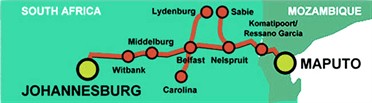
Maputo Corridor “held ransom” by new RSA Immigration border crossing requirements

maputo_corridorSouth African authorities implemented legislation requiring all travellers from Mozambique to prove they hold enough funds to cover their visit, either by showing R3000 minimum or by providing a credit card with a bank statement, the Maputo Corridor Logistics Initiative (MCLI) said in a statement today. This led to considerable delays for freight, tourists, business and informal traders, which was worsened when a riot and blockade broke out at the Lebombo/Ressano Garcia border post.

Following the blockade the requirements were withdrawn, allowing traffic to pass through the border.

In their statement the MCLI declared they will directly contact the Minister of Home Affairs to settle the issue. “This requirement takes us back to the pre 2005 era where similar requirements were implemented”, the statement says, “and [it] is in direct conflict with the regional integration policy of SADC which expressly seeks to promote the ease of movement of people and goods through our borders.”

The statement calls the implementation for this legislation discriminatory towards informal traders who move through the border on a daily basis, and warns the long term impact on the region’s economy could be “dire”. Source: Club of Mozambique

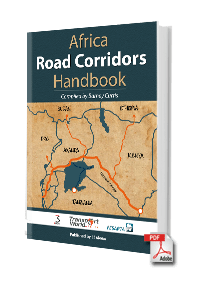
New Publication – Africa Corridors Handbook

Africa_Road_Corridors_HandbookAs countries across Africa gear themselves towards growing and stimulating inter-regional trade, the transport corridors being developed across the continent are important passageways for the movement of freight.

Though the growth and development of rail across Africa is in the pipeline over 80 percent of all freight being transported is on road.

Transporting goods on trucks is an expensive business. Africa can be challenging at the best of times due to non-tariff barriers even though governments across the continent are trying to make it easier for the flow of goods from one country to another.

The logistics of transporting freight can be a harrowing and expensive exercise.Especially if a transport manager is not armed with key and pertinent information – regarding the route, border posts, costs, relevant documentation required at borders, waiting times at the border posts, location of wellness centres,road conditions and where the tolls and weighbridges are situated.

3S Media in association with FESARTA have released the Africa Corridors Handbook which gives transport and logistics managers all the key information they need before drivers embark on a journey.

Having the correct information on hand is critical for every transport operator that is moving freight across Africa and now it is available in one concise handbook. Click the following hyperlink to purchase the book.

No cash! No problem!

banner4Transport Forex, created by Inter Africa Bureau de Change, a registered bureau de change with the South African Reserve Bank has created an unique online banking system for the transport industry.

With branches at all of South African border posts, the company has expanded operations into Namibia, Botswana, Zimbabwe, Mozambique, Zambia, the DRC and Tanzania with offices on all the major border posts between these countries.

Transport Forex is an online ordering system where the transport manager can deposit money in South Africa into the relevant account therefore ensuring when drivers arrive at the relevant border posts there is enough money for them to pay the relevant duties. At the same time, this ensures enough cash is in the account for drivers to purchase fuel at key petrol stations or even pay for a service on-route in one of the partner countries.

Once the monies have been deposited into the account, an order number is sent via SMS to the driver who then presents it at the relevant Transport Forex office to draw the necessary funds required.

In the same way you can book and pay for diesel for your truck on any of the major transport routes in Namibia, Botswana, Zimbabwe, Mozambique, Zambia, the DRC and Tanzania. Transport Forex has negotiated with partner fuel suppliers for better prices and passes this discount directly to the transport company.

A new Payment Service was introduced in 2013 for clients. Should additional unforeseen funds be required for an emergency while the driver is on the road then monies can be made available for drivers almost immediately. This prevents valuable time from being lost.

Transport Forex is also in negotiations with several government institutions so relevant duties and taxes for operators’trucks can also be paid through the system in advance.

To join Transport Forex simply log onto www.transportforex.co.za, and click on “Create Account”. Registration is free, and there are no monthly charges.

Congestion Besets Botswana’s Tlokweng Border Post

botswanaMap showing border posts between Botswana and South Africa, with No.7 being the Tolkweng and No.4 the Martins Drift posts.

The temporary closure of the Martin’s Drift border post due to recent floods in the Tswapong area has resulted in the congestion of cargo trucks at Tlokweng border post.

Approaching the border from the Botswana side, there is a queue of these trucks awaiting declaration. The situation is made worse by shortage of parking space for the trucks, which at times lead to some trucks blocking way for others, hence the delay.

In an interview, the principal customs officer, Ms Monkgogi Makwati said they started receiving a large number of trucks on transit on Saturday (22 March 2014).

She said most of the trucks were from Kazungula on their way to South Africa. Ms Makwati also said trucks from South Africa were a challenge as the customs office was faced with a lot of work as goods were cleared in large quantities from that side.

She noted that Tlokweng border had always been the busiest in the country, but the current situation had made it more busy than usual. She also said the delay at the border was due to the electronic clearance system used by South Africa compared to the manual one used by Botswana, thus when the system is down, services from that side halt.

Ms Makwati, however, noted that trucks carrying perishables and goods such as medicines, gas and petrol among others were given special clearance and they do not take long at the border.

The traffic jam has not only affected services at the border, but also facilities such as toilets have started to experience some blockage while others are running out of water due to high number of people who are frequenting them.

Some truck drivers expressed dissatisfaction on the South African service of clearing noting that they had been at the border for four days without bathing. Source: Daily News Botswana

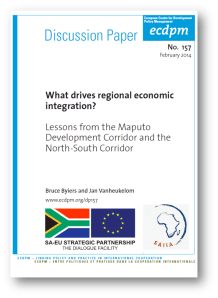
What drives regional economic integration? Lessons from Maputo Development Corridor and North-South Corridor

ECDPM - SAIIAThis study is part of the ECDPM-SAIIA project on the Political Economy of Regional Integration in Southern Africa (PERISA). The PERISA project aims to inform and facilitate dialogue on the political economy drivers of regional integration in Southern Africa. It focuses particularly on the role of South Africa in this process with a view to better informing relations between the European Union and South Africa. Regional economic integration is essential for Africa’s development. While integration is taking place across the continent, it is not happening at the pace and the scope that the institutional architects in the Regional Economic Communities and their member states have agreed upon. Southern Africa is no exception. In looking for answers as to what obstructs or what drives regional integration, this study focuses on one particular type of integration process: cross-border transport corridors.

All Regional Economic Communities in Southern Africa have embraced transport corridors (also referred to as Spatial Development Initiatives) as key development tools. Adopting a corridor approach means engaging with a wide range of actors with different interests and influence along key transport routes that link neighbouring countries and ports. This includes the full range of government agencies that control borders for security, revenue collection, and regulatory purposes as well as infrastructure, transport, trade and economic ministries as well as a range of private sector actors from small-scale informal traders and producers to transporters and major international investors as well as port, rail and road operators.

The analysis focuses on the North-South Corridor and the Maputo Development Corridor. The North-South Corridor links Dar es Salaam in Tanzania to Durban in South Africa through Zambia, Zimbabwe and Botswana. The Maputo Development Corridor links Gauteng Province in South Africa to Maputo in Mozambique. The analytical focus is on South Africa and Mozambique, while from the multi-country North-South Corridor the focus in this paper is on Zambia, a potential key beneficiary of the initiative. Source: ECDPM.org

Mastermind and KRA Feud Over Tobacco Imports

Cigarettes+XXX+smokingWhile many nations are mulling over health legislation to curb tobacco use, it would seem the Kenyan authorities have opted for a conventional ‘delay-and-stall’ approach. From a trade facilitation perspective it is a disaster, but no doubt the ‘health propeller heads’ will be happy.

The Star (Kenya) reports that Mastermind Tobacco Kenya has accused the Kenya Revenue Authority of detaining its vehicles bringing in unprocessed tobacco from the Democratic Republic of Congo at the Malaba border for the last one month.

MTK Malaba liaison officer Robert Kiru said three trucks for its processing plant in Nairobi had been detained at the border since August 30 (2013) with no explanation coming from KRA.

“KRA Malaba station manager Philip Chirchir has not given concrete reasons why the trucks are held and neither have we been invoiced for any payment. Our three other trucks are still parked at Malaba Uganda with storage charges now totalling Sh300,000,” Kiru said. Addressing journalists at Malaba border Kiru dismissed as false claims by KRA that no bond had been paid on the impounded trucks. He however failed to show copies of the bond to prove payment.

MTK Corporate Affairs manager Josh Kirimania said he had talked to KRA top officers in Nairobi and wondered why none of them has ordered their officers in Malaba to release the trucks. “KRA have no tangible reasons to hold our trucks in Malaba. This is killing our business since we rely on imports from DRC and Uganda to sustain our business,” he said. Kirimania said KRA was ‘blocking’ their trade by continuously detaining their trucks at the Malaba border and called for an end to the practice. Chirchir could not be reached for comment as he was said to be in a security meeting. Source: The Star (Kenya)

Border Management in Southern Africa: Lessons with respect to Policy and Institutional Reforms

The folk at Tralac have provided some welcomed insight to the challenges and the pains in regard to ‘regionalisation’. No doubt readers in Member States will be familiar with these issues but powerless within themselves to do anything due to conflict with national imperatives or agendas. Much of this is obvious, especially the ‘buzzwords’ – globally networked customs, one stop border post, single window, cloud computing, and the plethora of WCO standards, guidelines and principles – yet, the devil always lies in the details. While the academics have walked-the-talk, it remains to be seen if the continent’s governments have the commitment to talk-the-walk!

Regional integration is a key element of the African strategy to deal with problems of underdevelopment, small markets, a fragmented continent and the absence of economies of scale. The agreements concluded to anchor such inter-state arrangements cover mainly trade in goods; meaning that trade administration focuses primarily on the physical movement of merchandise across borders. The services aspects of cross-border trade are neglected. And there are specific local needs such as the wide-spread extent of informal trading across borders.

Defragmenting Africa WBThis state of affairs calls for specific governance and policy reforms. Effective border procedures and the identification of non-tariff barriers will bring major cost benefits and unlock huge opportunities for cross-border trade in Africa. The costs of trading remain high, which prevents potential exporters from competing in global and regional markets. The cross-border production networks which are a salient feature of development in especially East Asia have yet to materialise in Africa.

Policy makers have started paying more attention to trade-discouraging non-tariff barriers, but why does the overall picture still show little progress? The 2012 World Bank publication De-Fragmenting Africa – Deepening Regional Trade Integration in Goods and Services shows that one aspect needs to be singled out in particular:  that trade facilitation measures have become a key instrument to create a better trading environment.

The main messages of this WB study are:

  • Effective regional integration is more than simply removing tariffs – it is about addressing on-the-ground constraints that paralyze the daily operations of ordinary producers and traders.
  • This calls for regulatory reform and, equally important, for capacity building among the institutions that are charged with enforcing the regulations.
  • The integration agenda must cover services as well as goods……services are critical, job-creating inputs into the competitive edge of almost all other activities.
  • Simultaneous action is required at both the supra-national and national levels. Regional communities can provide the framework for reform, for example, by bringing together regulators to define harmonised standards or to agree on mutual      recognition of the qualification of professionals……. but responsibility for implementation lies with each member country.

African governments are still reluctant to implement the reforms needed to address these issues. They are sensitive about loss of ‘sovereign policy space’ and are not keen to establish supra-national institutions. They are also opposed to relaxing immigration controls. The result is that border control functions have been exercised along traditional lines and not with sufficient emphasis on trade facilitation benefits. This is changing but specific technical and governance issues remain unresolved, despite the fact that the improved border management entails various technical aspects which are not politically sensitive.

The required reforms involve domestic as well as regional dimensions. Regional integration is a continental priority but implementation is compounded by legal and institutional uncertainties and burdens caused by overlapping membership of Regional Economic Communities (RECs). The monitoring of compliance remains a specific challenge. Continue reading →