Five years ago, a dentist from Minnesota killed Cecil the lion, Hwange National Park’s most famous resident. This caused an outcry in the United Kingdom and in the rest of the world against trophy hunting. Yet people are still killing big game for sport.
A new book reveals explosive insight into hidden world of trophy hunting. The book was written by Eduardo Goncalves, a former WWF consultant, CEO of a major UK animal charity, journalist award-winning founder of the Campaign to Ban Trophy Hunting which is supported by over 100 celebrities.
Eduardo Goncalves is currently leading an international campaign to close a loophole in CITES wildlife trade laws which controversially allow trophy hunters to shoot critically endangered animals. The campaign is supported by dozens of conservation groups as well as Members of the European Parliament across the EU and political parties. He is also working with wildlife and animal welfare groups across Europe to ban hunting trophy imports throughout the EU, and is assembling a group of lawyers and senior politicians to push for an international treaty banning all trophy hunting around the world.
Among the astonishing revelations in the book are how –
Powerful trophy hunting bodies are posing as conservation organisations in order to weaken wildlife conservation laws, so that hunters can shoot and take home trophies of threatened species
The Convention on International Trade in Endangered Species (CITES) – the body meant to protect wildlife – is allowing trophy hunters to shoot tens of thousands of animals at risk of extinction every year
Steven Chancellor, a leading fundraiser for US President Donald Trump, broke the world record for the biggest ever trophy lion
A former Vladimir Putin right-hand man is one of the world’s ‘top’ trophy hunters and has hunting trophies of more than 250 species at his home 60km outside Moscow
Prestigious industry awards have been bestowed on a paramilitary death squad leader linked to the deaths of more than 1 million dissidents and ethnic minorities
Michel Bergerac, a record-breaking trophy hunter and member of Safari Club International, was also a World Wildlife Fund (WWF) Director
The US Salvation Army and Boy Scouts Association is helping the industry to recruit tens of thousands of children as hunters: psychologists and criminologists fear this could lead to a rise in violent crime
The trophy hunting industry made contributions totalling over $1 million to the congressional election campaigns of pro-hunting politicians including US Secretary of State Mike Pompeo, Interior Secretary Ryan Zinke (who was responsible for America’s hunting laws and trophy import regulations), US Senate leader Mitch McDonnell, and House of Representatives speaker John Boehner
A trophy hunter still alive today is thought to be the only man in history to have killed 100+ lions and 1,000 elephants, and has more than 4,000 confirmed kills
The use of trophy hunting as a ‘cover’ for wildlife trafficking, and how the Chinese are now the world’s top hunters of white rhinos
The book also reveals –
The identity of over 500 hunters who have won industry awards for shooting all the ‘African Big Five’ – lions, elephants, rhinos, leopards, buffalos
Scientists fear that South Africa’s canned lion hunting industry, and the sale of lion bones for traditional Chinese medicines, could spark a devastating new disease outbreak
Some of the industry’s top donors and hunting group leaders include Trump fundraiser Steven Chancellor, well-known drinks brands (Budweiser, the Bacardi family), vehicle manufacturers (Yamaha), oil companies (Chevron, Halliburton, Shell Oil), banking institutions (Morgan Stanley), gun-makers (Beretta)
Controversial funding has come from US schools, the Scouts Association, and American and European taxpayers.
‘Trophy Hunters Exposed – Inside the Big Game Industry’ is published by Green Future Books Ltd and is available in paperback and kindle from www.greenfuturebooks.com
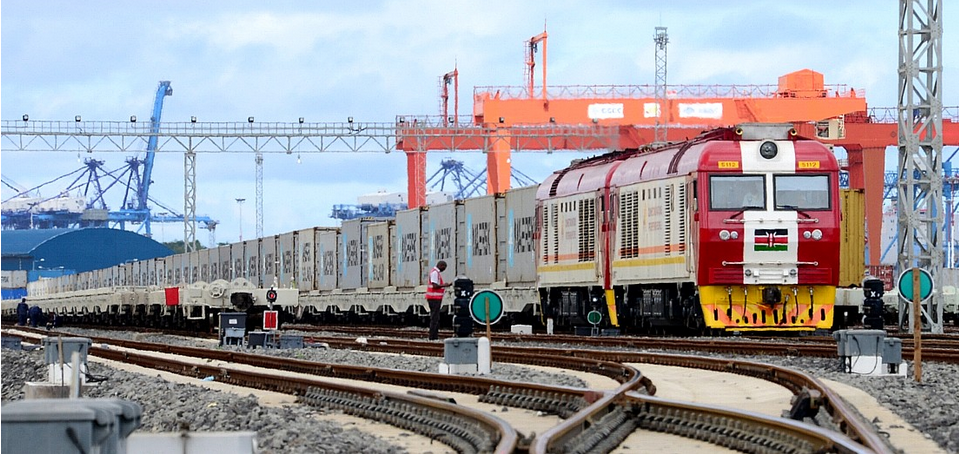
Transit cargo destined for Uganda, Rwanda and South Sudan will be transported by Standard Gauge Railway (SGR) to Naivasha then to Tororo Kampala from June 1st, the government has said.
Transport Cabinet Secretary James Macharia said the move was arrived at during a meeting with his counterparts from the three countries as a key measure to curb cross border transmissions of COVID-19.
“All transit cargo/containers transported on SGR will be armed only at the Inland Container Depot (ICD) AT Naivasha to be tracked through the Regional Electronic Cargo Tracking System,” a part of the statement read.
Macharia further pointed out that all cargo railed to the Inland Container Depot at Naivasha will be collected by trucks to the partner states via Busia or Malaba.
He however, pointed out that fuel products will be transported by pipeline to Kisumu and thereafter through Lake Victoria to Port Bell or Jinja in Uganda.
Cases of coronavirus among truck drivers who transport cargo across East African member states have tested positive with high numbers prompting Kenya to close its borders with Somalia and Tanzania.
Kenya has subsequently banned any truck driver who turn positive at the border from corssing into the country, with Tanzania having adopted a similar approach lately.
Health Cabinet Secretary Mutahi Kagwe said the development explained why President Uhuru Kenyatta ordered the mandatory screening of truck drivers at border posts before clearance into the country.
Kenya also closed its borders with Somalia, following increased coronavirus cases in Wajir which borders Somalia.
Since the border closure, Tanzanian government officials in Arusha and other border towns have publicly protested, accusing Kenya of discriminating their truck drivers.
Martin Shigella, the Tanga Regional Commissioner was blunt last week, declaring that no Kenyan truck driver will be allowed to cross into Tanzania, accusing them of exporting COVID-19 to the country which is largely seen as the weak link in managing coronavirus in the region, and the world. He also warned Tanzanians against buying goods in Kenya.
But on Wednesday, President John Pombe Magufuli announced on a tour to Singinda region, that “COVID-19 pandemic will not threaten our association with Kenya.”
He said he had held talks with his Kenyan counterpart Kenyatta, and agreed to have their ministers resolve the matter.
“Our economies need each other, our onions are sold in Kenya and Kenya exports milk and other items here,” he said, rooting for a diplomatic solution to the crisis.
Many African states have closed their borders due to COVID-19. The movement of goods continues, albeit slowly. For people, transiting countries is difficult and the consequences for workers and small businesses are dire.
2020 should be the year of open borders in Africa. After years of negotiations, the concrete implementation of the African Free Trade Area (AfCFTA) was finally on the agenda. The common African passport was also to become a reality this year.
It is true that many countries allow goods to pass through, at least partially. However, the consequences for the continent, especially the long-term effects, can hardly be estimated. The African Union warns that border closures for people and goods could have a “devastating effect on the health, economy and social stability of many African states” that rely on trade with neighbors.
Africa thrives on mobility
The restricted transportation of goods is only one of the negative outcomes of border closures Africa is heavily dependent on the mobility of its workforce, explains to Robert Kappel, Professor Emeritus of the Institute for African Studies at the University of Leipzig. But right now, that workforce is stuck in place.
“Mobility is part of everyday life for most Africans,” Kappel told DW. “You go somewhere else for a while, work, earn income and send it to your family, acquire and bring back skills, create networks across borders,” Kappel said. The economist is certain that the longer mobility is restricted, the more African states will suffer from reduced economic growth.
Kappel cites Ivory Coast as an example. Just as Western European countries depend on eastern European harvest workers, many people come from Burkina Faso to work on Ivorian cocoa plantations.
Even people who have been living in Ivory Coast for a long time are now being sent back because of the COVID-19 pandemic. Kappel said the reason for their expulsion is simply because they are foreigners. “Cote d’Ivoire, one of the world’s largest cocoa producers, has been relying on the exchange of workers for decades and now suddenly has to limit this,” he said.
Southern Africa moving in the ‘right direction’
For goods transported by truck, meanwhile, the restrictions on the continent appear to be slowly easing. That’s according to Sean Menzies, responsible for road freight transport at the South African logistics company CFR Freight. The company’s trucks transport goods to almost all neighboring countries and member states of southern Africa’s regional bloc, SADC, including food to Zimbabwe and mining equipment to the Democratic Republic of Congo or to Zambia. The spread of coronavirus and the resulting border closures brought restrictions for CFR Freight.
Initially, only essential goods such as food, hygiene products or personal protective equipment could be transported across borders, Menzies said. Shortly afterwards, the regulations were also relaxed for cargo that reaches South Africa by sea but is destined for other SADC countries. These containers may be transported across borders, regardless of whether their contents are vital or not.
Menzies said the new regulations and controls will not delay the transport too much. “At the very beginning there were problems and a lot of confusion about what is required. But within a week, the customs officers understood and implemented the guidelines,” said the logistics expert. From then on, he said, traffic at the border posts has been fairly smooth. Menzies praised the cooperation in the region regarding the movement of goods during the pandemic.
COVID-19 test for East Africa truck drivers
The East African Community (EAC) is also trying to simplify the transport of goods between member states. On Monday the EAC issued new guidelines. Among other things, the regional bloc suggested that all border crossings should be kept open for freight traffic so that trucks can be cleared as quickly as possible.
EAC member states are interlinked at many levels, Kenneth Bagamuhunda, Director General for Customs and Trade in the Secretariat, the executive body of the EAC, said. “This forces us to really come together and issue regional guidelines,” Bagamuhunda told DW in an interview. Although the guidelines are not binding, they are intended to enable joint action.
The situation at the borders in East Africa could not be described as “very stable,” it was changing from day to day. But things were beginning to improve. Some states had started to test all truck drivers. “This led to some delays at first,” Bagamuhunda said.
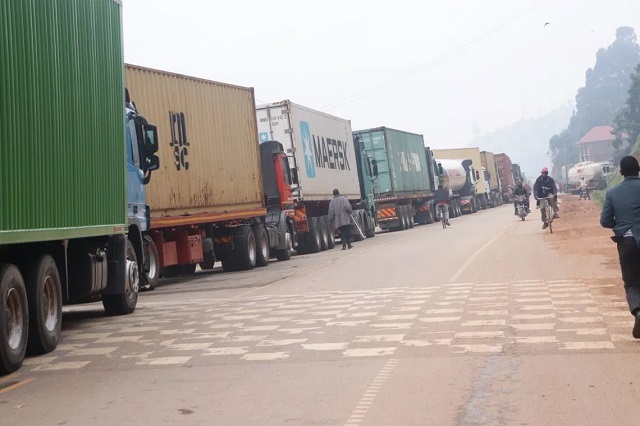
30 kilometers (18 miles) – that’s how long the traffic jam was last weekend at the Kenyan town of Malaba on the border with Uganda, a Kenyan media house, Citizen TV, reported. Because truck drivers are particularly mobile, there is a risk that they will contribute to the spread of the virus. At least 20 of the 79 officially registered cases in Uganda are truck drivers, according to the BBC.
The EAC’s new guidelines now require testing for all truck drivers. The states are also to set up special stopping points so that drivers have as little contact with the population as possible.
Impact on farmers and small businesses
Small and medium-sized companies that depend on cross-border trade are particularly threatened by delays and restrictions, economist Robert Kappel said. “Many of the farmers or small entrepreneurs must now try to sell their products elsewhere but often the local market is limited.”
The EAC is now considering how to support these small businesses. According to Bagamuhunda, different approaches are being discussed: “Can we, for example, create an online mechanism so that they can handle their goods? Or systems that help them to trade with as little interaction as possible?” Soon, proposals will be made to politicians.
Source: article by Uta Steinwehr, DW.com, 2 May 2020
The Secretary-General the Africa Continental Free Trade Area (AfCFTA), Mr. Wamkele Mene, yesterday announced the postponement of the implementation of the AfCFTA agreement scheduled for July 1, 2020, citing the COVID-19 pandemic.
Mene said: “It is obviously not possible to commence trade as we had intended on 1 July under the current circumstances.
“I think that’s the responsible thing to do. I don’t think it would be appropriate when people are dying to be focused on meeting the 1 July deadline. Instead all governments should be allowed to concentrate their efforts on fighting the pandemic and saving lives at home.”
Mene did not disclose the targeted implementation date, but there were strong speculations that the new commencement date might be January 2021. “The political commitment remains, the political will remains to integrate Africa’s market and to implement the agreement as was intended,” he said.
The AfCFTA was promoted as having the capacity to bring about $3.4 trillion intra-African trade with 1.3 billion people across Africa and constitute the largest new trading bloc since the World Trade Organisation was formed in 1994.
According to the Head, Division of International Economics Relations, Nigeria Institute of International Affairs (NIIA), Dr. Efem N. Ubi, the postponement of the take-off date was in order to enable African countries focus fully on surviving the threat from COVID-19.
“The focus should be on sustaining our economy and see how we can win the war against COVID-19 by managing what we have. And the most important thing for the post COVID-19 economy is for African countries to focus on the kind of education that will promote science and technology that will transit the continent from a primary producer to a manufacturing economy. The focus onward should be science, technology, agriculture and health so that Africans can produce and have things to trade among themselves,” Ubi said.
The National COVID-19 Taskforce has agreed that all trucks entering Uganda will have only one person on board for the next four weeks in a move to control the movement and exposure of Ugandans to foreign truck drivers.
The meeting which was convened yesterday decided that drivers will have to implement the relay system-where a designated driver drives to the Ugandan border and from there on, another from Uganda who has tested negative for COVID-19 continues with the rest of the journey.
For the last two weeks, truck drivers have undergone mandatory testing at the borders but have been allowed to continue with their journeys before the release of their results. In the process, the drivers who have tested positive have come into contact with several Ugandans. As of today, 18 drivers have tested positive and over 300 contacts are being monitored and traced.
With the new measures, new truck parks or stops have been designated. Drivers who have been tested for COVID-19 and are waiting for their results will stop under the surveillance of security officers to wait for their results. Once results are released, drivers who test positive will be picked up by health ministry officials while those who test negative will be allowed to continue with their journey.
Different routes will have three stops. Route one will cover drivers from Kenya. These drivers will be able to stop at either Namboole, Lukaya, Ntungamo/Ishaka and the border. Route two also from Kenya will have drivers stop in Soroti or Kamdin corner. Trucks from Tanzania travelling to Kampala will cover route three and stop in Karuma and Packwatch. Route four will cover trucks from DRC. The trucks will travel from Fortportal to Mubende and then Namboole.
All other stop points that were previously used by the trucks such as; Tororo, Mbale, Lira, Kamdin, Mbikko, Naluwerere, Lyantonde, Namawojolo, Sanga, Ruti, Migyera, Luwero have been closed. No truck is allowed to make stops there.
The new measures come following an outcry from Ugandans after several truck drivers carrying cargo from Kenya and Tanzania tested positive for COVID-19. Many had called for the closure of all border entry points.
Dr Monica Musenero, an epidemiologist and also a member of the task force says that the new measures are going to be implemented starting next week. She says that all the measures that have been set up are geared towards protecting Ugandans.
The task force also decided on reducing the number of fuel trucks that cross the border. According to Dr Musenero, railway services are going to be used to transport fuel.
“ We want to reduce the number of trucks entering the country. The railway freight services are going to be brought on board so that some things like fuel can be transported using the railway,” Dr Musenero adds.
Other measures that were discussed and passed include; the mandatory use of personal protective equipment like masks by all drivers. Also, domestic trucks should have only two people. In addition to this, freight forwarders will have to pay for testing kits to be used to test drivers.
A dedicated COVID-19 page has been added to this blog to provide Customs and Trade users a reference and insight into a variety of international and South African weblinks and documents concerning guidelines under COVID-19. This page will be updated regularly to include additional links and updates to any relevant document or website referenced. Please bookmark this page to be kept abreast of updates.
The following article was published by Bloomberg and sketches the day-to-day hardship for cross border trucking through Africa. In a sense it asks the very questions and challenges which the average African asks in regard to the highly anticipated free trade area. While rules of origin and tariffs form the basis of trade across borders, together with freedom of movement of people, these will mean nothing if African people receive no benefit. As globalisation appears to falter across Europe and the West, it begs the question whether this is in fact is the solution for Africa; particularly for the reason that many believe globalisation itself is an extension of capitalism which some of the African states are at loggerheads with. Moreover, how many of these countries can forego the much need Customs revenue to sustain their economies, let alone losing political autonomy – only time will tell.
Nyoni Nsukuzimbi drives his 40-ton Freightliner for just over half a day from Johannesburg to the Beitbridge border post with Zimbabwe. At the frontier town—little more than a gas station and a KFC—he sits in a line for two to three days, in temperatures reaching 104F, waiting for his documents to be processed.
That’s only the start of a journey Nsukuzimbi makes maybe twice a month. Driving 550 miles farther north gets him to the Chirundu border post on the Zambian frontier. There, starting at a bridge across the Zambezi River, trucks snake back miles into the bush. “There’s no water, there’s no toilets, there are lions,” says the 40-year-old Zimbabwean. He leans out of the Freightliner’s cab over the hot asphalt, wearing a white T-shirt and a weary expression. “It’s terrible.”
By the time he gets his load of tiny plastic beads—the kind used in many manufacturing processes—to a factory on the outskirts of Zambia’s capital, Lusaka, he’s been on the road for as many as 10 days to traverse just 1,000 miles. Nsukuzimbi’s trials are typical of truck drivers across Africa, where border bureaucracy, corrupt officials seeking bribes, and a myriad of regulations that vary from country to country have stymied attempts to boost intra-African trade.
The continent’s leaders say they’re acting to change all that. Fifty-three of its 54 nations have signed up to join only Eritrea, which rivals North Korea in its isolation from the outside world, hasn’t. The African Union-led agreement is designed to establish the world’s biggest free-trade zone by area, encompassing a combined economy of $2.5 trillion and a market of 1.2 billion people. Agreed in May 2019, the pact is meant to take effect in July and be fully operational by 2030. “The AfCFTA,” South African President Cyril Ramaphosa said in his Oct. 7 weekly letter to the nation, “will be a game-changer, both for South Africa and the rest of the continent.”
It has to be if African economies are ever going to achieve their potential. Africa lags behind other regions in terms of internal trade, with intracontinental commerce accounting for only 15% of total trade, compared with 58% in Asia and more than 70% in Europe. As a result, supermarket shelves in cities such as Luanda, Angola, and Abidjan, Ivory Coast, are lined with goods imported from the countries that once colonized them, Portugal and France.
By lowering or eliminating cross-border tariffs on 90% of African-produced goods, the new regulations are supposed to facilitate the movement of capital and people and create a liberalized market for services. “We haven’t seen as much institutional will for a large African Union project before,” says Kobi Annan, an analyst at Songhai Advisory in Ghana. “The time frame is a little ambitious, but we will get there.”
President Nana Akufo-Addo of Ghana and other heads of state joined Ramaphosa in hailing the agreement, but a number of the businesspeople who are supposed to benefit from it are skeptical. “Many of these governments depend on that duty income. I don’t see how that’s ever going to disappear,” says Tertius Carstens, the chief executive officer of Pioneer Foods Group Ltd., a South African maker of fruit juices and cereal that’s being acquired by PepsiCo Inc. for about $1.7 billion. “Politically it sounds good; practically it’s going to be a nightmare to implement, and I expect resistance.”
Under the rules, small countries such as Malawi, whose central government gets 7.7% of its revenue from taxes on international trade and transactions, will forgo much-needed income, at least initially. By contrast, relatively industrialized nations like Egypt, Kenya, and South Africa will benefit from the outset. “AfCFTA will require huge trade-offs from political leaders,” says Ronak Gopaldas, a London-based director at Signal Risk, which advises companies in Africa. “They will need to think beyond short-term election cycles and sovereignty in policymaking.”
Taking those disparities into account, the AfCFTA may allow poorer countries such as Ethiopia 15 years to comply with the trade regime, whereas South Africa and other more developed nations must do so within five. To further soften the effects on weaker economies, Africa could follow the lead of the European Union, says Axel Pougin de La Maissoneuve, deputy head of the trade and private sector unit in the European Commission’s Directorate General for Development and International Cooperation. The EU adopted a redistribution model to offset potential losses by Greece, Portugal, and other countries.
There may be structural impediments to the AfCFTA’s ambitions. Iron ore, oil, and other raw materials headed for markets such as China make up about half of the continent’s exports. “African countries don’t produce the goods that are demanded by consumers and businesses in other African countries,” says Trudi Hartzenberg, executive director of the Tralac Trade Law Center in Stellenbosch, South Africa.
Trust and tension over illicit activity are also obstacles. Beginning in August, Nigeria shut its land borders to halt a surge in the smuggling of rice and other foodstuffs. In September, South Africa drew continentwide opprobrium after a recurrence of the anti-immigrant riots that have periodically rocked the nation. This could hinder the AfCFTA’s provisions for the free movement of people.
Considering all of these roadblocks, a skeptic would be forgiven for giving the AfCFTA little chance of success. And yet there are already at least eight trade communities up and running on the continent. While these are mostly regional groupings, some countries belong to more than one bloc, creating overlap. The AfCFTA won’t immediately replace these regional blocs; rather, it’s designed to harmonize standards and rules, easing trade between them, and to eventually consolidate the smaller associations under the continentwide agreement.
The benefits of the comprehensive agreement are plain to see. It could, for example, limit the sort of unilateral stumbling blocks Pioneer Foods’ Carstens had to deal with in 2019: Zimbabwe insisted that all duties be paid in U.S. dollars; Ghana and Kenya demanded that shippers purchase special stickers from government officials to affix to all packaging to prevent smuggling.
The African Export-Import Bank estimates intra-African trade could increase by 52% during the first year after the pact is implemented and more than double during the first decade. The AfCFTA represents a “new pan-Africanism” and is “a pragmatic realization” that African countries need to unite to achieve better deals with trading partners, says Carlos Lopes, the former executive secretary of the United Nations Economic Commission for Africa and one of the architects of the agreement.
From his closer-to-the-ground vantage point, Olisaemeka Anieze also sees possible benefits. He’s relocating from South Africa, where he sold secondhand clothes, to his home country of Nigeria, where he wants to farm fish and possibly export them to neighboring countries. “God willing,” he says, “if the free-trade agreement comes through, Africa can hold its own.”
In the meantime, there are those roads. About 80% of African trade travels over them, according to Tralac. The World Bank estimates the poor state of highways and other infrastructure cuts productivity by as much as 40%.
If the AfCFTA can trim the red tape, at least driving the roads will be more bearable, says David Myende, 38, a South African trucker resting after crossing the border post into South Africa on the way back from delivering a load to the Zambian mining town of Ndola. “The trip is short, the borders are long,” he says. “They’re really long when you’re laden, and customs officers can keep you waiting up to four or five days to clear your goods.”
Source: article by Anthony Sguazzin, Prinesha Naidoo and Brian Latham, Bloomberg, 30 January 2020
Importers and exporters will have to pay to use the Single Window System, Kenya Trade Network Agency(KenTrade) has said.
The agency dismissed concerns that it will increase the cost of doing business.
This comes as it moves to upgrade its system which provides the sole trading platform for lodging entries and accessing trade approvals, mainly by government agencies.
Companies will now have to pay Sh5,000 [ZAR722] annually as registration to the Single Window System. Application for Unique Consignment Reference (UCR) number in the system costs Sh750 [ZAR108] per UCR.
Arrival notification for any the impending arrival notice of a consignment will cost Sh7,500 [ZAR1,080] per ship.
The charges have been approved by the National Treasury and Planning, following a legal notice issued on December 24 which became effective this month.
This is to support the cash-strapped government agency’s operations after Treasury cut its budget by more than a half.
KenTrade CEO Amos Wangora said the charge are informed by low funding by the exchequer,which is threatening sustainability of the Single Window Services.
“The agency has over the years relied on the exchequer for funding to run its operations as well as maintain the system, this funding has not been sufficient and has been declining over the years,” Wangora said.
The Single Window System was rolled out in 2013, providing a single platform to process import and export cargo documentation.
It currently serves 12,000 users and processes close to 800,000 transactions annually.
The system brings together 35 permits, licenses and certificates from various government issuing agencies whose cargo clearance documentations have been interfaced with the KenTrade system.
It is also linked to financial institutions (banks, mobile payment solutions) through Kenya Revenue Authority (KRA) iTax System and the governments eCitizen platforms.
Source: article published in The Star, Kenya, 24 January 2020
An online platform developed by UNCTAD and the African Union to help remove non-tariff barriers to trade in Africa became operational on 13 January.
Traders and businesses moving goods across the continent can now instantly report the challenges they encounter, such as quotas, excessive import documents or unjustified packaging requirements.
The tool, tradebarriers.africa, will help African governments monitor and eliminate such barriers, which slow the movement of goods and cost importers and exporters in the region billions annually.
An UNCTAD report shows that African countries could gain US$20 billion each year by tackling such barriers at the continental level – much more than the $3.6 billion they could pick up by eliminating tariffs.
“Non-tariff barriers are the main obstacles to trade between African countries,” said Pamela Coke-Hamilton, director of UNCTAD’s trade division.
“That’s why the success of the African Continental Free Trade Area depends in part on how well governments can track and remove them,” she said, referring to the agreement signed by African governments to create a single, continent-wide market for goods and services.
The AfCFTA, which entered into force in May 2019, is expected to boost intra-African trade, which at 16% is low compared to other regional blocs. For example, 68% of the European Union’s trade take place among EU nations. For the Asian region, the share is 60%.
The agreement requires member countries to remove tariffs on 90% of goods. But negotiators realized that non-tariff barriers must also be addressed and called for a reporting, monitoring and elimination mechanism.
The online platform built by UNCTAD and the African Union is a direct response to that demand.
Hands-on training
Complaints logged on the platform will be monitored by government officials in each nation and a special coordination unit that’s housed in the AfCFTA secretariat.
The unit will be responsible for verifying a complaint. Once verified, officials in the countries concerned will be tasked with addressing the issue within set timelines prescribed by the AfCFTA agreement.
Hands-on training
UNCTAD and the African Union trained 60 public officials and business representatives from across Africa on how to use the tool in December 2019 in Nairobi, Kenya.
They practiced logging and responding to complaints, in addition to learning more about non-tariff barriers and their effects on trade and business opportunities.
“The AfCFTA non-tariff barriers mechanism is a transparent tool that will help small businesses reach African markets,” said Ndah Ali Abu, a senior official at Nigeria’s trade ministry, who will manage complaints concerning Africa’s largest economy.
UNCTAD and the African Union first presented tradebarriers.africa in July 2019 during the launch of the AfCFTA’s operational phase at the 12th African Union Extraordinary Summit in Niamey, Niger.
Following the official presentation, they conducted multiple simulation exercises with business and government representatives to identify any possible operational challenges.
Lost in translation
One of the challenges was linguistic. Africa is home to more than 1,000 languages. So the person who logs a complaint may speak a different language from the official in charge of dealing with the issue.
Such would be the case, for example, if an English-speaking truck driver from Ghana logged a complaint about the number of import documents required to deliver Ghanaian cocoa to importers in Togo – a complaint that would be sent to French-speaking Togolese officials.
“For the online tool to be effective, communication must be instantaneous,” said Christian Knebel, an UNCTAD economist working on the project.
The solution, he said, was to add a plug-in to the online platform that automatically translates between Arabic, English, French, Portuguese and Swahili – languages that are widely spoken across the continent. More languages are being added.
UNCTAD’s work on the AfCFTA non-tariff barriers mechanism is funded by the German government.
Customs stakeholders with members of the SARS Preferred Trader team
The stakeholders – from various business associations and Customs umbrella bodies – were very positive after the engagement and were open to form part of an AEO Working Group going forward. The idea is to have representatives from the public and private sectors who would discuss and examine the various issues related to the design and roll-out of the future AEO programme.
An engagement with various key Customs stakeholders was held on 25 September to share Customs’ plans to introduce an Authorised Economic Operator (AEO) programme in South Africa.
The AEO programme follows in the footsteps of Customs’ Preferred Trader programme which offers various benefits to compliant Customs clients. The SARS’ Preferred Trader programme, which was officially launched in May 2017, currently has 105 accredited clients who have been awarded Preferred Trader status.
The AEO programme – based on the World Customs Organisation’s SAFE Framework of Standards – requires an extra level of safety and security compliance from traders and offers additional benefits, compared to the Preferred Trader programme. It is also open to the entire Customs value-chain, as opposed to only local importers and exporters.
SARS Customs intends to pilot the AEO programme in South Africa before the end of 2019. Clients in the motor vehicle manufacturing industry – representing big businesses have been earmarked to participate in the pilot, as well as SMMEs in the Clothing and Textile Industry. SARS is also in the planning stage of engagements with its major trading partners within BRICS and the EU for the purpose of establishing Mutual Recognition Agreements (MRAs) for its AEO Programme and intends to commence engagements within Africa as well.
At the recent stakeholder engagement session, Customs and Excise Group Executive, Rae Vivier, indicated that the AEO programme was being designed for Customs to partner with the private and public sector to improve voluntary compliance and trade facilitation in the country. She mentioned a few key points that SARS was looking at when it came to AEO, including Mutual Recognition Agreements with SACU/SADC trading partners, close cooperation with Other Government Agencies (OGAs) in South Africa to ensure the programme is recognised by all government departments, exploring modern technology such as block chain and augmenting AEO benefits in order to design a programme that would be beneficial for trade.
She also mentioned that C&E Trade Services would soon be sending a survey to Customs traders to find out what clients’ requirements are, from a trade facilitation point of view. “We need to collaborate with each other to ensure we design something for the future,” she said.
The following article featured in BusinessLive (eEdition) on 25 July 2019. It is authored by John Grobler. The article was compiled with the financial support of Journalismfund.eu’s Money Trail grant programme.
Chinese ‘lying money’, or fei qian, is an ancient form of value exchange. But its modern incarnation is blamed for stripping Africa of its resources.
The secret of Chinese commercial success in Africa, as suggested by an 18-month investigation into the drugs-for-abalone and rosewood trade and a major Namibian tax fraud case, is an ancient system that not only allows African countries to be robbed of taxes, but also plays a part in financing the global $270bn-a-year wildlife contraband trade.
Fei qian, or “flying money”, dates back about 1,200 years, to the Tang Dynasty in China. In its simplest modern incarnation, it is a low-cost and trusted method of remitting money, much like the Islamic hawala system. For example, a person who wants to send funds to a recipient in Africa will pay a fei qian broker in China. For a commission, the broker will arrange that a counterpart in Africa pays the recipient, again for a commission. The two fei qian brokers later settle their account through, for example, the transfer of commodities of equivalent value — but also sometimes through less salubrious methods such as transfer mispricing or invoice manipulation.
In practice, the system relies on the systematic underinvoicing of Chinese imports into Africa and a seamless chain of payments system in which accounts are settled through the transfer of high-end — and often illicit — goods such as abalone, rosewood, rhino horn and ivory. In brief: goods are undervalued on their import documentation; they are then sold for cash; and that undeclared cash is subsequently channelled into high-end commodities that are remitted to China to balance the fei qian books.
“The trick behind fei qian is that the money never actually leaves China,” says a former Singaporean finance expert, speaking on condition of anonymity. “It’s just the commodities that get moved around” as part of a longer payment chain among the Chinese diaspora.
Unlike barter trade, fei qian is not a straight swap; it is an exchange in stored value that leaves no paper trail, except in the books of the fei qian operators themselves. What makes the system even more impenetrable, the investigation has found, is that these operators mostly seem to be older, well-established women working in a closed network of mutually trusted contacts.
This nexus, and lack of paper trail, means fei qian is largely invisible. But it occasionally appears as a gaping hole in a country’s balance of payments account with China – as Namibia has discovered in an ongoing import-tax fraud investigation.
Jack Huang, a business associate of President Hage Geingob, and Laurentius Julius, a former Walvis Bay customs official and now a customs clearing agent, are among eight suspects facing 3,215 charges of fraud and money laundering in the Windhoek high court. Continue reading →
This Monday, July 22, 2019, photo released by National Parks Board shows ivory tusks in Singapore. Singapore has seized nearly 10 tons of elephant ivory and about 12 tons of pangolin scales belonging to around 2,000 of the endangered mammals. (National Parks Board via AP)
Authorities in Singapore have stopped a shipment of almost 9 tonnes (9.9 US tons) of ivory, the largest seizure of its kind in the nation’s history. The 8.8-tonne (9.7-US ton) haul was passing through Singapore on its way from the Democratic Republic of Congo to Vietnam, according to a joint statement from the Singapore Customs, Immigration & Checkpoints Authority (ICA) and the National Parks Board released Tuesday.
There were also 11.9 tonnes (13.1 US tons) of pangolin scales among the illicit cargo, the third such shipment to be intercepted in Singapore this year.Three containers said to contain timber were inspected as they passed through Singapore on July 21, revealing the huge illegal cache.
Authorities say the ivory, with tusks from nearly 300 elephants, is worth $12.9 million; the pangolin scales, estimated to have been taken from around 2,000 Giant Ground Pangolins, would fetch around $35.7 million.
Pangolins are solitary animals that have an armor of scales, which are coveted for “cultural and ethno-medicinal purposes,” according to the statement. They are also hunted for their meat.
The seizure takes the total weight of pangolin scales stopped in Singapore to 37.5 tonnes (41.3 US tons) in 2019 alone. Singapore previously seized 177 kilograms (390 pounds) of ivory in April.
In Africa, poachers kill tens of thousands of elephants a year for their tusks. Much of the demand for elephant tusks comes from China, where ivory is still seen by some as a symbol of luxury and wealth.
“Around 55 African elephants are killed for their ivory a day, their tusks turned into carvings and trinkets,” Tanya Steele, chief executive at World Wildlife Fund, said in a statement.
Fifty-five pieces of rhino horn were found hidden inside shipments of plaster at Hanoi International Airport, Vietnam’s state media reported Saturday.
Customs officers broke open plaster molds from 14 shipments to uncover the illegally trafficked horns, which weighed 125 kilograms (275 pounds) in total, according to the Vietnam News Agency.
Vietnam has the world’s largest market for illegal rhino horn, according to the World Wildlife Fund. A single horn can fetch $100,000 in Asian countries such as China and Vietnam, where buyers believe it can cure health problems from hangovers to cancer, and use it as a lifestyle drug. The global market is thought to be worth about $500 million.
The seizure in the Vietnamese capital came after Hanoi police arrested a man accused of running a wildlife trafficking ring on July 23.
That arrest followed the discovery of seven frozen tigers in a car parked in the basement of a Hanoi skyscraper.
Source: CNN, Helen Reagan and Angus Watson, 29 July 2019






 What Happened to the Portcullis?
You must be logged in to post a comment.