On 15 February 2022, Dr. Kunio Mikuriya, Secretary General of the World Customs Organization (WCO), and H.E. Mr. Wamkele Mene, Secretary General of the African Continental Free Trade Area (AfCFTA) Secretariat, met at WCO Headquarters to sign a Memorandum of Understanding (MoU). This MoU aims at strengthening the organizational capacity, transparency and effectiveness of African Customs administrations in a sustainable manner through cooperation between both Organizations.
In his remarks on this occasion, Secretary General Mene explained that it had been a long road since the establishment of the AfCFTA Secretariat. Today, 41 of its 54 Member States had duly ratified Rules of Origin for 87.7% of tariff headings agreed upon, to name but one milestone. He recalled the mandate of his Secretariat and stated that Customs’ involvement is essential in order to realise the ambitions laid out in the Agreement establishing the AfCFTA. He also noted that expectations were high and that communities were eager to start trading under the Agreement. The AfCFTA Secretary General then acknowledged the WCO’s expertise and role in delivering capacity building in highly-technical areas which were key for implementing the Agreement.
After congratulating his counterpart for the work done by the AfCFTA Secretariat, Dr. Mikuriya highlighted the areas where the WCO could contribute, including customs technical matters such as the Harmonized System, Valuation and Origin, as well as automation, risk management and trade facilitation which will yield economic benefits to the African continent.
He went on to outline the WCO’s long experience in developing capacity-building materials for Customs administrations and in donor coordination to ensure the efficient delivery of training. He reaffirmed WCO’s commitment to contribute to the regional integration efforts in Africa through customs modernisation.
The negotiations to finalise the tariff schedules and rules of origin (RoO) of the African Continental Free Trade Area (AfCFTA) are taking place during the last two weeks of January 2022. Senior Trade Officials (STOs) and the AfCFTA Council of Ministers (COM) will then meet to confirm the results or to decide the outstanding issues. Once the State Parties have agreed on the content of these important Annexes to the AfCFTA Protocol on Trade in Goods, they must be adopted. This is the responsibility of the African Union (AU) Assembly.[1]
Trade in goods under AfCFTA preferences can then begin among the State Parties presently trading with each other under most-favoured-nation (MFN) rates. (Non-State Parties will first have to accede to the AfCFTA Agreement in terms of Article 23 of the AfCFTA Agreement.)
Those State Parties that are members of Regional Economic Community (REC) Free Trade Areas (FTAs), Customs Unions (CUs) and other trade arrangements will continue to trade under existing preferential arrangements.
Article 19(2) AfCFTA Agreement provides that
“… State Parties that are members of other regional economic communities, regional trading arrangements and custom unions, which have attained among themselves higher levels of regional integration than under this Agreement, shall maintain such higher levels among themselves”.
Article 8(2) of the Protocol on Trade in Goods adds the following:
“… State Parties that are members of other RECs, which have attained among themselves higher levels of elimination of customs duties and trade barriers than those provided for in this Protocol, shall maintain, and where possible improve upon, those higher levels of trade liberalisation among themselves”.
However, there is also the practical requirement that the AfCFTA regime must be “customs ready”. It means that the tariff books of individual State Parties and of CUs such as the Southern African Customs Union (SACU), and presumably the East African Community (EAC) and the Economic Community of West African States (ECOWAS), need to be updated. AfCFTA columns will have to be added to these tariff books in order to ensure the new preferences will be enjoyed when customs officials and border control agencies clear goods under this new trade arrangement.
The updating of a tariff book normally happens through national legislative procedures such as the promulgation of a Government Gazette. Customs and other border officials can only act in terms of domestic legal instruments granting them the necessary powers. Trade agreements are not self-executing.[2]
The importation and exportation of goods entail detail procedures involving customs clearance. Customs clearance is the procedure of procuring permission, through its customs authority, to either take goods out of its territory (export) or have goods enter its territory (import). Failure to provide the correct paperwork will mean that goods cannot clear customs and enter the market of the country of destination.
The customs authority of a country is the administrative agency responsible for collecting tariffs and for controlling the flow of goods into and out of a country. Depending on local legislation and regulations, the import or export of some goods may be restricted or forbidden, and the customs agency enforces these rules. The customs authority is different from the immigration authority, which monitors persons who leave or enter the country, checking for appropriate documentation, apprehending people wanted by international arrest warrants, and impeding the entry of others deemed dangerous to the country. A customs duty is a tariff or tax on the importation or exportation of goods.
The approach taken by the World Customs Organisation (WCO) is to improve the security of borders, without unduly hindering legitimate international trade. The WCO initiative focusses on the entire international trade supply chain, rather than restricting customs’ interest to that aspect of the international trade transaction, when goods move across a border. The basic principle underpinning its work is to create an international mechanism for Customs Administrations to gain access to relevant information relating to international trade well in advance, for the purposes of risk management and risk assessment.[3]
The AfCFTA is a free trade agreement (FTA). This is an agreement between States that removes tariffs and other restrictions on goods which are traded between the State Parties, according to the applicable RoO. The main difference between a customs union and a free trade agreement is that even where zero (or reduced) tariffs are part of an FTA, extra bureaucracy is needed to take advantage of those tariffs. Exporting under an FTA means companies have to comply with a complex set of rules (known as preferential rules of origin) to prove that goods only come from countries who have signed up to the FTA and that such goods have been produced or manufactured in accordance with the applicable RoO. For a customs union, once the common external tariff has been paid for a product then it is in “free circulation”. Traders only have to prove the common external tariff has been paid on goods or parts they have used. This is easier to demonstrate than proving the origin of imported goods.
[2] Constitutional systems based on monism, may provide otherwise but will have other requirements to ensure that the executive branch of government respects the powers of the legislature.
On 27 January 2022, representatives of the WCO, the AfCFTA Secretariat and the European Commission held a virtual meeting to review the state of play in the implementation of the African Continental Free Trade Area (AfCFTA). The meeting focused on the trade liberalization mechanism envisaged by the AfCFTA Agreement, the management of tariff offers and a possibility of setting up a continental digital platform to handle information on applicable tariff rates covering all African countries.
In opening the meeting, Mrs. Demitta Chinwude Gyang, Head of Customs at the AfCFTA Secretariat, expressed her appreciation for the support provided by the WCO and the EU on the implementation of the Harmonized System (HS) under the EU-WCO Programme for HS in Africa (HS-Africa Programme), funded by the EU. She emphasised that the trade under the AfCFTA had already started from January 2021, and 44 tariff offers had been submitted by AfCFTA signatories already. She explained that the AfCFTA Secretariat intended to create a web-based ‘tariff book’ whereby all the necessary information on tariff offers and applicable tariff rates would be made available in a user-friendly and easily accessible manner.
The representatives of the WCO and the EU welcomed the AfCFTA initiative to set up a digital tariff platform at the continental level, recalling that electronic tariffs had been successfully implemented in some African countries in the recent past, with the support of the HS-Africa Programme. They stressed that such digital tools contributed significantly to trade facilitation efforts of Customs administrations and Regional Economic Communities by providing data that were vital for trade operators. The EU and the WCO reiterated their firm commitment to offering continued support to the AfCFTA in that regard, under the HS-Africa Programme.
In conclusion, the meeting participants agreed that the initiative should start by developing terms of reference for the implementation of the AfCFTA digital ‘tariff book’ and launching a tendering process to select a service provider that would carry out the required technical work. It was felt that this project would contribute to scaling up digital transformation of Customs, announced as the theme of the year 2022, and create a foundation for the next steps in the establishment of the Customs union on the African continent.
The new edition of the Harmonised Commodity Description and Coding System 2022 (HS2022) entered into force on the 1st of January 2022. This development means that Customs tariffs, associated Information, Communication and Technology (ICT) management systems as well as accompanying Harmonised System (HS) tools and instruments must have been successfully migrated from the previous edition (HS2017) to the new version (HS2022).
A few weeks prior to entry into force of HS2022, African countries’ experiences in this regard still indicated widely ranging inconsistencies and discrepancies in the application of the HS in general. Whilst all the Contracting Parties were expected to have fully migrated to the HS2017 by then, apparently some had not yet done so. The majority of those were still either using HS2012 or even HS2007, whilst some had huge delays in rolling out HS2017. Only 30 African countries had successfully migrated to HS2017 and were already applying it. At the launch of the operational phase of the African Continental Free Trade Area (AfCFTA) during the 12th Extraordinary Session of the Assembly of the Union on the AfCFTA in Niamey, Niger held on the 7th of July 2019, HS2017 was already in its third year. At that time, half of the African Union Member States were still to ratify the AfCFTA.
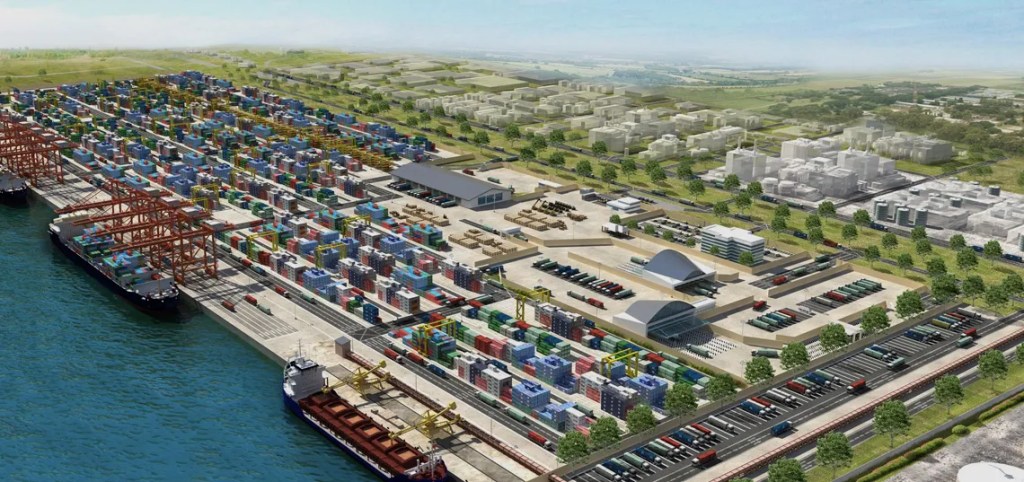
The Minister of Transportation, Chibuike Amaechi, has urged contractors of the Lekki Deep SeaportProject to speed up work to enable the government approve all the necessary processes before the next election.
Mr Amaechi made this known in a statement on Saturday while inspecting the ongoing construction of the Lekki Deep Seaport Project in Lagos.
He, however, commended the contractors for the progress of work done so far stating that in less than five months, a lot of civil work had been done.
“I want to congratulate you for the very huge progress. By the time we came here, there were no civil works; it was just pure sand. You have tried.
“I am suggesting that if you work day and night you will go far and complete the work before commissioning. If the President sees it, approval will be easier.
“You need to speed up the work so we can get approval from the government side before election, process of election will be completed in July.
“This is because by law, six months to election people start politics and if you wait till that time, you won’t meet anyone in the office,” he said.
Mr Amaechi, however, said that the port should be automated to avoid all forms of physical contact.
Speaking during the tour, the Chief Technical Officer, Lekki Port, Steven Heukelom, explained that construction work on the project was on course and as scheduled.
He noted that dredging and reclamation works had reached 89.93 per cent completion, Quay Wall 85.65 per cent completion, Breakwater 79.66 per cent completion, and the landside infrastructure development 67.82 per cent completion.
He added that this brings total works carried out on the project to approximately 80 per cent completion stage.
Mr Heukelom also informed the minister that work had commenced on the marine services jetty, which the NPA would use to carry out their marine services obligation.
He commended the Acting Managing Director, Mohammed Bello-Koko, for the support and partnership in preparing the port to start operations.
Mr Bello-Koko reaffirmed the agency’s readiness to provide marine services for the port’s operations.
To this end, he disclosed that NPA was procuring tug boats and other necessary infrastructure for the smooth take-off of the Port.
In his remarks, the Chief Operating Officer of Lekki Port, Laurence Smith, reaffirmed the company’s commitment to delivering the project by the fourth quarter of 2022.
He noted that the EPC Contractor, China Habour Engineering LFTZ Enterprise, was working day and night to make this commitment a reality.
Mr Smith expressed confidence that the Port, upon completion, would be a world-class port and would become a regional distribution and transhipment hub for the African region.
The News Agency of Nigeria reports that Lekki Port is being developed by Tolaram and China Harbour Engineering Company.
The Lagos State Government and NPA are also shareholders in the project company.
The port is scheduled to start port operations by the end of 2022.
The International Chamber of Commerce (ICC) in partnership with West Blue Consulting, United Parcel Services (UPS), Trade Law Center (TRALAC) have officially launched the eTradeHubs portal, http://www.etradehubs.com.
The eTradeHubs portal is a one-stop for Trade Tools, Information & Collaboration which aims to reduce the time and cost of doing business by supporting businesses at all levels of maturity – the micro enterprise to the multinational.
Features
The portal which was virtually launched last week Thursday has features such as a multi country Tariff and Trade Information Tool and a Duty Calculator.
A first-time trader or existing trader wishing to import raw materials or export finished goods, can search on the portal.
The Duty Calculator further provides an estimate of the customs duty, tax and levies of the destination region or country to aid in financial and logistical planning.
eTradeHubs also provides a Trade Management Tool. Equipped with accurate trade information, the trader can proceed to transact, by generating trade compliant documentation, manage compliance, workflow and costs – all on the same platform, without the need to visit multiple regulatory agencies, entities, websites and physical offices as done previously.
The portal currently provides country data on Ghana, Kenya, Nigeria, South Africa, Zambia and the ECOWAS sub region, with more countries and sub regions to be introduced in support of the Digitise 5 million African SMES initiative.
CC, UPS, Tralac, and West Blue Consulting through a Memorandum of Understanding (MOU) announced a partnership to support women-led small and medium-sized enterprises (SMEs) in Africa.
The partners will offer capacity building programmes and tools, including co-developed trade and information portals called “e-Trade Hubs,” advocate for enabling public policy, and create electronic guidelines to help women entrepreneurs scale-up and digitise their businesses.
COVID-19
The Secretary General of ICC, Mr John W.H. Denton AO in his remarks said the economic, social, and health consequences associated with the COVID-19 pandemic had unequally impacted the lives and livelihoods of women business owners everywhere.
“We are extremely proud to partner with UPS, Tralac, and West Blue Consulting to level the playing field in Africa and provide women entrepreneurs with the required resources to digitise their businesses. Women-led businesses are the backbone of their local economies – we can’t afford to leave them behind,” he added,
The CEO and Founder of West Blue Consulting, noted that “The adoption of solutions by women in business and trade, will ensure benefits such as an increased ability for women to work from home whilst raising families; improved global market access, employment opportunities and a shift of women from the informal sector to the formal.
“The portal will provide a 24/7 collaborative space where women traders and entrepreneurs in the African Continental Free Trade Area (AfCFTA) and of course their male peers can connect and access timely and up to date information, skills and operational tools, offered by various providers”, she added.
Information
Ms Mintah expressed delight to partner with ICC, UPS and TRALAC to provide the needed skills training, trade information and tools via the eTradeHubs portal http://www.etradehubs.com.
President of UPS, Ms Penny Naas, the International Public Affairs & Sustainability said “Research shows that only 1 out of 5 businesses that exports is led by a woman. At UPS, we’re moving our world forward by helping women-run businesses maximize their participation in trade through public-private partnerships that provide policy recommendations and support with knowledge sharing and building skills”.
Executive Director of Tralac, Ms Trudi Hartzenberg, said the adoption of digital trade solutions for the AfCFTA would address many border management challenges that disproportionately impact women traders.
The federal government has banned all agencies from conducting individual cargo inspection at the ports, noting that such inspections must be done jointly.
The Executive Secretary, the Nigerian Shippers Council (NSC), Mr. Hassan Bello disclosed this on Wednesday during a courtesy call to the Nigerian Drug Law Enforcement Agency (NDLEA) Chairman, Brigadier General Mohammed Buba Marwa (rtd).
He said the regime of the Nigerian Port Process Manual (NPPM) recently approved has commenced with no provision for individual inspections by agencies, directing inspection agencies to assemble do joint inspection by 9 am.
“What causes delay is the lack of harmonisation of operating procedures of many agencies at the port. We want all agencies to be on the same page so the process is efficient. The manual says everyone should assemble at the port by 8:30 am and by 9:00 am, everyone does joint inspection. This will cut out delays, ensure efficiency, and promote ease of doing business” Mr. Bello said.
With this measure in place, the ports digitisation process must reach 90 per cent by this first quarter just as the government targets 24 hours operations at the ports.
“Some terminal operators have 98 per cent and others are coming up. Our target is that by the end of the first quarter, we should achieve 90 per cent digitalisation so you don’t need to go to the port to transact business,” he stated.
“We are also aiming to have 24 hours operations at the seaports just like the airports. We are doing it in conjunction with our sister agencies at the ports” he further stated.
The NDLEA Chairman, Brig. Gen. Marwa (rtd) pledged his support to the new reform but he added that the NDLEA will not compromise its duties in stopping illicit drugs from entering the country to destroy citizens.
SARS’ Customs unit made a bust of rhino horn with an estimated value of R53 172 000, in a shipment destined for Malaysia.
While conducting manifest profiling at the courier facilities, the Customs Detector Dog Unit at O.R.Tambo International Airport selected a suspicious shipment declared as ‘HP Cartridges Developers’.
The three-piece shipment was taken to the X-ray scanner for non-intrusive inspection, where the image analysis reflected objects resembling the shape of rhino horns. The shipment was taken for physical inspection and upon inspection of the boxes, 18 pieces of rhino horn were found concealed in traditional clothing. The goods weighed 63kg.
This is the fourth rhino horn bust by SARS Customs at the O.R.Tambo International Airport between July 2020 and February 2021. The overall weight of the rhino horn seized in these four cases is 277.30 kg with an estimated value of R 234 114 206.
The Customs officers immediately called the Directorate of Priority Crimes Investigation (Hawks) to the scene, who confiscated the shipment for further investigation.
In his reaction to this massive seizure of the rhino horn, Commissioner Edward Kieswetter congratulated the Customs officers for their excellent work. He warned the perpetrators of crime that SARS, working with other law enforcement agencies, would spare no efforts in confronting and dealing decisively with any criminal malfeasance. Those that are involved in such egregious and merciless killing of rhinoceros and mutilating them will be brought to book.
He furthermore said, “Those who are determined to destroy the rich natural endowment of our country, which is a common treasure and heritage for all, that we should look after for future generations, will be met with unwavering commitment of our officers to enforce the law.”
Source: South African Revenue Service, 4 February 2021
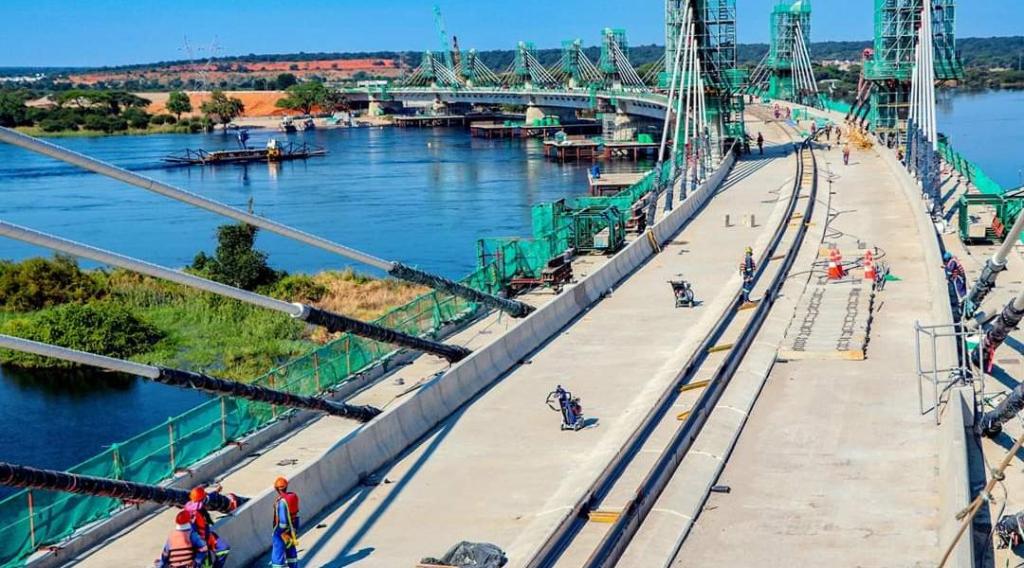
Construction of the Kazungula bridge which will connect Zambia and Botswana and ultimately link the port of Durban in South Africa to the Democratic Republic of the Congo nears completion and by end of 2020 it is expected to be open to the public.
The Kazungula Bridge is located at the Kazungula crossing, where Botswana and Zambia share a border measuring about 750m over the Zambezi River. It is also at the confluence of Zambezi and Chobe rivers, and the meeting point of the four southern Africa countries – Botswana, Namibia, Zambia and Zimbabwe.
The US $259.3m project was officially launched in September 2014 by then Vice-presidents of Zambia and Botswana, and is financed by the African Development Bank (AfDB) and the two governments. The multi-million-dollar project was hailed as the Southern African Development Community (SADC) economic integration success stories, one of the missing links to realizing the North-South Corridor identified under the Regional Infrastructure Development Master Plan (RIDMP).
Kazungula Bridge under Construction
The new bridge will facilitate trade with Botswana and within the SADC region. The project, which entails a 923 metre-long rail/road extra dosed cable stayed bridge with approach roads as well as construction of one stop border posts on the Zambia and Botswana sides; was scheduled for completion last year but failed due to Zambia’s failure to pay.
The bridge is expected to reduce transit time for freight and passengers, boost the regional economy and even increase global competitiveness of goods from Botswana and Zambia due to reduced time-based trade and transport costs.
The Convention on International Trade in Endangered Species of Wild Fauna and Flora (CITES) Secretariat, World Wildlife Fund (WWF) and TRAFFIC recently publish the Identification Guide for Ivory and Ivory Substitutes, a comprehensive and accessible resource for identifying the most commonly found ivories and artificial substitutes in trade. This is a vital tool to assist law enforcement in identifying trafficked ivory in particular.
CITES Secretary-General Ivonne Higuero stated, “The much-awaited 4th edition of the Guidewill be a key tool in the regulation of the international trade of several CITES-listed species. Through it, we reaffirm our commitment to support CITES Parties to achieve the objectives of the Convention and combat wildlife crime.”
Last reviewed in 1999, more than two decades of advancements have been incorporated into the Guide to help law enforcement agencies distinguish between types of ivories and their substitutes, including detailed graphics and forensic applications for ivory identification. Accurate identification is critical potentially to prevent illegal ivory products from being smuggled or illegally traded and to curb the poaching crisis decimating African elephant populations.
In the past dozen years, there has been a surge in the poaching of elephants for their ivory tusks. In a Decision made at the 17th meeting of the Conference of the Parties to CITES in 2016, Parties agreed that the guide required updating to help with identification of elephant ivory due to the increased enforcement activity and the growing number of substitute ivory types entering the market, making it challenging to determine elephant ivory from other types.
The Guide provides enforcement officers, forensic scientists, online technology company enforcement staff and wildlife trade management authorities with detailed procedures, visual aids and instructions for recognizing ivory products, particularly those that have undergone heavy alterations such as carving and painting.
Ivory products can sometimes be falsely labelled in trade to avoid regulations, particularly to circumvent the international commercial trade ban in elephant ivory. The range of ivories and substitutes can be difficult to recognize without specific equipment, expertise and time-consuming examinations.
The Guide includes updated descriptions of ivories from different species and their products found in trade, and reliable, telltale methods used to determine ivory types depending on the form of product, such as tusk/tooth, carving, or other items.
The new Guide includes details on the most relevant species— elephants, mammoths, whales, narwhals and hippos— as well as more extensive visual materials to aid enforcement officers in identifying elephant ivories from ivory substitutes, such as plastics and vegetable ivory. The Guide also addresses the sale of ivory products online, where an increasing share of illegal elephant ivory trade is now taking place and where identification of static digital images can be challenging.
“Even today, it is still challenging to identify ivory,” said Ginette Hemley, Senior Vice President for Wildlife Conservation at WWF-US. “We are in a time of increased illicit trade in elephant ivory and a proliferation of trade in other ivories, like mammoth and artificial substitutes, that make it difficult to distinguish the origin of the ivory. We must also contend with the flourishing online trade and extensive criminal efforts to avoid detection or to sell fraudulent products.”
Addressing the CoP17 decision, the CITES Secretariat commissioned WWF and TRAFFIC to develop the Guide. Some of the original authors and forensics experts working at the United States Fish and Wildlife Service’s Forensic Laboratory (USFWS) were involved in the update. Additional research on online trade and overall guide production was completed by WWF-US and TRAFFIC. The guide now includes an extract from the UN Office of Drugs and Crime 2014 report, Guidelines on methods and procedures for ivory sampling and laboratory analysis,published in cooperation with the International Consortium on Combating Wildlife Crime (ICCWC). The Guide will be published in Chinese, French and Spanish language versions.
Crawford Allan, Senior Director, TRAFFIC, stated, “The ivory experts from the USFWS Wildlife Forensic Laboratory are commended for updating and expanding the morphology section of this definitive guide. It will be used in training programs for law enforcement and supporting a wide range of enforcement and conservation applications, including helping online companies with blocking listings of prohibited elephant ivory from their platforms. Ramping up the pressure is vital to keep illegal trade in ivories in check.”
This publication was made possible with the support from the European Union (through the CITES CoP17 Decisions implementation project).
THE use of Electronic Tax Stamps (ETS) for excisable goods have contributed to a 34 percent increase in revenue collected on branded products.
Due to the increase, the Tanzania Revenue Authority (TRA) has already rolled out the second phase which saw ETS being stamped on soft and carbonated drink plus bottled water.
TRA Deputy Commissioner General, Mr Msafiri Mbibo made the remarks during the on-going 44th Dar es Salaam International Trade Fair (DITF).
Mr Mbibo said since the system was introduced it has proven success showing improvement in revenue collections in which there is an increase of 34 percent.
ETS replaces the former paper stamp system, which was cumbersome and prone to human error, allowing certain tax-related malpractices to slip through the cracks.
This is one of the government’s moves geared towards improving tax administration in the country.
“We are glad that ETS shows improvement in the collection of excise duty and Value-added Tax (VAT), in the first quarter of the 2019/20 financial year the collection rose to 35.3 per cent on domestic spirits and wines compared to the corresponding period of last year,” he noted.
The taxman garnered 25.8bn/-as excise duty and VAT from domestic spirits and wines during the first quarter of the 2018/19 fiscal year, but the amount rose to 34.96bn/- during the first quarter of the 2019/2020 financial year.
Excise duty and VAT on cigarettes rose by 5.6 percent during the first quarter of the 2019/2020 financial year compared to a similar period last year.
TRA collected 56.7bn/-as excise duty and VAT on cigarettes from July to September 2019, a 3bn/-increase from a similar period of the previous financial year.
For the soft drinks, the amount collected as excise duty and VAT during the two months of August and September 2019 was 18 percent, higher than what was garnered during a similar period in 2018.
TRA collected 16.155bn/-in excise duty and VAT on soft drinks in August and September 2018, but the amount rose to 19.05bn/-during the period between August and September 2019.
Mr Mbibo said ETS has helped to eliminate counterfeit products from the market. It is, nonetheless, a promising move by the Government, and manufacturers and intellectual property owners should have reason to smile.
Commenting on how TRA is planning to ensure the surge the tax base, Mbibo said they will continue to develop friendly tax collection mechanisms so that everyone can enjoy voluntary taxation.
ETS first phase commenced on 15 January 2019 and affected cigarettes, wines, spirits, beer and all other alcoholic beverages.
The second phase began on 1 August 2019 and applied to products such as sweetened or flavoured water and other non-alcoholic beverages, except for fruit or vegetable juice.
The Regulations require each manufacturer to install an electronic tax stamp management system.
A Swiss-based firm SICPA has been contracted by the Tanzania Revenue Authority (TRA) to install and enroll all manufacturers, producers and importers onto the system.
Reports such as this should serve as intelligence for any law enforcement entity within the region as well as countries impacted by such illegal activities downstream.
A triangle of vulnerability for illicit trafficking is emerging as a key geographic space along Africa’s eastern seaboard – the Swahili coast. At one apex of this triangle is Zanzibar, a major hub for illicit trade for decades, but one that is currently assuming greater importance. Further south, another apex is northern Mozambique. This area is experiencing significant conflict and instability, and is increasingly a key through route for the illicit trafficking of heroin into the continent and wildlife products from the interior. The final apex of the triangle is out to sea: the Comoros islands, lying 290 kilometres offshore from northern Mozambique and north-east of Madagascar. Comoros is not yet a major trafficking hub, but perennial political instability and its connections into the wider sub-regional trafficking economy make it uniquely vulnerable as illicit trade continues to evolve along the wider Swahili coastal region. These three apexes are linked by illicit economies and trade routes which take little heed of modern political boundaries.
Two main factors underlie the illicit markets that form the primary focus of this study. First, the powerful market demand for illicit wildlife products from Asia (and China in particular), and second, the steady growth in the volumes of heroin moving down the coast, with landings being made further and further south. The Indian Ocean islands themselves have long had serious challenges with heroin trafficking and use, and these are being exacerbated. Developments in Zanzibar, northern Mozambique and Comoros will have a crucial impact on wider patterns of trafficking and trade across the Swahili coast as a whole. For example, as we doc- ument the trade in endangered species from Madagascar which flows to Zanzibar and Comoros, Madagascar is also seen as a potential risk area for an increase in heroin trafficking.
At the time of writing, the impact of COVID-19 in the wider region was just becoming clearer as countries entered lockdown and began to restrict some forms of trade. The effect of these developments on the illicit political economy will still unfold in time to come.
Source: A Triangle of Vulnerability – Illicit Trafficking off the Swahili Coast authored by Alastair Nelson, June 2020
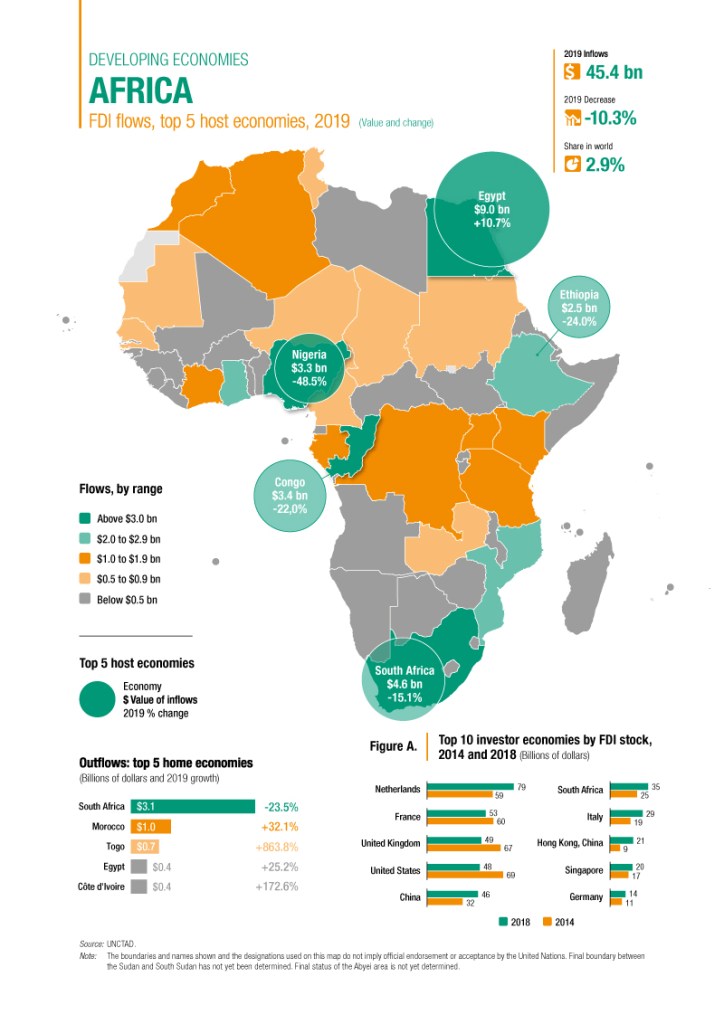
The trend of declining foreign direct investment (FDI) to Africa is set to exacerbate significantly in 2020 amid the dual shock of the coronavirus pandemic and low prices of commodities, especially oil.
FDI flows to the continent are forecast to contract between 25% and 40% based on gross domestic product (GDP) growth projections as well as a range of investment specific factors, according to UNCTAD’s World Investment Report 2020.
“Although all industries are set to be affected, several services industries including aviation, hospitality, tourism and leisure are hit hard, a trend likely to persist for some time in the future,” said UNCTAD’s director of investment and enterprise, James Zhan.
Manufacturing industries intensive in global value chains are also strongly affected, a sign of concern for efforts to promote economic diversification and industrialization in Africa.
Overall, there is a strong downward trend in the first quarter of 2020 for announced greenfield investment projects, although the value of projects (-58%) has dropped more severely than their number (-23%).
Similarly, as of April 2020, the number of cross-border merger and acquisition (M&A) projects targeting Africa had declined 72% from the monthly average of 2019.
Hope for recovery
However, two distinct factors offer hope for the recovery of investment flows to the continent in the medium to long run. The first is the higher value being assigned to ties to the continent by major global economies, promoting investment in infrastructure, resources, but also industrial development.
Investments from these countries, which have varying degrees of political backing, despite being affected by the joint impact of COVID-19 and low commodity prices to some degree, could be relatively more resilient.
The second is deepening regional integration due to the commencement of trade under the African Continental Free Trade Area (AfCFTA) after years of deliberation and the expected finalization of its investment protocol.
In the short term, curtailing the extent of the investment downturn and limiting the economic and human costs of the pandemic is of paramount importance.
Longer term, diversifying investment flows to Africa and harnessing them for structural transformation remains a key objective. Both of these objectives will require a prudent, coordinated and timely response from countries on the continent.
FDI was already on the decline before the crisis
The COVID-19 crisis has arrived at a time when FDI was already in decline, with the continent having experienced a 10% drop in inflows in 2019 to $45 billion.
The negative effects of tepid global and regional GDP growth and dampened demand for commodities inhibited flows to countries with both diversified and natural resource-oriented investment profiles alike, although a few countries received higher inflows from large new projects.
North Africa
FDI inflows to North Africa decreased by 11% to $14 billion, with reduced inflows in all countries except Egypt, which remained the largest FDI recipient in Africa in 2019, with inflows increasing by 11% to $9 billion.
Sub-Saharan and Southern Africa
After a significant increase in 2018, FDI flows to Sub-Saharan Africa decreased by 10% in 2019 to $32 billion.
Southern Africa was the only sub-region to have received higher inflows in 2019 (22% increase to $4.4 billion) but only due to the slowdown in net divestment from Angola.
FDI inflows to South Africa decreased by 15% to $4.6 billion in 2019, despite key investments in mining, manufacturing (automobiles, consumer goods) and services (finance and banking).
West Africa
FDI to West Africa decreased by 21% to $11 billion in 2019. This was largely driven by the steep decline in investment in Nigeria due to new investment regulations for multinational enterprises in the oil and gas industry.
East Africa
FDI flows to East Africa also decreased, by 9% to $7.8 billion. Inflows to Ethiopia contracted by a fourth to $2.5 billion caused to some degree by political tensions in parts of the country.
Similarly, inflows to Kenya dropped by 18% to $1.3 billion despite several new projects in IT and healthcare.
Central Africa
Central Africa received $8.7 billion in FDI, marking a decline of 7%. The key highlight in the sub-region was the decrease in flows to the Democratic Republic of the Congo (9% to $1.5 billion).
The Netherlands overtook France as the largest investor by stock
On the basis of FDI stock data through 2018, the Netherlands overtook France as the largest foreign investor in Africa.
The investment stock held by the United States and France in Africa declined by 15% and 5% respectively, owing to profit repatriation and divestment. Meanwhile, the investment stock of the United Kingdom and China increased by 10% each.
FDI outflows also fell in 2019, by approximately a third
FDI outflows from Africa decreased by 35% to $5.3 billion. South Africa continued to be the largest outward investor despite the reduction in outflows from $4.1 billion to $3.1 billion.
Outflows from Togo increased significantly, from a mere $70 million to $700 million, a tenfold increase. In North Africa, Morocco also increased outward FDI, to approximately $1 billion from $800 million in 2019.
Source: UNCTAD, World Investment Report, 16 June 2020
Botswana is investigating the mysterious deaths of at least 154 elephants over two months in the northwest of the country, a wildlife official said on Monday, although poaching or poisoning have been ruled out.
“We are still awaiting results on the exact cause of death,” Regional Wildlife Coordinator Dimakatso Ntshebe told Reuters.
The carcasses were found intact, suggesting they were not poached. Further investigations have also ruled out poisoning by humans and anthrax, which sometimes hits wildlife in this part of Botswana.
Africa’s overall elephant population is declining due to poaching, but Botswana, home to almost a third of the continent’s elephants, has seen numbers grow to 130,000 from 80,000 in the late 1990s, owing to well managed reserves.
However, they are seen as a growing nuisance by farmers, whose crops have been destroyed by elephants roaming the southern African country.
President Mokgweetsi Masisi last year lifted a five-year ban on big game hunting, imposed by previous president Ian Khama, but the hunting season failed to take off in April as global travel restrictions meant hunters from many coronavirus-hit countries could not enter Botswana.
Meanwhile, the Wildlife Department has undertaken an operation to relocate and dehorn all rhinos to tackle poaching in Botswana – mirroring efforts elsewhere in the region.
The Okavango Delta rhino population has been the hardest hit, with 25 reported poached between December and the beginning of May, government figures show, as poachers take advantage of the absence of safari tourists during the pandemic.
That compares with a total of 31 rhinos poached from October 2018 to December last year.
“Both white rhino and black rhinos have been severely affected, necessitating the … relocation of highly endangered black rhinos (and) intensification of surveillance,” the Department said.
This research report “A Shallow Flood: The Diffusion of Heroin in Eastern and Southern Africa” (click hyperlink to access report) draws from and analyzes field data examining three characteristics of the illicit drug economy in a selected number of countries of eastern and southern Africa:
Price. This part of the data identifies the retail price (i.e. street price) for heroin in a given market location, and examines factors that influence retail price variations within a particular market, and between markets.
Distribution system. Identifying the means by which heroin is moved between wholesale and retail vending situations, and how it is moved within and between adjacent and/or distant markets.
Market structure. Identifying core structural components of domestic heroin markets in the region, with particular attention to those features that enable markets to emerge and flourish, as well as factors that disrupt or deteriorate these markets.
The flow of heroin from Asian production points to the coastal shores of eastern and southern Africa is not new. Whereas the first heroin transit routes in the region in the 1970s relied heavily on maritime transport to enter the continent, a number of transport modes and urban centres of the interior have increasingly become important features in the current movement of heroin in this region. Interior transit hubs and networks have developed around air transport nodes that use regular regional and international connections to ship heroin. As regional air routes proliferated and became more efficient, their utility and value for the heroin trade increased as well. Heroin is also consolidated and shipped over a frequently shifting network of overland routes, moving it deeper into the African interior in a south-westerly direction across the continent.
Consequently, a shallow flood of heroin has gradually seeped across the region, and this has had a significant impact on the many secondary towns found along the continent’s transcontinental road networks. These places, in turn, have spawned their own small local heroin markets, and become waypoints in rendering sustainable the now chronic, metered progression of heroin’s resolute geographic diffusion across the region.
The impact of this creeping spread of heroin on regional state development has been significant and, paradoxically, symbiotic. The emerging illicit African drug market environments may represent credible threats to the development and security of the region’s nascent independent state institutions and structures. At the same time, these markets have also presented new and considerable sources of economic livelihood and opportunity for the continent’s ever-expanding population of poor, disenfranchised and vulnerable people. A surrogate ‘drug working class’ has emerged as a socio-economic sequela to more traditional, yet increasingly limited, licit income opportunities.
The purpose of this report is to examine the diffusion of heroin across eastern and southern Africa. This will be achieved through an analysis of retail heroin prices, distribution systems and domestic marketplaces. The report provides an analytical summary of heroin market data collected across the countries of the region, with specific retail price points, commentary on domestic heroin distribution systems and structures, and a discussion of the common structural characteristics evident across the region that enable, embed and sustain these heroin markets.










 What Happened to the Portcullis?
You must be logged in to post a comment.