Tobacco Taxes or Cigarette Smuggling – Which Is Worse?

Cigarettes+XXX+smokingRampant cigarette smuggling isn’t the problem in New York–“sky-high” tobacco taxes are, according to an op-ed by Patrick M. Gleason, director of state affairs at Americans for Tax Reform, in The Wall Street Journal.

Gleason’s opinion piece, titled “A Laffer Curve for Smokes,” digested here, takes the city and state of New York to task for their $180-million lawsuit against UPS over what officials allege was unlawful delivery of nearly 700,000 cartons of cigarettes. (A Laffer curve, named for economist Arthur Laffer, shows the relationship between rates of taxation and levels of government revenue.)

“This misguided lawsuit demonstrates once again that too many in government do not understand the root cause of cigarette smuggling. New York state levies the highest cigarette tax in the nation, $4.35 per pack, and New York City tacks on an additional $1.50 local tax. All told, the cost of one pack there can run to $12 or more.

“The result? Most of the cigarettes smoked in New York, 58%, are smuggled in from out of state, according to the nonpartisan Tax Foundation. The higher that revenue-hungry politicians raise tobacco taxes, the more profit smugglers can make.

“Politicians never learn. Of the 32 state tobacco tax increases that went into effect between 2009 and 2013, only three met or exceeded revenue projections, according to industry data.

“Lawmakers can claim they’re raising taxes on cigarettes to reduce smoking and improve public health. That talking point is belied by the recent imposition of taxes on electronic cigarettes, which are saving lives by delivering nicotine in puffs of water vapor instead of chemical-filled smoke. There are more than 15 tax bills pending across the country for currently untaxed e-cigarettes. Hawaii is proposing a tax of 80%, New York of 75%, Oregon of 65% and Ohio of 60%.

“For politicians, cigarette taxes are—and have always been—about one thing: money.

“New York state officials claim that the cigarette smuggling via UPS cost the treasury $29.7 million in lost tax revenue. That’s less than 0.03% of the state budget. The $4.7 million allegedly lost by New York City represents less than 0.006% of its budget.

“For a mere rounding error, state and city officials want to grab $180 million from UPS. That’s $180 million UPS could use to hire new workers, give employees raises, or invest back into its business. The leaders of New York and New York City should drop this silly lawsuit and find a more productive use of their time.”

Click here to view the full Wall Street Journal opinion piece.

Xenophobia Backlash – Mozambique/South African Border closed

Lebombo border post has been closed until further notice Friday17 April 2015 after an unruly mob barricaded the N4 near Ressano Garcia, targeting trucks with South African registration numbers [Picture: Sowetan]

Lebombo border post has been closed until further notice Friday17 April 2015 after an unruly mob barricaded the N4 near Ressano Garcia, targeting trucks with South African registration numbers. [Picture: Sowetan]

The border post between South Africa and Mozambique has been closed until further notice Friday after an unruly mob barricaded the N4 near Ressano Garcia, targeting trucks with South African registration numbers.

This also came just as immigration officials from Mozambique early in the morning began the blocking of all vehicles coming from South Africa under unexplained circumstances. Witnesses told ZimEye.com the situation at the border is both shocking and desperate with drivers voicing their frustration at the hands of Mozambican border officials.

Lebombo border post has been closed until further notice Friday17 April 2015 after an unruly mob barricaded the N4 near Ressano Garcia, targeting trucks with South African registration numbers..

“Trucks with South African registration plates have been stoned in Mozambique. A volatile crowd of about 200 Mozambicans has barricaded the N4 about four kilometres east of the Resano Garcia border post, where there is a truck stop,” reported Corridor Gazette on Friday.

“It is suspected that this action in related to the Xenophobic attacks which have erupted in various areas of KwaZulu-Natal and Gauteng this week.”

Trac, a company which is responsible for the 570km of the road between Solomon Mahlangu off-ramp in Tshwane and the Port of Maputo in Mozambique, placed a warning on the protest action on its website.

A traveller who en route to Nelspruit from Maputo at around 9:30 on Friday morning told the website that: “The crowd let us pass because we had a Mozambican-registered car.

South Africa and Zimbabwe sign milestone Customs Mutual Assistance Agreement

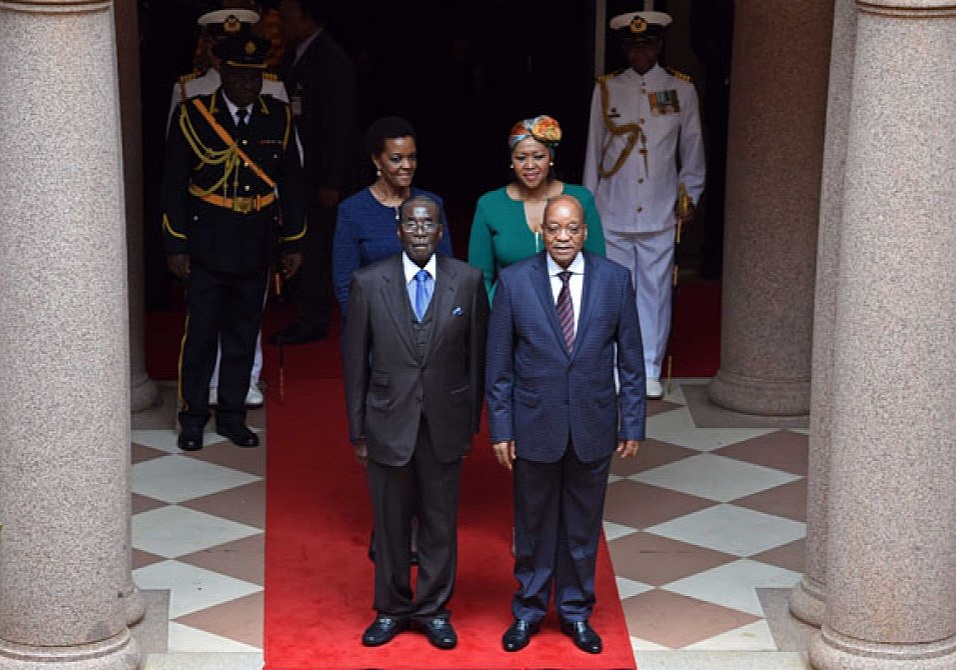
robertmugabejacobzuma2015govtza_SnapseedSouth Africa and Zimbabwe have elevated bilateral relations with the signing of five agreements set to benefit both countries. The agreements were signed on Wednesday during President Robert Mugabe’s state visit to South Africa at the invitation of President Jacob Zuma. An agreement regarding mutual assistance between customs administrations between the two countries was also signed, which will further cooperation towards the establishment of a one-stop border post. This is viewed as a crucial milestone.

Zimbabwe tightens border controls on imported goods

Zimbabwe-flagZimbabwe has introduced custom-control measures aimed at reducing the inflow of smuggled and inferior goods, and boosting its revenue from customs duty. Goods being exported to Zimbabwe will have to undergo consignment verification from May 16.

The government’s customs officials are also tightening up inspections at the Beitbridge border post to stem the flow of cheap, illegal goods, which Zimbabwean companies blame for their financial woes.

Executive chairman of the European Union Chamber of Commerce and Industry of Southern Africa Stefan Sakoschek said on Thursday that “the general idea is for Zimbabwe to protect its borders from substandard goods, as well as from undervaluation”.

Mr Sakoschek said the consignment-based conformity assessment programme fell within the framework of the World Trade Organisation’s technical barriers to trade as well as the regulations of the General Agreement on Tariffs and Trade.

Exporters and clearing agents have been informed of the new consignment verification measures, which will ensure conformity to standards and the value of goods declared. A certificate will be issued for the consignments for presentation to customs officials on arrival in Zimbabwe. Goods without a certificate will be refused entry.

Targeted products include food and agricultural goods, building and civil engineering products, timber and timber products, petroleum and fuel, packaging materials, electrical and electronic appliances, body care products, automotive and transportation goods, clothing and textiles, engineering equipment, mechanical appliances and toys.

Trade Law Chambers director Rian Geldenhuys said the pre-shipment verification process would entail additional costs but should not contribute to further delays in shipment. Consignment verification was widely practised especially in developing countries as a way to ensure the collection of customs duty revenue, Mr Geldenhuys said.

“Underinvoicing is a huge problem throughout the world, especially least developed and developing countries which Zimbabwe is one of,” he said.

Trade Law Centre researcher Willemien Viljoen also said the assessments would entail additional costs. Much of the effect would depend on how the conformity assessments were implemented and the standards that would be applied, Ms Viljoen said.

The Zimbabwean government has appointed well-recognised French company Bureau Veritas as the conformity assessment company for verification purposes, and has given the assurance that “compliant exporters will be able to benefit from fast-track procedures reducing systematic intervention on their frequent exports to Zimbabwe.”

Zimbabwean Industry and Commerce Minister Mike Bimha was quoted by the Zimbabwean press as saying that Zimbabwe was being “flooded with sub-standard imports which do not meet quality, safety, health and environmental standards”.

These goods had a negative effect on the country’s economic development and the competitiveness of its industries, Mr Bimha said.

In terms of its four-year agreement with Bureau Veritas the Zimbabwean government will receive monthly royalty fees equivalent to 5% of all monies received for its services. This arrangement will eventually lapse when the Zimbabwe Standards Regulatory Authority is established to monitor and control imports, exports and local goods to ensure compliance with quality, health, safety and environmental standards. Bureau Veritas operates in 140 countries and offers pre-shipment services to SA, Ethiopia, Kenya, Somalia, Uganda and Côte d’Ivoire. Source: BDLive (Reporter: Linda Ensor)

Read also the following articles, published in Zimbabwean Situation – Govt moves to tighten border controls (September 2014) as well as Zim mulls one-stop border post (November 2014) which might suggest that entry arrival procedures at Zimbabwean ports of entry may not be that expeditious given a prominent focus on revenue collection.

Event – Role of the Private Sector in Support of the Trade Facilitation Agreement

international-trade1The role of the private sector in the implementation of the World Trade Organization’s (WTO) Trade Facilitation Agreement (TFA) will be the focus of the 2015 edition of the Global Facilitation Partnership for Transportation and Trade (GFP) meeting. With the world’s customs administrations currently identifying their respective TFA  implementation commitments and setting up National Trade Facilitation Committees, trade and logistics operators can learn how they can participate in such initiatives by attending these sessions.

The GFP meeting will be held at Palais des Nations, Geneva, on 22 April, and will be divided into three thematic sessions.

The first session, ‘Governments’ Priorities: Strategies for Fostering Private Sector Participation in the TFA Implementation Process’ will look at how governments are planning to implement the TFA.

It will focus on how the private sector is consulted and how an effective participation of the private sector can be facilitated to implement the Agreement.

The second session, ‘Priorities, Perspectives, and Expectations from the Private Sector on TFA Implementation’ will assess how the private sector – including large corporates and small and medium-sized enterprises – view TFA implementation. It will look at the potential benefits from a private-sector perspective, and how the sector can contribute to national and international initiatives to implement the agreement.

The third session, ‘International Organizations’ Co-ordination and Partnership for Supporting TFA Implementation’, will provide an opportunity to share information and experiences on how the TFA can be implemented with public-private partnerships in mind, as how national trade facilitation committees can better support this process.

ITC invites all interested stakeholders to join the GFP meeting at the Palais des Nations on 22 April from 9:00. Click here for link to online registration.

Source: International Trade Centre (Geneva)